Water Meter Freeze Prevention: How Much Should You Run the Tap at -10°C and -15°C?
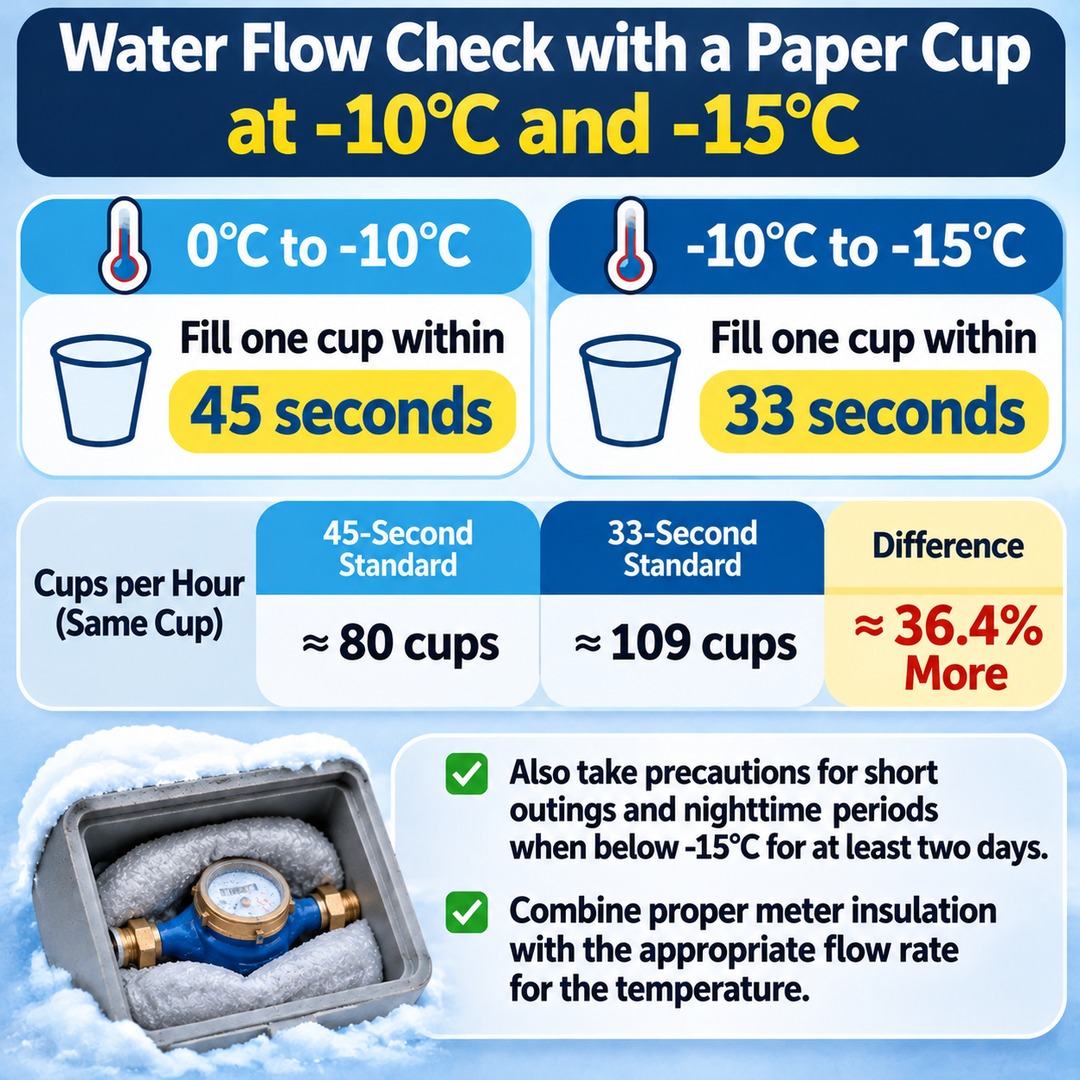
When temperatures below -15°C continue for at least two days, precautions should also include short outings and nighttime periods when water is not being used. The goal is not to open the tap as wide as possible, but to combine proper meter insulation with an appropriate flow rate for the temperature.
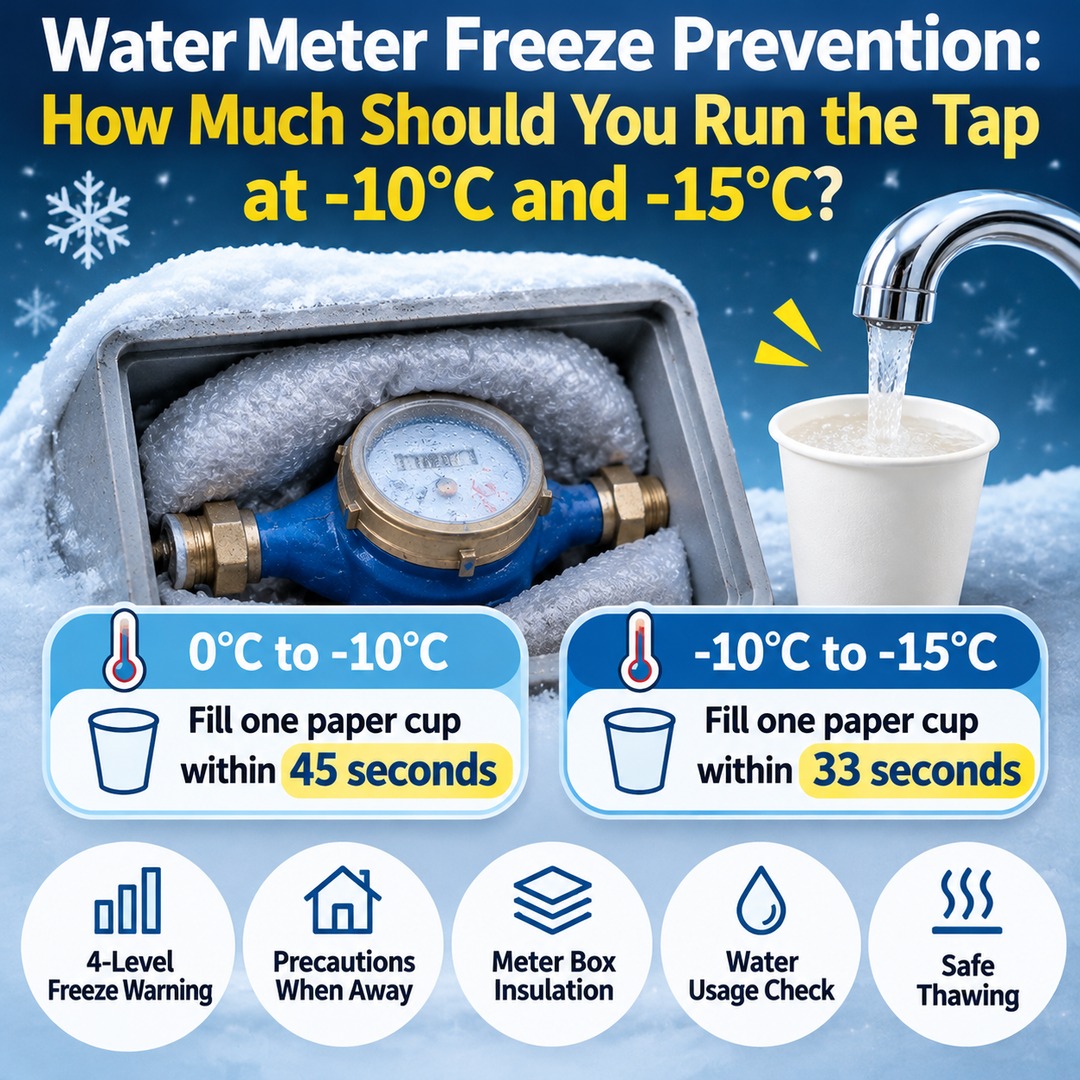
How Much Water Should Flow at -10°C and -15°C? Measure It with a Paper Cup
The difference between the two temperature ranges can be measured by timing how long it takes to fill a paper cup. When using disposable cups of the same size, the 33-second standard requires a higher water flow rate than the 45-second standard.
| Daily Minimum Temperature | Time to Fill One Paper Cup | Water Flow |
|---|---|---|
| 0°C to -10°C | Within 45 seconds | A thin, steady stream |
| -10°C to -15°C | Within 33 seconds | More water than in the previous range |
The 45-second and 33-second figures do not indicate how long to leave the tap open. They measure the time required to fill a cup, starting when water begins flowing into it.
To measure the flow at home, place a paper cup under the tap and time how long it takes to fill. A cup that fills in 33 seconds indicates a higher flow rate than one that takes 45 seconds.
Author's calculation
Assuming the same cup capacity, the two flow rates compare as follows:
45-second standard: approximately 80 cups per hour
33-second standard: approximately 109 cups per hour
Difference: the 33-second standard delivers approximately 36.4% more water per hour
The calculation is `45 ÷ 33 = approximately 1.364`.
This represents the relative difference in water flow. It does not mean that the risk of freezing decreases by 36.4%. Actual water consumption depends on the cup's capacity and the tap's flow rate.
When Should You Leave the Tap Running?
| Freeze Forecast Level | Daily Minimum Temperature and Duration | Recommended Action |
|---|---|---|
| Attention | Above -5°C | Insulate the meter box and block cold outside air |
| Caution | -5°C to -10°C | Recheck insulation around the meter and exposed pipes |
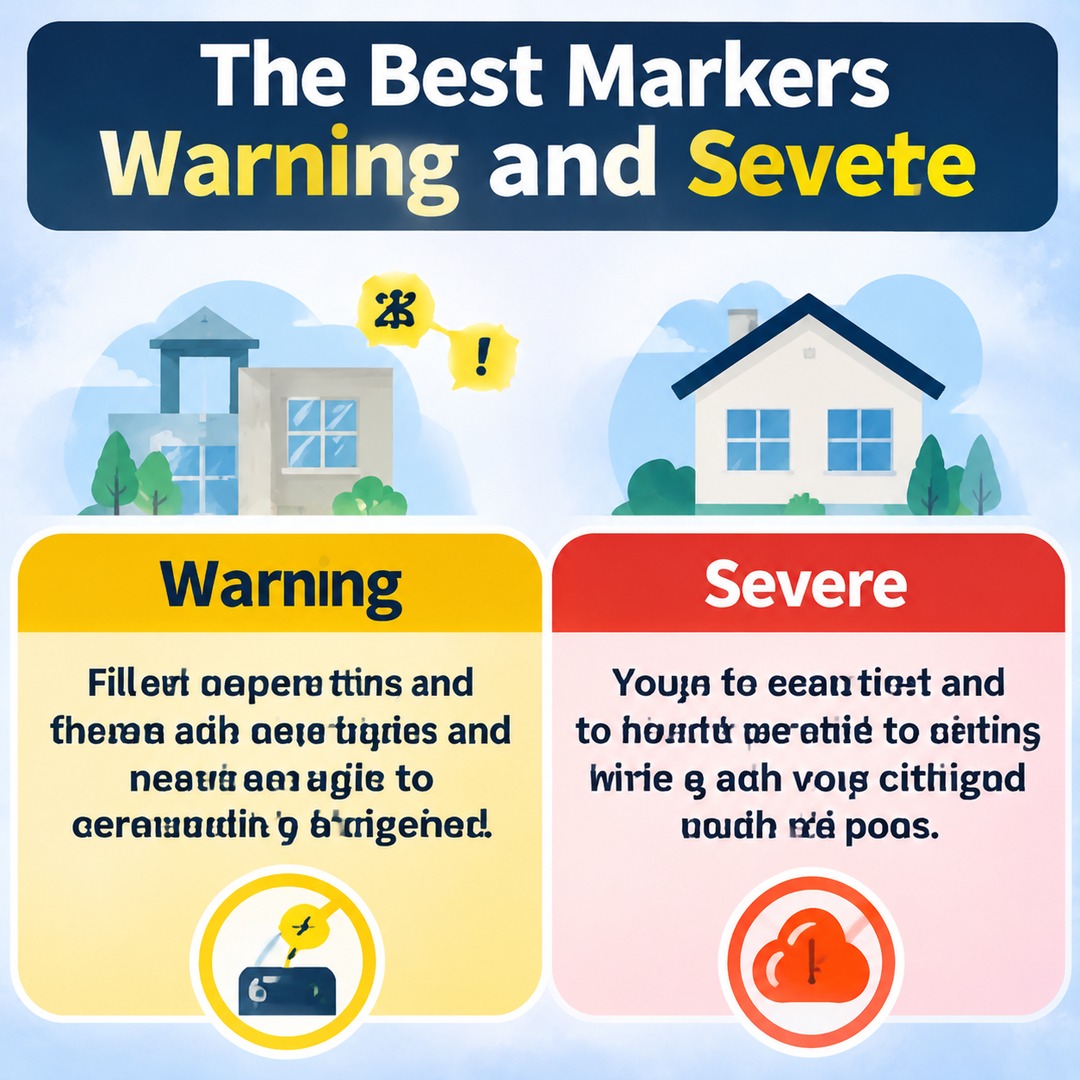
| Warning | -10°C to -15°C for at least 2 days | Leave a thin stream running when away for an extended period |
| Severe | Below -15°C for at least 2 days | Leave water running even during nighttime or short outings |
The important distinction is between the Warning and Severe levels.
At the Warning level, when temperatures around -12°C persist for at least two days, leaving water running is recommended if you will be away from home for an extended period. At the Severe level, when temperatures below -15°C continue for at least two days, precautions also apply when you go out briefly or stop using water overnight.
Why You Should Insulate the Meter Box Before Running Water
Leaving a tap running is not enough on its own to prevent freezing. The basic precaution is to block openings through which cold air can enter the meter box and fill the interior with insulating material.
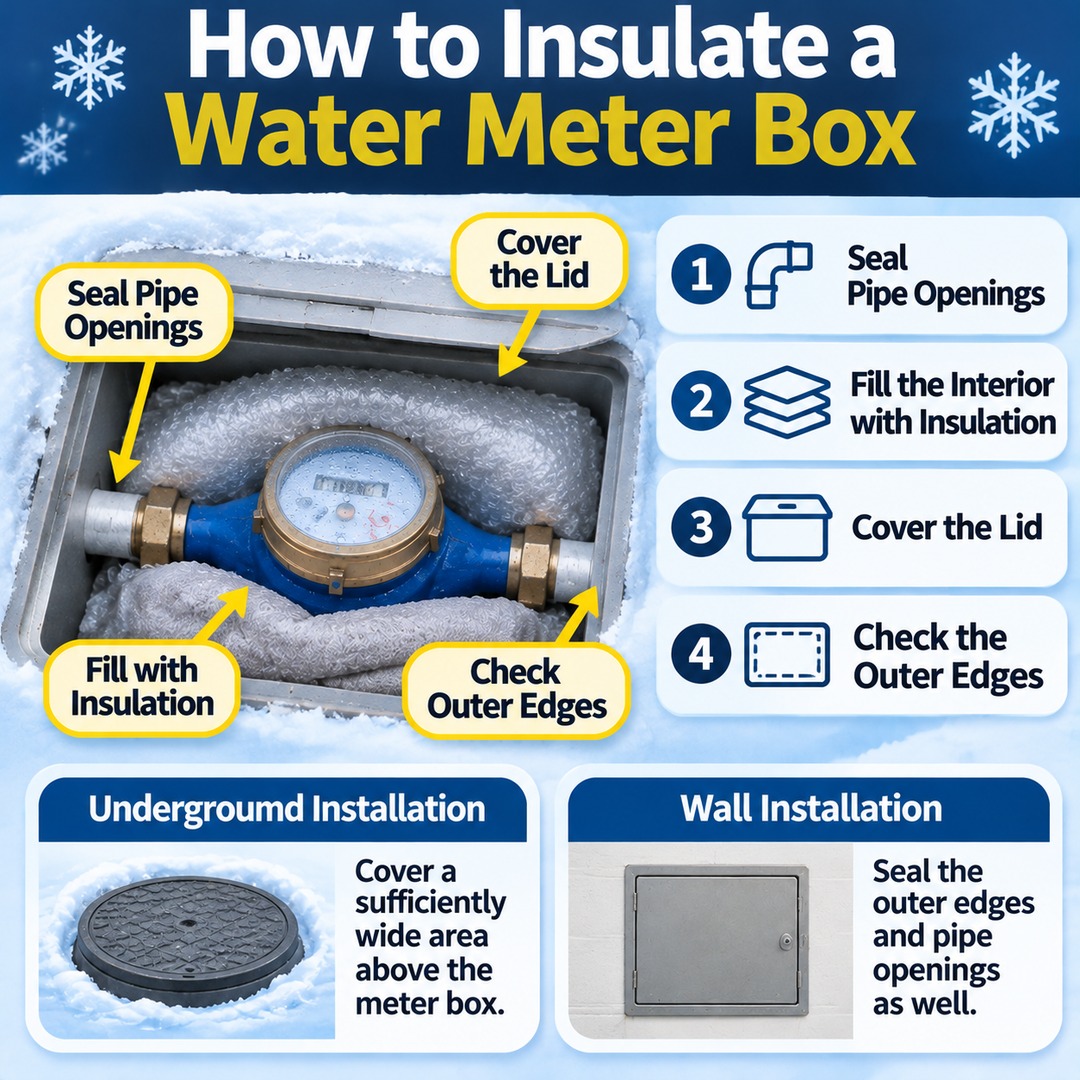
Follow these steps to insulate the meter box:
1. Seal pipe openings: Close gaps around the points where pipes pass through the meter box.
2. Fill the interior with insulation: Use bubble wrap or dry old clothing to fill the available space.
3. Cover the lid: Place insulating material over the meter-box lid and use a plastic cover or similar material to keep cold air out.
4. Check the outer edges: For meters installed in walls, inspect gaps around the outer frame and lid.
5. Insulate exposed pipes: Wrap any outdoor or otherwise exposed water pipes with insulating material.
One easily overlooked area is the opening where the water pipe enters the meter box. Even if the interior is packed with old clothing, outside air can still enter through an unsealed pipe opening or gaps around the lid.
If the insulating material becomes wet, replace it with dry material rather than leaving it in place. Homes using old clothes or towels should check for moisture during winter.
For meters installed underground, cover a sufficiently wide area above the meter box. For meters installed in walls, seal the outer edges and the openings around the pipes as well.
Worried About Your Water Bill? Calculate Your Actual Water Consumption
Meeting the paper-cup flow standard means water continues running, so total consumption increases. However, the actual amount depends on the size of the paper cup.
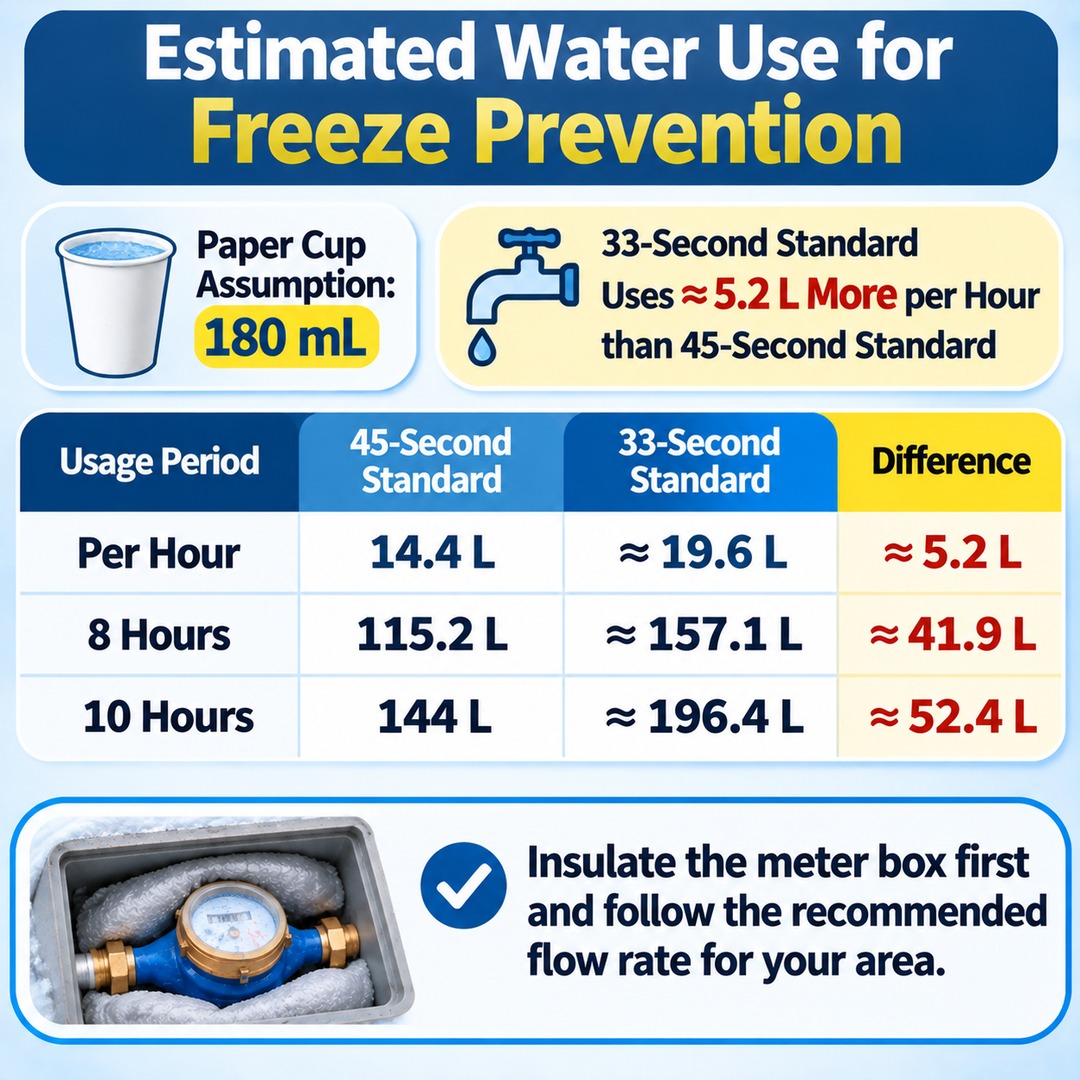
For example, assuming a cup capacity of 180 mL, consumption can be calculated as follows:
| Period | 45-Second Standard | 33-Second Standard |
|---|---|---|
| 1 hour | 14.4 L | Approximately 19.6 L |
| 8 hours | 115.2 L | Approximately 157.1 L |
| 10 hours | 144 L | Approximately 196.4 L |
Author's calculation: Assumes a 180 mL paper cup. Actual consumption varies with cup capacity and tap flow rate.
The 33-second standard used below -10°C consumes approximately 5.2 L more water per hour than the 45-second standard. If maintained for 10 hours, the difference is approximately 52.4 L.
These figures compare water consumption; they do not establish a fixed water-bill amount. Actual charges depend on local water rates and household consumption.
Rather than reducing the flow far below the recommended level simply to save water, insulate the meter box first and follow the flow-rate guidance issued by your local water authority.
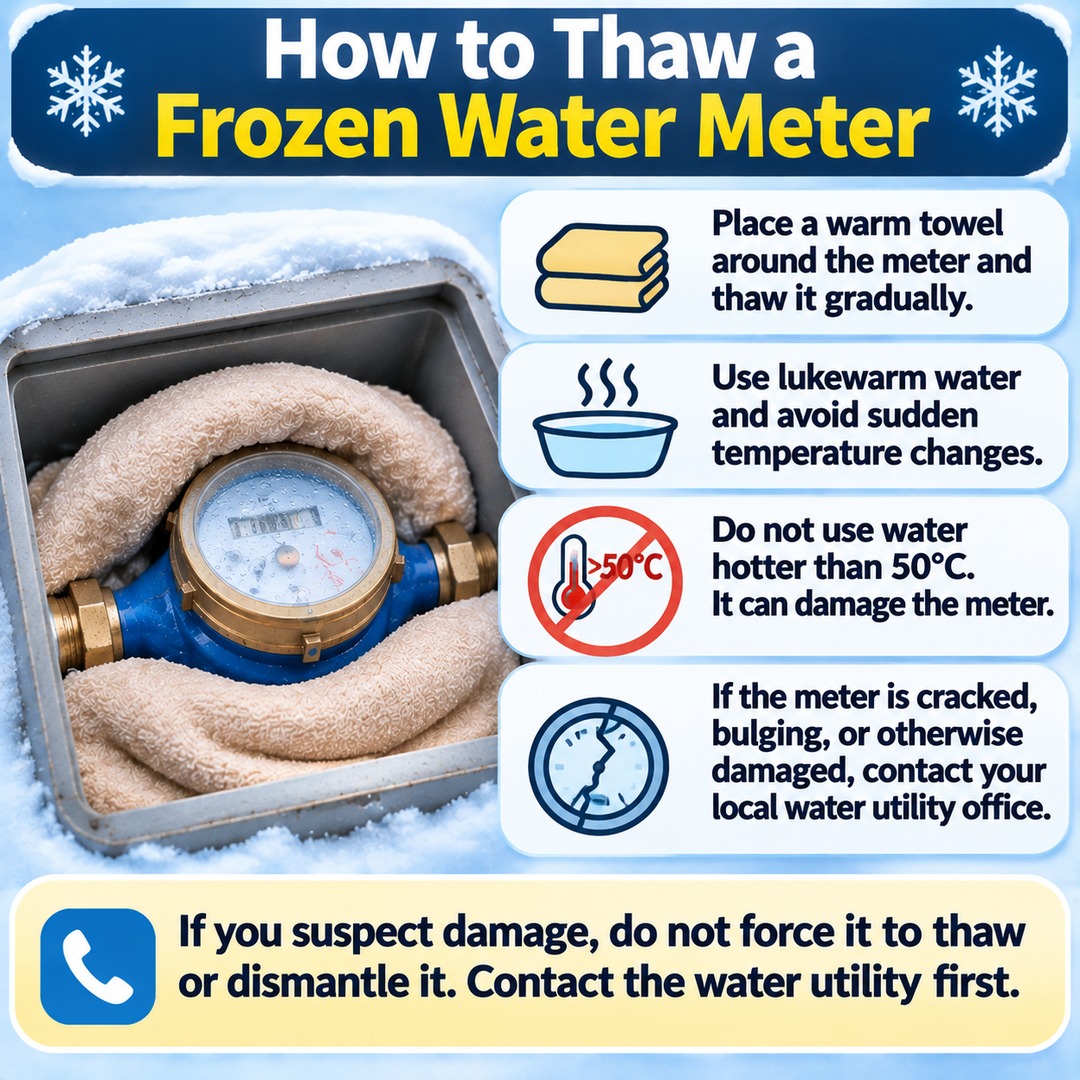
How Should You Thaw a Frozen Water Meter?
Follow these precautions when thawing a frozen meter:
Place a warm towel around the meter and allow it to thaw gradually.
Use lukewarm water and avoid sudden temperature changes.
Do not use water hotter than 50°C. It can damage the meter.
If the meter glass is cracked, bulging, or otherwise appears damaged, do not attempt repairs yourself. Contact your local water utility office.
A frozen meter that has stopped water from flowing is not necessarily the same as a physically damaged meter. If you suspect damage, do not force the meter to thaw or dismantle it. Contact the responsible water utility first.
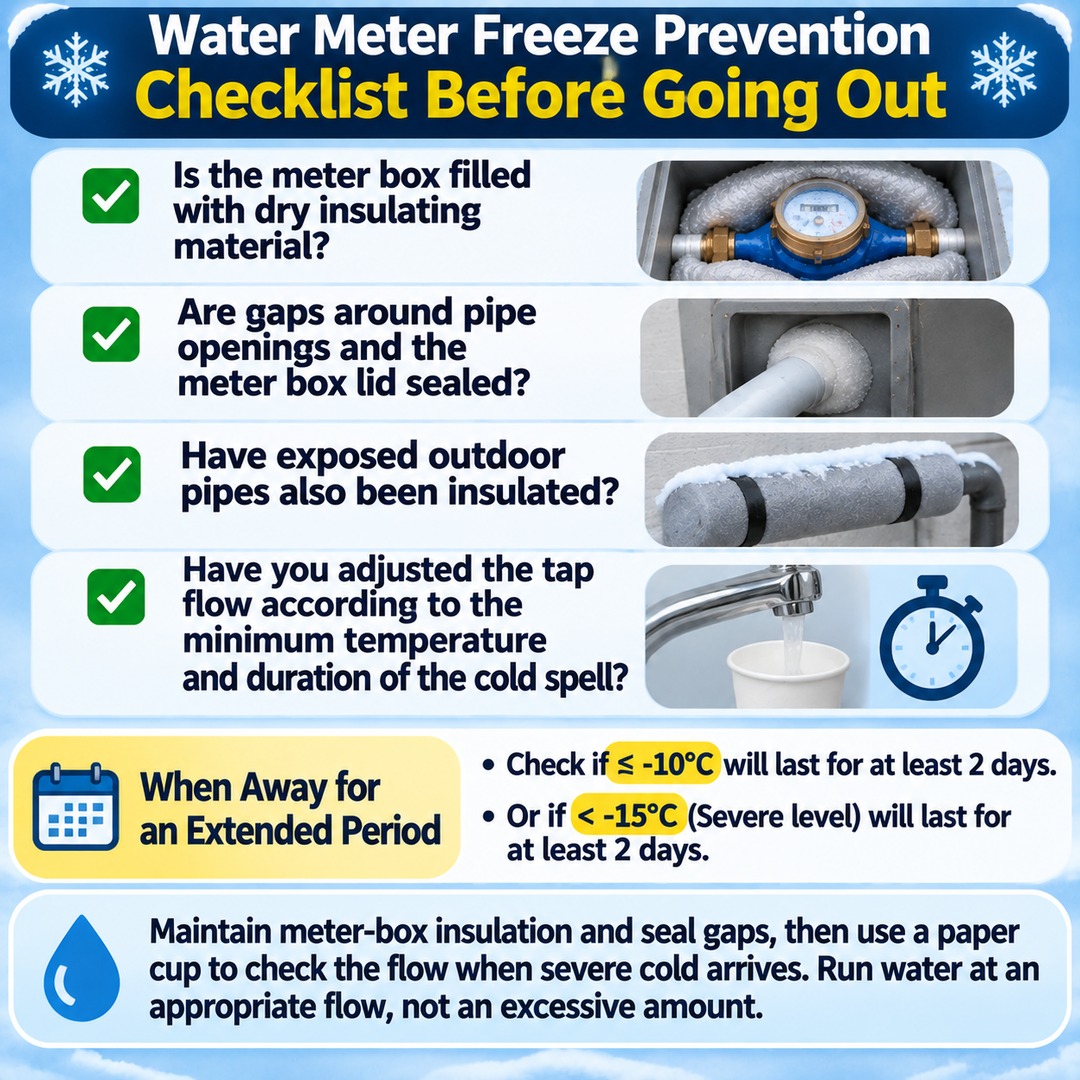
What to Check Before Leaving Home
When cold weather is forecast, check the following before going out:
Is the meter box adequately filled with dry insulating material?
Are gaps around pipe openings and the meter-box lid sealed?
Have exposed outdoor pipes also been insulated?
Have you adjusted the tap flow according to the minimum temperature and duration of the cold spell?
If you plan to be away for an extended period, do not assume that insulation alone will always be sufficient. Check whether temperatures of -10°C or lower are expected to continue for at least two days, or whether the conditions meet the Severe level of below -15°C for at least two days, and apply the recommended running-water precautions.
The most practical approach to preventing a frozen water meter is to maintain the meter box's insulation and seal its gaps during ordinary winter conditions, then use a paper cup to check the flow when severe cold arrives. Rather than running excessive amounts of water, maintain an appropriate flow for the conditions specified in your area.