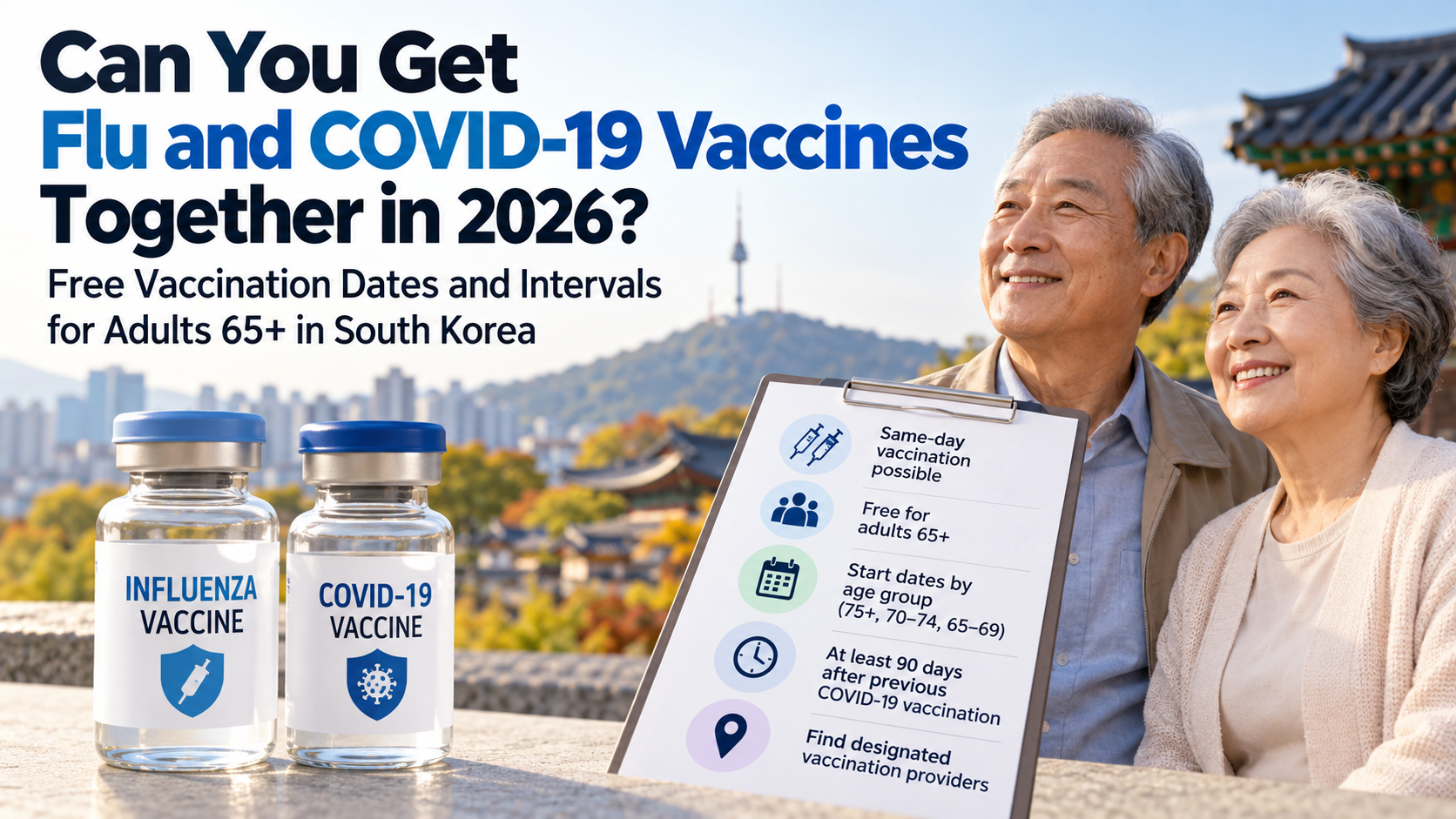
adults aged 65 and older in South Korea can receive both influenza (flu) and COVID-19 vaccines free of charge on the same day under the national vaccination programs. The two vaccines are administered at different injection sites. Even if they are given on separate days, there is no mandatory waiting interval between the flu and COVID-19 vaccines. However, the date of any previous COVID-19 vaccination and the individual's current health condition must be checked separately.
The 2026–2027 vaccination season has different starting dates depending on age. In particular, flu vaccinations began first for adults aged 75 and older, while COVID-19 vaccinations began on the same date for everyone aged 70 and older. This difference is important when checking eligibility for both vaccines.
1. Can Flu and COVID-19 Vaccines Be Given on the Same Day?
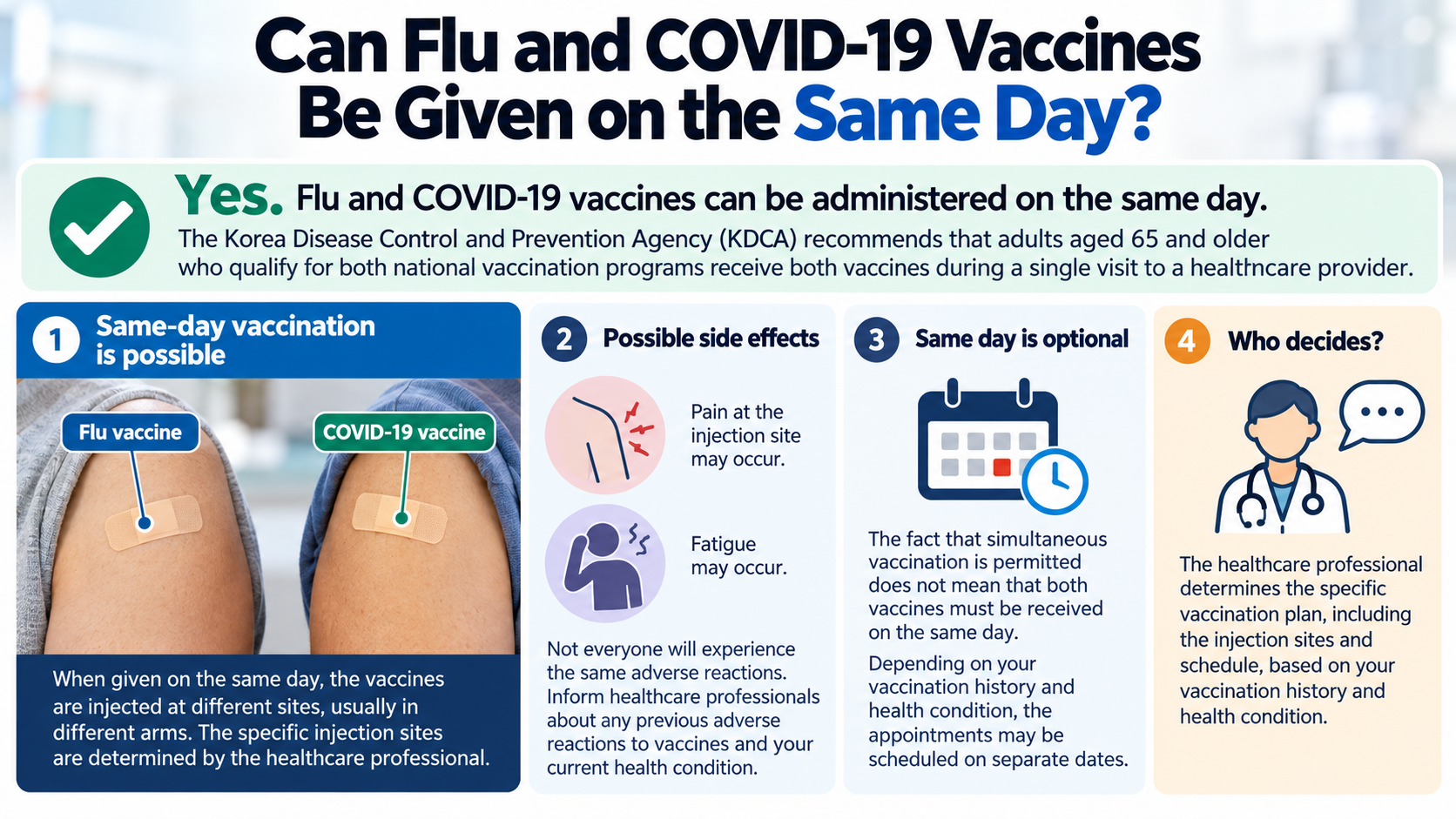
Yes. Flu and COVID-19 vaccines can be administered on the same day. The Korea Disease Control and Prevention Agency (KDCA) recommends that adults aged 65 and older who qualify for both national vaccination programs receive both vaccines during a single visit to a healthcare provider.
When both vaccines are administered during the same visit, they are injected at different sites. In general, they may be given in different arms, although the healthcare professional determines the specific injection sites.
Receiving both vaccines on the same day does not mean that everyone will experience the same adverse reactions. Pain at the injection site or fatigue may occur after vaccination. Patients should therefore inform healthcare professionals about any previous adverse reactions to vaccines and their current health condition.
The fact that simultaneous vaccination is permitted does not mean that both vaccines must be received on the same day. Depending on an individual's vaccination history and health condition, the appointments may be scheduled on separate dates.
2. Free Flu and COVID-19 Vaccination Dates for Adults Aged 65 and Older
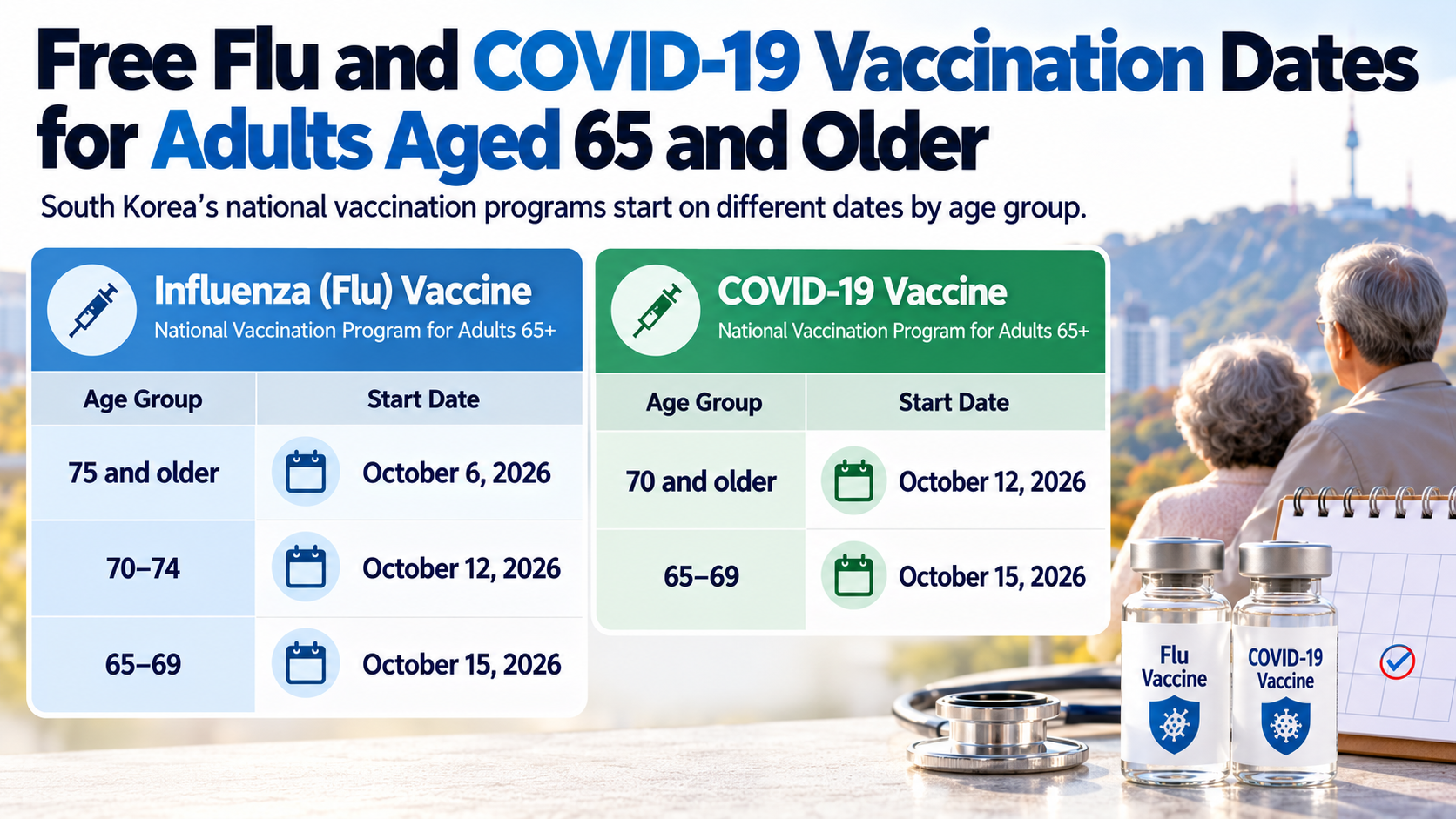
South Korea's national flu vaccination program for adults aged 65 and older began on October 6, 2026, with different start dates for each age group. The national COVID-19 vaccination program began on October 12 for adults aged 70 and older and expanded to include those aged 65–69 on October 15.
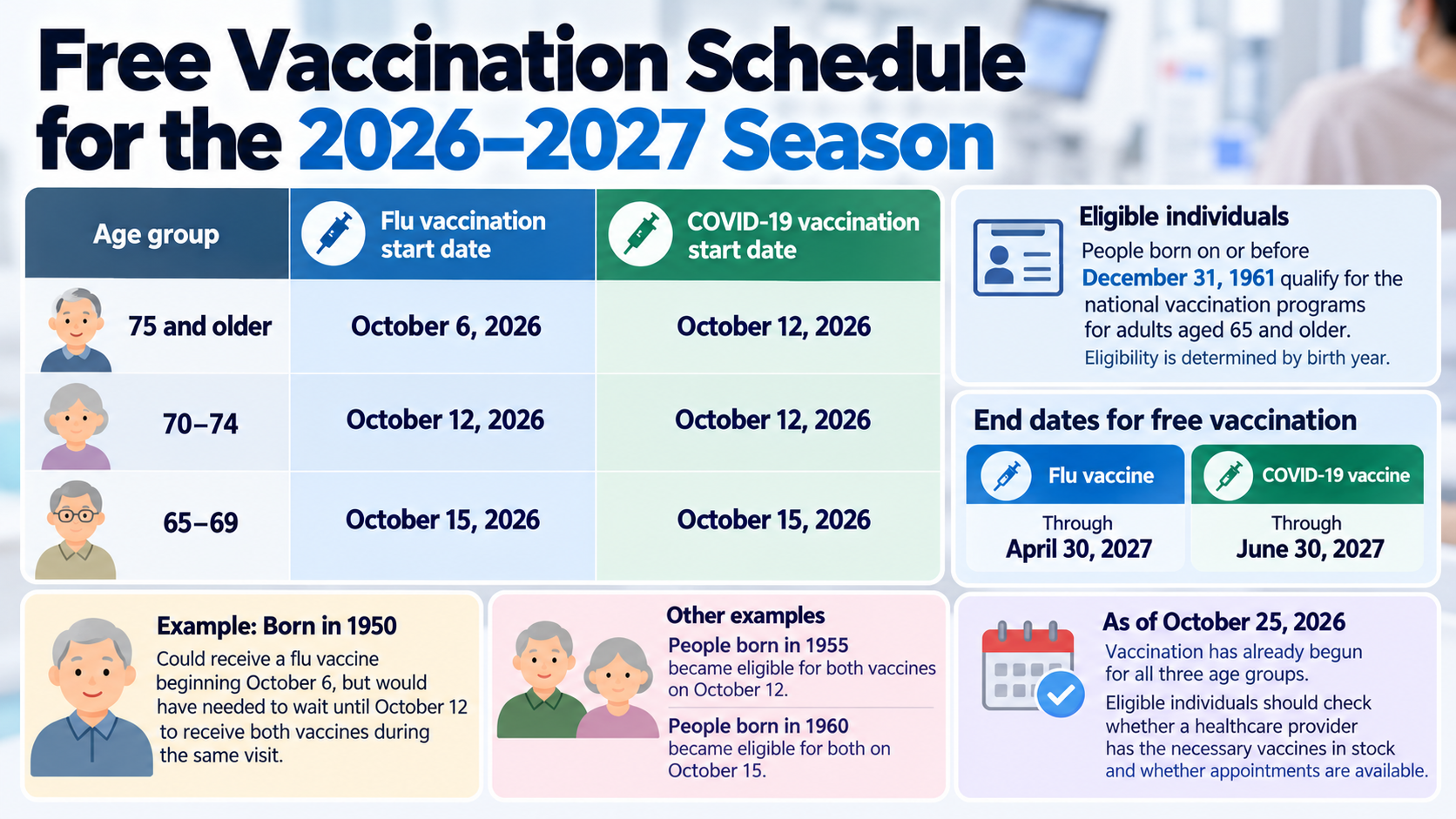
Free Vaccination Schedule for the 2026–2027 Season
| Age group | Flu vaccination start date | COVID-19 vaccination start date |
|---|---|---|
| 75 and older | October 6, 2026 | October 12, 2026 |
| 70–74 | October 12, 2026 | October 12, 2026 |
| 65–69 | October 15, 2026 | October 15, 2026 |
People born on or before December 31, 1961, qualify for the national vaccination programs for adults aged 65 and older. Eligibility is determined by birth year.
The end dates for free vaccination also differ:
Flu: Through April 30, 2027
COVID-19: Through June 30, 2027
For example, someone born in 1950 could receive a flu vaccine beginning October 6, but would have needed to wait until October 12 to receive both the flu and COVID-19 vaccines during the same visit.
People born in 1955 became eligible for both vaccines on October 12, while those born in 1960 became eligible for both on October 15.vaccination has already begun for all three age groups. Eligible individuals should therefore check whether a healthcare provider has the necessary vaccines in stock and whether appointments are available.
The revised flu vaccination schedule can be confirmed in the KDCA announcement dated September 16, 2026.
3. Is There a Required Interval Between Flu and COVID-19 Vaccines?
There is no universally required minimum interval between a flu vaccine and a COVID-19 vaccine. Therefore, if the two vaccines are not administered on the same day, there is no general requirement to wait one or two weeks between them.
However, it is important to distinguish the interval between two different vaccines from the interval required after a previous dose of a COVID-19 vaccine.
For the 2026–2027 season, a COVID-19 vaccine may be administered only after at least 90 days have passed since the previous COVID-19 vaccination.
For example, if someone received a COVID-19 vaccine in September 2026, becoming eligible for a free flu vaccination in October does not automatically mean they can receive another COVID-19 vaccine at the same appointment.
In that situation, one option is to receive the flu vaccine first and schedule the COVID-19 vaccine separately after checking the date of the previous COVID-19 vaccination.
People who have recently had COVID-19 may also choose to postpone vaccination until three months after the date of their confirmed infection, taking into account the immunity developed through infection. Anyone with a recent infection should consult a healthcare professional about the appropriate timing based on their individual circumstances.
4. Who Is Eligible for COVID-19 Vaccination in the 2026–2027 Season?
South Korea's national COVID-19 vaccination program for the 2026–2027 season covers high-risk groups, including adults aged 65 and older, immunocompromised individuals, and patients or residents of facilities considered vulnerable to infectious diseases.
Beginning in 2026, COVID-19 vaccination in South Korea was moved from the previous temporary vaccination framework into the country's routine national immunization system.
Vaccines designed to target the XFG variant are being used during this vaccination season.
The general vaccination schedules are as follows:
Adults aged 65 and older: One dose during the current vaccination season
Immunocompromised individuals: Two doses during the current vaccination season
Certain groups, including hematopoietic stem cell transplant recipients: Individualized vaccination schedules based on the time elapsed since transplantation and the person's immune status
Immunocompromised individuals aged 12 and older, along with patients and residents of facilities vulnerable to infectious diseases, became eligible for the national COVID-19 vaccination program on October 12, 2026.
The number of doses and the intervals between vaccinations may differ for immunocompromised individuals compared with the general older adult population. In particular, hematopoietic stem cell transplant recipients should consult their healthcare team to establish an individualized vaccination plan.
5. Precautions Before and After Vaccination
Before vaccination, individuals should prepare identification, review their previous vaccination history, and check their current health condition. After vaccination, they should remain at the healthcare facility for 20–30 minutes to be monitored for adverse reactions and get sufficient rest after returning home.
The following checklist can help prepare for a vaccination appointment:
1. Bring identification, such as a Korean resident registration card.
2. Check the date of your previous COVID-19 vaccination and whether you have recently tested positive for COVID-19.
3. Inform the healthcare professional if you currently have a fever or respiratory symptoms.
4. Consult a healthcare professional before vaccination if you previously experienced a severe allergic reaction or another significant adverse reaction following vaccination.
5. If you want both vaccines during the same appointment, confirm at registration that the facility can administer both.
People who need to verify special eligibility, including certain immunocompromised individuals, may be asked to provide supporting documents such as a medical certificate, physician's opinion letter, or confirmation of admission to a qualifying facility.
However, exceptions are available. For example, vaccination may be permitted without separate supporting documents when a healthcare professional determines that the patient is immunocompromised.
After vaccination, monitor for symptoms such as pain or swelling at the injection site and fever. If a serious allergic reaction is suspected, including difficulty breathing or swelling of the face or throat, seek emergency medical attention immediately.
Adults aged 65 and older and other high-risk individuals, including immunocompromised patients, should seek medical care if they develop a fever or respiratory symptoms, regardless of whether they have been vaccinated.
6. How to Find a Designated Vaccination Provider in South Korea
Under South Korea's national vaccination programs, flu and COVID-19 vaccines are available at participating medical institutions and public health centers nationwide, regardless of a person's registered residential address.
However, not every healthcare facility can administer both vaccines during the same appointment. It is therefore important to check vaccine availability before visiting.
The following steps explain how to find vaccination providers using the KDCA's Vaccination Assistance service, South Korea's official vaccination information and provider-search platform.
1. Open the Korea Disease Control and Prevention Agency's Vaccination Assistance service and select the option to search for participating medical institutions.
2. Under the influenza vaccination section, select the category for older adults aged 65 and above. Be sure to distinguish this from the search option for children's vaccinations.
3. Select the province or metropolitan city and then the relevant city, county, or district. Run the search to view provider names and telephone numbers.
4. Go to the COVID-19 vaccination program section, select the region again, and choose the available vaccine filter before searching. This filter is a search criterion, not a personalized recommendation about which vaccine is appropriate for an individual.
5. Even if a medical institution appears in both search results, this does not guarantee that both vaccines will be available on the intended date or that simultaneous vaccination can be provided. Call the healthcare facility before visiting to confirm.
Eligible adults aged 65 and older can receive free vaccinations in other regions of South Korea, not only in the area listed as their registered residential address.
Family members or caregivers may help someone prepare for a vaccination appointment, but the decision to receive vaccination and its suitability for the individual should be determined through consultation between the person receiving the vaccine and the healthcare professional.
7. Frequently Asked Questions
Can Both Vaccines Be Injected Into the Same Arm?
The two vaccines must be administered at different injection sites. A healthcare professional will determine the appropriate locations, so tell the vaccination provider before the procedure if you intend to receive both vaccines during the same appointment.
Can Someone Born in 1961 Receive Free Vaccinations Before Their Birthday in 2026?
Yes. For South Korea's 2026–2027 national vaccination season, adults aged 65 and older are defined as those born on or before December 31, 1961.
People who meet this birth-year requirement can receive vaccination from the designated start date for their age group, even if their birthday has not yet occurred in 2026.
Can I Receive a Flu Vaccine Immediately After a COVID-19 Vaccine?
Yes. There is no mandatory minimum interval between flu and COVID-19 vaccines. However, eligibility for another COVID-19 vaccine requires a separate review of the date of the previous COVID-19 vaccination and factors such as recent COVID-19 infection.
Can I Still Get Flu or COVID-19 After Being Vaccinated?
Yes. Infection remains possible even after vaccination. Vaccines help reduce the risk of infection and progression to severe illness, but they do not prevent every infection.
Basic respiratory infection prevention measures, including handwashing, proper cough etiquette, and adequate ventilation, remain important alongside vaccination.