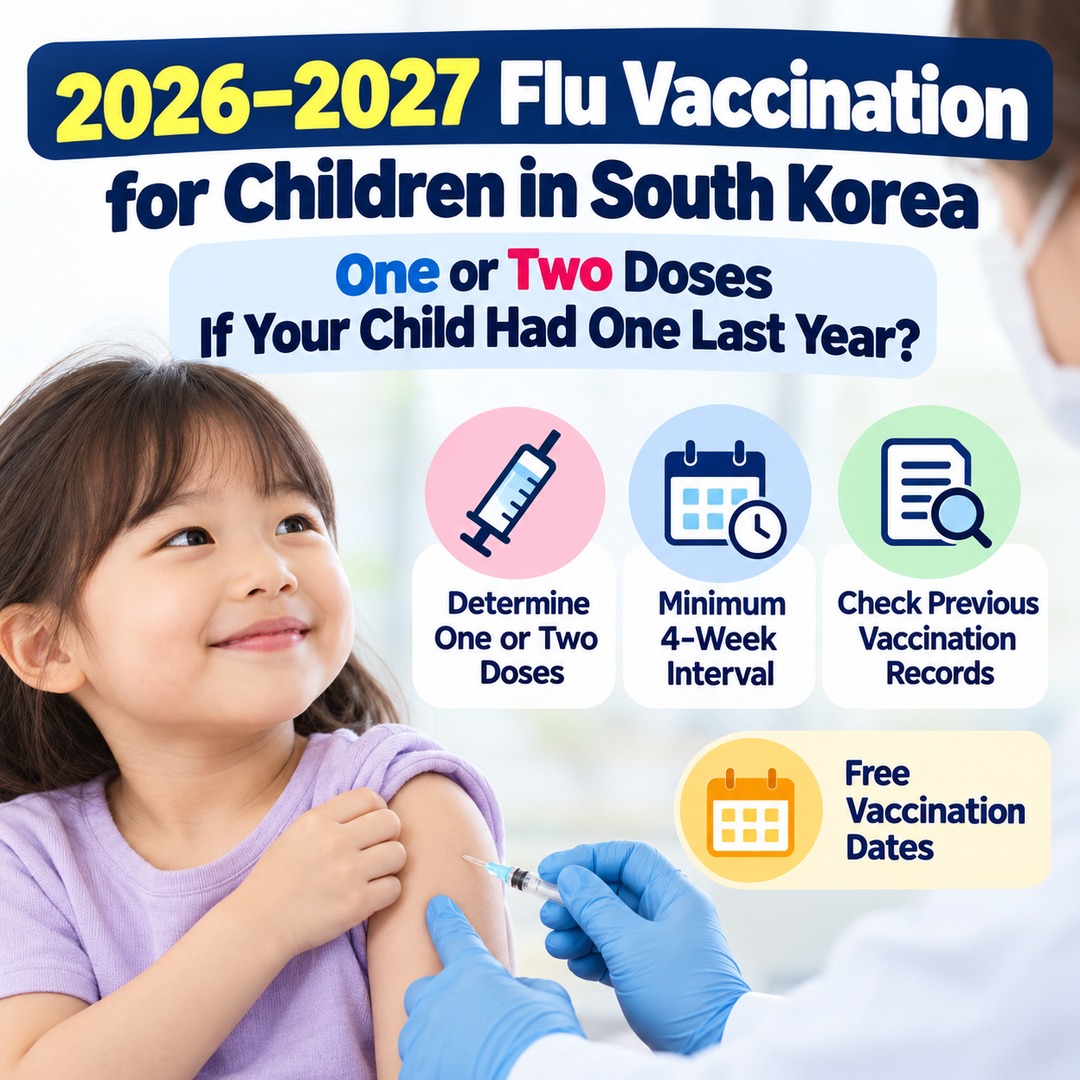
Whether a child who received one flu vaccine dose last year needs two doses this year depends on their current age and total vaccination history. During the 2026–2027 flu season in South Korea, children aged 6 months to under 9 years who have never received an influenza vaccine or have received only one dose in total need two doses this season. Children who have previously received at least two doses generally need only one dose this season. When two doses are required, they must be administered at least four weeks apart.
Importantly, the fact that a child received one dose last year is not enough to determine how many doses they need this year. Parents must also check whether the child received any influenza vaccinations before last year.
If Your Child Received One Flu Shot Last Year, How Many Doses Are Needed This Year?
If a child under age 9 received their first-ever influenza vaccination last year, received only one dose, and has no earlier vaccination history, they need two doses during the current flu season.
However, even if a child received only one dose last year, they generally need just one dose this season if earlier vaccinations bring their lifetime total to at least two doses.
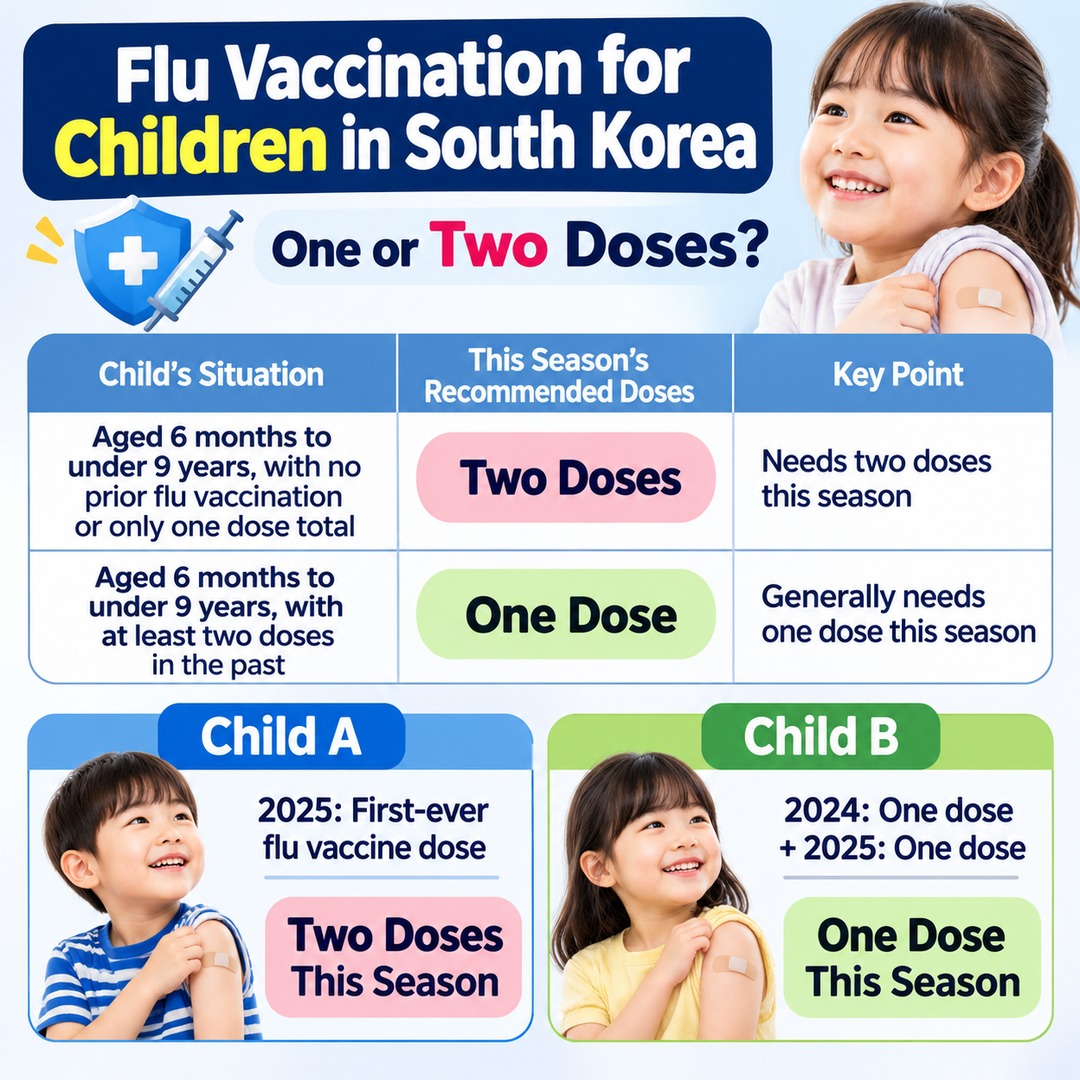
For example, consider two children who each received one influenza vaccine dose in 2025.
Child A: If the dose received in 2025 was their first-ever influenza vaccination and there are no earlier records, the child needs two doses during the 2026–2027 season.
Child B: If the child received one dose in 2024 and another in 2025, bringing their previous total to two doses, the child needs one dose during the 2026–2027 season.
Both children received the same number of doses last year, but the number required this year is different.
This is because the influenza vaccination schedule for children under age 9 takes their previous vaccination history into account.
How Does Previous Vaccination History Determine the Number of Doses for Children Under Age 9?
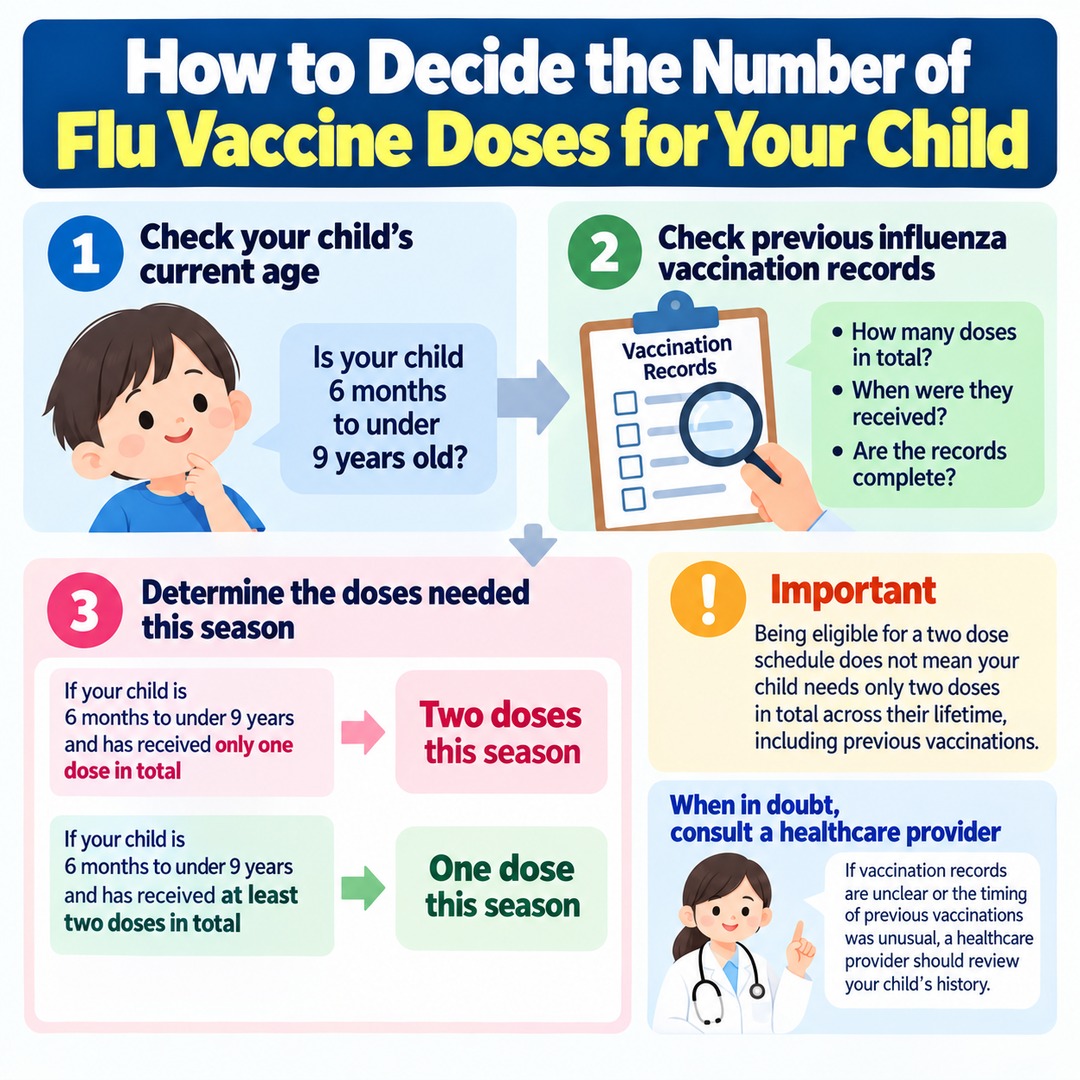
To determine the number of doses needed, parents should consider both the child's current age and their previous influenza vaccination records.
| Child's age and vaccination history | Doses required this season |
|---|---|
| Aged 6 months to under 9 years, no previous influenza vaccination | 2 doses |
| Aged 6 months to under 9 years, one previous dose in total | 2 doses |
| Aged 6 months to under 9 years, at least two previous doses in total | 1 dose |
| Aged 9 years or older and eligible for South Korea's National Immunization Program | 1 dose |
An important distinction is that being eligible for a two-dose schedule does not mean the child needs only two doses in total across their lifetime, including previous vaccinations.
If a child under age 9 previously received one dose and qualifies for the two-dose schedule this season, they should receive two doses during the current season.
If vaccination records are unclear or the timing of previous vaccinations was unusual, a healthcare provider should review the child's history before determining the appropriate number of doses.
What Is the Required Interval Between Two Flu Vaccine Doses?
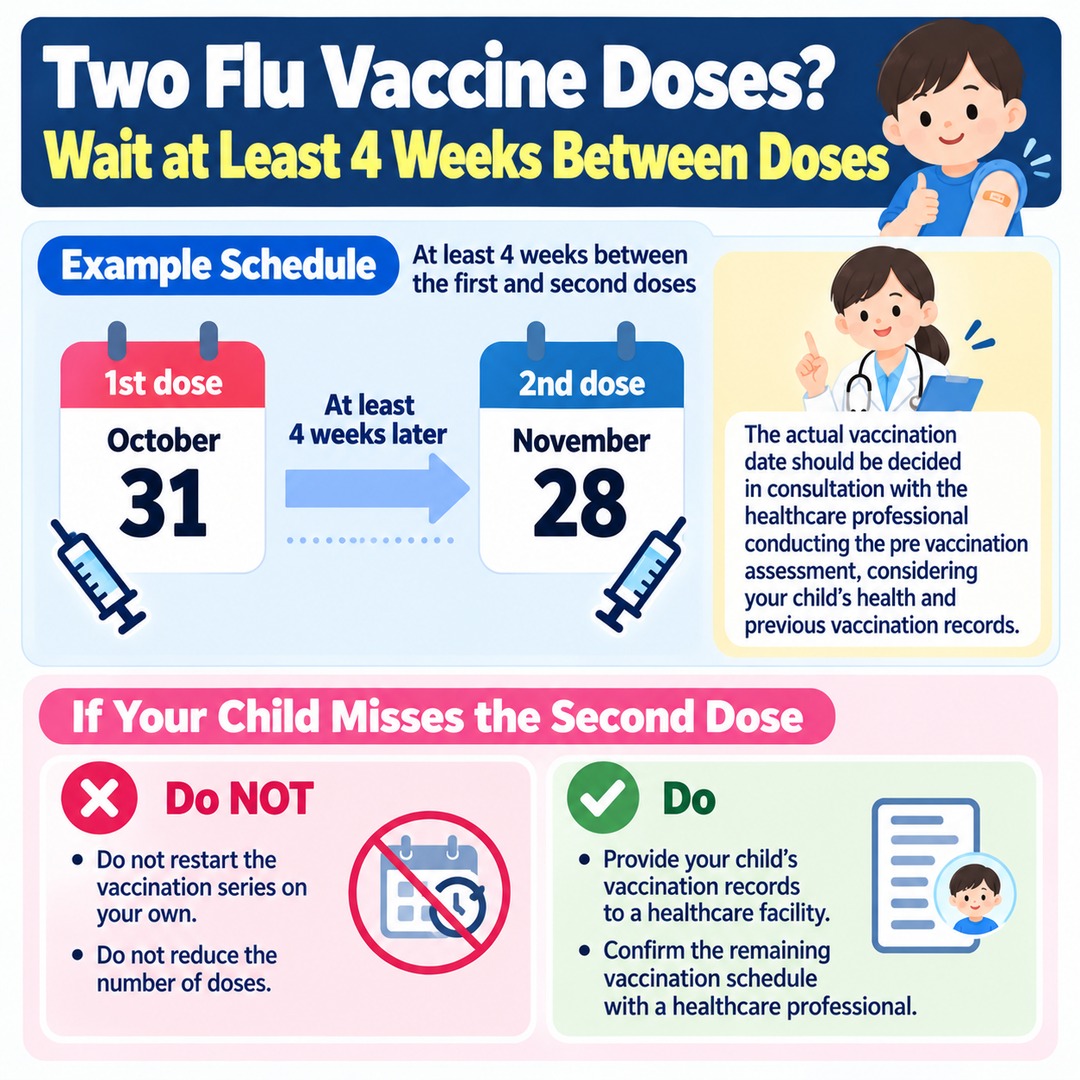
Children who need two influenza vaccine doses must wait at least four weeks between the first and second doses.
For example, if a child receives their first dose on October 31, the second dose can be scheduled from November 28, four weeks later.
However, the actual vaccination date should be decided in consultation with the healthcare professional conducting the pre-vaccination assessment, taking into account the child's health and previous vaccination records.
If a child misses their second dose after receiving the first, parents should not independently restart the vaccination series or reduce the number of doses. Instead, they should provide the child's vaccination records to a healthcare facility and confirm the remaining schedule.
When Does Free Flu Vaccination for Children End in the 2026–2027 Season?
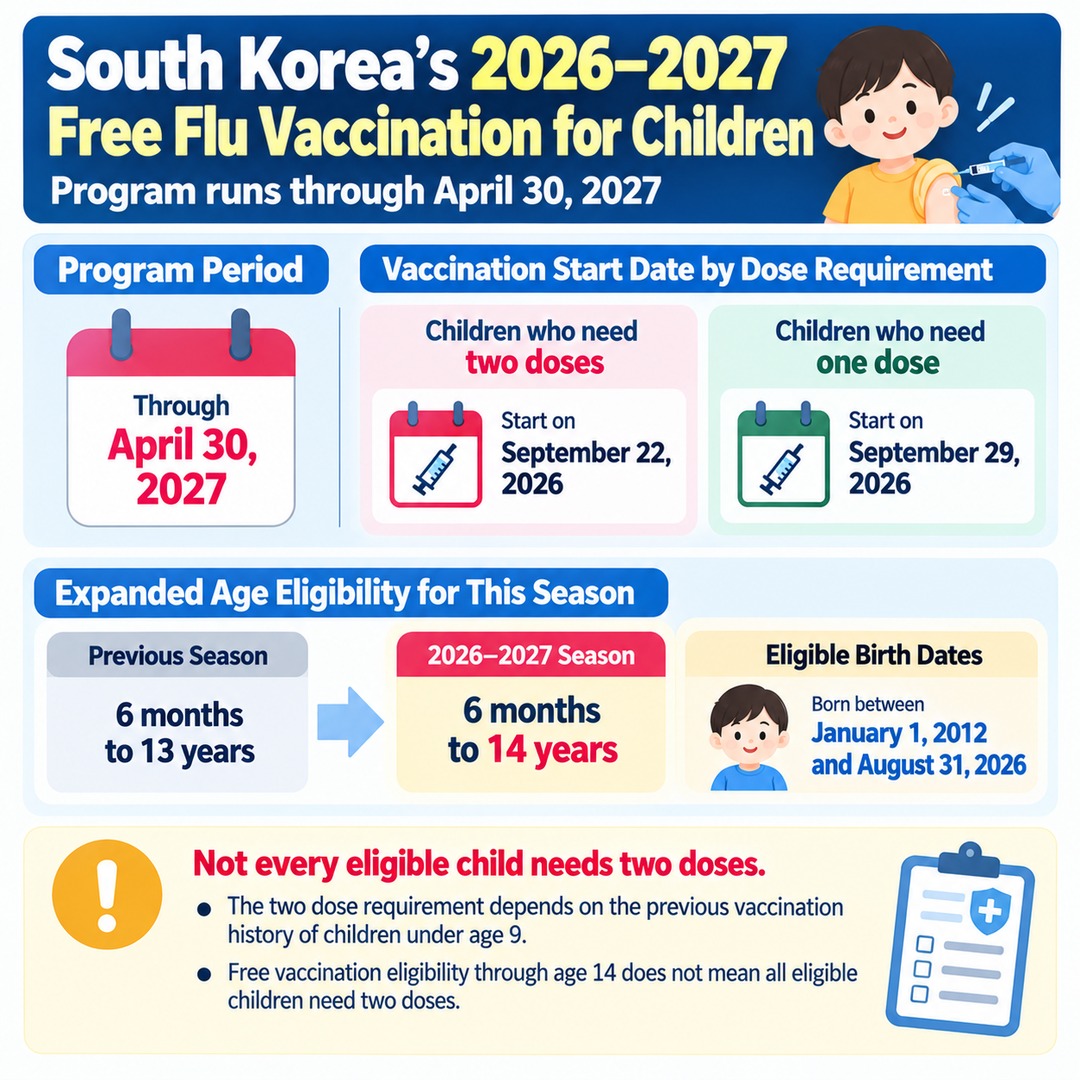
South Korea's National Influenza Immunization Program for the 2026–2027 season runs through April 30, 2027.
The starting date differs depending on whether a child needs one or two doses.
| Eligible children | Free vaccination period |
|---|---|
| Children requiring two doses | September 21, 2026 – April 30, 2027 |
| Children requiring one dose | September 28, 2026 – April 30, 2027 |
The age range eligible for government-supported influenza vaccination has also been expanded for this season.
Previously, the program covered children aged 6 months through 13 years. Beginning with the 2026–2027 season, eligibility has been expanded to children aged 6 months through 14 years.
Based on dates of birth, eligible children are those born between January 1, 2012, and August 31, 2026.
However, expanding free vaccination eligibility through age 14 does not mean that every eligible child needs two doses. The two-dose requirement depends on the previous vaccination history of children under age 9.
How Can You Check Your Child's Flu Vaccination Records If You Cannot Remember Last Year's Doses?
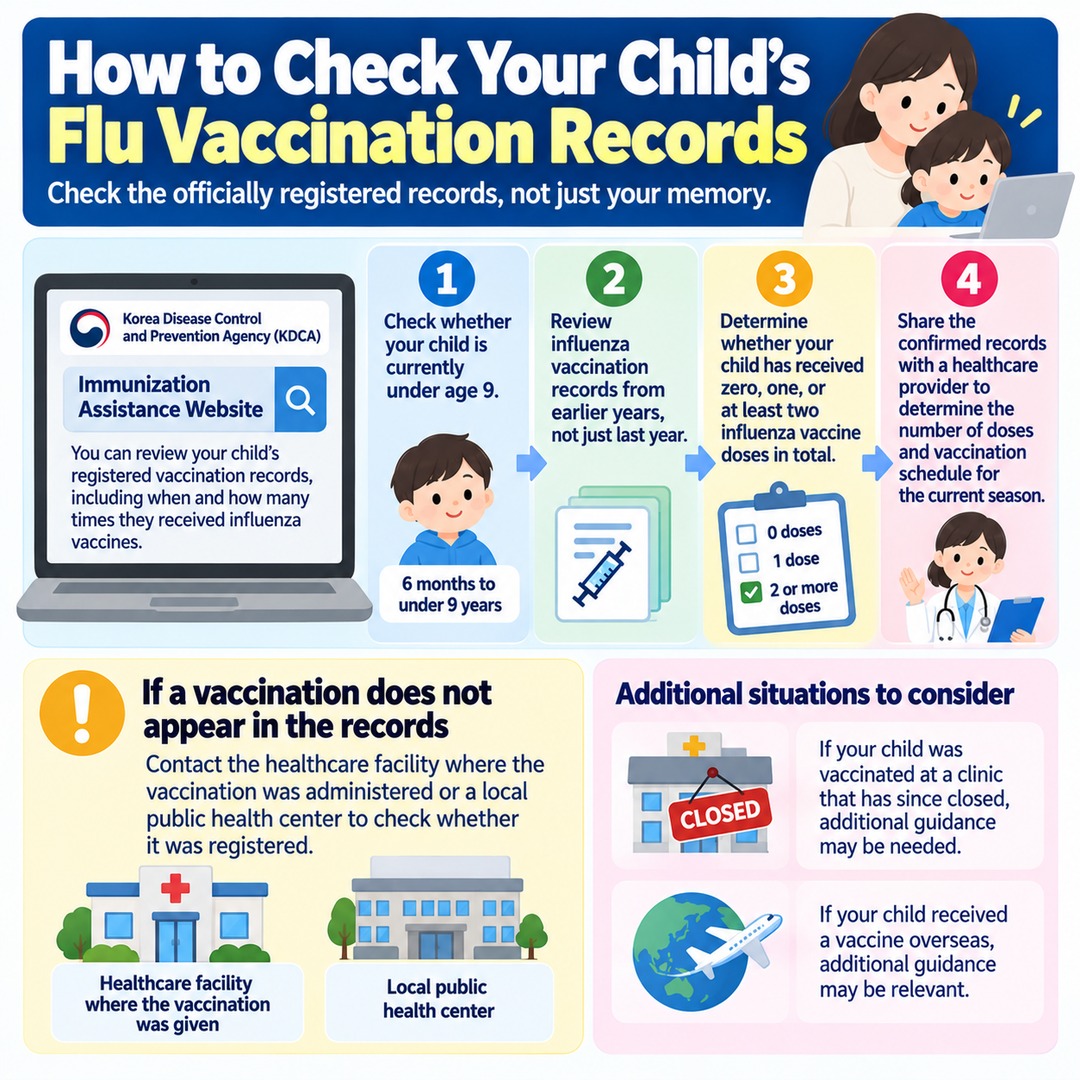
If your child's vaccination history is uncertain, check the officially registered records rather than relying on memory.
South Korea's Korea Disease Control and Prevention Agency (KDCA) operates the Immunization Assistance website, where parents can review their children's registered vaccination records and see when and how many times they received influenza vaccines.
Follow these steps:
1. Check whether your child is currently under age 9.
2. Review influenza vaccination records from earlier years, not just last year.
3. Determine whether your child has received zero, one, or at least two influenza vaccine doses in total.
4. Share the confirmed records with a healthcare provider to determine the number of doses and vaccination schedule for the current season.
If your child received a vaccination but it does not appear in the records, contact the healthcare facility where the vaccination was administered or a local public health center to check whether it was registered.
Additional guidance may also be relevant when vaccination records are difficult to obtain, such as when a child was vaccinated at a clinic that has since closed or received a vaccine overseas.
Where Can Children Receive Free Flu Vaccinations in South Korea?
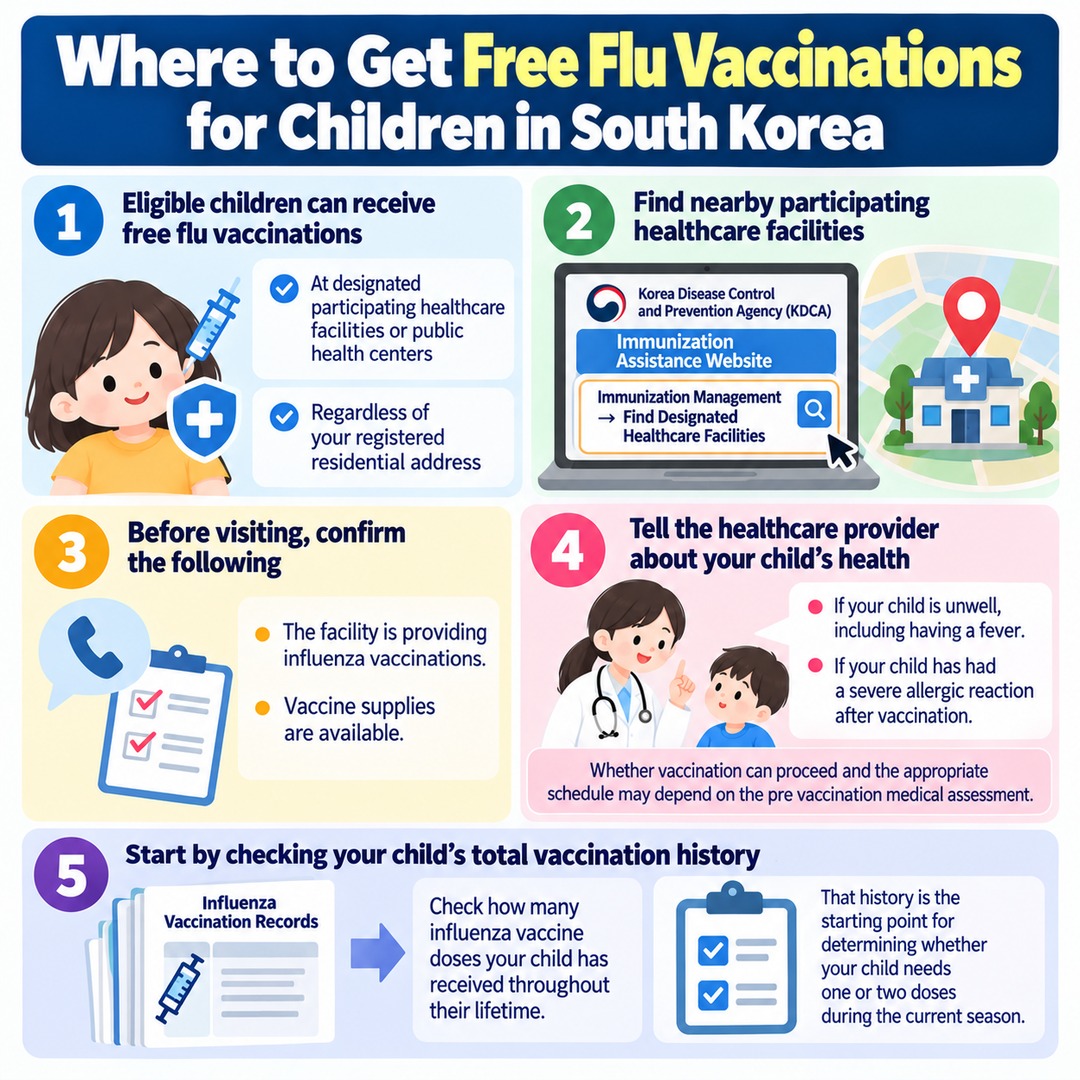
Under South Korea's National Influenza Immunization Program, eligible children can receive free influenza vaccinations at designated participating healthcare facilities or public health centers, regardless of their registered residential address.
Parents can find nearby participating healthcare facilities through the KDCA Immunization Assistance website by navigating to 'Immunization Management → Find Designated Healthcare Facilities.'
Before visiting, it is advisable to confirm that the facility is providing influenza vaccinations and has vaccine supplies available.
If a child is unwell, including having a fever, or has previously experienced a severe allergic reaction after vaccination, parents should inform the healthcare provider before the injection. Whether vaccination can proceed and the appropriate schedule may depend on the pre-vaccination medical assessment.
If you are preparing for your child's flu vaccination this season, start by checking how many influenza vaccine doses they have received throughout their lifetime, rather than focusing only on how many they received last year. That history is the starting point for determining whether they need one or two doses during the current season.