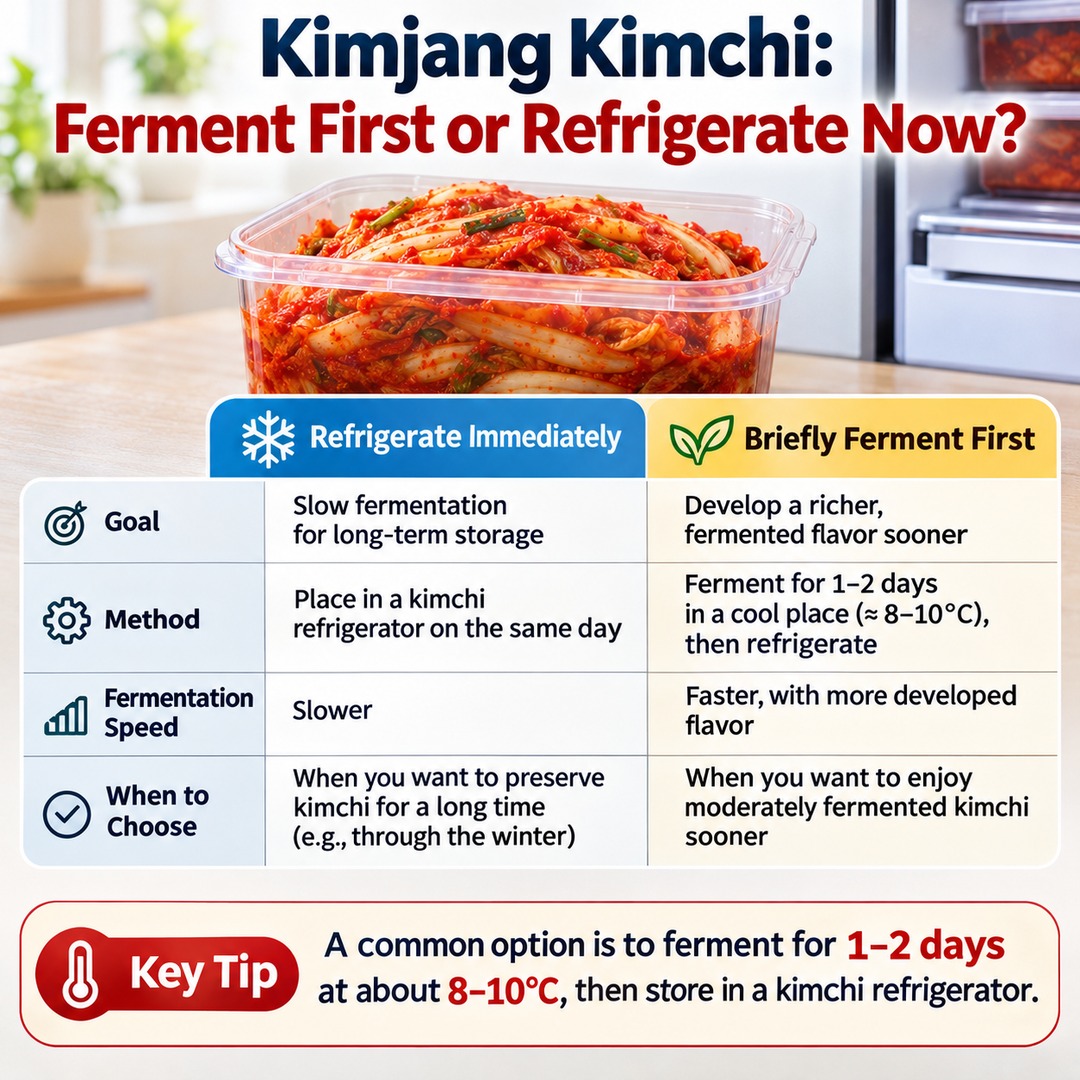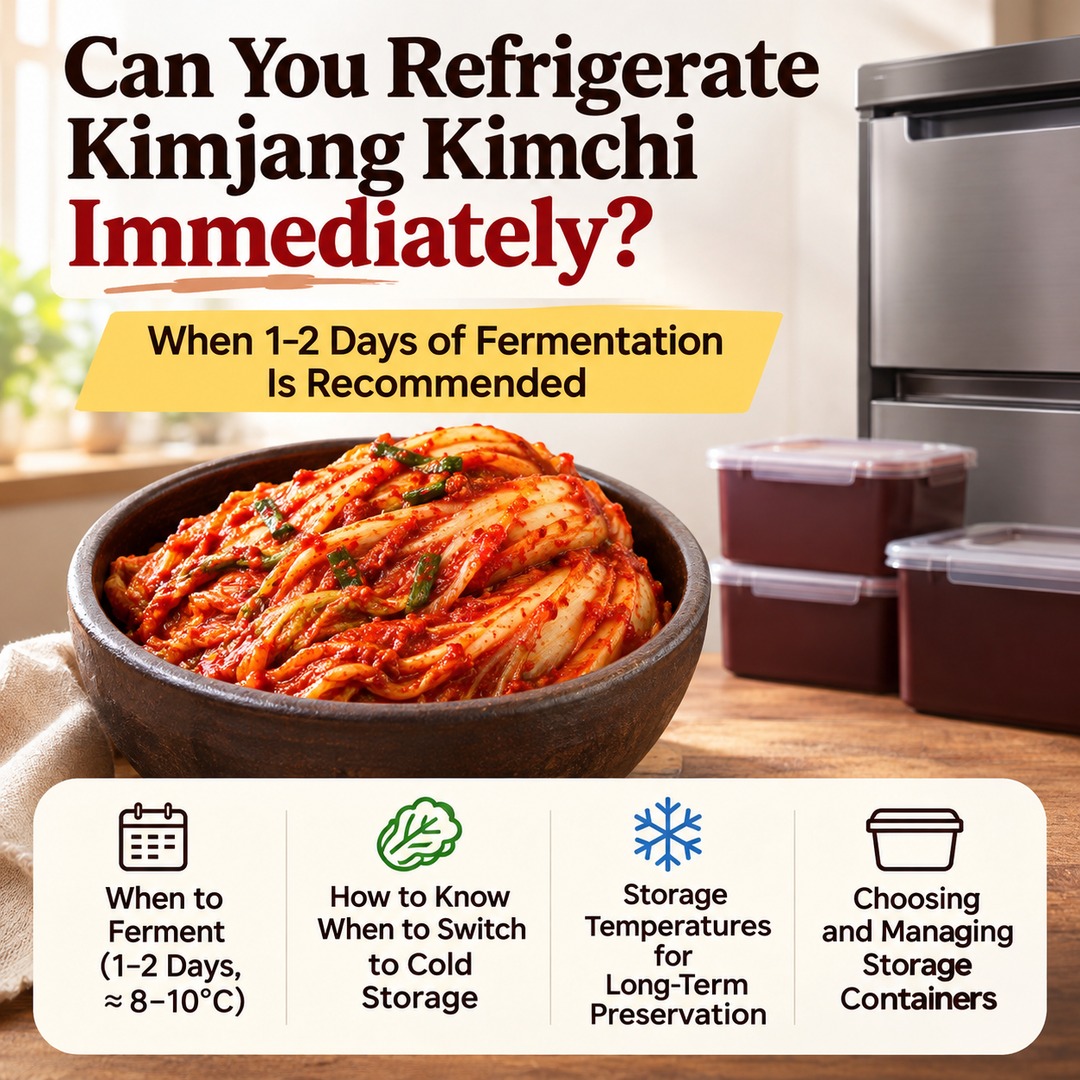
Freshly made kimjang kimchi can be placed directly into a kimchi refrigerator on the day it is prepared. However, if you want to develop its characteristic fermented flavor, allowing it to ferment briefly in a cool place before refrigeration may be a better option. One recommended method is to ferment kimchi for 1–2 days at approximately 8–10°C. However, if the room is warm or the kimchi has already begun fermenting, you should check its condition and move it into refrigerated storage rather than waiting for a fixed number of days.
The most important consideration is whether you plan to eat the kimchi soon or preserve it throughout the winter. These two purposes call for different fermentation and storage approaches.
What Happens If You Put Freshly Made Kimjang Kimchi Directly Into a Kimchi Refrigerator?
When freshly prepared kimchi is stored immediately at a low temperature, fermentation proceeds more slowly. As a result, it may take longer for the distinctive flavor of fermented kimchi to develop.
Kimchi is a fermented food whose flavor changes as microorganisms naturally present in the cabbage and seasonings carry out fermentation. A dedicated kimchi refrigerator maintains low temperatures to help control this process.
Samsung Electronics Service explains in its kimchi storage guidance that refrigerating kimchi immediately, without allowing an initial flavor-development period, may prevent sufficient lactic acid bacteria from developing and result in less desirable flavor.
However, this does not mean that every batch of kimjang kimchi must be left at room temperature for two days.
The fermentation rate varies depending on the amount of salt and seasoning used, the condition of the cabbage, and the temperature of the storage environment.
If your goal is to let kimchi ferment slowly and preserve it for a long time, immediate low-temperature storage can be appropriate. If you prefer to enjoy moderately fermented kimchi sooner, a short initial fermentation period may better suit your needs.
At What Temperature Can Kimchi Be Fermented for 1–2 Days?
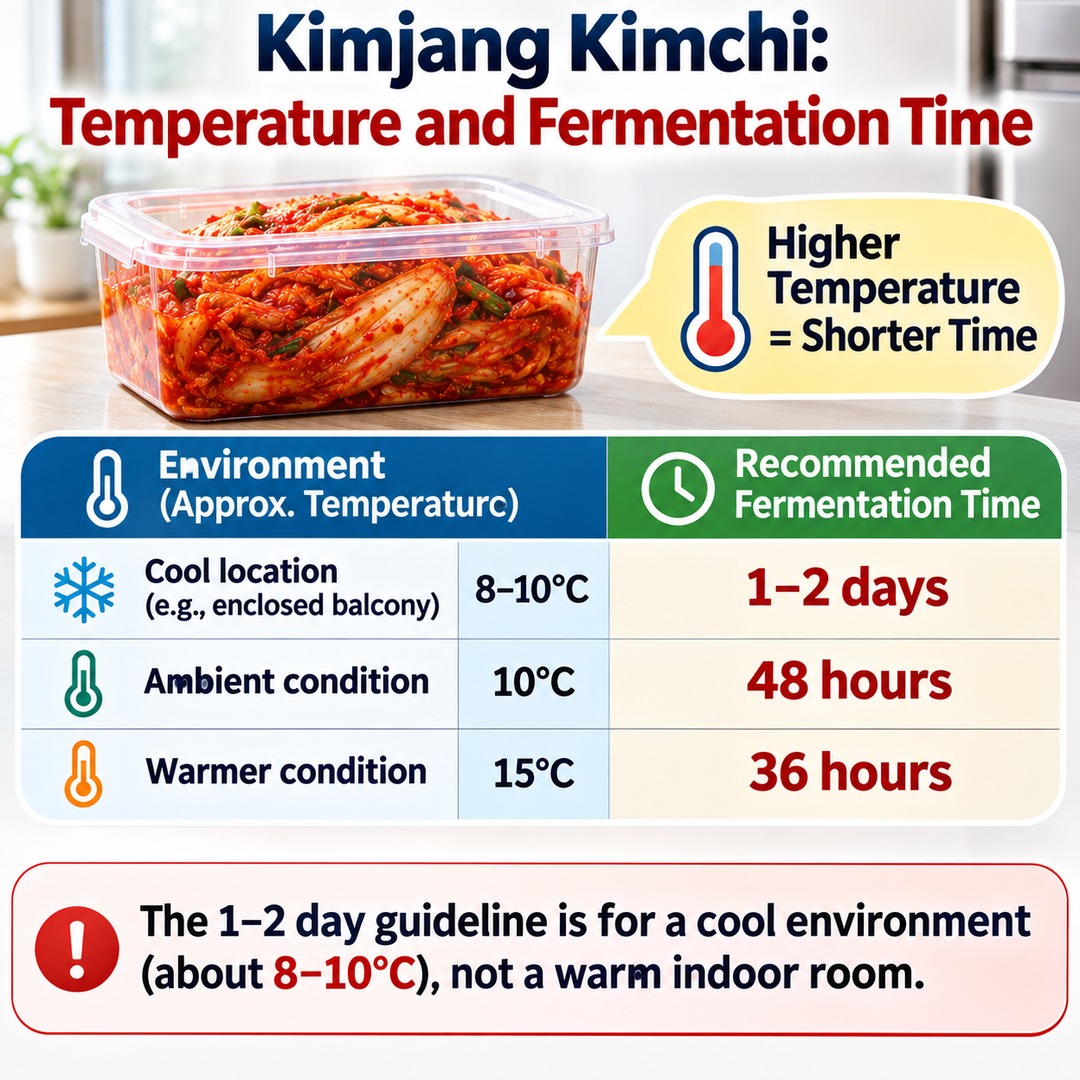
The recommendation to ferment kimjang kimchi for 1–2 days assumes a cool environment of approximately 8–10°C. It does not mean leaving kimchi in a warm indoor room for the same amount of time.
Samsung Electronics Service recommends fermenting kimjang kimchi for 1–2 days in a cool winter location, such as an enclosed balcony maintained at approximately 8–10°C, before transferring it to a kimchi refrigerator.
Another storage guideline suggests a flavor-development period of 48 hours at an ambient temperature of 10°C or 36 hours at 15°C.
Comparing these conditions shows that higher temperatures generally require shorter fermentation periods.
| Ambient temperature | Suggested fermentation time | Important consideration |
|---|---|---|
| Approximately 8–10°C | 1–2 days | Suitable for a cool winter storage environment |
| 10°C | Approximately 48 hours | Check the kimchi's condition during fermentation |
| 15°C | Approximately 36 hours | Watch for faster fermentation |
| Warm indoor environment | No universally applicable duration | Avoid leaving kimchi out for extended periods; prioritize cold storage |
These times are guidelines, not guaranteed fermentation periods that apply equally to every batch. Actual fermentation depends on factors such as salt concentration and ingredient composition.
In particular, a heated living room or kitchen has very different temperature conditions from a cool winter balcony.
If the indoor environment is warm, pay closer attention to the kimchi's actual condition than to the suggested 1–2-day period.
How Can You Tell When It Is Time to Move Kimchi Into the Refrigerator?
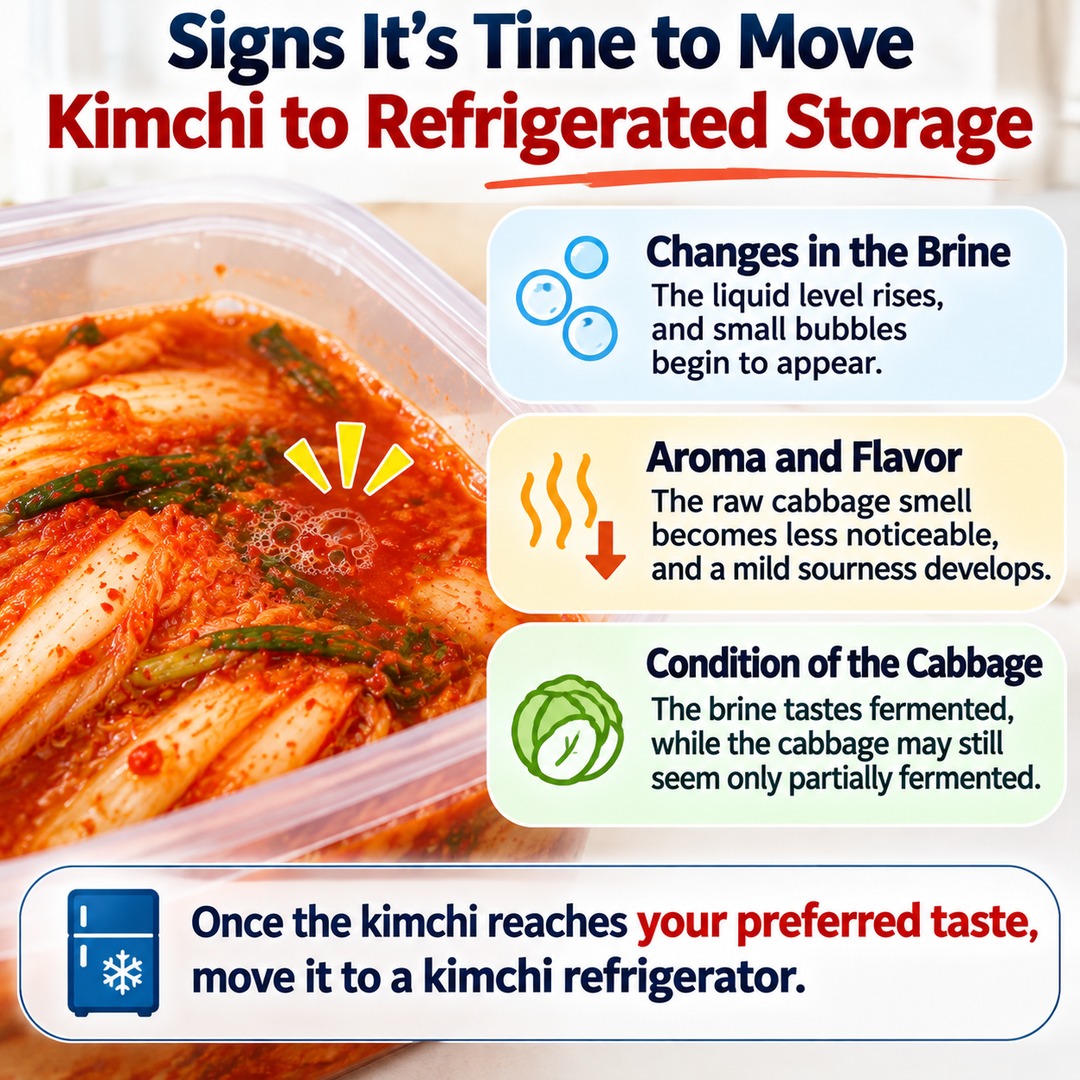
Small bubbles beginning to appear in the kimchi brine, a reduction in the raw cabbage smell, and the development of a mild sour flavor are signs that the kimchi may be ready to move into refrigerated storage.
Rather than relying only on the number of days since preparation, look for the following changes:
Changes in the brine: The liquid level rises, and small bubbles begin to appear.
Aroma and flavor: The raw smell of freshly prepared cabbage becomes less noticeable, and a mild sourness develops.
Condition of the cabbage: The brine begins to taste fermented, while the cabbage itself may still seem only partially fermented.
An important point is that you do not need to wait until large numbers of bubbles appear.
Excessive fermentation can produce an increasingly sour flavor. If the kimchi has already reached your preferred taste, it is better to transfer it to a kimchi refrigerator than to continue fermenting it outside.
When checking fermentation, use clean utensils and make sure the container lid is properly closed afterward.
How Should You Separate Kimchi for Early Consumption and Long-Term Storage?
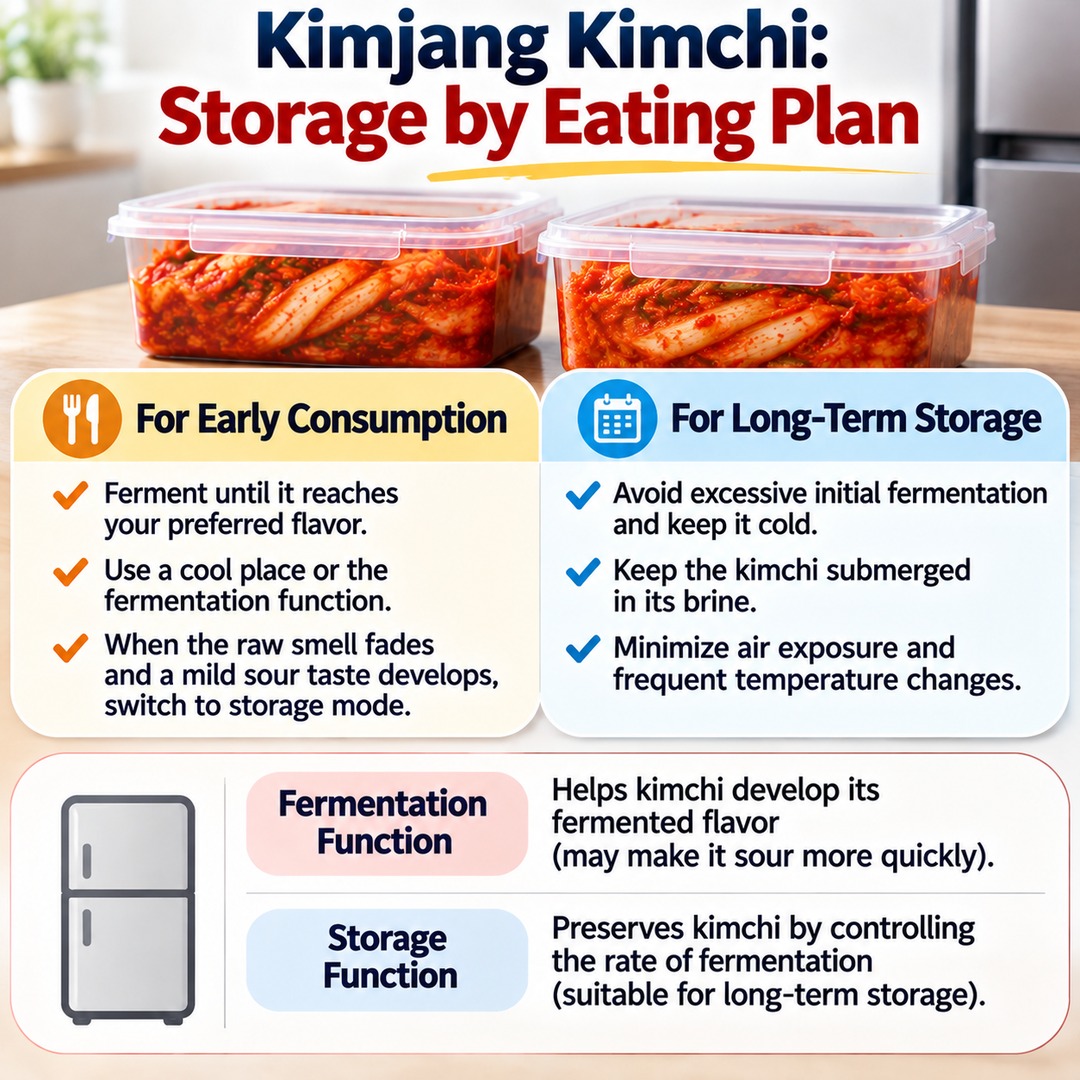
If you have prepared several containers of kimjang kimchi, separating them according to when you intend to eat them can make storage easier. Kimchi intended for early consumption can be fermented until it reaches the desired flavor, while kimchi intended for long-term storage should be kept cold to prevent excessive fermentation.
Kimchi to eat first
Allow it to undergo initial fermentation in a cool place, or use the fermentation function of your kimchi refrigerator. Check whether the raw cabbage smell has diminished and a mild sour flavor has developed, then switch to a storage mode.
Kimchi for long-term storage
Avoid excessive initial fermentation and focus on maintaining low storage temperatures. Arrange the kimchi so that it remains submerged in its brine, and minimize exposure to air and frequent temperature fluctuations.
It is also important to distinguish between the fermentation and storage functions of a kimchi refrigerator.
The fermentation function is designed to help kimchi develop its fermented flavor, while the storage function is intended to preserve kimchi by controlling the rate of fermentation.
Using the fermentation function may cause kimchi to become sour more quickly than it would in storage mode, potentially shortening the period during which it maintains the desired flavor.
If you plan to preserve kimchi for an extended period, select the appropriate storage mode for the type of kimchi according to your appliance's user manual.
Is Filling a Kimchi Container Completely Bad for Long-Term Storage?
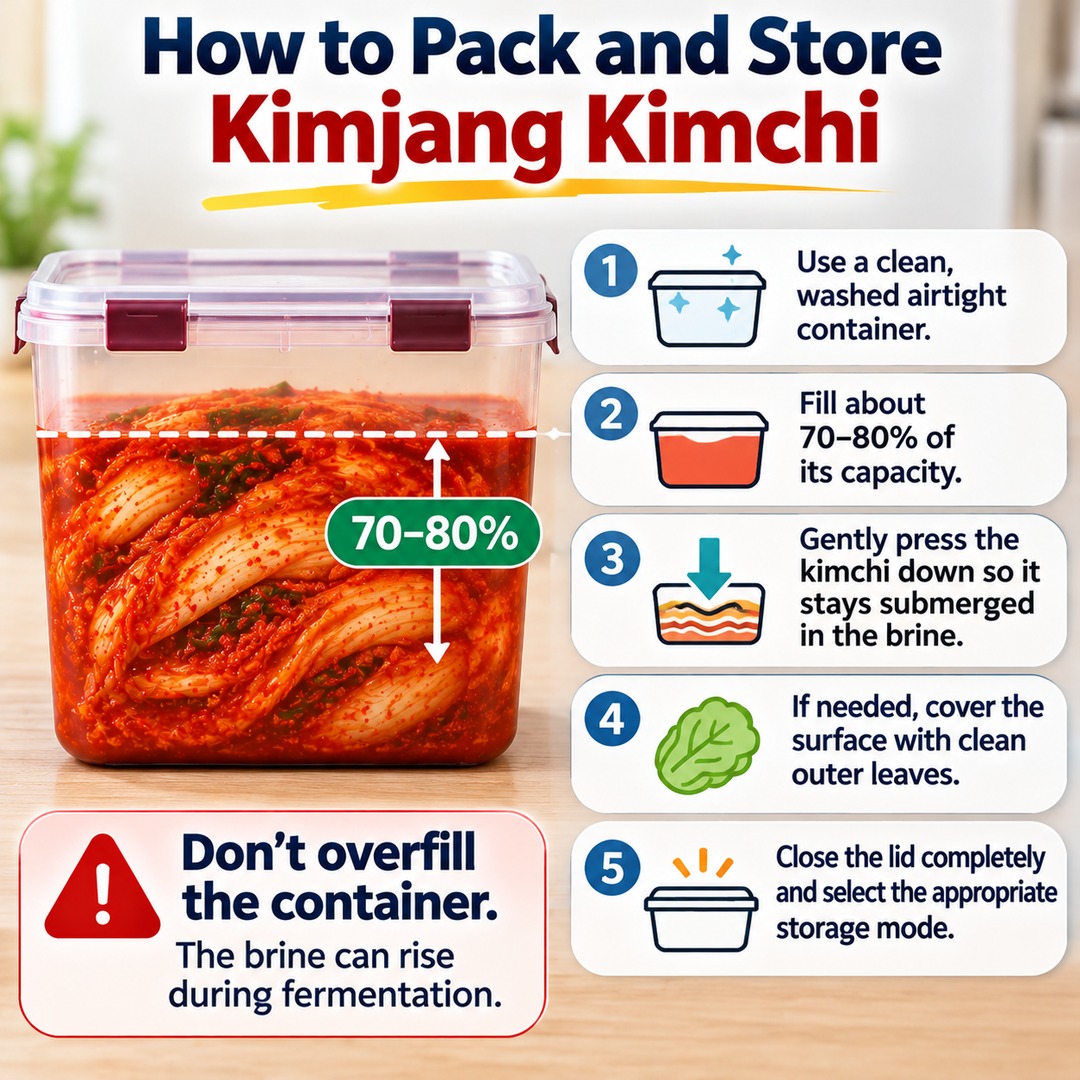
A commonly recommended approach is to fill a kimchi container to approximately 70–80% of its total capacity, leaving some space at the top.
Because the brine level can rise during fermentation, it is best not to overfill the container.
Follow these steps when packing kimchi:
1. Place the kimchi into a clean, thoroughly washed airtight container.
2. Fill approximately 70–80% of the container's capacity.
3. Gently press the kimchi down with a clean utensil so that it remains submerged in the brine.
4. If necessary, cover the surface with clean outer leaves from salted cabbage.
5. Close the lid completely and select the appropriate storage mode.
If the surface of kimchi remains exposed to air for an extended period, a white yeast film known in Korea as *golmaji* may develop, or the kimchi may become excessively soft.
Keeping the kimchi submerged in brine and maintaining an airtight seal can help reduce these changes.
Wash kimchi containers with a soft sponge and mild detergent. It is also advisable to clean the interior shelves and walls of the kimchi refrigerator before storing a new batch of kimjang kimchi.
Should You Set Your Kimchi Refrigerator to the Strongest Cooling Mode?
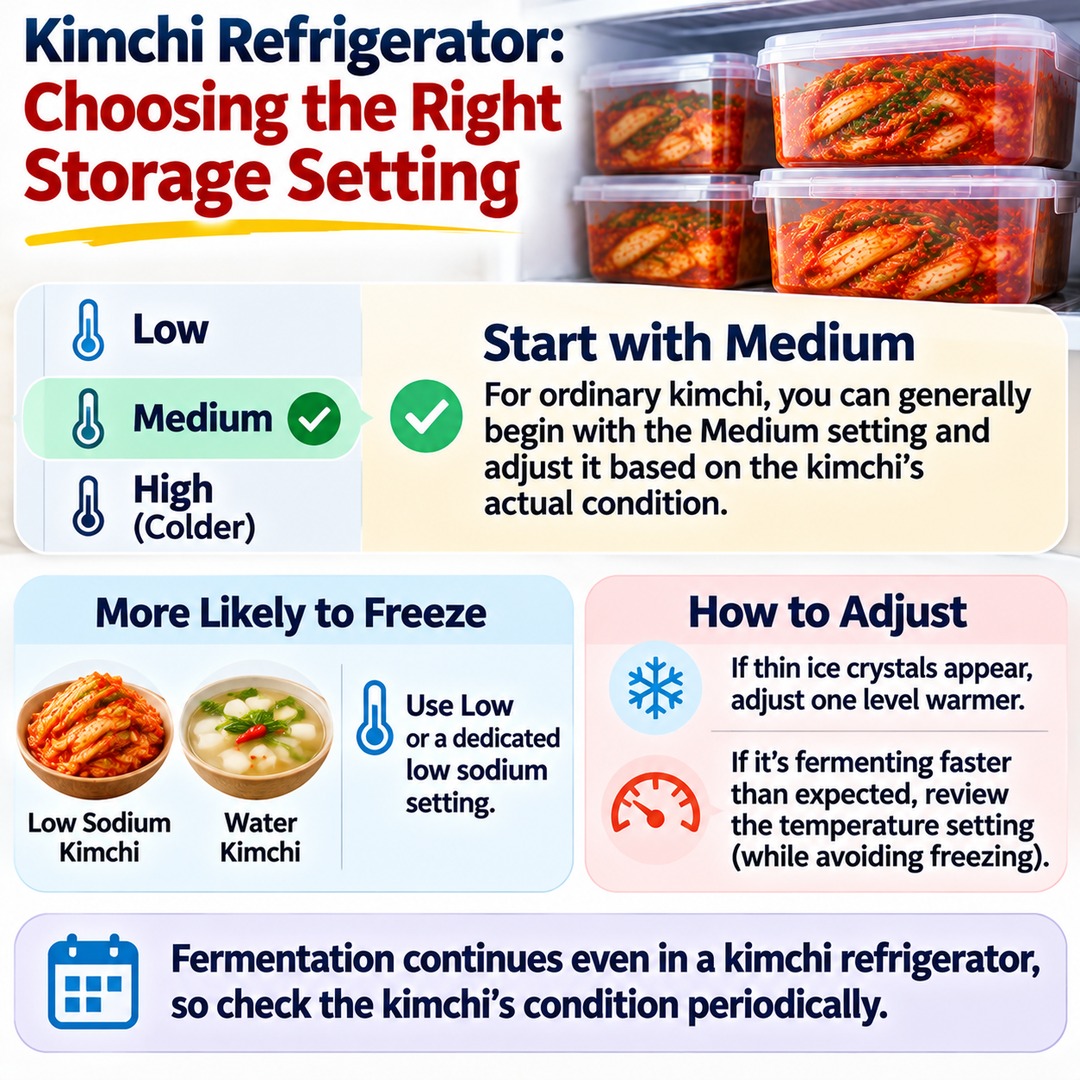
For ordinary kimchi, you can generally begin with the refrigerator's Medium storage setting and adjust it according to the kimchi's actual condition.
Selecting the coldest available mode is not always the best approach.
The temperature at which kimchi freezes can vary depending on its type and salt concentration.
Low-sodium kimchi and water kimchi, a variety containing a relatively large amount of seasoned liquid, may freeze more easily. For these types, consider the Low cooling setting or a dedicated low-sodium kimchi storage function if your appliance provides one.
If thin ice crystals begin forming in the kimchi brine, storage guidance recommends adjusting the temperature one level warmer than the current setting.
Conversely, if the kimchi is fermenting faster than expected, review the temperature setting while ensuring that the kimchi does not freeze.
Fermentation does not stop completely after kimchi is placed in a kimchi refrigerator. Its flavor can continue to change over time, so check its condition periodically during long-term storage.
What Is the Best Storage Procedure on the Day You Make Kimjang Kimchi?
Immediately after preparing kimjang kimchi, it is better to decide how each batch will be used rather than fermenting every container in exactly the same way.
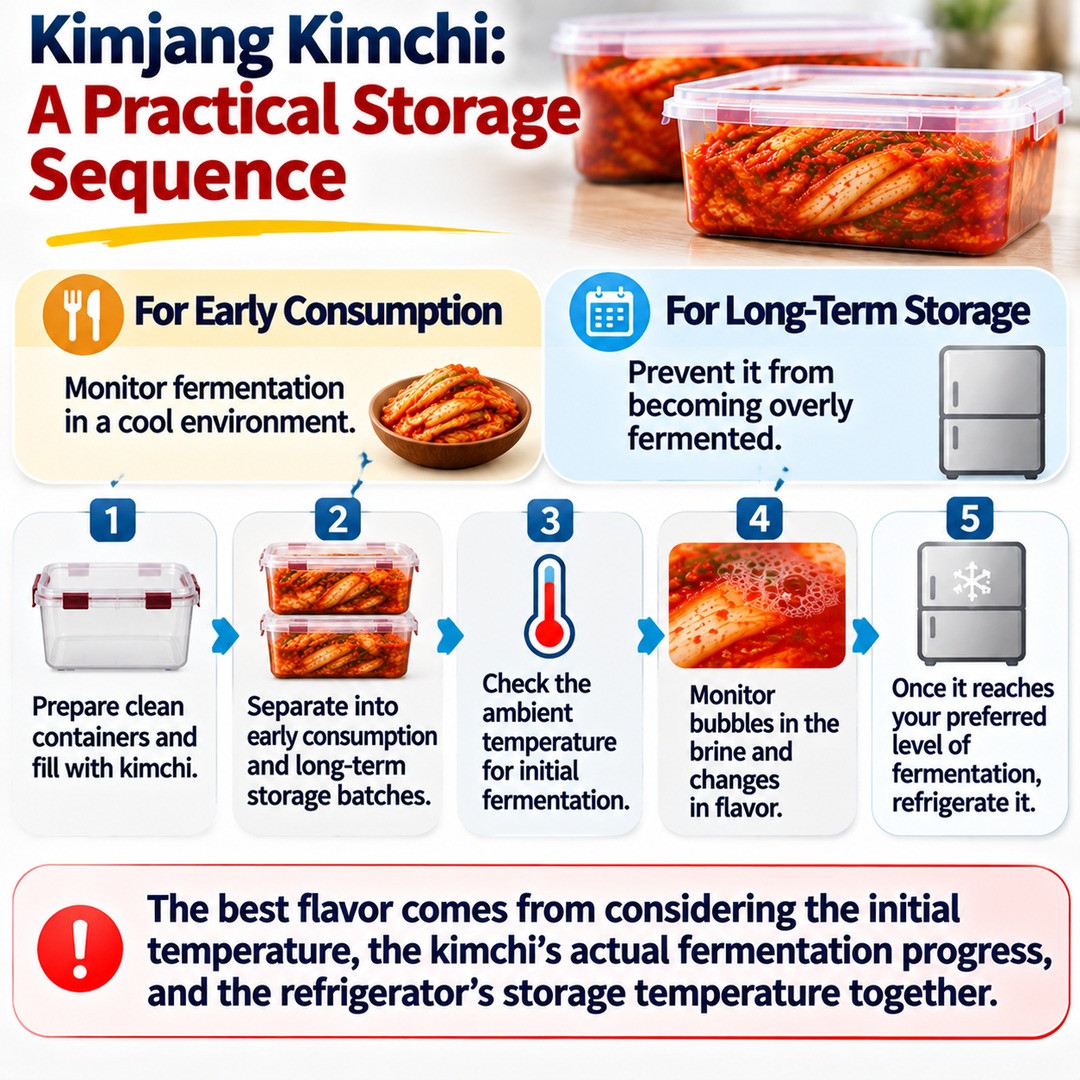
For kimchi you intend to eat soon, monitor fermentation in a cool environment. For kimchi intended for long-term storage, focus on preventing it from becoming overly fermented.
After finishing your kimjang preparation, you can follow this sequence:
1. Prepare clean kimchi containers and fill each with an appropriate amount of kimchi.
2. Separate kimchi intended for early consumption from kimchi intended for long-term storage.
3. Check the ambient temperature for any kimchi that requires initial fermentation.
4. If fermenting kimchi in a cool place, monitor the appearance of bubbles in the brine and changes in flavor.
5. Once the desired level of fermentation is reached, transfer the kimchi to the refrigerator and select the appropriate storage mode.
6. During storage, check whether the kimchi is freezing or fermenting too quickly.
The flavor of kimjang kimchi is not determined simply by how many days it spends outside the refrigerator.
Considering the temperature of the initial fermentation environment, the kimchi's actual fermentation progress, and the refrigerator's storage temperature together makes it easier to maintain the flavor you want.
For kimchi intended for long-term storage, it is especially important to avoid exceeding the desired level of fermentation rather than automatically leaving it outside the refrigerator for a full two days.