When Is the Best Time for Kimjang in Each Region in 2026?
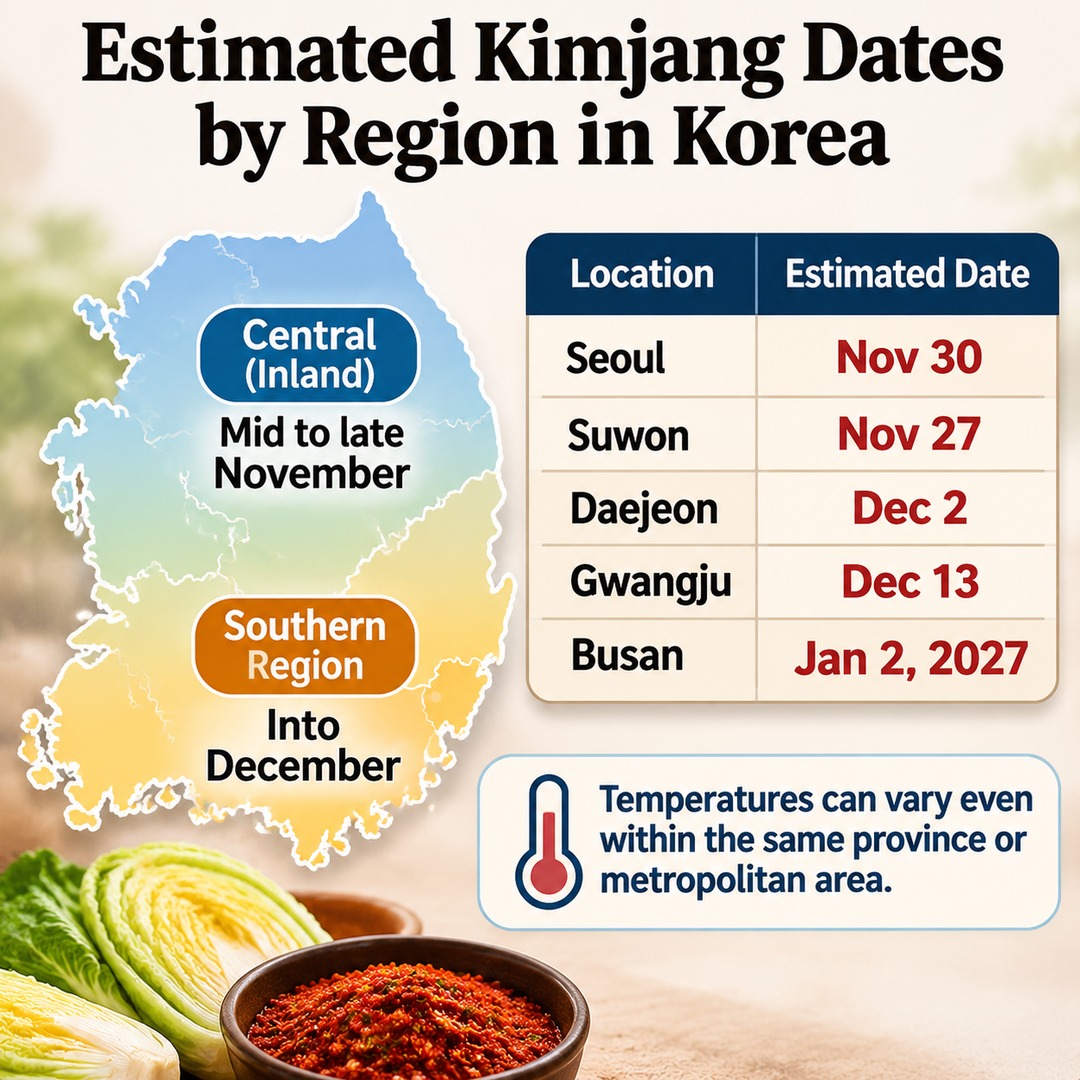
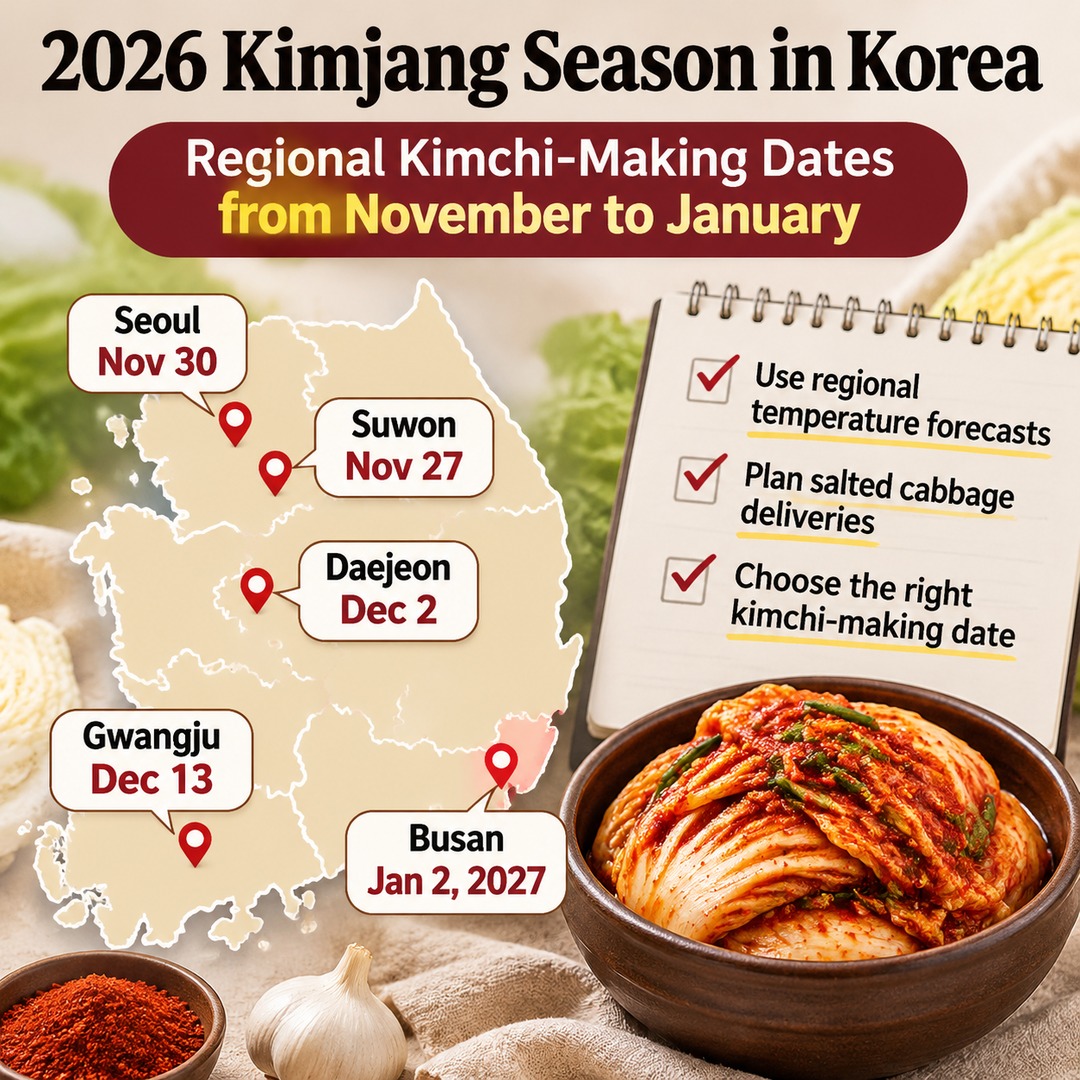
According to the estimated kimjang dates presented in Weatheri's October 2026 monthly data, central inland areas can begin in mid-to-late November, while suitable periods in southern regions extend into December.
| Region | Estimated Best Kimjang Date in 2026 |
|---|---|
| Daegwallyeong | November 8 |
| Dongducheon and Yeongwol | November 16 |
| Cheorwon and Icheon | November 17 |
| Chuncheon and Wonju | November 18 |
| Suwon | November 27 |
| Cheongju and Cheonan | November 28 |
| Incheon and Daejeon | December 2 |
| Jeonju | December 4 |
| Daegu | December 6 |
| Gangneung | December 12 |
| Gwangju | December 13 |
| Ulsan | December 23 |
| Pohang | December 24 |
| Mokpo | December 27 |
| Tongyeong | December 28 |
| Changwon | December 29 |
| Yeosu | December 31 |
| Busan | January 2, 2027 |
These dates are estimates for the specified locations. Even within the same province or metropolitan region, temperatures can differ between inland and coastal areas and higher-altitude locations. Use the nearest listed observation location as a reference when making your decision.
How Should You Choose a Kimjang Date Based on November Temperatures?
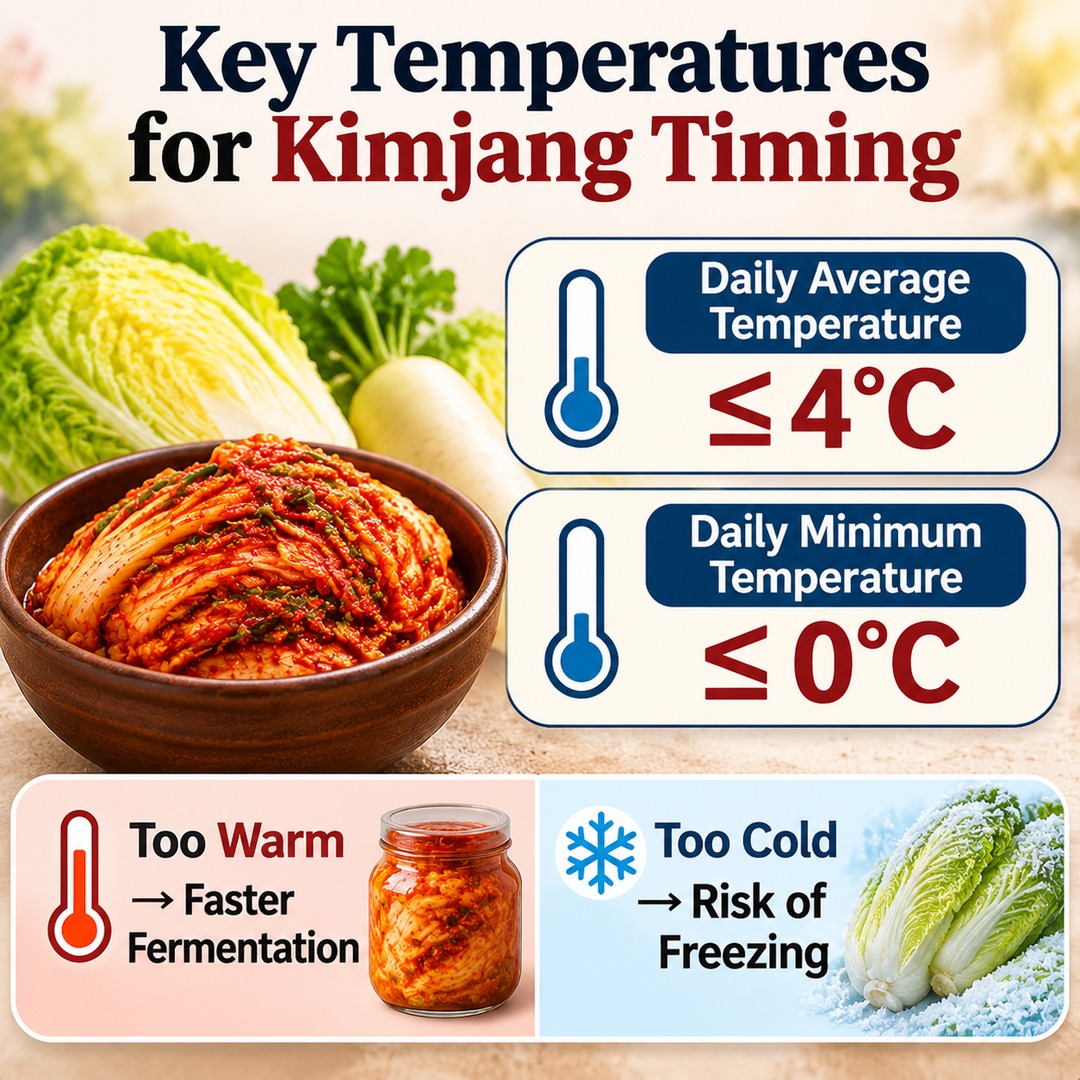
Two commonly used weather indicators for determining the appropriate kimjang period are a daily average temperature of 4°C or lower and a daily minimum temperature of 0°C or lower. Rather than choosing a date simply because temperatures drop for one day, check whether these conditions are expected to persist.
Temperature matters because fermentation and the condition of napa cabbage and radishes are affected by their storage environment. When temperatures remain high, kimchi may ferment faster than expected. In excessively cold conditions, vegetables may freeze and suffer quality problems.
It is therefore helpful to monitor both of the following:
Daily average temperature: Check whether the daily average is 4°C or lower.
Daily minimum temperature: Check whether the morning low falls to 0°C or below.
These figures are general weather indicators for estimating the appropriate kimjang period. They are neither a guarantee that kimchi will ferment identically in every household nor legally binding requirements.
How Can Early November 2026 Temperatures Help with Kimjang Scheduling?
Forecasts indicate falling temperatures in early November, particularly in central inland areas. However, this information alone is not enough to finalize a kimjang date for late November.
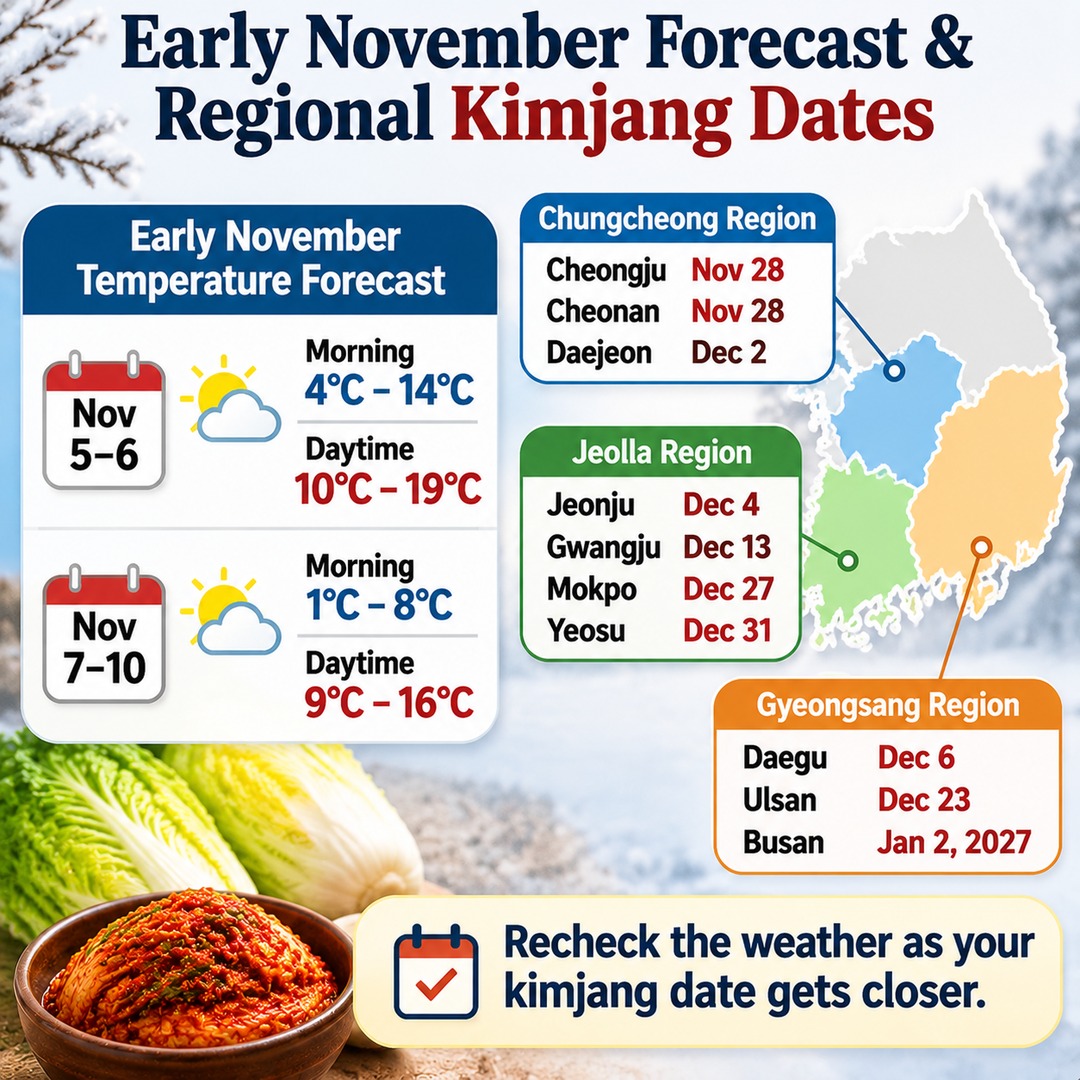
According to the Korea Meteorological Administration's nationwide medium-range forecast, morning temperatures on November 5–6 are expected to range from 4°C to 14°C, with daytime temperatures between 10°C and 19°C. For November 7–10, morning temperatures are forecast to fall to between -1°C and 8°C, while daytime temperatures are expected to range from 9°C to 16°C.
In particular, colder air from the northwest is forecast to move southward from the afternoon of November 6, bringing lower temperatures.
The Korea Meteorological Administration's medium-range forecast is useful for checking weather conditions over a period of up to 10 days. For dates further ahead, it is better to consult the weekly temperature trends in its one-month outlook. The agency publishes its one-month outlook every Thursday, providing temperature and precipitation forecasts for the second through fourth weeks following the publication date.
Therefore, rather than confirming a salted cabbage order based only on early November forecasts, it is more practical to check the weather again as the planned kimjang date approaches.
The following regional approach can help with planning:
Chungcheong region: Refer to November 28 for Cheongju and Cheonan and December 2 for Daejeon.
Jeolla region: Use December 4 for Jeonju and December 13 for Gwangju as reference dates. Mokpo and Yeosu differ, with estimated dates of December 27 and December 31, respectively.
Gyeongsang region: Refer to December 6 for Daegu, December 23 for Ulsan, and January 2, 2027, for Busan.
In particular, southern Korea should not be treated as one uniform region for scheduling. The estimated dates for Gwangju and Busan are substantially different.
Schedule Salted Cabbage Delivery After Choosing Your Kimjang Date
If you plan to purchase salted napa cabbage, check the kimjang work date and delivery date separately. Confirming delivery before deciding when you will actually make kimchi can make it difficult to respond to temperature changes or family scheduling conflicts.
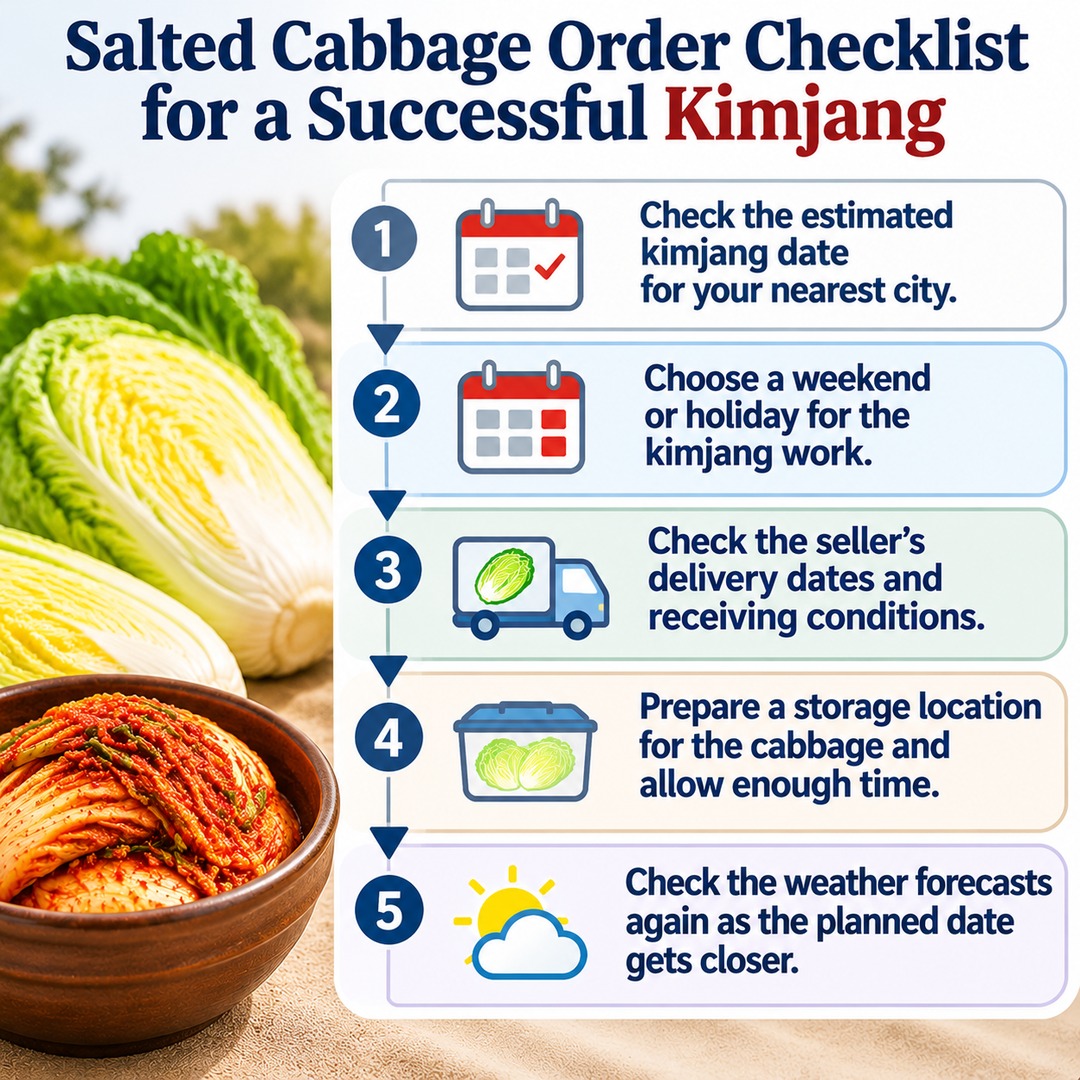
The following preparation sequence is practical:
1. Check the estimated kimjang date for the nearest city to your home.
2. Choose a weekend or holiday when you can carry out the kimjang preparations.
3. Check the seller's available delivery dates and receiving conditions for salted cabbage.
4. Prepare a storage location for the cabbage and allow enough time for the kimjang work.
5. Check the Korea Meteorological Administration's forecasts again as the planned date approaches.
Delivery date options and instructions for storing cabbage after receipt may differ between sellers. When placing an order, check not only the delivery date but also how the cabbage should be handled after it arrives.
This is particularly important if you are using long-distance delivery. Make sure the expected arrival date matches your actual kimjang schedule. Before ordering, also check whether you can adjust your plans if delivery is delayed by a day or the schedule changes.
Final Checks for Choosing Your Household's Kimjang Date
Use the estimated date for your region as a starting point, then check temperatures closer to the actual work date before making your final decision.
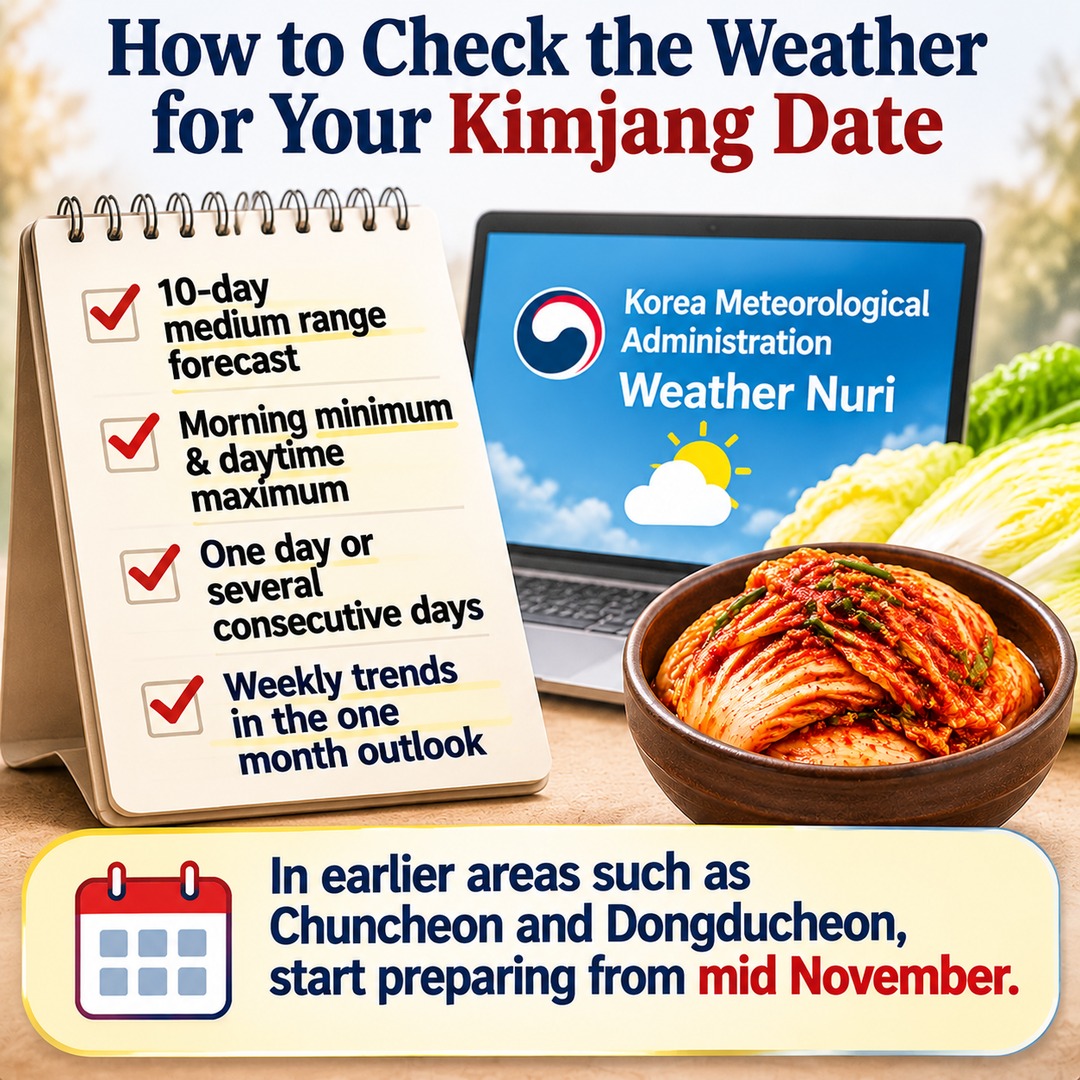
You can check the following information on the Korea Meteorological Administration's Weather Nuri website:
The 10-day medium-range forecast for your area
Morning minimum and daytime maximum temperatures
Whether cold conditions are expected for just one day or several consecutive days
Weekly temperature trends shown in the one-month outlook
Conversely, residents of areas such as Chuncheon and Dongducheon, where earlier dates are estimated, should start reviewing their preparation schedules from mid-November.
Frequently Asked Questions About Kimjang Timing
Can All Areas of Gyeonggi Province Make Kimjang in Late November?
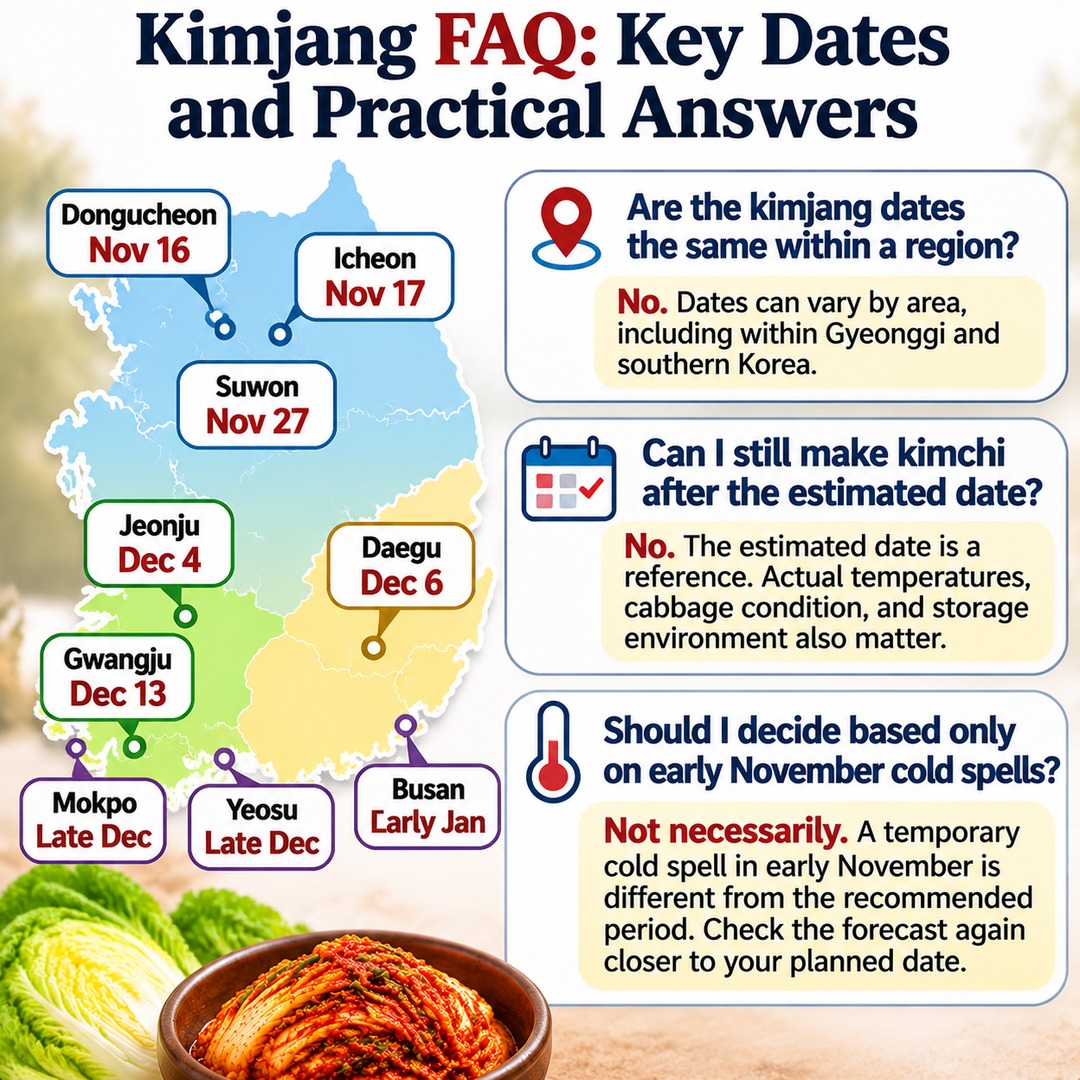
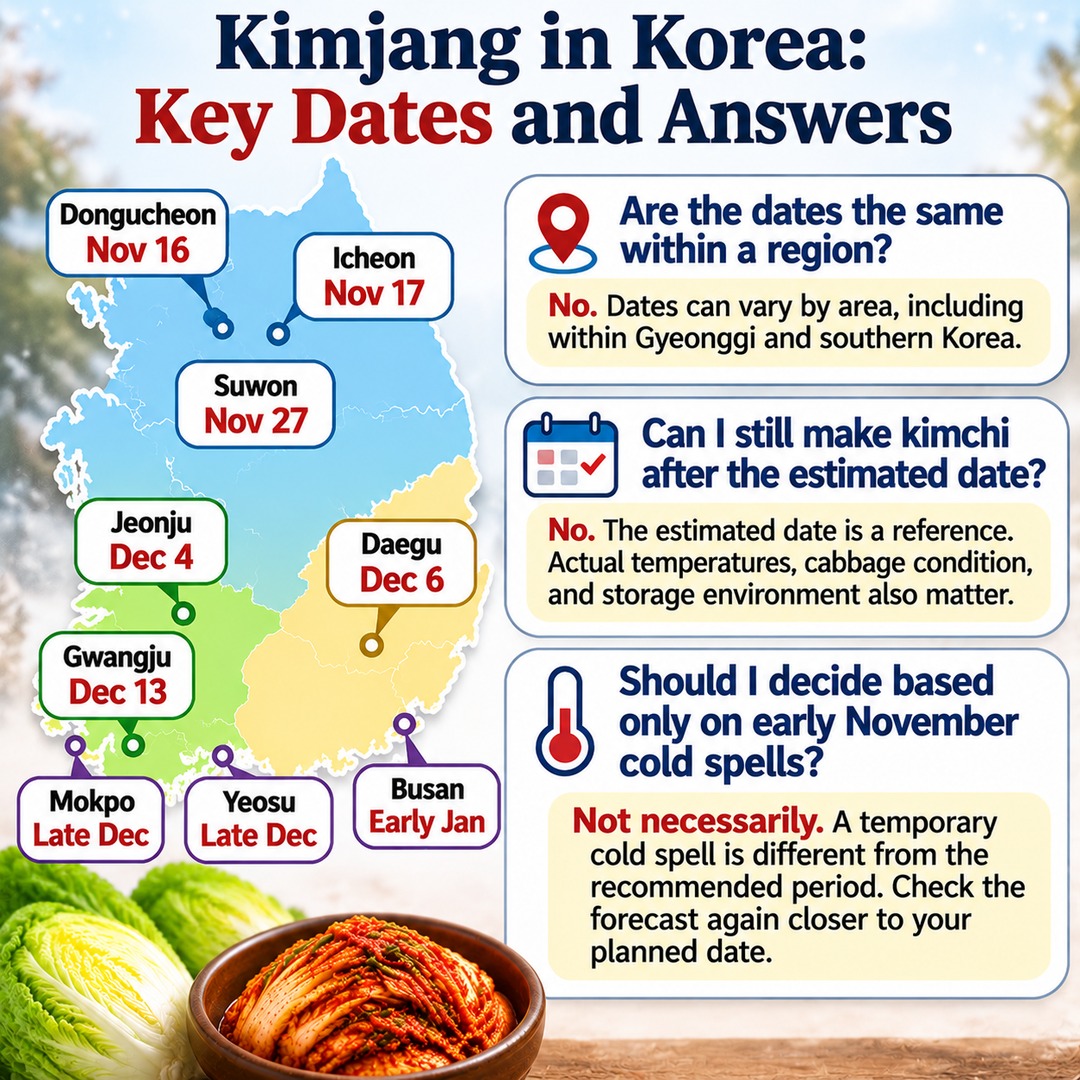
No. The estimated date is November 27 in Suwon, but November 16 in Dongducheon and November 17 in Icheon. Differences between northern and southern Gyeonggi and inland areas should be taken into account.
Should Southern Korea Make Kimjang in December?
There are regional differences even within southern Korea. The estimated dates are December 4 in Jeonju, December 6 in Daegu, and December 13 in Gwangju. Along the southern coast, locations such as Mokpo, Yeosu, and Busan may have later dates ranging from late December to early January of the following year.
Is It Too Late to Make Kimjang After the Estimated Recommended Date?
No. The estimated date does not mean that kimjang is no longer possible once that date has passed. Actual temperatures, the condition of the cabbage, and the environment in which the kimchi will be stored should all be considered.
Should I Make Kimjang Immediately If It Gets Cold in Early November?
Not necessarily. A temporary drop in temperatures in early November should be distinguished from the recommended kimjang period for your region. It is better to check the forecast again closer to your planned date.