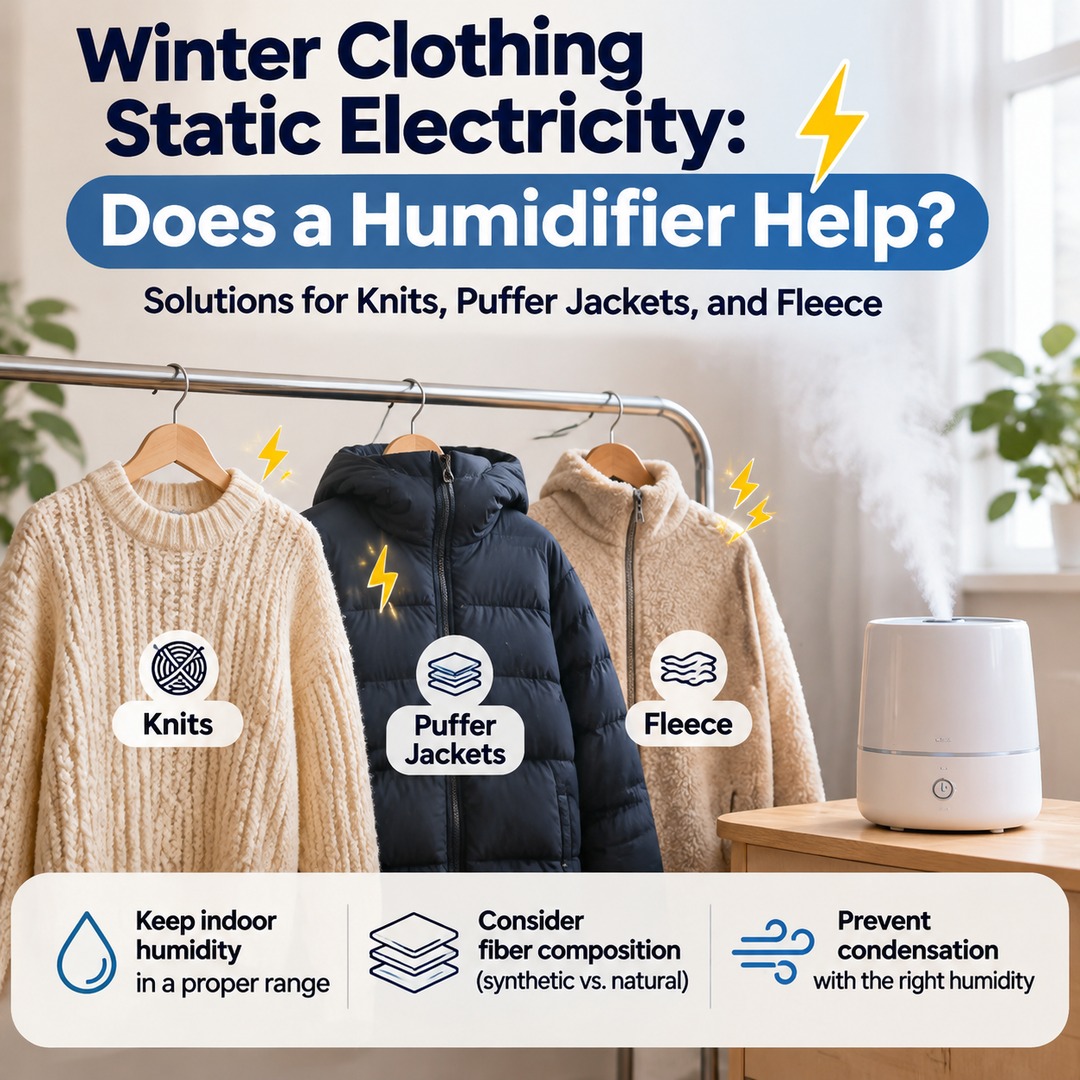
If your hair sticks to your clothes and you feel a sharp static shock when taking off winter clothing, you need to consider both indoor humidity and fabric composition. A humidifier can help reduce static buildup, but it cannot completely eliminate the problem with synthetic fibers such as polyester and nylon, which absorb little moisture. The most effective approach is to maintain appropriate indoor humidity while adjusting how you layer your clothes and reducing friction between fabrics.
Why Does Static Electricity Become Worse When Removing Clothes in Winter?
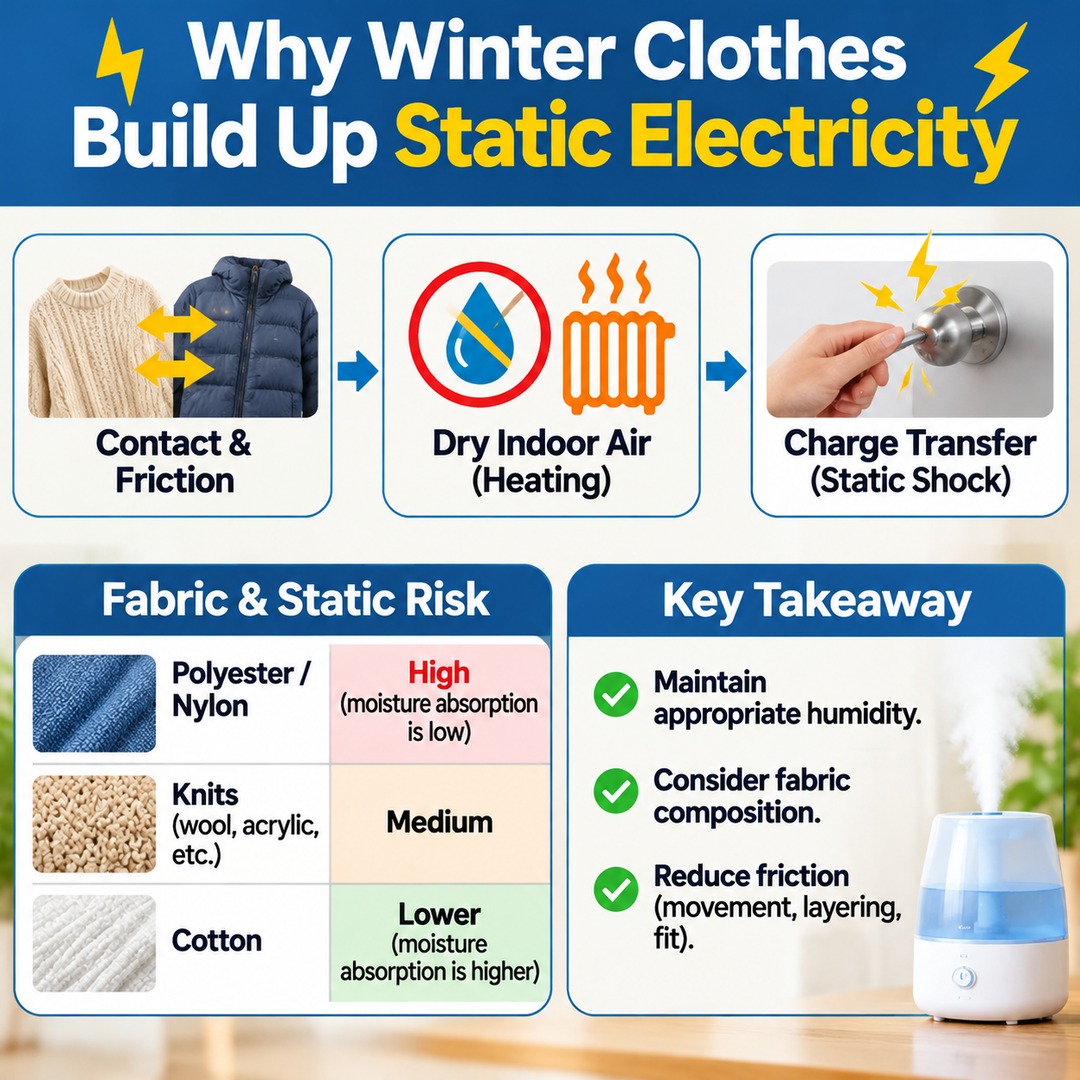
Static electricity occurs when electrical charges transfer as two different materials come into contact, rub against each other, and then separate. During winter, indoor heating makes the air dry, allowing electrical charges to remain on clothing and the body instead of dissipating easily.
Common examples include:
Hair standing up when you pull off a sweater.
The lining of a puffer jacket sticking to your inner clothing.
Visible sparks or crackling sounds when removing a fleece jacket.
A sharp shock in your fingertips when touching a metal doorknob after walking in socks.
The important point is to distinguish between how static electricity is generated and how it accumulates.
Contact and separation between clothing and skin, or between different layers of clothing, create the conditions for electrical charges to develop. If the surrounding environment is dry, those charges may not dissipate sufficiently. They remain until contact with another object allows them to transfer suddenly, producing an electrostatic discharge.
Therefore, simply adding moisture to the air will not eliminate all static electricity. Fabric composition, the amount of surface contact, and the way you move also influence the problem.
Can Running a Humidifier Alone Eliminate Static Electricity?
A humidifier does not completely prevent static electricity from being generated. Instead, it helps improve environmental conditions that allow electrical charges to accumulate.
As indoor relative humidity increases, moisture conditions on fibers and surrounding surfaces change, making it easier for electrical charges to dissipate. Technical materials from the American Society of Heating, Refrigerating and Air-Conditioning Engineers (ASHRAE) also explain that higher humidity can reduce static buildup.
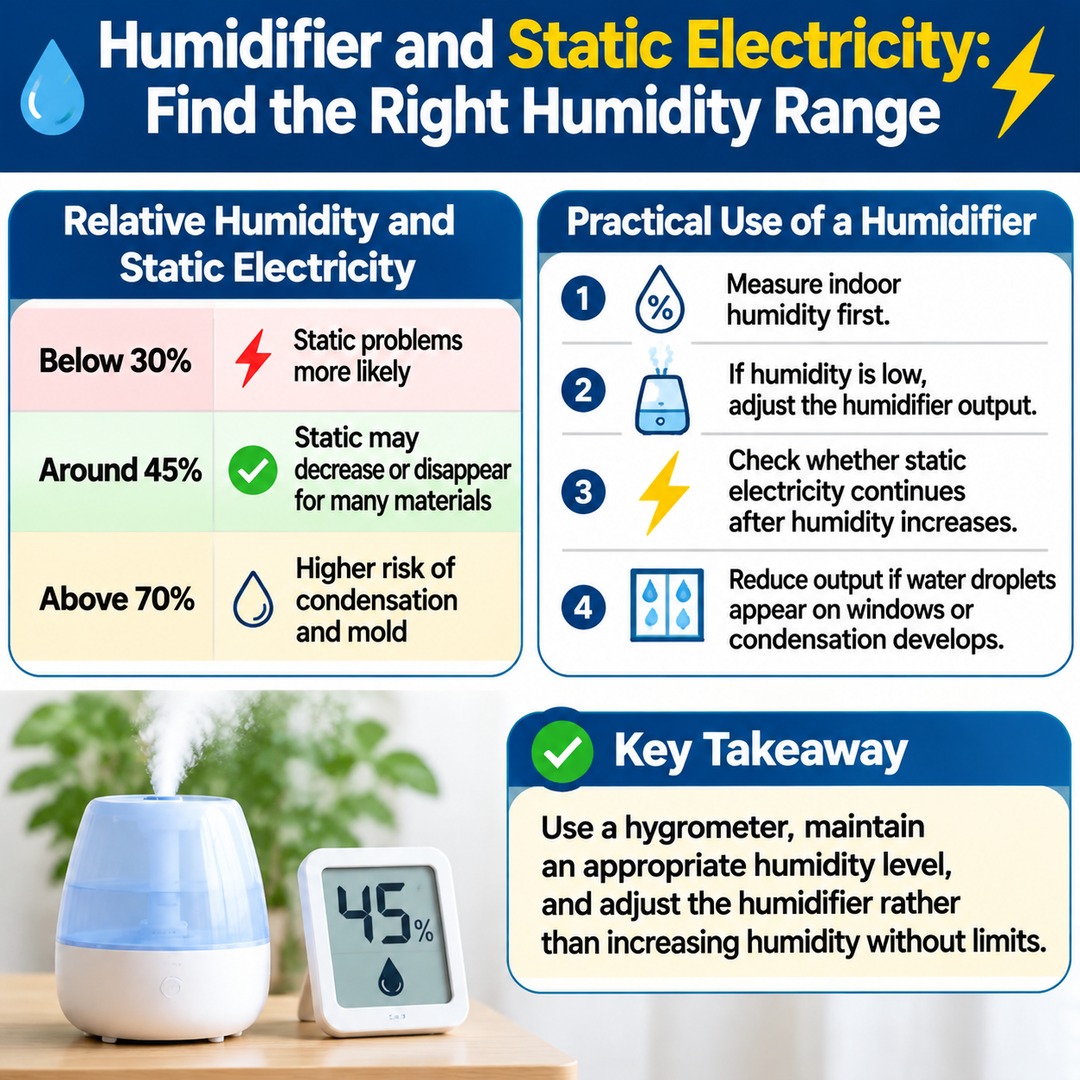
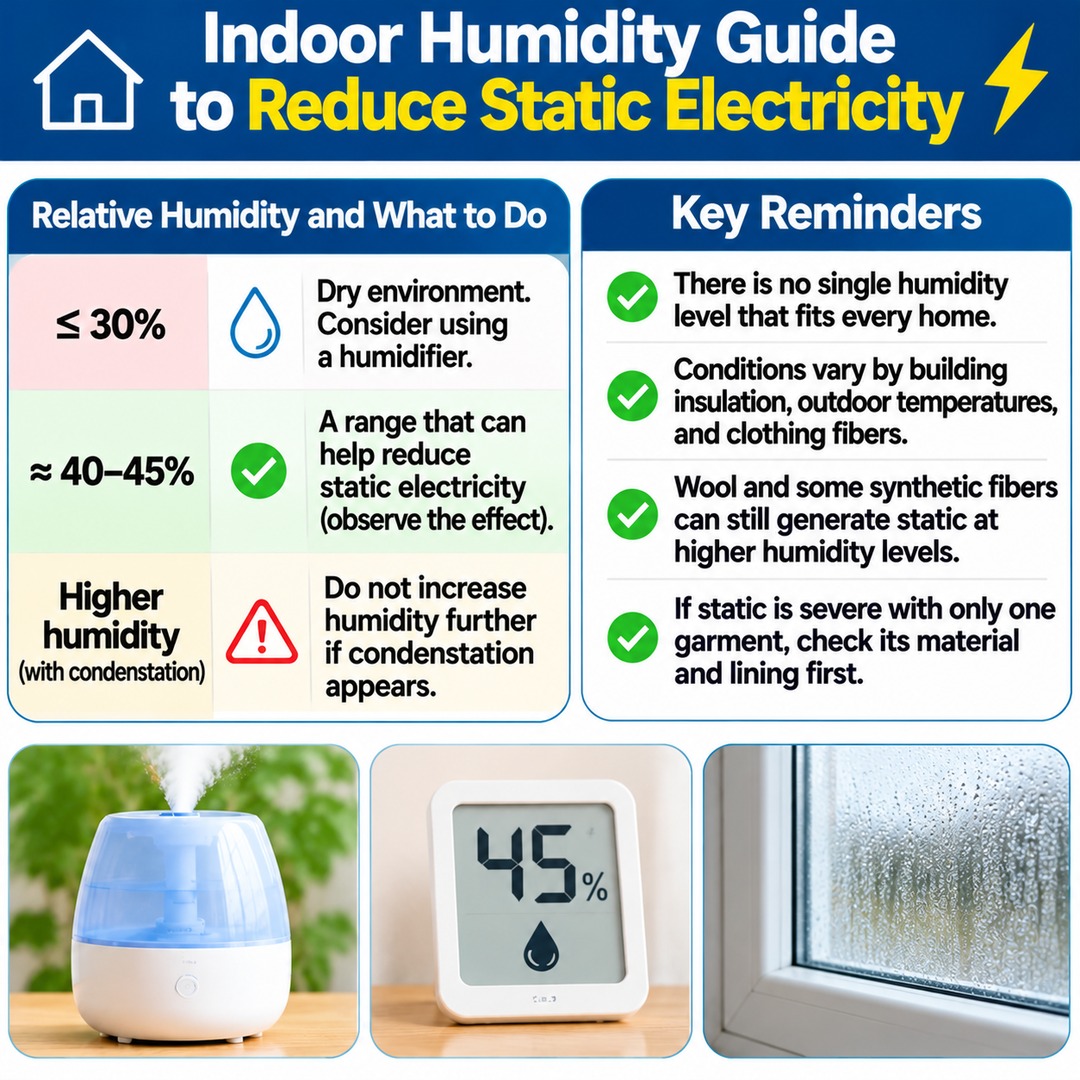
In particular, static discharge problems can become more pronounced with certain materials when relative humidity falls below 30%. At approximately 45%, static electricity may decrease or disappear for many materials. However, wool and some synthetic fibers can still generate static at higher humidity levels.
A practical approach to using a humidifier is:
Measure the indoor humidity first.
If humidity is low, adjust the humidifier output.
Check whether static electricity continues after humidity increases.
Reduce humidifier output if water droplets appear on windows or condensation develops.
The important point is not to increase humidity without limits.
ASHRAE technical materials explain that the amount of humidity a building can accommodate during winter depends on factors such as exterior wall and window insulation and outdoor temperatures. This is because water vapor can condense when it comes into contact with cold window surfaces.
The Canadian Centre for Occupational Health and Safety (CCOHS), in its indoor environment guidance, also notes that relative humidity above 70% can lead to condensation on surfaces and inside buildings. If left unaddressed, this can contribute to mold problems.
When using a humidifier to reduce static electricity, it is safer to monitor actual humidity levels with a hygrometer and adjust the output accordingly.
Why Do Knits, Puffer Jackets, and Fleece Behave Differently Depending on Their Materials?
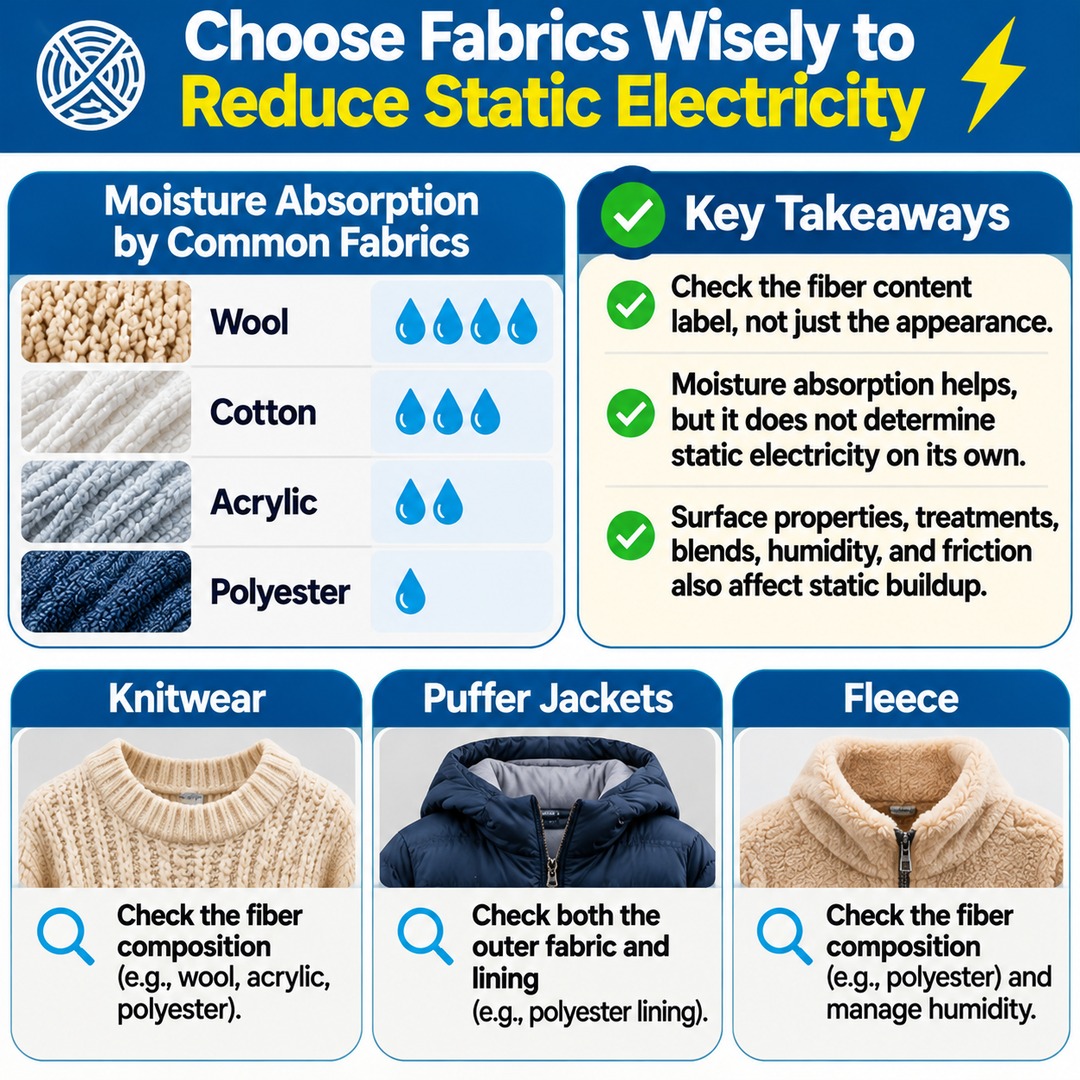
To reduce static electricity, check the actual fiber composition rather than judging clothing by its appearance. Even two sweaters that look similar can have different moisture-absorption properties depending on whether they are made from wool or acrylic.
Differences between common fabrics based on their moisture-absorption properties:
| Material | Moisture absorption characteristics | What to consider |
|---|---|---|
| Wool | Absorbs water vapor relatively well | Manage indoor humidity and friction with other clothing |
| Cotton | Absorbs more moisture than synthetic fibers | Check for excessively dry indoor conditions |
| Polyester | Absorbs very little moisture | Reduce friction with other garments |
| Nylon (polyamide) | Absorbs more moisture than polyester but less than wool | Check combinations of lining and innerwear |
| Acrylic | Generally has low moisture absorption | Manage friction between the inner surface of sweaters and outerwear |
Fiber-science educational materials from The Woolmark Company include a graph comparing the water-vapor absorption of different fibers. It shows that wool and cotton absorb more moisture than polyester and acrylic.
This difference is useful when choosing clothing. However, moisture absorption alone cannot establish a definitive ranking of how much static electricity each material will generate. Fiber surface properties, manufacturing treatments, blend ratios, surrounding humidity, and friction conditions also play a role.
For knitwear, start by checking the fiber-content label.
A sweater that looks like wool may actually contain a large proportion of acrylic or polyester. Conversely, a wool-blend product is not guaranteed to be completely free of static electricity.
Puffer jackets also require separate checks of the outer fabric and lining. Even if the outer material is cotton or another fabric, a polyester lining can create repeated friction against inner clothing when you put the jacket on or take it off.
For fleece, checking the fiber composition of each product is important. If the fleece is made from polyester, managing indoor humidity and choosing compatible innerwear can help.
How Should You Combine Clothing When Static Electricity Becomes Severe?
When changing your clothing, consider how different garments interact rather than focusing on just one material.
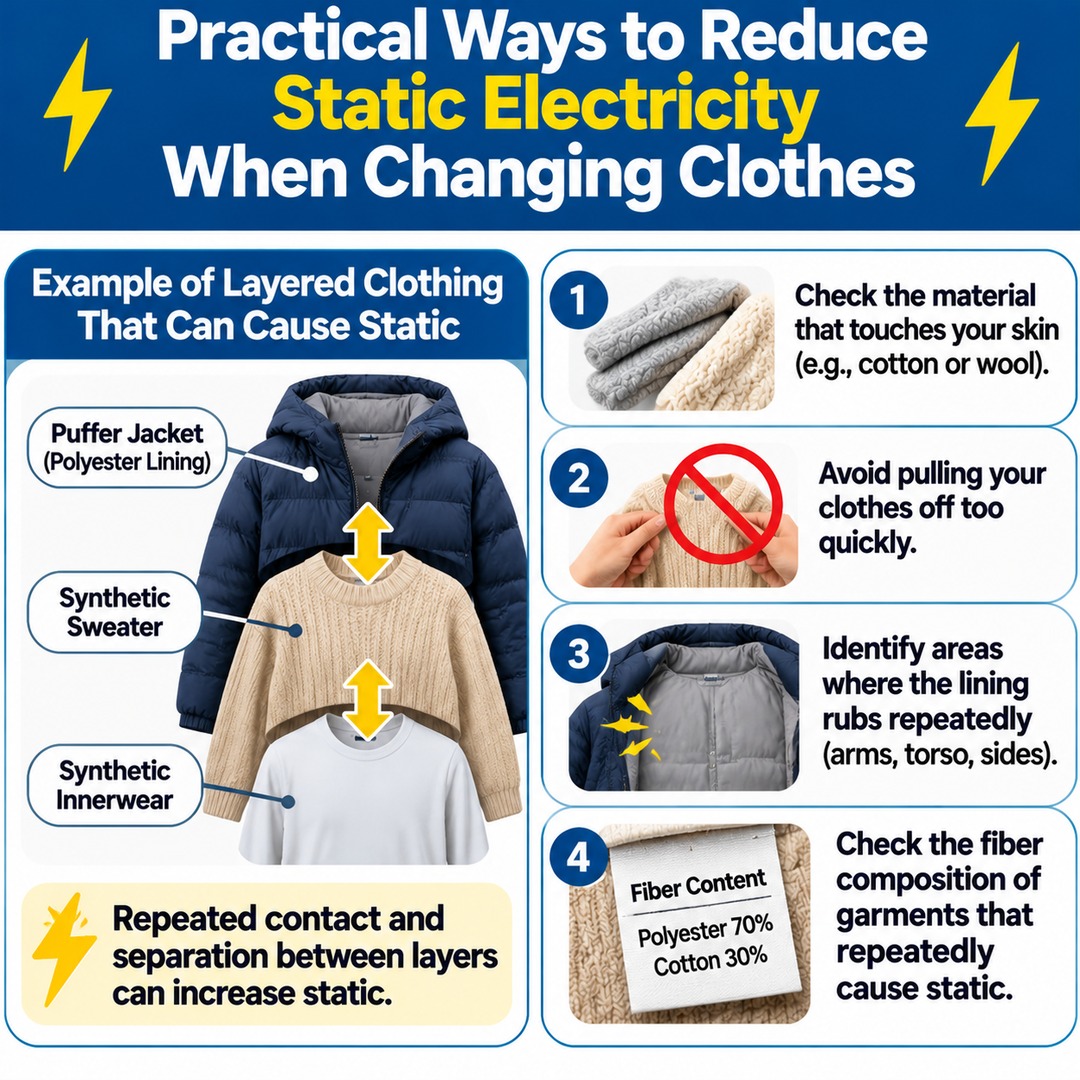
For example, wearing synthetic-fiber innerwear under a synthetic sweater and then putting on a puffer jacket with a polyester lining creates repeated contact and separation between several layers of clothing.
You can try the following approaches:
First, check the material of the clothing that touches your skin.
Consider innerwear made from materials such as cotton or wool, which have moisture-absorbing properties. However, blended fabrics can behave differently depending on their actual fiber composition.
Second, avoid pulling your clothes off too quickly.
Because static electricity develops during contact and separation, reducing sudden pulling and vigorous rubbing when removing clothing may help.
Third, identify areas where the lining repeatedly rubs against your innerwear.
Check for friction around the arms, torso, and sides of the body, where different layers of clothing frequently come into contact.
Fourth, check the fiber composition of garments that repeatedly generate static.
If only one garment causes unusually severe static, it may not be appropriate to blame the overall indoor humidity. Check its outer fabric, lining, and fiber blend separately.
How Can You Reduce Static Electricity in Your Hair and When Touching Doorknobs?
The best way to manage static electricity also depends on where it occurs.
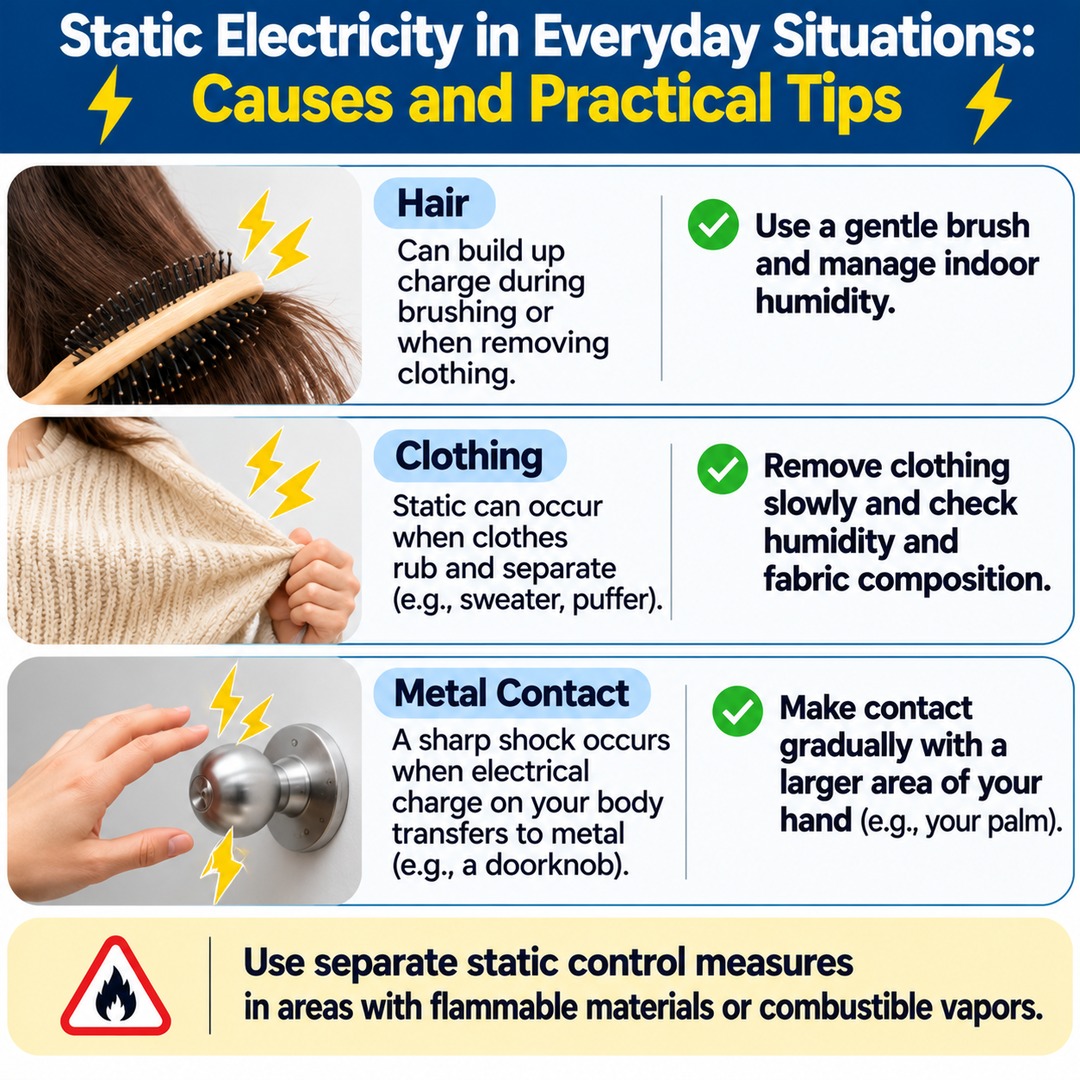
Hair can stand up when electrical charges transfer during brushing or while removing clothing. Static charging can also occur through friction between your hair and a comb.
If your hair sticks to your clothes when you take them off, remove the clothing slowly and check both indoor humidity and fabric composition.
The sharp sensation you feel when touching a metal doorknob occurs when electrical charges accumulated on your body transfer rapidly upon contact with the metal.
Instead of touching the doorknob first with your fingertip, you can try making contact gradually with a larger area of your hand. However, this does not completely prevent static electricity. Separate static-control precautions are necessary in areas containing flammable materials or combustible vapors.
How High Should Indoor Humidity Be in Winter?
It is difficult to recommend one identical humidity level for every household solely to reduce static electricity. Appropriate conditions vary depending on building insulation, outdoor temperatures, and the types of fibers in your clothing.
ASHRAE technical materials explain that relative humidity of approximately 45% can help reduce static electricity in various materials. However, wool and some synthetic fibers may still generate static at higher humidity levels.
On the other hand, excessive humidity can cause condensation on windows and cold wall surfaces.
Use the following guidelines when managing your indoor environment:
If relative humidity is 30% or lower, consider using a humidifier because the environment is dry.
At approximately 40–45% relative humidity, observe whether the conditions are helping reduce static electricity.
Do not increase humidity further if condensation appears on windows or walls.
If static electricity is severe with only one garment, check its material and lining first.
These figures are not mandatory standards applicable to every home, nor are they absolute thresholds at which static electricity disappears.
In particular, the risk of window condensation can change even at the same indoor humidity level when outdoor temperatures drop significantly. Check the condition of your windows as well as the reading on your hygrometer.
What If Static Electricity Continues Even After You Turn On a Humidifier?
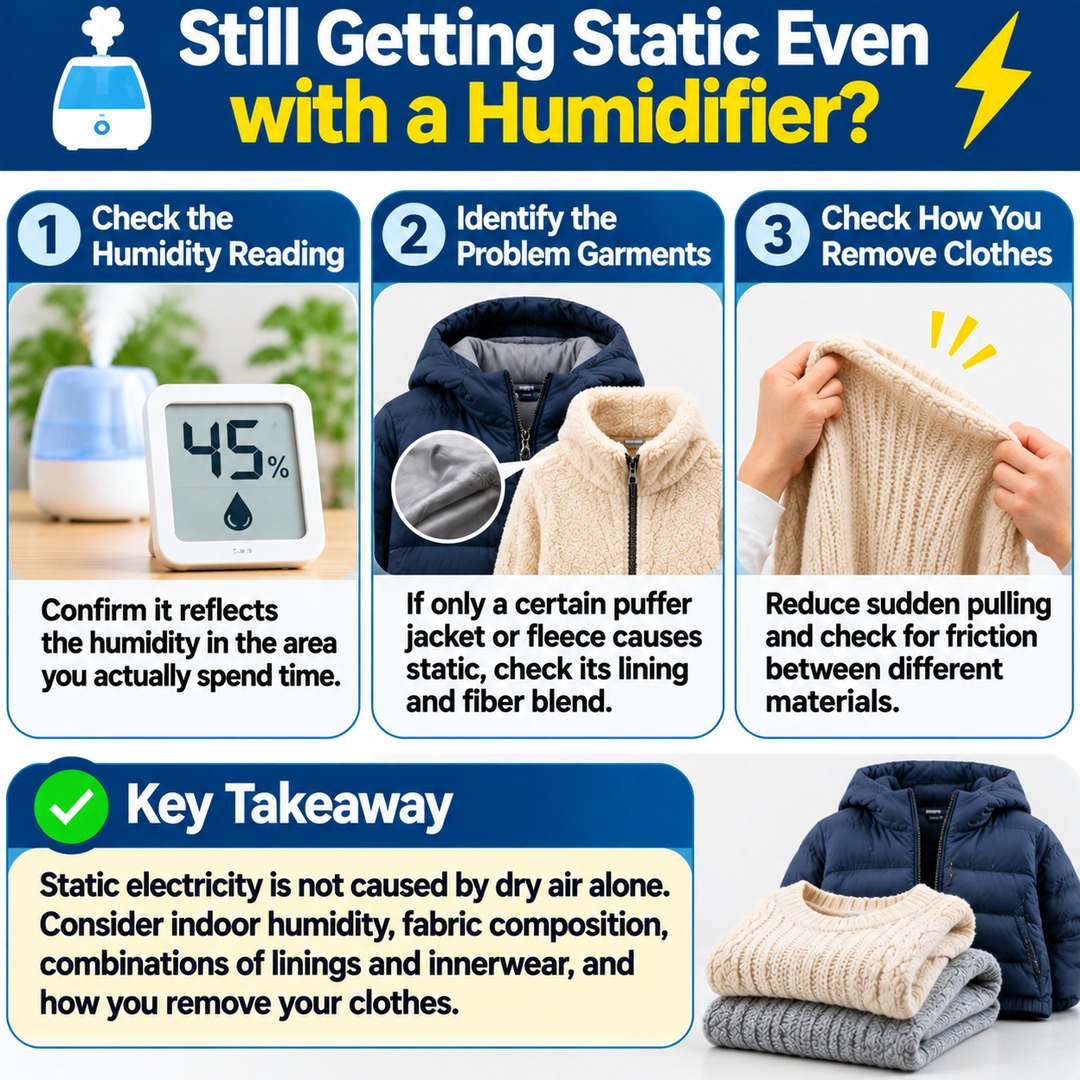
If static electricity occurs every time you remove your clothes despite running a humidifier, do not simply keep increasing humidity. Instead, examine the conditions that may be causing the problem separately.
First, check whether your hygrometer is accurately measuring humidity in the area where you actually spend time. A reading taken right next to a humidifier may differ from the humidity level throughout the room.
Next, identify which garments generate static electricity. If the problem occurs repeatedly with only a particular puffer jacket or fleece garment, pay close attention to the lining material and fiber blend.
Finally, examine how you remove your clothing and how different garments come into contact. If different materials repeatedly rub together and separate, static electricity may persist even when you manage humidity.
Static electricity is not caused solely by dry air. Electrical charges develop between clothing and the body, and when the surrounding environment cannot dissipate those charges sufficiently, they can lead to uncomfortable electrostatic discharges.
Therefore, rather than relying on a humidifier alone during winter, consider indoor humidity, clothing fiber composition, combinations of linings and innerwear, and the way you remove your clothes.