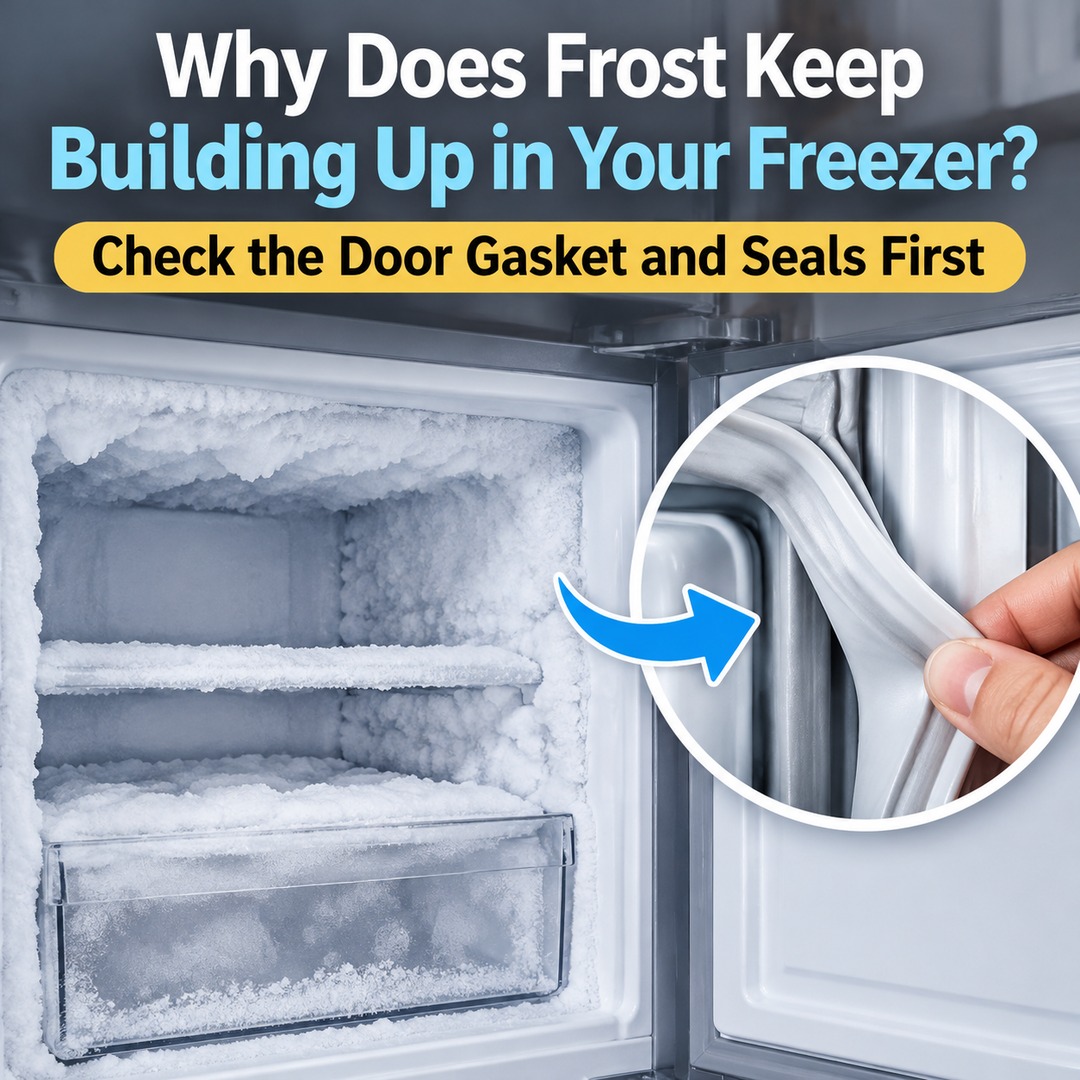
Frost inside your freezer does not automatically mean something is broken. Moist air can enter when you open the door and freeze against the cold interior surfaces, forming a thin layer of frost. However, if ice keeps getting thicker in the same area or the freezer begins losing its cooling performance, you should check the door gasket, whether the door closes properly, the air vents, and the defrost system.
When frost appears, first examine where it forms and how much has accumulated. The appropriate response depends on whether it is caused by frequent door openings, a continuous leak of outside air, or a problem with air circulation inside the refrigerator.
Why Does Frost Form in a Freezer, and When Is It Normal?
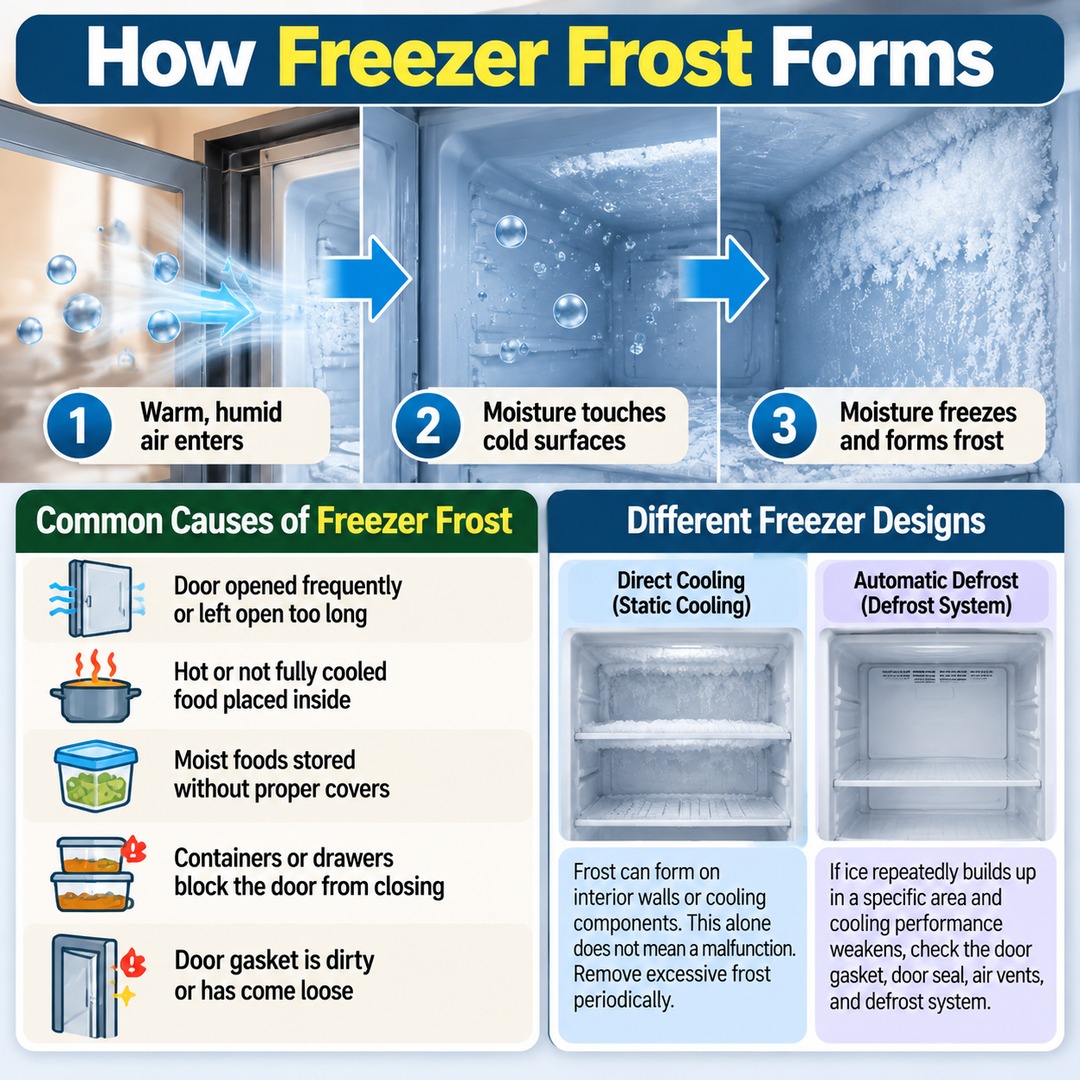
Freezer frost forms when moisture in the air settles on a cold surface and freezes. When you open the door, cold air escapes and humid room air enters. The moisture carried by that incoming air can freeze onto the walls, shelves, and food surfaces.
Frost is more likely to develop under the following conditions:
The freezer door is opened frequently or left open for extended periods.
Hot food or food that has not cooled sufficiently is placed inside.
Moist foods are stored without lids or proper covers.
Food containers or drawers prevent the door from closing completely.
The rubber gasket around the door is dirty or has come loose.
It is also important to distinguish between different freezer designs.
Direct-cooling models, also known as static-cooling models, are designed so that frost can form on the interior walls or cooling components. The presence of frost alone does not mean that the appliance is malfunctioning. However, excessive frost can affect temperature maintenance, so it should be removed periodically.
By contrast, if a refrigerator with an automatic defrost function repeatedly develops ice in a particular area and its cooling performance also weakens, the problem should not automatically be attributed to frequent door openings.
How Can You Check Whether the Freezer Door Gasket Is Causing the Problem?
The rubber gasket is the sealing component attached around the edge of the freezer door. If it does not make proper contact with the refrigerator body, outside air can enter and cause frost to accumulate in specific areas.
Follow these steps to inspect it.
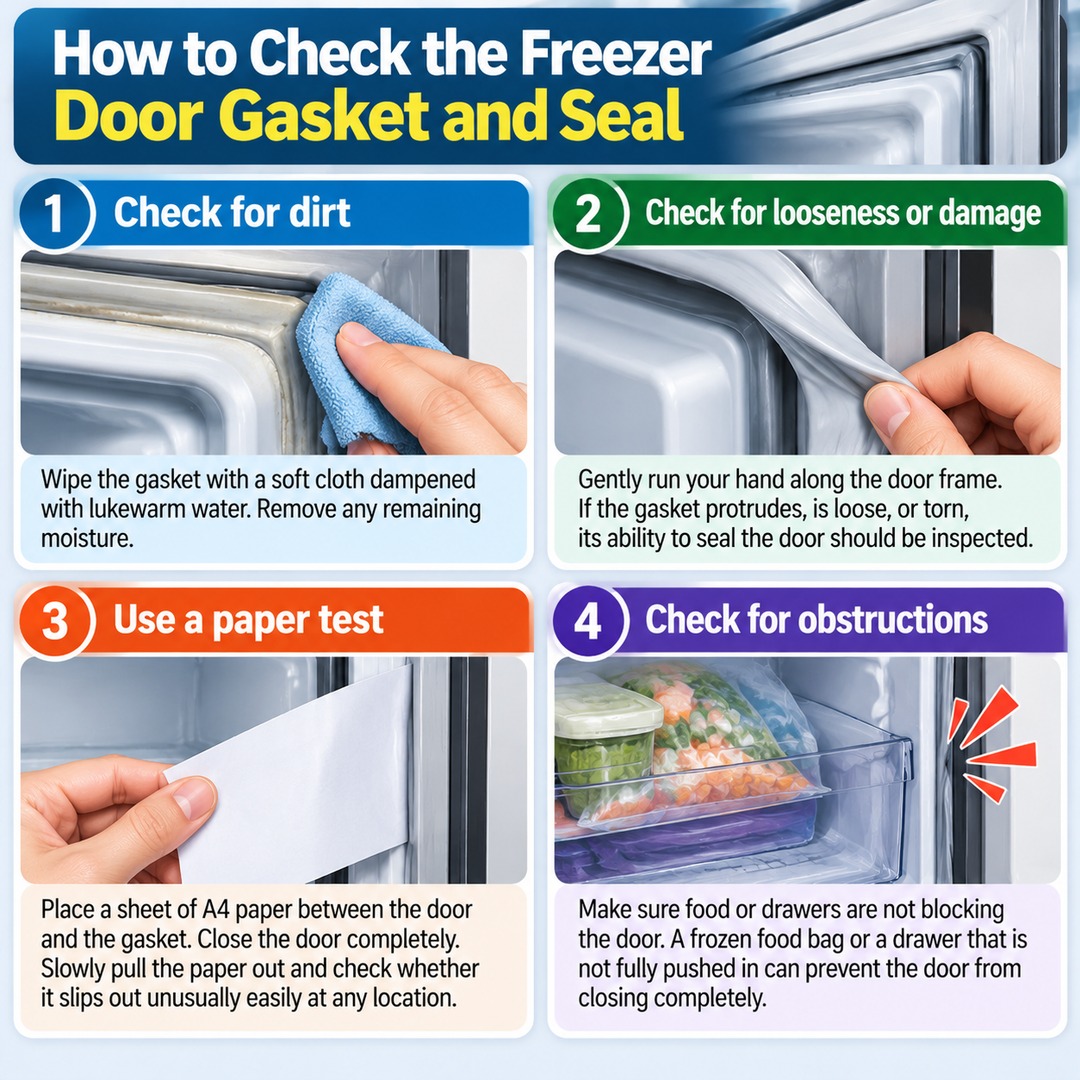
1. Check whether the gasket is dirty.
Food residue, grease, or dust can prevent the door from sealing properly. Wipe the gasket with a soft cloth dampened with lukewarm water, then remove any remaining moisture.
2. Check whether the rubber is loose or out of position.
Gently run your hand along the door frame. If part of the gasket protrudes or is torn, its ability to seal the door should be inspected.
3. Use a piece of paper to check the seal.
Place a sheet of A4 paper between the door and the gasket.
Close the door completely.
Slowly pull the paper out.
Check whether it slips out unusually easily at a particular location.
This is a simple reference test for checking the seal. A sheet of paper that comes out easily does not, by itself, confirm that the gasket is defective.
4. Check whether food or drawers are obstructing the door.
A frozen-food bag caught in the door or a drawer that has not been pushed all the way in can prevent the door from closing completely, even when the gasket itself is in good condition.
If frost repeatedly appears around a particular corner or section of the door frame even after you close it, inspect that area more closely.
Should You Also Inspect the Inside of the Refrigerator if Frost Keeps Returning?
Yes. What you need to inspect depends on whether frost forms around an air outlet, on an interior wall, or on the surface of food.
LG Electronics also explains in its freezer troubleshooting guidance that ice buildup around cold-air outlets can obstruct airflow and reduce freezing performance.
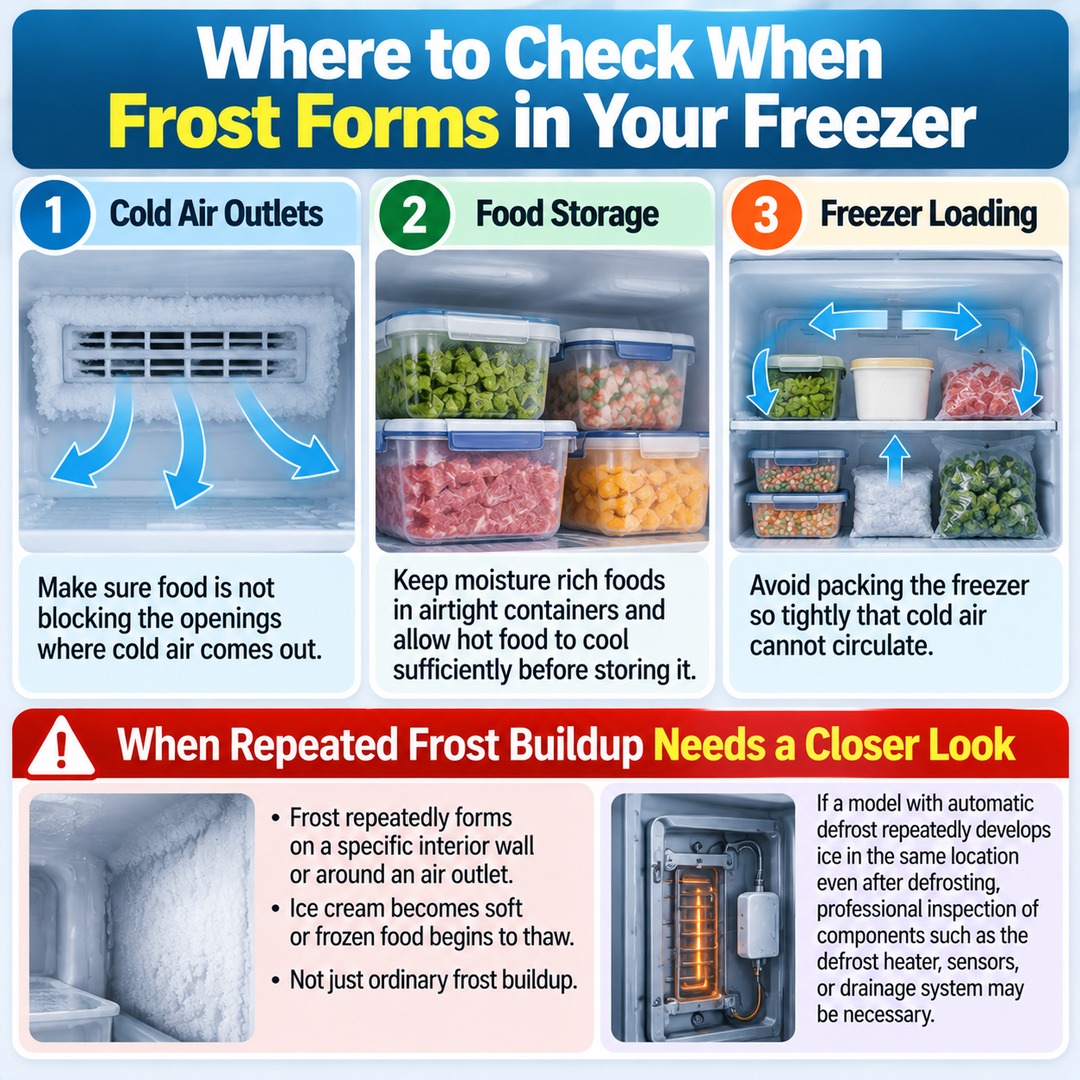
Check these three areas:
Cold-air outlets: Make sure food is not blocking the openings where cold air comes out.
Food storage: Place moisture-rich foods in airtight containers and allow hot food to cool sufficiently before storing it.
Freezer loading: Avoid packing the freezer so tightly that cold air cannot circulate.
In particular, if frost repeatedly forms on a specific interior wall or around an air outlet while ice cream becomes soft or frozen food begins to thaw, do not dismiss the issue as ordinary frost buildup.
If a refrigerator with automatic defrost repeatedly develops ice in the same location even after defrosting, professional inspection of internal components such as the defrost heater, sensors, or drainage system may be necessary. However, frost alone cannot establish that any particular component has failed.
How to Remove Freezer Frost Safely
If a thick layer of frost has accumulated, the safer approach is to disconnect the power and allow the ice to melt naturally rather than trying to scrape it off forcefully.
Cooling components or refrigerant pipes may be located close to the interior walls, so avoid using sharp tools.
Natural Defrosting Steps
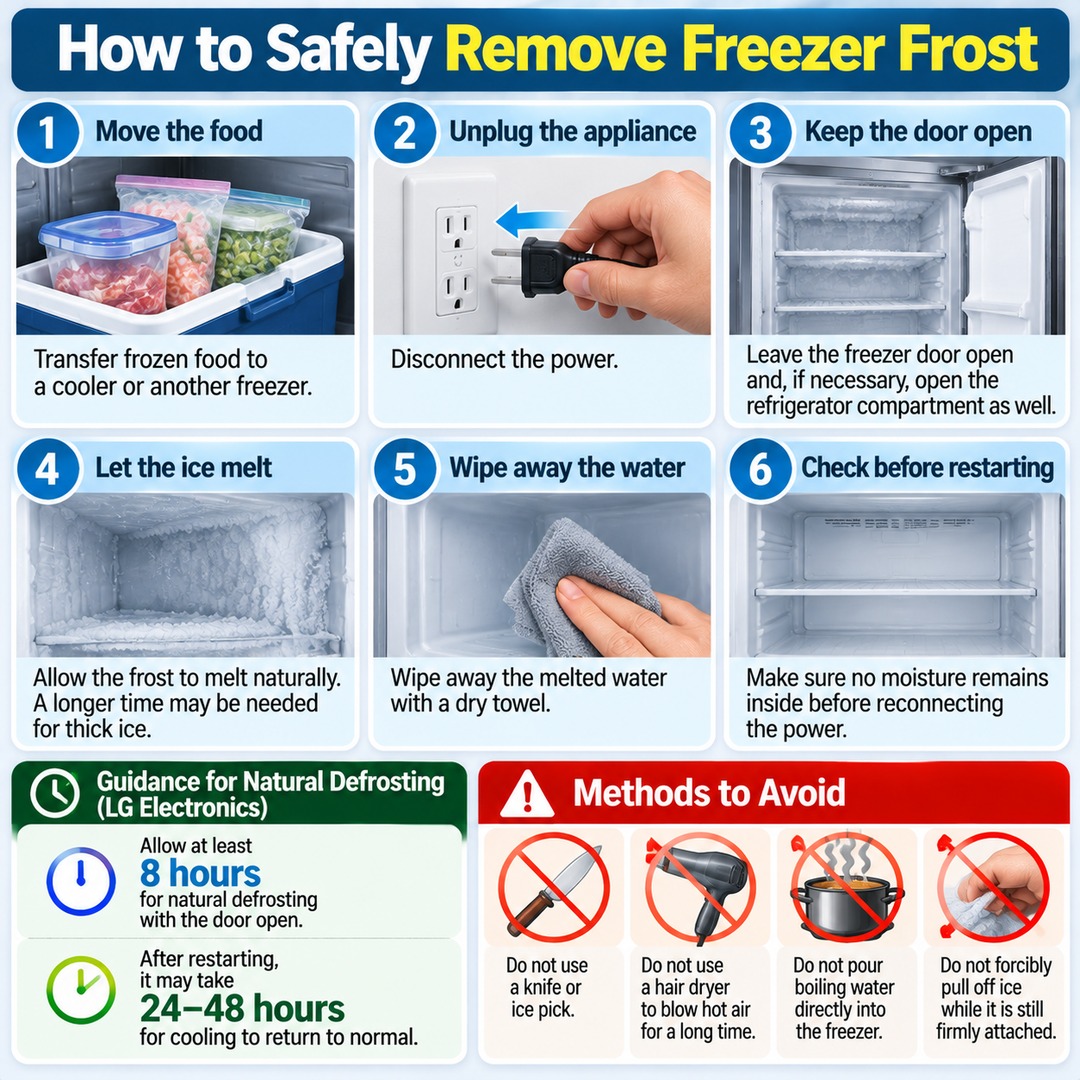
1. Transfer frozen food to a cooler or another freezer.
2. Unplug the appliance.
3. Leave the freezer door open and, if necessary, open the refrigerator compartment as well.
4. Wait for the frost to melt naturally.
5. Wipe away the melted water with a dry towel.
6. Check that no moisture remains inside before reconnecting the power.
In its frost-removal guidance for the relevant products, LG Electronics recommends unplugging the appliance, leaving the door fully open, and allowing at least 8 hours for natural defrosting. After restarting the appliance, it may take approximately 24–48 hours for cooling performance to return to normal.
These timeframes apply to the products covered by that guidance and are not universal requirements for every refrigerator. Always check the manual for your specific model first.
Avoid the following methods:
Using a knife or ice pick to break up the ice.
Holding a hair dryer close to the interior and directing hot air at it for an extended period.
Pouring boiling water directly into the freezer.
Forcibly pulling off ice while it is still firmly attached.
These methods can damage the interior walls, cooling components, or rubber parts. If the frost does not come away easily, it is better to wait until it has melted sufficiently.
What Should You Do If Frost Returns After Removal?
Removing frost once does not necessarily resolve the underlying problem. To narrow down the cause, pay attention to where the frost returns and whether the freezer is still maintaining its temperature.
| Observed condition | What to check first |
|---|---|
| Frost concentrated around the door | Gasket and door closure |
| Frost forming around food | Uncovered storage and moisture entering the freezer |
| Ice accumulating around cold-air outlets | Air circulation |
| Ice repeatedly returning to the same spot after defrosting | Defrost function and internal components |
| Frozen food becoming soft or starting to thaw | Freezer temperature and cooling performance |
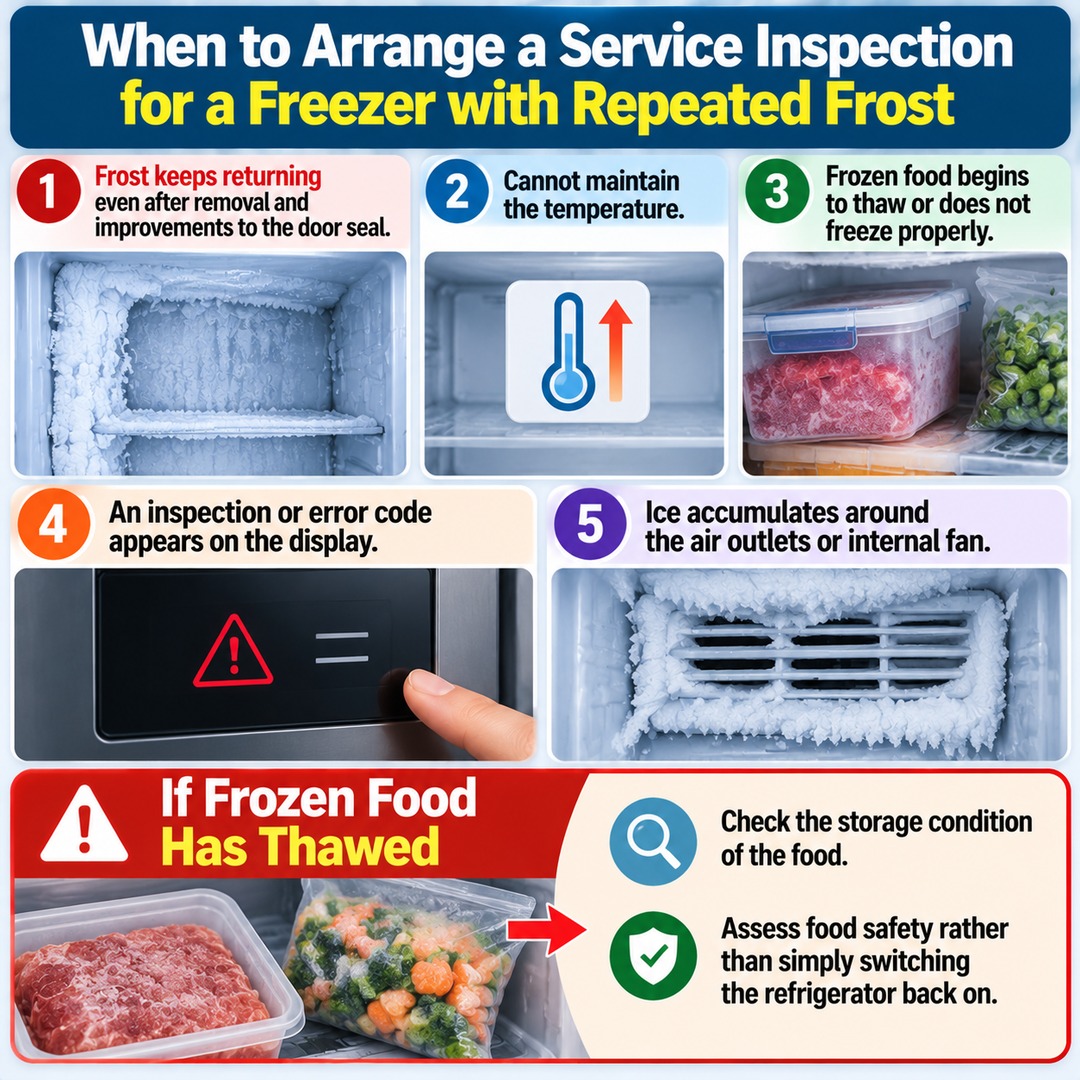
You should arrange a service inspection if any of the following occurs:
Frost keeps returning even after removal and improvements to the door seal.
The freezer cannot maintain its temperature.
Frozen food begins to thaw or ice does not freeze properly.
An inspection or error code appears on the display.
Ice continues to accumulate around the air outlets or internal fan.
If food stored in the freezer has already thawed, you should also assess its storage conditions and food safety rather than simply switching the refrigerator back on.
Everyday Habits That Help Prevent Freezer Frost from Returning
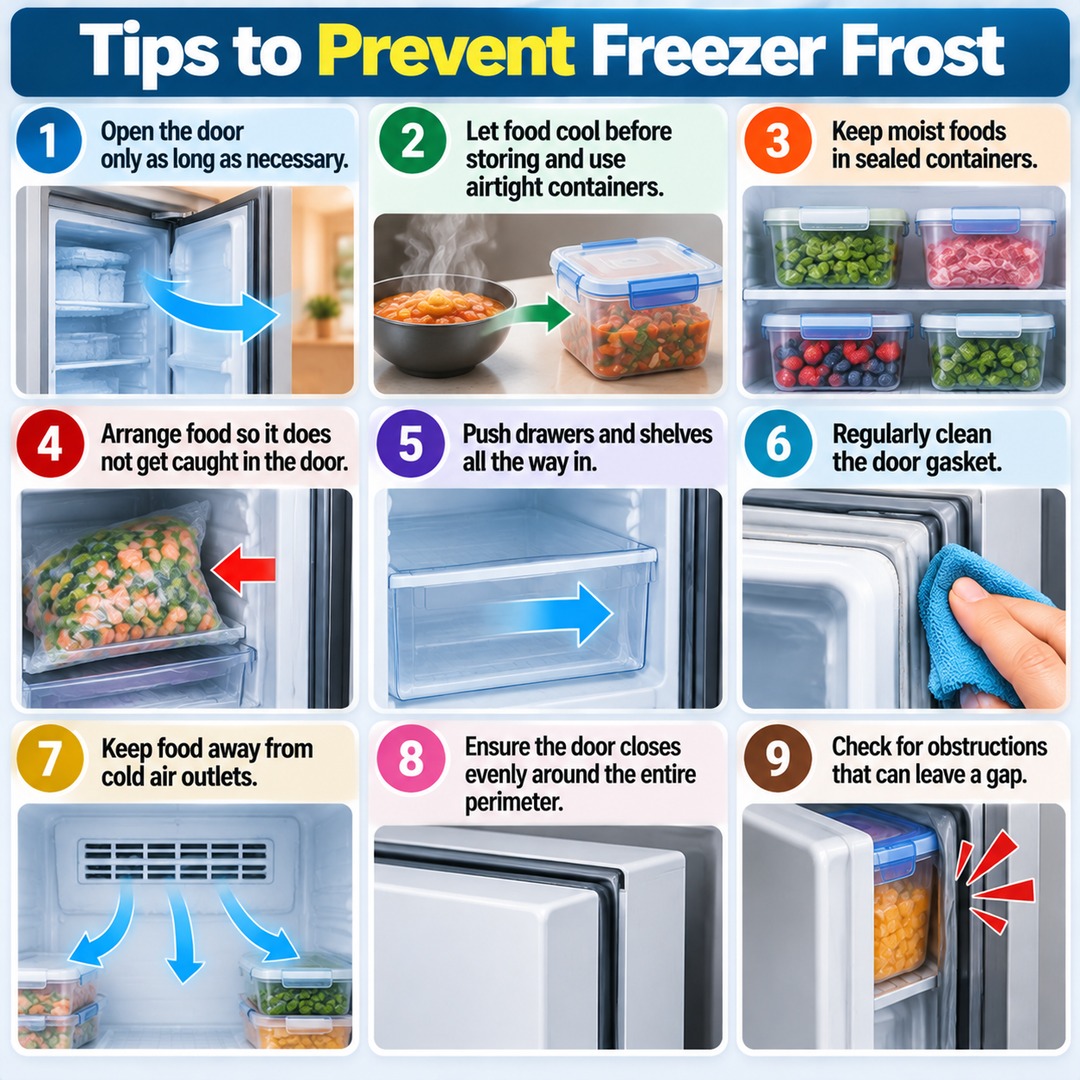
For routine maintenance, focus on preventing excess moisture from entering and making sure the door closes completely.
Open the freezer door only for as long as necessary.
Allow food to cool sufficiently before placing it in airtight containers.
Do not store moisture-rich foods without lids or covers.
Arrange food and bags so they cannot get caught in the door.
Push drawers and shelves all the way into place.
Regularly wipe dirt and residue from the rubber gasket.
Keep food away from the cold-air outlets so they remain unobstructed.
When closing the freezer door, check that the entire perimeter makes even contact with the refrigerator body. The door may appear closed even when a container or food package is obstructing one side and leaving a small gap.
Frequently Asked Questions
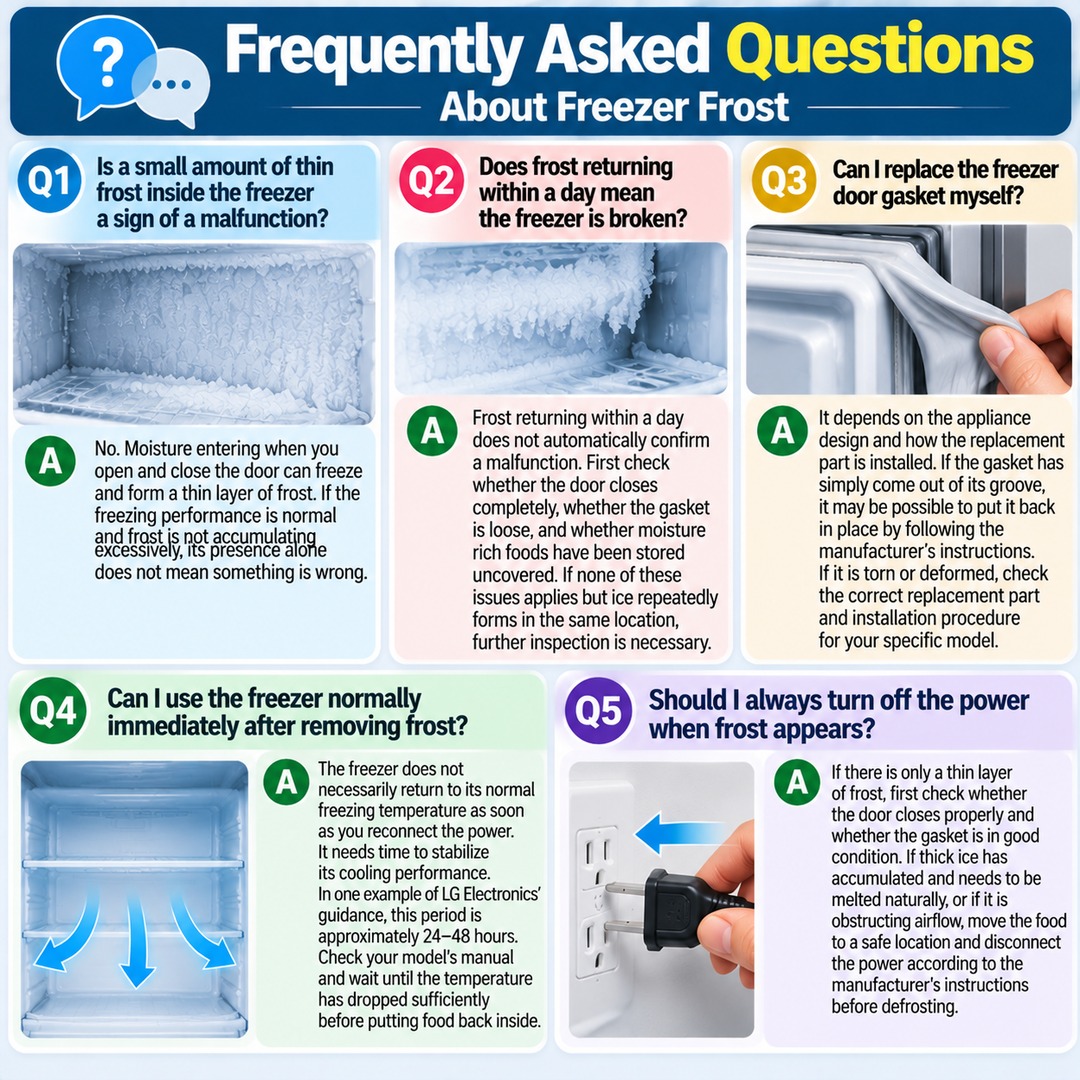
Q. Is a small amount of thin frost inside the freezer a sign of a malfunction?
No. Moisture entering when you open and close the door can freeze and form a thin layer of frost. If the appliance is maintaining its freezing performance and frost is not accumulating excessively, its presence alone is not enough to conclude that something is wrong.
Q. Does frost returning within a day mean the freezer is broken?
The fact that frost returns within a day is not enough to confirm a malfunction. First check whether the door closes completely, whether the gasket is loose, and whether moisture-rich foods have been stored uncovered. If none of these issues applies but ice repeatedly forms in the same location, further inspection is necessary.
Q. Can I replace the freezer door gasket myself?
It depends on the appliance design and how the replacement part is installed. If the gasket has simply come out of its groove, it may be possible to put it back in place by following the manufacturer's instructions. If it is torn or deformed, check the correct replacement part and installation procedure for your specific model.
Q. Can I use the freezer normally immediately after removing frost?
The freezer does not necessarily return to its normal freezing temperature as soon as you reconnect the power. It needs time to stabilize its cooling performance. In one example of LG Electronics' guidance, this period is approximately 24–48 hours. Check your model's manual and wait until the temperature has dropped sufficiently before putting food back inside.
Q. Should I always turn off the power when frost appears?
If there is only a thin layer of frost, you can first check whether the door closes properly and whether the gasket is in good condition. If thick ice has accumulated and needs to be melted naturally, or if it is obstructing airflow, move the food to a safe location and disconnect the power according to the manufacturer's instructions before defrosting.
With freezer frost, the important factors are not simply whether it appears, but where it repeatedly forms, how much accumulates, and whether freezing performance changes. Start by checking the door gasket and how food is stored. If the problem continues, arrange an inspection of the internal cooling and defrost systems.