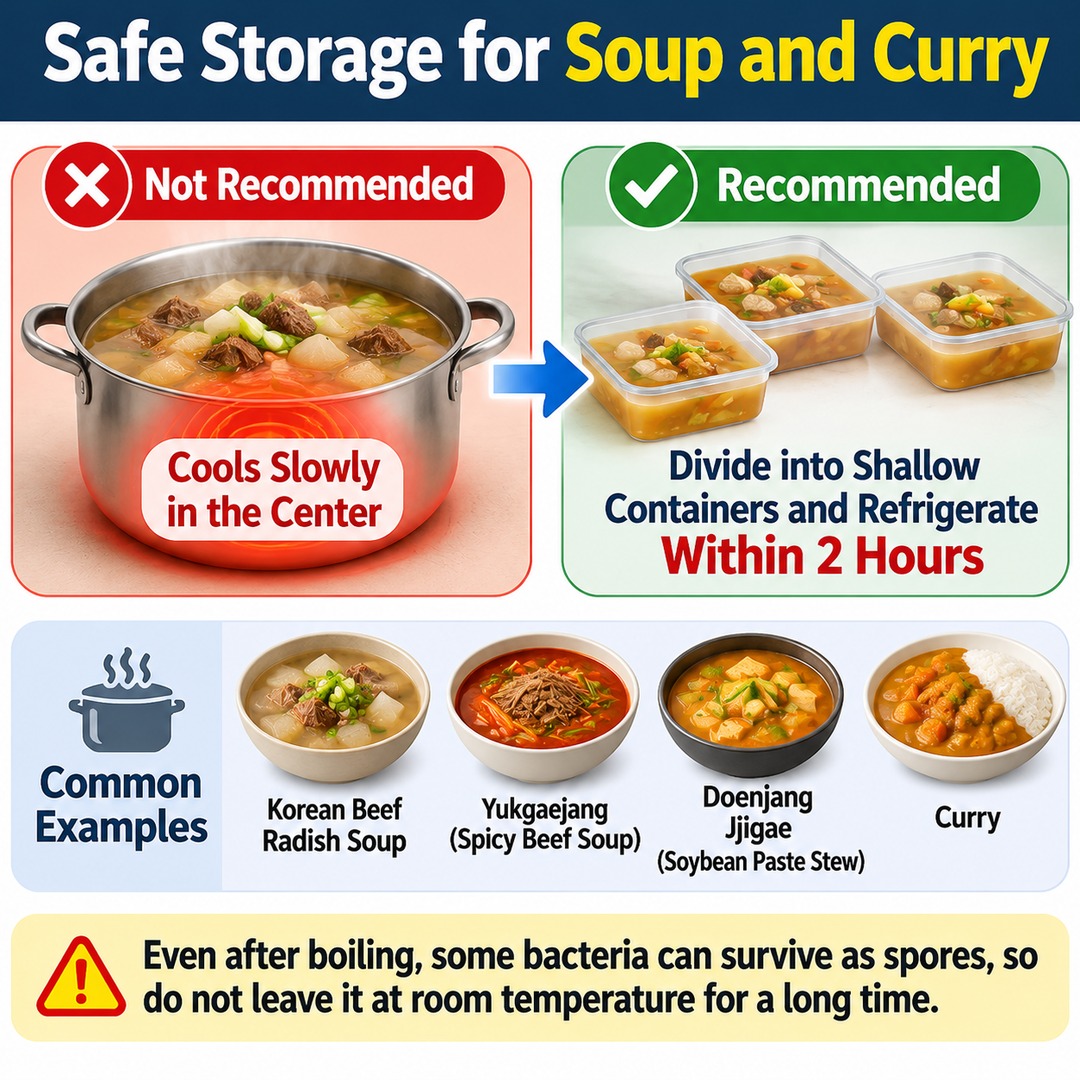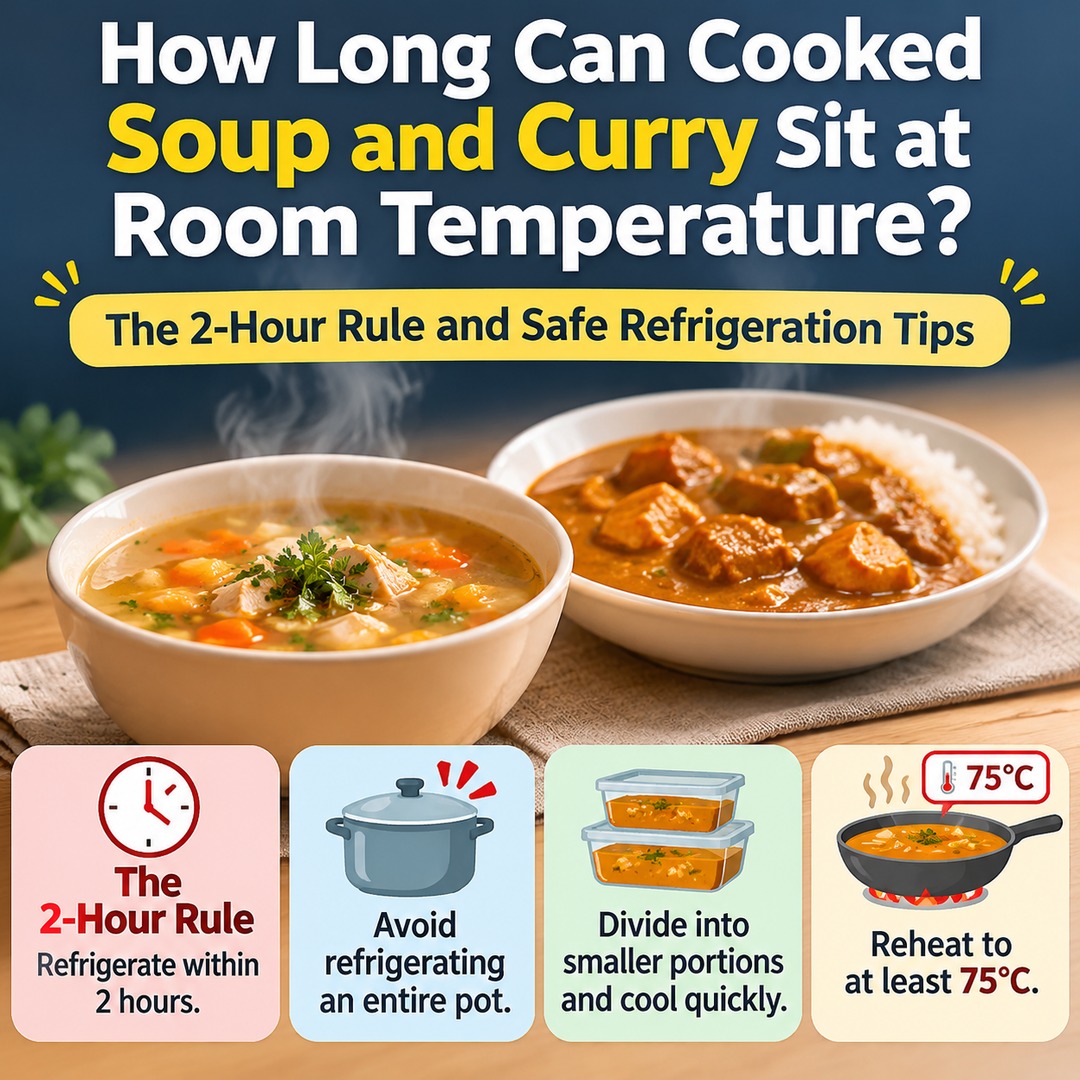
Cooked soup and curry are safer when divided into shallow containers and refrigerated within 2 hours of cooking rather than left at room temperature until completely cool. Food stored in a large pot takes longer to cool in the center, so it is important not to leave an entire pot sitting out for an extended period.
This is particularly important for dishes such as Korean beef radish soup, yukgaejang (spicy shredded beef soup), doenjang jjigae (Korean soybean paste stew), and curry. These dishes are often prepared in large batches and eaten over several meals, so you need to pay attention not only to their temperature immediately after cooking but also to how they are cooled and stored.
Can Cooked Soup and Curry Also Cause Food Poisoning?
Yes. Even when food has been thoroughly boiled, cooking does not necessarily eliminate the spores of every foodborne pathogen. If soup or curry is left in a large pot at room temperature for too long, *Clostridium perfringens* bacteria can multiply.
This bacterium can form spores, which may survive ordinary cooking temperatures. Therefore, the fact that a dish has been boiled does not mean it will remain safe during subsequent storage at room temperature.
Pay particular attention to situations such as these:
Cooking a large pot of soup in the evening and leaving it on the stove until the following morning.
Leaving curry in a large, covered pot overnight to cool.
Delaying refrigeration because the kitchen feels cold in winter.
Keeping food at room temperature for an extended period because you plan to boil it again before the next meal.
Even if the room feels cold, its temperature is not being controlled in the same way as a refrigerator.
Why Is Two Hours the Recommended Room-Temperature Limit?
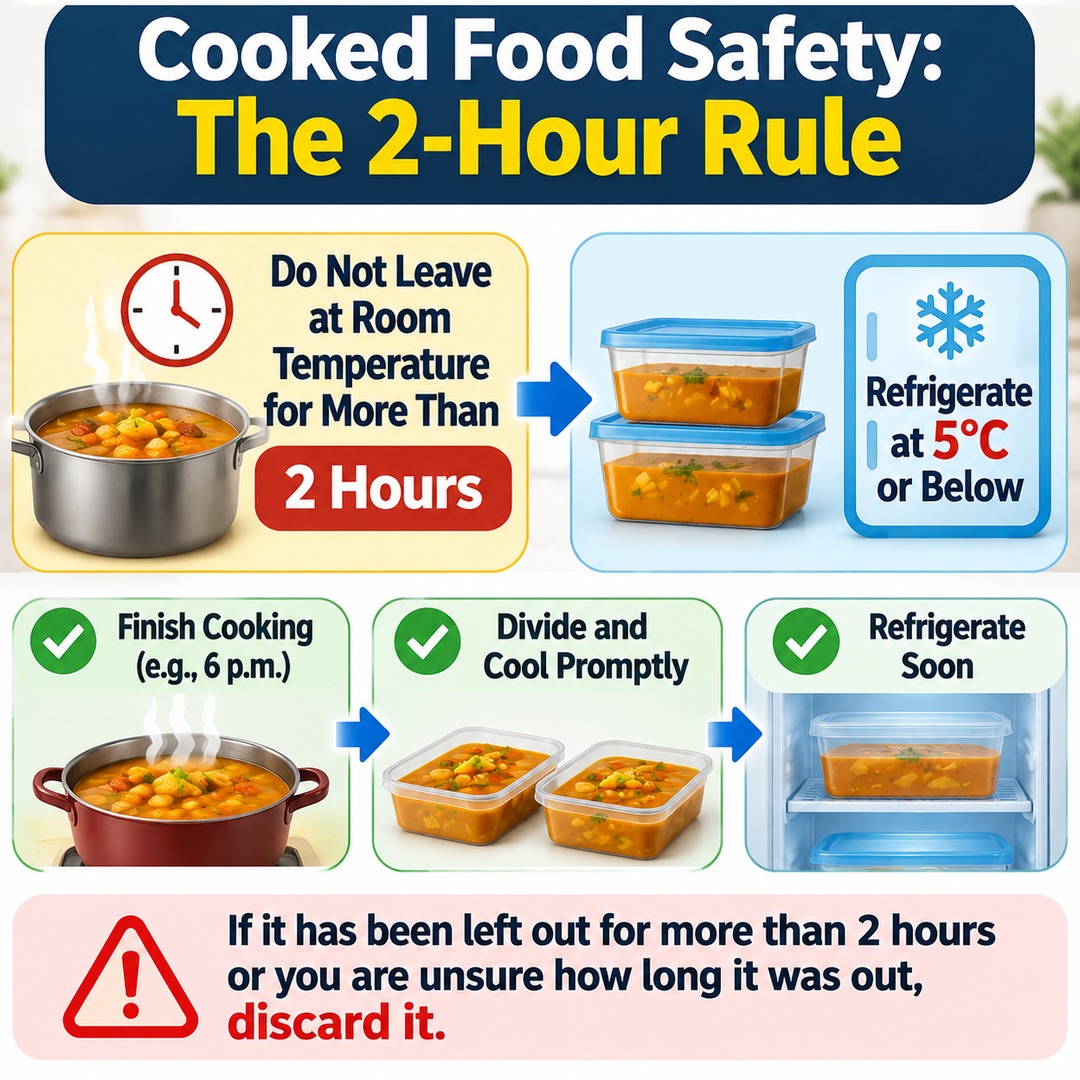
A basic food safety guideline is not to leave cooked food at room temperature for more than 2 hours. Food safety management emphasizes cooling cooked food promptly and storing it at a refrigerated temperature of 5°C or below.
The 2-hour guideline does not mean that food must be left to cool for exactly 2 hours. It means that food should be refrigerated promptly rather than kept at room temperature for an extended period.
For example, if you finish cooking curry at 6 p.m., do not wait until late at night for it to become completely cold. Divide it into appropriately sized portions and begin cooling and refrigerating it promptly.
Food that has already been left at room temperature for more than 2 hours cannot be assumed to become safe simply by boiling it again. If the storage time is uncertain or the food has been left out for an extended period, discarding it is safer than trying to judge its safety by smell or taste.
Is It Safe to Put an Entire Pot in the Refrigerator?
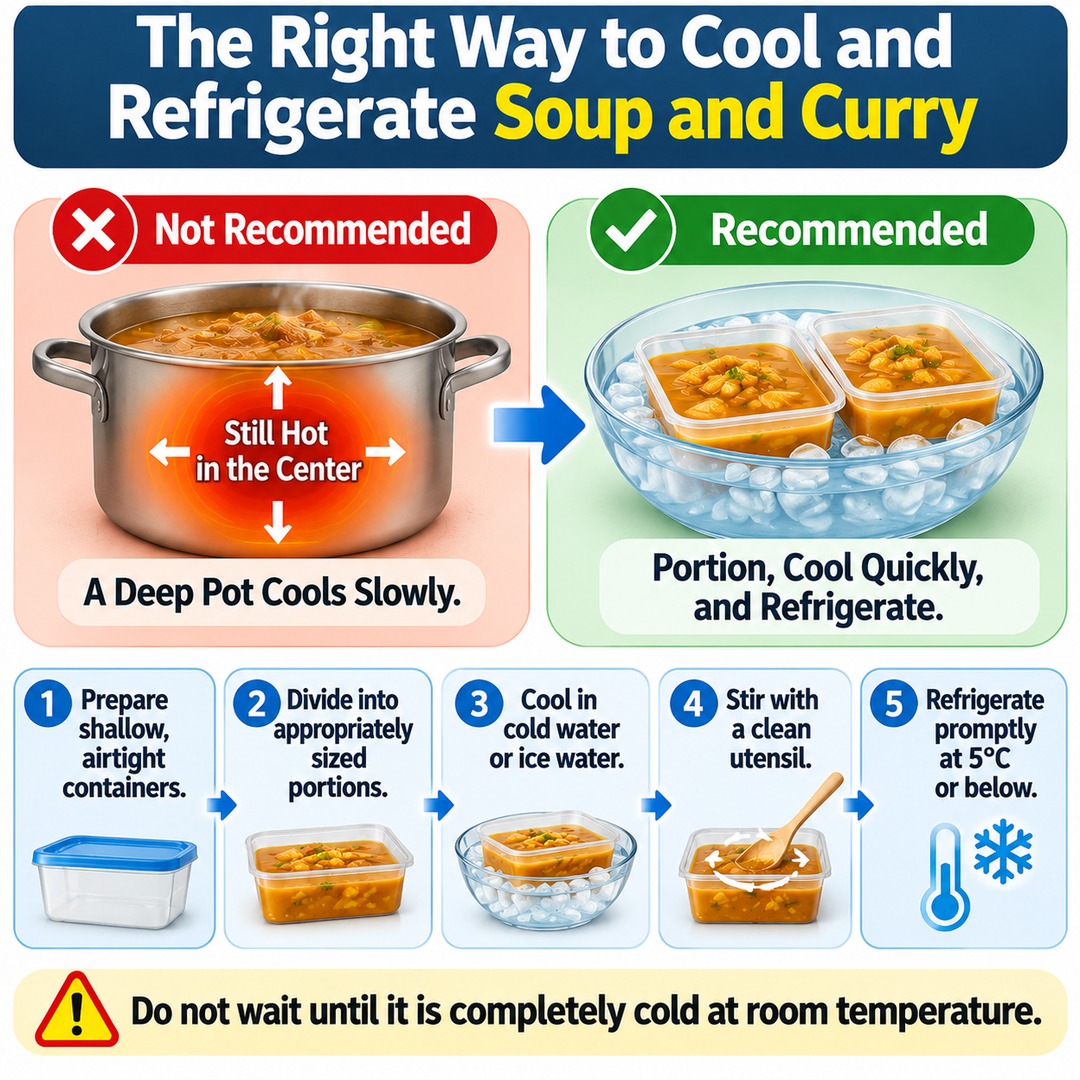
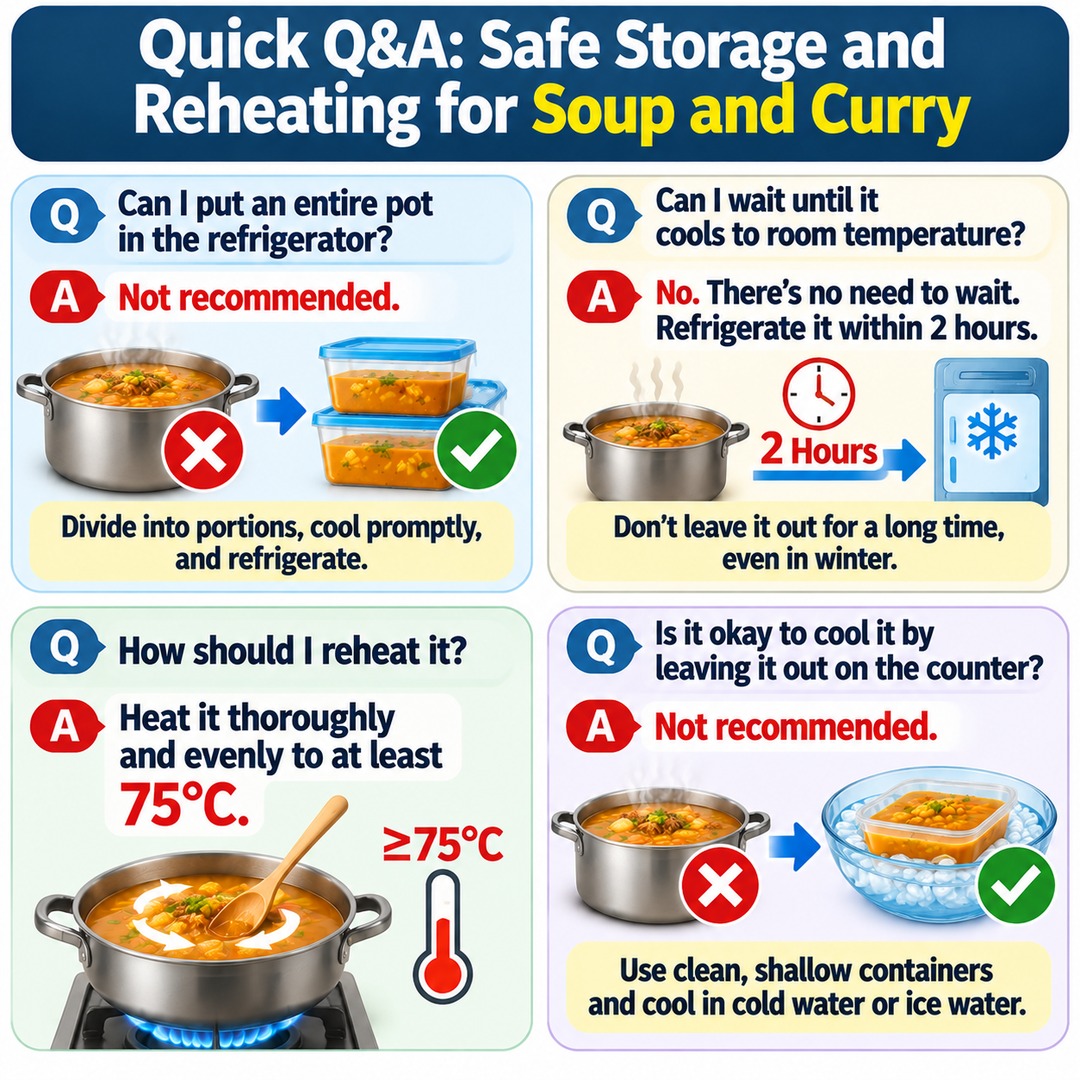
Refrigerating a small quantity of food in a shallow pot may be reasonable. However, storing a deep pot filled with soup or curry is not recommended.
The problem is that even when the outside of the pot has cooled, the food in the middle may still be hot. In a large container, it takes time for the temperature to drop throughout the food, including its center.
If you have prepared a large quantity of soup or curry, use the following method:
1. Prepare clean, shallow, airtight containers.
2. Divide the soup and solid ingredients into appropriately sized portions.
3. Place the containers in a larger bowl filled with cold water or ice water to help cool the food.
4. Stir with a clean utensil to help the food cool evenly.
5. Refrigerate promptly and keep the refrigerator temperature at 5°C or below.
Image section: An explanatory comparison of cooling methods using a deep pot and shallow portion-sized containers.
The important point is not to wait until the food has become completely cold at room temperature before putting it in the refrigerator. Instead, avoid leaving it in a large pot for too long and combine portioning with rapid cooling.
What Is the Safest Order for Storing Soup and Curry?
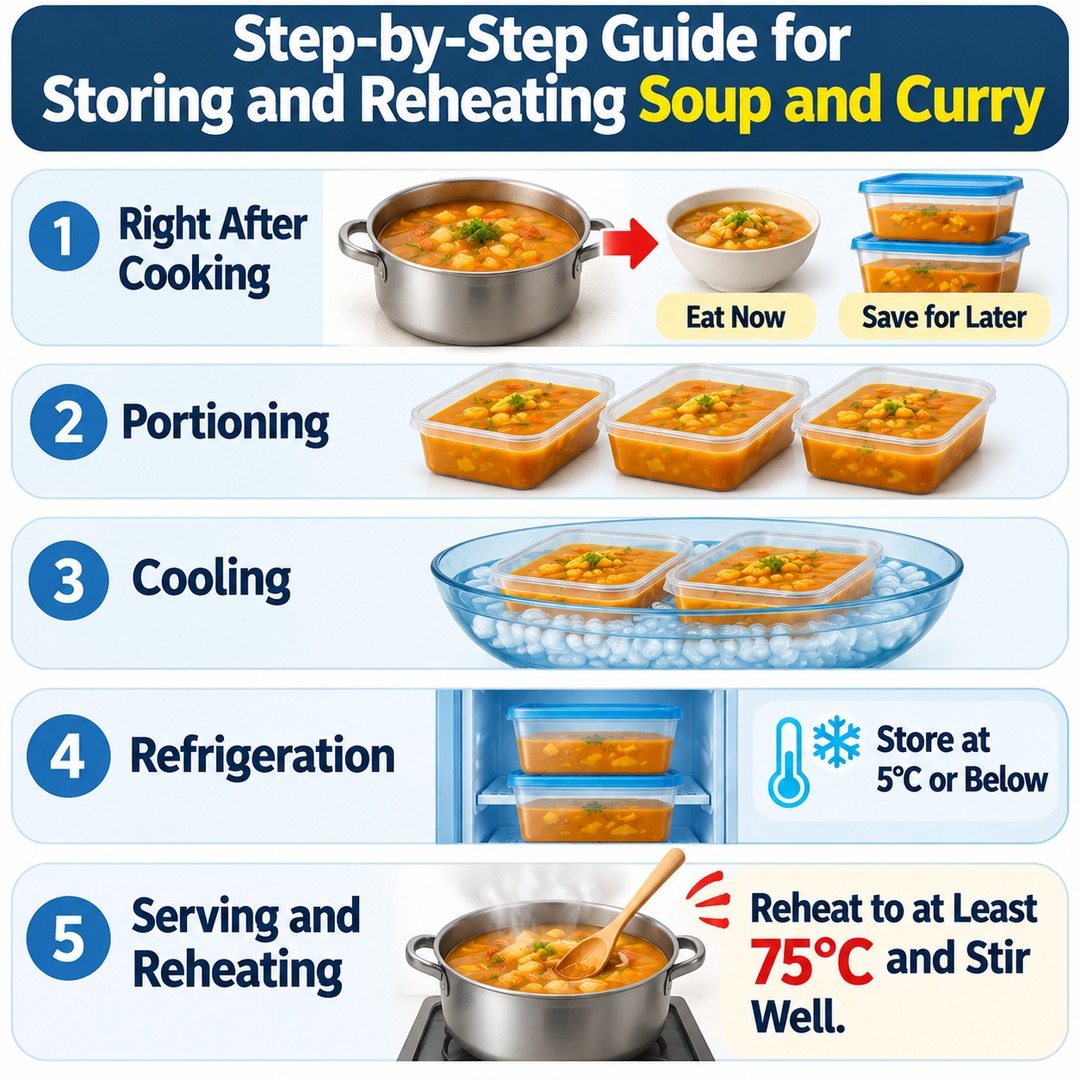
The most practical approach is to separate the portions you will eat immediately from those you intend to store as soon as cooking is finished.
If you plan to eat soup or curry over several meals, follow these steps:
Immediately after cooking: Separate the portions you will eat now from those you will save for later.
Portioning: Divide the food to be stored among shallow containers.
Cooling: Use cold water or ice water to help cool it quickly.
Refrigeration: Do not leave it at room temperature for too long. Store it at 5°C or below.
Serving: Remove only the amount you intend to eat and reheat it thoroughly.
When reheating soup, heating only the surface is not sufficient. Stir it so that the entire dish heats evenly, including the center.
The Korean Ministry of Food and Drug Safety (MFDS) recommends reheating stored food to at least 75°C before eating it again as part of its guidance on preventing *C. perfringens* food poisoning.
Curry and other thick foods can stick to the bottom of the pot or remain cold in the middle. Stir them periodically while heating to ensure that the temperature is distributed evenly.
How Many Days Can Refrigerated Soup and Curry Be Kept?
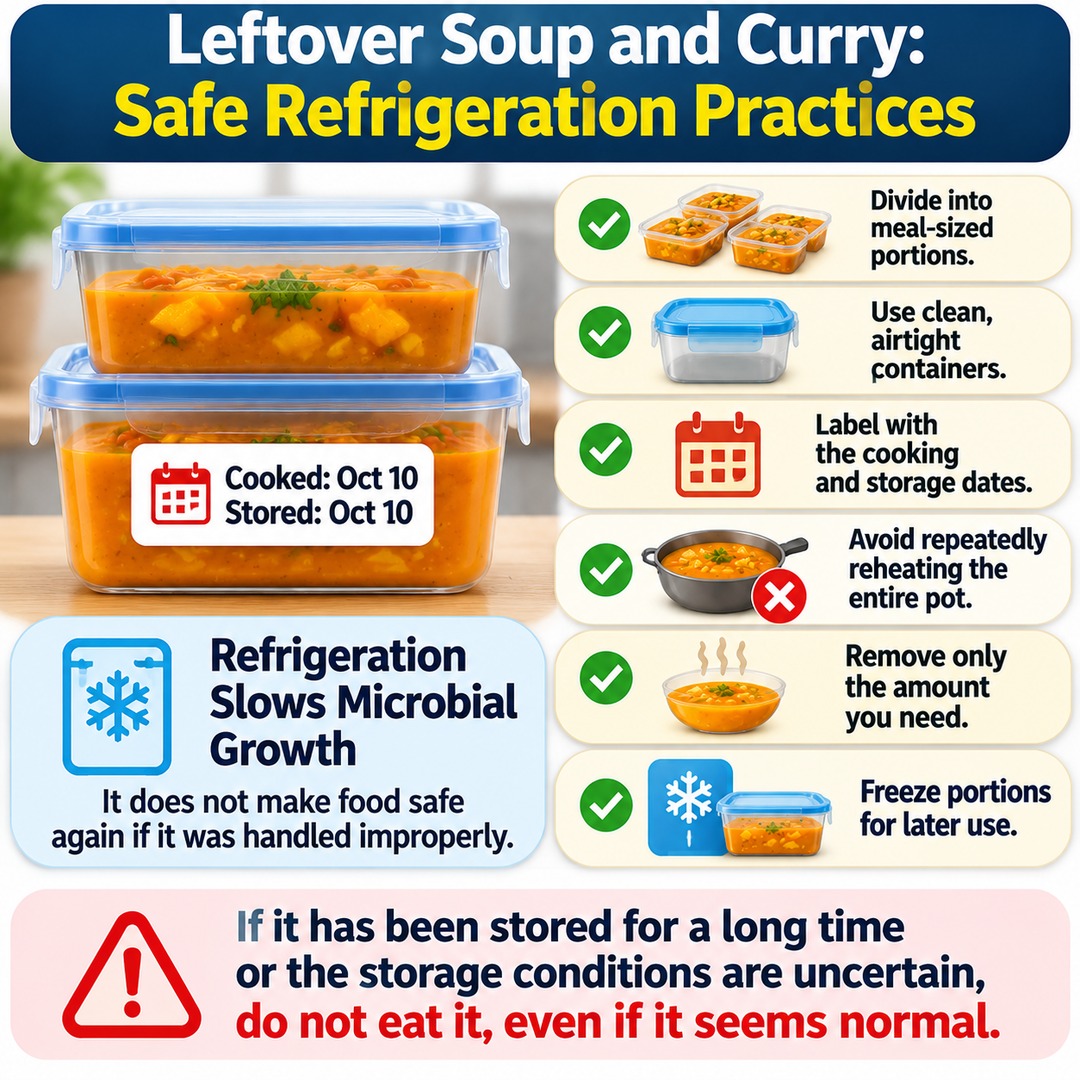
Refrigeration does not mean that food can be stored indefinitely. Refrigeration helps slow the growth of microorganisms; it does not make food safe again if it has already been handled improperly.
When storing leftover soup and curry at home, follow these practices:
Divide food into portions appropriate for individual meals.
Use clean, airtight containers.
Label containers with the cooking and storage dates.
Avoid repeatedly reheating the entire pot. Remove only the amount you need each time.
Consider freezing portions that you intend to eat several days later.
In particular, the safe refrigerated storage period depends on the type of food, how it was prepared, how quickly it was cooled, and the refrigerator temperature. It is difficult to establish one storage period that applies equally to every type of soup and curry.
If food has been stored for a long time or its storage conditions are uncertain, do not eat it simply because its smell and taste seem normal.
Is Soup or Curry Left Out Overnight Safe If You Boil It Again?
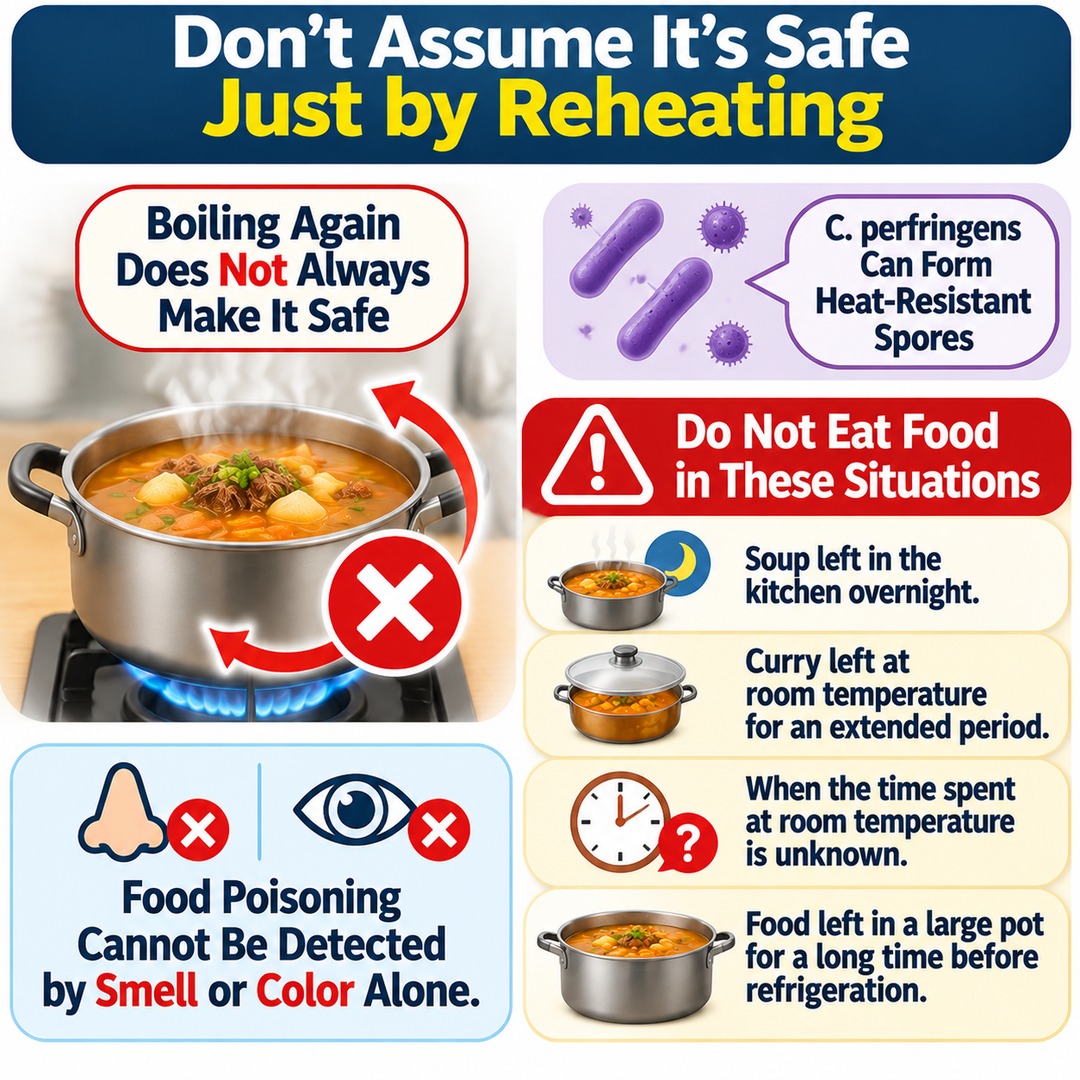
Soup or curry left at room temperature overnight cannot be guaranteed safe, even if you bring it back to a vigorous boil.
*C. perfringens* can form heat-resistant spores. Therefore, if food was stored improperly after cooking, you should not assume that reheating alone can restore its safety.
It is safer not to eat food in situations such as these:
Soup left in the kitchen overnight after cooking.
Curry left at room temperature for an extended period in a covered pot.
Food for which the amount of time spent at room temperature is unknown.
Food left in a large pot for a long time before being placed in the refrigerator.
Food poisoning cannot be detected by smell or color alone. The absence of an unusual smell does not mean that food is safe.
Frequently Asked Questions About Storing Leftover Soup and Curry
Should I Avoid Putting Hot Soup Directly in the Refrigerator?
It is best to avoid placing an entire large pot in the refrigerator. Divide the food into portions, cool it promptly, and refrigerate it. There is no need to wait for it to reach room temperature completely.
Can I Leave Soup or Curry Outside in Winter Because the Kitchen Is Cold?
This is not recommended. *C. perfringens* food poisoning can also occur during winter, and indoor temperatures alone cannot guarantee safe storage conditions.
Should Curry Be Divided into Portions Just Like Soup?
Yes. Rather than leaving curry in a large pot for an extended period, divide it into shallow containers, cool it, and refrigerate it. Thick curry can take longer to cool all the way through, particularly in the center.
How Long Should I Boil Soup After Taking It Out of the Refrigerator?
Rather than relying on a specific heating time, make sure the entire dish has been heated thoroughly. The reheating temperature recommended in MFDS guidance is at least 75°C.
Can I Use a Fan to Cool Soup?
This is not recommended because dust and foreign particles could enter the food. Using clean, shallow containers and cold water or ice water is a better approach.
If you cook a large pot of soup or curry, the first habit to change is waiting until the entire pot has cooled completely before storing it. The key is to eat or refrigerate the food within 2 hours and divide large batches into portions so they cool quickly.
This is particularly important if you plan to eat the food the following day. Divide it into individual meal portions from the beginning instead of storing the entire pot. This also makes refrigeration and reheating much easier.