Starting November 12, 2026, accommodation booking platforms must verify the operating licenses of accommodation providers. Existing listings are not exempt. Even accommodations that have been listed on a platform for years must have their legal operating status verified if the platform intends to continue facilitating bookings after the effective date. However, this does not mean that bookings already completed before the new requirement takes effect will automatically be canceled.
Whether a pension, guesthouse, or other accommodation that you regularly book through an app will remain available after November 12 depends not simply on when it was listed, but on whether the platform has verified that the property is legally authorized to operate.
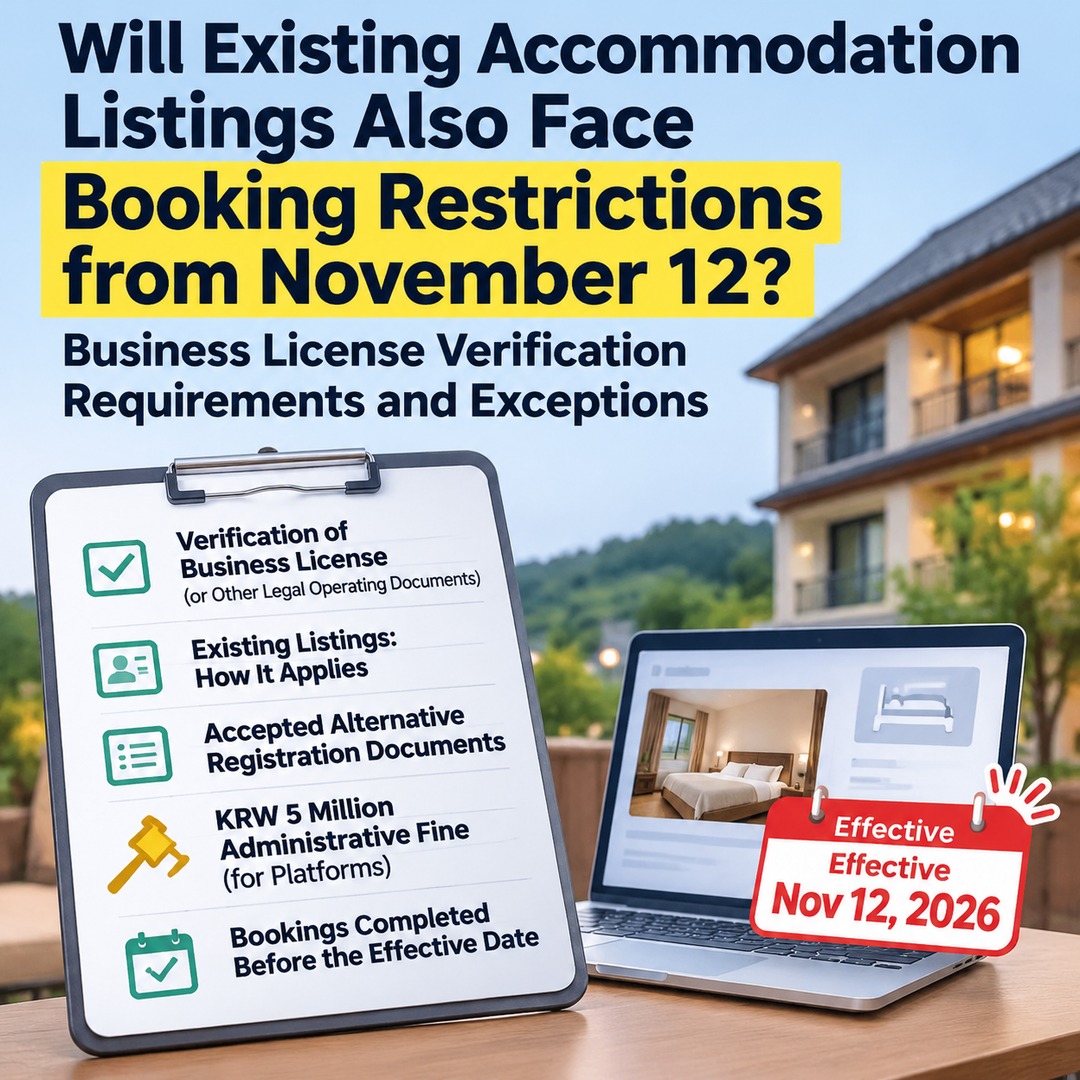
Will the verification requirement also apply to existing accommodation listings from November 12?
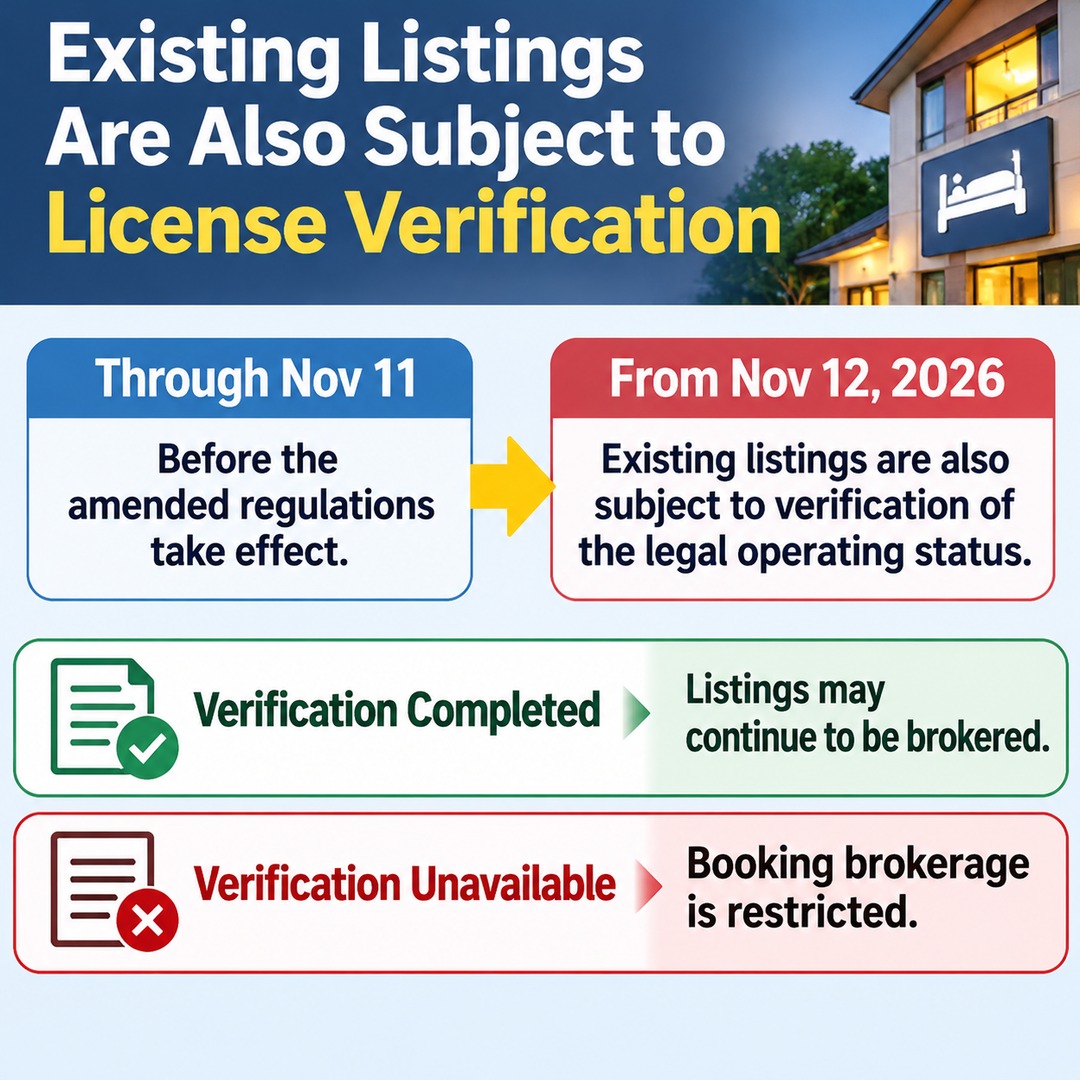
Yes. The requirement applies not only to newly registered accommodations but also to accommodation listings that were already available on platforms.
Starting November 12, 2026, mail-order brokerage operators and other covered intermediaries must verify accommodation business licenses. They cannot continue facilitating bookings for accommodation listings whose legal operating status cannot be verified.
The distinction is as follows:
Through November 11: Before the amended regulations take effect.
From November 12: Existing listings are also subject to verification of their legal operating status.
Verification completed: Listings whose operating eligibility has been confirmed using documents compliant with the applicable laws may continue to be brokered.
Verification unavailable: Booking brokerage for the affected listings is restricted from the effective date.
The fact that an accommodation has been listed on an app for a long time or previously accepted bookings without problems does not exempt it from the new verification requirement.
Which accommodation businesses must booking platforms verify?
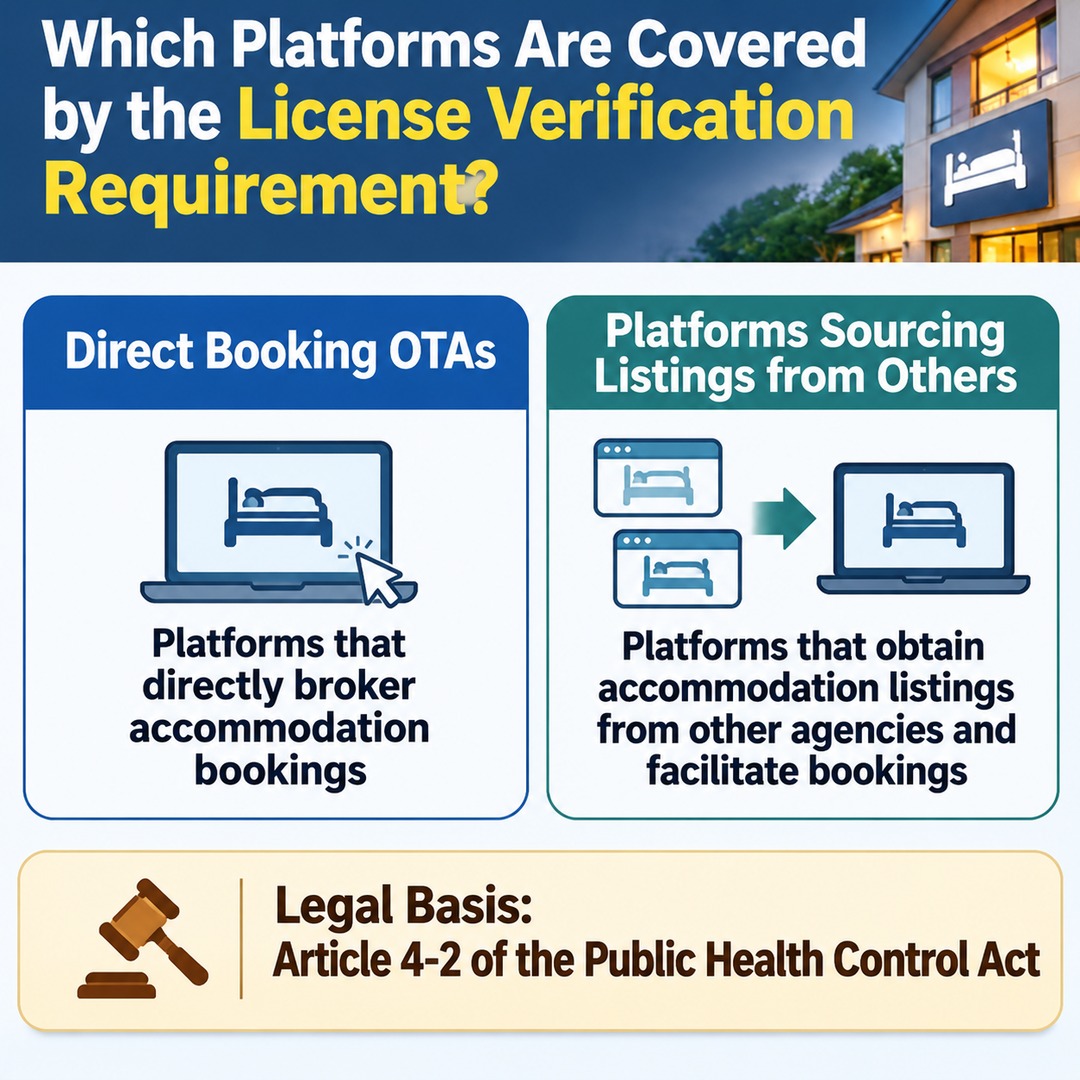
The requirement is not limited to online travel agencies (OTAs) that directly broker accommodation bookings, such as Yanolja and Good Choice (Yeogi Eottae). It also covers platforms that obtain accommodation listings from other travel agencies or product suppliers, display those listings on their own services, and facilitate actual booking sales.
In other words, whether the accommodation owner has a direct contract with the platform is not the only factor determining whether the requirement applies. What matters is whether the platform actually sells accommodation products through a method that qualifies as mail-order brokerage under South Korean law.
The legal basis for this requirement is Article 4-2 of the Public Health Control Act of South Korea. This provision requires mail-order brokerage operators and mail-order brokerage businesses to verify accommodation business licenses and restricts the brokerage of accommodation products that cannot be verified.
Are all accommodations without a business license prohibited from accepting bookings?
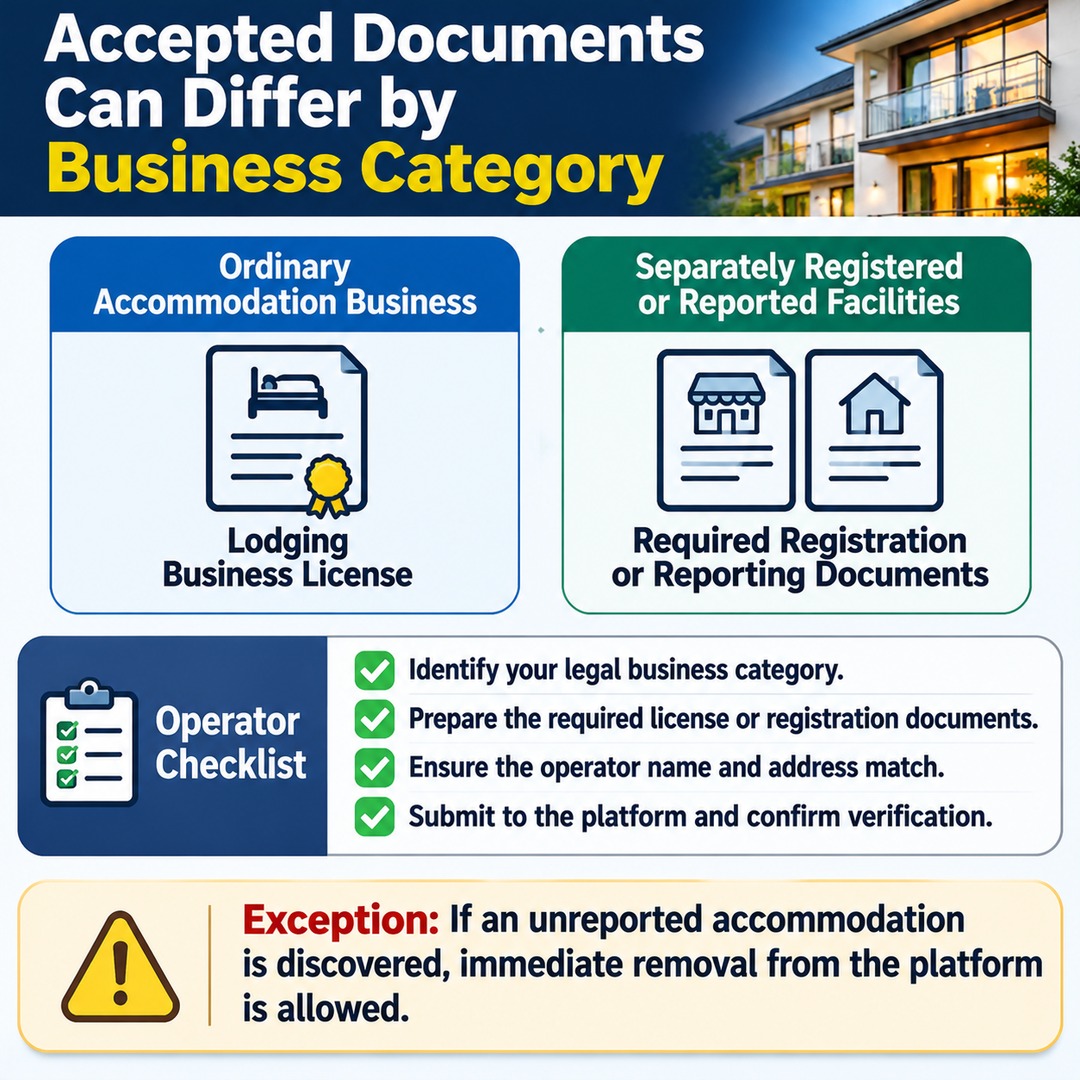
An accommodation should not automatically be classified as an unregistered lodging business simply because it does not have a document specifically titled an accommodation business license. Different types of accommodation facilities may be legally authorized to operate under different business categories and may therefore have different supporting documents.
It is important to distinguish between ordinary accommodation businesses that receive a lodging business license and facilities that are separately registered or reported under other legislation.
What platforms must verify is not simply the name of a particular document, but whether the accommodation is legally operating in accordance with the laws applicable to its business category.
Accommodation operators should check the following:
Identify the legal business category under which the accommodation currently operates.
Prepare the business license or registration and reporting documents required for that category.
Confirm that the business operator's name and accommodation address on the documents match the actual registration information.
After submitting the documents to the platform, separately confirm that verification has been completed.
In particular, holding only a business registration certificate does not establish that the required lodging business notification has also been completed. Tax-related business registration and the operating notification required for accommodation businesses are separate procedures in South Korea.
The law also provides an exception. Under Article 4-2(2), the brokerage restriction does not apply when a platform discovers an operator conducting an unreported accommodation business through its own online marketplace and immediately removes the listing. However, this is not permission to continue selling unregistered accommodation. The exception concerns cases in which the platform takes immediate removal action after discovering the violation.
Who is responsible for the KRW 5 million administrative fine?
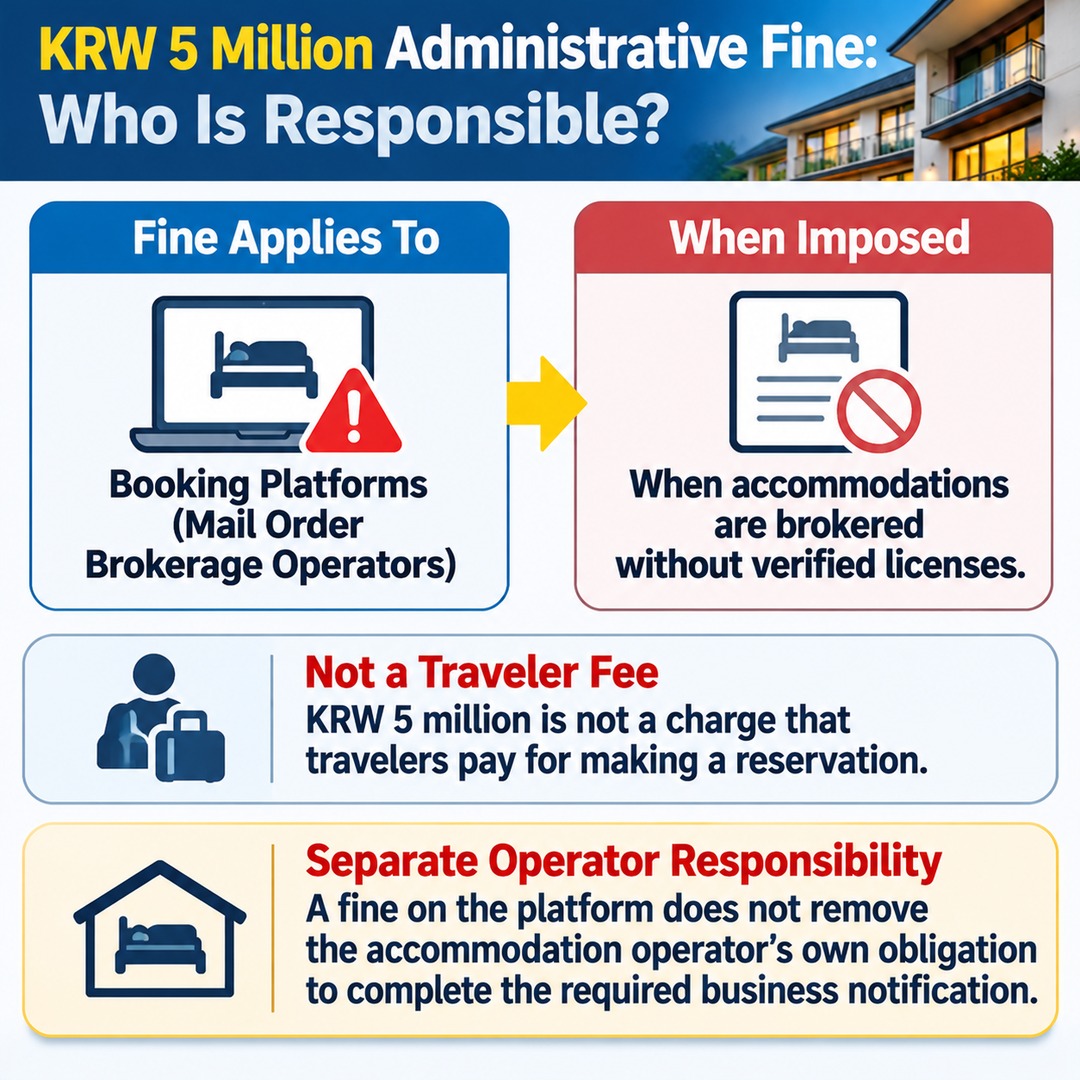
Under the new provision, the party responsible for an administrative fine when accommodation products are brokered without verifying the required business license is the mail-order brokerage operator or other covered platform business.
It is important to distinguish between the statutory maximum fine and the specific amount established under the Enforcement Decree.
| Category | Administrative fine |
|---|---|
| Statutory maximum | Up to KRW 10 million |
| Fine under the amended Enforcement Decree | KRW 5 million |
|---|
Therefore, KRW 5 million is not a fee that travelers must pay simply because they make a reservation. It is a regulatory penalty applicable when a platform brokers accommodation listings whose required operating licenses cannot be verified.
The legal responsibility of an accommodation operator conducting business without the required notification must be assessed separately from a platform's violation of its brokerage obligations. A fine imposed on a platform does not eliminate the accommodation operator's own legal obligation to complete the required business notification.
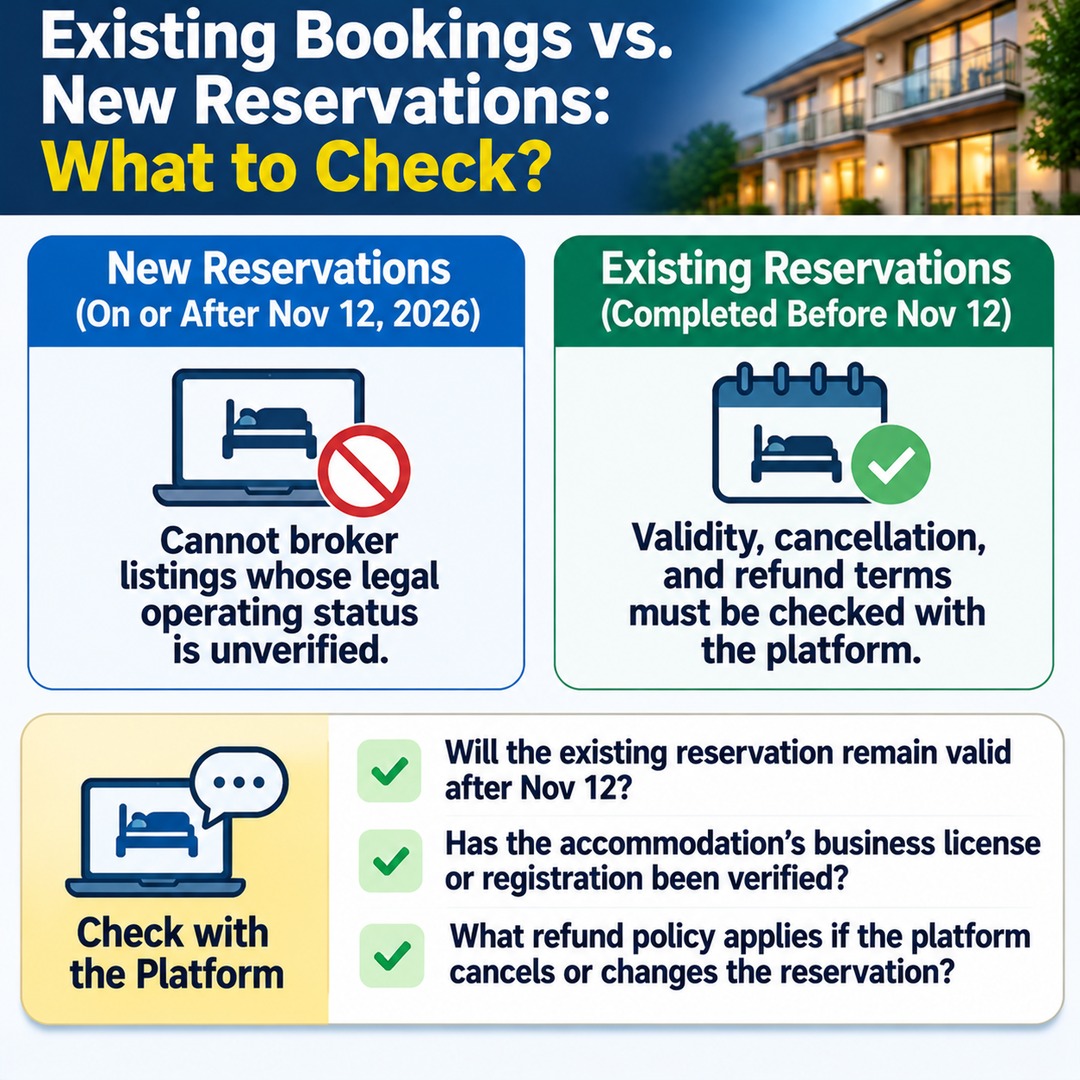
Will reservations paid for before November 12 be automatically canceled?
The key distinction is between when an individual reservation was completed and when an accommodation product is newly brokered.
The amended regulation establishes verification obligations for accommodation brokerage from November 12, 2026. It is clear that accommodation products already listed before the effective date must also undergo verification if the platform intends to continue brokering them afterward.
However, the verification provision alone does not establish whether individual reservations already completed before the effective date will be canceled in bulk, remain valid, or be subject to particular refund conditions if canceled.
The following situations should therefore be considered separately:
New reservations made on or after November 12: Platforms cannot broker accommodation listings whose legal operating status they have been unable to verify.
Reservations and payments completed before the effective date: Whether an existing reservation remains valid and how cancellation and refunds are handled must be checked against the platform's booking terms and individual notices.
Do not assume that an existing paid reservation has been automatically canceled just because the accommodation has disappeared from search results. Conversely, having a booking confirmation does not guarantee that the stay will necessarily proceed as scheduled.
If your travel plans are already confirmed, contacting the accommodation directly is not enough. It is also advisable to provide your reservation number to the booking platform and check the following:
1. Whether the existing reservation will remain valid after November 12.
2. Whether verification of the accommodation's business license or other legally required registration has been completed.
3. What refund policy applies if the platform cancels or changes the reservation.
Keeping the platform's responses and reservation-related notices will make it easier to establish what was communicated if a dispute arises later.
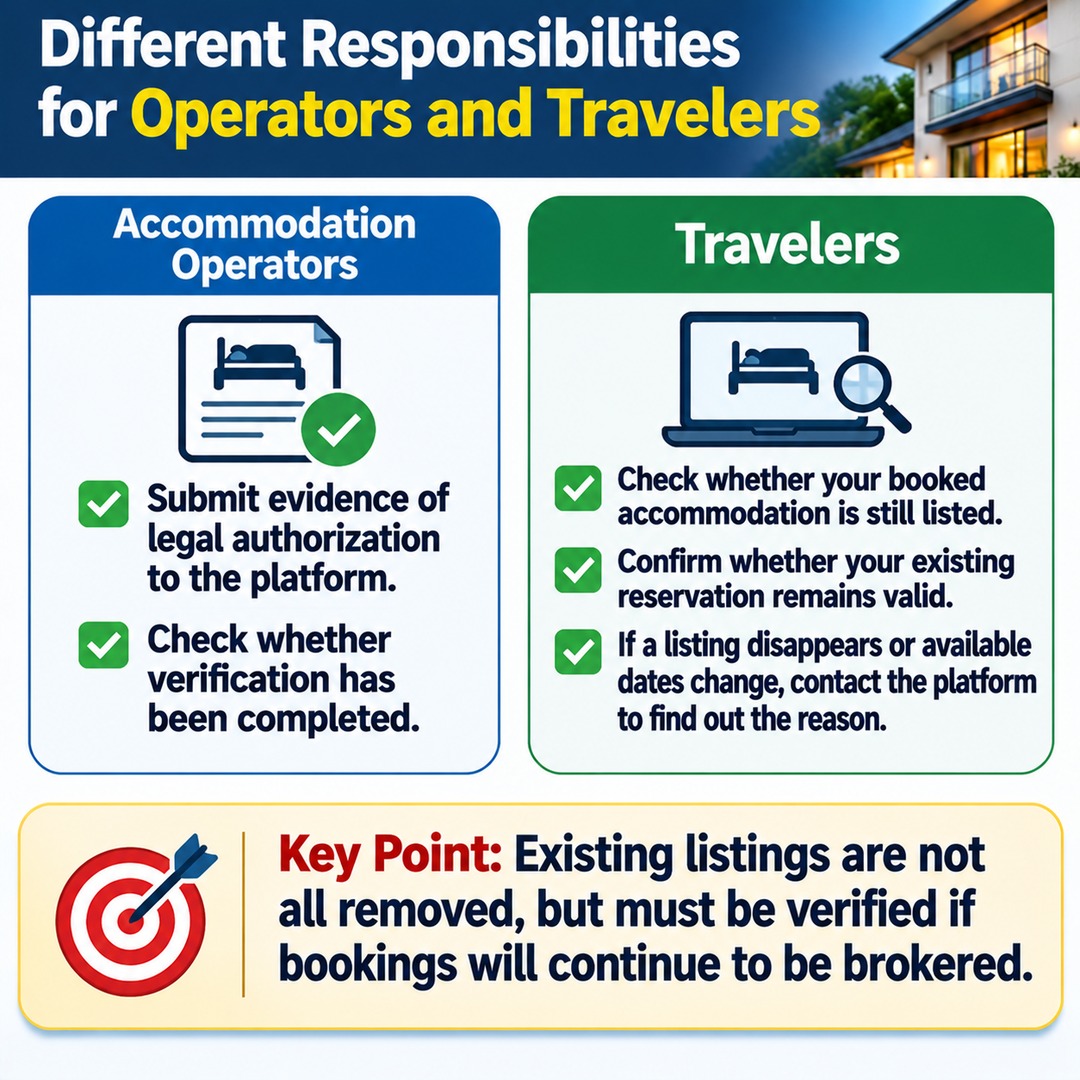
Accommodation operators and travelers need to check different things
Accommodation operators and travelers have different responsibilities under this system.
Accommodation operators must submit evidence of their legal authorization to operate to the platform and check whether verification has been completed. Travelers should check whether their booked accommodation remains listed and whether their existing reservations are still valid.
In particular, if an accommodation listing disappears from search results or its available booking dates change around November 12, contact the platform to determine whether the issue is simply that the rooms are sold out or whether it relates to verification of the property's legal operating status.
The key point of this regulation is not that all existing accommodation listings will be removed. Rather, even previously registered accommodations must have their legal operating status verified if platforms intend to continue brokering their bookings after the effective date.
The business license verification requirement and the cancellation or refund of existing reservations are separate matters. If you already have travel plans, the first step is to confirm with the platform whether your reservation will remain valid.