Does Your Apartment Complex Fall Within the Scope?
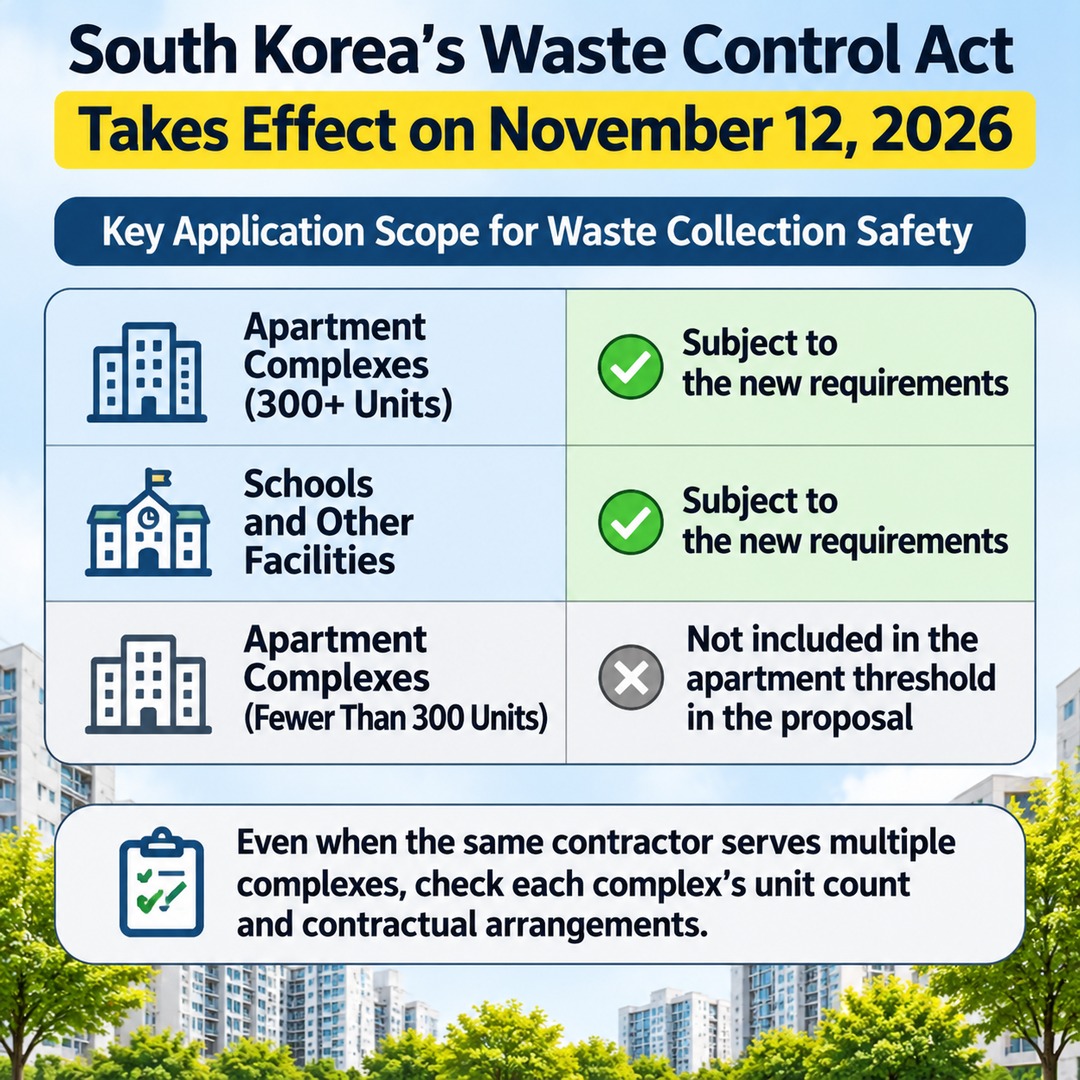
The revised Waste Control Act of South Korea, scheduled to take effect on November 12, 2026, establishes requirements to protect pedestrian safety during household waste collection at apartment complexes, schools, and other facilities. The Enforcement Decree amendment proposal published by the Ministry of Climate, Energy and Environment identifies apartment complexes with 300 or more residential units, as well as schools, kindergartens, and childcare centers, as facilities covered by the proposed requirements. The scope includes collection performed by local governments or their contracted service providers, as well as private companies directly contracted by individual apartment complexes.
Apartment complexes with fewer than 300 units do not fall within the apartment-complex threshold specified in the published proposal. However, other existing waste collection safety requirements may still apply, depending on who performs the collection and how the work is organized. Even when the same contractor serves multiple apartment complexes, it is important to check each complex's unit count and contractual arrangement separately.
What Will Change for Garbage Trucks and Collection Operations?
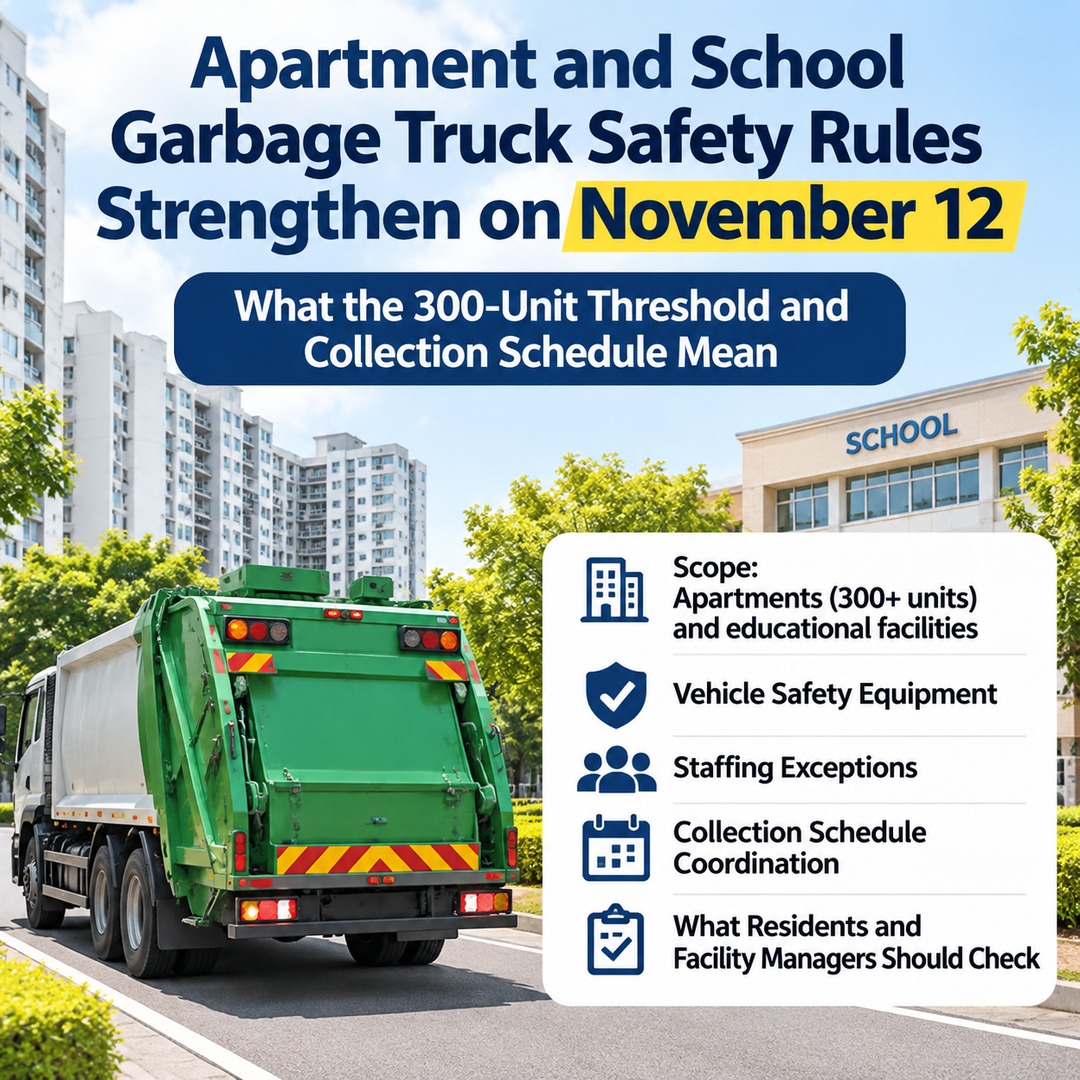
The proposed amendment to the Enforcement Rule requires collection vehicles to be equipped with rear-view video systems, proximity warning devices, and reversing warning alarms. It also requires safety signs to be installed around work areas. These measures are intended to help drivers identify pedestrians behind their vehicles and alert pedestrians when a vehicle is moving, particularly while reversing.
The proposal establishes a general requirement for at least two people to perform collection work, while providing exceptions for certain small vehicles and grapple trucks. Whether an exception applies at a particular apartment complex may depend on the vehicle type and the way the work is performed. Management offices should therefore check the final Enforcement Rule alongside the contractor's work plan.
Will Collection Schedules Change Nationwide All at Once?
The proposal aims to coordinate collection hours with facility management bodies, taking into account periods when school commutes and resident pedestrian traffic are particularly heavy. Actual collection days and times may vary depending on agreements reached at individual facilities and local operating conditions. Unless the apartment complex issues a notice announcing a change, residents should continue to follow the existing waste disposal instructions.
What Residents and Management Offices Should Check
Residents: Check notices from your apartment management office to see whether collection times or designated work areas are changing. When a collection vehicle is stopped or reversing, it is safer to walk around the designated work area rather than pass through it.
Apartment management offices: Confirm the number of residential units and the type of contract with the waste collection provider. Review the vehicle's safety equipment, staffing arrangements at the collection site, and work schedules during periods of heavy pedestrian traffic with the contractor.
Schools, kindergartens, and childcare centers: First inspect locations where collection vehicle access routes overlap with student arrival and departure times. If collection hours change, inform teachers, staff, and parents or guardians.
November 12 is the effective date of the revised Act. However, details such as the 300-unit threshold and staffing exceptions for different vehicle types are set out in the proposed amendments published for public comment. Before incorporating these requirements into contracts or operational plans, check the final promulgated versions of the Enforcement Decree and Enforcement Rule.