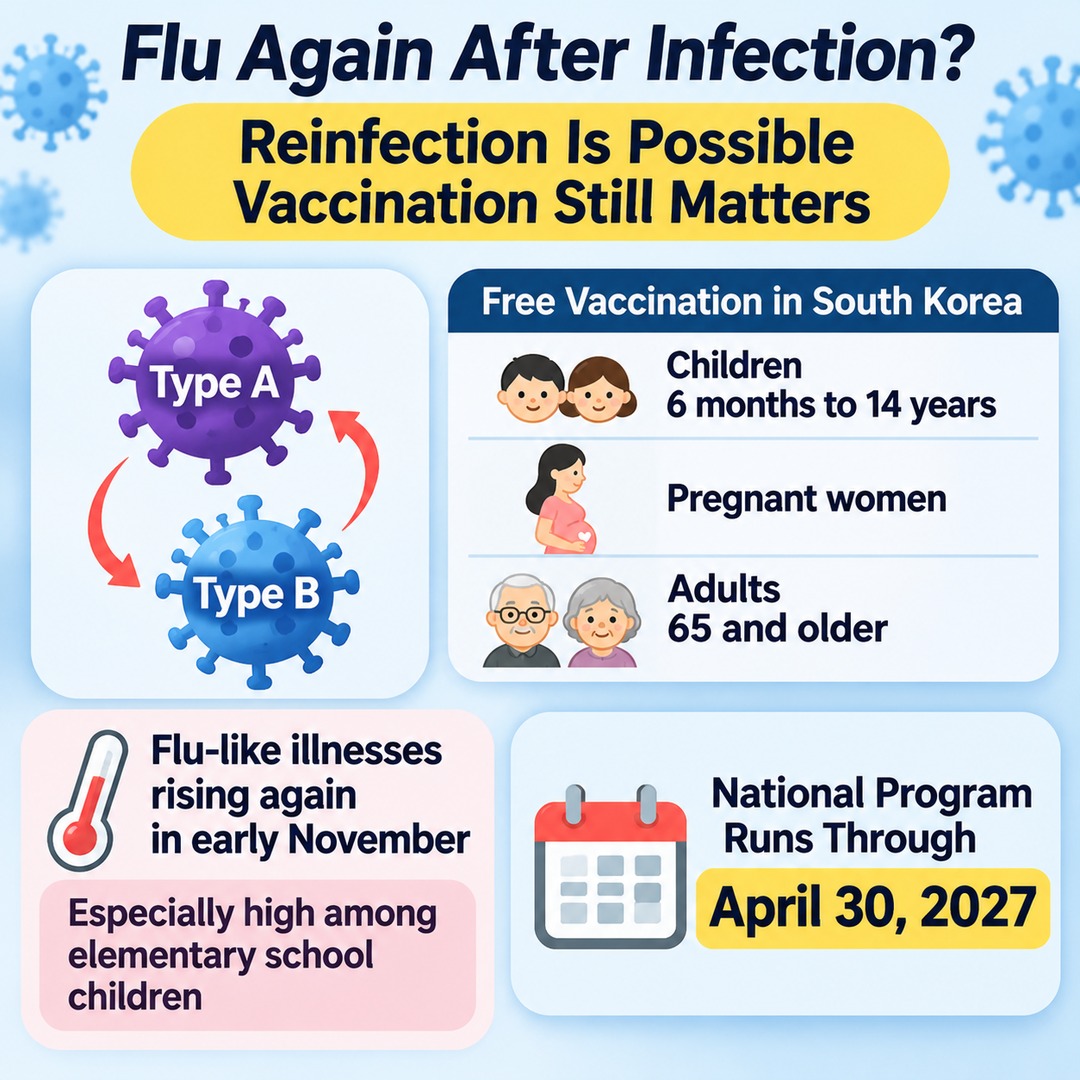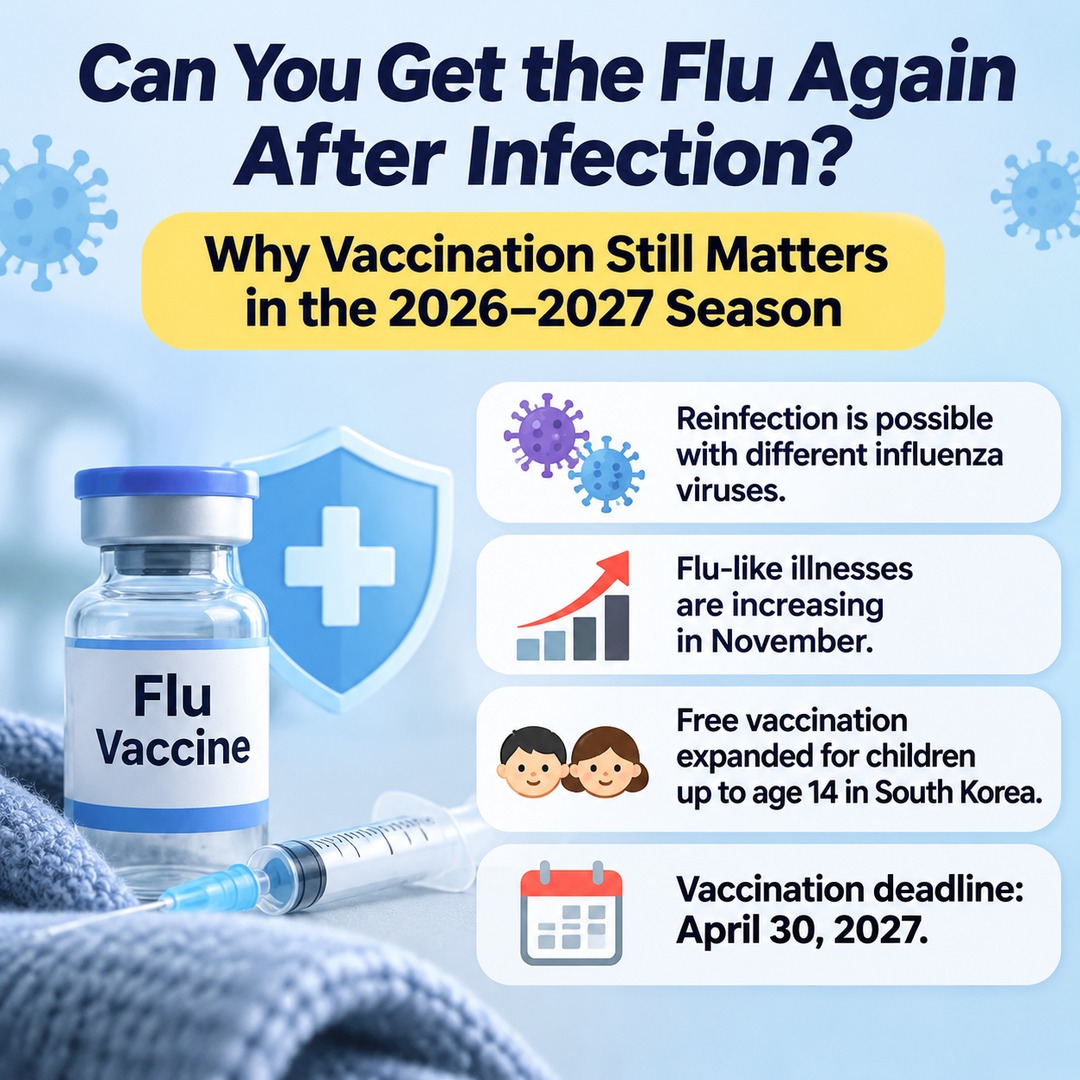
Even if you have already had the flu during the current season, you should not automatically skip vaccination. Influenza infection does not necessarily protect you against other types of influenza viruses. For the 2026–2027 season, South Korea's free national vaccination program covers children aged 6 months to 14 years, pregnant women, and adults aged 65 and older. The national program runs through April 30, 2027.
It is easy to assume that recovering from the flu provides immunity for the rest of the season. However, the virus that caused your first infection may differ from viruses you encounter later. The Korea Disease Control and Prevention Agency (KDCA) has specifically advised that people who have already had influenza can still become infected again, and has encouraged high-risk individuals who have not been vaccinated to get their shots.
Flu-like illnesses also began increasing again in early November. Incidence was particularly high among elementary school-aged children, making it important for households with children to check both previous infection history and vaccination status.
Should You Get a Flu Vaccine Even After Having the Flu?
If you have not received the seasonal flu vaccine, vaccination may still be worth considering even if you have already had influenza. A previous infection does not guarantee protection against every influenza virus circulating during the same season.
Influenza is not caused by just one type of virus. Multiple types and subtypes can circulate, and infection with one does not mean you are protected from infection with another.
The KDCA has explicitly explained that people who have already been infected during the current season may still contract a different type of influenza virus.
It is important to distinguish between the following situations:
Having already had the flu: This does not mean you can automatically skip vaccination for the current season.
Exposure to a different type of virus: The possibility of reinfection remains.
Not yet having received the vaccine: It is advisable to discuss whether vaccination is appropriate based on your age and health condition with a healthcare professional.
However, this does not mean you should necessarily get vaccinated immediately after an infection. If you still have a fever or acute symptoms, consult a healthcare professional about the appropriate time to receive the vaccine.
How Much Did Flu Cases Increase in November?
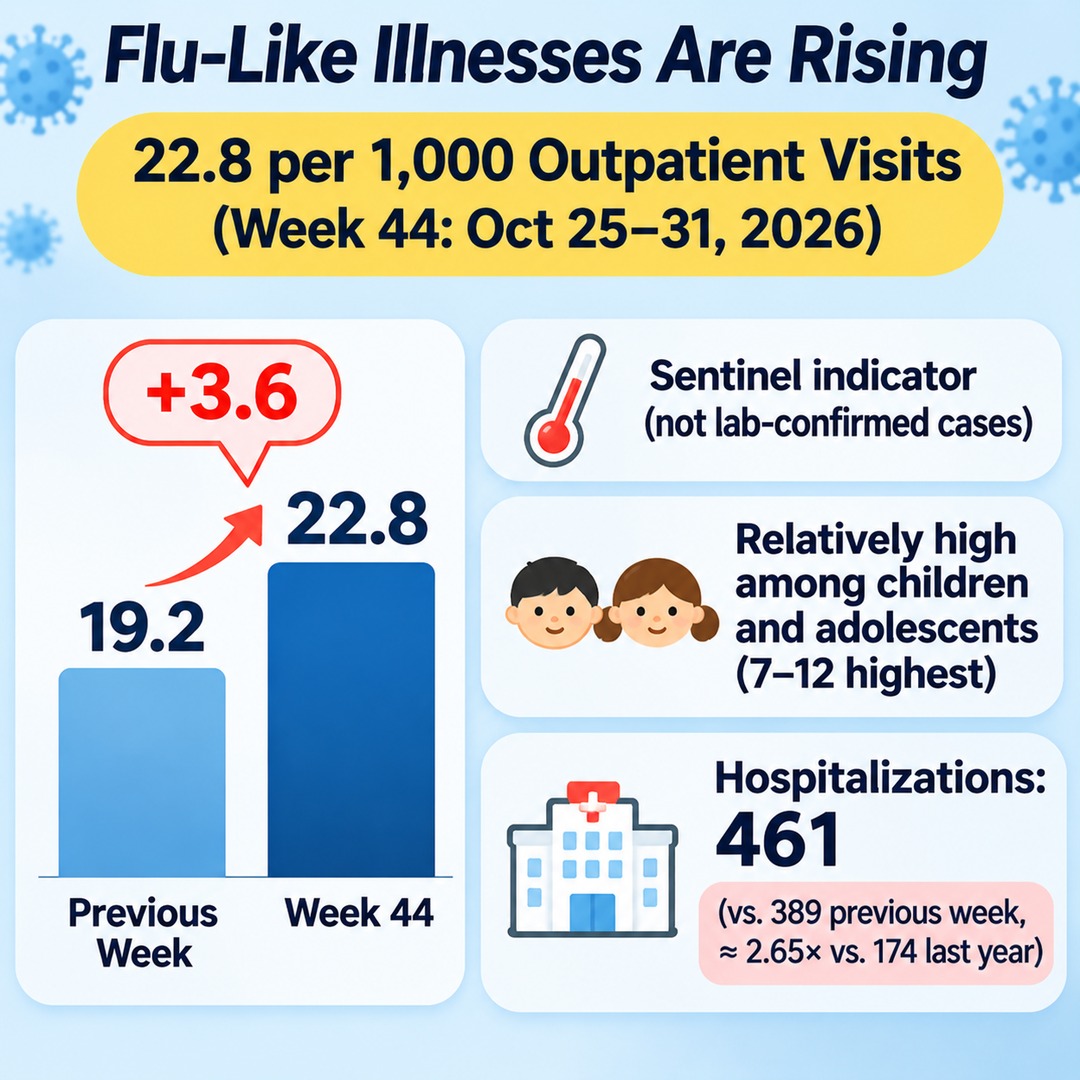
Data for epidemiological week 44, released in early November 2026, recorded 22.8 patients with influenza-like illness per 1,000 outpatient visits. This was an increase of 3.6 from the previous week's figure of 19.2, marking the second consecutive week of increases.
This figure does not represent the number of laboratory-confirmed influenza cases. It is a sentinel surveillance indicator based on patients suspected of having influenza who present with a fever of 38°C or higher accompanied by a cough or sore throat.
Changes in the proportion of patients with influenza-like illness
Number of suspected cases per 1,000 outpatient visits at participating clinics
Week 43
19.2 cases
Week 44
An increase of 3.6 cases compared with the previous week
Statistical period for week 44: October 25–31, 2026
Incidence was relatively high among children and adolescents.
| Age group | Suspected cases per 1,000 outpatient visits |
|---|---|
| 7–12 years | 60.9 |
| 13–18 years | 37.4 |
| 1–6 years | 33.1 |
| 19–49 years | 23.7 |
| 50–64 years | 13.1 |
| 65 and older | 10.1 |
Children aged 7–12 recorded the highest rate among all age groups.
Hospitalizations also increased to 461 in week 44, compared with 389 in the previous week. This was approximately 2.65 times the 174 hospitalizations recorded during the same week last year. However, these figures come from sentinel surveillance at participating hospitals and do not represent every influenza case nationwide.
These figures illustrate why even people who have already had the flu should consider the possibility of another infection.
Who Is Eligible for Free Flu Vaccination in the 2026–2027 Season?
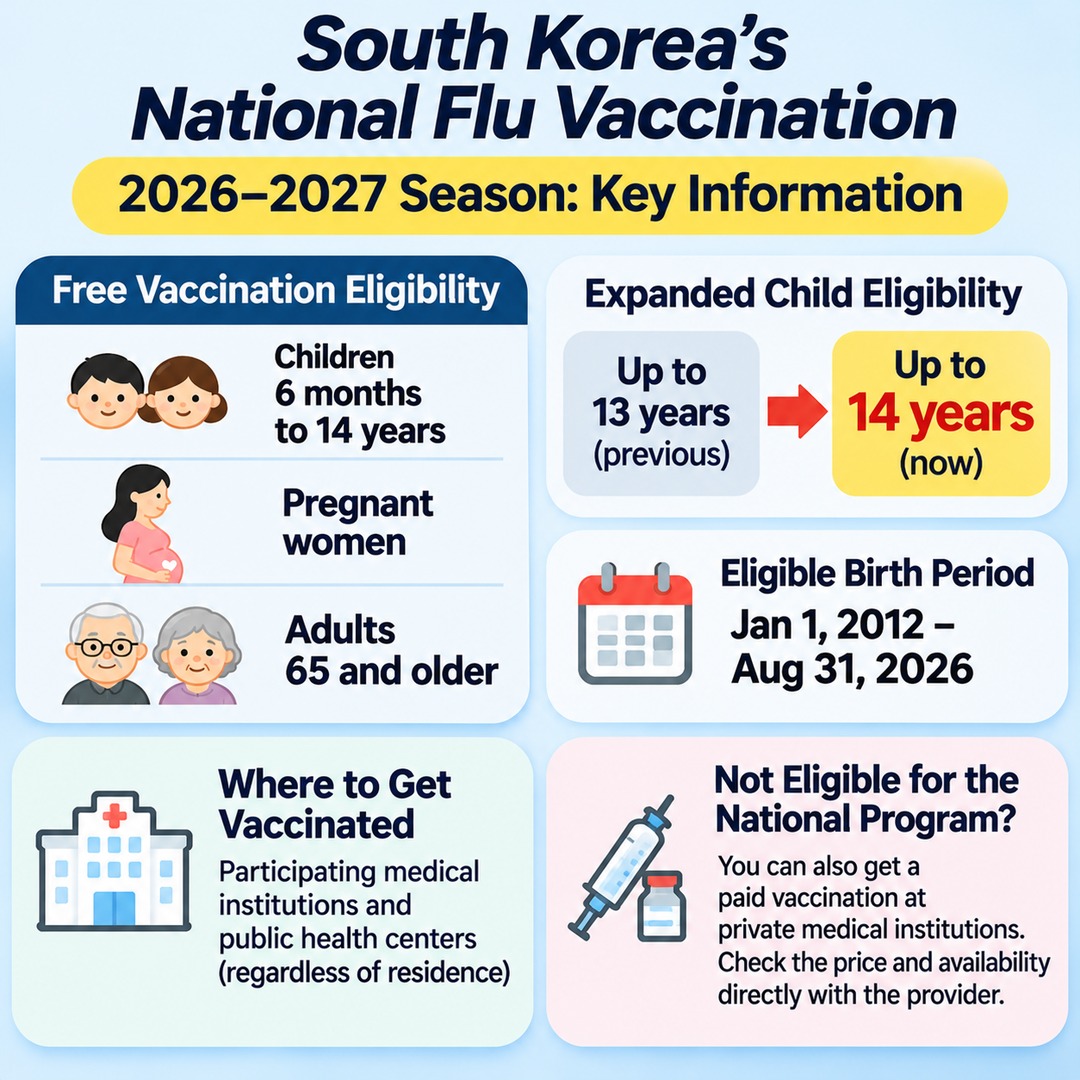
South Korea's national influenza vaccination program for this season covers children aged 6 months to 14 years, pregnant women, and adults aged 65 and older. One notable change is that the eligible age range for children has expanded from 13 to 14 years.
| Eligible group | Birth date or eligibility criteria | Vaccination period |
|---|---|---|
| Children | 6 months to 14 years old | September 21, 2026–April 30, 2027 |
| Pregnant women | Pregnant women | September 21, 2026–April 30, 2027 |
| Adults aged 75 and older | Born on or before December 31, 1951 | October 6, 2026–April 30, 2027 |
| Adults aged 70–74 | Born January 1, 1952–December 31, 1956 | October 12, 2026–April 30, 2027 |
| Adults aged 65–69 | Born January 1, 1957–December 31, 1961 | October 15, 2026–April 30, 2027 |
Children born between January 1, 2012, and August 31, 2026, are included in the eligibility range.
Vaccination is available at participating medical institutions and public health centers regardless of your registered residential address in South Korea. However, it is advisable to check with a public health center before visiting to confirm vaccine availability.
Adults who are not eligible for the national vaccination program can also receive paid vaccinations at private medical institutions. Prices and vaccine availability should be confirmed directly with each provider.
When Should You Get Vaccinated After Having the Flu?
Rather than rushing to get vaccinated while you are still ill, first check your current health condition.
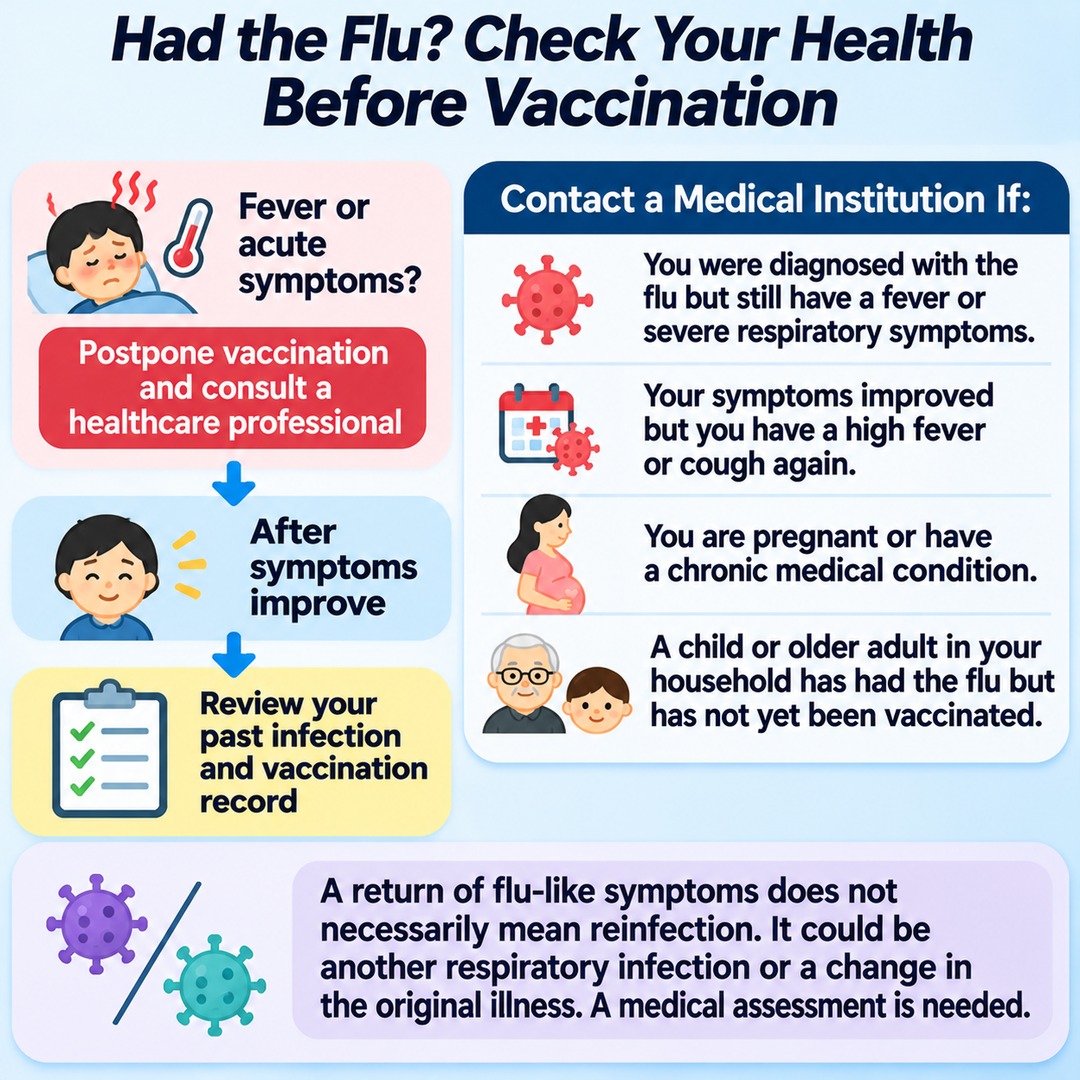
If you have a fever or acute symptoms, it is appropriate to postpone vaccination and consult a healthcare professional about when to receive it. Once your symptoms have improved, review both your previous infection history and your vaccination record for the current season.
You should particularly consider contacting a medical institution in the following situations:
You have been diagnosed with influenza but still have a fever or severe respiratory symptoms.
Your symptoms improved but you have developed a high fever or cough again.
You are pregnant or have a chronic medical condition.
A child or older adult in your household has had the flu but has not yet been vaccinated.
The return of flu-like symptoms does not necessarily mean you have been reinfected with a different influenza strain. The symptoms could also be caused by another respiratory infection or a change in the original illness. A medical assessment is needed to determine the cause.
Does Getting a Flu Vaccine Guarantee That You Will Not Get Infected?
Vaccination is not a guarantee that infection will be completely prevented. Even after receiving the vaccine, you may still contract influenza.
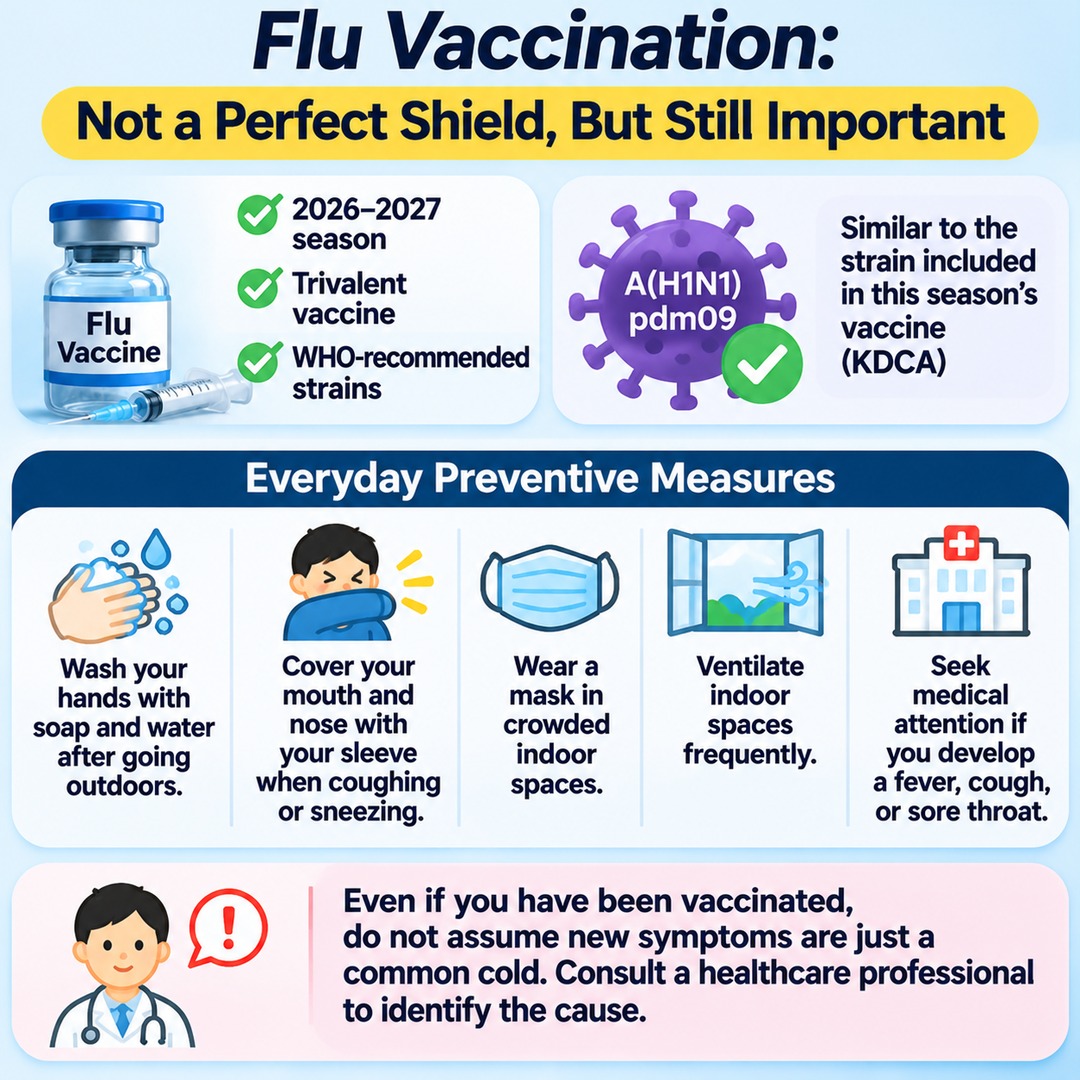
South Korea's 2026–2027 national vaccination program uses a trivalent vaccine incorporating the virus strains recommended by the World Health Organization (WHO).
The KDCA has stated that the currently circulating influenza A(H1N1)pdm09 virus is similar to the strain included in this season's vaccine.
You should also follow everyday preventive measures alongside vaccination:
Wash your hands with soap and water after going outdoors.
Cover your mouth and nose with your sleeve when coughing or sneezing.
Wear a mask in crowded indoor spaces.
Ventilate indoor spaces frequently.
Seek medical attention if you develop a fever, cough, or sore throat.
Even if you have been vaccinated, do not automatically assume that new symptoms are just a common cold. Consult a healthcare professional to identify the cause.
What Should You Check If You Have Already Had the Flu?
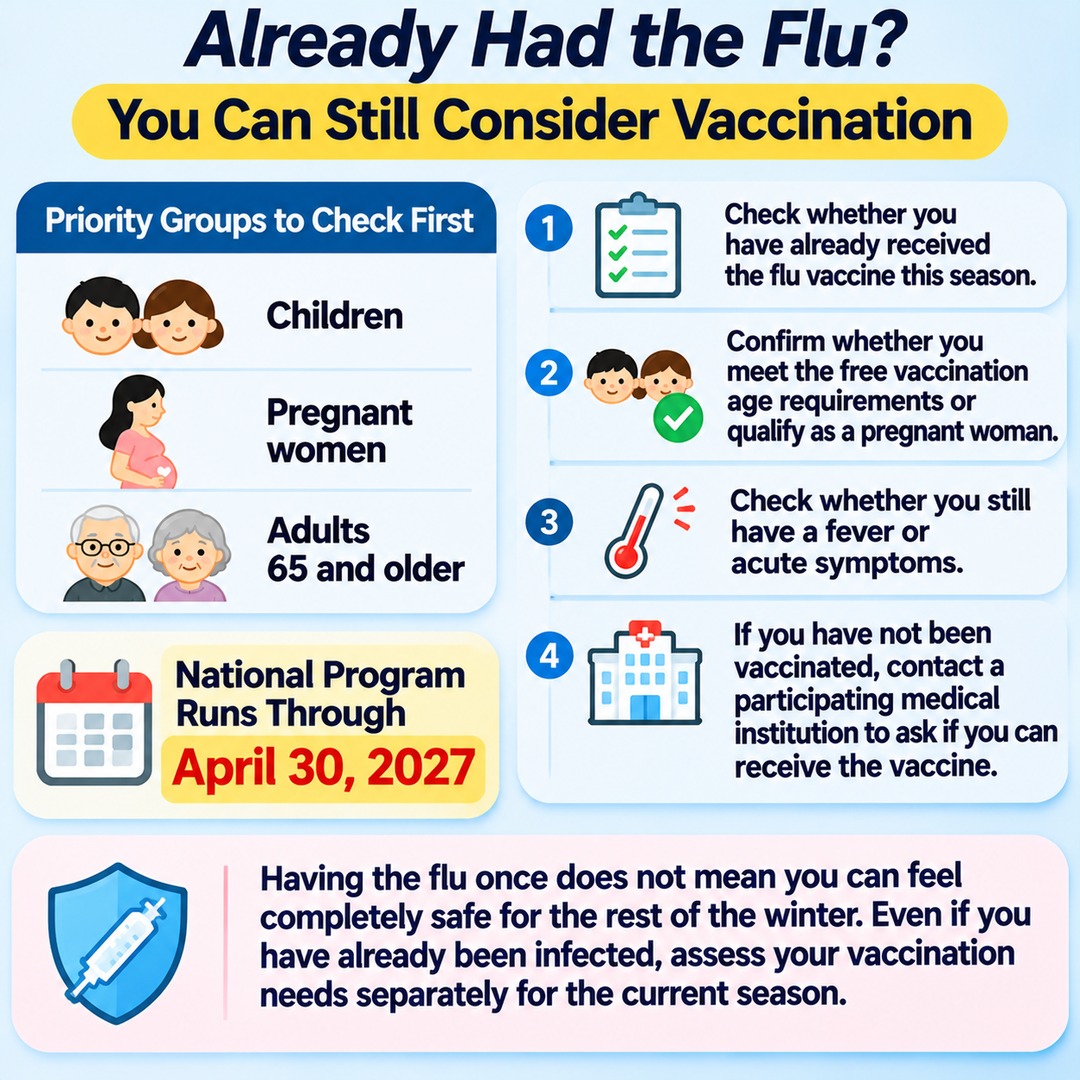
You do not need to give up on vaccination simply because you have already had influenza during the current season. In particular, children, pregnant women, and adults aged 65 and older should first check whether they qualify for South Korea's national vaccination program.
The steps are straightforward:
1. Check whether you have already received the flu vaccine for the current season.
2. Confirm whether you meet the free vaccination age requirements or qualify as a pregnant woman.
3. Check whether you still have a fever or acute symptoms.
4. If you have not been vaccinated, contact a participating medical institution to ask whether you can receive the vaccine.
South Korea's national influenza vaccination program runs through April 30, 2027. However, actual vaccine availability and the appropriate timing for each individual should be confirmed with a medical institution.
Having the flu once does not mean you can feel completely safe for the rest of the winter. Even if you have already been infected, it is important to assess your vaccination needs separately for the current season.