Winter window condensation can return even after ventilation because indoor water vapor comes into contact with cold glass or window frame surfaces and turns into droplets. The important step is to determine whether the problem is simply high indoor humidity or an issue with the windows' airtightness and insulation. In particular, identifying exactly where the water droplets appear can help narrow down what needs to be inspected.
Why Does Window Condensation Return After Ventilation?
Ventilation helps reduce indoor moisture, but condensation can keep returning if the window surface is excessively cold.
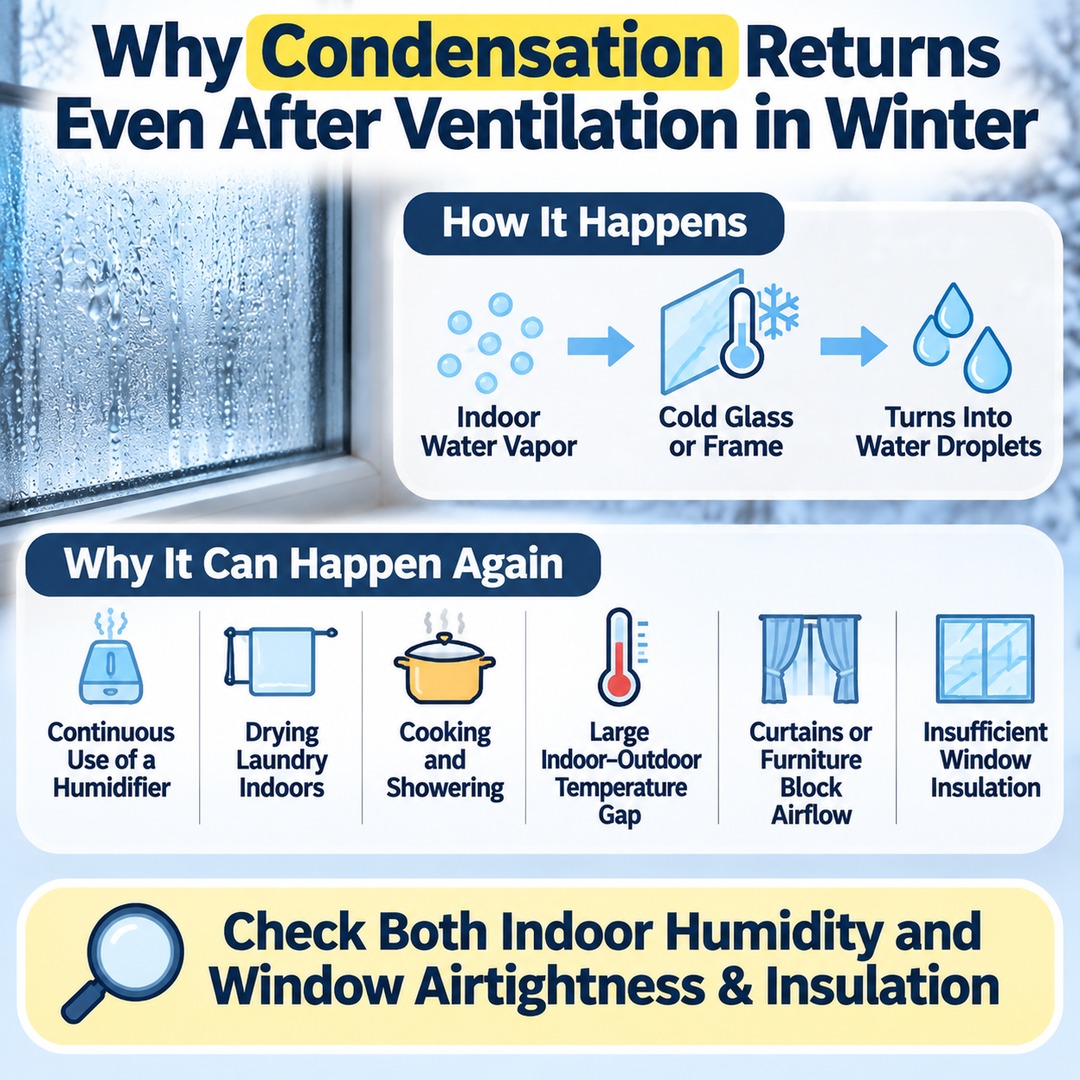
Condensation occurs when water vapor in the air comes into contact with a cold surface and turns into liquid water. The amount of moisture air can hold depends on its temperature. When water vapor meets cold surfaces, such as window glass or frames, it can easily turn into water droplets.
Condensation may reappear after ventilation in situations such as these:
A humidifier is running continuously or laundry is being dried indoors.
Cooking and showering generate large amounts of water vapor.
The temperature difference between indoors and outdoors becomes significant while heating is in use.
Thick curtains or furniture block warm air from circulating around the windows.
The windows or frames do not provide sufficient insulation.
The important point is not simply to ventilate more often. You also need to consider both the amount of moisture being generated indoors and the temperature of the window surfaces.
The Cause Depends on Where the Water Droplets Appear
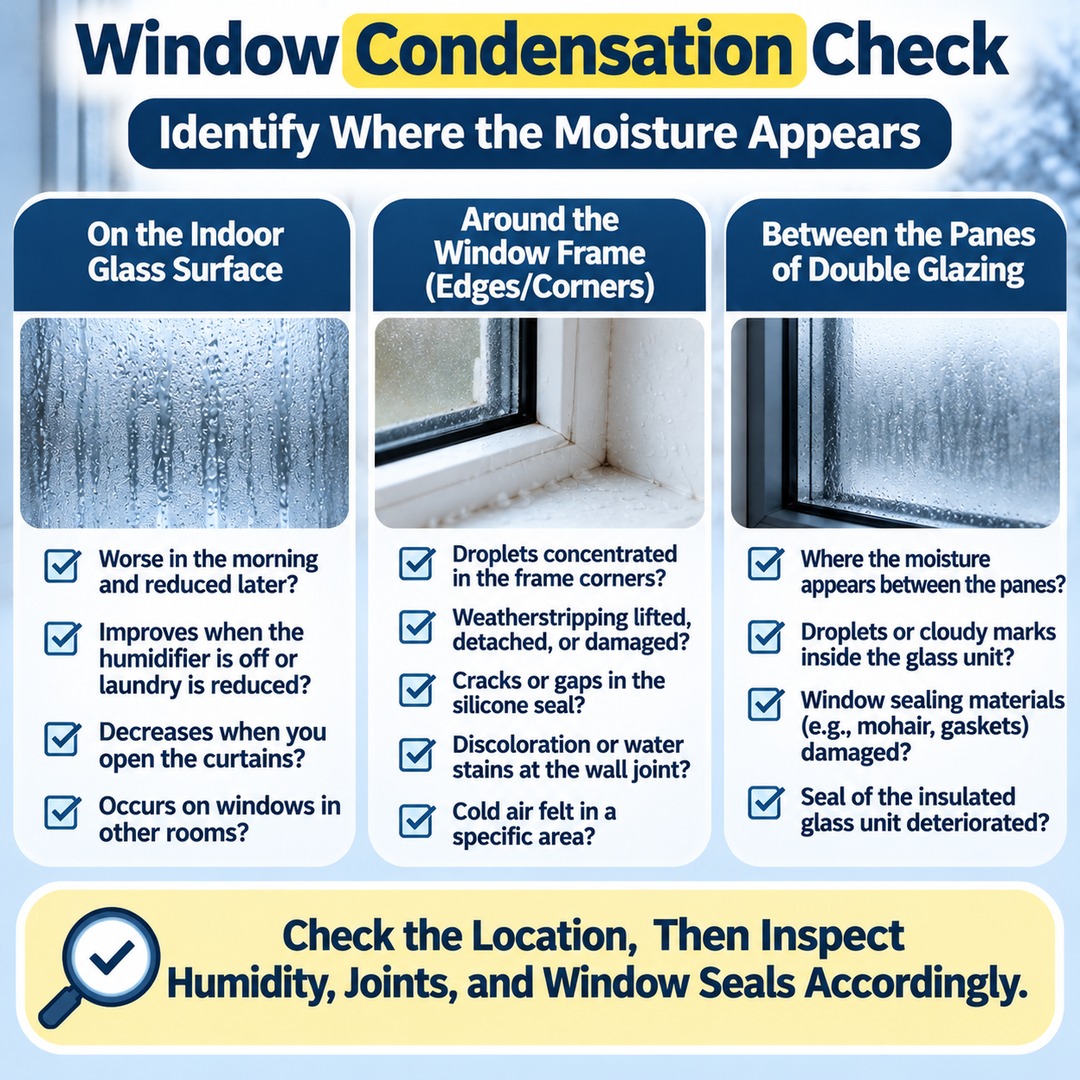
When inspecting window condensation, first identify exactly where the water has collected. The inspection approach differs depending on whether the moisture is on the indoor-facing glass, around the window frame joints, or between the panes of double-glazed windows.
1. Water Droplets on the Indoor-Facing Glass
If droplets form across the glass surface facing the room, first check the indoor humidity and the surface temperature of the glass.
Even with double-glazed windows, the glass closer to the outside can be colder than the indoor-facing pane. When water vapor in indoor air comes into contact with cold glass, condensation forms.
Check the following:
Is the condensation worse in the morning and reduced during the day?
Does it improve when you turn off the humidifier or reduce indoor laundry drying?
Does moisture around the window decrease when you open the curtains?
Does the same problem occur on windows in other rooms?
If condensation appears on several windows at the same time, it is a good idea to investigate indoor humidity and moisture generated by everyday activities first.
2. Moisture Around Window Frame Corners and Silicone Seals
If water is concentrated around the edges of the window frame or where the glass meets the frame, check the surface temperature and the condition of the window joints.
Window frames are made from different materials than glass. Areas where the frame meets the surrounding wall can also become vulnerable points where heat escapes or cold transfers indoors.
Inspect the following areas:
Are water droplets concentrated in the corners of the window frame?
Is the rubber weatherstripping lifted, detached, or damaged when the window is closed?
Are there cracks or gaps in the silicone seal around the frame?
Are there discoloration marks or water stains where the frame meets the wall?
Can you feel cold air entering through a particular area even when the window is closed?
However, moisture around a window frame corner does not automatically prove that the window is poorly sealed or leaking. Further inspection is needed to determine whether the cause is indoor condensation or water entering from outside.
3. Water Droplets Between Double-Glazed Window Panes
If you notice moisture or droplets between the two panes of a double-glazed window, distinguish this from ordinary condensation on an indoor-facing surface.
Condensation inside the sealed space of a double-glazed unit may be related to the window's airtightness. The condition of sealing materials, including mohair weatherstripping and gaskets, may need to be inspected.
In this situation, simply lowering indoor humidity may not solve the problem.
When requesting an inspection from a window specialist, check the following:
The location where moisture appears between the panes.
Whether there are droplets or cloudy marks inside the glass unit.
Whether the window sealing materials are damaged.
Whether the seal of the insulated double-glazed unit has deteriorated.
Moisture between the panes is not surface water that can be wiped away from inside the room. A professional window inspection should therefore take priority.
Managing Indoor Humidity Is Essential for Reducing Window Condensation
Indoor humidity is an important factor in condensation. Use a hygrometer to check the actual humidity level and take steps to reduce moisture generated inside the home.
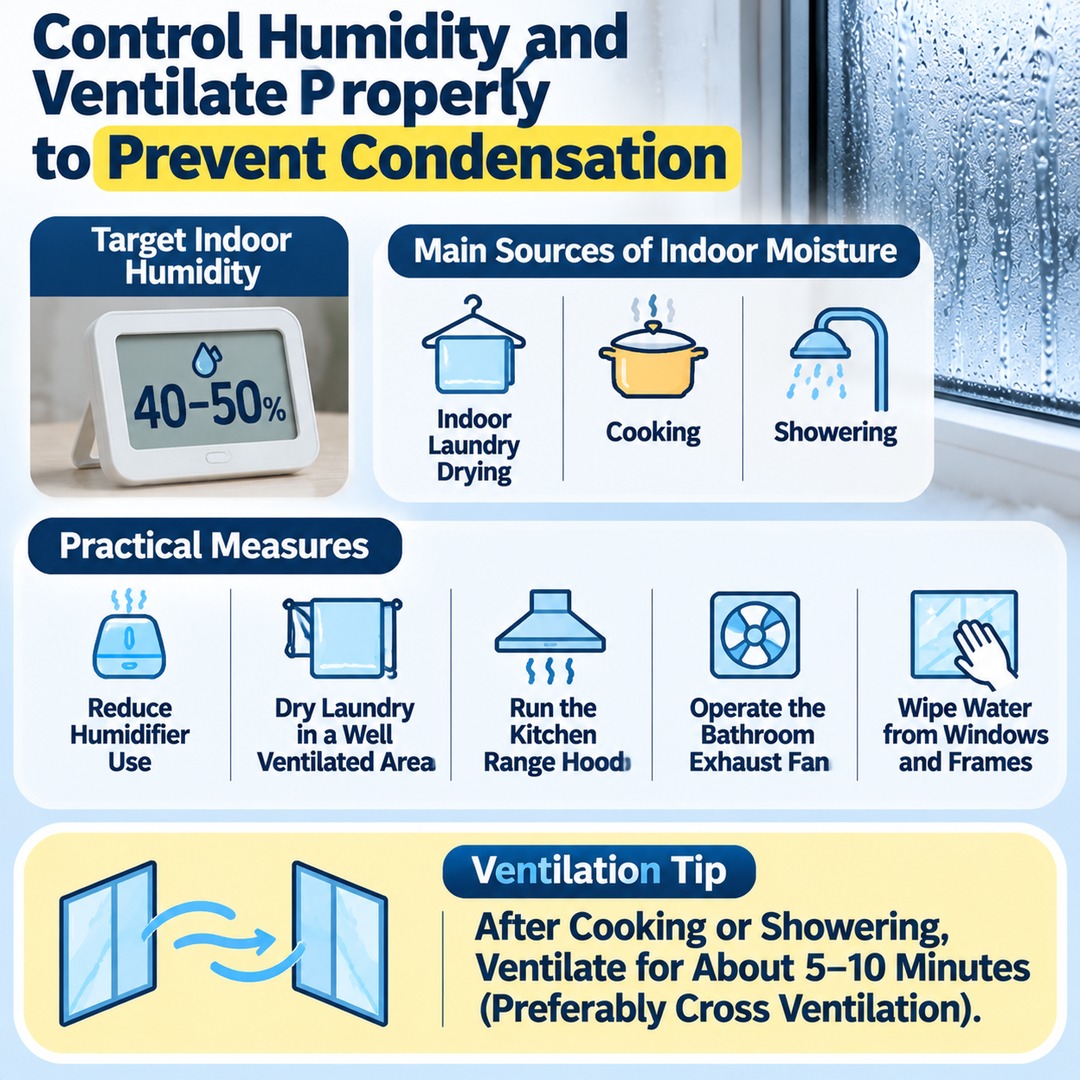
A reasonable initial target is to maintain indoor relative humidity at approximately 40–50%. However, condensation can still occur at the same humidity level depending on the outdoor temperature and the insulation performance of the windows.
Check Humidifiers and Indoor Laundry Drying First
In winter, indoor heating raises room temperatures, and many households use humidifiers. When indoor laundry drying, cooking, and showering are added to the mix, moisture continues to accumulate.
Try the following measures:
Reduce humidifier use on days when significant condensation appears on the windows.
Whenever possible, dry laundry in a well-ventilated area.
Run the kitchen range hood while cooking.
Operate the bathroom exhaust fan after showering.
Wipe water droplets from windows and frames with a dry towel.
In particular, leaving water on the window frame can allow nearby wallpaper and finishing materials to become damp as well.
Ventilate Immediately After Activities That Generate Moisture, Even for Short Periods
Winter ventilation helps remove accumulated indoor moisture and release it outdoors.
After cooking or showering, use the kitchen range hood or bathroom exhaust fan. If necessary, open the windows to replace the indoor air. Guidance on window condensation in Korean apartment buildings also recommends approximately 5–10 minutes of natural ventilation after evening cooking and bathroom use.
When ventilating, creating cross-ventilation by opening windows on opposite sides can help replace indoor air more effectively than leaving just one window slightly open. Keep the ventilation period short and efficient, taking outdoor temperatures and indoor conditions into account.
Where Should You Check Window Airtightness and Insulation?
If you have adjusted humidity and ventilated but only certain windows keep getting wet, inspect the condition of the window system.
When the window is closed, check the following components.
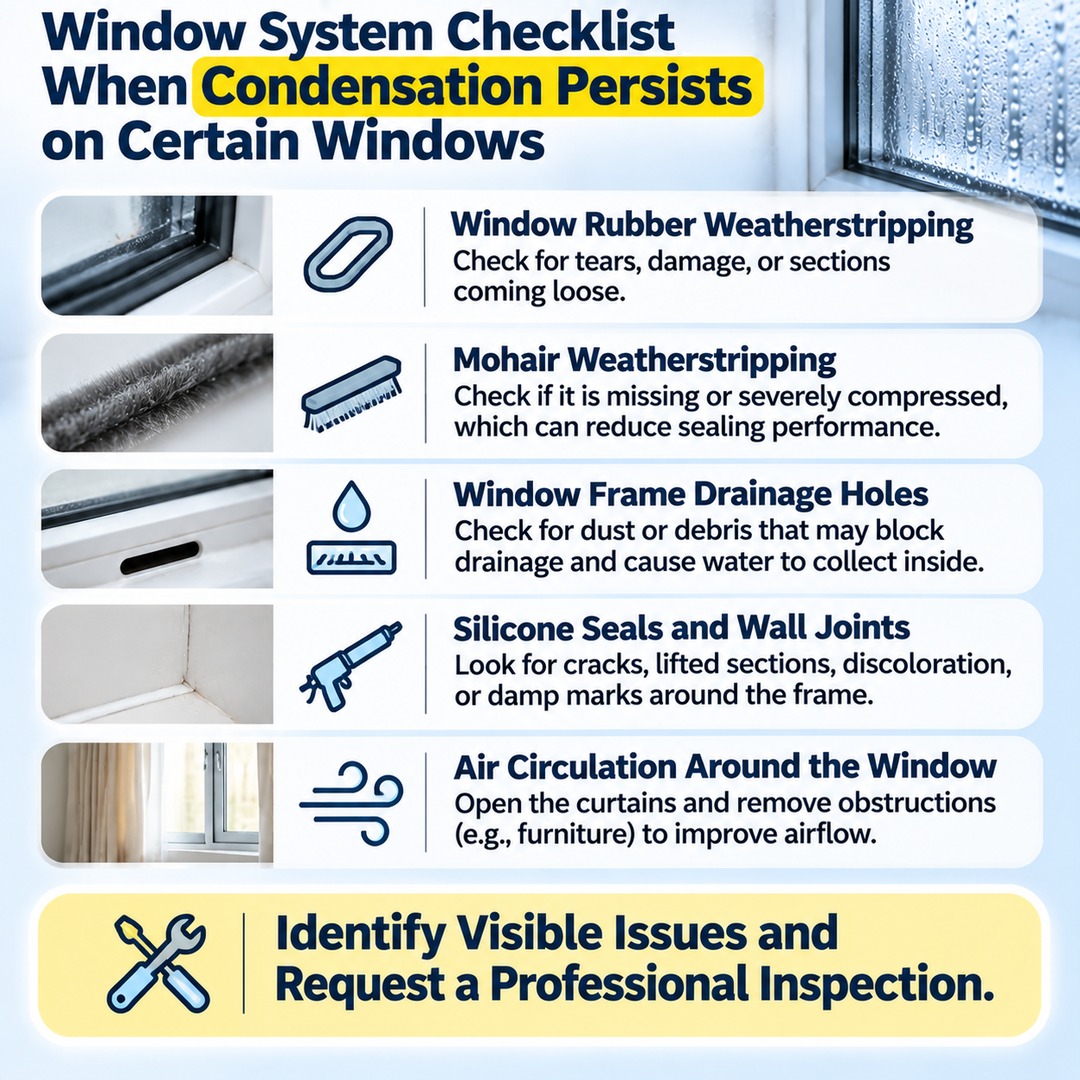
Window Rubber Weatherstripping
Check whether the rubber seals where the window sash meets the frame are torn, damaged, or coming loose.
Mohair Weatherstripping
Mohair is a brush-like sealing material attached to moving parts of a window. If it is missing or severely compressed, the window's contact and sealing performance may need to be inspected.
Window Frame Drainage Holes
Check whether dust or debris has accumulated in the drainage holes along the bottom of the window frame. Blocked drainage holes can cause water to collect inside the frame, so check for obstructions.
Silicone Seals and Wall Joints
Look for cracks, lifted sections, discoloration, or damp marks where the window frame connects to the wall.
Air Circulation Around the Window
If thick curtains completely cover the window or furniture blocks the area underneath it, warm indoor air may not reach the glass surface sufficiently. Try opening the curtains and improving air circulation around the window.
Rather than dismantling the window frame or replacing sealing materials yourself, it is safer to identify any visible damage and arrange a professional inspection.
How Can You Distinguish Window Condensation from a Water Leak?
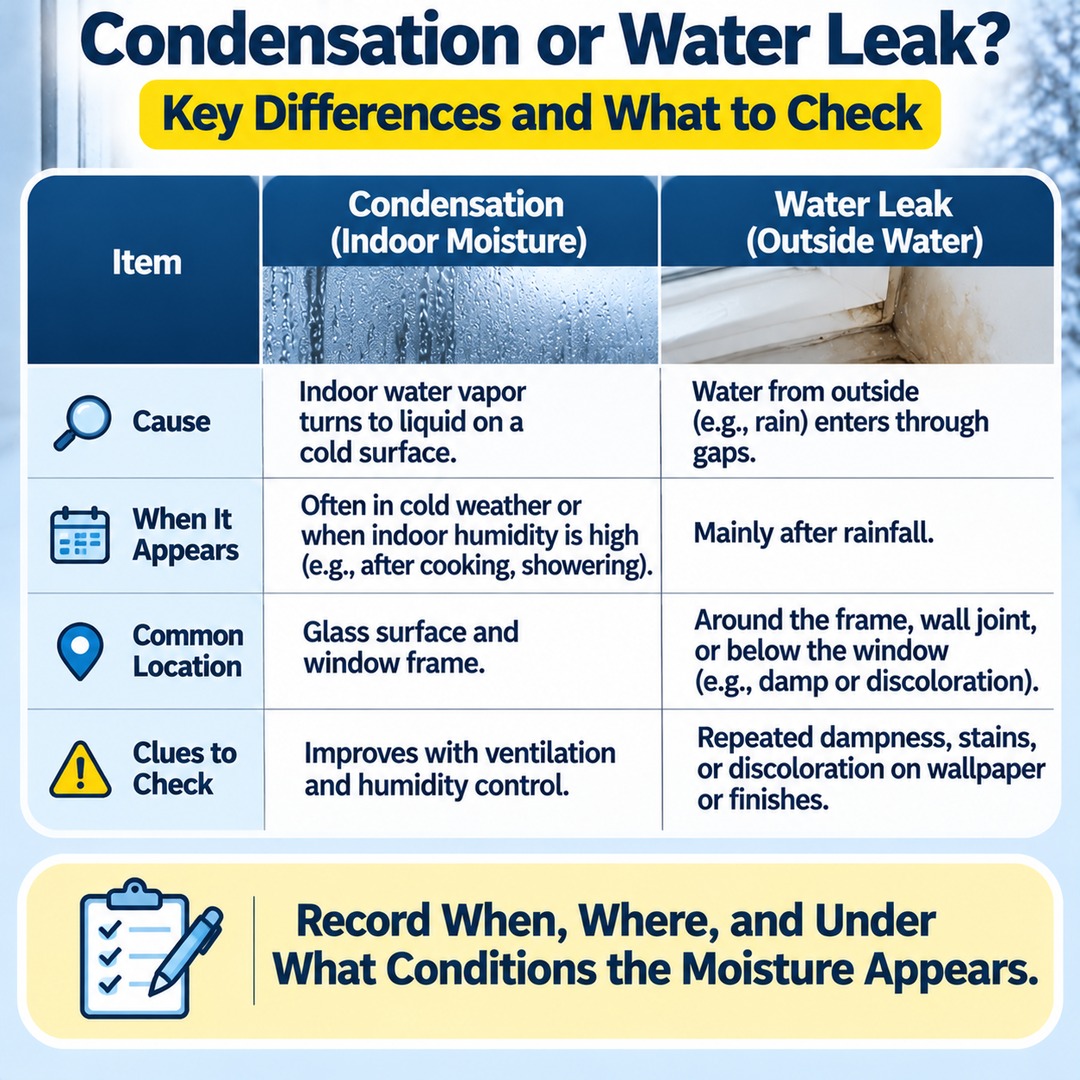
Not all moisture around a window is condensation. Condensation occurs when indoor water vapor turns into liquid on a cold surface, whereas a leak involves water, such as rainwater, entering through gaps from outside. These problems have different causes.
| Observed situation | What to check first |
|---|---|
| The entire glass surface becomes wet on cold mornings | Indoor humidity and glass surface temperature |
| Only the corners of a particular window become wet while heating is on | Window frame insulation and joint condition |
| Moisture appears between double-glazed panes | Glass seal and window airtightness |
| Areas around the window frame become wet after rainfall | Rainwater entering from outside and silicone seals |
| Wallpaper and areas around the window frame remain wet even when it has not rained | Possible leaks and internal condensation |
This table is not a definitive diagnostic guide. It is intended to help distinguish which areas should be inspected first.
In particular, if water appears only after rainfall, or the wallpaper beneath the window repeatedly becomes damp and discolored, the possibility of water leakage should also be investigated.
Condensation and water leaks can occur at the same time. Recording when the moisture appears, the weather conditions, and its location can help identify the cause.
When Should You Request a Window Inspection?
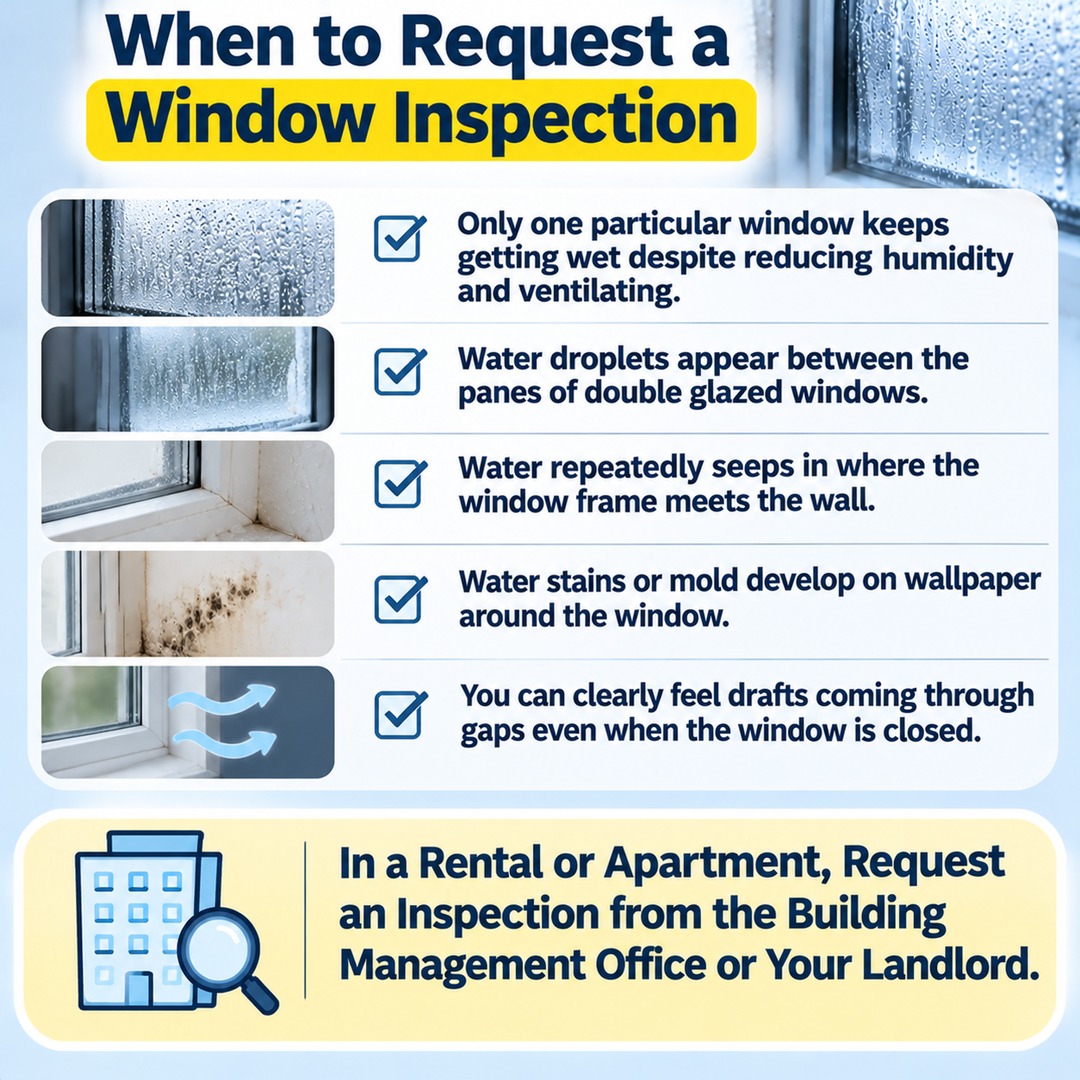
If any of the following situations occur, do not assume that humidity management alone will resolve the problem.
Only one particular window continues to get wet despite reducing indoor humidity and ventilating.
Water droplets appear between the panes of double-glazed windows.
Water repeatedly seeps in where the window frame meets the wall.
Water stains or mold develop on wallpaper around the window.
You can clearly feel drafts coming through gaps even when the window is closed.
Moisture appears around the window frame and wall joints after rainfall.
If you live in a rental property or apartment building, you can request an inspection from the building management office or your landlord. When determining whether a defect exists, it is important to distinguish between a problem with the window itself, condensation related to indoor humidity management, and water entering from outside.
Keeping photographs that record the date, weather conditions, and location of the moisture can help identify the cause.
Winter Window Condensation: What Should You Check First?
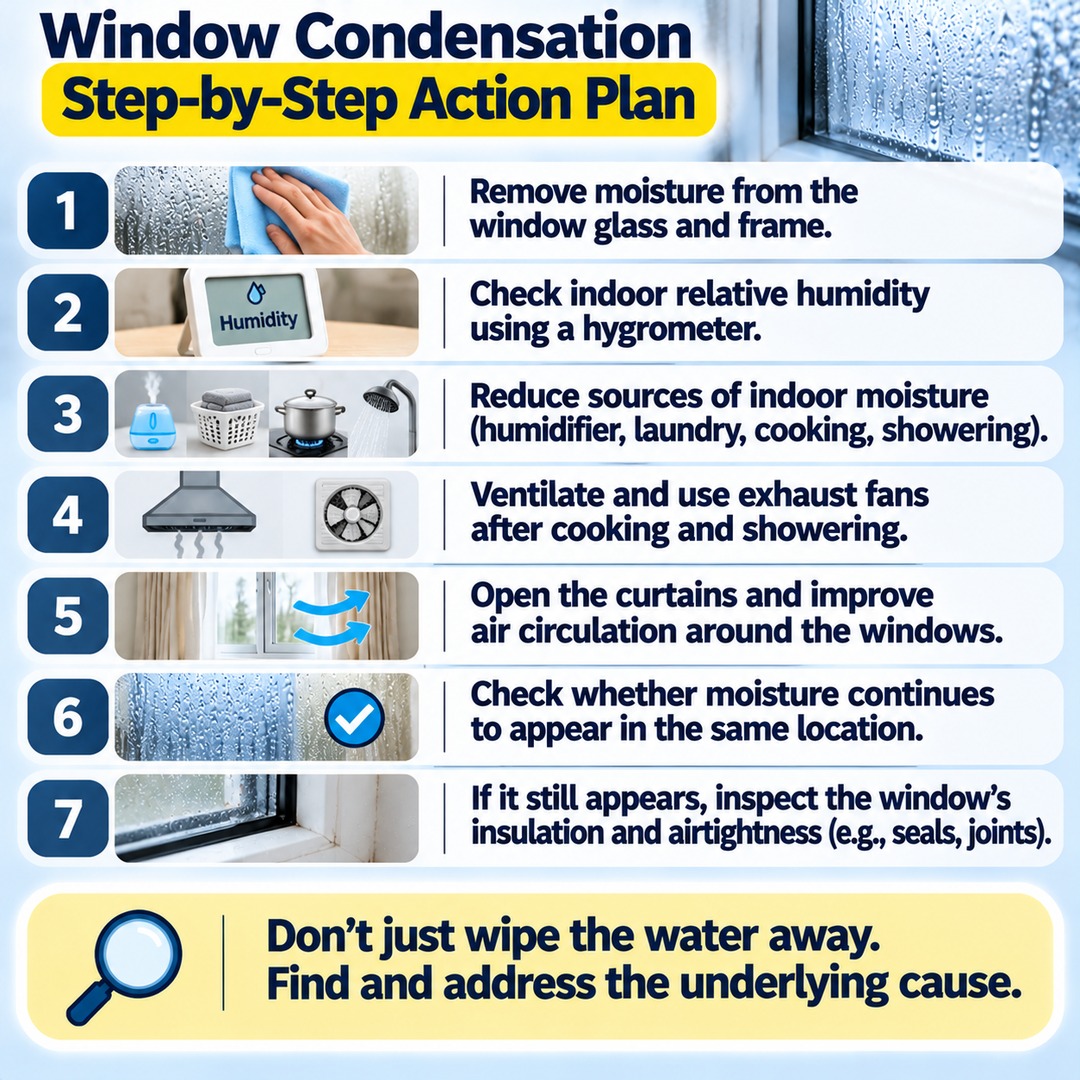
If water droplets keep returning even after ventilation, follow these steps:
1. Remove moisture from the window glass and frame.
2. Check indoor relative humidity using a hygrometer.
3. Reduce sources of indoor moisture, including humidifiers, indoor laundry drying, cooking, and showering.
4. Ventilate and use exhaust fans after cooking and showering.
5. Open the curtains and improve air circulation around the windows.
6. Check whether moisture continues to appear in the same location.
7. If the problem persists, inspect the window frame seals, mohair weatherstripping, silicone joints, and moisture between the glass panes.
Window condensation cannot always be resolved simply by lowering indoor humidity. If it continues to occur on a particular window even after reducing indoor moisture, the window's insulation and airtightness should be inspected.
The most important thing is not to stop after wiping away the water droplets. Identify and address the underlying reason they keep appearing.