
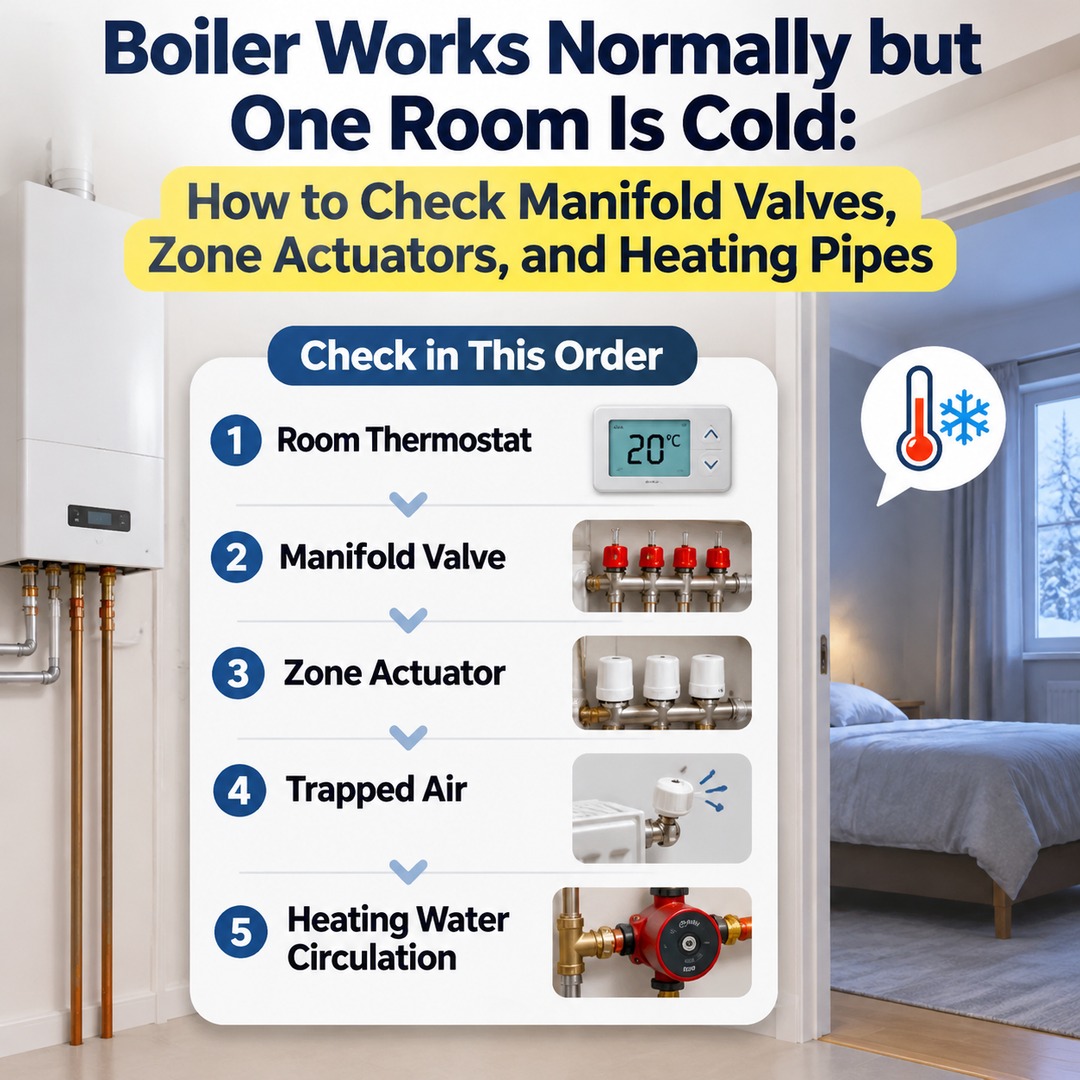
If your boiler is operating normally and the other rooms are warm, but one particular room remains cold, you should check that room's heating circuit before assuming the entire boiler is malfunctioning. Start by checking the individual room thermostat and heating manifold valve. If these appear normal, inspect the zone actuator and look for trapped air or circulation problems inside the pipes.
In particular, a heating manifold valve may appear to be open without actually allowing heating water to flow properly into the corresponding room. A malfunctioning actuator that controls the valve or air trapped inside the pipes can also cause just one room to remain cold.
What Is the Difference Between an Entire House Being Cold and Only One Room Being Cold?
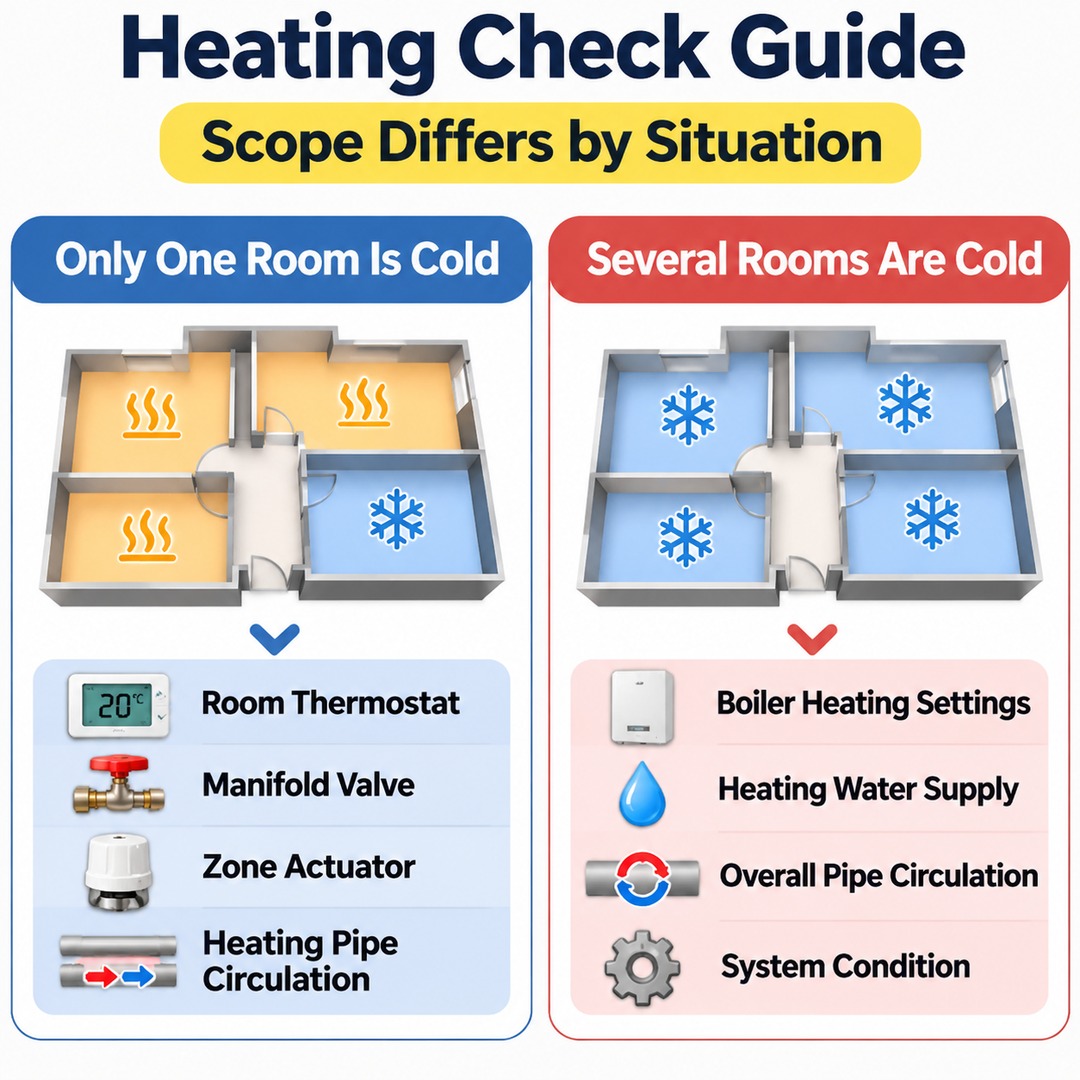
If the other rooms are warm but one room is cold, the first priority is to inspect the heating circuit connected to that room. If the entire house is cold, you should also check the boiler's heating operation, heating water supply, and overall circulation system.
The inspection scope differs between these two situations:
Only one room is cold: Check that room's thermostat, manifold valve, individual zone actuator, and heating pipe circulation.
Several rooms are cold at the same time: Check the boiler's heating settings, heating water supply, overall pipe circulation, and system condition.
A normal status indicator on the boiler display does not necessarily mean that every room is receiving heat properly. Individual room heating systems operate through separate room thermostats, valves, and actuators connected to each heating circuit.
Why Should You Check the Individual Room Thermostat First?
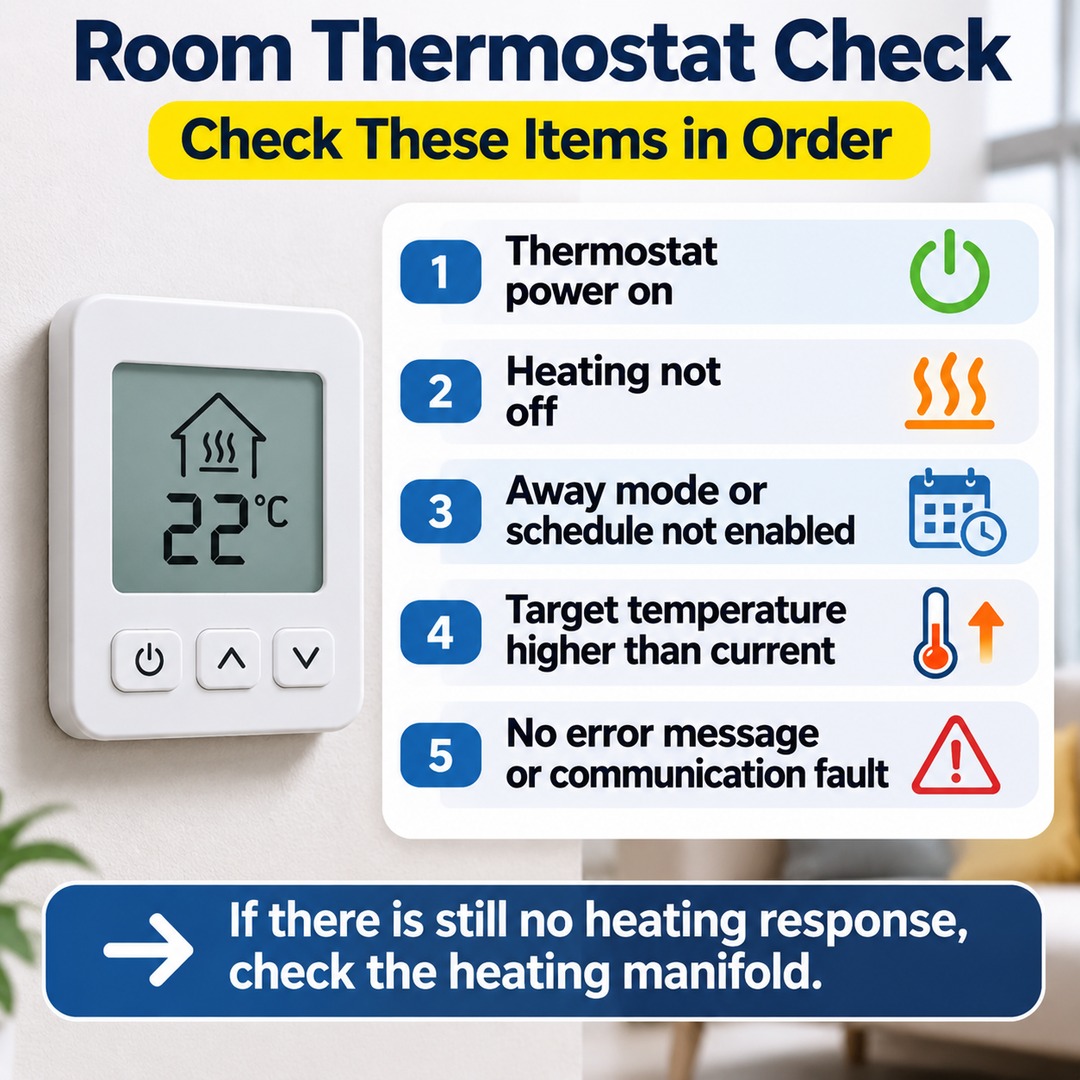
First, make sure that the heating settings for the affected room are actually active. If the individual room thermostat is switched off or set to away mode or scheduled operation, that room may not receive heat even when the boiler is running.
Check the following items in order:
1. Make sure the affected room's thermostat is powered on.
2. Check that heating is not set to off.
3. Check whether away mode or scheduled operation is enabled.
4. Make sure the target temperature is higher than the current room temperature.
5. Check the thermostat for error messages or communication fault indicators.
If adjusting the individual room thermostat does not produce any heating response, expand your inspection to the manifold.
Can a Closed Heating Manifold Valve Cause Only One Room to Remain Cold?
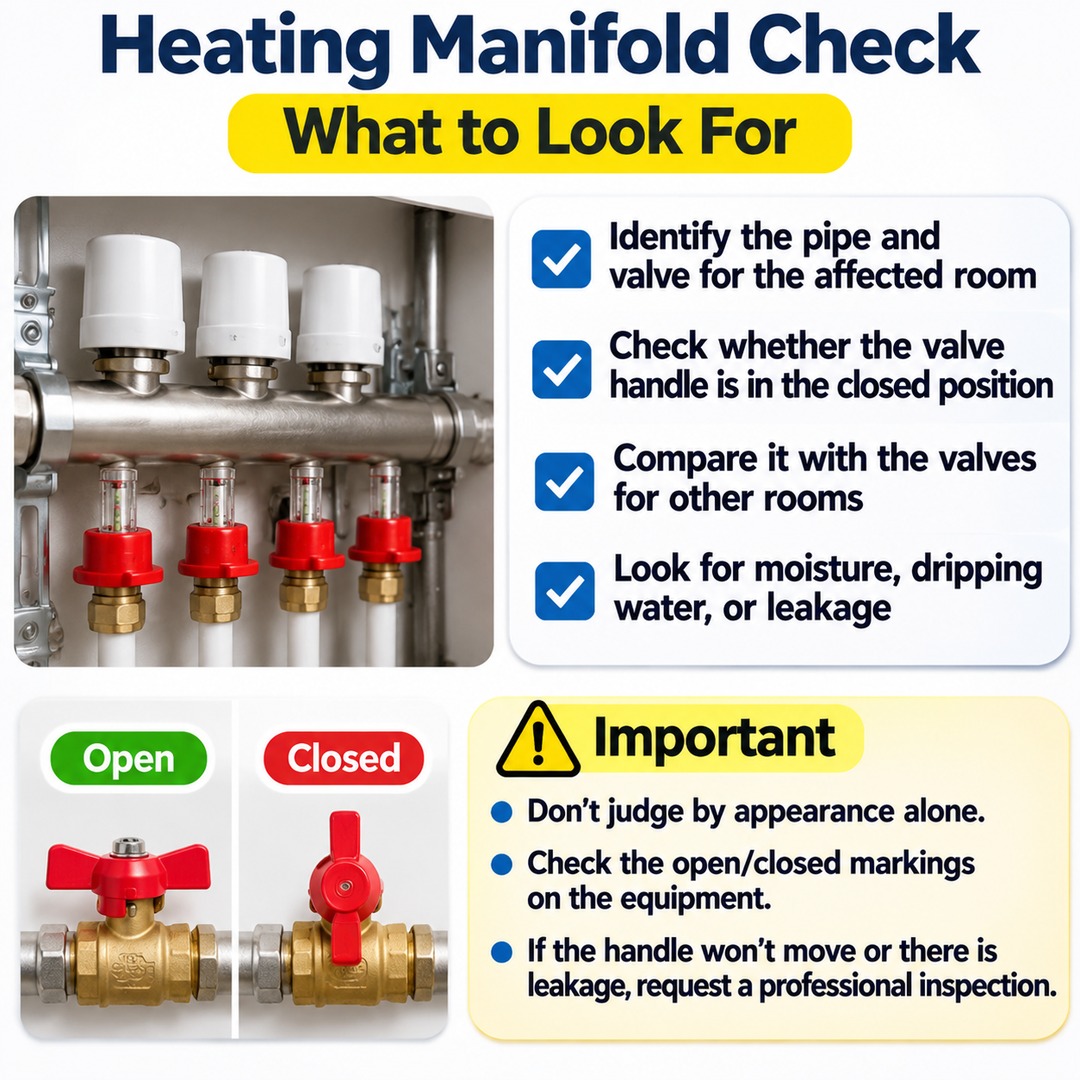
Yes. A heating manifold distributes hot water supplied by the boiler to the pipes serving individual rooms. If the valve connected to a particular room is closed, heating water cannot flow through that circuit, potentially leaving only that room cold.
soomgo.com
The manifold is usually installed inside a kitchen sink cabinet, in a utility room, or near the boiler room. Its exact location depends on the home's layout.
When inspecting the manifold, check the following:
Identify the pipe and valve connected to the affected room.
Check whether the valve handle has been turned toward the closed position.
Compare the visible condition of the affected room's valve with the valves serving other rooms.
Look for moisture, dripping water, or signs of leakage around the valve.
An important point is that you should not determine whether a valve is open or closed based solely on its appearance. Handle designs and opening and closing directions vary depending on the type of manifold. Check the open and closed markings on the equipment.
Also, an open valve does not necessarily mean that the internal passage is functioning properly. If the handle will not move or you notice leakage around the valve, do not force it. Request an inspection by a heating system professional.
If the Valve Is Open but the Floor Is Still Cold, Check the Individual Zone Actuator
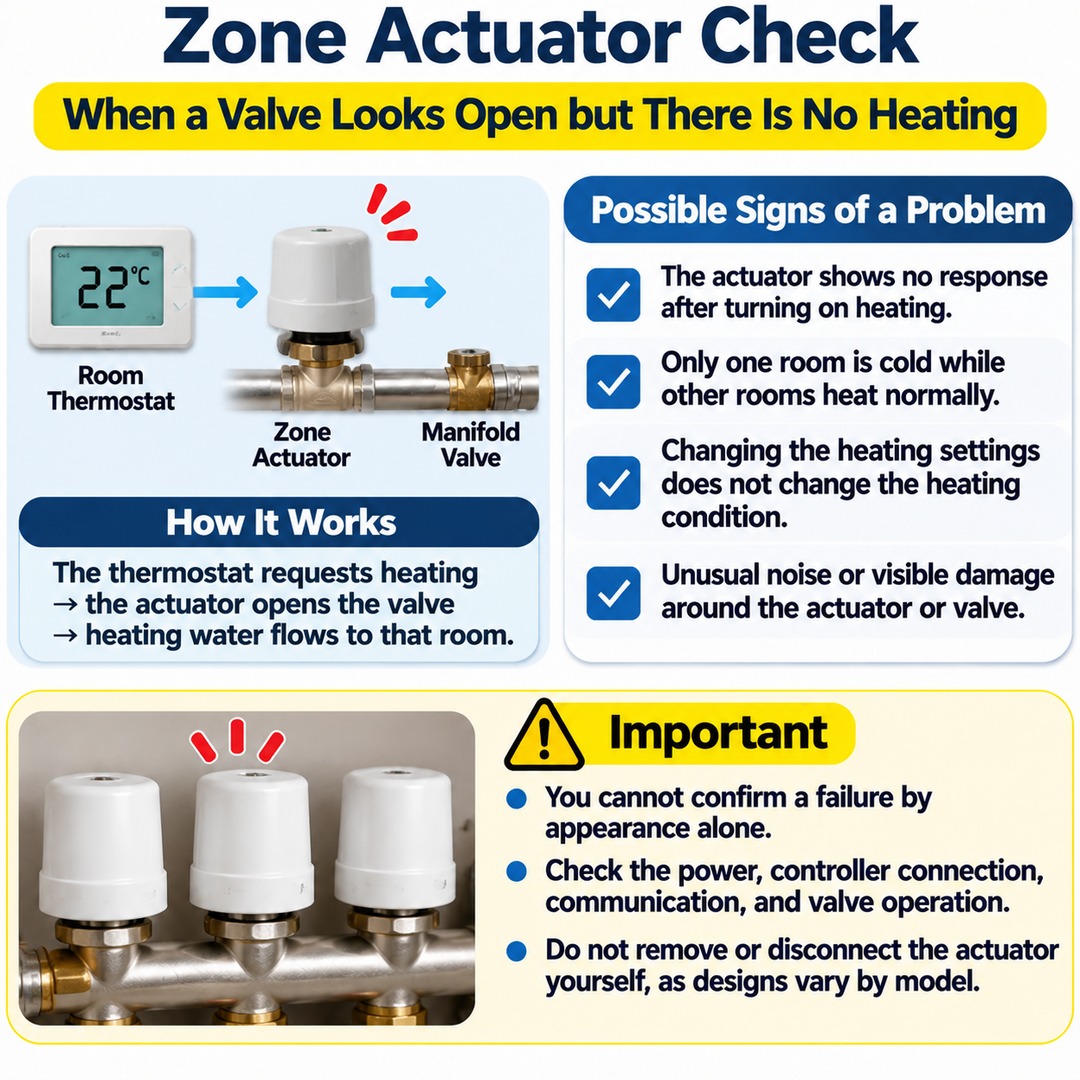
Even if the manifold valve appears to be open normally, heating water may not circulate if the individual room's zone actuator is malfunctioning.
A zone actuator is an electrically powered device that opens and closes the manifold valve in response to signals from the room thermostat. When the room temperature is too low, the thermostat requests heating, and the actuator opens the valve so heating water can flow into that room's circuit.
The following situations may indicate an actuator problem:
You turn on heating at the thermostat, but the corresponding actuator shows no operating response.
Only one room remains cold while the other rooms heat normally.
Changing the heating settings does not change the heating condition in that room.
There is unusual noise or visible damage around the actuator or valve.
However, you cannot confirm an actuator failure from its external appearance alone. The power supply, controller connection, communication status, and operation of the valve itself must also be checked.
Some individual room heating control systems describe manual actuator operation in the manufacturer's instructions. However, this does not mean that every actuator can be operated in the same way. Since designs differ by model, avoid removing actuator caps or disconnecting the actuators yourself.
Can Trapped Air in the Pipes Prevent Heating Water from Circulating Properly?
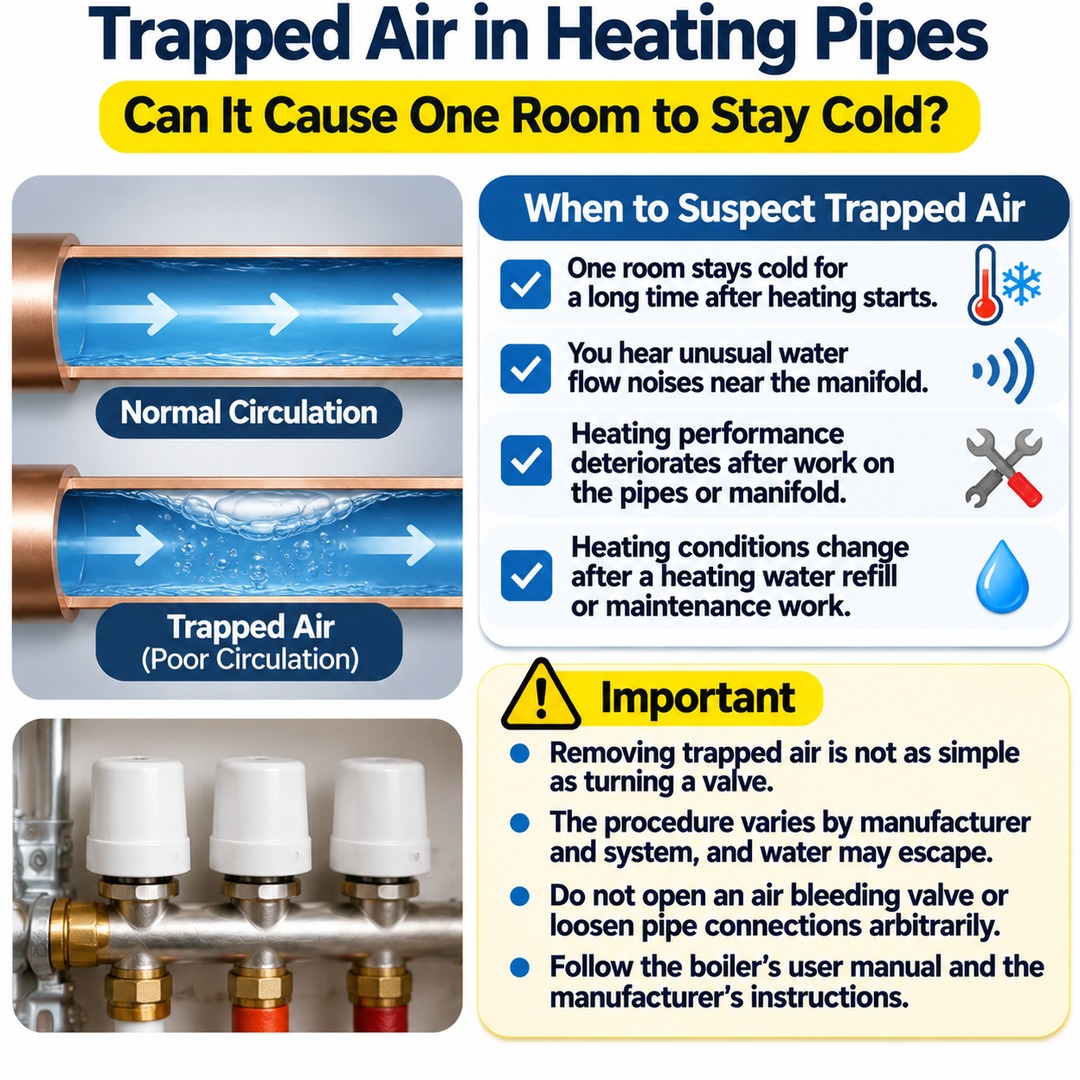
Yes. If air remains inside the heating pipes and has not been adequately removed, heating water may not circulate smoothly. You may also hear unusual water-flow noises near the manifold while the room fails to heat properly.
Consider checking for trapped air in the following situations:
One particular room remains cold for a long time after heating starts.
You hear unusual water-flow noises near the manifold.
Heating performance deteriorates after work on the pipes or manifold.
Heating conditions change following a heating water refill or maintenance work.
Removing trapped air should not be treated as a simple matter of turning a valve. The air-bleeding procedure varies depending on the manufacturer and heating system configuration, and water may escape during the process.
Therefore, do not open an air-bleeding valve or loosen pipe connections arbitrarily. Follow the boiler's user manual and the manufacturer's instructions.
Why Does Heating Still Fail Even When the Valve and Actuator Work Normally?
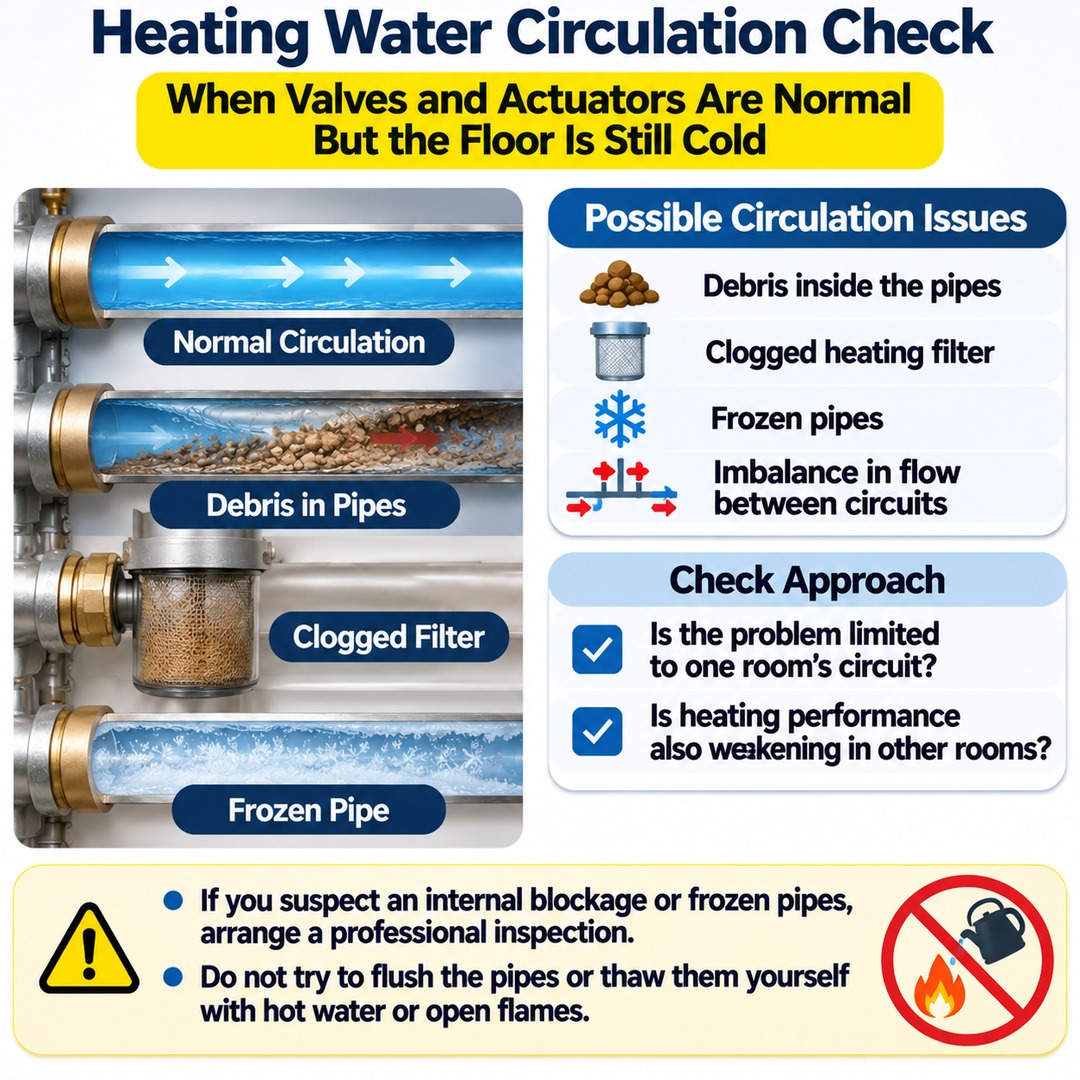
If the valve and actuator operate normally but the floor remains cold, you should investigate whether there is a problem with heating water circulation itself.
Possible issues include debris inside the pipes, a clogged heating filter, frozen pipes, or an imbalance in water flow between individual heating circuits.
In particular, a clogged heating filter or accumulated debris inside the pipes can restrict heating water flow. To narrow down the cause, check whether the problem is limited to one room's circuit or whether heating performance is also weakening in other rooms.
If the floor in a particular area suddenly becomes cold during a period of sharply lower temperatures, frozen pipes should also be considered. However, the fact that other rooms remain warm does not by itself confirm that a pipe is frozen.
If you suspect an internal pipe blockage or frozen pipes, it is safer to arrange a professional inspection. Avoid attempting to flush the pipes or thaw them yourself using hot water or open flames.
Should You Contact the Building Management Office or the Boiler Service Center?
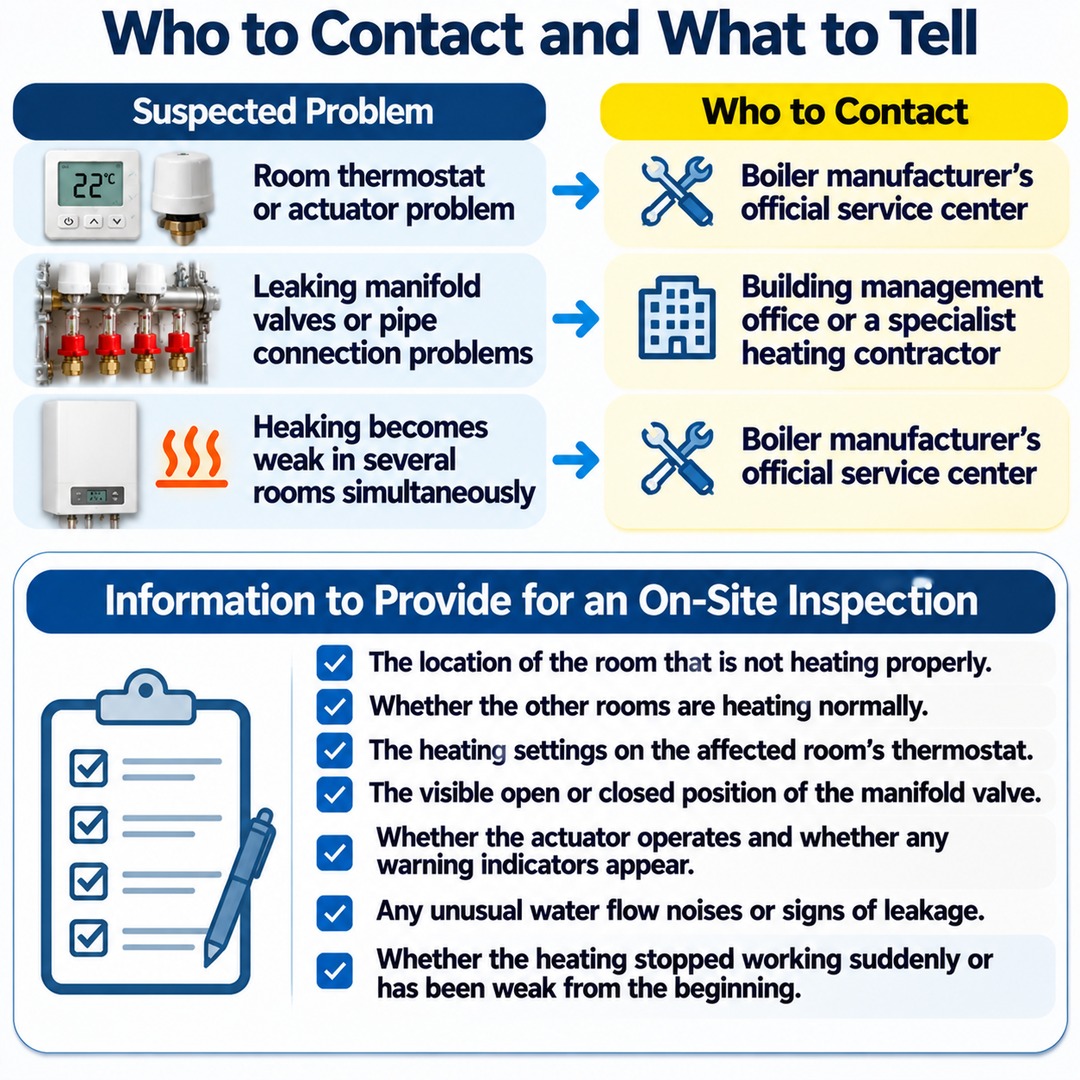
If you live in an apartment or villa with an individual gas boiler, choose whom to contact based on the location of the suspected problem.
Individual room thermostat or actuator problems: Contact the boiler manufacturer's official service center.
Leaking manifold valves or pipe connection problems: Contact the building management office or a specialist heating contractor.
Heating becomes weak in several rooms simultaneously: Request an inspection of the boiler and overall heating water circulation from the manufacturer's service center.
Possible problems with shared pipes or communal equipment: Contact the apartment building management office first.
When requesting an on-site inspection, provide specific details rather than simply saying that a room is cold.
Prepare the following information in advance:
The location of the room that is not heating properly.
Whether the other rooms are heating normally.
The heating settings on the affected room's thermostat.
The visible open or closed position of the manifold valve.
Whether the actuator operates and whether any warning indicators appear.
Any unusual water-flow noises or signs of leakage.
Whether the heating stopped working suddenly or has been weak from the beginning.
Providing these details can help narrow down which components need inspection.
What Is the Most Efficient Order for Checking a Room That Will Not Heat Properly?
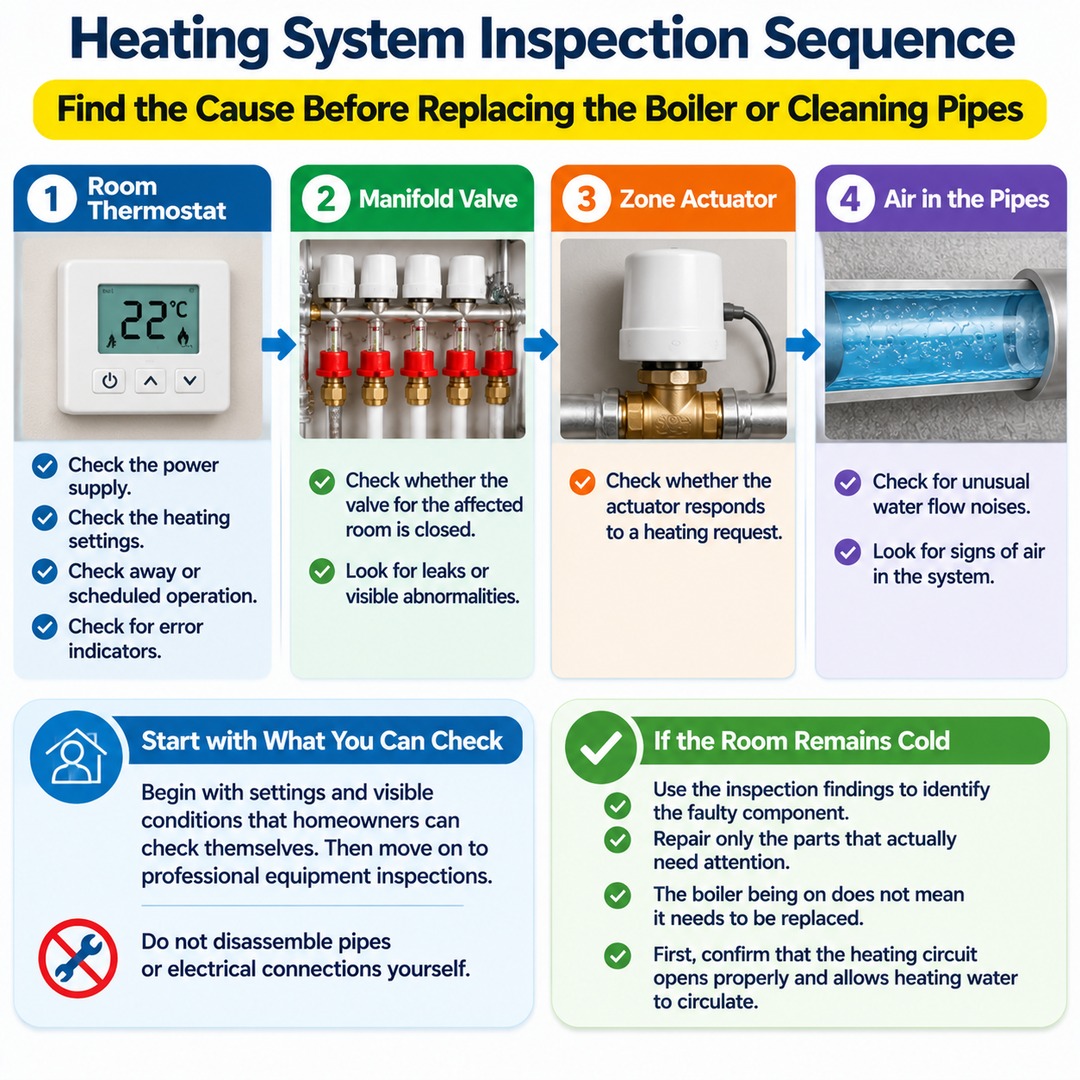
Before replacing the boiler unnecessarily or cleaning the entire heating pipe system, narrow down the possible causes by following this inspection sequence.
1. Step 1 — Room thermostat: Check the power supply, heating settings, away or scheduled operation, and error indicators.
2. Step 2 — Manifold valve: Check whether the valve serving the affected room is closed and look for leaks or visible abnormalities.
3. Step 3 — Individual zone actuator: Check whether the actuator for that heating circuit responds to a heating request.
4. Step 4 — Air in the pipes: Check for unusual water-flow noises and assess heating water circulation.
5. Step 5 — Pipes and filter: Request an inspection for debris, freezing, blockages, and uneven water flow between heating circuits.
This sequence starts with settings and visible conditions that homeowners can check themselves before moving on to professional equipment inspections. You do not need to disassemble pipes or electrical connections yourself.
If a particular room continues to receive insufficient heat, use the inspection findings to identify the faulty component and repair only the parts that actually need attention.
The fact that the boiler is switched on does not mean the boiler itself needs to be replaced. The important first step is to determine whether the heating circuit connected to the affected room opens properly and allows heating water to circulate normally.