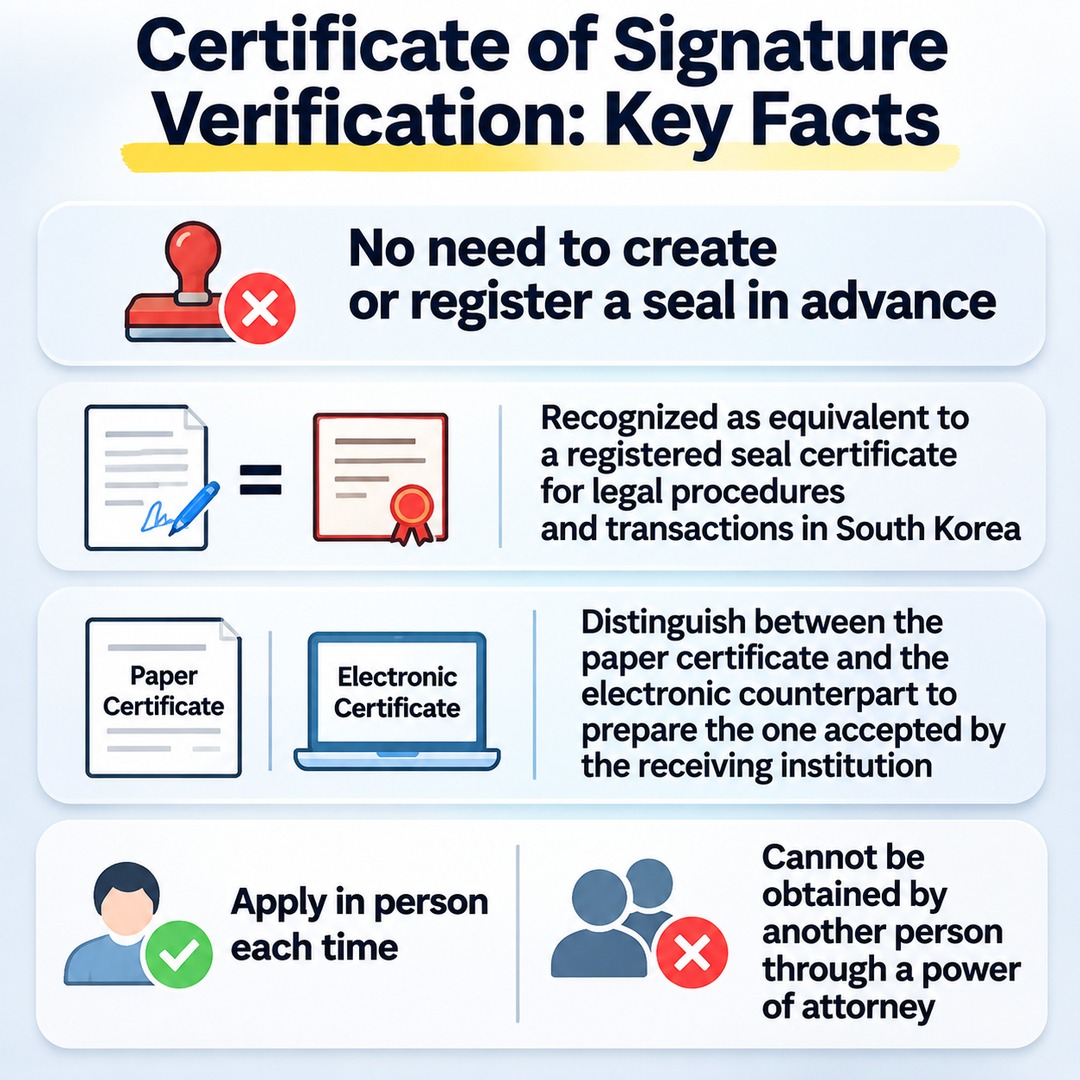
The biggest difference is that you do not need to create or register a seal in advance. What matters is distinguishing between the paper certificate and its electronic counterpart so that you prepare the document accepted by the receiving institution.
What Is a Certificate of Signature Verification?
For legal procedures and transactions in South Korea that require a registered seal certificate, submitting a Certificate of Signature Verification is recognized as equivalent to submitting a registered seal certificate.
The applicant must apply in person each time the document is issued. Another person cannot obtain the certificate on the applicant's behalf through a power of attorney.
Where Can You Obtain a Certificate of Signature Verification?
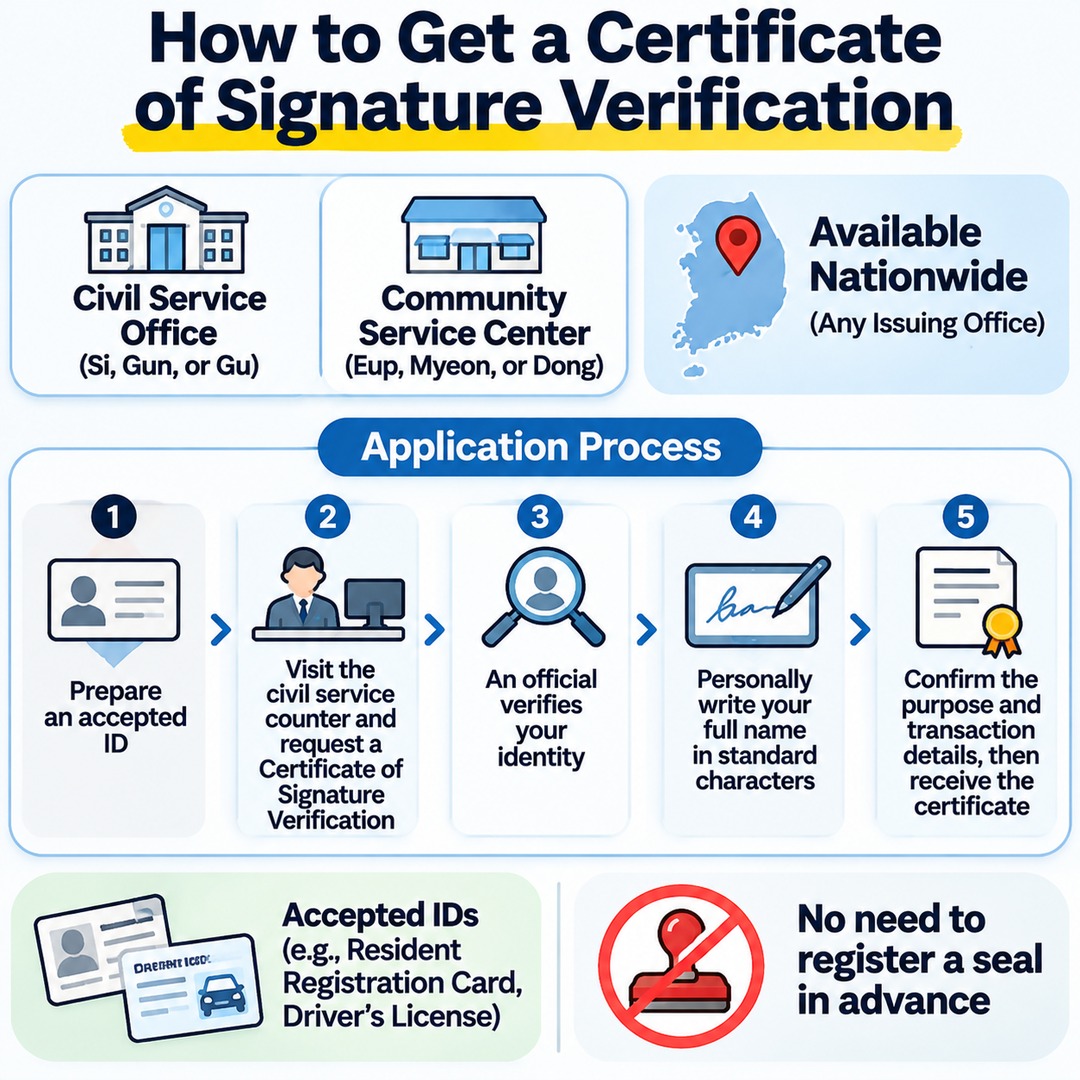
You can obtain one at the civil service office of a city, county, or district government (si, gun, or gu office), or at a local community service center (eup, myeon, or dong administrative welfare center). You can use any issuing office nationwide, regardless of your registered residential address.
The application process is as follows:
1. Prepare an accepted form of identification.
2. Visit the civil service counter and request a Certificate of Signature Verification.
3. An official verifies your identity.
4. Personally write your full name in standard characters using an electronic signature input device or another designated method.
5. Confirm the intended purpose and required transaction details, then receive the certificate.
In general, you can use identification such as a Korean resident registration card or driver's license, provided it is accepted for identity verification.
Another convenience is that, unlike a registered seal certificate, you do not need to register a seal in advance.
How Much Does It Cost?
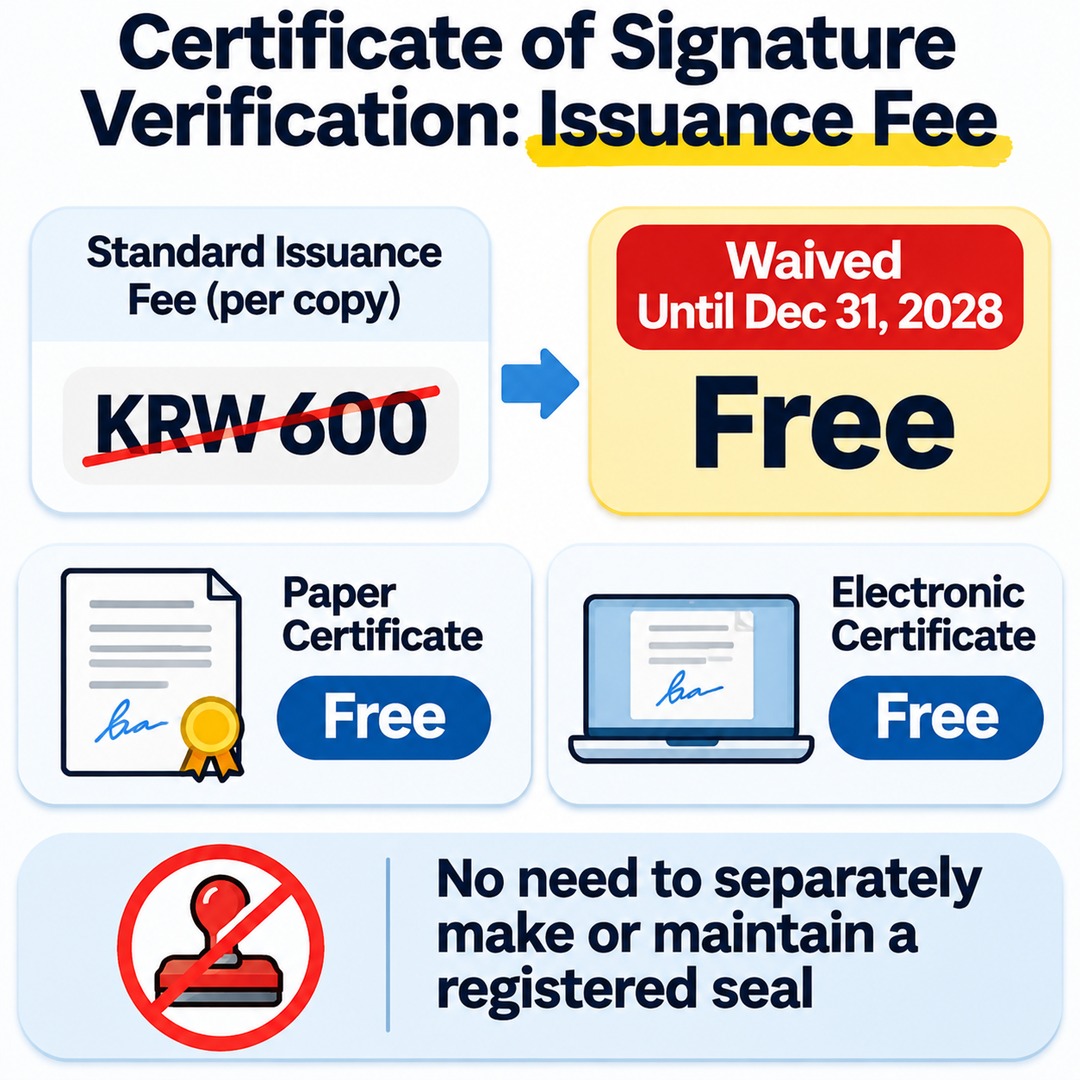
The standard issuance fee for a Certificate of Signature Verification was originally KRW 600 per copy. However, this fee is waived through December 31, 2028.
The electronic Certificate of Signature Verification is also free of charge.
As a result, you can currently obtain the paper certificate without paying an issuance fee or separately making and maintaining a registered seal.
Can It Be Used for Bank Loans and Real Estate Transactions?
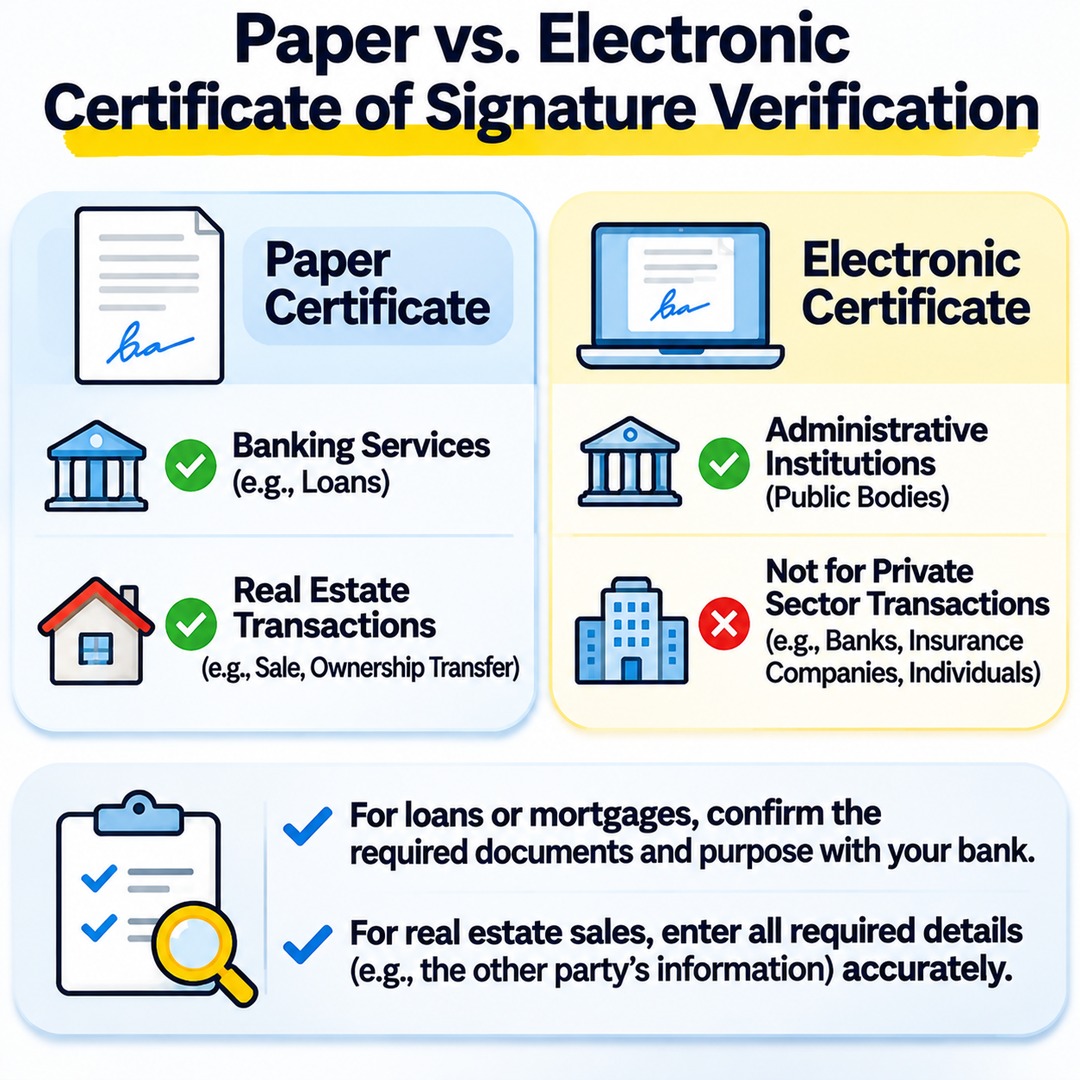
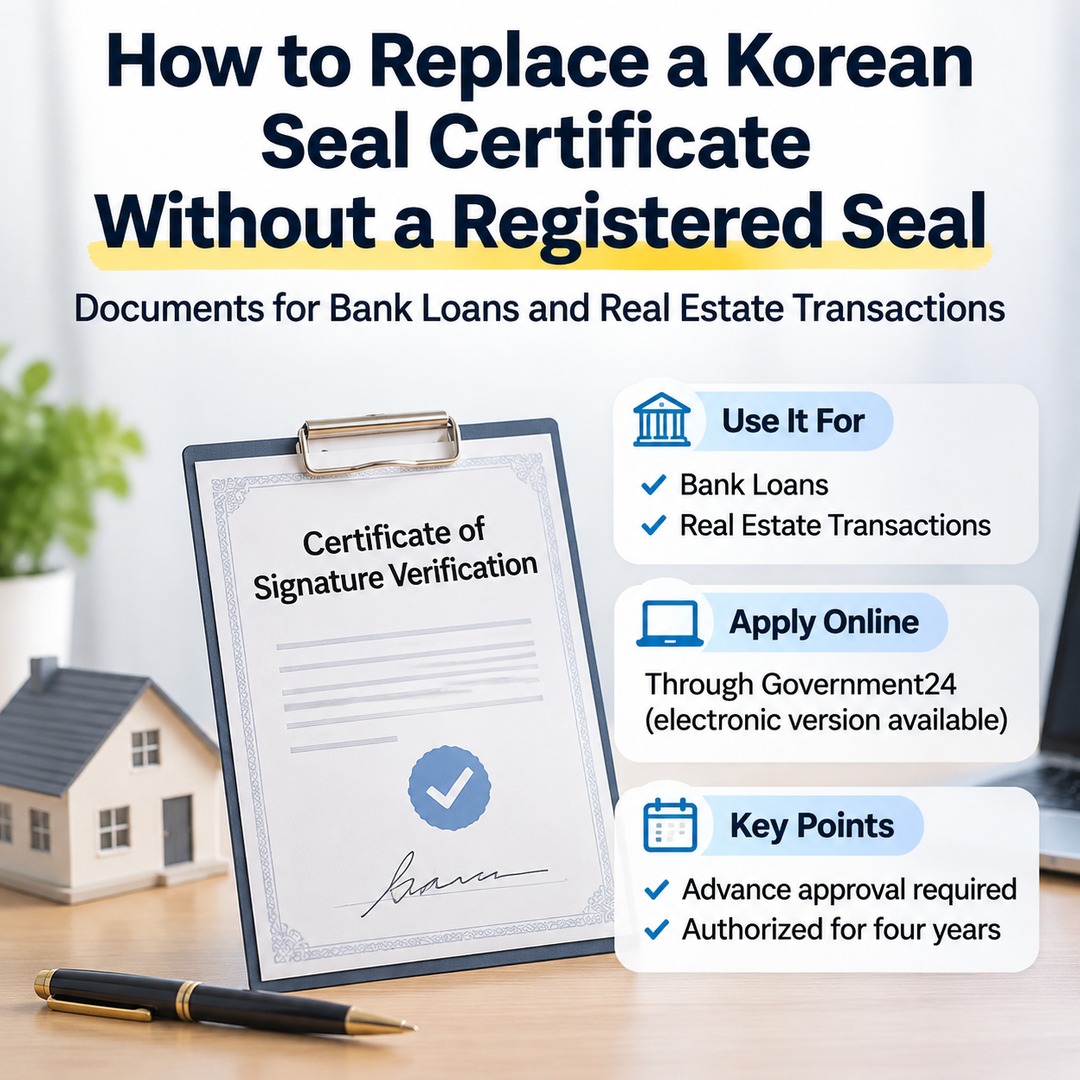
The paper Certificate of Signature Verification can replace a registered seal certificate for banking services and real estate transactions. The electronic Certificate of Signature Verification is different. Its use is restricted to submissions to administrative institutions and similar public bodies. It cannot be used for private-sector transactions involving banks, insurance companies, or transactions between individuals.
The differences between the two documents are as follows:
| Category | Paper Certificate | Electronic Certificate |
|---|---|---|
| Issuance method | In-person visit to a community service center or other issuing office | Online through Government24 (Jeongbu 24) |
| Initial in-person visit | Required when obtaining the certificate | Required in advance to receive authorization for system use |
| Submission to banks | Yes | No |
| Private real estate transactions | Yes | No |
| Submission to administrative institutions | Yes | Yes |
| Fee | Waived through 2028 | Free |
| Issuance by proxy | Not permitted | Not permitted |
The fact that the paper certificate can be submitted to banks means that it has the legal effect of serving as a substitute for a registered seal certificate. However, for actual loan applications or mortgage-related procedures, you should first confirm the specific documents and purposes required by the bank.
The paper certificate can also be used in real estate sales. However, when submitting documents related to a property sale or transfer of ownership, make sure that all required details, including information about the other transaction party, are entered accurately.
Can You Obtain an Electronic Certificate From Home?
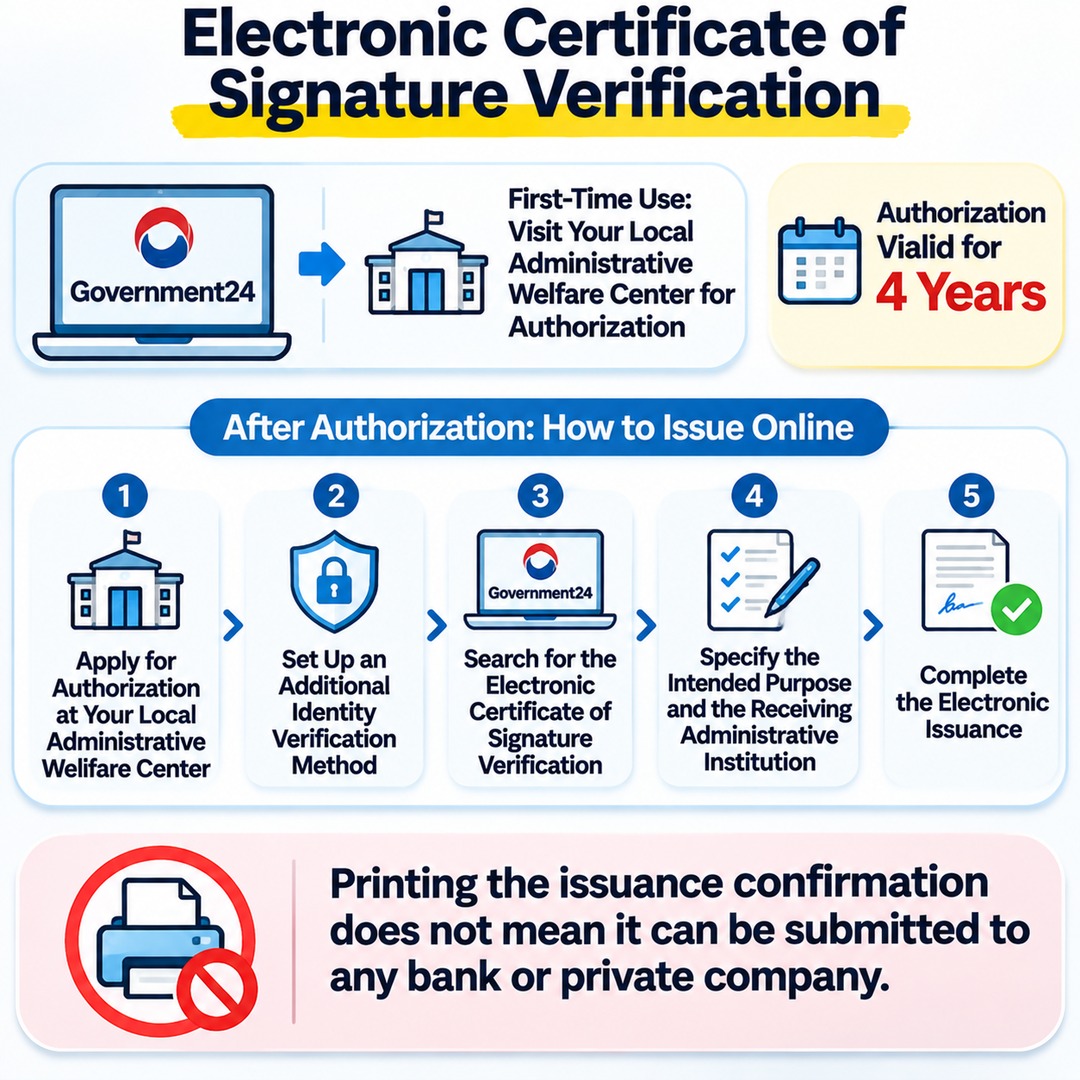
The electronic Certificate of Signature Verification can be issued online through Government24 (Jeongbu 24). However, you cannot complete the entire process from home when using the system for the first time.
To use the service initially, you must personally visit your local eup, myeon, or dong administrative welfare center and obtain authorization to use the electronic certificate issuance system.
After receiving authorization, follow these steps:
1. Visit your local administrative welfare center and apply for authorization to use the electronic Certificate of Signature Verification service.
3. Set up an additional identity verification method.
4. Search for the electronic Certificate of Signature Verification on Government24.
5. Specify the intended purpose and the administrative institution to which the document will be submitted.
6. Complete the electronic signature process and obtain the certificate.
7. Print the issuance confirmation and submit it to the designated receiving institution.
The authorization to use the electronic Certificate of Signature Verification system is valid for four years. This four-year period refers to the authorization to access the issuance system, not the validity period of an individual certificate that has already been issued.
In particular, specifying the receiving institution is an important step. Printing the issuance confirmation does not mean that the electronic certificate can be submitted to any bank or private company.
What Should You Prepare Before Visiting an Issuing Office?
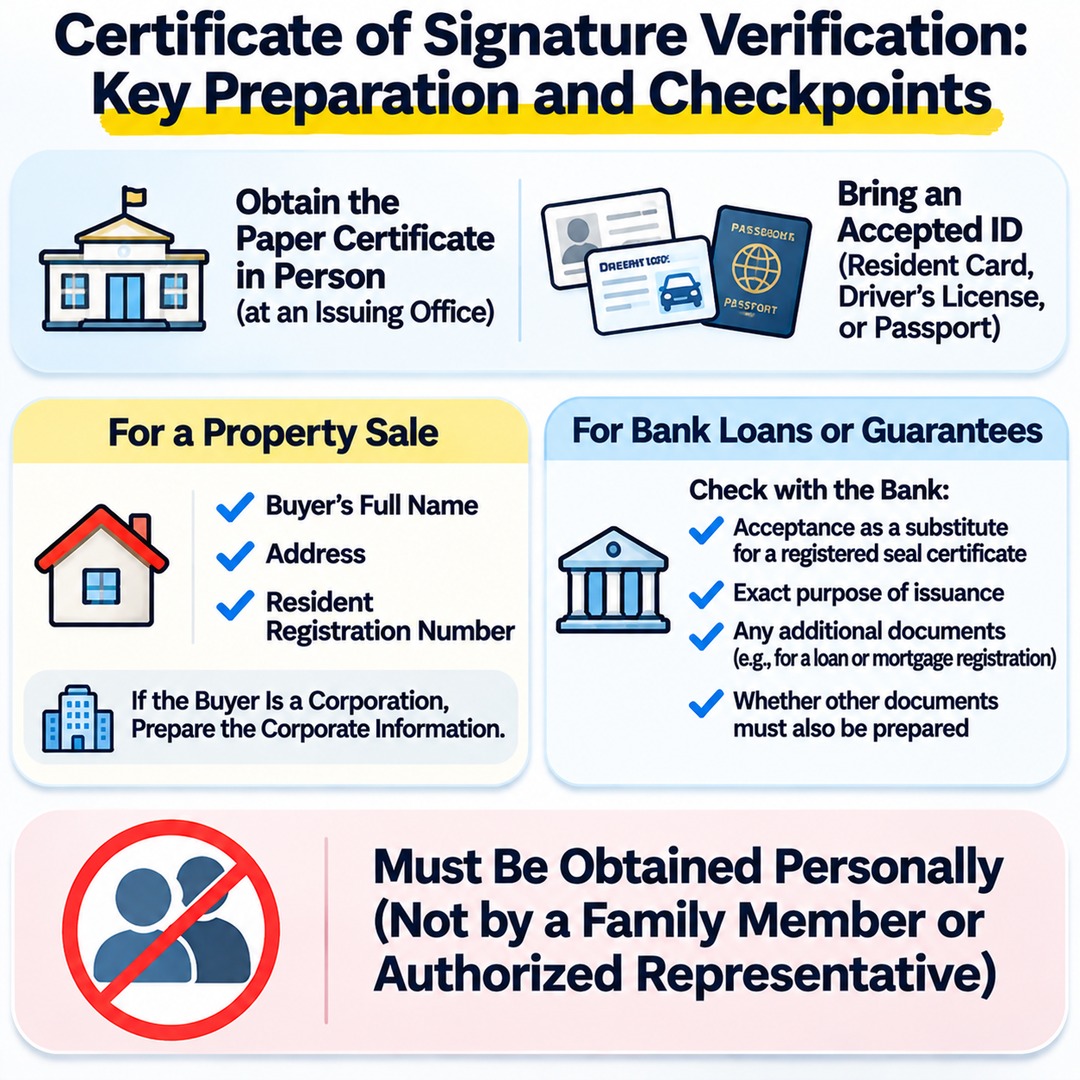
To obtain a paper certificate, you must visit an issuing office in person. Bring an accepted form of identification, such as a Korean resident registration card, driver's license, or passport.
If the certificate is for a property sale, prepare the required transaction information, including the buyer's full name, address, and resident registration number. If the buyer is a corporation, you will need the relevant corporate information.
For bank loans or guarantee-related services, it is advisable to check the following details with the bank representative before visiting:
Whether the bank accepts a Certificate of Signature Verification as a substitute for a registered seal certificate.
The exact purpose of issuance required by the bank.
Whether any additional documents are required for the loan or mortgage registration.
Whether any documents other than the personally issued certificate must also be prepared.
Because the Certificate of Signature Verification must be obtained personally, a family member or other authorized representative cannot obtain it at the service counter on your behalf.
How Is This Different From Online Issuance of a Registered Seal Certificate?
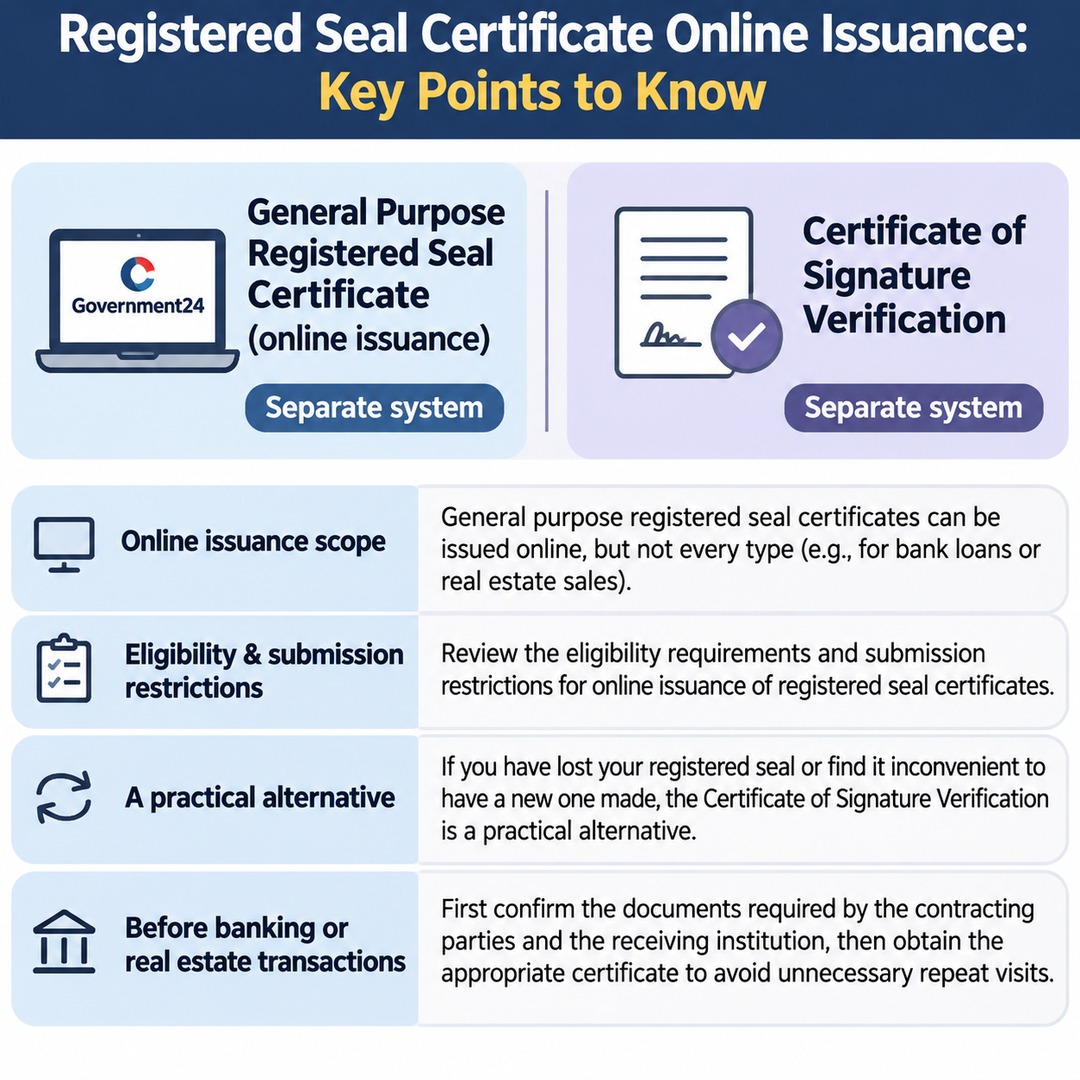
The online issuance of general-purpose registered seal certificates through Government24 is a separate system from the Certificate of Signature Verification.
The fact that general-purpose registered seal certificates can be issued online does not mean that every type of registered seal certificate, including those required for bank loans or real estate sales, can also be issued online.
You should also review the eligibility requirements and submission restrictions applicable to online issuance of registered seal certificates themselves.
If you have lost your registered seal or find it inconvenient to have a new one made, the Certificate of Signature Verification is a practical alternative. However, for banking or real estate transactions, first confirm the documents required by the contracting parties and the receiving institution, then obtain the appropriate certificate. This can help avoid unnecessary repeat visits.