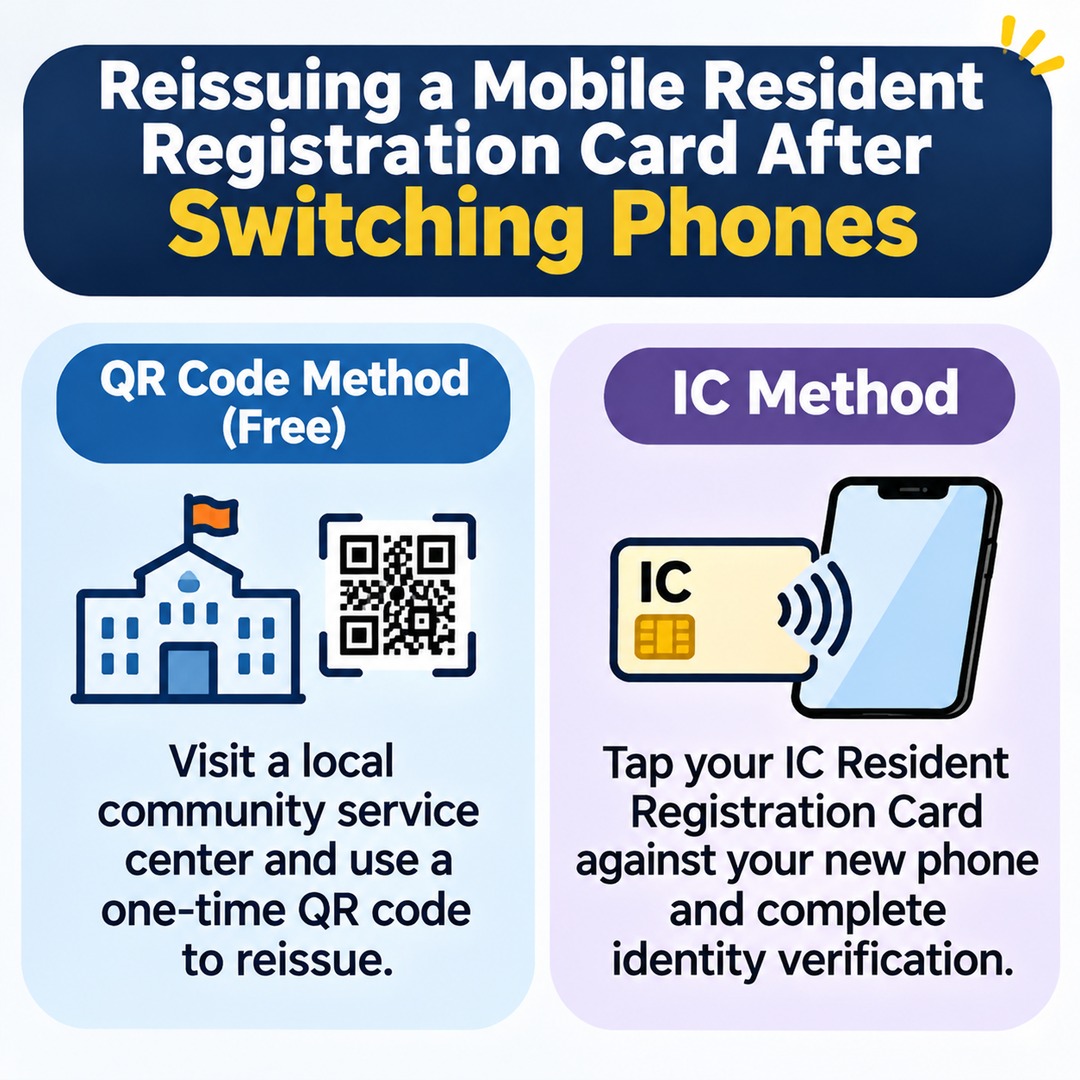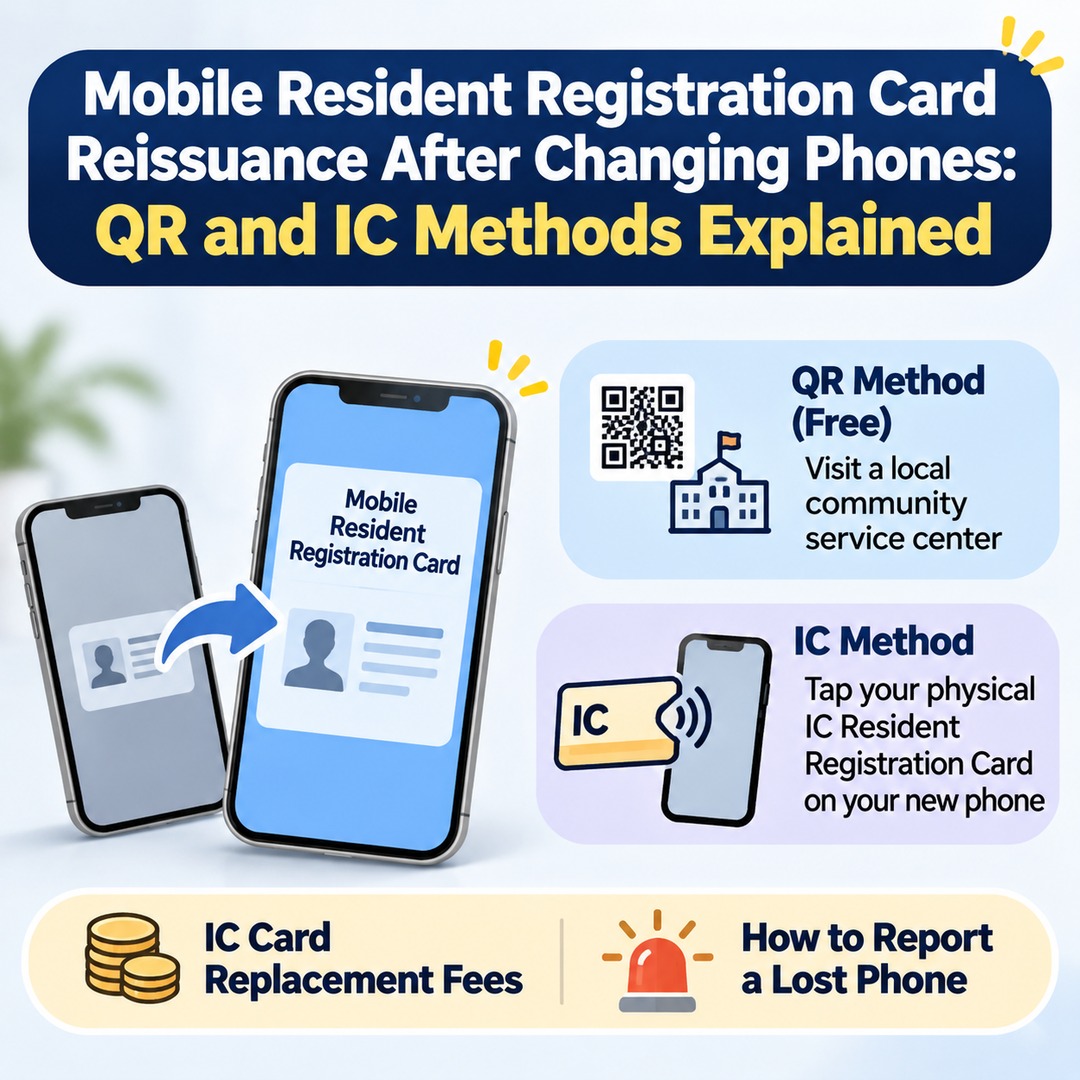
When you switch smartphones, you cannot simply transfer your existing Mobile Resident Registration Card to your new device and continue using it. The free QR-code method requires another visit to a local community service center, while people who have an IC Resident Registration Card can reissue their mobile ID by tapping the physical card against their new phone and completing identity verification. The method you originally chose determines the reissuance process.
Do You Need to Reissue Your Mobile Resident Registration Card When You Change Phones?
Yes. When you replace your phone, you must go through the issuance process again on your new device. Whether you need to visit a community service center depends on whether your original card was issued using the QR-code method or the IC method.
QR-code method: Visit a nearby eup, myeon, or dong community service center in South Korea and use a one-time QR code to reissue your mobile ID.
IC method: Tap your IC Resident Registration Card against the back of your new phone and complete identity verification to reissue your mobile ID.
The QR-code method does not mean that your physical Resident Registration Card contains a QR feature. Instead, you visit a community service center, complete identity verification, and scan a QR code issued specifically for mobile ID activation.
The IC method, on the other hand, uses a physical Resident Registration Card equipped with an IC chip. If you already have this card, you do not need to obtain a new QR code at a community service center every time you change phones.
How Do the QR-Code and IC Reissuance Processes Differ?
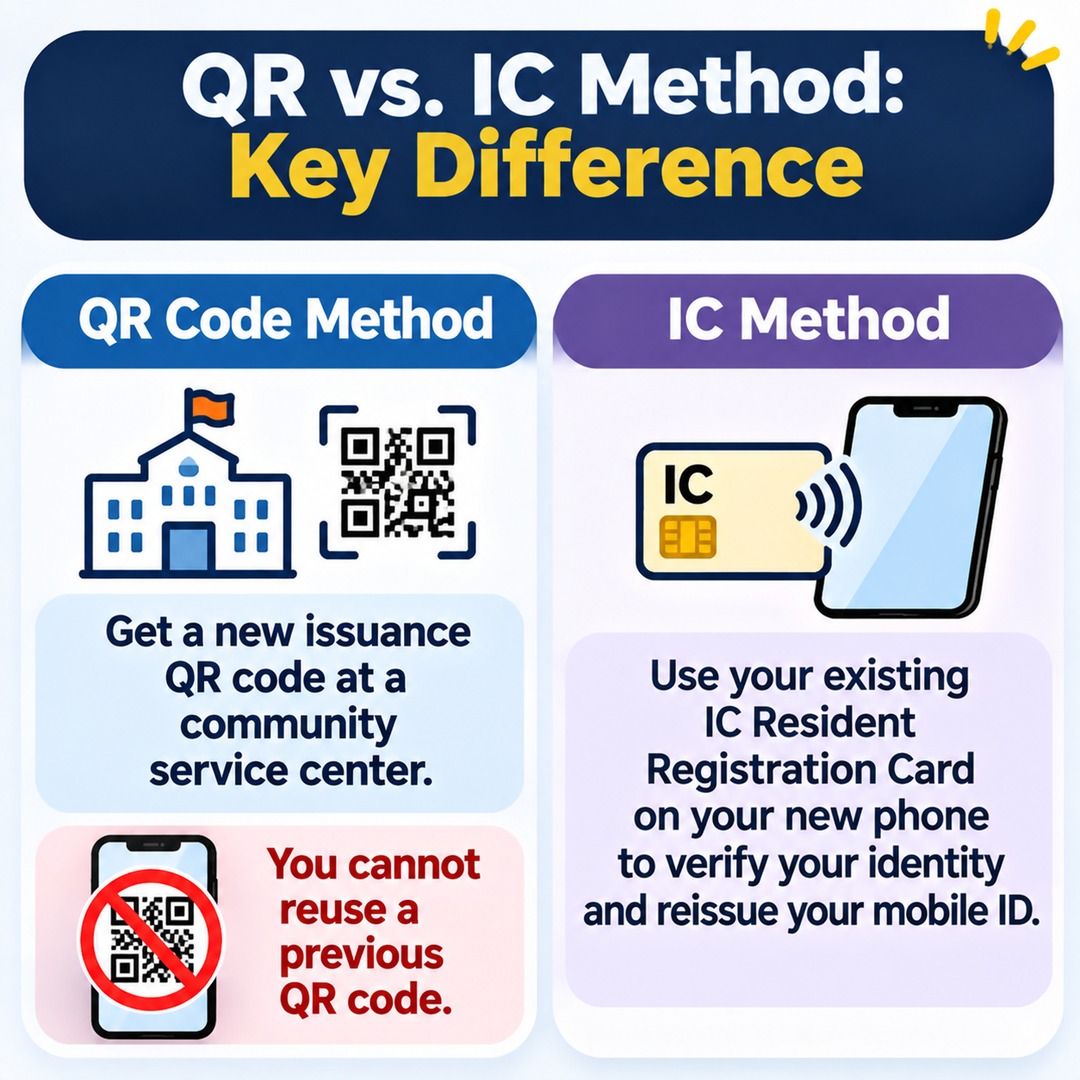
The main difference between the two methods is how you verify your identity on your new phone. The QR-code method requires you to obtain a new issuance QR code at a community service center, whereas the IC method allows you to authenticate using an IC Resident Registration Card you already own.
Reissuance Process by Method
| Category | QR-Code Method | IC Resident Registration Card |
|---|---|---|
| When changing phones | Visit a community service center | Tap the physical IC card against the phone |
| Identity verification | Scan a one-time QR code | Tap the IC chip and complete authentication |
| Need to revisit a community service center | Yes | No, if you already have an IC card |
| Mobile ID issuance fee | Free | No separate mobile issuance fee |
| Physical card required | Standard Resident Registration Card | Card with an embedded IC chip |
If you already have an IC Resident Registration Card, install the Mobile ID app on your new phone and hold the IC card against the back of the device. After completing identity verification, you can reissue your Mobile Resident Registration Card.
The QR-code method does not allow you to save a screenshot of the QR code used on your previous phone and reuse it on your new device. You must complete the process again at a community service center and obtain a new one-time QR code.
How Much Does It Cost to Switch to an IC Resident Registration Card?
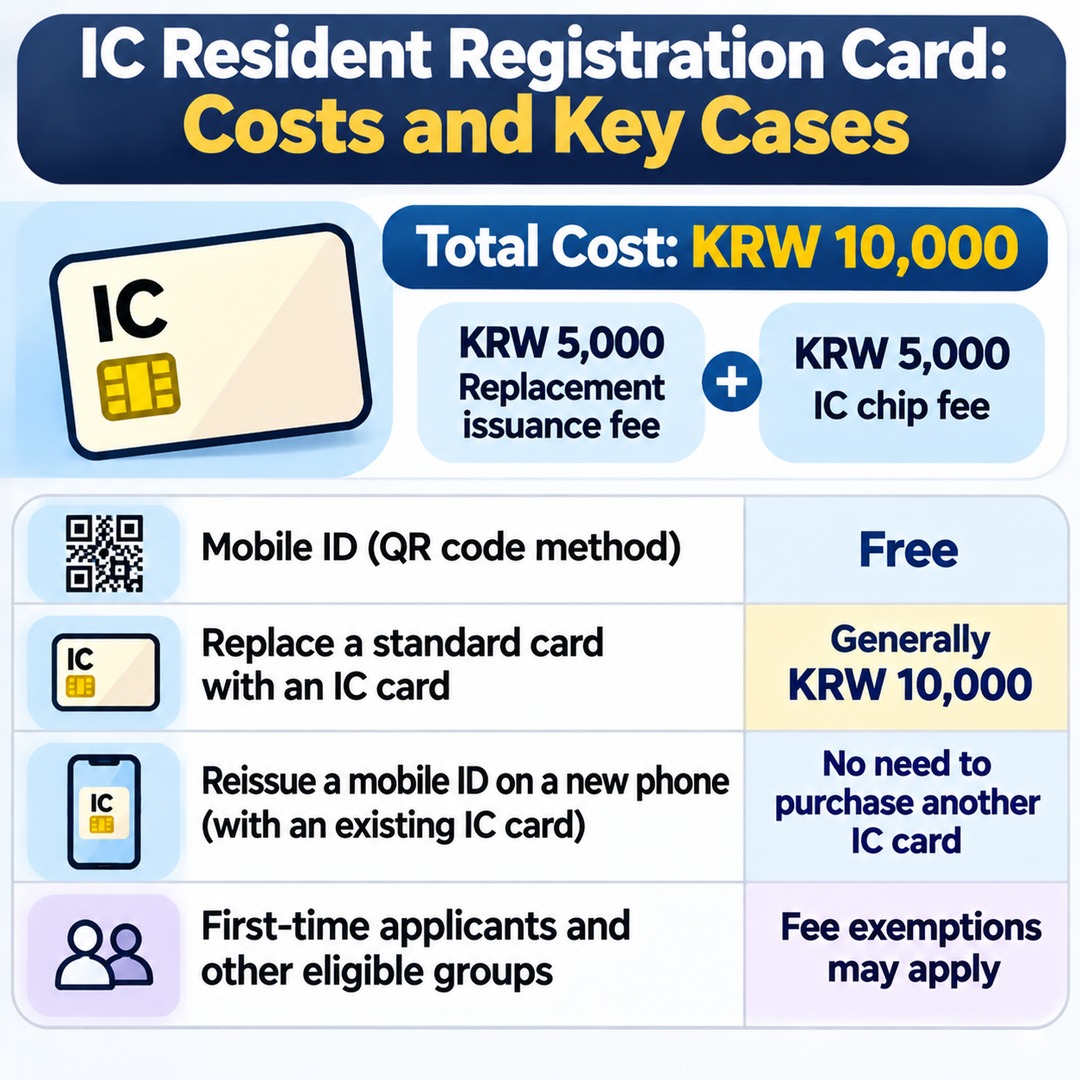
In a typical case where you replace a standard Resident Registration Card with an IC Resident Registration Card, the total cost is KRW 10,000. This consists of a KRW 5,000 replacement issuance fee and KRW 5,000 for the IC chip.
The costs can be broken down as follows:
Mobile Resident Registration Card issued using the QR-code method: Free
Replacing a standard Resident Registration Card with an IC card: Generally KRW 10,000
Reissuing a mobile ID on a new phone when you already have an IC Resident Registration Card: No need to purchase another IC card
First-time Resident Registration Card applicants and other eligible groups: Fee exemptions may apply
In particular, people receiving their first Resident Registration Card at age 17 are eligible for free issuance. The IC chip fee may also be waived depending on the applicable laws and eligibility requirements.
It is important to distinguish between the cost of obtaining a new IC Resident Registration Card and the process of reissuing a mobile ID using an IC card you already own. Simply changing your phone does not mean you need to apply for another IC Resident Registration Card.
What Should You Do Before Reissuing Your Mobile ID If Your Phone Is Lost?
If you lose your phone, you should first check how to report the loss of your existing Mobile Resident Registration Card. This is a separate step from reissuing the mobile ID on a new device.
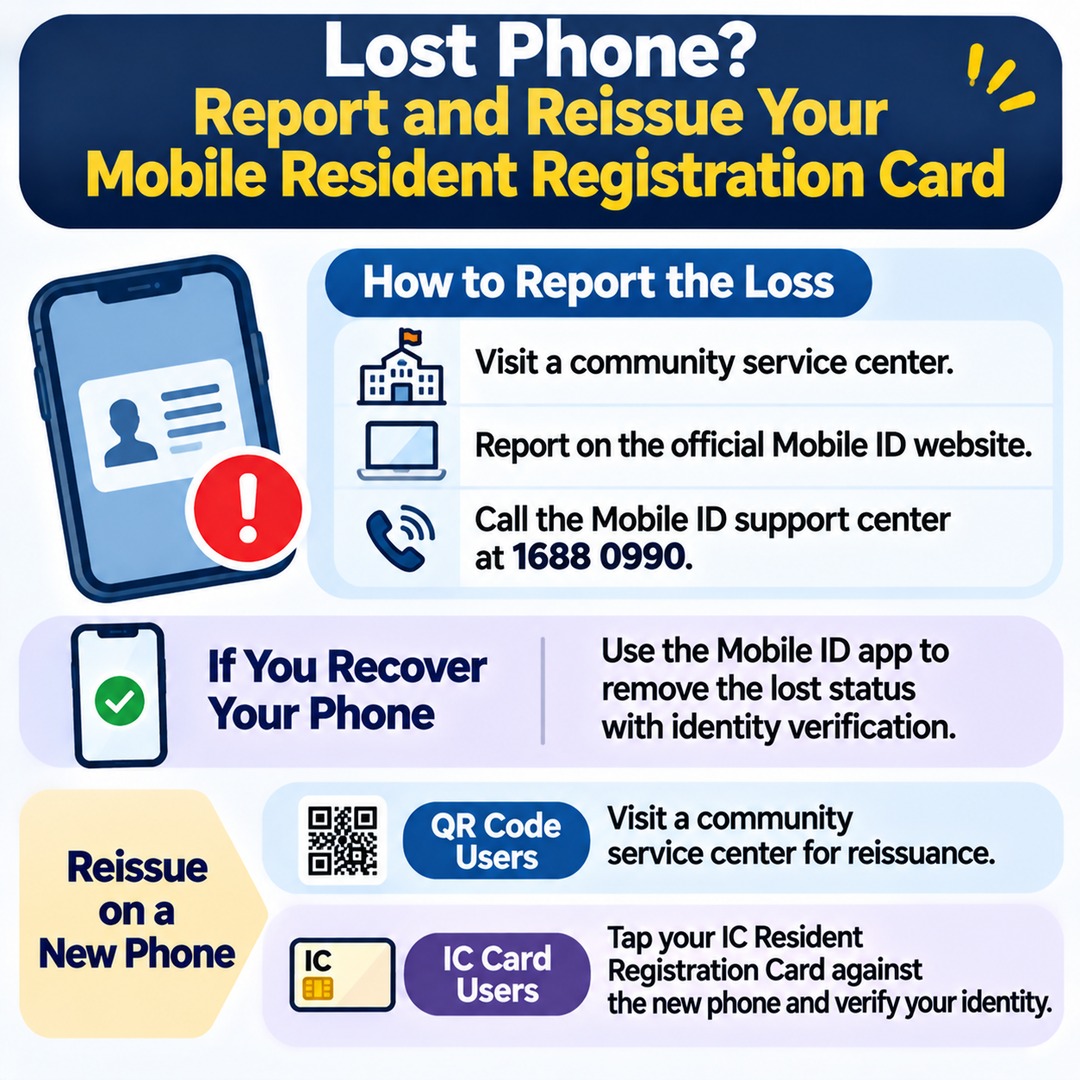
According to guidance from South Korea's Government Civil Service Information Center, you can report a lost mobile ID through the following channels:
1. Visit a community service center in person to report the loss.
2. Submit a theft or loss report through the official Mobile ID website.
3. Call the dedicated Mobile ID support center at 1688-0990.
If you recover your lost phone, you can use the Mobile ID app to解除 the lost status. This requires identity verification, such as authentication using a phone registered in your name, real-name verification, and facial recognition.
Once you have a replacement phone, you can reissue your mobile ID using the method associated with your original issuance:
QR-code users: Visit a community service center for reissuance.
IC card users: Tap your IC Resident Registration Card against the new phone and complete identity verification.
Reporting a lost phone and reissuing a Mobile Resident Registration Card are not the same process. A loss report manages the status and use of your existing mobile ID, while reissuance allows you to use a newly issued mobile ID on another device.
How Can You Reissue Your Mobile ID Without Visiting a Community Service Center?
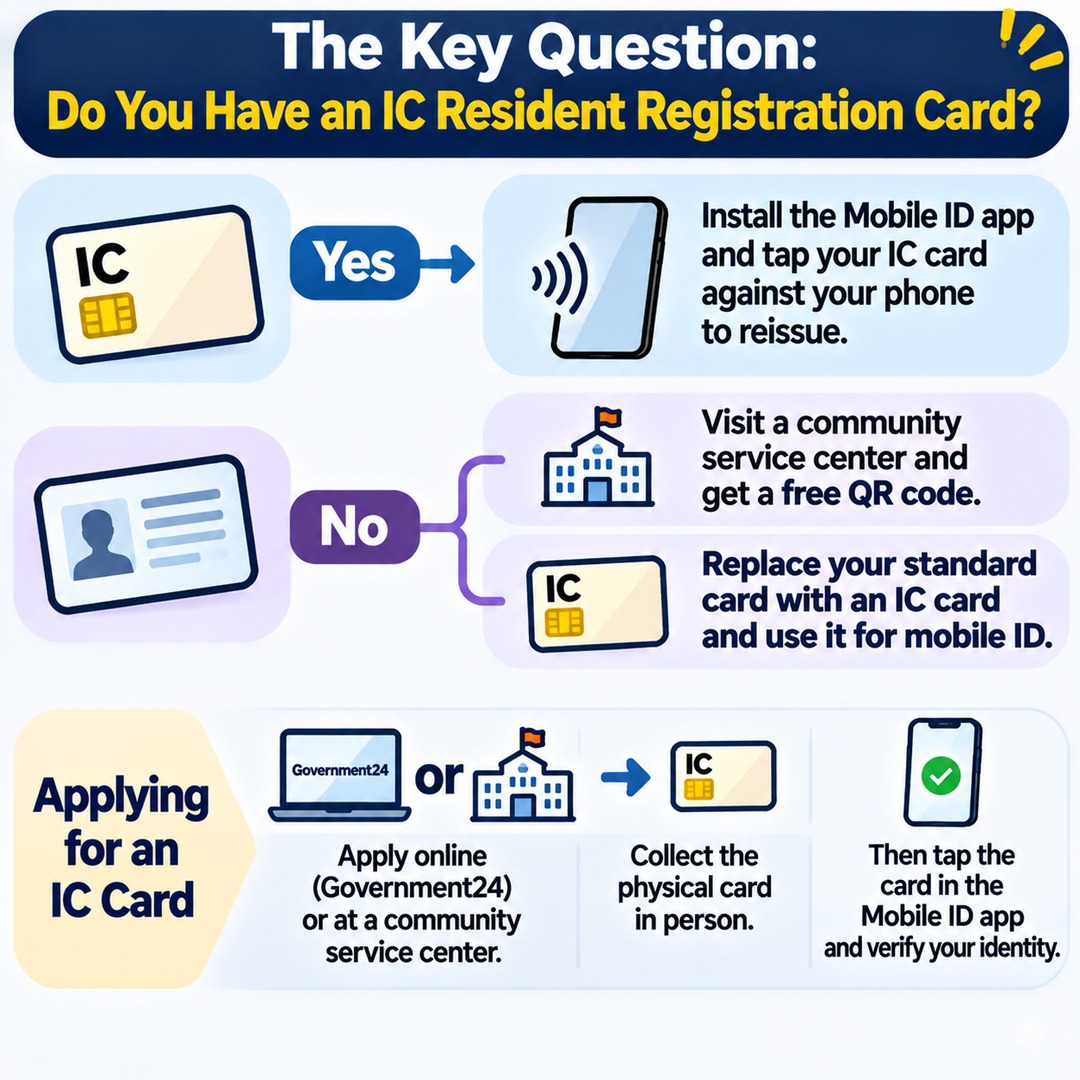
The most important factor is whether you already have an IC Resident Registration Card.
If you have one, install the Mobile ID app and tap the physical card against the back of your phone to proceed with reissuance.
If you only have a standard plastic Resident Registration Card, you can choose between two options:
Visit a community service center and obtain a free QR-code-based mobile ID.
Replace your standard card with an IC Resident Registration Card and use the physical IC card for mobile ID issuance.
You can apply for an IC Resident Registration Card through the Korean government's Government24 website or at a community service center. However, even if you apply online through Government24, you must collect the physical card in person at the designated community service center. After receiving the card, use the Mobile ID app to tap the card and complete identity verification.
Therefore, if you want to avoid visiting a community service center altogether, first check whether you already have an IC Resident Registration Card. If you do not, you will need to account for the application and physical card collection process.
Frequently Asked Questions
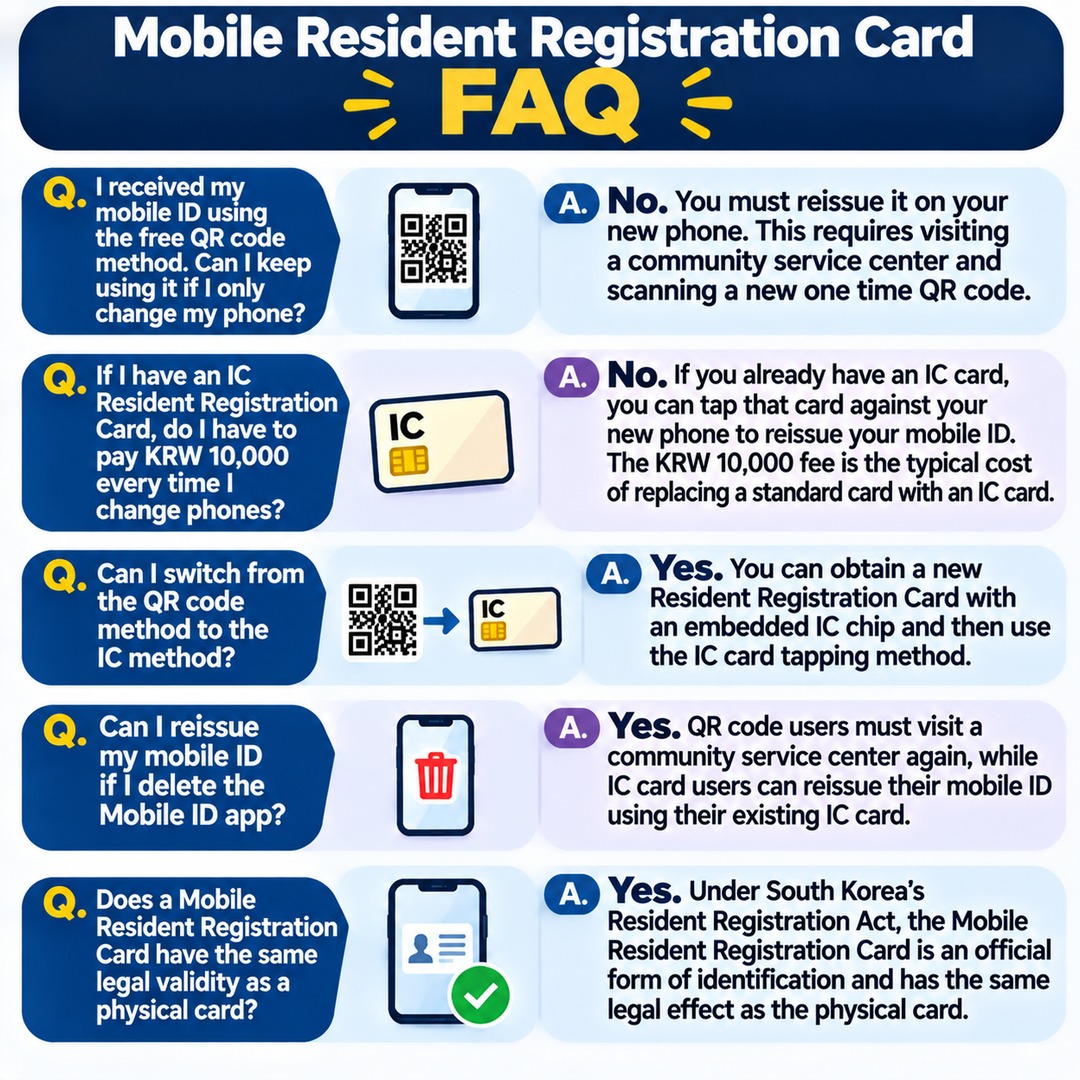
Q. I received my mobile ID using the free QR-code method. Can I keep using it if I only change my phone?
No. You must reissue it on your new phone. This requires visiting a community service center and scanning a new one-time QR code.
Q. If I have an IC Resident Registration Card, do I have to pay KRW 10,000 every time I change phones?
No. If you already have an IC Resident Registration Card, you can tap that card against your new phone to reissue your mobile ID. The KRW 10,000 fee is the typical cost of replacing a standard physical Resident Registration Card with an IC card. It is not a mobile issuance fee charged every time you change phones.
Q. Can I switch from the QR-code method to the IC method?
Yes. You can obtain a new Resident Registration Card with an embedded IC chip and then use the IC card tapping method to issue your Mobile Resident Registration Card.
Q. Can I reissue my mobile ID if I delete the Mobile ID app?
Yes. QR-code users must visit a community service center again, while IC card users can reissue their mobile ID using their existing IC Resident Registration Card.
Q. Does a Mobile Resident Registration Card have the same legal validity as a physical Resident Registration Card?
Yes. Under South Korea's Resident Registration Act, the Mobile Resident Registration Card is an official form of identification and has the same legal effect as the physical Resident Registration Card.