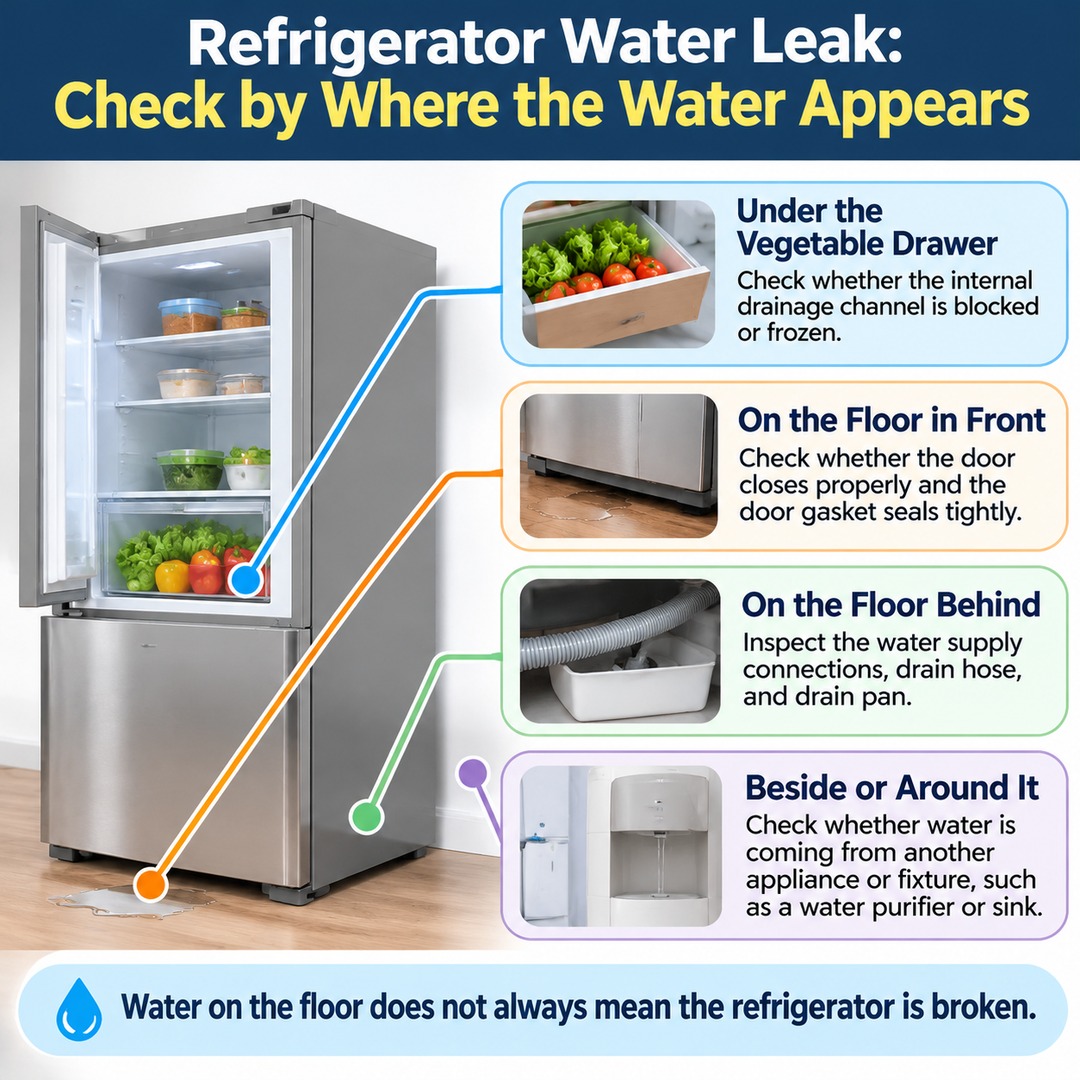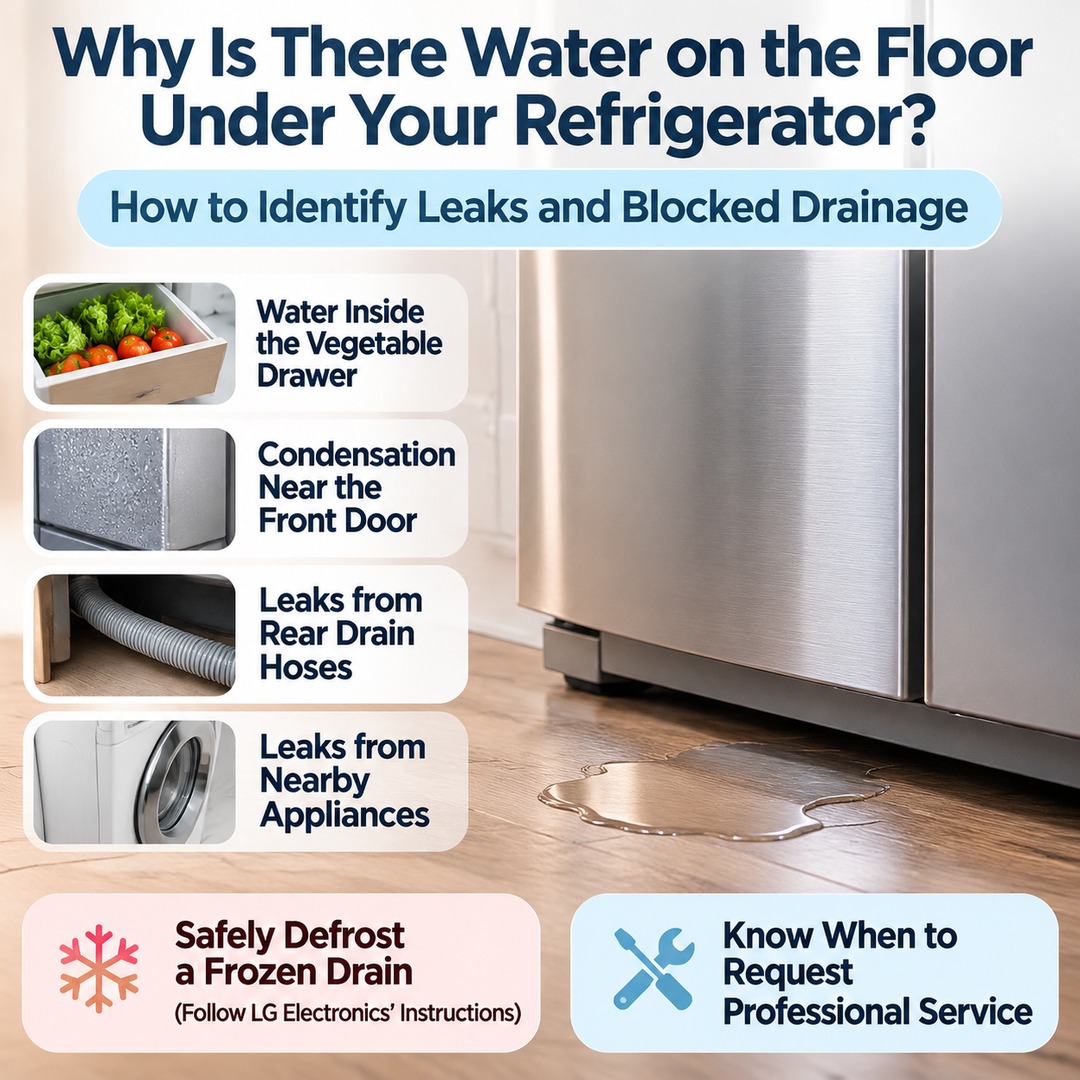
Water pooling under your refrigerator does not necessarily mean the appliance is broken. If water repeatedly appears beneath the vegetable drawer in the refrigerator compartment, the internal drain may be frozen or blocked. If the floor behind the refrigerator is wet, check the water supply hose, drain hose, and drain pan. Identifying where the water first appears can help you determine whether you can resolve the issue yourself or need a professional service visit.
Refrigerator Leaking Water: Start by Identifying Where It Appears
The first step in diagnosing a refrigerator leak is to distinguish between water collecting inside the appliance and water escaping onto the floor. Although both situations may look like a refrigerator leak, their causes can be quite different.
Under the vegetable drawer: Check whether the internal drainage channel is blocked or frozen.
On the floor in front of the refrigerator: Check whether the door closes properly and the door gasket seals tightly.
On the floor behind the refrigerator: Inspect the water supply connections, drain hose, and drain pan.
Beside or around the refrigerator: Check whether water is coming from another appliance or fixture, such as a water purifier, sink, or dishwasher.
In particular, if the refrigerator compartment is dry but the floor is wet, do not immediately assume that the refrigerator itself is leaking.
Why Does Water Collect Under the Refrigerator's Vegetable Drawer?
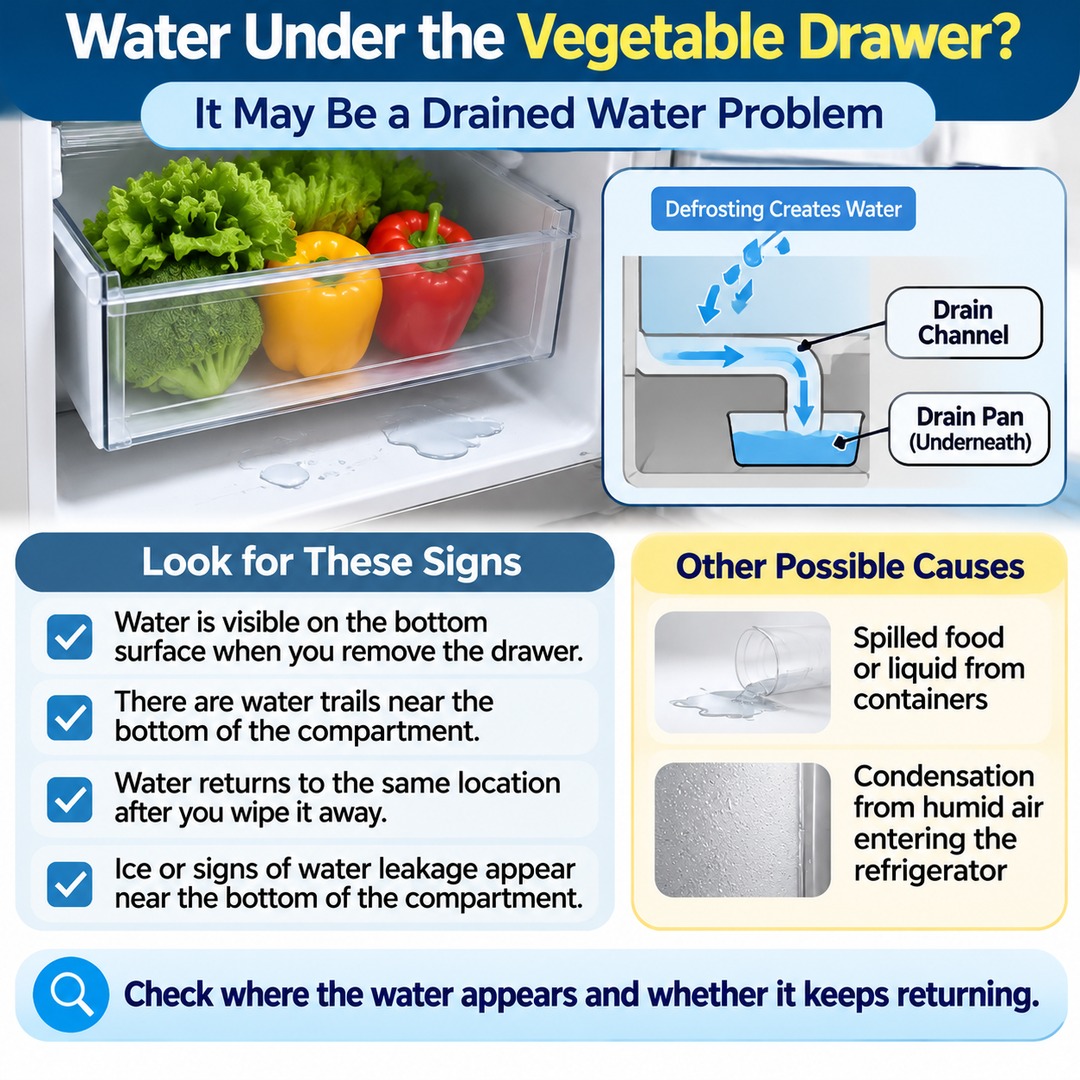
If water repeatedly collects beneath the vegetable drawer, one possible cause is that water produced during defrosting cannot drain away properly.
Refrigerators produce water when frost is removed during the cooling cycle. Under normal conditions, this water flows through a drainage channel into a drain pan located underneath the appliance.
However, if ice or debris blocks the drain opening, the water cannot flow out properly. It may overflow onto the floor of the refrigerator compartment or collect underneath the drawers.
Look for the following signs:
Water is visible on the bottom surface when you remove the vegetable drawer.
There are visible water trails near the bottom of the refrigerator compartment.
Water returns to the same location some time after you wipe it away.
Ice or signs of water leakage appear near the bottom of the freezer or refrigerator compartment.
However, spilled food or liquid from containers and condensation caused by humid air entering the refrigerator can produce similar symptoms. Check both where the water appears and whether it keeps returning.
How Do Front and Rear Refrigerator Leaks Differ?
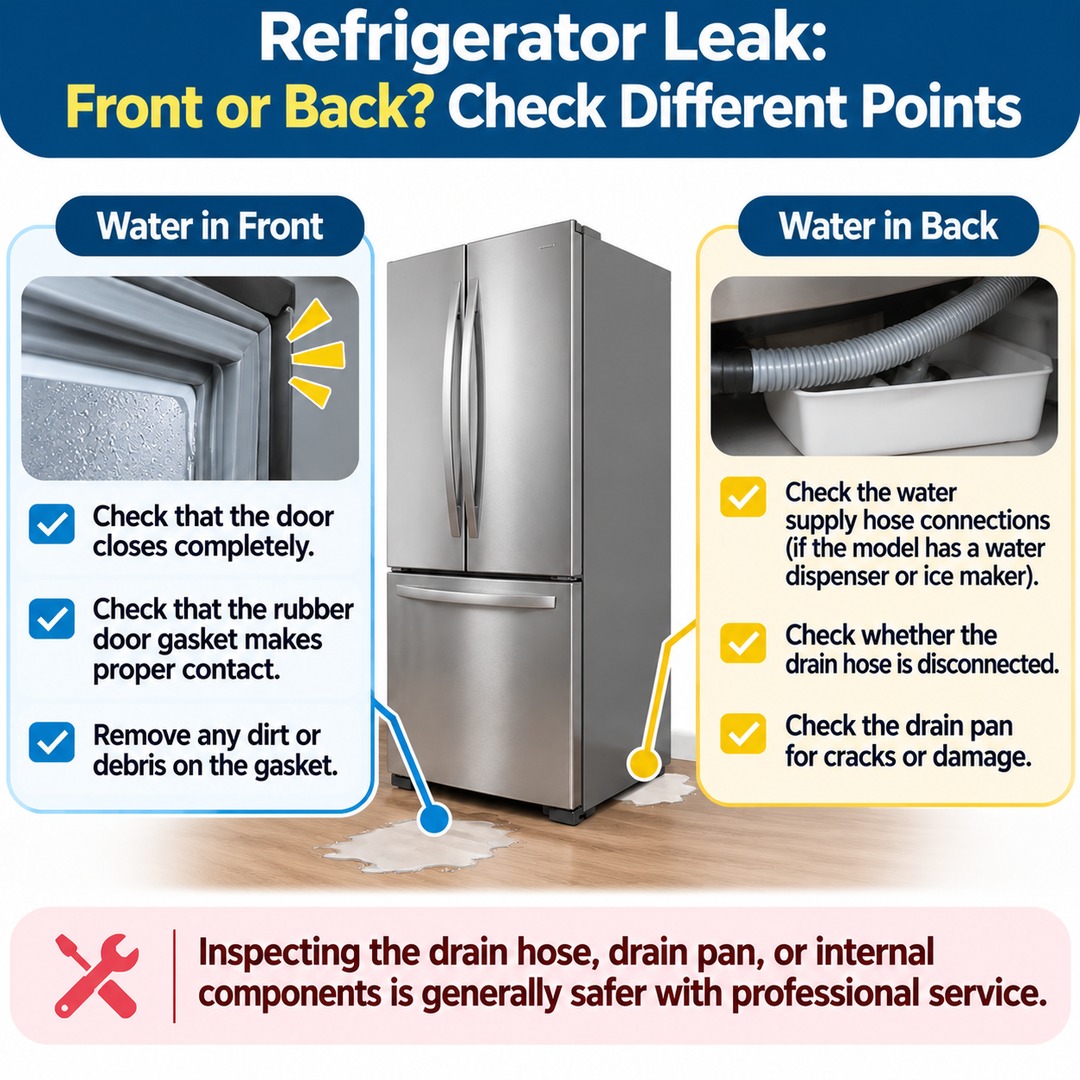
A leak at the front and a leak at the back of a refrigerator require different inspection points. The location of the water alone cannot confirm the cause, but it can help you decide what to check first.
If the Floor in Front of the Refrigerator Is Wet
First, check whether the refrigerator door closes completely. If a food container or an item on a shelf prevents the door from closing properly, humid air from outside can enter. This may cause water droplets to form on the interior walls or floor of the refrigerator.
Also check whether the rubber door gasket makes proper contact with the refrigerator body when the door is closed. Dirt or debris on the gasket, or a door that does not close completely, can cause condensation to develop repeatedly.
If the Floor Behind the Refrigerator Is Wet
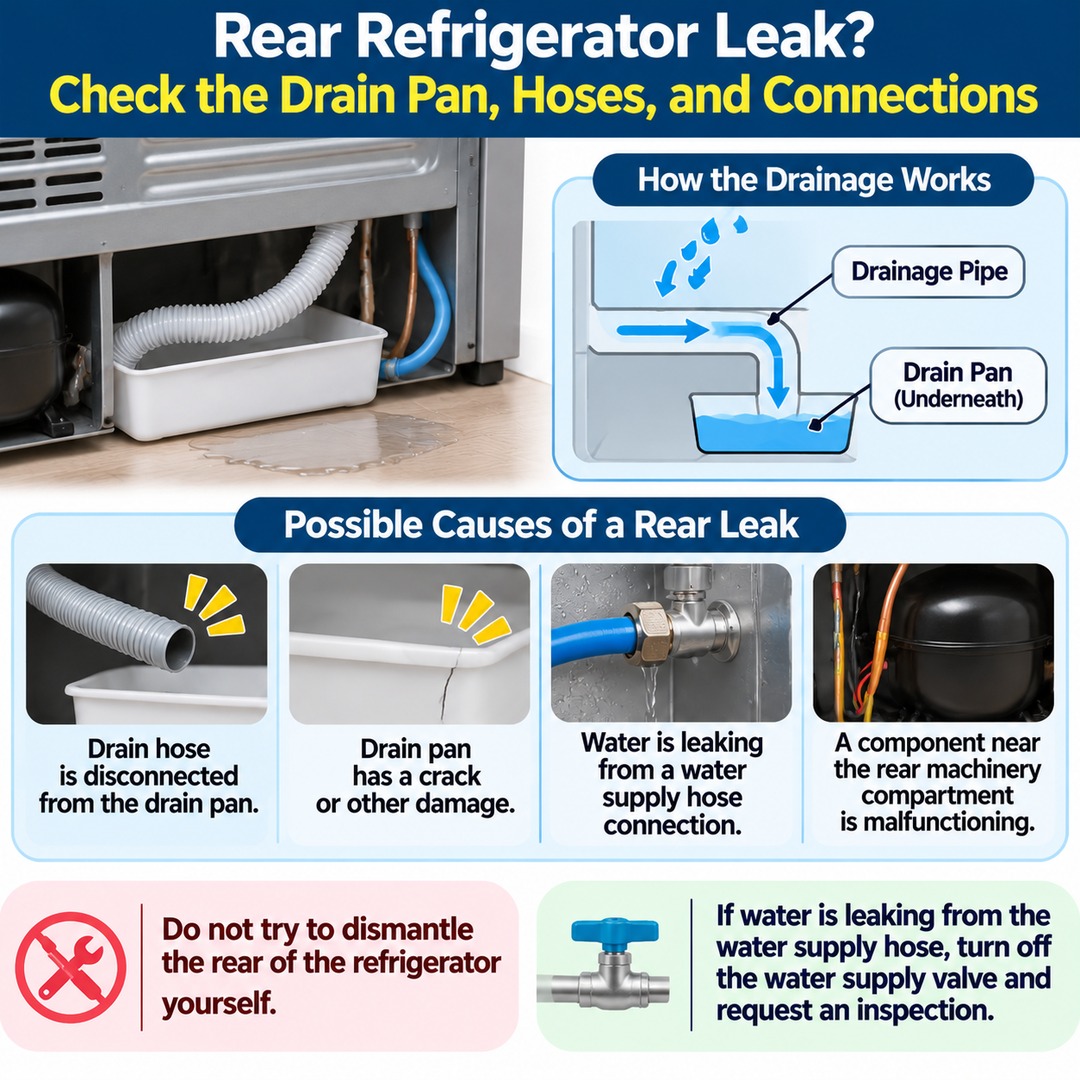
Depending on the refrigerator model, the rear section may contain water supply connections, a drain hose, and an evaporation drain pan.
In particular, water may leak onto the floor behind the refrigerator if the drain hose leading to the drain pan has become disconnected or the pan has developed a crack. If your refrigerator has a built-in water dispenser or ice-making function, also inspect the water supply hose connections.
Samsung's guidance for freestanding kimchi refrigerators in South Korea also identifies a disconnected drain hose and a damaged drain pan as possible causes of rear leakage.
For these components, professional inspection is generally safer than attempting to disassemble the refrigerator or open the machinery compartment yourself.
How Can You Fix a Frozen Refrigerator Drain?
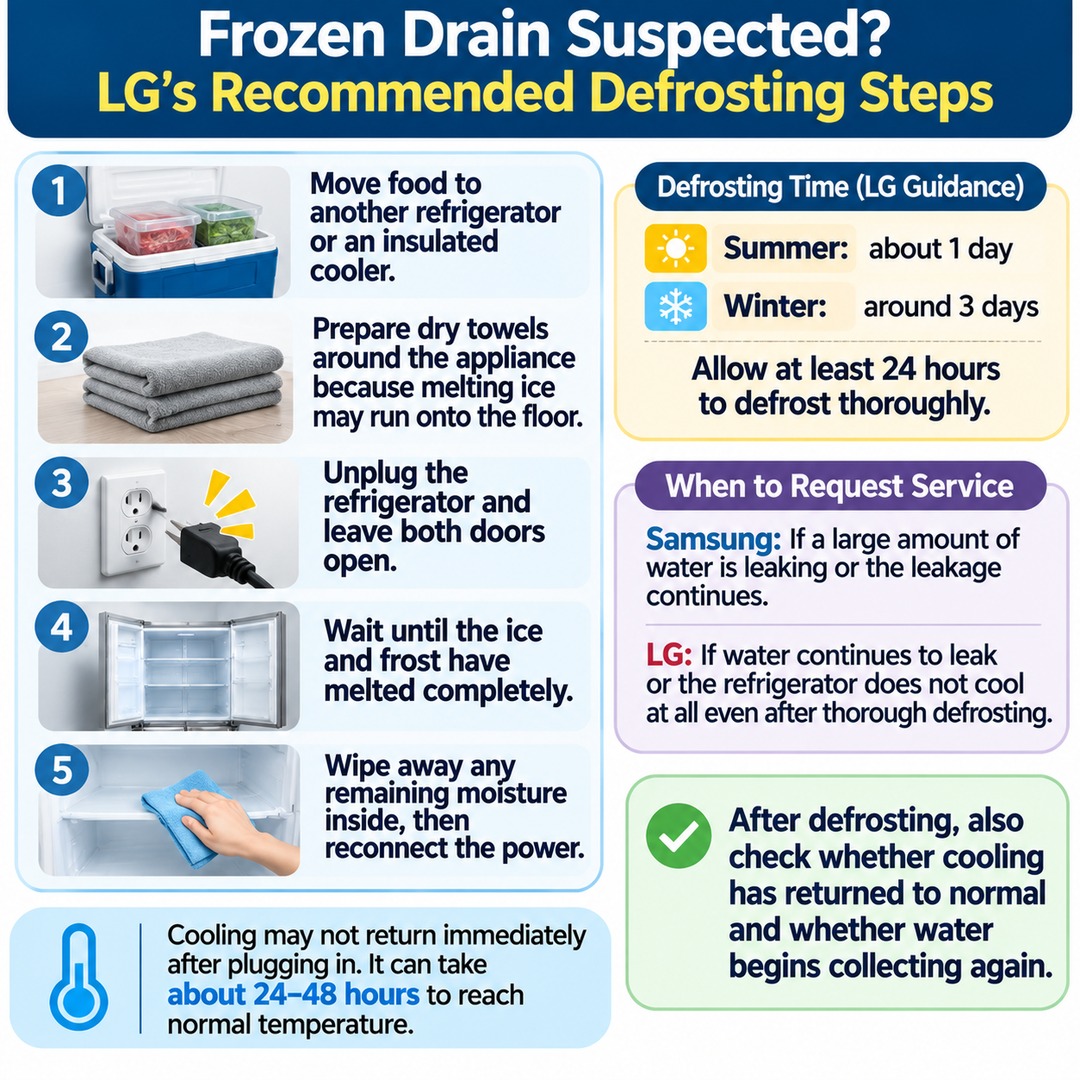
If you suspect that the drain is frozen, first check the manufacturer's recommended natural defrosting procedure. LG Electronics recommends moving food to another refrigerator or an insulated cooler, disconnecting the power, and leaving both the refrigerator and freezer doors open to allow the appliance to defrost thoroughly.
Follow these steps based on LG Electronics' guidance:
1. Move refrigerated and frozen food to another refrigerator or an insulated cooler.
2. Prepare dry towels around the appliance because melting ice may cause water to run onto the floor.
3. Unplug the refrigerator and leave both the refrigerator and freezer doors open.
4. Wait until the ice and frost have melted completely.
5. Wipe away any remaining moisture inside the appliance and reconnect the power.
The time required for defrosting varies depending on the season. LG Electronics recommends allowing at least 24 hours. Its guidance indicates that approximately one day may be needed in summer, while winter defrosting may take around three days.
Also, normal cooling does not necessarily resume immediately after you reconnect the power. The refrigerator may need approximately 24–48 hours to reach its normal operating temperature.
There is also an important difference between Samsung Electronics' and LG Electronics' service guidance. Samsung Electronics Service recommends professional inspection by a service engineer if a large amount of water is leaking or the leakage continues. LG Electronics advises requesting an in-home service visit if water continues to leak or the refrigerator does not cool at all even after thorough defrosting.
Therefore, completing the recommended defrosting period does not automatically mean the refrigerator is operating normally. You should also check whether cooling has returned to normal and whether water begins collecting again.
Can You Repair a Leak from the Refrigerator's Rear Drain Pan Yourself?
If the cause is damage to the rear drain pan or drain hose, simply defrosting the refrigerator may not solve the problem.
Defrost water generated inside the refrigerator normally travels through a drainage pipe into a drain pan underneath the appliance. Depending on the refrigerator's design, heat is used to evaporate the collected water.
The following problems can cause water to leak onto the floor behind the refrigerator:
The drain hose has become disconnected from the drain pan.
The drain pan has developed a crack or other damage.
Water is leaking from a water supply hose connection.
A component near the refrigerator's rear machinery compartment is malfunctioning.
If you suspect one of these problems, avoid attempting to dismantle the rear of the refrigerator yourself. Repairs involving the machinery compartment or internal drainage connections are generally safer when handled by a professional service engineer.
If you confirm that water is leaking from the water supply hose, turn off the connected water supply valve and request an inspection.
The Water May Be Coming from a Nearby Appliance, Not the Refrigerator
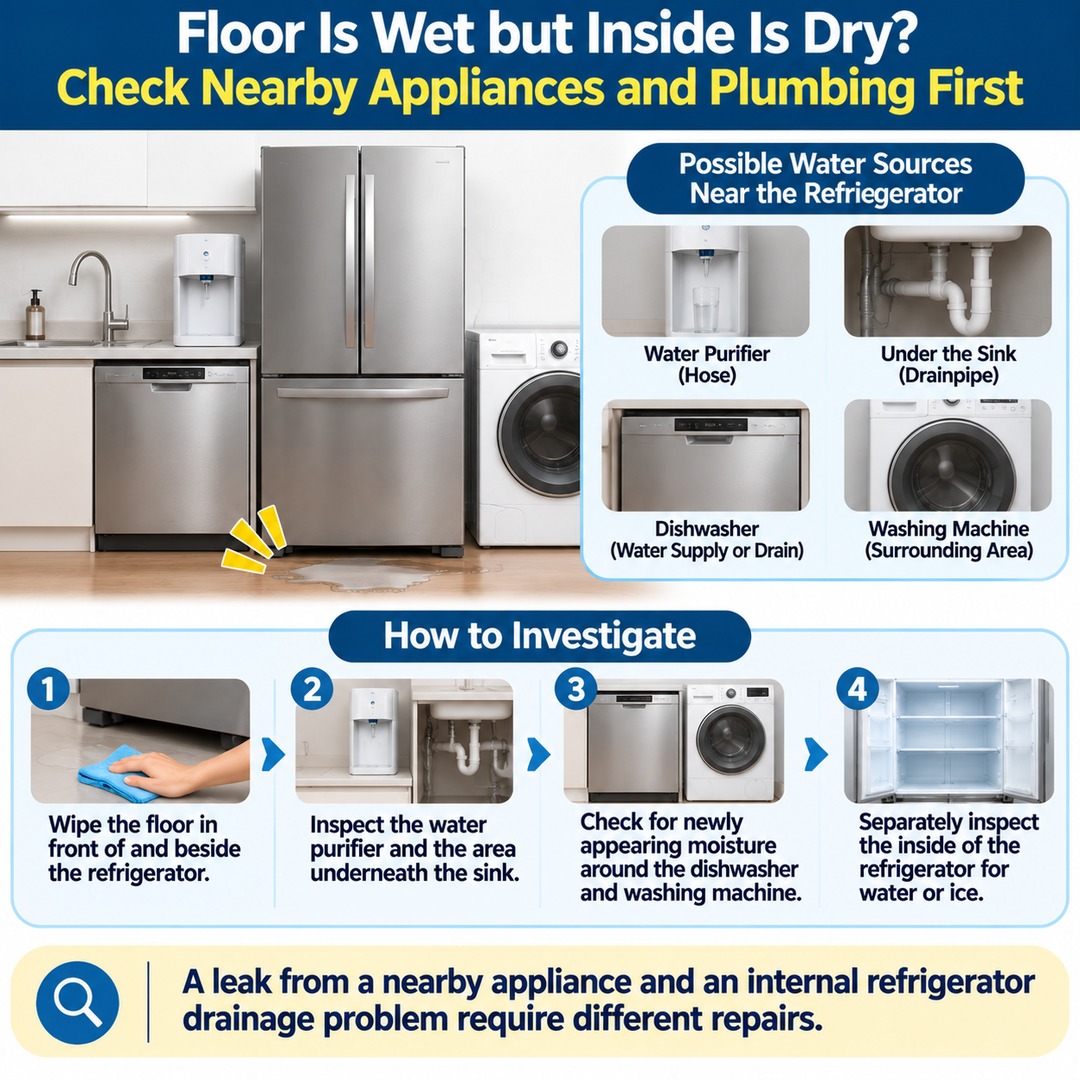
If the inside of the refrigerator is dry but the floor is wet, check nearby plumbing and appliances before assuming that the refrigerator is responsible.
Water from a water purifier hose, the drainpipe underneath the sink, a dishwasher's water supply or drainage connections, or the area around a washing machine may flow underneath the refrigerator.
You can investigate as follows:
1. Wipe the floor in front of and beside the refrigerator.
2. Inspect the water purifier and the area underneath the sink.
3. Check for newly appearing moisture around the dishwasher and washing machine.
4. Separately inspect the inside of the refrigerator for water or ice.
A leak from a nearby appliance and an internal refrigerator drainage problem require different repairs.
If water is also collecting underneath the dishwasher, inspect that area separately to avoid confusing a dishwasher leak with a refrigerator drainage problem.
When Should You Request Professional Service Instead of Trying to Fix It Yourself?
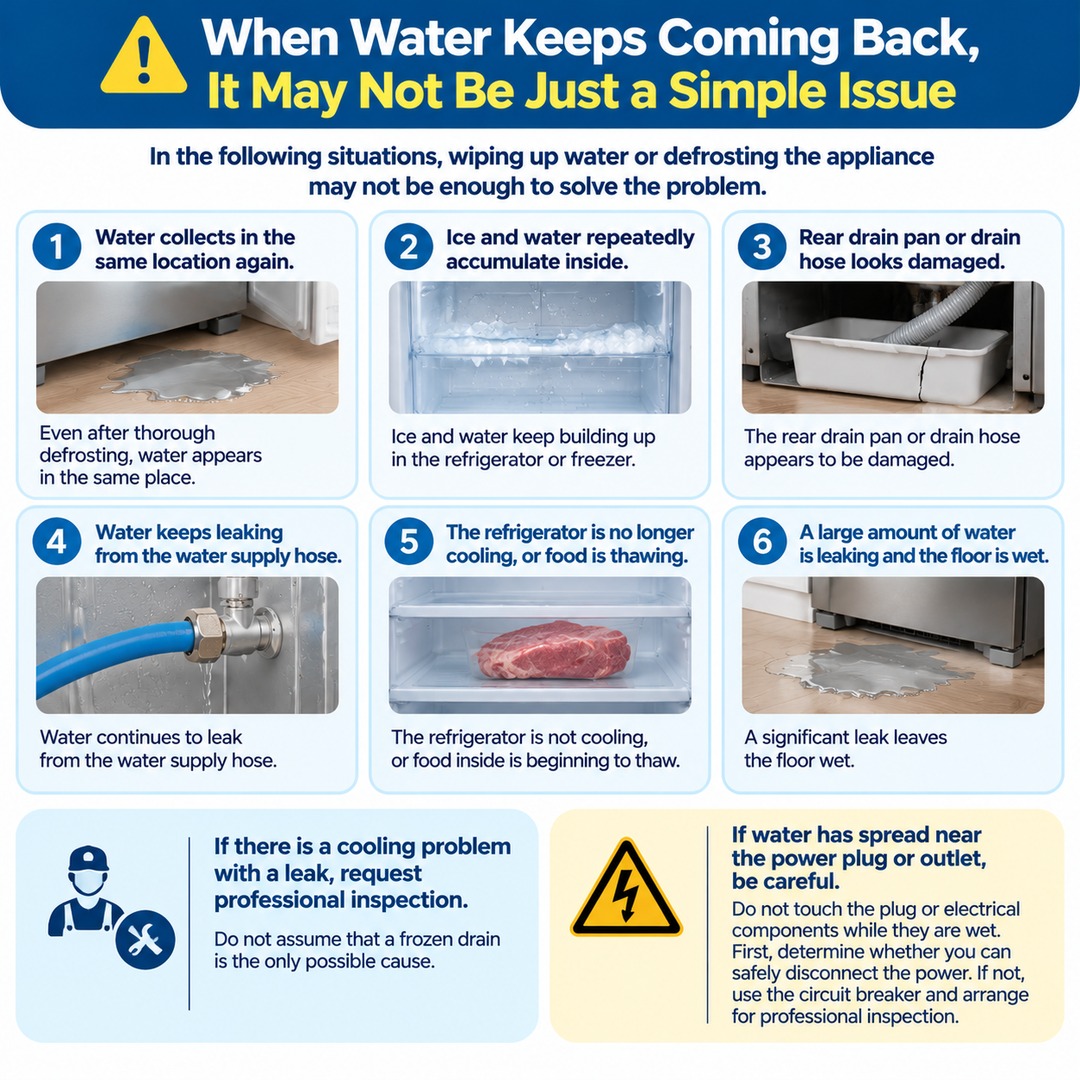
In the following situations, repeatedly wiping up water or defrosting the appliance may not be enough to resolve the problem.
Water collects in the same location again even after thorough defrosting.
Ice and water repeatedly accumulate inside the refrigerator or freezer.
The rear drain pan or drain hose appears to be damaged.
Water continues to leak from the water supply hose.
The refrigerator is no longer cooling, or food inside is beginning to thaw.
A large amount of water is leaking and the floor remains wet.
In particular, if leakage occurs together with a cooling problem, do not assume that a frozen drain is the only possible cause. Request a professional inspection.
If water has spread near the power plug or electrical outlet, do not touch the plug or electrical components while they are wet. First determine whether you can safely disconnect the power. If direct access is unsafe or difficult, use the electrical circuit breaker and arrange professional inspection.
Frequently Asked Questions About Water Collecting in Refrigerators
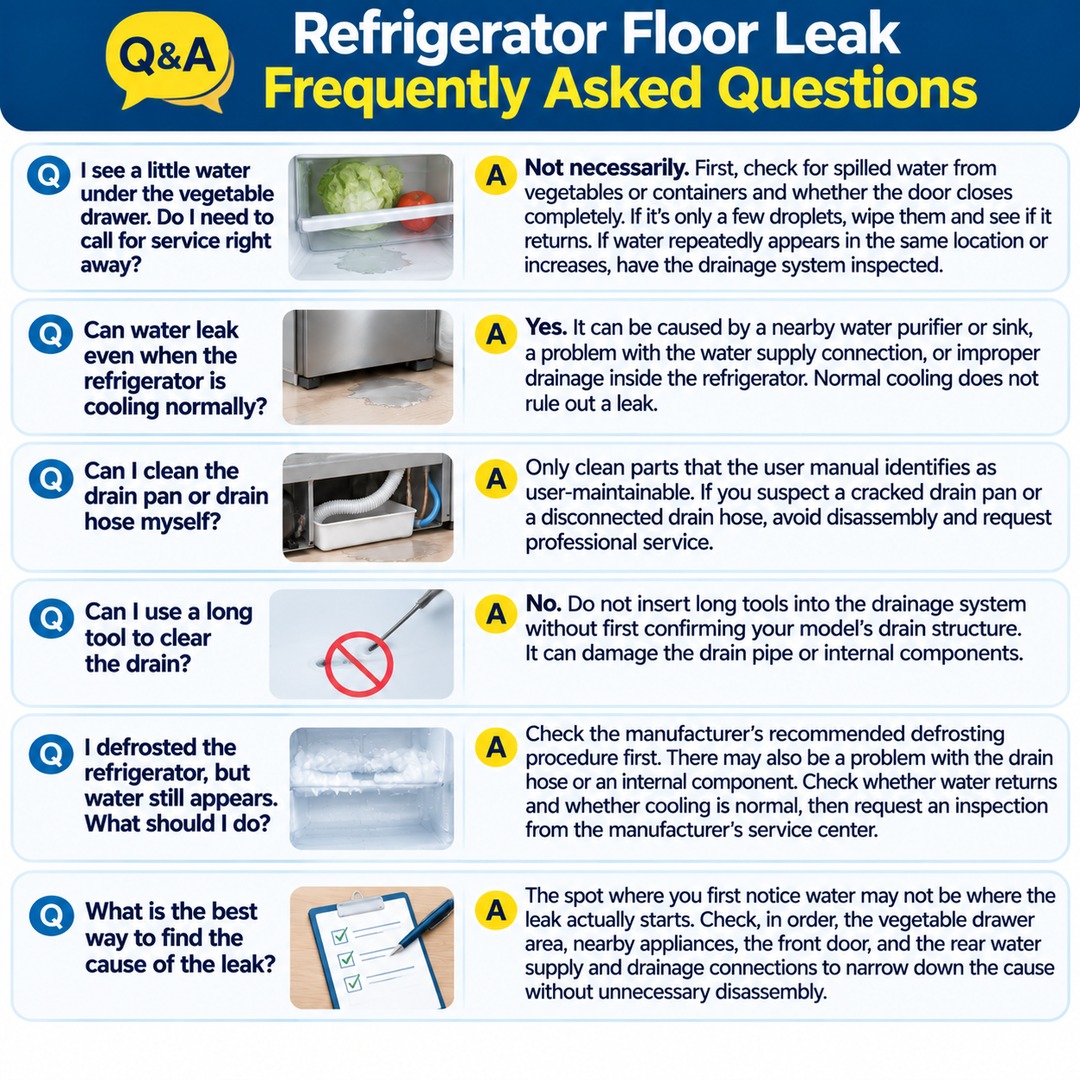
Q. A Small Amount of Water Has Collected Under the Vegetable Drawer. Do I Need to Call for Service Immediately?
Not necessarily. First, check whether water has spilled from vegetables or food containers and whether the refrigerator door is closing completely. If there are only a few water droplets, wipe them away and see whether they return. If water repeatedly appears in the same location or the amount increases, the drainage system should be inspected.
Q. Can Water Appear on the Floor Even When the Refrigerator Is Cooling Normally?
Yes. There are several possible causes, including a leak from a nearby water purifier or sink, a problem with the water supply connection, or improper drainage of water generated inside the refrigerator. Normal cooling does not rule out a leakage problem.
Q. Can I Clean the Drain Pan Behind the Refrigerator Myself?
The structure and accessibility of the drain pan vary by model. Only clean components that the manufacturer's user manual specifically identifies as suitable for user maintenance. If you suspect that the drain pan is cracked or the drain hose has become disconnected, avoid disassembling the appliance and request professional service.
Q. Can I Clear the Drain Opening with a Wire or Long Rod?
Avoid inserting long tools into the drainage system without first confirming the structure of the drain channel for your specific model. Doing so may damage the drain pipe or internal components. Check the manufacturer's recommended defrosting procedure first.
Q. What Should I Do If Water Collects Again After Defrosting?
There may be a problem with the drain hose or an internal component in addition to possible drain freezing. Check whether water returns to the same location and whether the refrigerator is cooling normally. Then request an inspection from the manufacturer's service center.
The location where you first notice water on the floor may not be the location where the leak actually begins. By checking the vegetable drawer area, nearby appliances, the front door, and the rear water supply and drainage connections in sequence, you can narrow down the problem without unnecessary disassembly.