
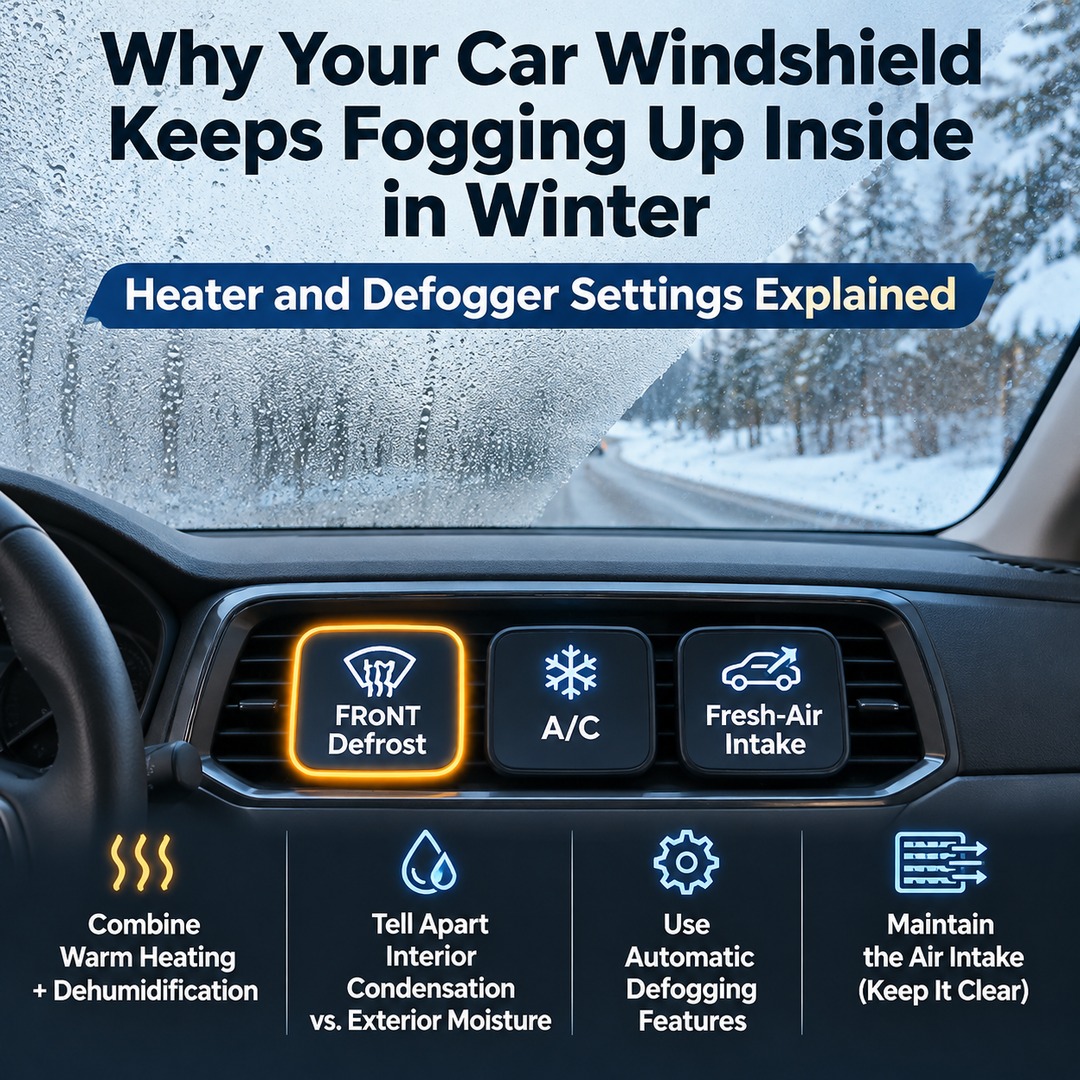
If the inside of your car's windshield repeatedly fogs up in winter, check the fresh-air circulation, A/C, and windshield airflow settings before simply increasing the heater temperature. Direct warm air toward the windshield, bring in outside air, and use the air conditioner's dehumidification function at the same time. However, if moisture has formed on the outside of the windshield, the appropriate solution is different.
Why Does the Windshield Fog Up Again Even When the Heater Is On?
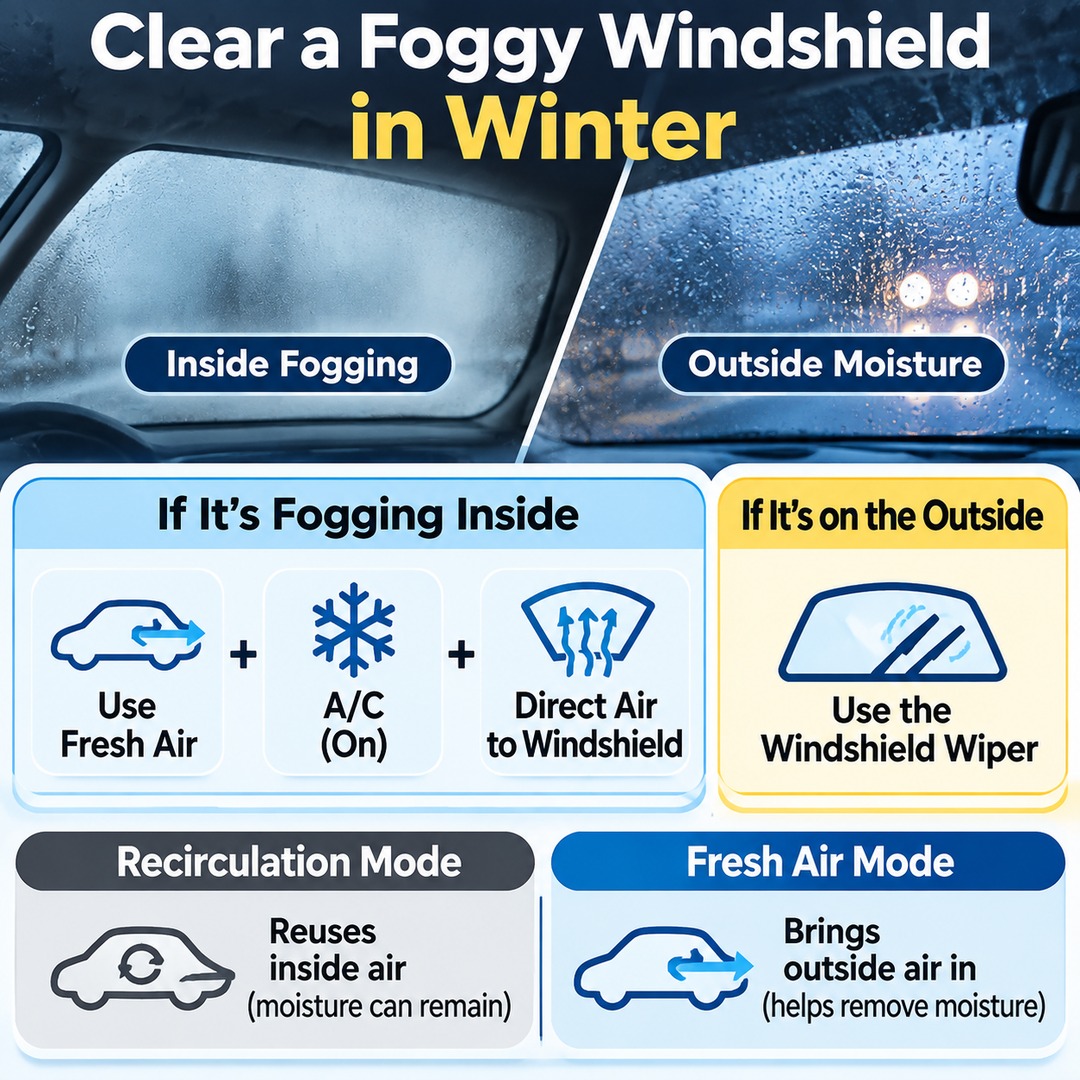
If the heater is running while the cabin remains in recirculation mode, moisture inside the vehicle may not be removed sufficiently. Moisture from passengers' breathing and water remaining inside the cabin can cause the inside of the windshield to fog up again.
Recirculation mode sends air already inside the vehicle back through the climate control system. Fresh-air mode, by contrast, brings outside air into the cabin.
In winter, you need to consider both warming the air and removing moisture from the cabin. Therefore, if the windshield keeps fogging up despite increasing the temperature, first check whether recirculation mode is still enabled.
Which Settings Should You Use to Clear Winter Windshield Fog?
If the inside of the windshield becomes foggy, select the windshield defrost or defog mode and use fresh-air intake and A/C. If the cabin feels cold, increase the temperature setting rather than turning off the air conditioner.
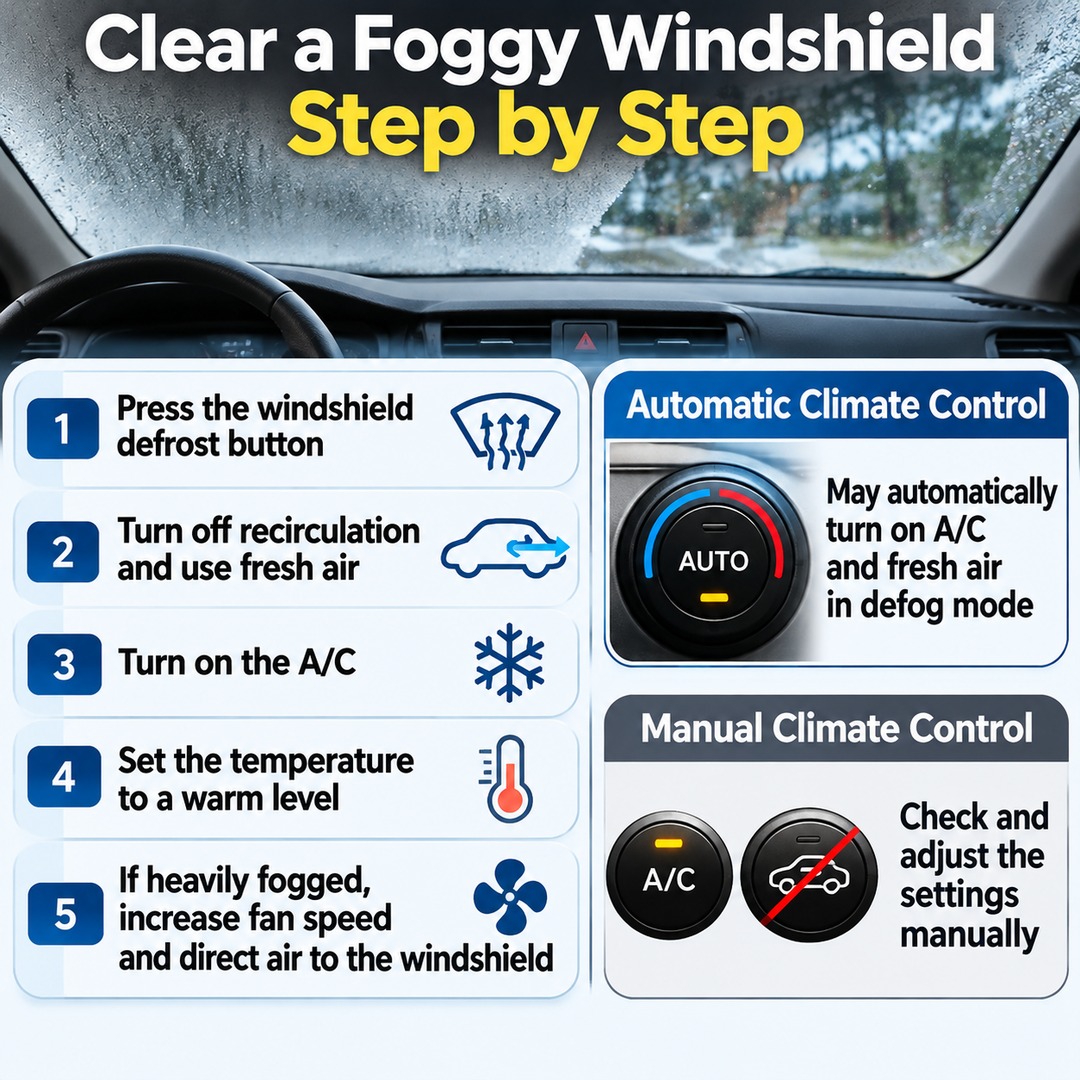
Vehicle owner's manuals explain that some models automatically activate the air conditioner and fresh-air intake when windshield defogging mode is selected. However, automatic operation depends on the vehicle's specifications and settings.
For vehicles with manual climate controls, follow these steps:
1. Press the button showing the windshield defrost symbol.
2. Turn off the recirculation indicator and switch to fresh-air intake.
3. Turn on the A/C button.
4. Set the temperature to a warm level.
5. If the windshield is heavily fogged, increase the fan speed and check that air is directed toward the windshield.
Differences Between Automatic and Manual Climate Control
| System | Controls to Check |
|---|---|
| Automatic climate control | Press FRONT or the windshield defrost button and check the automatic settings |
| Manual climate control | Check windshield airflow, fresh-air intake, and A/C individually |
| Weak airflow | Increase the fan speed to direct more air toward the windshield |
| Rear window also fogged | Activate the REAR heated window function separately |
Kia's 2026 owner's manual explains the conditions under which fresh-air intake and the air conditioner operate automatically in windshield defogging mode. Hyundai Motor's owner's manuals also describe the same automatic operation in vehicles equipped with the relevant moisture-prevention function.
However, selecting defrost mode does not mean that every vehicle automatically activates the same functions. If automatic operation is disabled or the vehicle has different specifications, you may need to check and adjust the settings manually.
Will Turning On A/C Make the Cabin Cold Even in Winter?
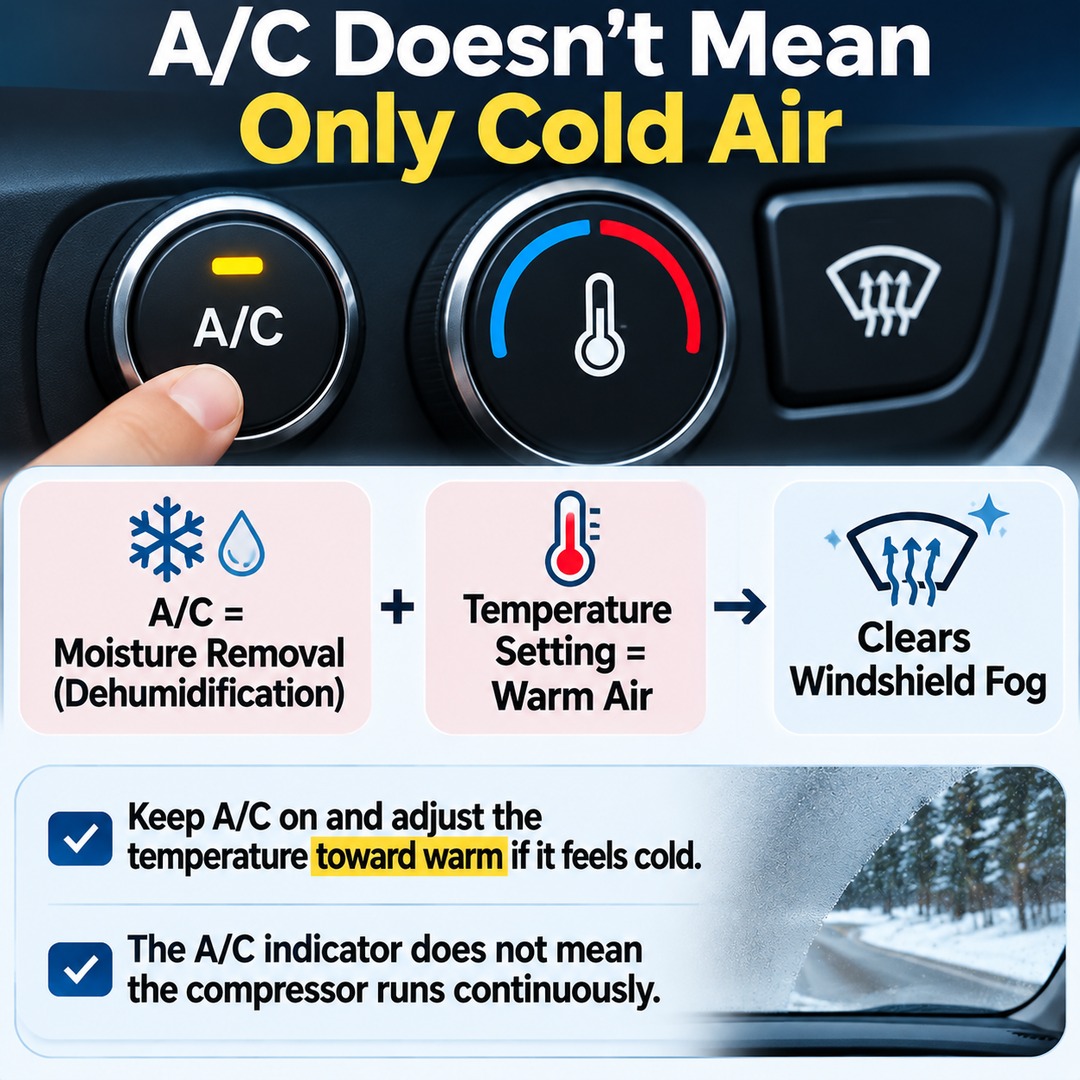
Pressing the A/C button does not necessarily mean that only cold air will come out. You can select warm air using the climate control temperature setting while using the air conditioner at the same time.
When clearing windshield fog in winter, the important factor is moisture removal rather than cooling the cabin. Therefore, if the cabin feels cold, it is generally better to adjust the temperature toward warm rather than immediately switching off A/C.
Actual air conditioner operation can also vary depending on the outside temperature and the vehicle's climate control conditions. The A/C indicator alone does not mean that the compressor is operating continuously.
If the Fog Is on the Outside of the Windshield, Change Your Settings
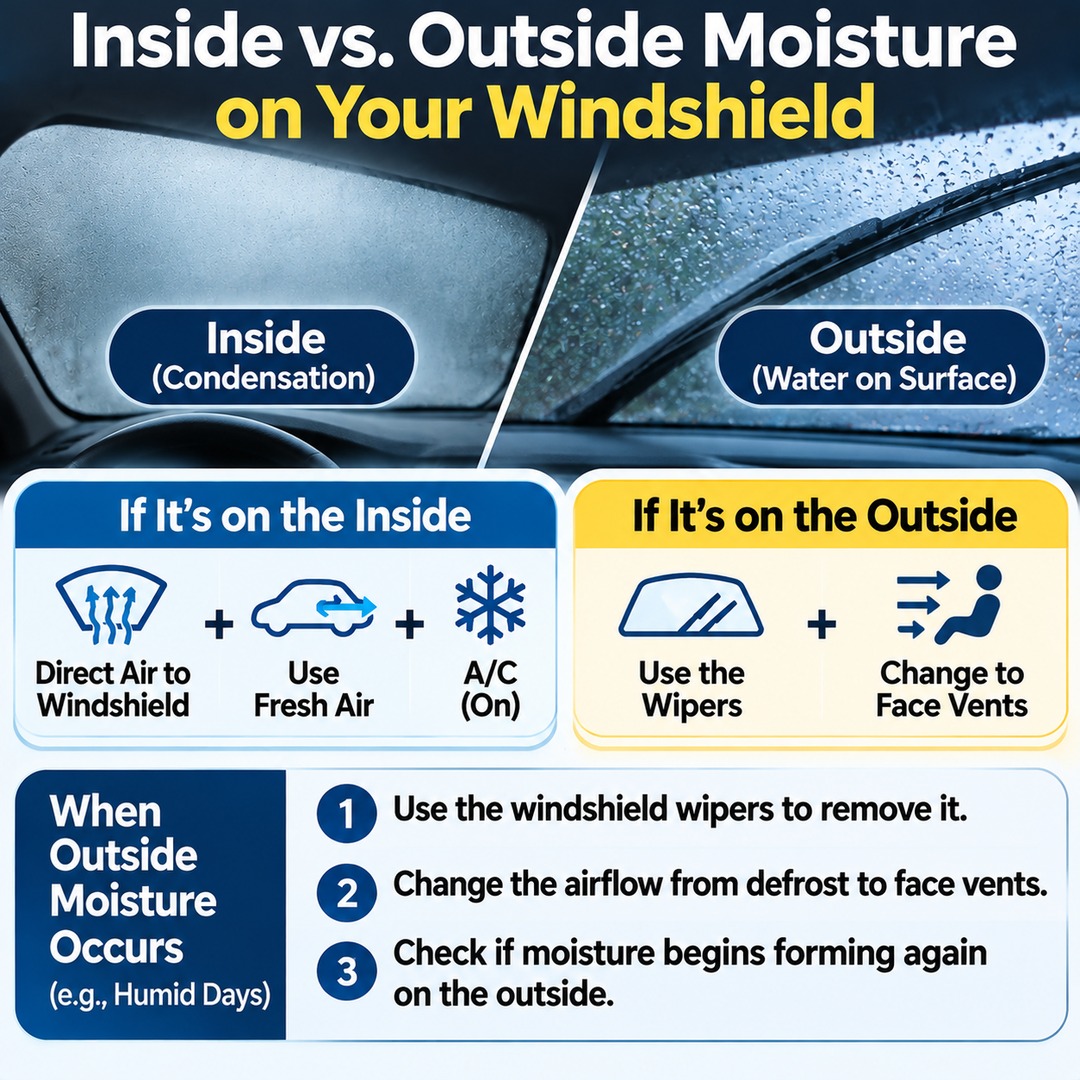
Moisture on the inside and outside of the windshield may look similar, but the solutions are different.
If condensation forms on the inside, use windshield-directed airflow, fresh-air intake, and A/C. If moisture forms on the outside surface, use the windshield wipers to remove it and adjust the airflow direction.
In particular, on humid days, moisture can form on the outside of the windshield when you drive for an extended period with A/C on and windshield defrost mode selected.
In this situation, adjust the controls as follows:
Use the windshield wipers to remove moisture from the outside.
Change the airflow direction from windshield defrost to the normal face-level vents.
Check whether moisture begins forming again on the outside of the glass.
If the moisture is on the outside, repeatedly using strong A/C and windshield defrost settings as though the problem were interior condensation is not the appropriate solution.
If the Windshield Keeps Fogging Up, Check the Air Intake
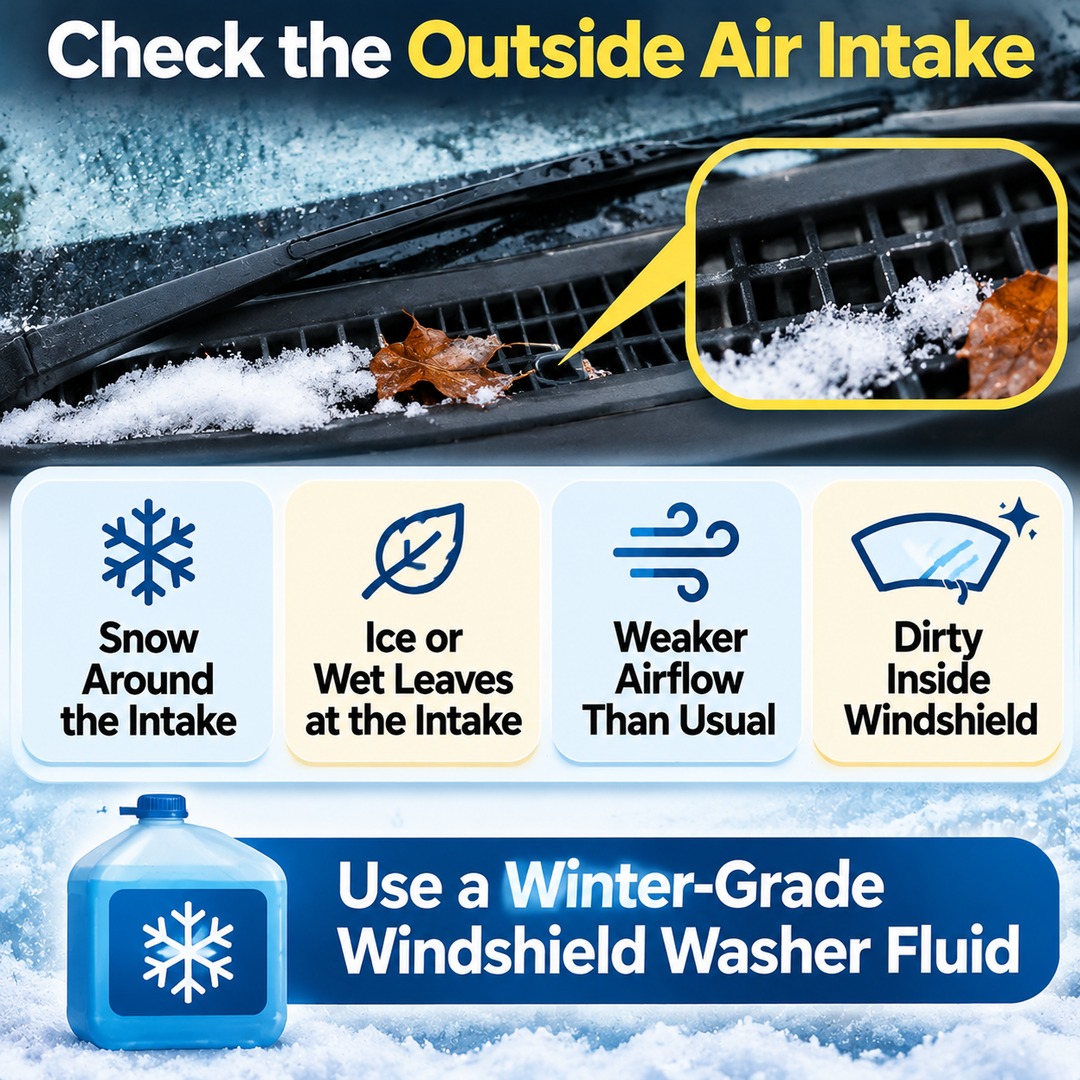
If the moisture does not clear properly despite using the correct climate control settings, check whether snow, ice, or wet leaves are blocking the outside air intake.
Hyundai Motor and Kia owner's manuals instruct drivers to remove foreign materials from the outside air intake. If the intake is obstructed, selecting fresh-air mode may not bring in as much air as expected.
Check the following areas outside the vehicle:
Whether snow has accumulated around the outside air intake below the windshield
Whether ice or wet leaves are stuck around the intake
Whether airflow has become weaker than usual
Whether the inside surface of the windshield is dirty
You should also check your windshield washer fluid in winter. Summer washer fluid can freeze on the windshield in cold weather, so use a winter-grade product.
How Does the Automatic Windshield Defogging Function Work?
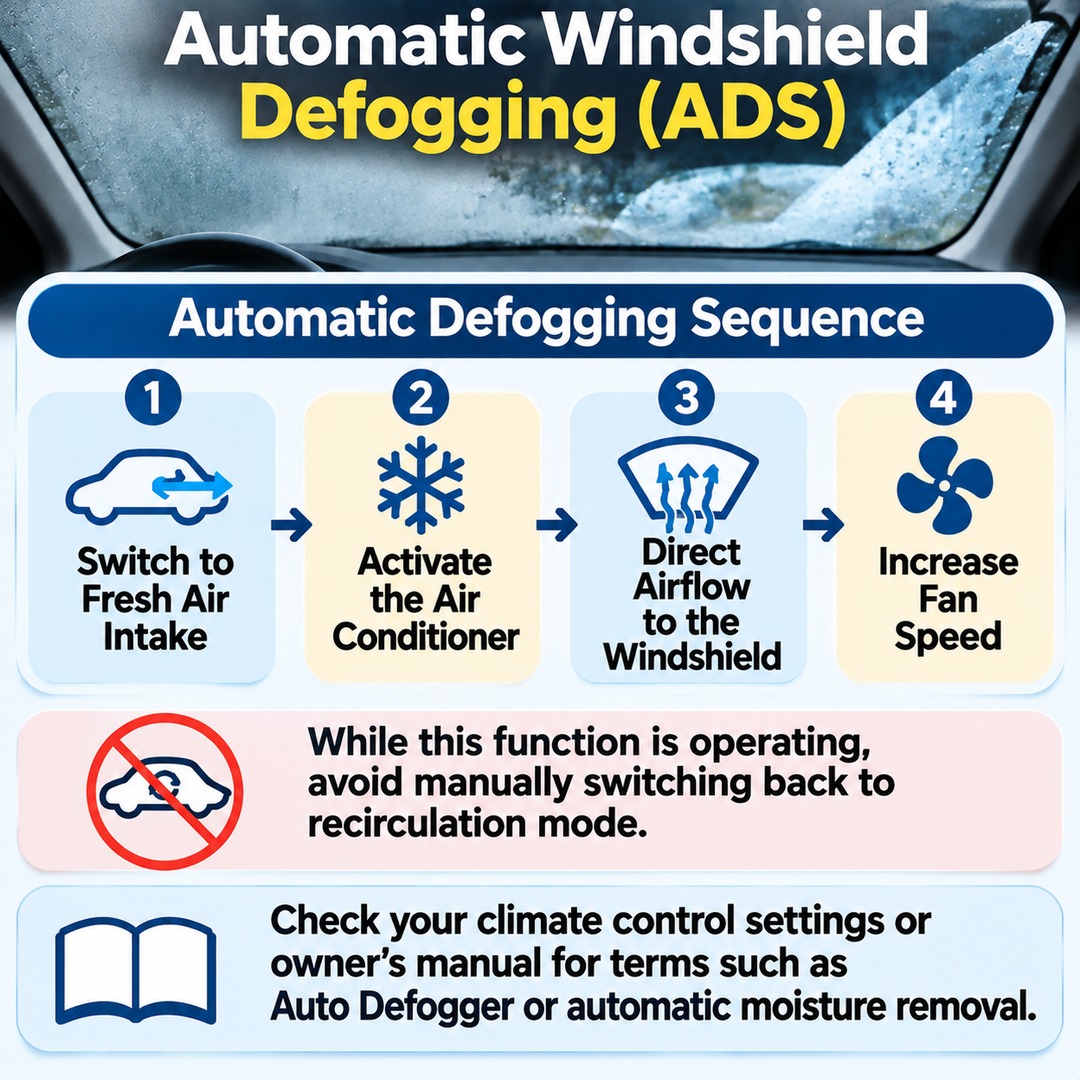
Some vehicles have a function that detects moisture on the inside of the windshield and automatically adjusts the climate control system. The name and operating stages vary by vehicle, so the same procedure does not apply to every model.
For example, the Automatic Defogging System (ADS) installed in certain KG Mobility vehicles is described as operating in the following sequence.
Automatic Defogging Sequence
1. Switch to fresh-air intake: Change from cabin air recirculation to outside air intake.
2. Activate the air conditioner: Turn on A/C to regulate humidity.
3. Direct airflow toward the windshield: Change the airflow direction to DEF mode.
4. Increase fan speed: Increase airflow toward the windshield to remove moisture.
This is the ADS operating sequence described in the relevant KG Mobility owner's manual. It is not a universal operating sequence for all vehicles.
While this function is operating, avoid manually switching back to recirculation mode. Doing so may deactivate automatic control or reduce defogging performance.
To check whether your vehicle has an automatic windshield defogging function, look in the climate control settings or owner's manual for terms such as Auto Defogger or automatic moisture removal.
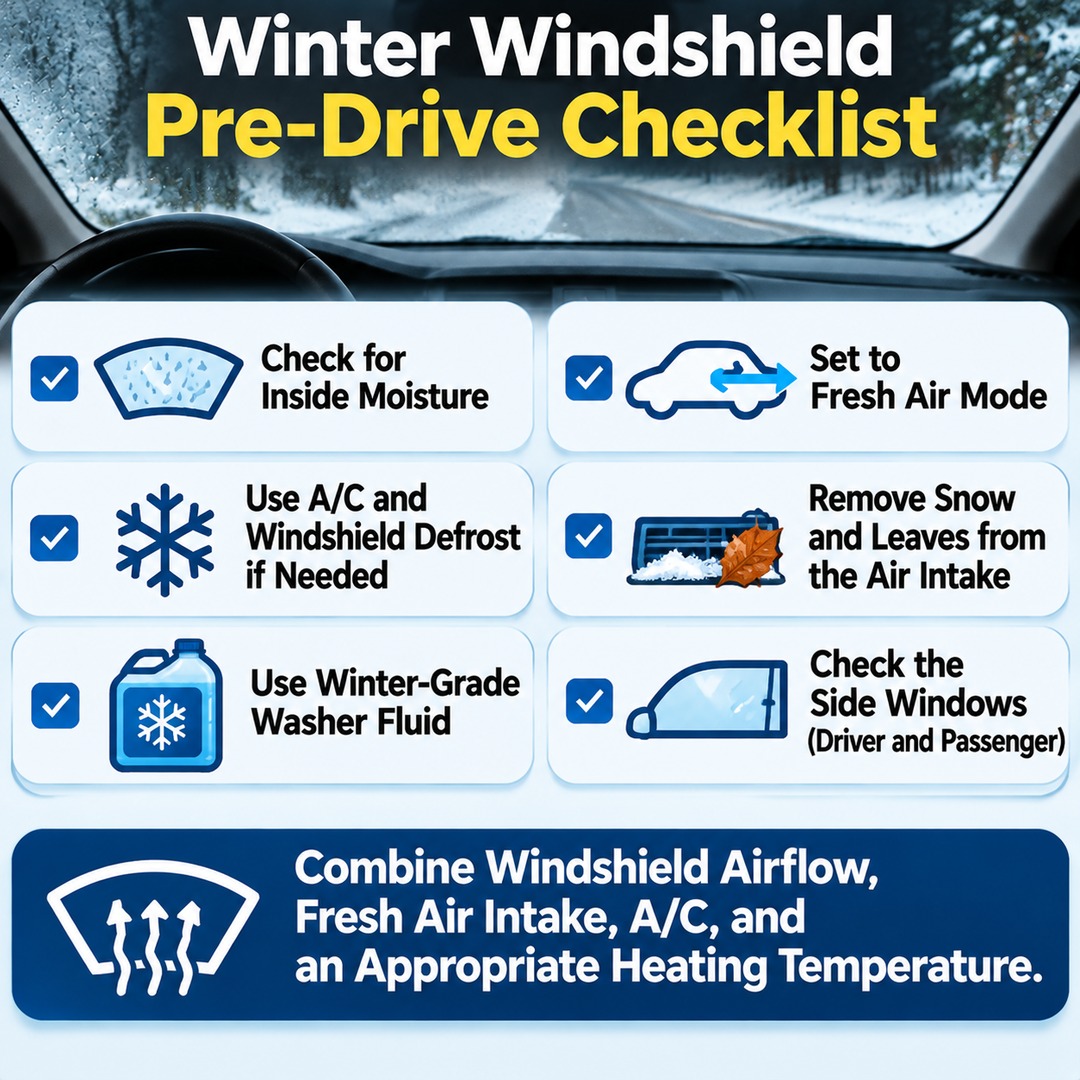
How to Prepare Your Windshield Before Driving in Winter
Checking the condition of your windshield before setting off is just as important as clearing fog after it appears.
Check whether moisture remains on the inside of the windshield.
Make sure the vehicle is set to fresh-air mode.
Use A/C and windshield defrost if necessary.
Check that snow and leaves have not accumulated around the air intake.
Make sure you are using winter-grade washer fluid.
Check not only the windshield but also the side windows on the driver's and front passenger's sides.
If visibility is not sufficient, do not start driving. If your visibility becomes impaired again while driving, pull over somewhere safe and clear the windshield before continuing.
Winter windshield fogging is not a problem that can be solved simply by turning up the heater. The basic approach is to combine windshield-directed airflow, fresh-air intake, A/C, and an appropriate heating temperature. Identifying whether the moisture is on the inside or outside of the windshield first can also help you avoid unnecessary adjustments.