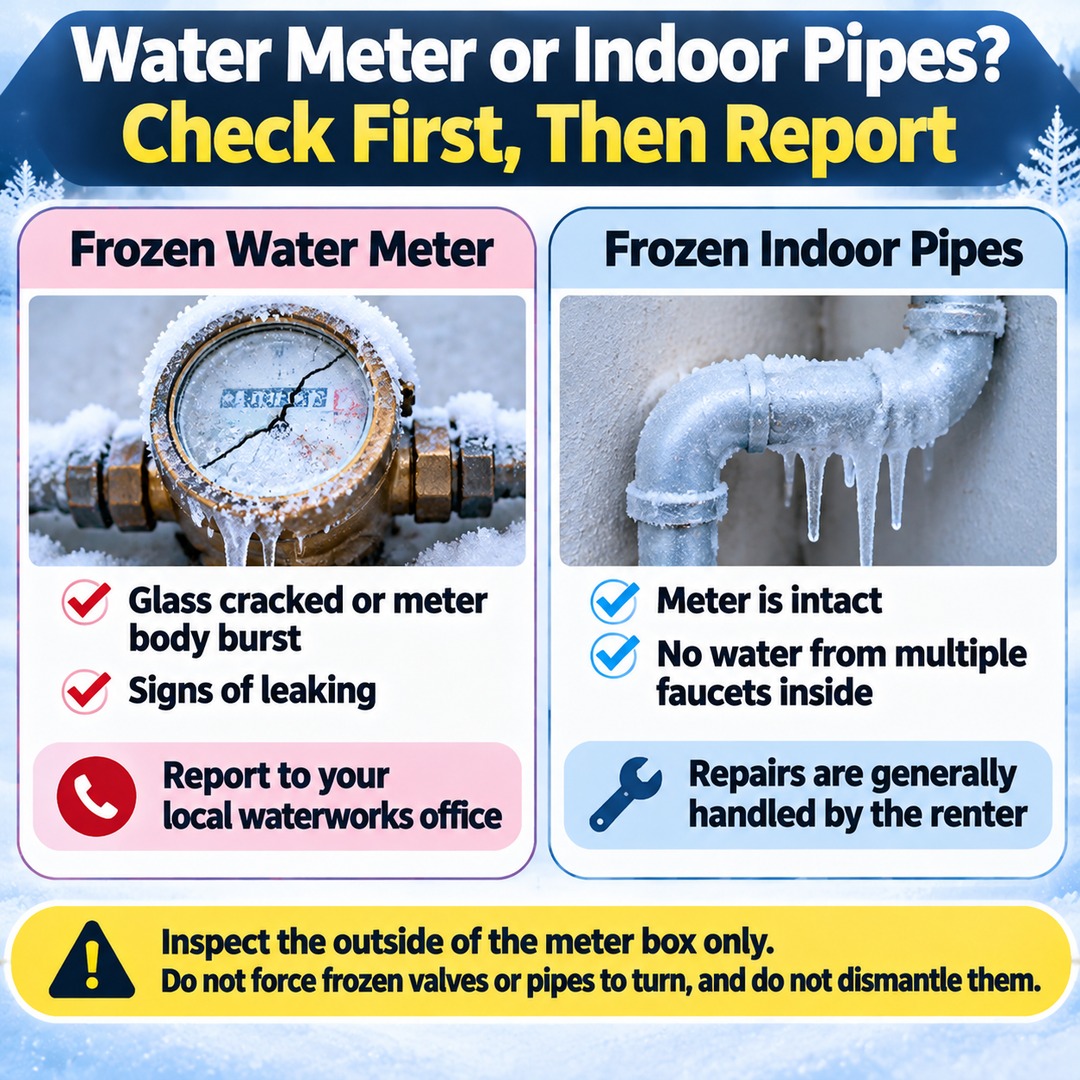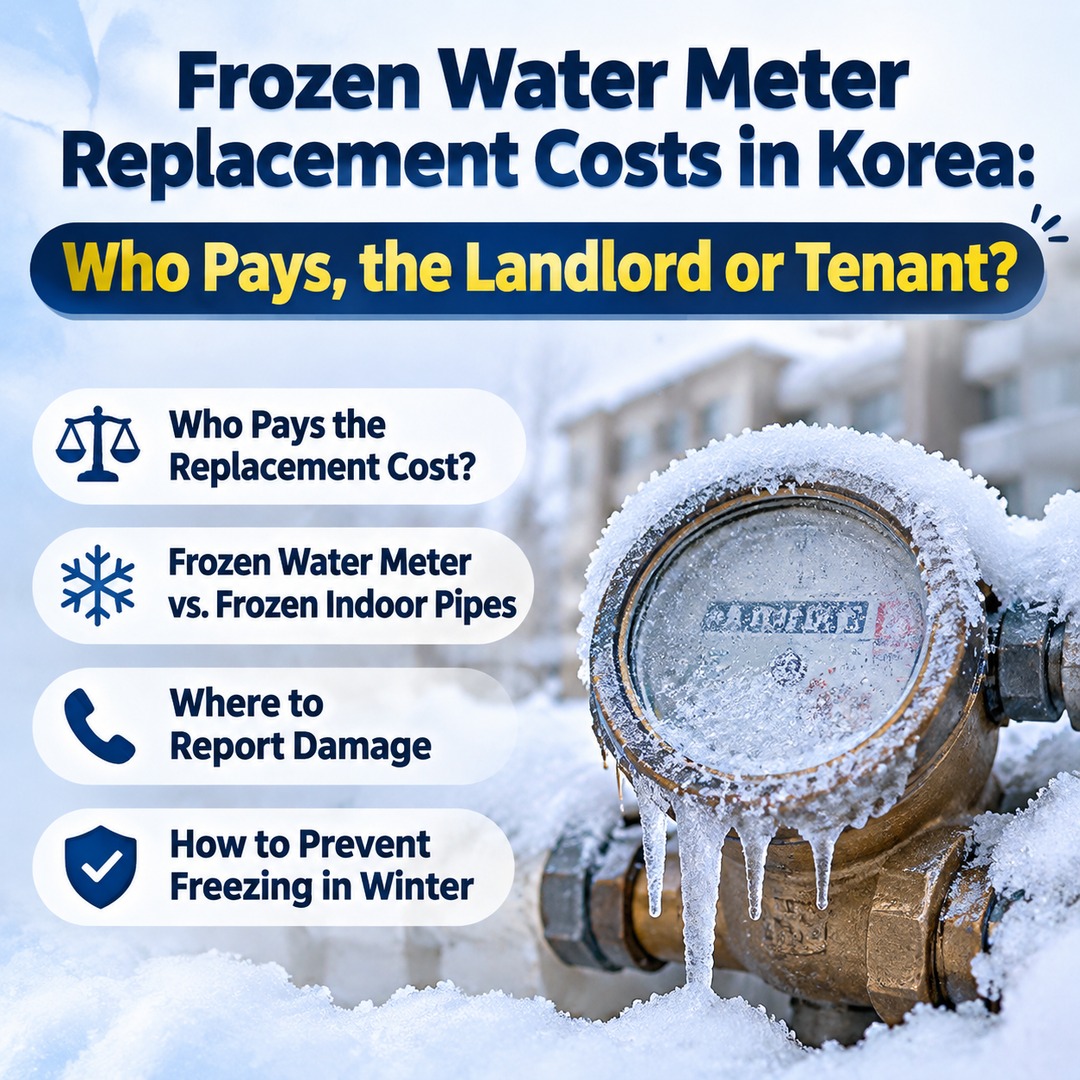
If the glass on your water meter is cracked or the meter body has burst due to freezing, report it to your local waterworks office first. Water meter replacement is not universally free across South Korea. The cost depends on the local government's water supply regulations and the cause of the damage. By contrast, if the meter is intact but the pipes inside your home are frozen, repairs are generally handled by the party responsible for maintaining the property's indoor plumbing.
Frozen water meters and frozen indoor pipes can look similar, but they involve different reporting procedures and cost responsibilities. Before calling a private plumbing contractor, check where the damage has occurred.
How Can You Tell Whether the Water Meter or Indoor Pipes Are Frozen?
Start by checking the water meter box. If the meter glass is broken, the meter body is cracked, or you can see signs of leaking, the meter itself may have frozen and burst. If the meter is intact but no water comes out of multiple faucets inside your home, check for frozen indoor pipes or a possible water supply interruption affecting the building.
| What You Find | Possible Problem | Who to Contact First |
|---|---|---|
| Cracked water meter glass | Frozen water meter | Local waterworks office |
| Water leaking from the meter body | Damaged water meter | Local waterworks office |
| Meter is intact, but no water comes out anywhere in the home | Frozen indoor pipes or water supply interruption | Building management office or waterworks office |
| No water comes from only one faucet | Possible freezing in the pipe serving that fixture | Building management office or plumbing contractor |
| Water pooling around the meter or on the floor | Possible leak at a connection or pipe | Contact the waterworks office to determine responsibility |
A meter display that is not moving does not, by itself, prove that the meter is frozen. The meter may also remain still when no water is being used or when the water supply has been interrupted.
Note: Inspect the outside of the meter box only. Do not force frozen valves or pipes to turn, and do not dismantle them.
Who Pays for Water Meter Replacement After Freezing?
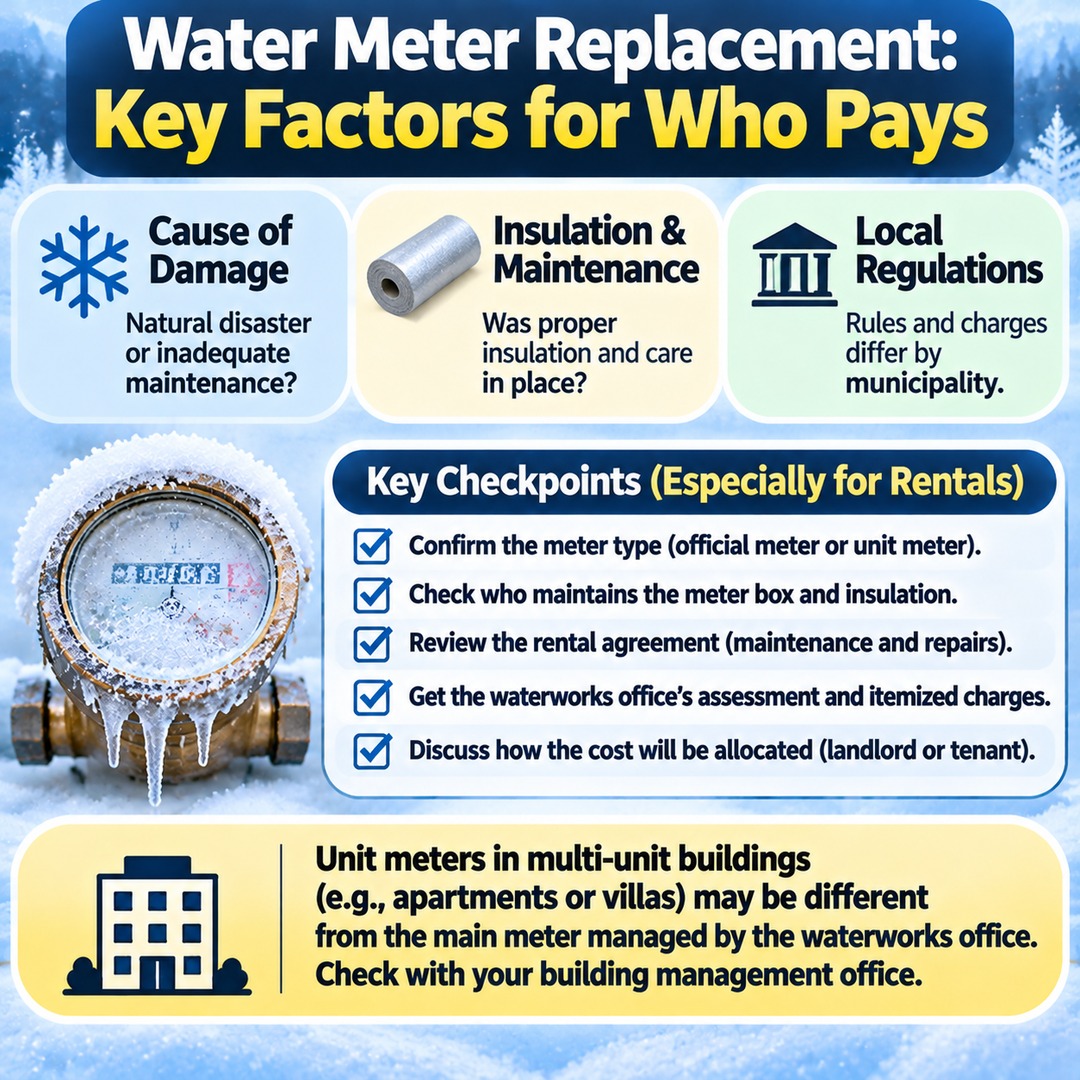
The replacement cost depends on whether the damage resulted from a natural disaster, whether adequate insulation and maintenance were provided, and what the relevant local government regulations require. You should not assume that a free replacement policy in another municipality or a price quoted online applies to your own address.
Local government guidance illustrates these differences.
| Region | Guidance on Frozen Water Meter Replacement Costs |
|---|---|
| Incheon Metropolitan City | No replacement cost is charged for official water meters damaged by natural disasters or freezing. Privately installed meters are treated separately. |
| Bucheon City | Meter charges of KRW 27,110 for a 13 mm meter and KRW 29,270 for a 20 mm meter apply. |
The amounts listed for Bucheon are meter charges. They are not nationwide standard prices that include service-call fees or pipe repair costs in every region.
What Is the Difference Between Natural Disaster Damage and Negligent Maintenance?
Whether the damage resulted from a natural disaster or inadequate maintenance is an important factor in determining who pays.
Natural disaster: The meter is damaged by severe cold or another natural event despite reasonable maintenance.
Inadequate maintenance: Insulation was not properly installed inside the meter box, or protective facilities were damaged or neglected.
Separate privately owned equipment: The meter was installed privately rather than being an official municipal water meter.
However, the absence of insulation does not automatically mean that every municipality will charge the same fees. Ask your local waterworks office to determine the cause of the damage and explain the applicable regulations and charges.
Does the Landlord or Tenant Have to Pay?
In a rental property, distinguish between the waterworks office's rules for charging replacement costs and the final allocation of those costs between the landlord and tenant.
Even if the waterworks office bills the water user, that does not automatically mean the tenant must bear the expense under the rental agreement. Likewise, not every replacement cost automatically becomes the landlord's responsibility simply because the property is rented out.
Check the following points:
1. Determine whether the meter is the building's official water meter or a supplementary meter serving an individual unit.
2. Check who was responsible for maintaining the meter box and its insulation.
3. Review the rental agreement's clauses concerning facility maintenance and repairs.
4. Obtain the waterworks office's assessment of the freezing damage and the actual itemized charges.
5. Discuss how the expense will be divided between the landlord and tenant before settling the repair bill.
Supplementary meters serving individual apartments or villa-style multi-unit buildings may be different from the main meter managed by the waterworks office. It is safer to confirm ownership and maintenance responsibility with the building management office first.
Where Should You Report a Frozen Water Meter?
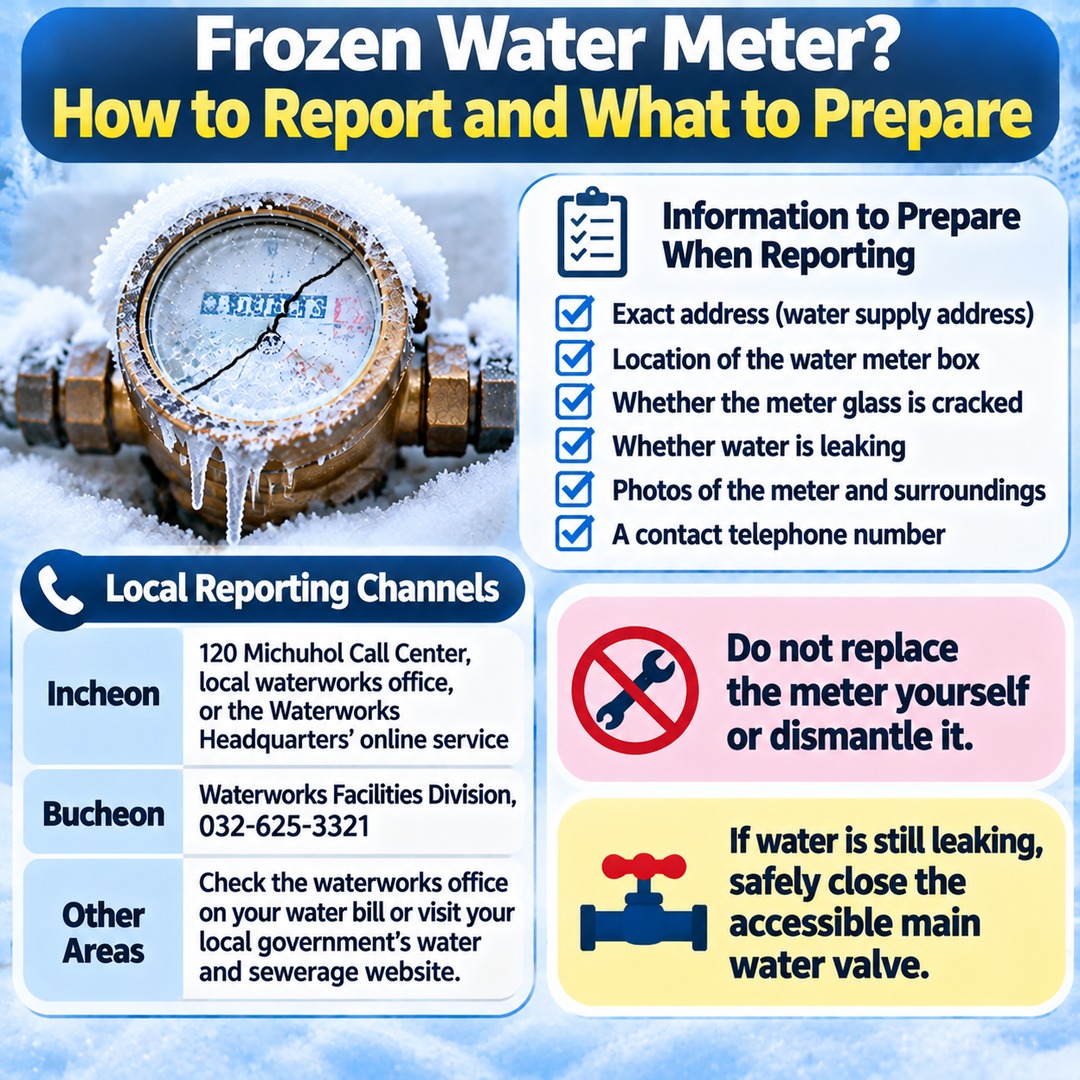
If the meter glass is cracked or water is leaking from the meter body, report the problem to your local waterworks office. If replacement is necessary, confirm who is authorized to replace the meter and what charges apply through the official reporting channel before hiring a private plumbing contractor.
Prepare the following information when reporting the problem:
The exact address where the water is supplied
The location of the water meter box
Whether the meter glass is cracked
Whether water is leaking
Photos of the meter and its surroundings
A telephone number where you can be reached
You can check local reporting channels as follows:
Incheon: 120 Michuhol Call Center, the local waterworks office, or the online civil complaint service of the Waterworks Headquarters
Bucheon: Waterworks Facilities Division, 032-625-3321
In other cities and counties, check the waterworks office listed on your water bill or visit the local government's water and sewerage website for frozen meter reporting instructions.
If the meter glass is broken, do not replace the meter yourself or dismantle its connections. Take photos and report the damage. If water continues to leak, safely close the accessible main water valve to prevent further water damage.
What If the Meter Is Fine but No Water Comes Out Inside the Home?
In this situation, check for frozen indoor water pipes first. If the water meter and its protective box are intact, the meter itself may not need to be replaced.
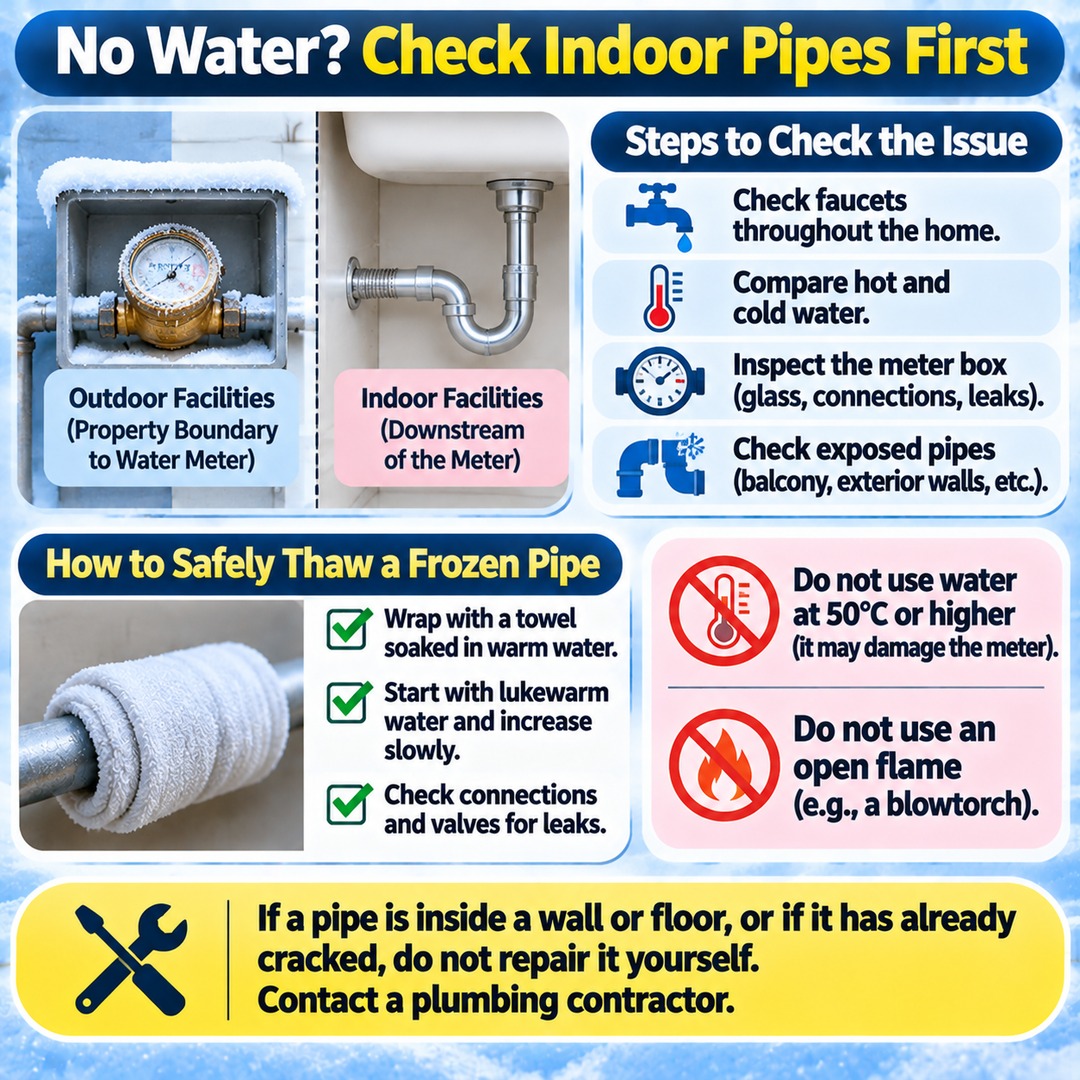
Bucheon's water facility management guidance distinguishes between outdoor facilities extending from the property boundary to the water meter and indoor facilities located downstream of the meter. When indoor pipes freeze or break, the water user is instructed to arrange repairs through a plumbing contractor.
How to Identify Which Part of the Home Is Frozen
Follow these steps to narrow down the possible repair area.
1. Check faucets throughout the home: See whether cold water is unavailable in both the kitchen and bathroom.
2. Compare hot and cold water: If cold water works but hot water does not, the problem may involve the boiler or hot water pipes.
3. Inspect the meter box: Look for broken glass, damaged connections, or leaks around the meter.
4. Check exposed pipes: Inspect pipes in balconies, along exterior walls, and in utility rooms where they are exposed to outdoor temperatures.
5. Check other units in the building: If neighboring units also have no water, investigate shared water supply facilities or a possible service interruption.
If cold water works normally but hot water does not, you need to distinguish between frozen pipes and a boiler malfunction.
How Should You Thaw Frozen Water Pipes?
Even if a pipe is frozen, do not suddenly pour boiling water over it or heat it with a blowtorch. Bucheon's guidance warns that using water at temperatures of 50°C or higher may damage the water meter.
Within a safe range of work that you can access at home, consider these methods:
Slowly wrap the frozen section with a towel soaked in warm water.
Start with lukewarm water and gradually increase the temperature as you thaw the pipe.
Check the pipe connections and surrounding valves for leaks.
Once the ice has melted, if you find a leak, close the water supply valve and arrange repairs.
If the pipe is embedded inside a wall or floor, or if it has already cracked, it is better not to attempt repairs yourself. Avoid using open flames to heat pipes.
Water Meter Freeze Prevention Measures for Winter 2026–2027 and Insulation Support
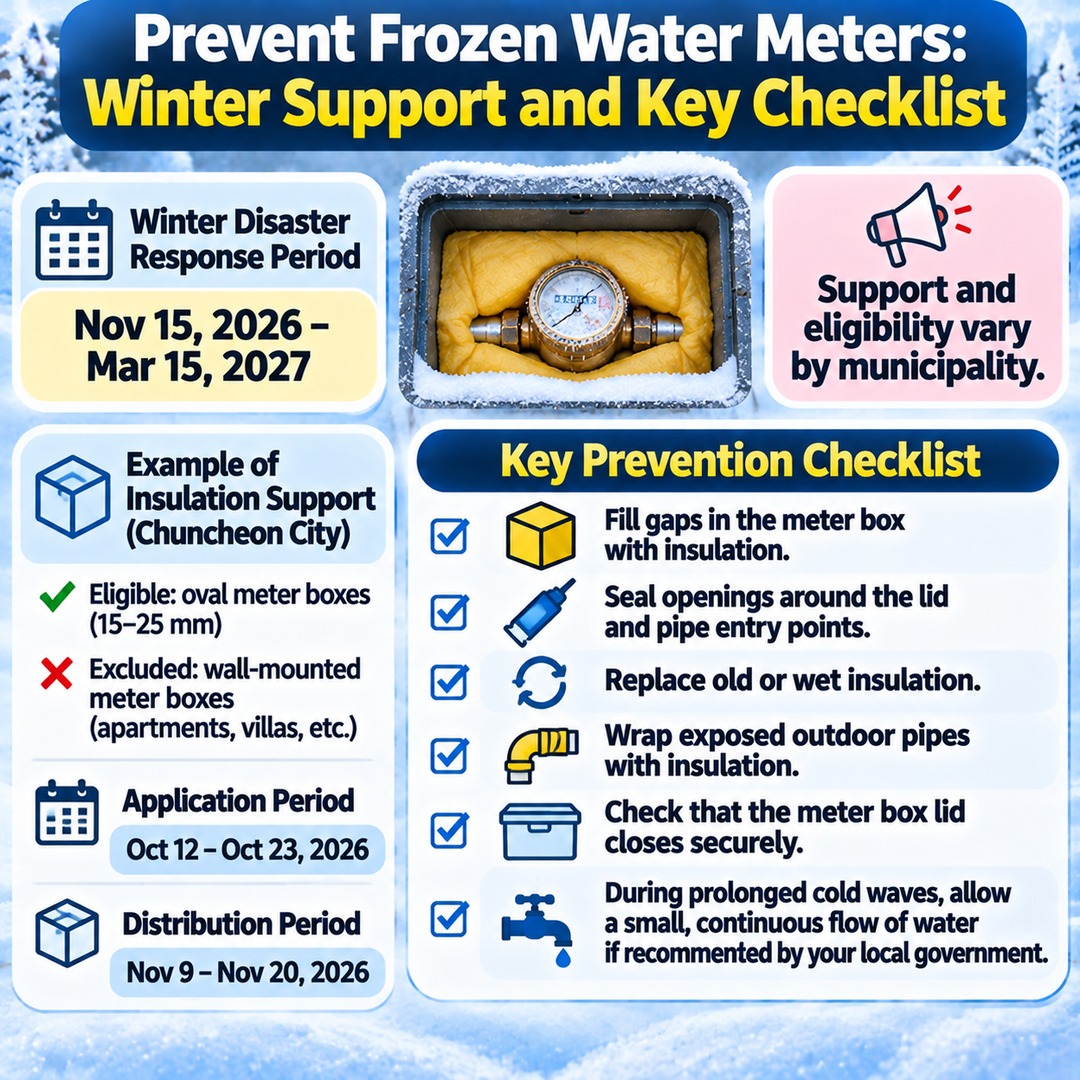
South Korea's winter natural disaster response period for 2026–2027 runs from November 15, 2026, through March 15, 2027. During this period, the government plans to operate cold-wave response systems, distribute insulation materials to help prevent frozen water meters, receive reports of freezing and water supply interruptions, and provide emergency repairs and alternative water supplies.
Eligibility for insulation support also varies by municipality.
For example, Chuncheon City identified oval-shaped meter protection boxes measuring 15–25 mm as eligible for free water meter insulation materials. Wall-mounted meter boxes in apartments, villa-style buildings, and multi-unit residential buildings were excluded.
Applications were accepted through local eup, myeon, and dong administrative welfare centers from October 12, 2026, to October 23, 2026. The distribution period was scheduled for November 9 through November 20.
Therefore, even if you want to install insulation before winter, do not assume that free materials are available to everyone. Check your municipality's eligibility requirements and remaining supplies.
How Can You Prevent Your Water Meter from Freezing Before a Cold Wave?
Fill gaps inside the meter box with insulation and seal openings around the lid and pipe entry points to reduce exposure to cold air.
Replace old clothing or insulation inside the meter box if it has become wet.
Wrap exposed outdoor water pipes with insulation.
Check that the meter box lid closes securely.
During prolonged cold waves, allow a small, continuous flow of water from a faucet if recommended by your local government.
If you plan to leave your home for an extended period, inspect the insulation around your water facilities in advance.
Wet insulation and gaps in the meter box can reduce its effectiveness. Check the condition of the protective box and insulation before winter begins.
Frequently Asked Questions About Frozen Water Meters
Do I Need to Report a Water Meter If Only the Glass Is Broken?
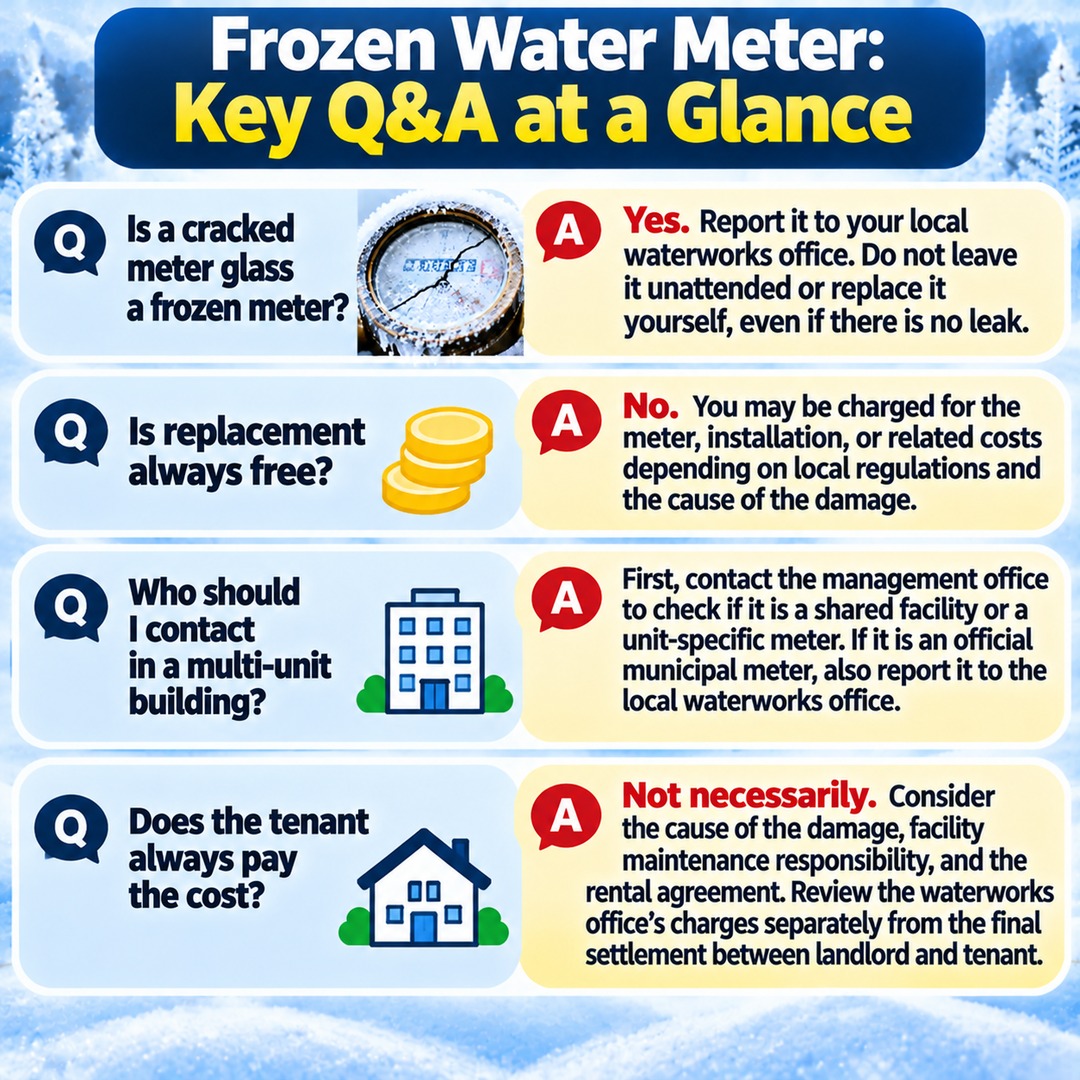
Yes. If the meter glass is cracked, treat it as a frozen water meter and report it to your local waterworks office. Do not leave it unattended or attempt to replace it yourself, even if no water is leaking.
Is Water Meter Replacement Always Free After Freezing?
No. Depending on local regulations and the cause of the damage, you may be charged for the meter itself, installation, or other related expenses. The rules for damage caused by natural disasters and inadequate maintenance also vary by municipality.
Will the Waterworks Office Repair Frozen Pipes Inside My Home?
The waterworks office's area of responsibility is generally separate from the maintenance responsibility for indoor plumbing. In some municipalities, the property owner or water user must arrange repairs to pipes located downstream of the meter. Confirm the applicable rules with your local authority first.
Should I Contact My Apartment Management Office If the Water Meter Freezes?
First, contact the management office to determine whether the meter is part of the shared facilities or belongs to an individual unit. If it is an official municipal water meter, also report the problem to the local waterworks office. If it is a supplementary meter serving your unit, check the building management rules and identify the responsible party.
Does the Tenant Have to Pay the Entire Cost of a Frozen Water Meter?
Not necessarily. The cause of the damage, responsibility for maintaining the facilities, and the terms of the rental agreement must all be considered. Review the charges imposed by the waterworks office separately from the final settlement between the landlord and tenant.