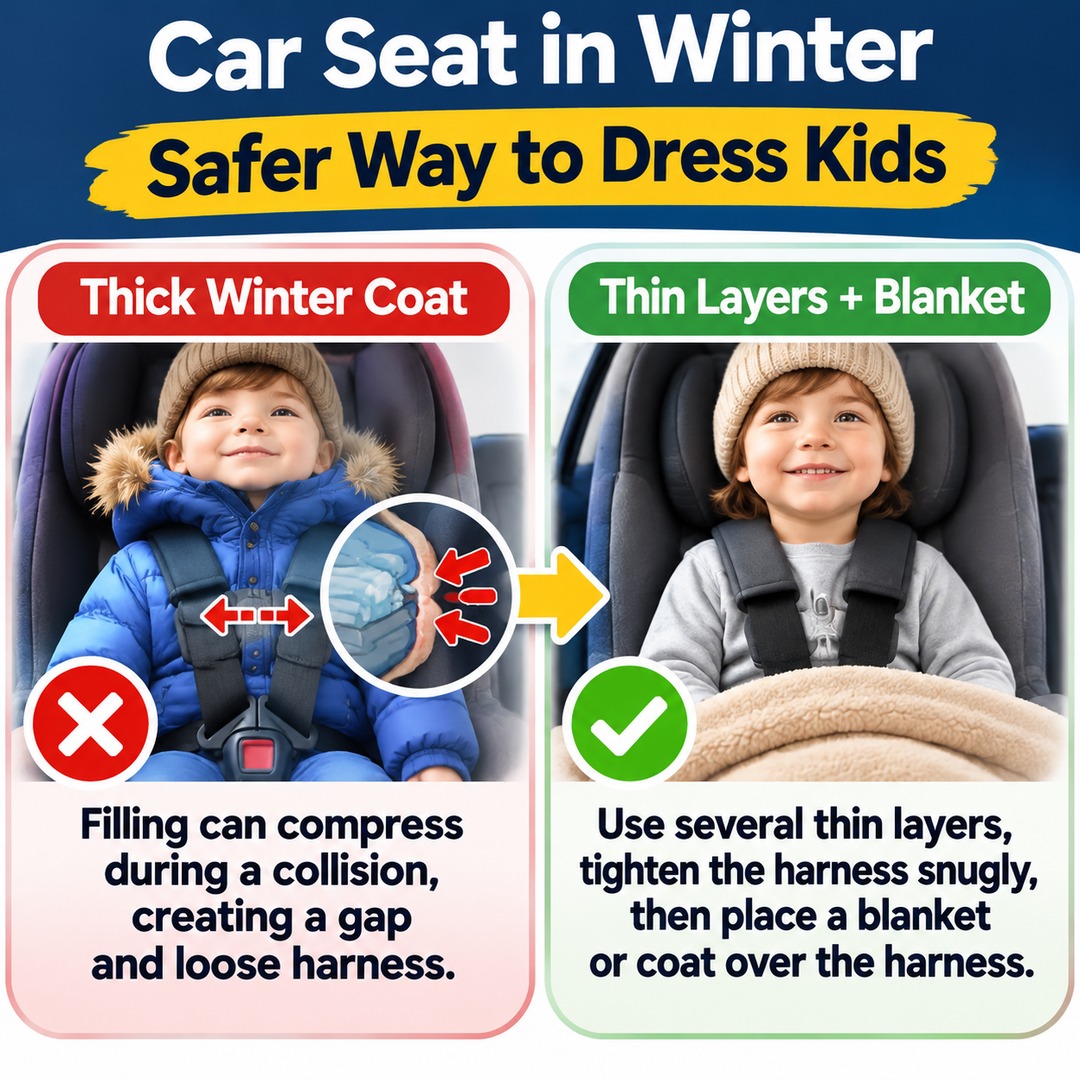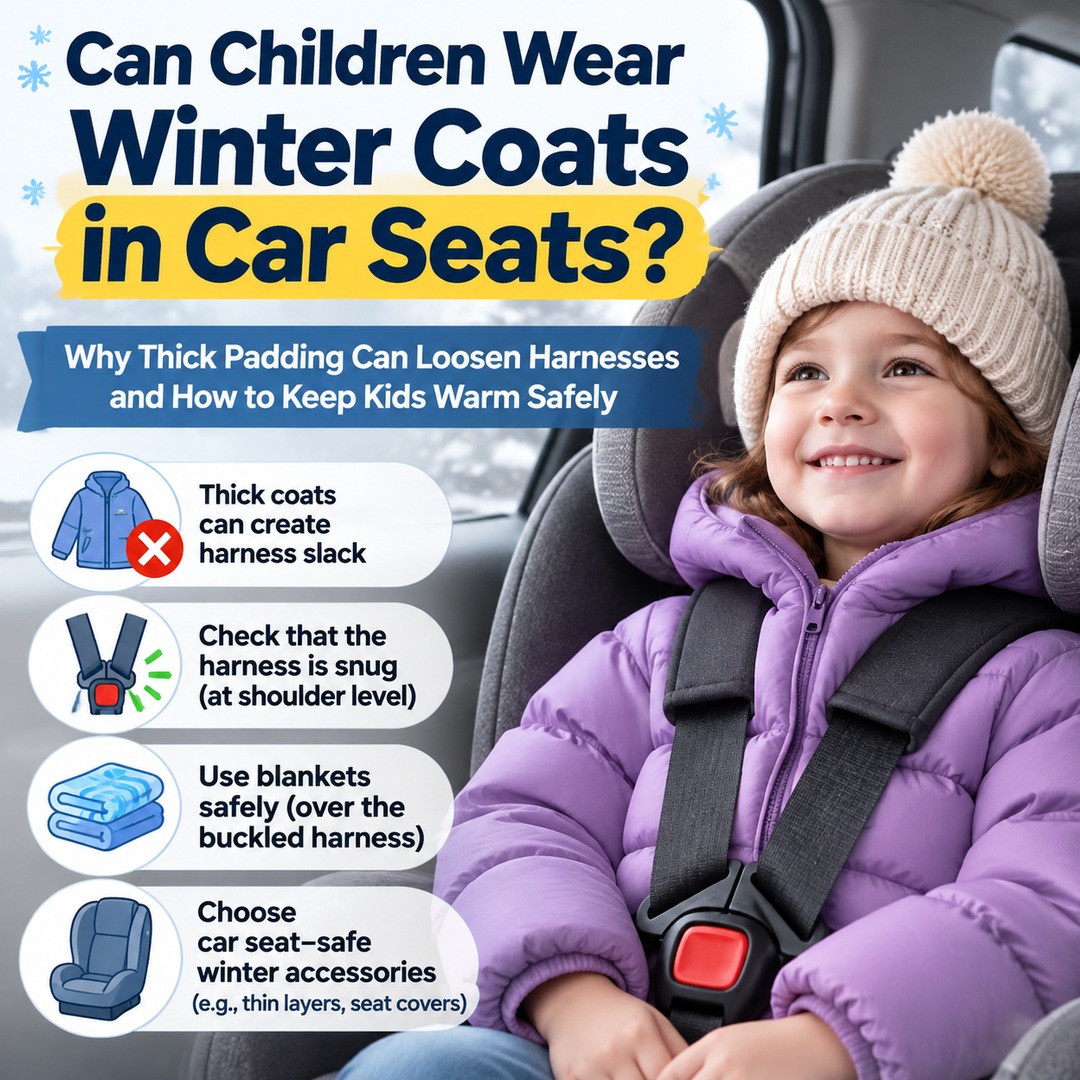
Children should not be placed in car seats while wearing thick padded jackets or insulated snowsuits. During a collision, the coat's filling can compress, creating a gap between the child's body and the safety harness. A safer approach is to dress the child in several thin layers, tighten the harness snugly against their body, and then place a blanket or coat over the secured harness.
Why Can Thick Winter Coats Be Dangerous in Car Seats?
The danger of a winter coat becomes apparent during a collision, rather than under normal wearing conditions. Thick winter coats contain insulating filling that traps air and can create space between a child's body and the harness.
Even if the harness feels tight initially, the force of a collision can compress the coat's filling. As a result, the harness may no longer hold the child securely against their body.
cdc.gov
A comparison of securing a child with a harness over a thick winter coat versus fitting the harness snugly over thin clothing
This problem has also been demonstrated in actual crash testing.
In 2023, the German automobile association ADAC conducted an experiment using adult and child crash-test dummies wearing thick winter coats. The child dummy was seated in a car seat. Both dummies were secured with seat belts, and the test simulated sudden braking at 16 km/h.
The experiment showed that the lap belt dug deeply into the abdominal area of both the adult and child dummies. The thick coats created space between the belts and their bodies, causing the belts to shift toward the abdomen rather than remaining positioned over the lower pelvis or thighs.
This experiment does not mean that every collision will produce the same result. However, it demonstrates that thick outerwear can interfere with proper seat belt positioning and a secure fit.
How Tight Should a Car Seat Harness Be?
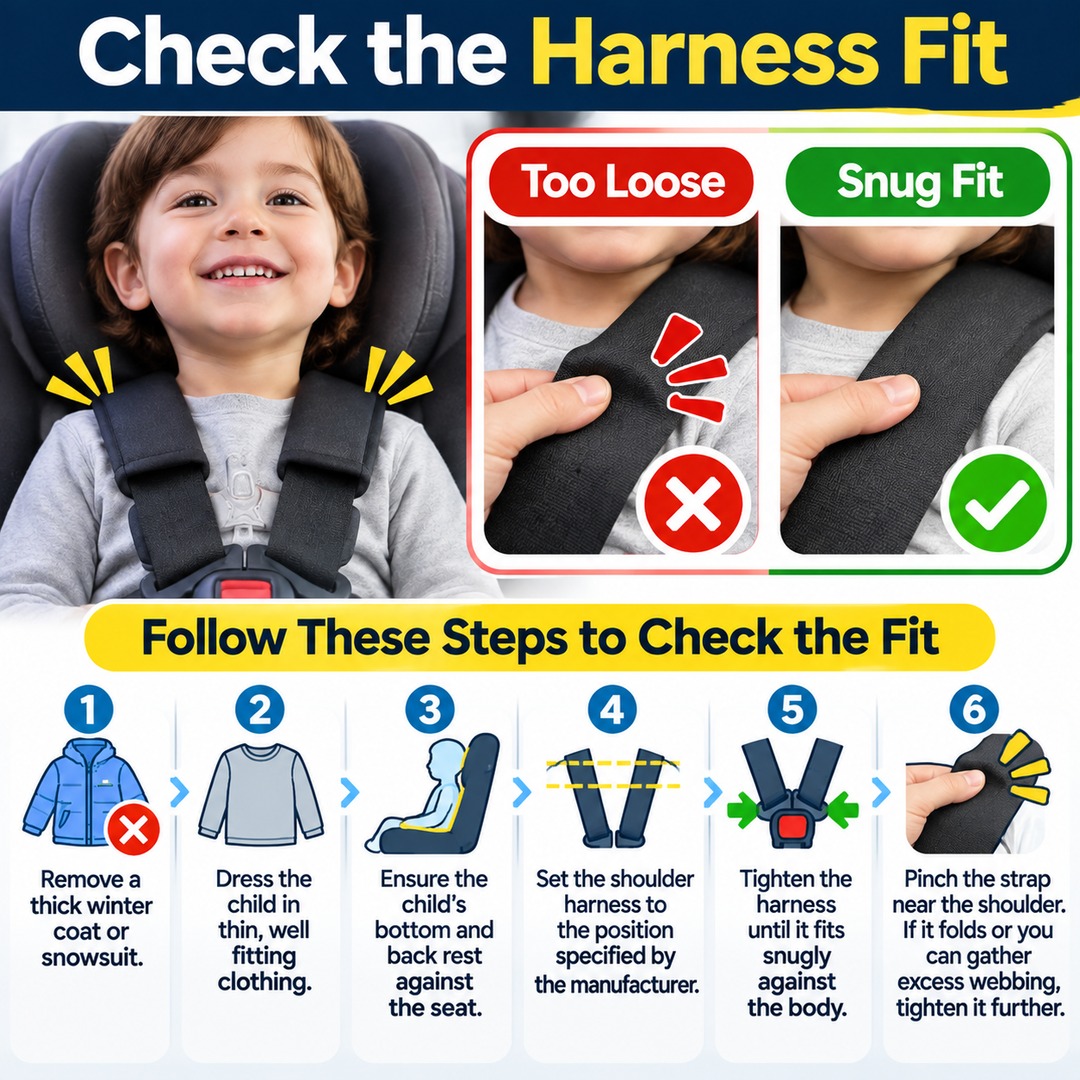
The harness should fit snugly against the child's shoulders and chest. After fastening it, try pinching the harness strap between your fingers. If you can pinch and lift excess webbing, the harness may still be too loose.
Follow these steps to check the fit:
1. Remove the child's thick padded jacket or insulated snowsuit.
2. Place the child in the car seat wearing thin, well-fitting clothing.
3. Position the child so their bottom and back rest properly against the seat.
4. Adjust the shoulder harness to the position specified by the car seat manufacturer.
5. Tighten the harness until it fits snugly against the child's body.
6. Pinch the strap near the shoulder to check whether any excess webbing can be gathered.
cdc.gov
The important part is checking the strap by pinching it between your fingers.
If the strap folds or you can gather excess webbing between your fingers, tighten it further. Do not leave the harness loose simply because you think a tighter fit might make the child uncomfortable.
However, harness adjustment mechanisms and fitting requirements can vary between car seats, so always consult the product's instruction manual as well.
How Can You Keep Your Child Warm Without a Winter Coat?
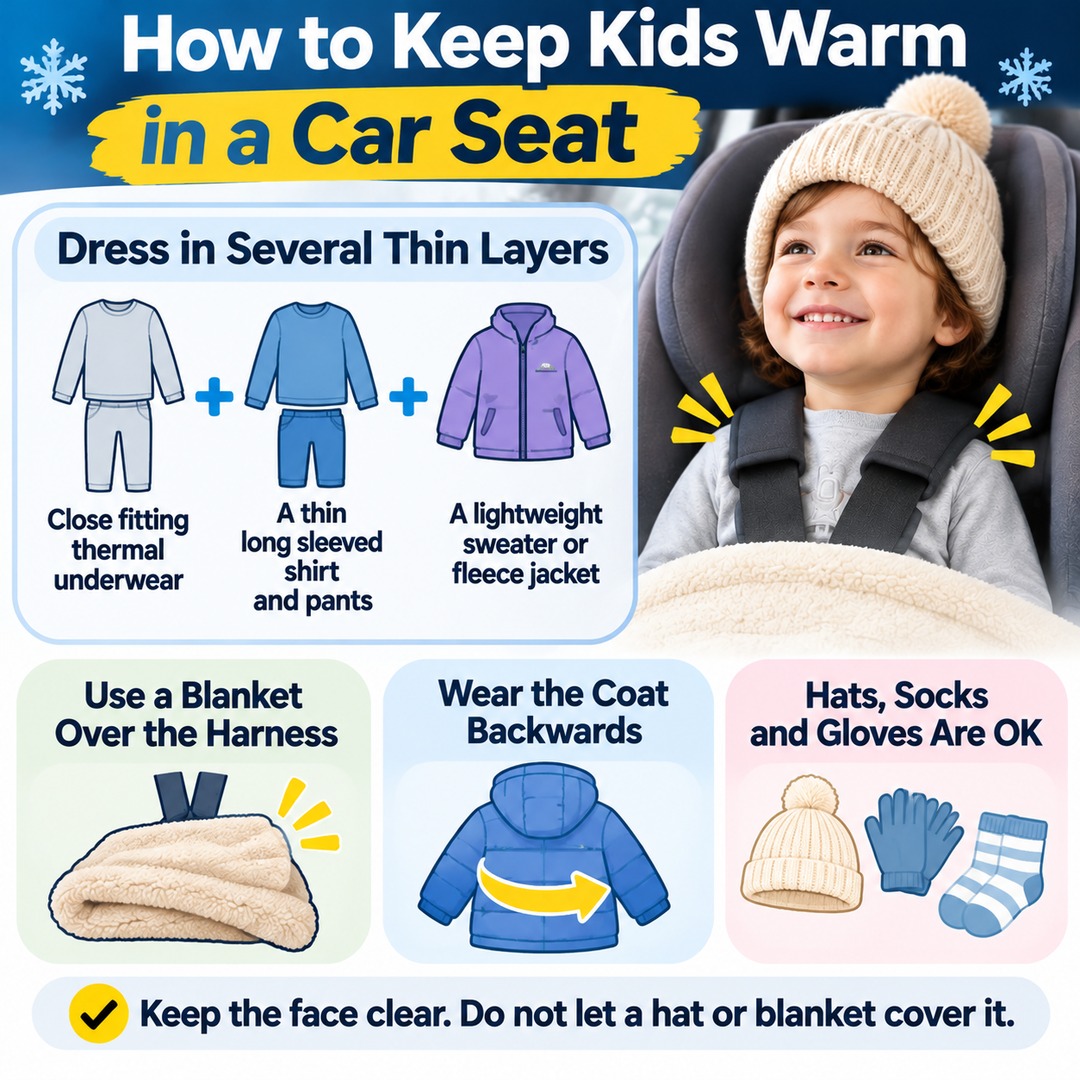
Removing a padded jacket does not mean your child has to travel wearing only a thin layer of underwear. You can dress them in several thin, close-fitting layers and provide additional warmth over the secured harness.
The American Academy of Pediatrics (AAP) recommends this general approach to keeping children warm in car seats during winter.
wisn.com
1. Dress Your Child in Several Thin Layers
Close-fitting thermal underwear
A thin long-sleeved shirt and pants
A lightweight sweater or fleece jacket
Layering clothing that is not bulky helps provide warmth while allowing the harness to fit properly.
Even with thin clothing, check that the harness does not become loose after all the layers have been put on.
2. Cover Your Child With a Blanket After Securing the Harness
Place your child in the car seat and tighten the harness securely before covering them with a blanket.
The blanket should go over the harness, not between the child's body and the harness straps.
Once the vehicle interior becomes warm, you can remove the blanket to prevent overheating.
3. Put the Winter Coat on Backward
Remove the child's coat and secure the harness first. Then turn the coat around and place the child's arms through the sleeves, with the coat worn backward.
This helps keep the thick coat filling out of the space between the child's back and the harness while providing additional warmth over the front of the body.
148fw.ang.af.mil
4. Use a Hat and Socks for Extra Warmth
Hats, socks, and gloves can help keep your child warm as long as they do not interfere with the harness. They are particularly useful for preventing cold hands and feet.
Make sure that hats and blankets do not cover your child's face.
Are Car Seat Winter Covers and Thick Cushions Safe to Use?
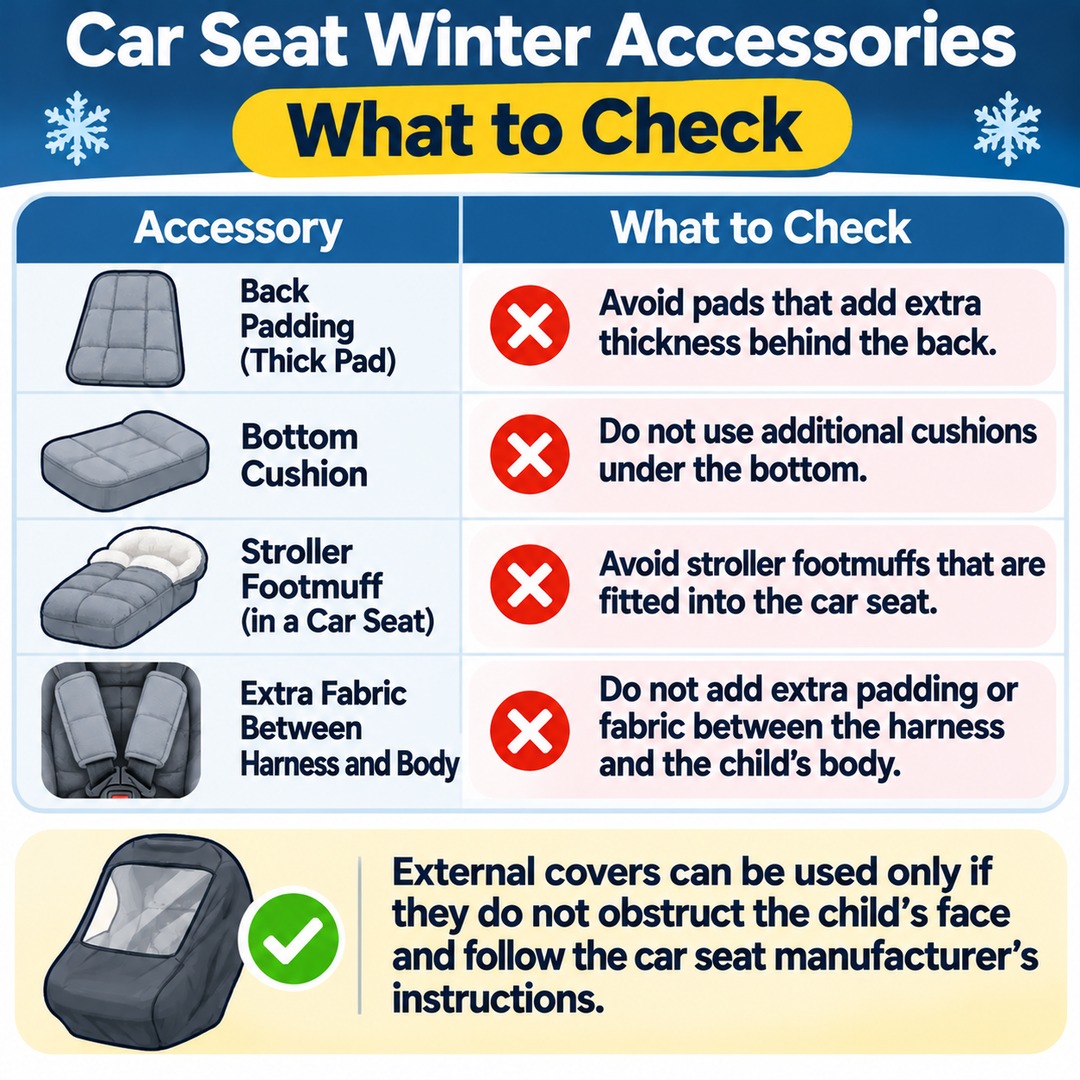
When choosing car seat winter accessories, their actual design matters more than their product names. Be particularly careful with products that add extra padding behind a child's back or underneath their bottom.
The following table outlines what to check for different winter accessories.
| Winter accessory | What to check before use |
|---|---|
| Blanket placed over the harness | Use only after the harness has been fastened securely |
| Coat worn backward | Keep it outside the harness |
| Thick seat cushion | Check whether the manufacturer permits its use |
| Backrest-inserted footmuff | Do not use without manufacturer approval |
| External car seat cover | Make sure it does not add a layer underneath the child |
The American Academy of Pediatrics explains that accessories not included with the original car seat or not approved by the manufacturer for that specific product may affect its protective performance in a collision.
Pay particular attention to the following products.
Thick insulating pads placed behind the child's back
Additional cushions placed underneath the child's bottom
Footmuffs designed for strollers that are fitted into car seats
Winter accessories that add extra fabric between the harness and the child's body
Even an external cover is not automatically safe. It must not obstruct the child's face, and you should check that the product complies with the car seat manufacturer's instructions.
What Should You Check Before Putting Your Child in the Car During Winter?
Checking the following items before every trip can help prevent problems with harness fit caused by thick winter clothing.
Before placing your child in the car seat
0/8 completed
0%
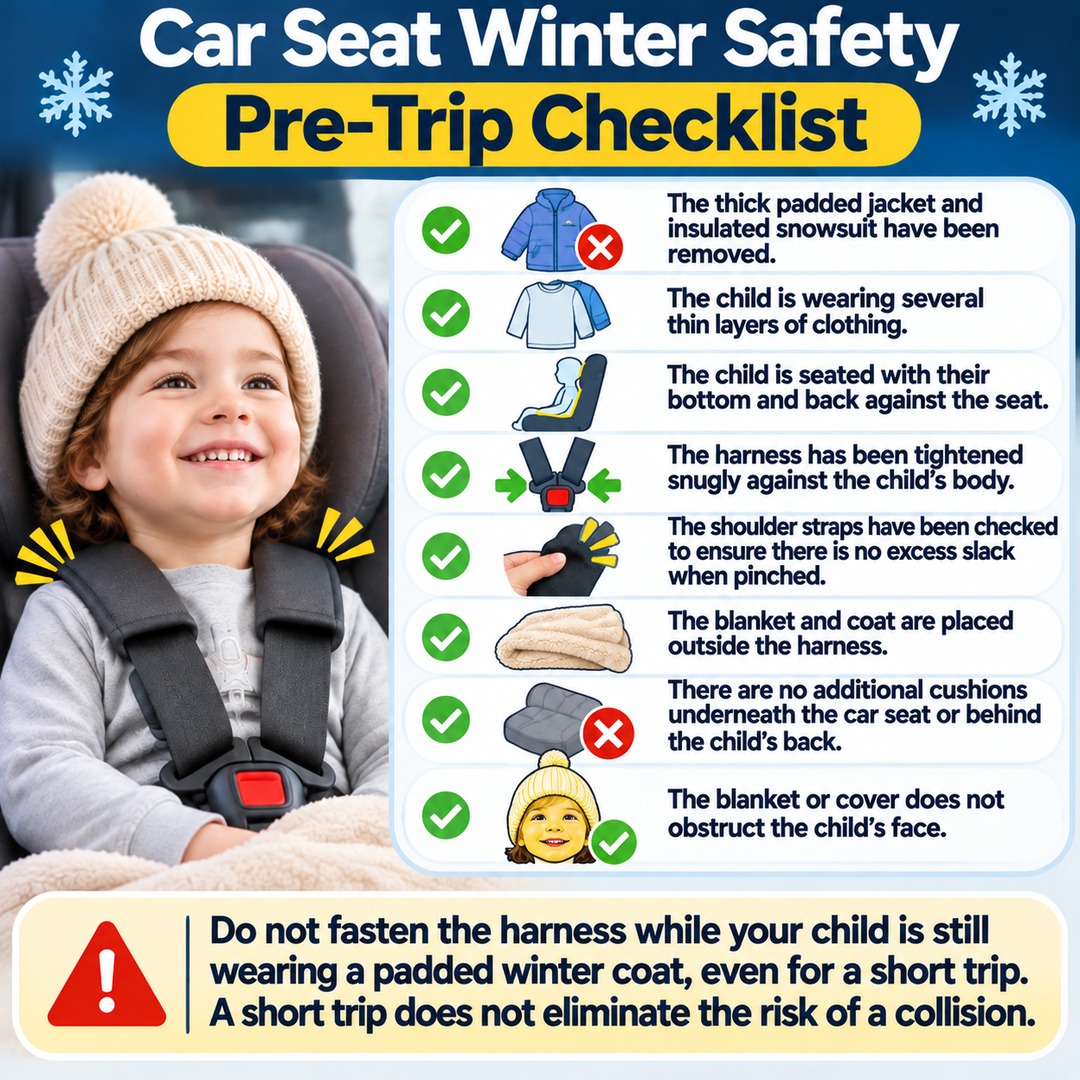
The thick padded jacket and insulated snowsuit have been removed.
The child is wearing several thin layers of clothing.
The child is seated with their bottom and back against the seat.
The harness has been tightened snugly against the child's body.
The shoulder straps have been checked to ensure there is no excess slack when pinched.
The blanket and coat are placed outside the harness.
There are no additional cushions underneath the car seat or behind the child's back.
The blanket or cover does not obstruct the child's face.
Avoid the habit of fastening the harness while your child is still wearing a padded winter coat, even for short journeys. A short trip does not eliminate the risk of a collision.