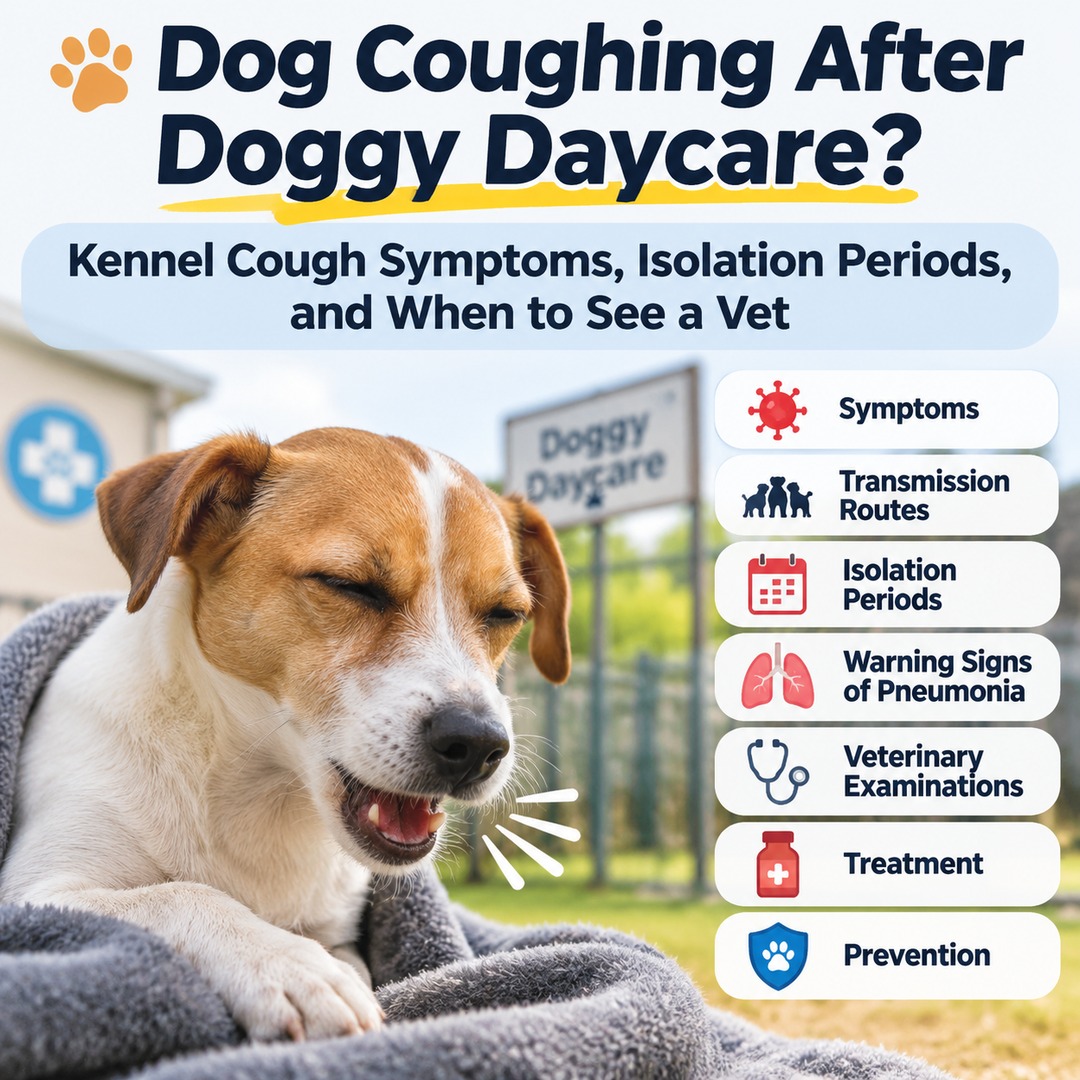
If your dog suddenly develops a harsh, dry cough that sounds like a goose honking after visiting doggy daycare or a boarding facility, especially if the coughing ends with gagging, kennel cough should be considered. Kennel cough is a group of contagious respiratory diseases involving various viruses and bacteria. As soon as you suspect an infection, keep your dog away from other dogs and call a veterinary clinic before visiting.
Why Does a Dog Start Coughing After Visiting Doggy Daycare?
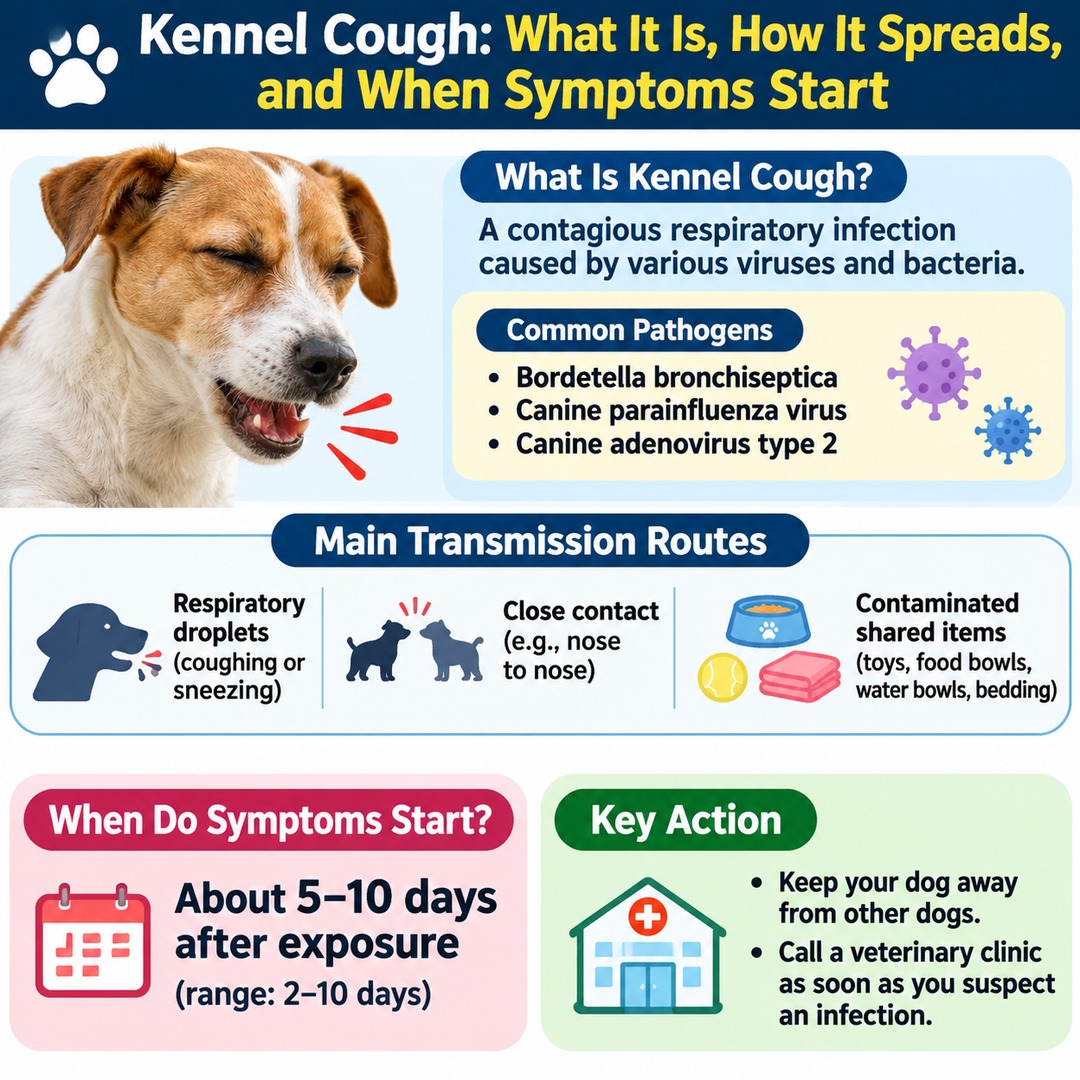
Kennel cough is a respiratory infection that spreads easily in environments where dogs gather in close proximity. In addition to doggy daycare, places such as dog boarding facilities, grooming salons, and animal shelters can pose a risk because multiple dogs stay or interact there.
Despite its name, kennel cough is not a disease caused by a single bacterium. Several pathogens can contribute to the condition. Common examples include Bordetella bronchiseptica, canine parainfluenza virus, and canine adenovirus type 2.
The main transmission routes include:
Respiratory droplets released when an infected dog coughs or sneezes
Close contact with an infected dog, including nose-to-nose contact
Contact with contaminated toys, food bowls, water bowls, bedding, and other shared items
Transmission can occur particularly quickly when multiple dogs spend extended periods together in the same space.
The absence of symptoms immediately after visiting doggy daycare does not necessarily mean your dog is safe. Symptoms take time to develop after exposure. Veterinary references describe the onset of characteristic symptoms approximately 5–10 days after exposure, or within a range of 2–10 days.
What Does a Dog's Kennel Cough Sound Like?
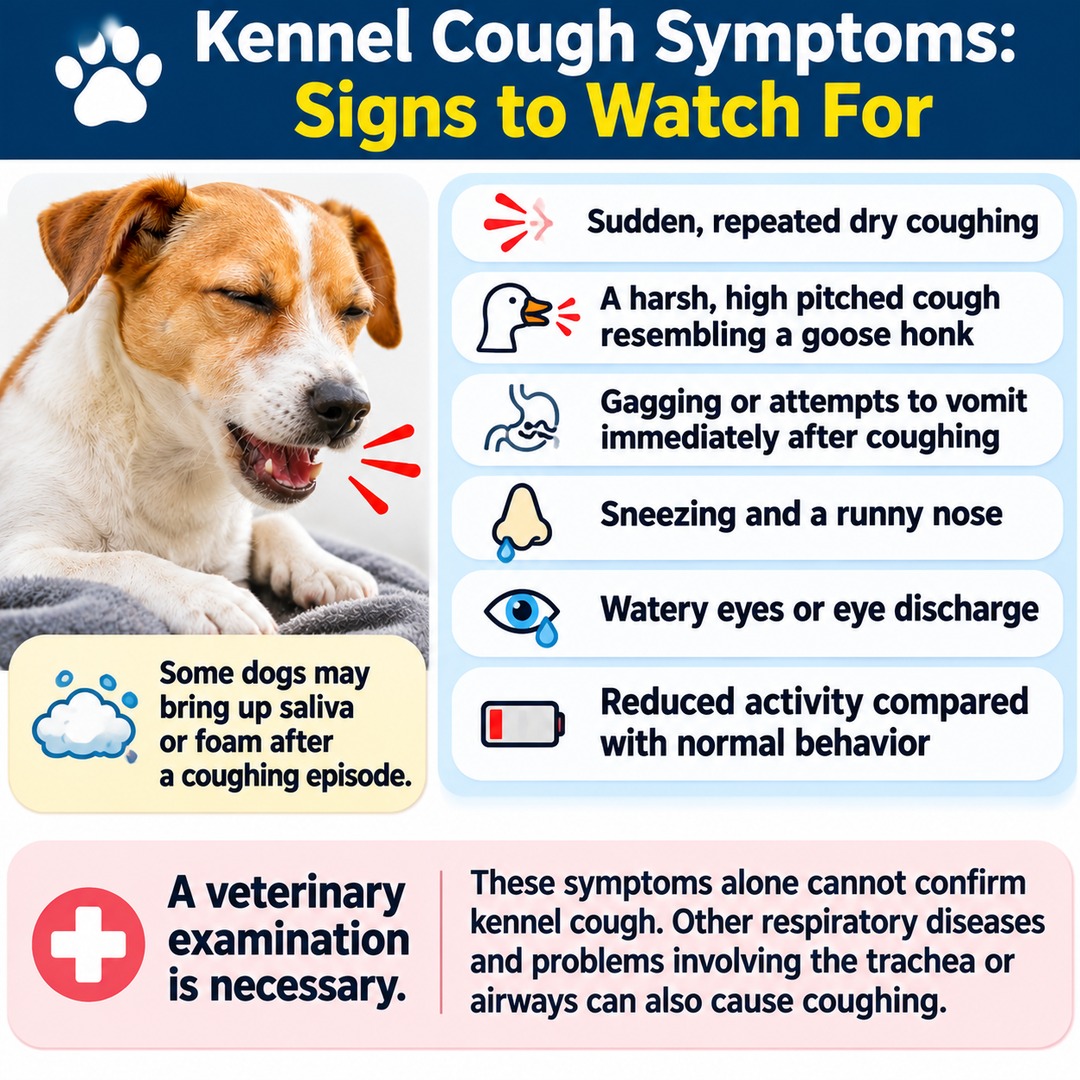
The most characteristic symptom is a sudden onset of a harsh, dry cough. The sound may resemble a goose honking, with repeated hacking or honking noises. After coughing, a dog may gag as though something is stuck in its throat.
Signs owners may notice include:
Sudden, repeated dry coughing
A harsh, high-pitched cough resembling a goose honk
Gagging or attempts to vomit immediately after coughing
Sneezing and a runny nose
Watery eyes or eye discharge
Reduced activity compared with normal behavior
Some dogs may bring up saliva or foam after a coughing episode. Actual vomiting and gagging that follows coughing can look different, so recording the sequence on video can help the veterinarian assess what is happening.
However, these symptoms alone cannot confirm kennel cough. Other respiratory diseases and problems involving the trachea or airways can also cause coughing, so a veterinary examination is necessary.
How Can You Tell the Difference Between a Mild Cough and Possible Pneumonia?
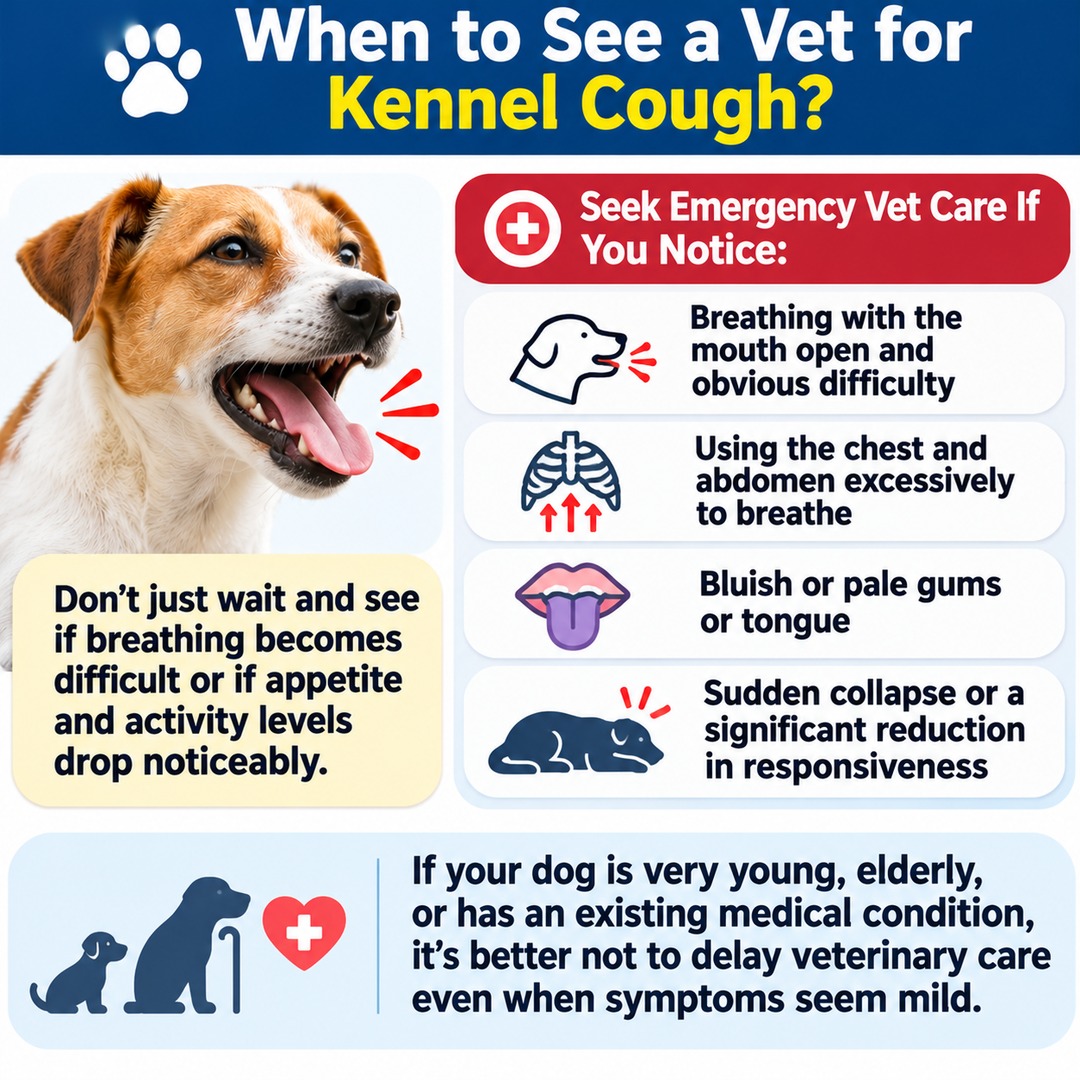
The urgency of veterinary care depends on whether the dog has only a cough or is also experiencing a decline in overall health. In particular, if breathing becomes difficult or appetite and activity levels drop noticeably, do not simply wait and see whether it improves as a minor respiratory infection. Seek veterinary care promptly.
| Observed symptoms | Assessment and recommended response |
|---|---|
| Harsh, dry cough and gagging after coughing | Possible kennel cough or another respiratory infection; call a veterinary clinic and arrange an examination |
| Sneezing, runny nose, or watery eyes | Possible respiratory infection; monitor symptoms and consult a veterinarian |
| Reduced appetite, lethargy, or fever | Possible complications; seek prompt veterinary care |
| Wet cough, severe breathing difficulties, or struggling to breathe | Possible pneumonia or another serious condition; seek immediate veterinary attention |
The following signs may require emergency veterinary care:
Breathing with the mouth open and obvious difficulty
Using the chest and abdomen excessively to breathe
Bluish or pale gums or tongue
Sudden collapse or a significant reduction in responsiveness
If your dog is very young, elderly, or has an existing medical condition, it is better not to delay veterinary care even when symptoms initially appear mild.
How Long Should a Dog with Suspected Kennel Cough Be Kept Away from Other Dogs?
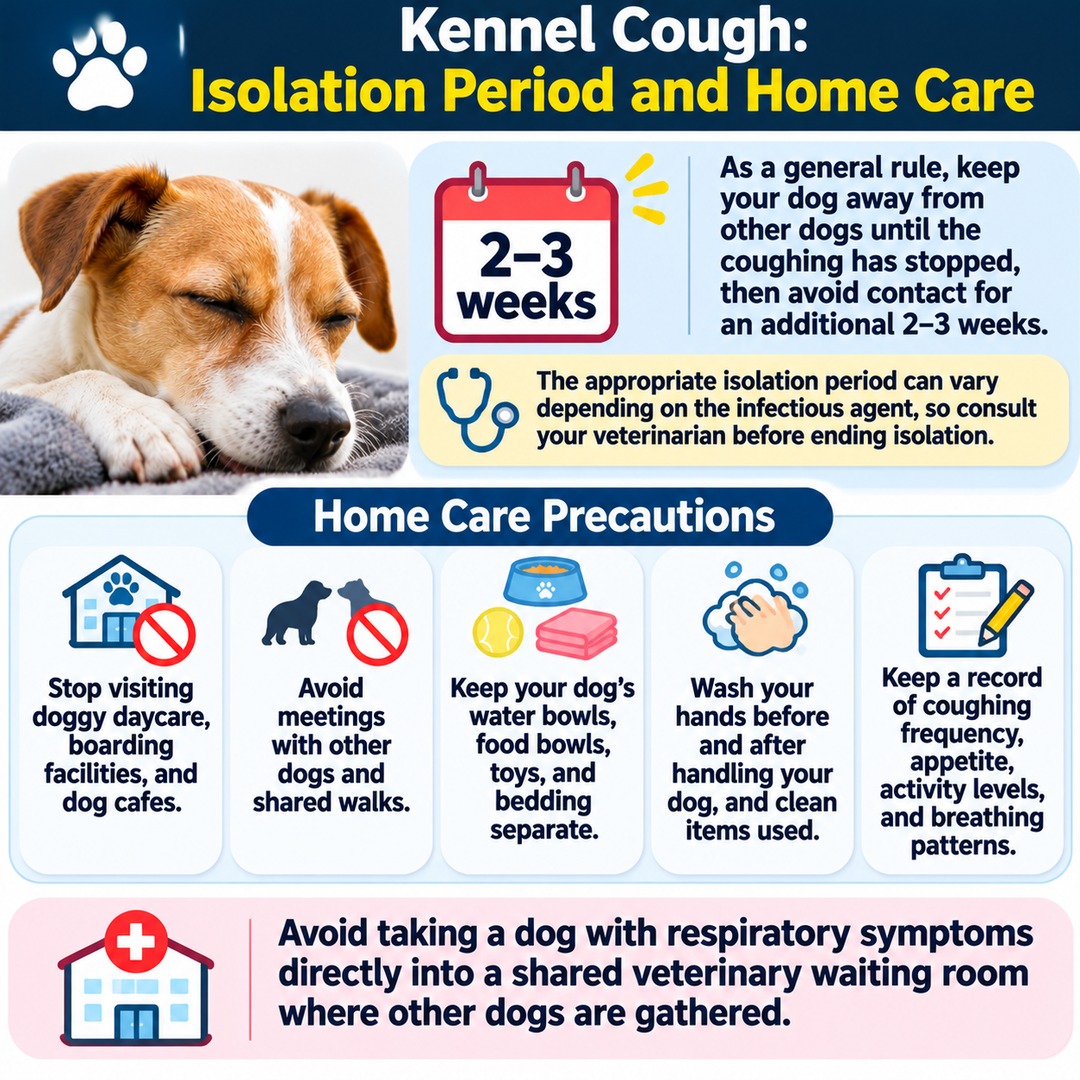
As a general rule, keep your dog away from other dogs until the coughing has stopped. However, the risk of transmission may remain even immediately after symptoms disappear. Some veterinary guidance recommends avoiding contact with other dogs and public areas for an additional 2–3 weeks after symptoms have resolved.
The appropriate isolation period can vary depending on the infectious agent, so consult your veterinarian before ending isolation.
Follow these precautions at home:
1. Stop visiting doggy daycare, boarding facilities, and dog cafes.
2. Avoid meetings with other dogs and shared walks.
3. Keep your dog's water bowls, food bowls, toys, and bedding separate from those used by other pets.
4. Wash your hands before and after handling your dog, and clean items your dog has used.
5. Keep a record of coughing frequency, appetite, activity levels, and breathing patterns.
In particular, avoid taking a dog with respiratory symptoms directly into a shared veterinary waiting room where other dogs are gathered.
When Should You Visit a Veterinary Clinic, and What Tests Might Be Needed?
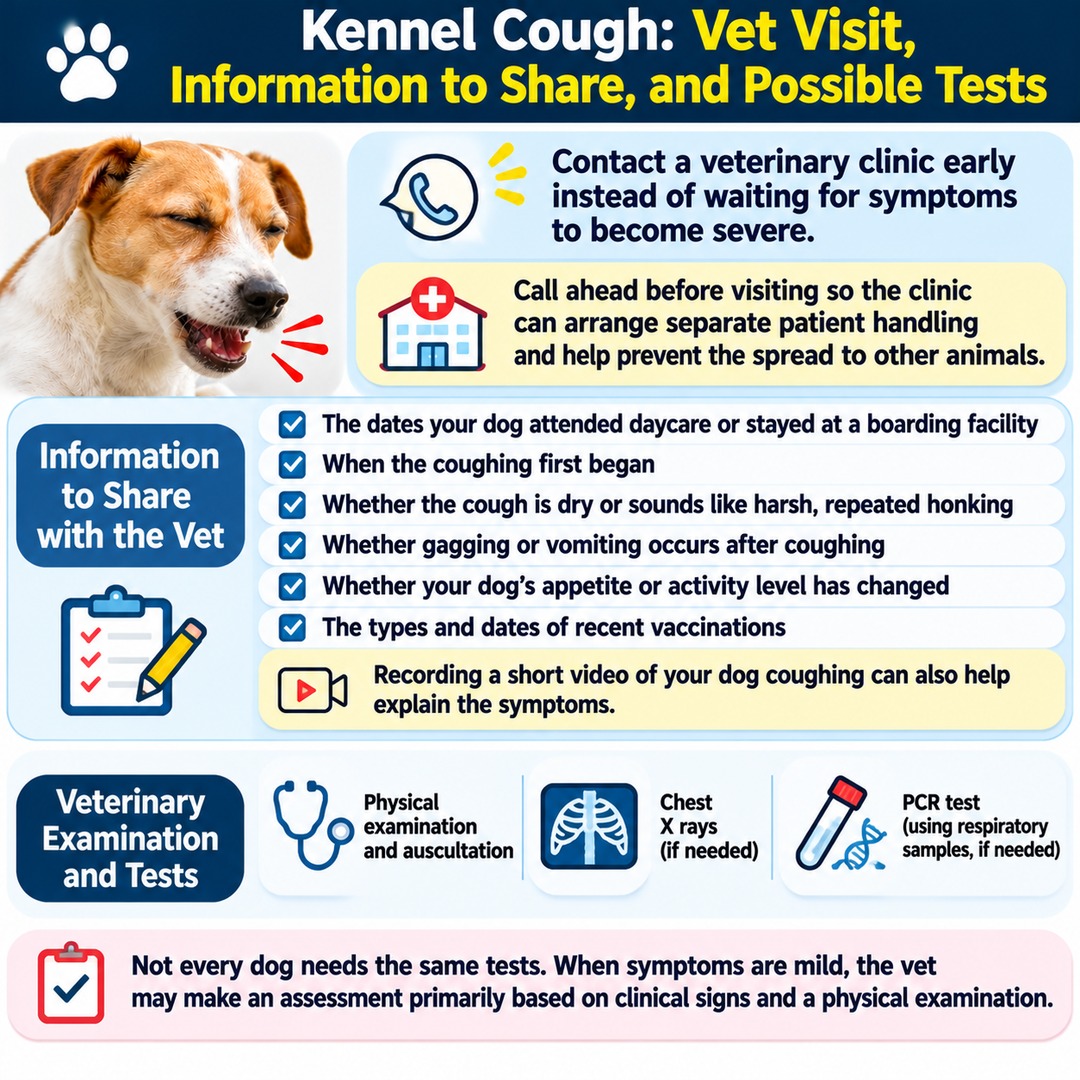
If your dog develops a characteristic cough after attending doggy daycare, contact a veterinary clinic rather than waiting for the symptoms to become severe. Calling ahead before visiting allows the clinic to arrange separate patient handling and reduce the risk of spreading infection to other animals.
When speaking with the veterinarian, provide the following information:
The dates your dog attended daycare or stayed at a boarding facility
When the coughing first began
Whether the cough is dry or sounds like harsh, repeated honking
Whether gagging or vomiting occurs after coughing
Whether your dog's appetite or activity level has changed
The types and dates of recent vaccinations
Recording a short video of your dog coughing can also help you explain the symptoms.
The veterinarian will assess your dog based on its contact history with other dogs, the nature of the cough, auscultation findings, and physical examination results. If necessary, the veterinarian may perform chest X-rays to check for pneumonia or a PCR test using respiratory samples to identify infectious pathogens.
Not every dog needs the same tests. When symptoms are mild, the veterinarian may make an assessment primarily based on clinical signs and the physical examination.
Can Kennel Cough Go Away on Its Own?
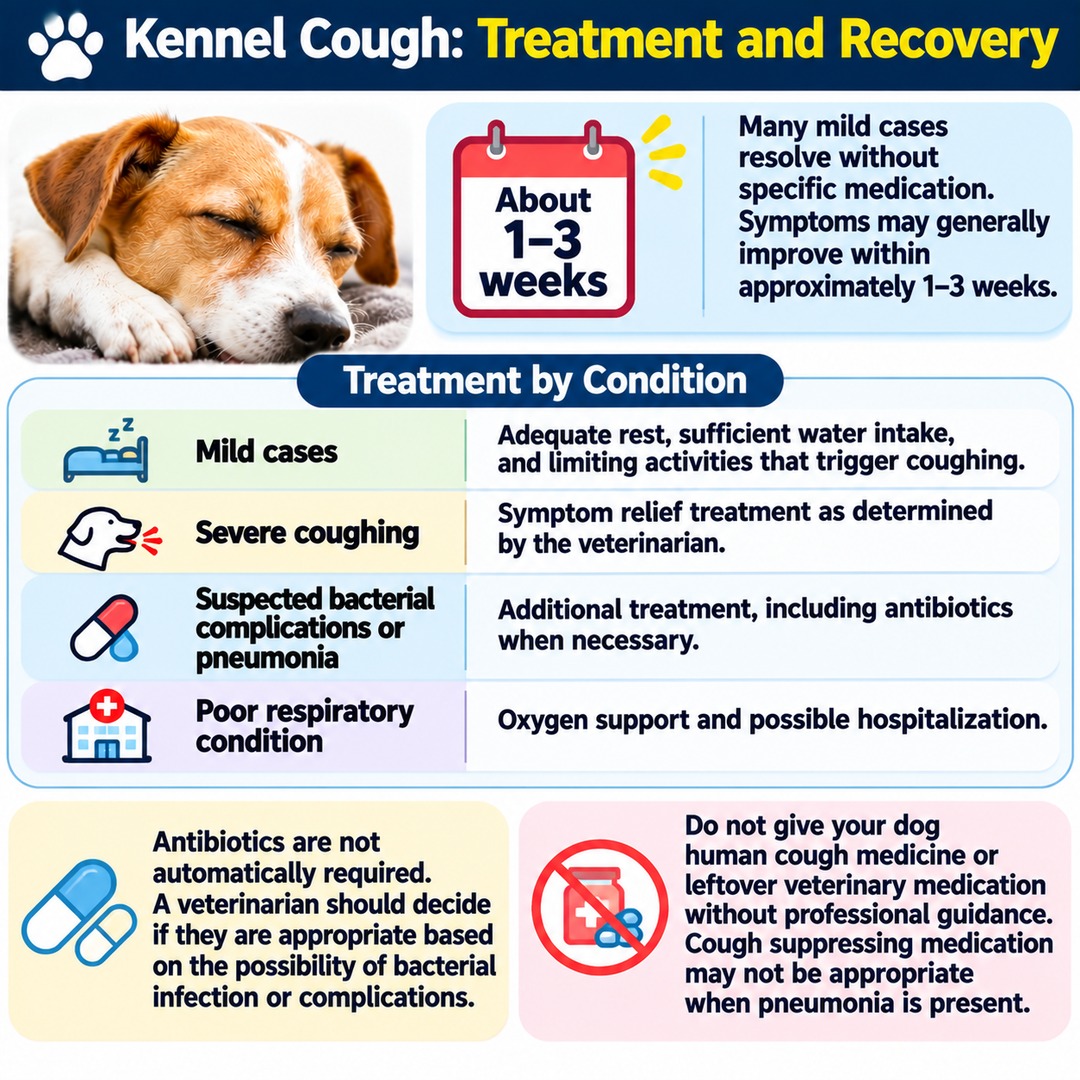
Many mild cases of kennel cough resolve without specific medication. Symptoms may generally improve within approximately 1–3 weeks, although some dogs may cough for longer or develop pneumonia.
Treatment depends on the dog's condition:
Mild cases: Adequate rest, sufficient water intake, and limiting activities that trigger coughing
Severe coughing: Symptom-relief treatment as determined by the veterinarian
Suspected bacterial complications or pneumonia: Additional treatment, including antibiotics when necessary
Poor respiratory condition: Oxygen support and possible hospitalization
Antibiotics are not automatically required simply because kennel cough is suspected. If a virus is responsible, antibiotics do not directly treat the infection. A veterinarian should decide whether they are appropriate based on the possibility of bacterial infection or complications.
Do not give your dog human cough medicine or leftover veterinary medication without professional guidance. In particular, cough-suppressing medication may not be appropriate when pneumonia is present.
Can a Vaccinated Dog Still Catch Kennel Cough?
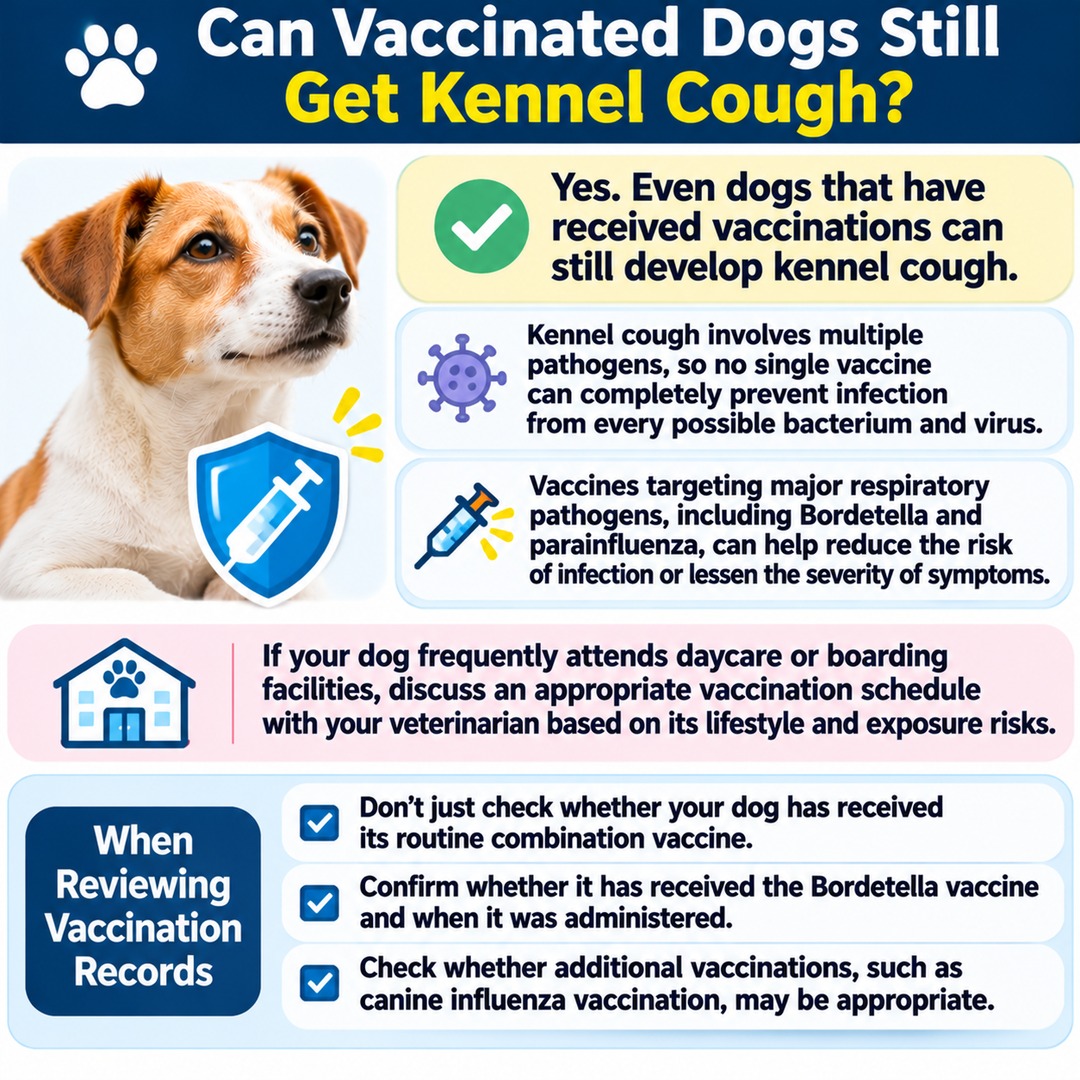
Yes. Even dogs that have received vaccinations can still develop kennel cough. Because kennel cough involves multiple pathogens, no single vaccine can completely prevent infection from every possible bacterium and virus.
However, vaccines targeting major respiratory pathogens, including Bordetella and parainfluenza, can help reduce the risk of infection or lessen the severity of symptoms.
If your dog frequently attends daycare or boarding facilities, discuss an appropriate vaccination schedule with your veterinarian based on its lifestyle and exposure risks.
When reviewing vaccination records, do not simply check whether your dog has received its routine combination vaccine. Also confirm whether it has received the Bordetella vaccine, when it was administered, and whether additional vaccinations, such as canine influenza vaccination, may be appropriate.
When Is It Safe to Return a Dog to Doggy Daycare?
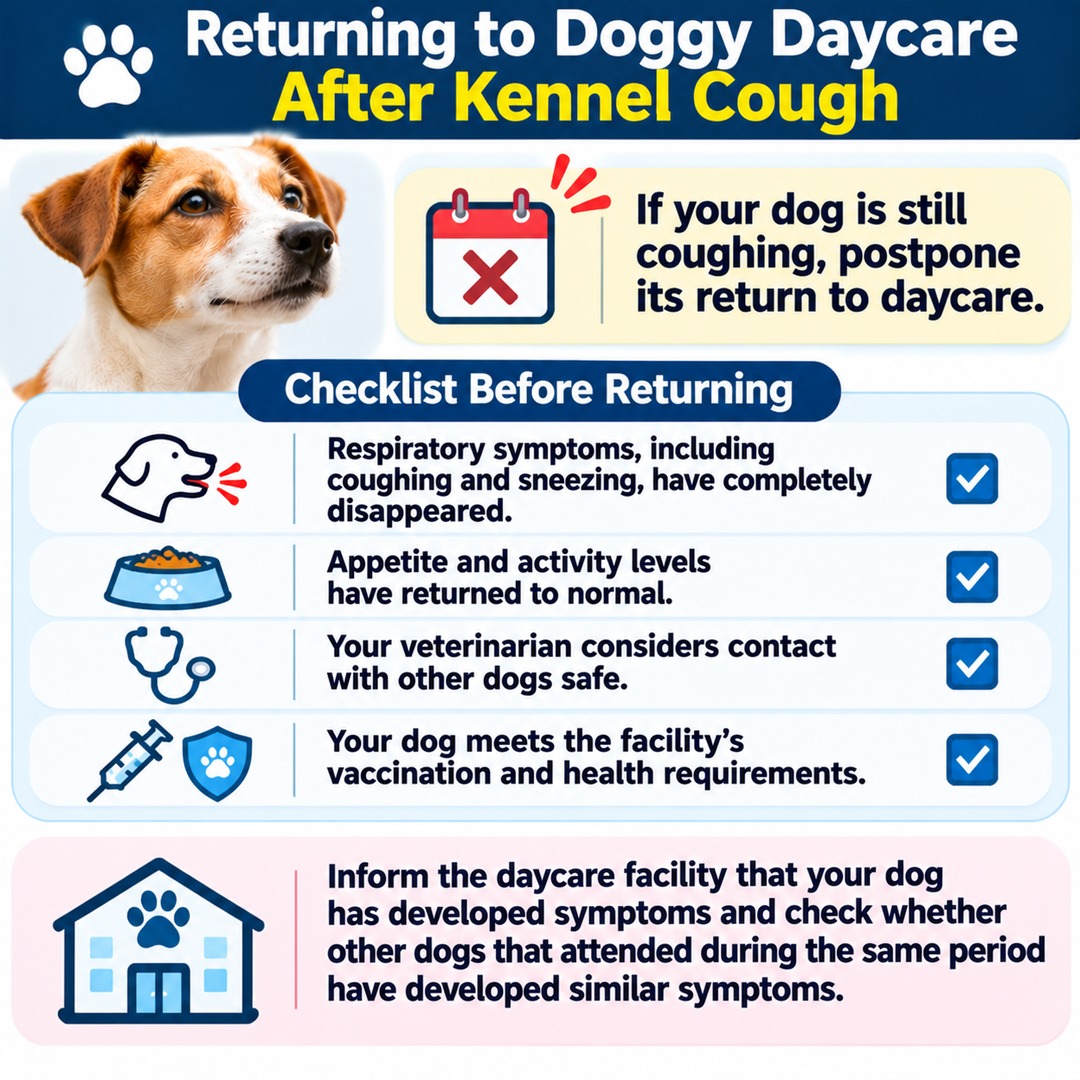
If your dog is still coughing, postpone its return to daycare. Even after the cough stops, the period during which transmission remains possible can vary depending on the infectious agent.
Before returning, check the following:
Whether respiratory symptoms, including coughing and sneezing, have completely disappeared
Whether appetite and activity levels have returned to normal
Whether your veterinarian considers contact with other dogs safe
Whether your dog meets the facility's vaccination and health requirements
You should also inform the daycare facility that your dog has developed symptoms. Checking whether other dogs that attended during the same period have developed similar symptoms can help prevent further transmission.
Frequently Asked Questions About Kennel Cough in Dogs
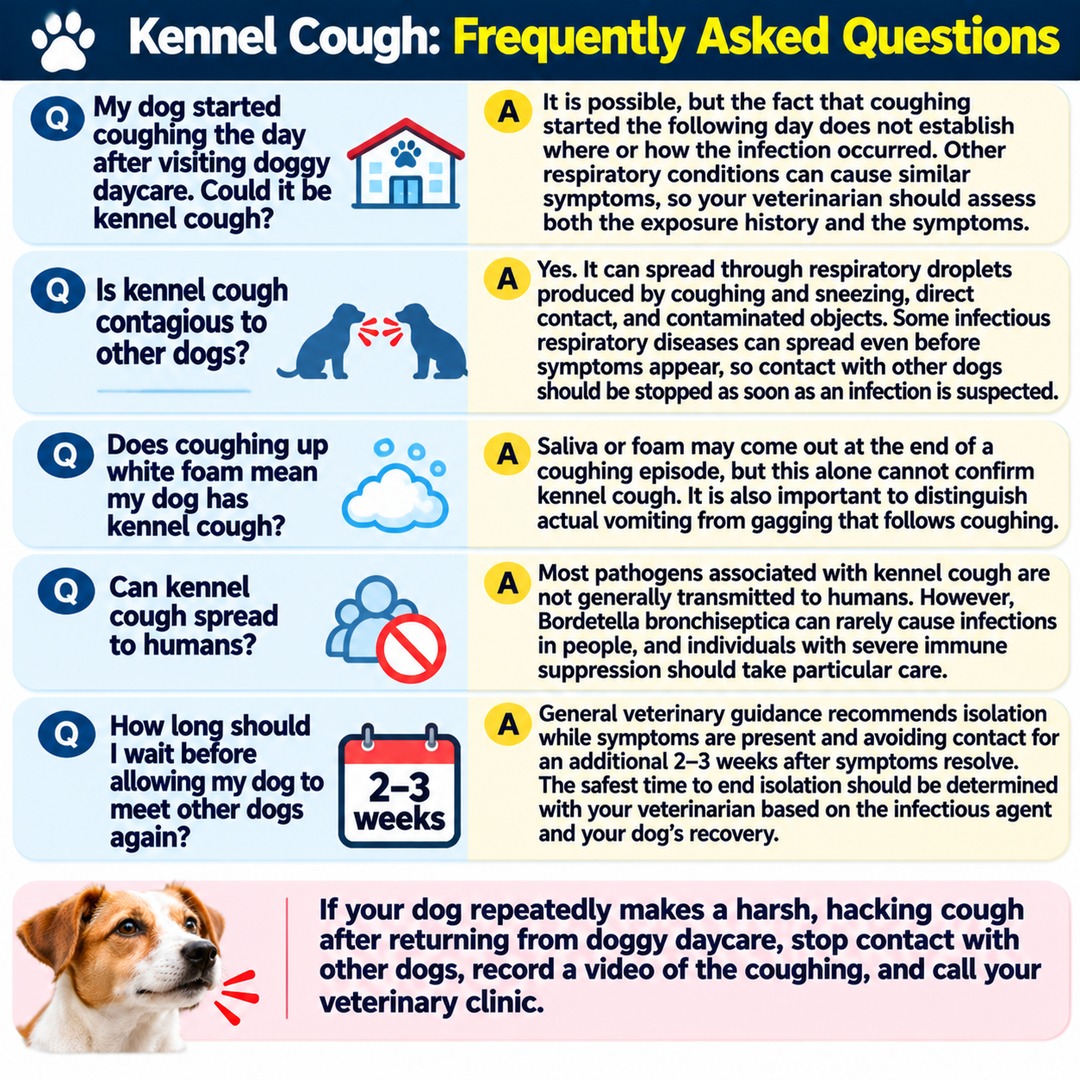
Q. My dog started coughing the day after visiting doggy daycare. Could it be kennel cough?
It is possible, but the fact that coughing started the following day does not establish where or how the infection occurred. Other respiratory conditions can cause similar symptoms, so your veterinarian should assess both the exposure history and the symptoms.
Q. Is kennel cough contagious to other dogs?
Yes. It can spread through respiratory droplets produced by coughing and sneezing, direct contact, and contaminated objects. Some infectious respiratory diseases can spread even before symptoms appear, so contact with other dogs should be stopped as soon as an infection is suspected.
Q. Does coughing up white foam mean my dog has kennel cough?
Saliva or foam may come out at the end of a coughing episode, but this alone cannot confirm kennel cough. It is also important to distinguish actual vomiting from gagging that follows coughing.
Q. Can kennel cough spread to humans?
Most pathogens associated with kennel cough are not generally transmitted to humans. However, Bordetella bronchiseptica can rarely cause infections in people, and individuals with severe immune suppression should take particular care.
Q. How long should I wait before allowing my dog to meet other dogs again?
General veterinary guidance recommends isolation while symptoms are present and avoiding contact for an additional 2–3 weeks after symptoms resolve. The safest time to end isolation should be determined with your veterinarian based on the infectious agent and your dog's recovery.
If your dog repeatedly makes a harsh, hacking cough after returning from doggy daycare, do not dismiss it as something temporarily stuck in its throat. The safest first response is to stop contact with other dogs, record a video of the coughing, and call your veterinary clinic.