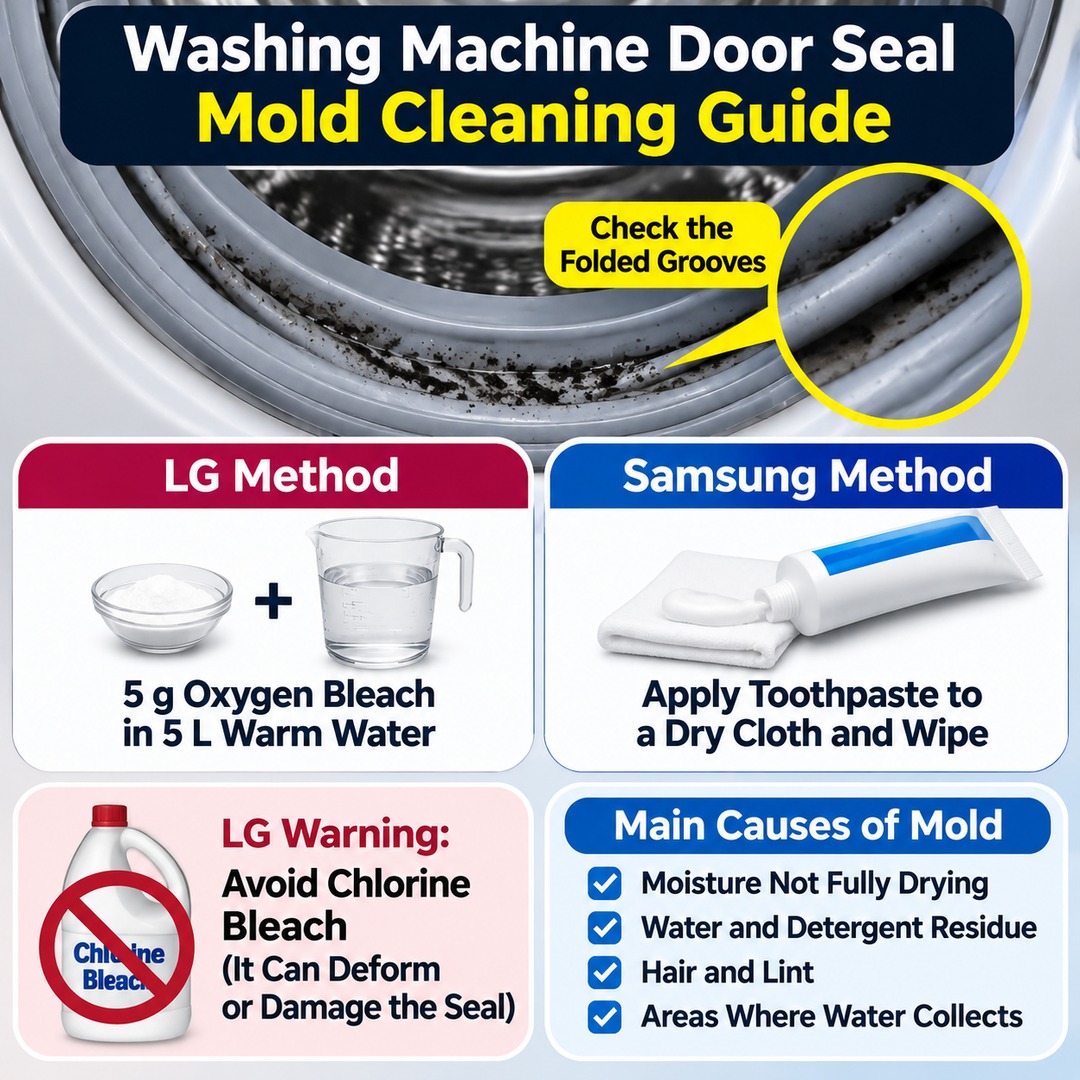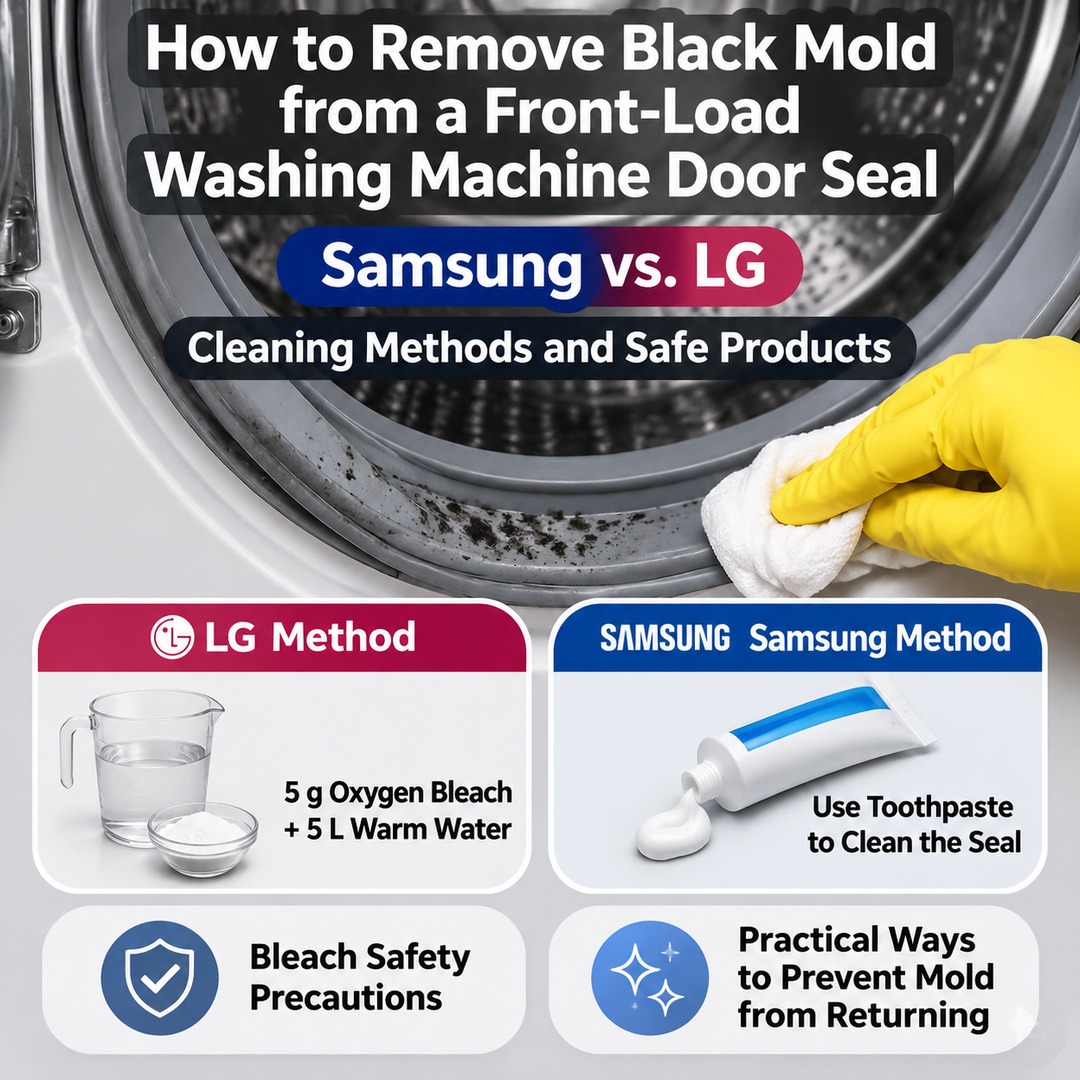
Black mold on a front-load washing machine door seal should be cleaned differently depending on the manufacturer. LG recommends wiping the seal with a solution made by dissolving 5 g of oxygen bleach in 5 L of warm water, while Samsung Electronics Service recommends applying toothpaste to a dry cloth and wiping the affected areas. LG specifically warns that chlorine bleach can deform or damage the rubber seal, so avoid using chlorine-based products without manufacturer approval.
Why Does Black Mold Appear on a Front-Load Washing Machine Door Seal?
Black stains on a washing machine door seal often develop in areas where moisture and debris become trapped, particularly inside the folded grooves. If moisture does not dry completely after a wash or water and residue remain inside the seal, mold and grime can accumulate.
When you open a front-load washing machine, you will see a thick rubber component surrounding the door opening. This part is commonly called the door seal or gasket.
Pay particular attention to these areas:
The folded inner groove along the bottom of the rubber seal
Water and detergent residue trapped inside the seal
Hair and lint shed from clothing
Areas inside the gasket where water tends to collect
Wiping only the visible outer surface may leave contamination hidden inside the folds. Open the door and carefully inspect the folded sections, but do not pull the rubber excessively or scrape it with sharp tools.
How Do Samsung and LG Recommend Cleaning Washing Machine Door Seals?
Comparison of official manufacturer support recommendations
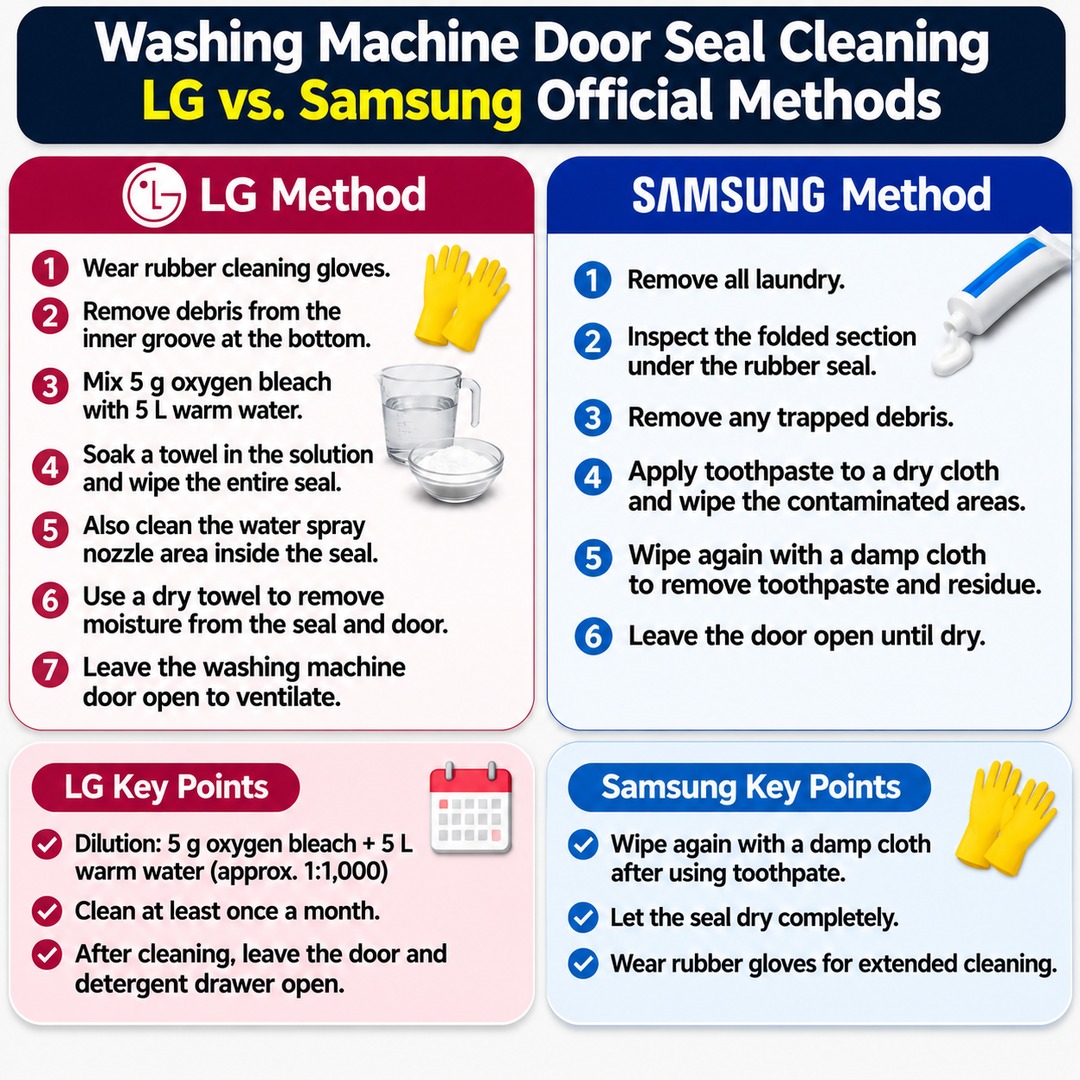
| Category | LG Electronics | Samsung Electronics Service |
|---|---|---|
| Cleaning material | Oxygen bleach | Toothpaste |
| Amount and method | Dissolve 5 g in 5 L of warm water | Apply toothpaste to a dry cloth |
| Areas to clean | Entire seal and inner water-spray nozzle | Folded sections and contaminated areas of the seal |
| Finishing step | Remove moisture with a dry towel | Wipe again with a damp cloth |
| Drying | Leave the door open until completely dry | Leave the door open until moisture has dried |
The two manufacturers do not recommend identical cleaning methods. Rather than automatically applying one manufacturer's instructions to another brand, follow the guidance provided for your specific washing machine.
LG Front-Load Washing Machines: 5 g of Oxygen Bleach in 5 L of Warm Water
LG recommends cleaning the rubber door seal with a diluted oxygen bleach solution.
Follow these steps:
1. Put on rubber cleaning gloves.
2. Remove debris trapped in the inner groove at the six o'clock position, near the bottom of the rubber seal.
3. Mix 5 g of oxygen bleach with 5 L of warm water.
4. Soak a towel in the diluted solution and wipe the entire seal.
5. Also clean the water-spray nozzle area inside the seal.
6. Use a dry towel to remove moisture from the seal and door glass.
7. Leave the washing machine door open until everything is completely dry.
The most important detail is the dilution ratio.
LG's recommended dilution
Oxygen bleach: 5 g
Warm water: 5 L
Approximate dilution ratio: 1:1,000
Do not arbitrarily increase the amount of bleach.
LG recommends cleaning the door seal at least once a month. After cleaning, leave both the washing machine door and detergent drawer open to allow the interior to ventilate.
If black stains continue to appear or cannot be removed through cleaning, consider having the appliance inspected to determine whether the rubber seal needs replacement.
Samsung Front-Load Washing Machines: Wipe with Toothpaste on a Dry Cloth
Samsung Electronics Service recommends the following cleaning method when odors develop around the washing machine door seal.
1. Remove all laundry from the washing machine.
2. Inspect the folded section underneath the rubber door seal.
3. Remove any debris trapped inside.
4. Apply toothpaste to a dry cloth and carefully wipe the contaminated areas, including the corners.
5. Wipe the area again with a damp cloth to remove toothpaste and remaining residue.
6. Leave the washing machine door open until the moisture has dried.
One important detail in Samsung's instructions is the additional wipe with a damp cloth after using toothpaste.
Do not finish cleaning with toothpaste still on the rubber. Remove any remaining residue and allow the seal to dry completely.
Avoid pulling the rubber seal forcefully. Carefully inspect its folded sections instead. Samsung also recommends wearing rubber gloves when cleaning for an extended period.
Can You Use Chlorine Bleach to Remove Mold from a Washing Machine Door Seal?
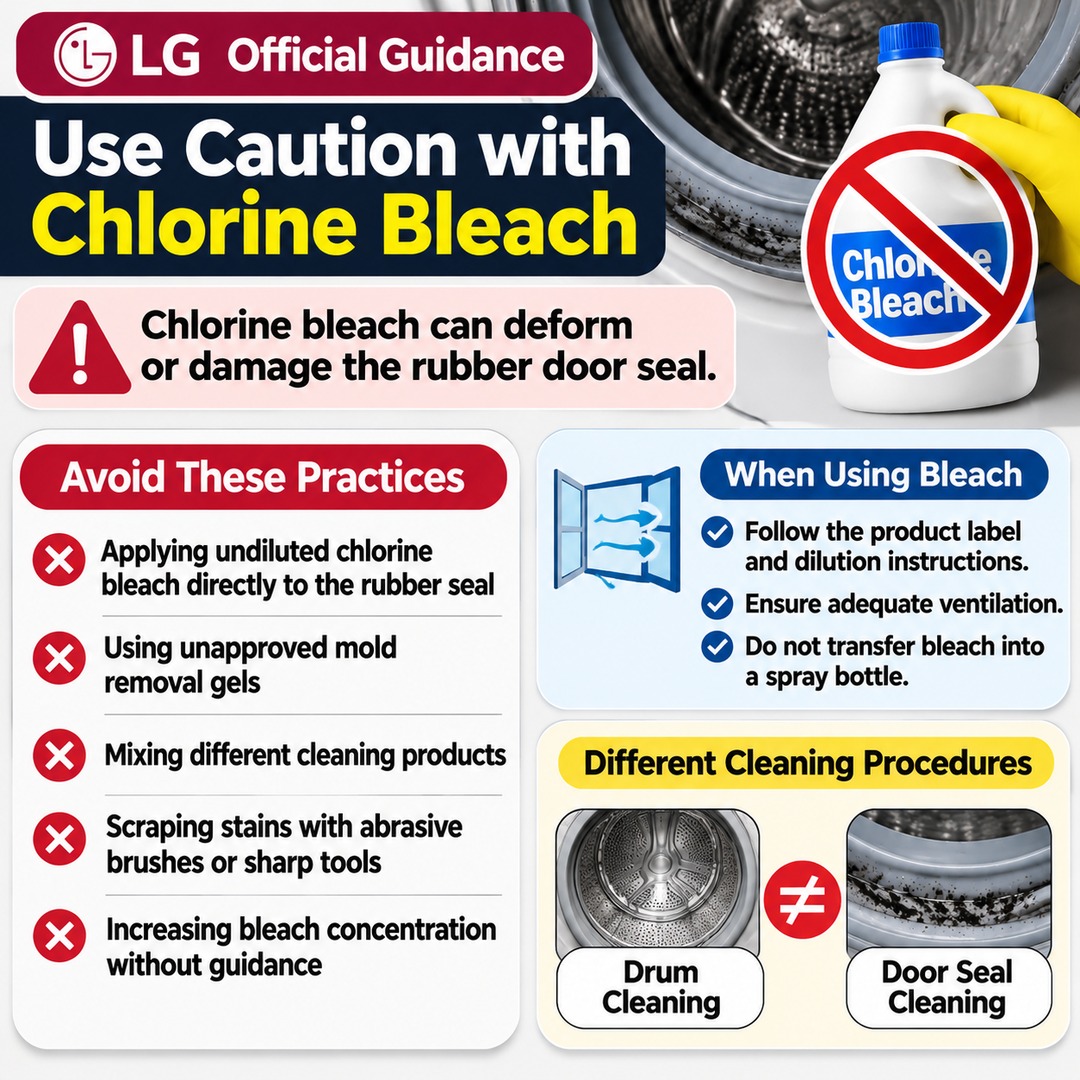
LG's official guidance: Use caution with chlorine bleach.
LG customer support warns that using chlorine bleach can deform or damage the rubber door seal.
Chlorine bleach is commonly used to remove mold in bathrooms, but that does not mean it is suitable for cleaning washing machine door seals in the same way.
Avoid the following practices:
Applying undiluted chlorine bleach directly to the rubber seal
Using mold-removal gels that the manufacturer has not recommended
Mixing different types of cleaning products
Scraping black stains with abrasive brushes or sharp tools
Increasing the recommended bleach concentration without guidance
Mixing chlorine bleach with other household cleaning products can release hazardous gases. When using bleach, follow the product label and dilution instructions and ensure adequate ventilation. Avoid transferring bleach into a spray bottle for application.
There is also an important distinction between cleaning the inside of the washing machine drum and cleaning the rubber door seal. These are different procedures. Do not assume that a product designed for drum cleaning is automatically suitable for the rubber gasket.
If you are also wondering how to choose a washing machine drum cleaner, consult the relevant cleaning guidance before selecting a product.
How Can You Prevent Black Mold from Returning to the Door Seal?
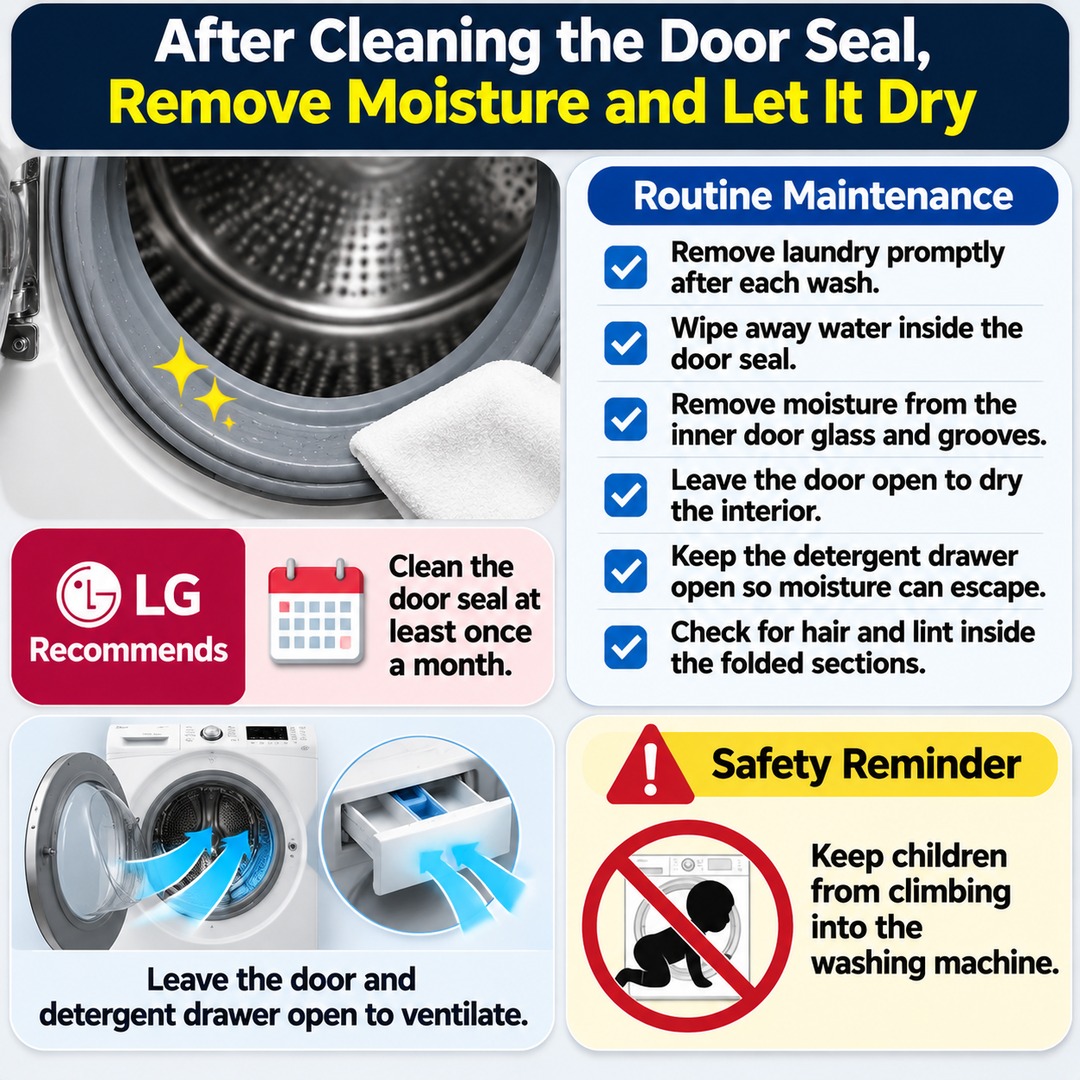
After cleaning the rubber seal, the most important step is to remove moisture and let the area dry thoroughly.
LG recommends removing laundry after each wash and leaving the door and detergent drawer open to ventilate the interior. It also recommends cleaning the rubber door seal at least once a month.
For routine maintenance, follow these practices:
Remove laundry promptly after each wash.
Wipe away water collected inside the rubber door seal.
Remove moisture from the inner door glass and the grooves of the gasket.
Leave the washing machine door open to dry the interior.
Keep the detergent drawer open so moisture can escape.
Check for hair and lint trapped inside the folded sections of the seal.
When leaving the door open, make sure children cannot climb inside the washing machine.
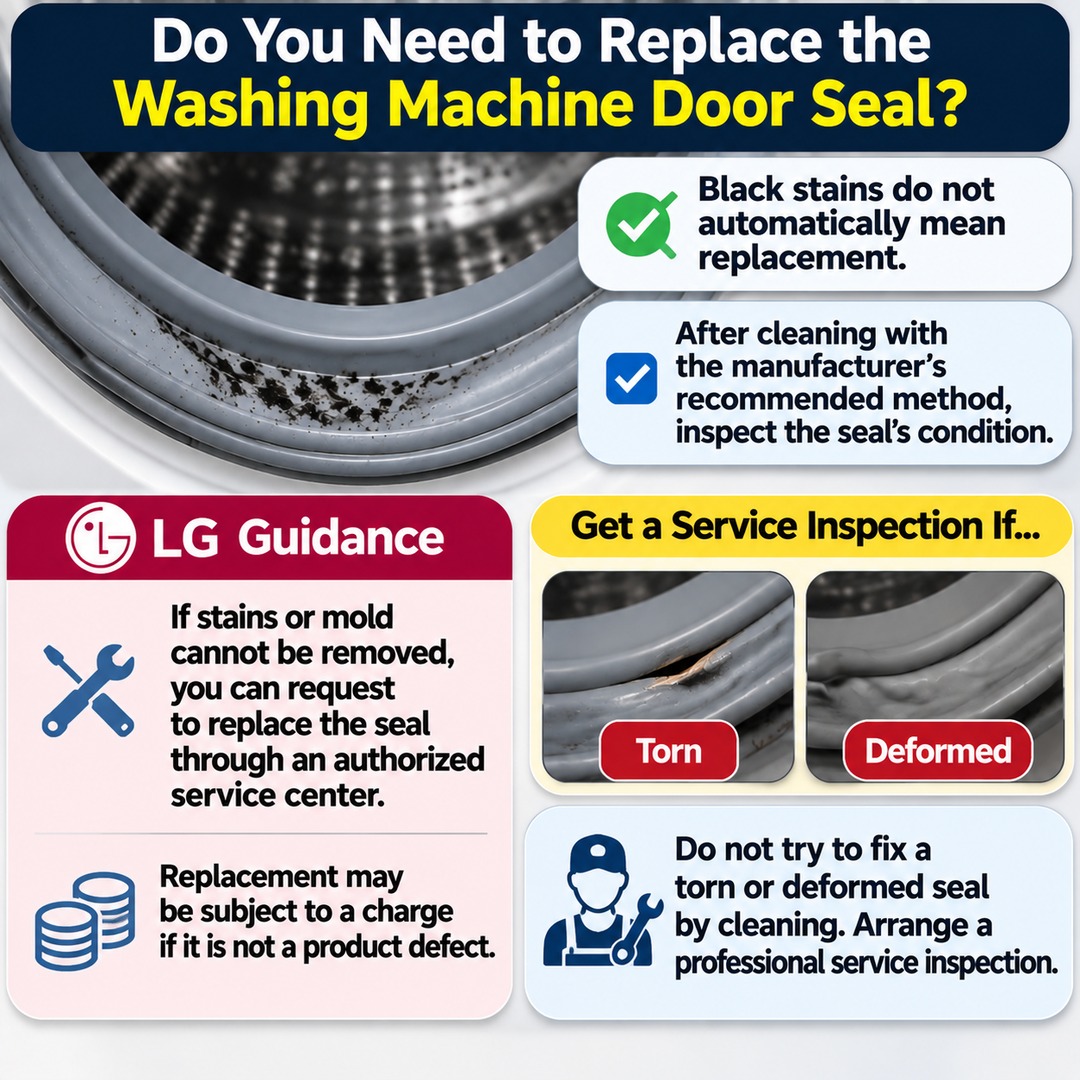
Should You Replace the Rubber Door Seal If Black Stains Remain After Cleaning?
The presence of black stains does not automatically mean that the rubber door seal needs to be replaced.
However, if stains remain after cleaning according to the manufacturer's recommended method, the condition of the gasket should be inspected.
LG explains that if stains or mold cannot be removed, customers can request replacement of the rubber door seal through an authorized service center. Replacement may be subject to a charge if the issue is not classified as a product defect.
If the seal is torn or deformed, do not try to resolve the problem through cleaning alone. Arrange a professional service inspection instead.
Samsung and LG Washing Machine Mold Cleaning FAQ
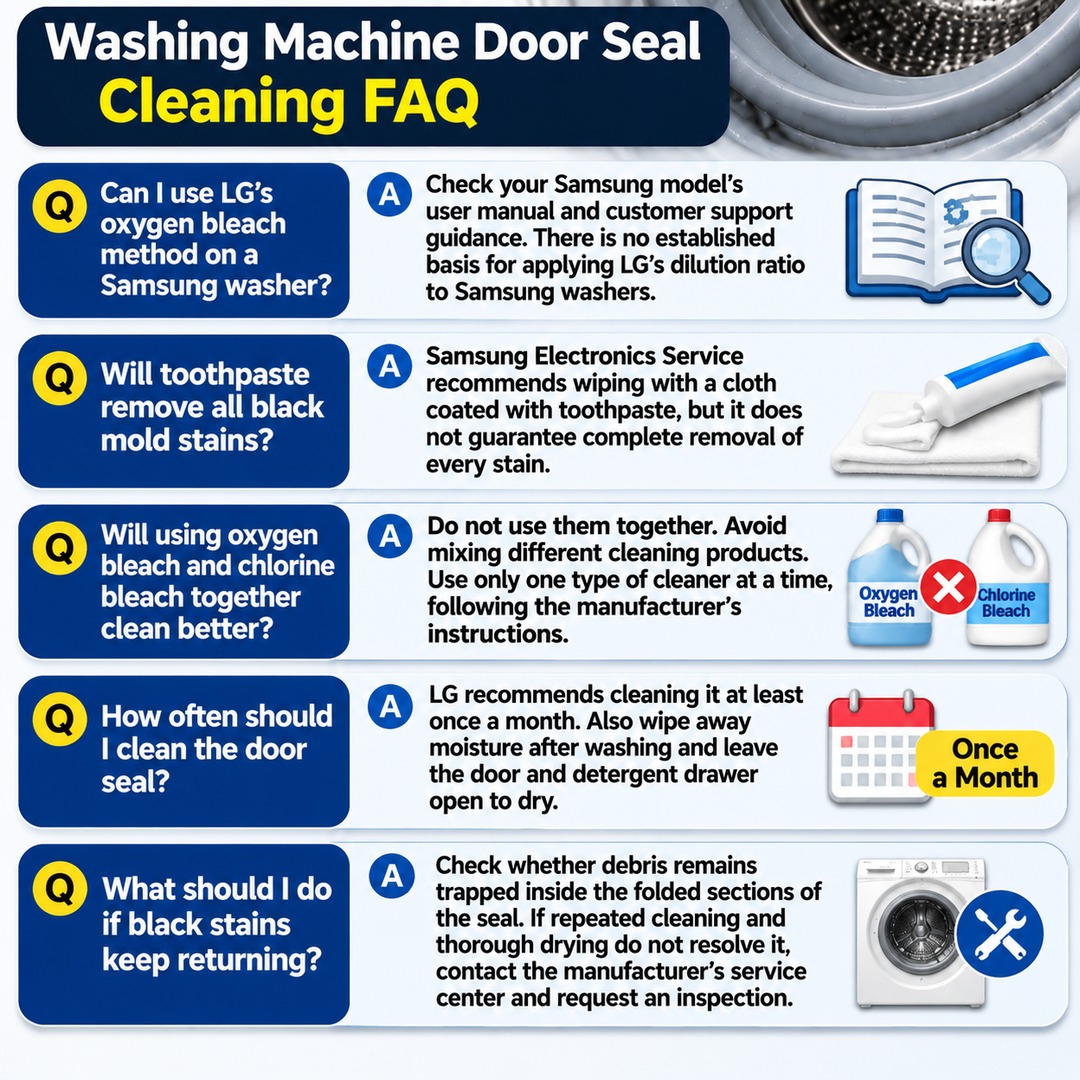
Q. Can I use LG's oxygen bleach cleaning method on a Samsung washing machine?
Because the manufacturers provide different cleaning instructions, check the user manual and customer support guidance for your specific Samsung model first. There is no established basis for applying LG's dilution ratio universally to Samsung washing machines.
Q. Will toothpaste remove all black mold stains?
Samsung Electronics Service recommends wiping contaminated areas with a cloth coated with toothpaste. However, this method does not guarantee that every mold stain will be completely removed.
Q. Will using oxygen bleach and chlorine bleach together produce better cleaning results?
Do not use them together. Avoid mixing different cleaning products. Use only one type of cleaner at a time, following the manufacturer's instructions.
Q. How often should I clean the washing machine door seal?
LG recommends cleaning it at least once a month. In everyday use, it is also important to wipe away moisture after washing and leave the door and detergent drawer open to dry.
Q. What should I do if black stains keep returning?
Check whether debris remains trapped inside the folded sections of the seal. If repeated cleaning and thorough drying do not resolve the problem, contact the manufacturer's service center and request an inspection.