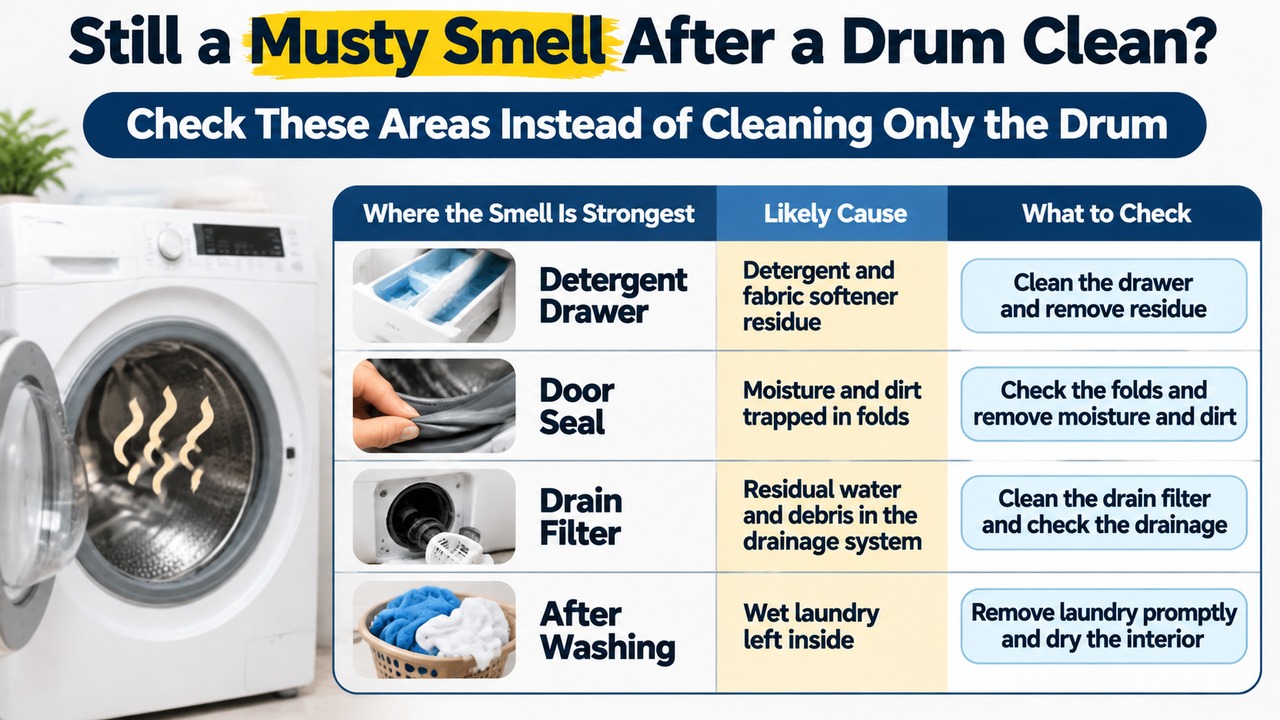
Even after running a washing machine drum-cleaning cycle, you may still notice a musty smell. If this happens, check the detergent drawer, door rubber seal, and drain filter rather than repeatedly cleaning only the drum. Detergent and fabric softener residue, moisture trapped inside the folds of the door seal, and residual water in the drainage system can all accumulate in different areas.
Front-loading washing machines are particularly prone to recurring odors if the door remains closed for long periods or the interior is not dried properly after washing. Before increasing the frequency of drum-cleaning cycles, identify where the smell is coming from.
Why Does Your Washing Machine Still Smell After a Drum-Cleaning Cycle?
A drum-cleaning cycle is designed to maintain the inside of the washing drum. It does not remove and clean every component of the washing machine individually.
Even if the drum itself has been cleaned, odors can persist if hardened detergent remains in the detergent dispenser or water and debris collect inside the folds of the rubber door seal.
You can narrow down the possible source based on where the smell is strongest:
If the smell is strongest around the detergent drawer, check for detergent and fabric softener residue.
If the rubber seal smells when you open the washing machine door, inspect the folds for trapped moisture and dirt.
If the inside of the drum smells like a drain or sewer, check the drain filter and drainage system.
If the smell becomes stronger over time after washing, check whether wet laundry has been left inside and whether the interior is being dried properly.
Not all washing machine contamination occurs in the same place, so cleaning just one component may not solve the problem.
How Should You Remove and Clean the Detergent Drawer?
The detergent drawer is where detergent and fabric softener are added, so it should be removed and cleaned regularly.
When detergent hardens or fabric softener leaves a sticky residue, deposits can build up inside the dispenser and its internal passages. The removal method varies by manufacturer and model, but most front-loading washing machines have a release button or locking mechanism.
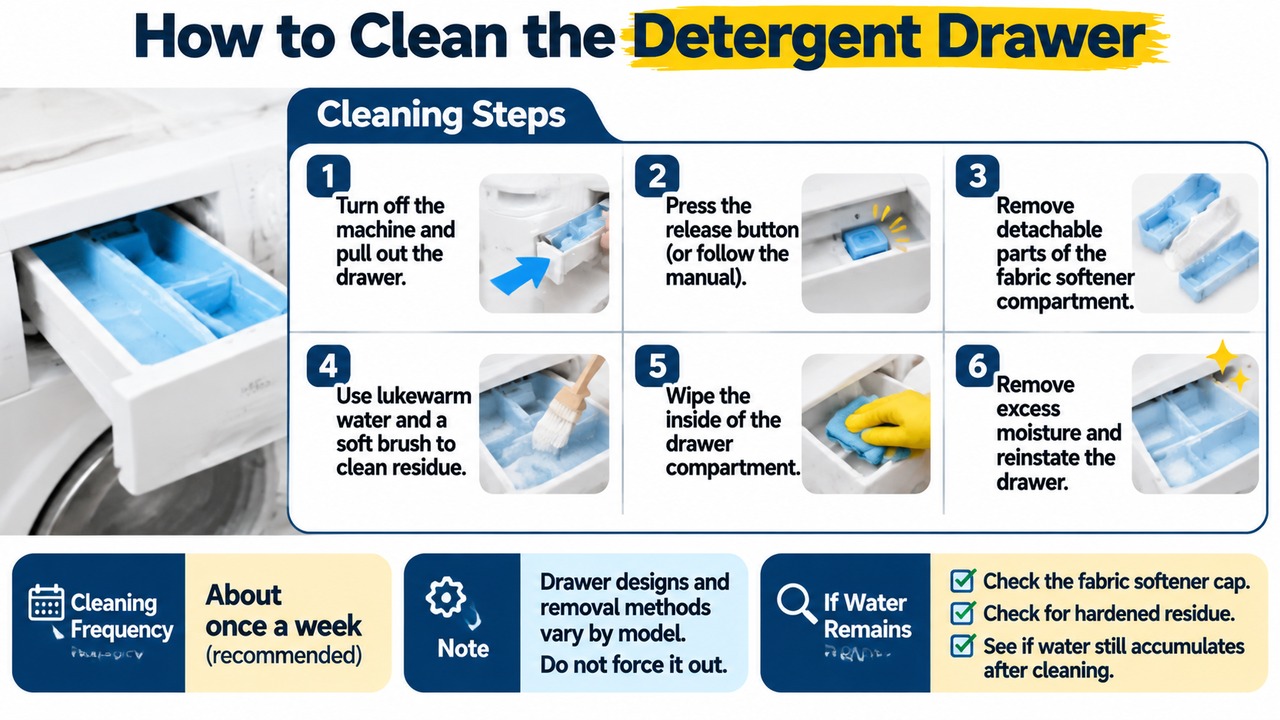
Follow these steps to clean the detergent drawer:
1. Turn off the washing machine and pull the detergent drawer out as far as it will go.
2. Press the release button or follow the removal instructions in the product manual.
3. Remove any detachable parts of the fabric softener compartment.
4. Use lukewarm water and a soft brush to remove hardened detergent and fabric softener residue.
5. Wipe the inside of the drawer compartment with a damp cloth.
6. Remove excess moisture, allow all parts to dry completely, and reinstall the drawer.
Narrow corners inside the drawer and the area around the fabric softener cap are particularly easy to overlook when cleaning.
LG Electronics recommends cleaning the detergent drawer approximately once a week in its front-loading washing machine maintenance guidance. However, drawer designs and removal methods vary by model, so do not force the drawer out.
What If Water or Residue Remains in the Fabric Softener Compartment?
Water remaining in the fabric softener compartment does not necessarily indicate a malfunction. The appropriate checks depend on the drawer design and the water supply and drainage process.
Check whether the fabric softener cap is correctly installed, whether residue has hardened inside the dispenser, and whether water continues to accumulate after cleaning.
If water repeatedly remains in the compartment even after cleaning the drawer, it is worth checking the relevant components as well.
How Do You Remove Moisture and Dirt from Inside the Rubber Door Seal?
The rubber seal around the door of a front-loading washing machine has folds that can trap water and lint.
Wiping only the visible surface may leave contamination inside these folds. Gently pull the seal back by hand to inspect and clean the inner sections.
Follow these steps:
1. Turn off the washing machine and open the door.
2. Gently pull back the rubber seal to inspect its inner folds.
3. Remove hair, lint, detergent residue, and other debris.
4. Clean the seal using a cleaning product approved in the manufacturer's instructions.
5. Use a clean cloth to remove any remaining cleaning solution.
6. Dry the entire seal, including the inner folds, with a dry towel.
7. Leave the door open to allow the interior to dry thoroughly.
Not every black mark on a rubber door seal is necessarily mold. It may also contain detergent residue or fabric-related dirt, so inspect the condition of the contamination before deciding how to clean it.
Some LG Electronics WashTower maintenance instructions describe cleaning the seal with 5 g of oxygen-based bleach diluted in 5 L of warm water. This ratio comes from those specific instructions and should not be treated as a universal cleaning method for every manufacturer or model.
Wear rubber gloves and prioritize the cleaning methods permitted in your product manual. Never mix different cleaning products, such as acidic cleaners and chlorine-based bleach.
Should You Check the Drain Filter Before Running Another Drum-Cleaning Cycle?
If the smell persists despite repeated drum-cleaning cycles, inspect the drain filter for accumulated debris and check the drainage system.
The drain filter catches lint and small particles released during washing. If debris builds up inside it, drainage performance may deteriorate.
starserviceappliancerepair.wordpress.com
Keep the following points in mind when cleaning the drain filter:
Locate the service cover near the bottom of the washing machine.
If your model has an emergency drain hose, drain the remaining water according to the manufacturer's instructions.
Check that no hot water remains inside.
Remove the filter and clear away lint and other debris.
Reinstall the filter and cap securely and correctly.
Water may flow out when you open the drain filter, so prepare a basin and towels beforehand. The water may still be hot, so allow it to cool sufficiently before starting.
If drainage remains poor or water continues to collect after cleaning the filter, other components, such as the drain hose or drain pump, may need inspection.
How Often Should You Maintain Your Washing Machine to Prevent Odors?
Rather than cleaning every component at the same interval, it is more efficient to set maintenance schedules according to where residue and dirt tend to accumulate.
Based on the recommended intervals in LG Electronics' front-loading washing machine maintenance guidance, the following schedule can be used:
| Component | Recommended Maintenance Frequency | Maintenance Method |
|---|---|---|
| Detergent drawer | Once a week | Remove and wash with lukewarm water |
| Rubber door seal | Once a month | Clean the inner folds and dry thoroughly |
| Washing drum | 1–2 times a month | Run the drum-cleaning or sterilization cycle |
| Drain filter | Periodically | Remove accumulated debris |
These intervals are based on LG Electronics' guidance and are not universal maintenance standards applicable to all washing machine manufacturers.
When running a drum-cleaning or sterilization cycle, use the correct washing machine cleaner for your model and follow the specified dosage. LG Electronics recommends oxygen-based washing machine cleaners. It also warns that using chlorine-based or acidic washing machine cleaners during the sterilization cycle may cause discoloration or corrosion inside the appliance.
Cleaning the drum does not replace cleaning the detergent drawer or rubber door seal. Each component needs separate maintenance.
How Can You Prevent Washing Machine Odors from Returning After a Wash?
Drying the interior after washing is just as important as cleaning it. If you keep the door closed after a cycle or leave wet laundry inside the drum for a long time, moisture can remain trapped inside.
Try to follow these habits after every wash:
Remove laundry promptly when the cycle finishes.
Wipe water collected on the rubber door seal with a dry towel.
Remove moisture from the inside of the drum and the inner surface of the door.
Leave the washing machine door and detergent drawer open to let the interior dry.
Use the recommended amount of detergent for your machine and detergent type.
Do not leave wet laundry inside the drum for extended periods after washing.
bosch-home.com
It is also a good idea to avoid using excessive detergent. If detergent is not rinsed away properly, residue can accumulate inside the washing machine.
If the laundry itself develops a sour or musty smell, distinguish between contamination inside the washing machine and problems with how the laundry is dried. Check whether the smell is absent immediately after washing but appears during drying, or whether the laundry already smelled before it went into the machine.
Consulting the relevant guidance can help you distinguish washing machine problems from laundry care issues.
What If the Smell Persists Despite Repeated Cleaning?
If the odor continues after cleaning the detergent drawer, rubber door seal, and drain filter and running the drum-cleaning cycle, there may be contamination in areas that ordinary surface cleaning cannot reach or a problem with the drainage system.
Consider arranging a professional service inspection if you notice any of the following:
An unpleasant smell persists despite running multiple drum-cleaning cycles.
Drainage is slow or water remains inside the drum.
Water leaks from underneath or around the washing machine.
The rubber door seal is torn or deformed.
Odors repeatedly come from deep inside the washing machine.
Avoid dismantling the washing machine or taking apart the drain pump yourself. It is safer to have the appliance inspected by the manufacturer's service center using procedures appropriate for your model.
To get rid of washing machine odors, start by checking hardened residue in the detergent drawer, trapped moisture inside the rubber door seal, and contamination in the drain filter instead of repeatedly running drum-cleaning cycles. After cleaning, allow the interior to dry thoroughly and adjust detergent usage to help prevent unpleasant smells from returning.