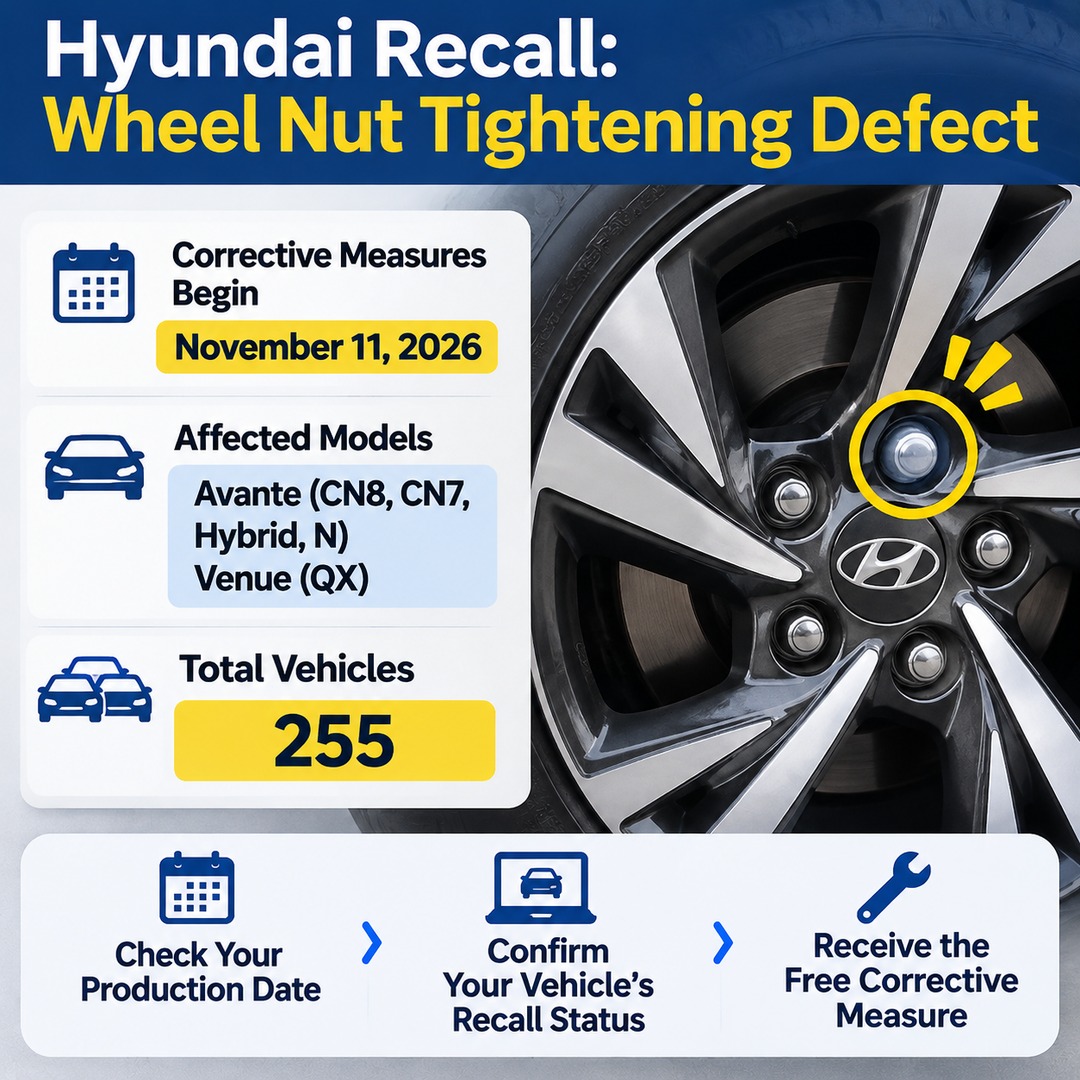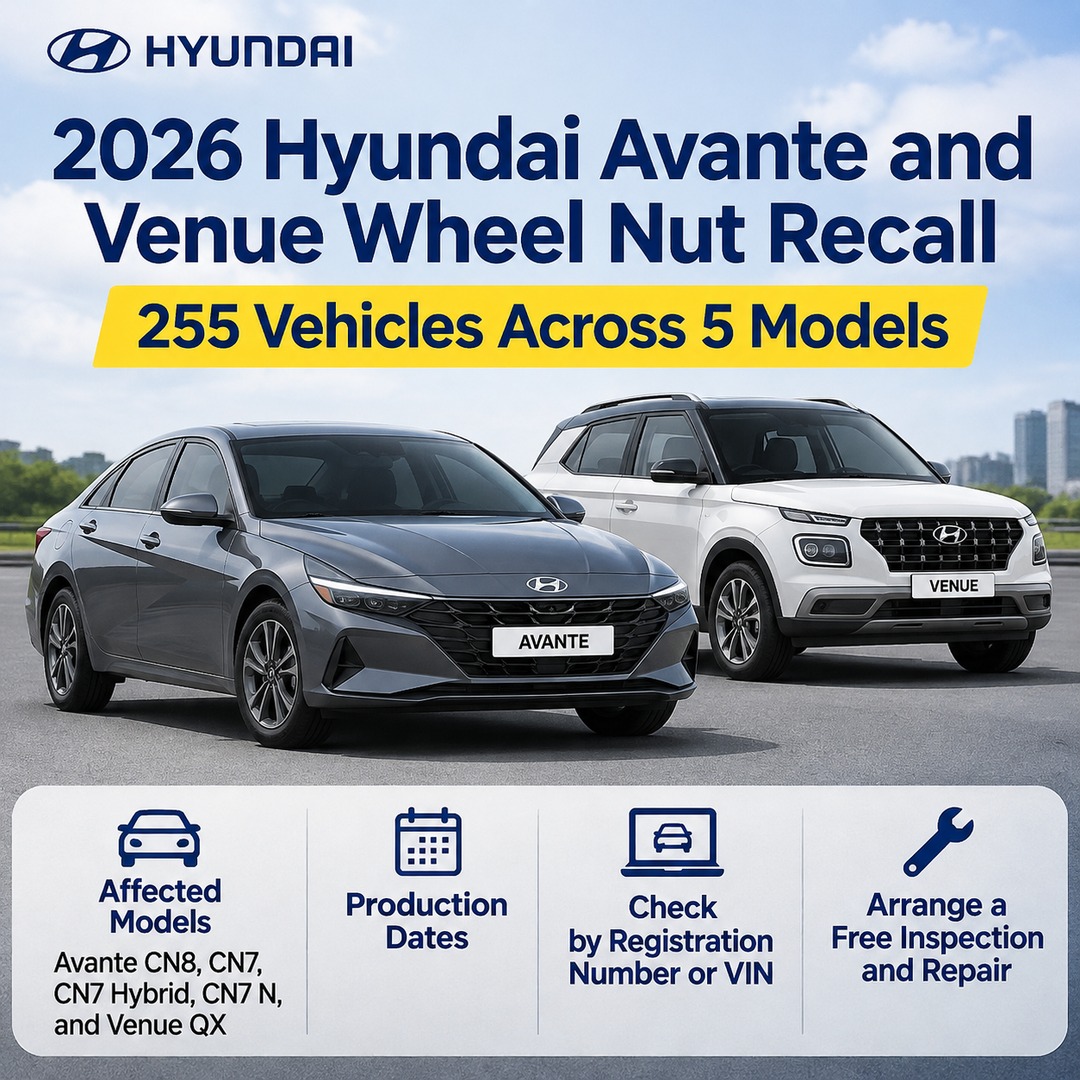
Certain Hyundai Avante and Venue vehicles have been included in a recall due to a potential wheel nut tightening defect. Free corrective measures began on November 11, 2026, covering a total of 255 vehicles across five models: the Avante CN8, CN7, Hybrid, and N, as well as the Venue. However, not every vehicle manufactured during the specified production periods is necessarily affected, so you should confirm your vehicle's status using its registration number or Vehicle Identification Number (VIN).
The most important factors in this recall are the model-specific production date and the individual vehicle's recall status, not its model year or actual delivery date. This is particularly worth checking even if you recently took delivery of a new vehicle or purchased a used one.
Which Hyundai Models Are Included in the Wheel Nut Recall?
The recall covers 255 vehicles in total across four Avante variants and the Venue. According to the Ministry of Land, Infrastructure and Transport's Automobile Recall Center in South Korea, corrective measures began on November 11, 2026.
The affected models are:
Avante (CN8)
Avante (CN7)
Avante Hybrid (CN7 HEV)
Avante N (CN7 N)
Venue (QX)
The total number of affected vehicles is 255. The available published information does not separately specify the number of affected vehicles for each model.
The issue concerns the possibility that the nuts securing the wheels to the vehicle may not have been properly tightened.
If the nuts are not correctly secured, they may gradually loosen while driving. In severe cases, this could cause a wheel to detach from the vehicle.
Therefore, this is not simply a routine maintenance or consumable-parts inspection issue. Owners should first establish whether their vehicle is subject to the recall and then have the manufacturer carry out the required corrective measures.
How Do the Affected Production Dates Differ by Model?
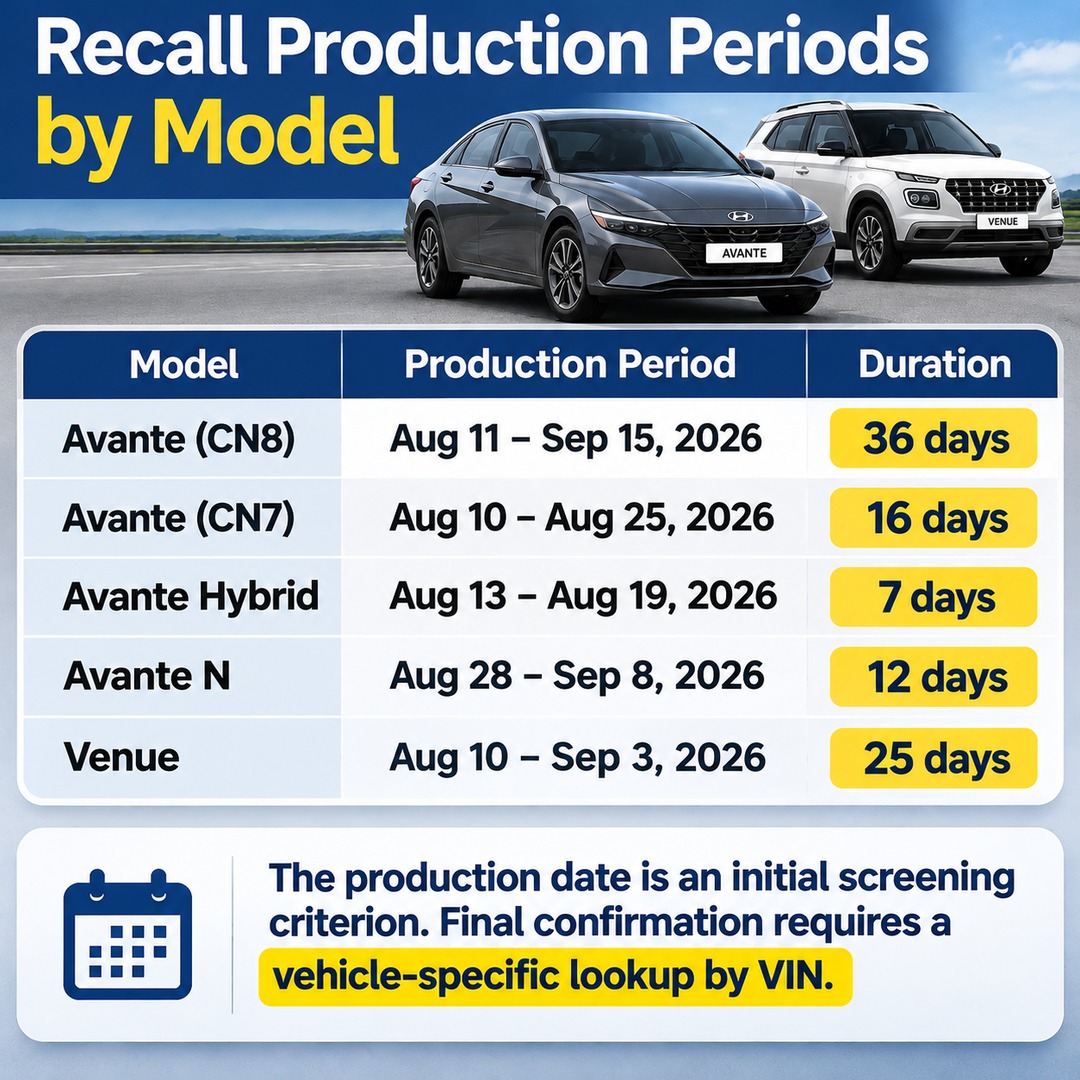
The recall covers certain vehicles manufactured between August 10 and September 15, 2026. Because the production periods differ among the five models, you need to check the dates applicable to your particular vehicle.
| Model | Affected production dates |
|---|---|
| Avante CN8 | August 11–September 15 |
| Avante CN7 | August 10–August 25 |
| Avante Hybrid | August 13–August 19 |
| Avante N | August 28–September 8 |
| Venue QX | August 10–September 3 |
Counting both the start and end dates, the production windows are 36 days for the CN8, 16 days for the CN7, 7 days for the Hybrid, 12 days for the Avante N, and 25 days for the Venue.
These dates identify the production windows in which potentially affected vehicles were manufactured. They do not mean that every vehicle produced during those periods is subject to the recall.
For example, an Avante CN8 delivered in September 2026 may actually have been manufactured in August. Conversely, even if a vehicle's production date falls within the specified period, you cannot conclude that it is affected unless its individual VIN is included in the recall.
In other words, the production date is an initial screening criterion. The final determination must be based on the vehicle-specific lookup results from the Automobile Recall Center.
How to Check Whether Your Vehicle Is Affected Using Its VIN
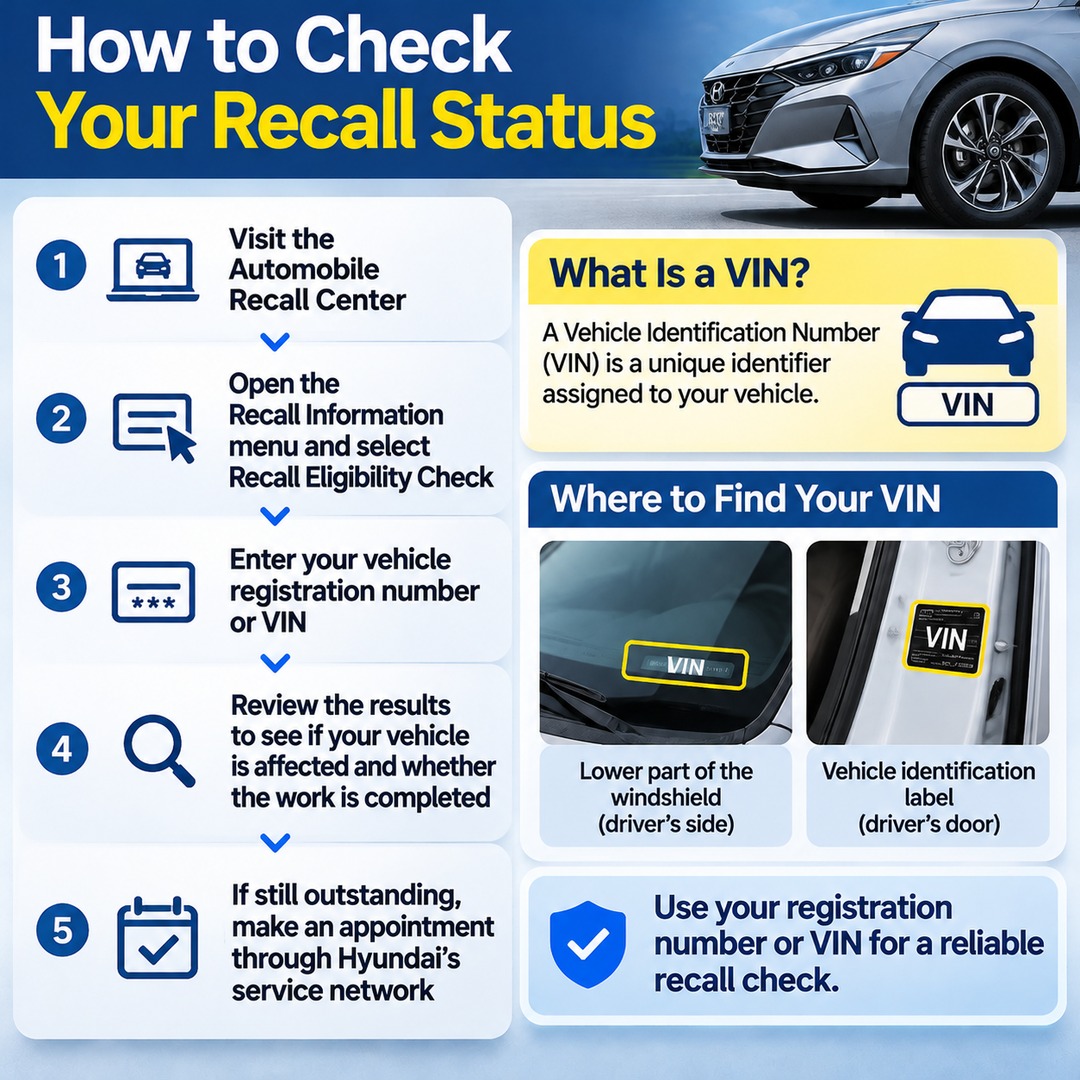
The most reliable method is to use the recall eligibility lookup service provided by South Korea's Automobile Recall Center. Enter your vehicle registration number or VIN to check whether your vehicle is included.
Follow these steps:
1. Visit the Automobile Recall Center website.
2. Open the Recall Information menu and select Recall Eligibility Check.
3. Enter your vehicle registration number or VIN.
4. Review the results to see whether your vehicle is affected and whether the corrective work has already been completed.
5. If the recall work is still outstanding, make an appointment through Hyundai's service network.
Visit the Automobile Recall Center to check recall eligibility
Check using your vehicle registration number or VIN.
Where Can You Find Your VIN?
The Vehicle Identification Number (VIN) is a unique identifier assigned to a vehicle. You can find it on your vehicle registration certificate or check the VIN displayed on the vehicle itself.
If you cannot access your registration certificate, look through the lower part of the windshield on the driver's side, where the dashboard meets the glass, or check the vehicle identification label around the driver's door.
You can start the lookup using your registration number. However, if there is a problem identifying the vehicle during the search, using the VIN is a good alternative.
This is particularly important if you purchased a used vehicle or the vehicle's ownership has changed. It is safer to check the recall status yourself rather than assume that you are unaffected simply because you did not receive a recall notice.
What Repairs Are Provided Under the Recall?
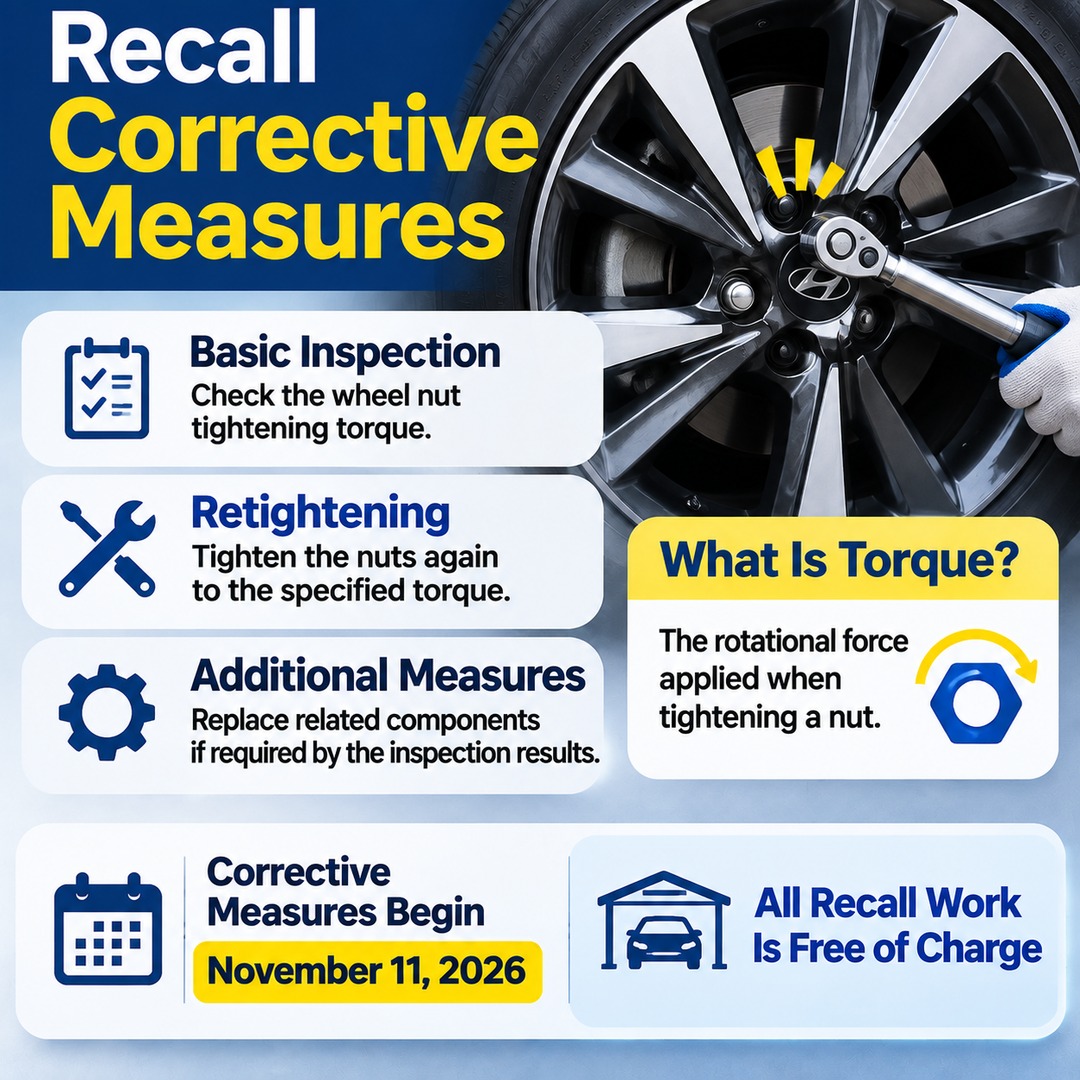
The recall involves inspecting the wheel nut tightening condition and retightening the nuts to the specified torque. If necessary, related components will also be replaced based on the inspection results.
Torque refers to the rotational force applied when tightening a nut. This is not simply a matter of tightening the nuts once more. The work must follow the manufacturer's specified tightening standards.
The corrective measures include:
Basic inspection: Check the wheel nut tightening torque.
Retightening: Tighten the nuts again to the specified torque.
Additional measures: Replace related components if required by the inspection results.
All recall corrective work is provided free of charge. Therefore, if your vehicle is affected, it is advisable to have the work completed through Hyundai's official service network rather than paying separately for repairs at a general repair shop.
Corrective measures under this recall began on November 11, 2026.
How to Book a Hyundai Recall Appointment and Contact Customer Service
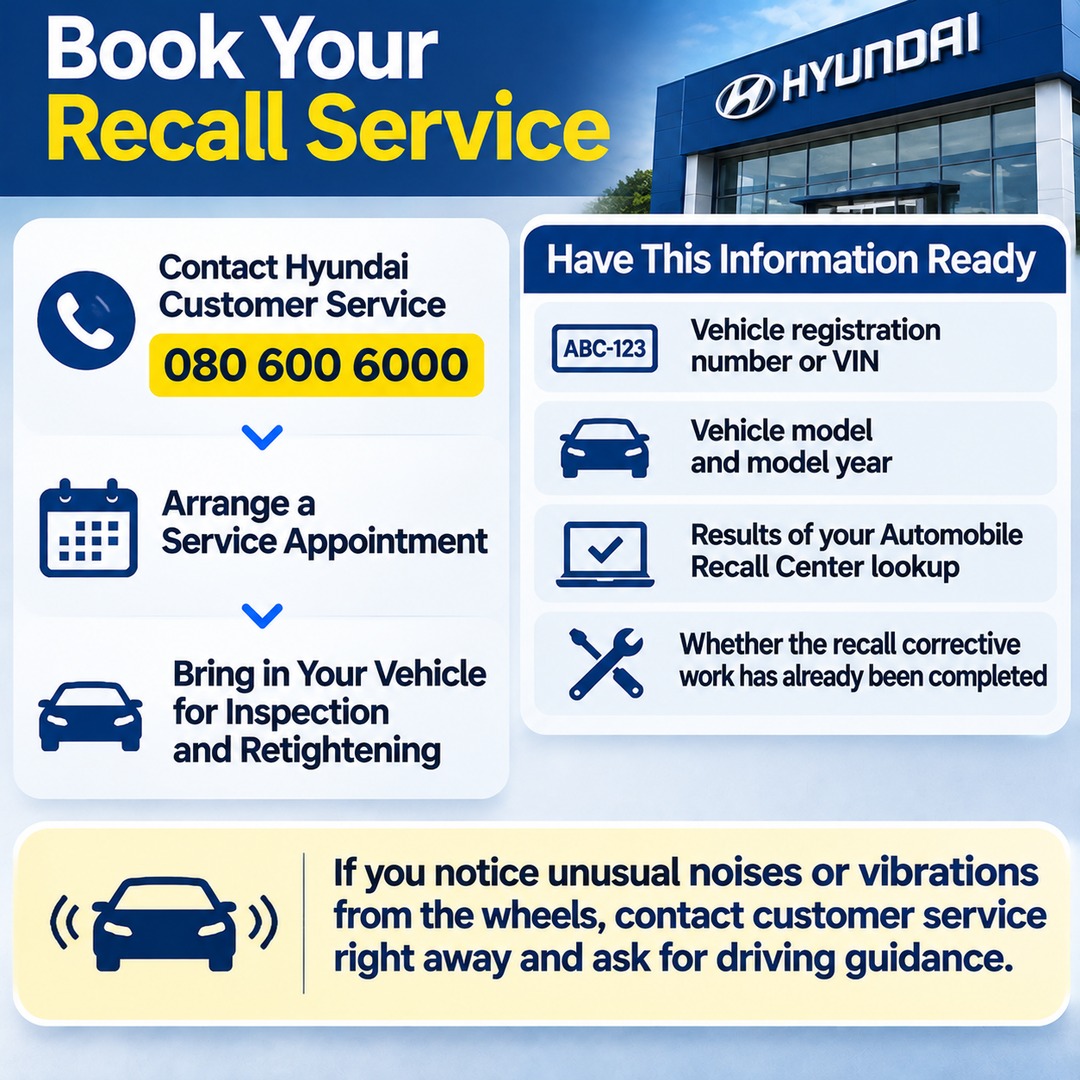
If your vehicle is confirmed to be affected, contact a Hyundai service center first to arrange an appointment for the vehicle to be brought in.
Hyundai's main customer service number in South Korea is 080-600-6000.
Having the following information ready can make the booking process easier:
Vehicle registration number or VIN
Vehicle model and model year
Results of your Automobile Recall Center lookup
Whether the recall corrective work has already been completed
Once your vehicle is confirmed as affected, request an inspection and retightening of the wheel nuts. You should also ask whether any additional component replacement is necessary.
Service appointments may be in high demand during the initial stages of a recall. It is therefore a good idea to coordinate the available service dates with the center before visiting.
If you notice unusual noises or vibrations around the wheels, do not simply wait for your scheduled appointment. Contact customer service first, explain the symptoms, and ask for guidance on whether the vehicle should continue to be driven.
Should You Check Even If You Have Not Received a Recall Notice?
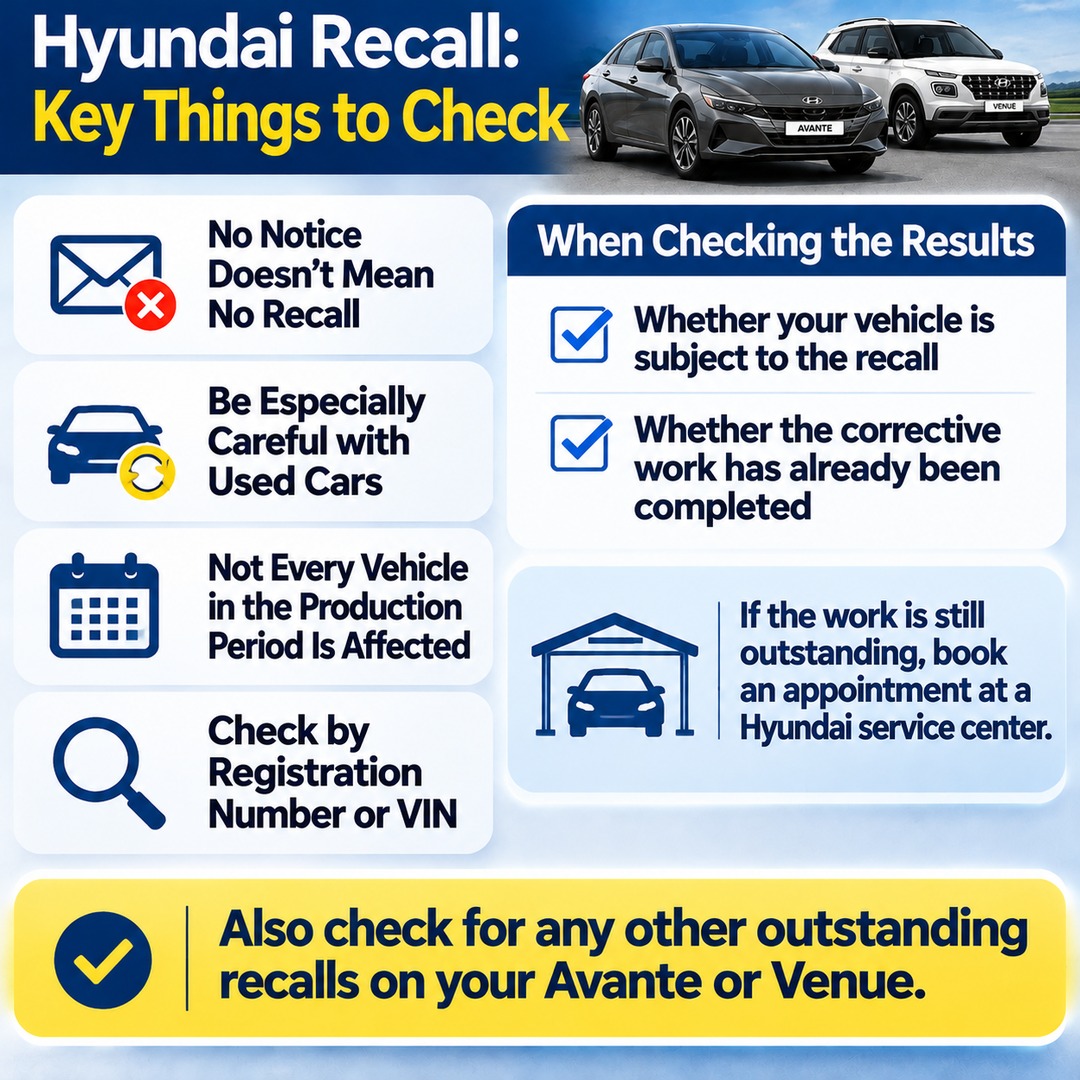
Do not assume that your vehicle is unaffected simply because you have not received a recall notice. You may not receive one if the vehicle has changed owners or your contact information has been updated.
Used-car buyers should be particularly careful. Even if the seller says that the recall work has been completed, it is advisable to check the actual repair status separately.
When reviewing the lookup results, check not only whether the vehicle is subject to the recall but also whether the corrective work has already been completed.
This recall applies to only certain vehicles within the specified production periods, not every vehicle manufactured during those dates. Therefore, using the model and production date alone to make a final determination is not accurate.
The most reliable approach is to look up the individual vehicle using its registration number or VIN and, if the corrective work is still outstanding, book an appointment with a Hyundai service center.
If you own an Avante or Venue, it is also worth checking whether your vehicle has any other outstanding recalls in addition to this wheel nut recall.