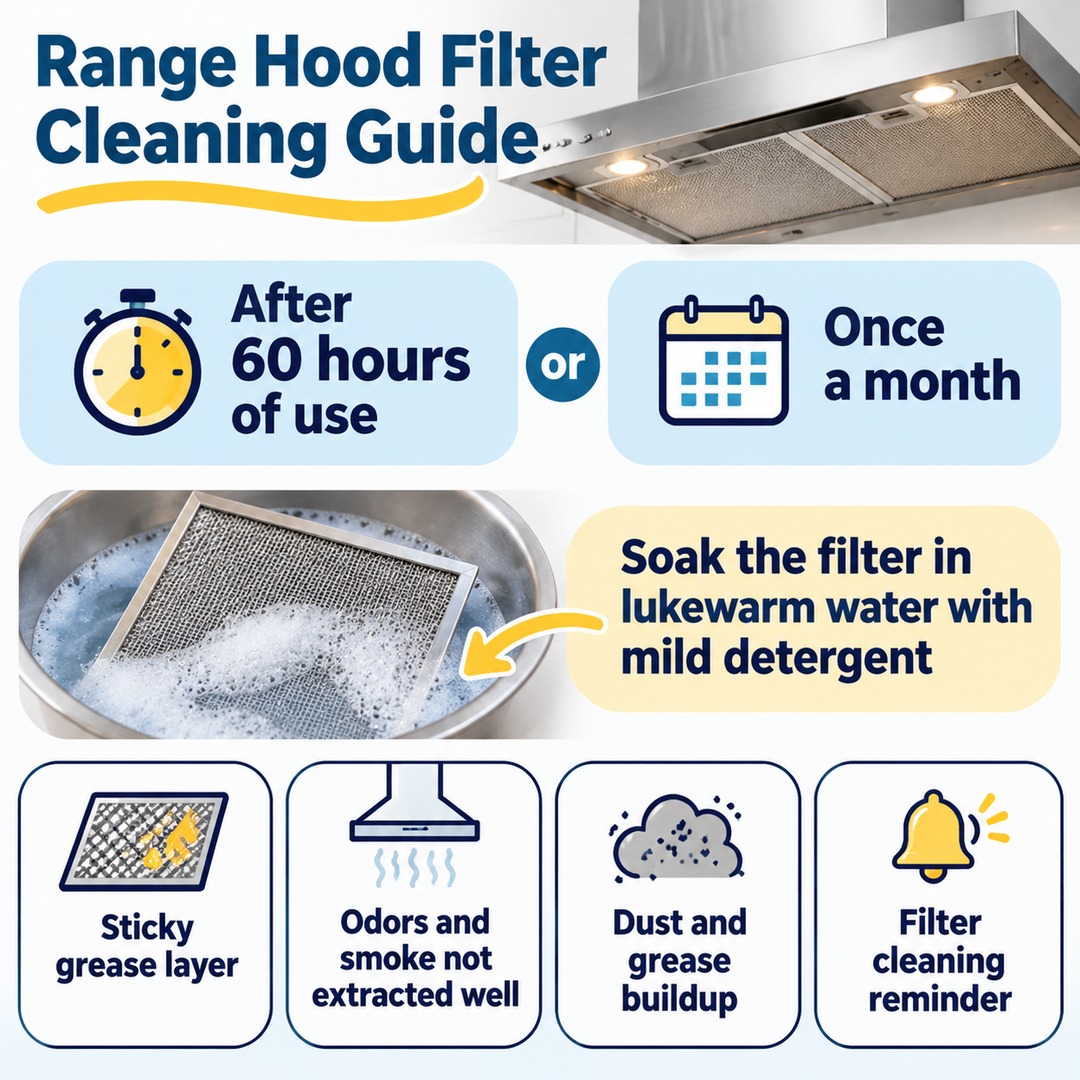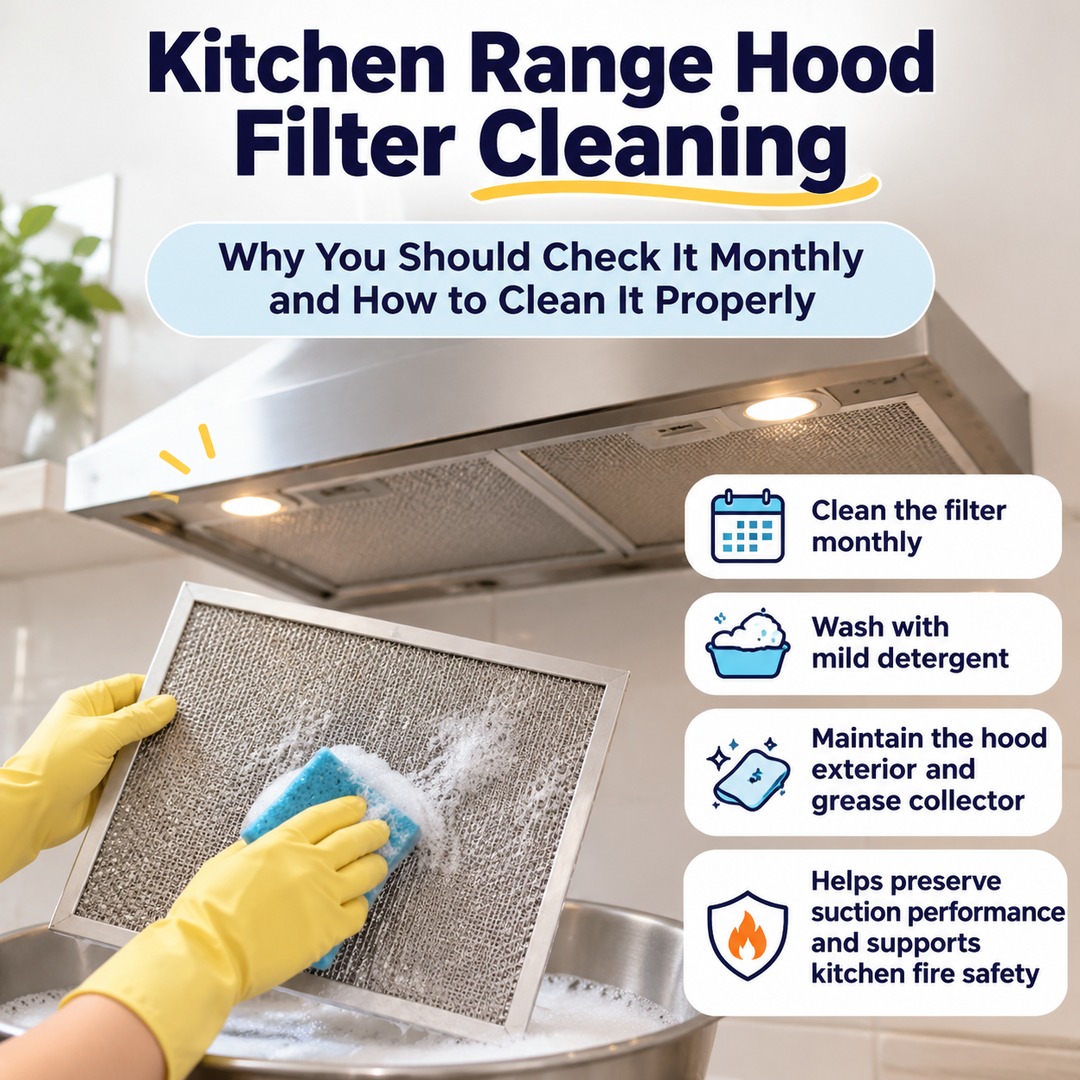
Range hood filters should be cleaned before grease has a chance to build up. Samsung Electronics Service recommends cleaning certain range hood models after 60 cumulative hours of use or once a month. Its cleaning instructions include soaking the filter in lukewarm water mixed with mild detergent. However, cleaning methods vary depending on the filter material and range hood model, so always check the product manual first.
When Should You Clean Your Range Hood Filter?
As a range hood accumulates operating hours, grease and other contaminants from cooking collect on its filter. Certain Samsung range hood models display a cleaning reminder after 60 cumulative hours of use, and Samsung also recommends monthly maintenance.
The 60-hour figure is not a universal cleaning or replacement standard for every brand and model. For accurate guidance, follow the maintenance instructions for your specific product.
In particular, check the filter without waiting for a scheduled reminder if you notice any of the following:
A sticky layer of grease on the filter surface
Cooking odors and smoke are not being extracted effectively, even when the hood is running
Dust and grease residue have accumulated together on the filter
The range hood displays a filter cleaning reminder
How to Remove and Clean the Filter Yourself
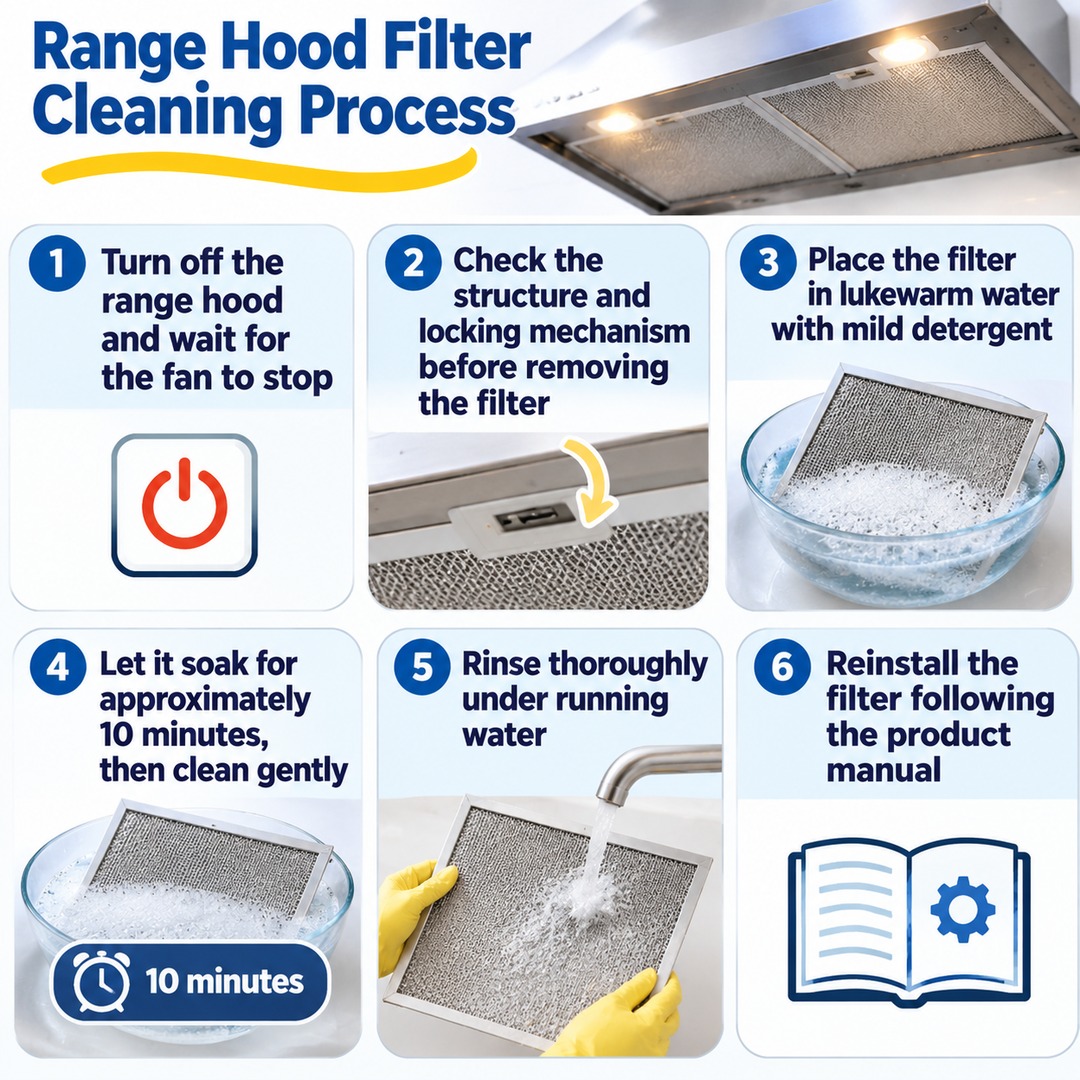
If your range hood has an aluminum filter, you can loosen the grease with mild dishwashing detergent and then rinse it thoroughly. The Haatz PW70-GBL user manual instructs users to soak the aluminum filter in lukewarm water mixed with mild detergent for approximately 10 minutes before rinsing it.
Image 1 — Range hood filter cleaning process
Follow these steps when cleaning the filter:
1. Turn off the range hood and make sure the fan has come to a complete stop.
2. Check the product's structure and locking mechanism before removing the filter.
3. Place the filter in lukewarm water mixed with mild detergent.
4. Let it soak for approximately 10 minutes, then clean it with a soft cloth or a tool permitted by the product manual.
5. Rinse thoroughly under running water to remove all detergent.
6. Remove excess water and allow the filter to dry completely before reinstalling it.
Samsung Electronics Service also recommends soaking certain range hood filters in lukewarm water mixed with mild detergent for approximately 10 minutes.
One important precaution: do not scrub the filter too aggressively. Filters with a stainless steel coating may be damaged if cleaned with abrasive scouring pads.
When removing the filter, avoid pulling it forcefully downward. Samsung Electronics Service recommends first lowering the hook, gently lowering the filter, and then pulling it toward you.
The Filter and Range Hood Body Require Different Cleaning Methods
Washing the filter does not complete the maintenance process. You should also inspect the exterior surfaces, where grease can splatter, and the areas around the filter.
The Haatz PW70-GBL manual recommends cleaning the exterior of the hood with a soft cloth or sponge dampened with mild detergent. After removing the detergent, wipe away any remaining moisture with a dry cloth.
However, avoid reaching deep inside the hood to clean its interior while the filter is removed.
Be sure to follow these precautions:
Always turn off the power before cleaning.
Do not reach inside the hood while the filter mesh is removed.
Do not use flammable solvents such as benzene or thinner.
Never spray water directly onto switches or electrical components.
Wear gloves to protect your hands from sharp metal edges.
Image 2 — Precautions for cleaning the range hood exterior and interior
Even if the filter looks relatively clean, check whether your model has a separate grease collector. If it does, that component also needs attention.
Range Hoods with Grease Collectors Need Separate Maintenance
A grease collector is a component that collects grease dripping from inside the range hood. It serves a different purpose from the filter, so cleaning the filter alone is not enough if your model also has a grease collector.
The Haatz PW70-GBL manual recommends cleaning the grease collector approximately once every three months. However, the actual cleaning interval may vary depending on how much grease accumulates. The manual also instructs users to empty it before the recommended interval if the grease reaches the indicator line inside the collector.
Image 3 — Comparing the functions of a range hood filter and grease collector
These instructions apply specifically to the Haatz PW70-GBL. Not all range hoods have a separate grease collector, and the same cleaning schedule does not necessarily apply to every model.
First, check whether your range hood has a grease collector. If it does, establish a separate maintenance schedule for it rather than relying solely on the filter cleaning routine.
What If Suction Is Still Weak After Cleaning the Filter?
If smoke and cooking odors are still not being extracted effectively after washing the filter, inspect the exhaust duct and its connections as well.
The Haatz user manual recommends checking for foreign objects inside the exhaust duct, incorrect duct installation, and blockages at intermediate connections when suction is poor or unusual noise occurs.
Follow this inspection sequence:
Make sure the filter is installed correctly.
Check that the hood's fan speed setting is appropriate.
Look for visible obstructions at the exhaust duct inlet and exterior vent.
If suction remains weak or unusual noise continues after cleaning, request a professional service inspection.
Disassembling the exhaust duct or motor yourself is not recommended. These components are connected to the product's internal structure and electrical parts, so professional inspection may be necessary.
Why Range Hood Maintenance Also Matters for Kitchen Grease Fires
Another important safety issue to remember alongside range hood cleaning is cooking oil fires.
In a demonstration experiment conducted by the National Fire Research Institute and made public by the National Fire Agency of Korea, pouring water onto burning cooking oil caused the oil to splatter and the flames to spread dramatically. A Class K fire extinguisher was effective because it formed a film over the cooking oil, helping block the flames and lower the temperature.
Never pour water or dishwashing detergent onto burning cooking oil. Range hood manufacturers' user manuals also instruct users to turn off the gas supply and stop the range hood if oil in a frying pan catches fire.
Image 4 — Cooking oil fires and Class K fire extinguishers
If you frequently deep-fry or stir-fry food, consider keeping a Class K fire extinguisher in your kitchen. However, if the fire has spread, do not approach it to attempt extinguishing it yourself. Evacuate to a safe location and call 119, South Korea's emergency services number.
Range Hood Maintenance Checklist to Review Every Month
If you treat range hood cleaning as a major cleaning project, it can be easy to keep putting it off. Regularly checking the filter and exterior, then cleaning them according to their actual condition, makes maintenance more manageable.
| Maintenance item | What to check |
|---|---|
| Filter | Grease film and accumulated contaminants |
| Hood exterior | Grease and dust |
| Grease collector | Grease buildup and indicator line |
| Exhaust duct | Visible blockages and damage |
| Operating condition | Suction performance and unusual noise |
| Cleaning reminder | Whether the reminder has been reset after cleaning |
If your range hood has a filter cleaning reminder, remember to reset it after cleaning. For certain Samsung range hood models, Samsung recommends resetting the filter usage time after cleaning and reinstalling the filter, using a button such as the lighting button. The button combination and procedure may vary by model.
One more thing to remember: a filter cleaning reminder tells you when maintenance is due; it is not a sensor that measures every type of contamination. Even if no reminder appears, you should still inspect the filter's actual condition.
If you cannot remember the last time you cleaned your kitchen range hood filter, start by checking how the filter is removed. Following the cleaning schedule and method specified for your particular model is the safest approach.