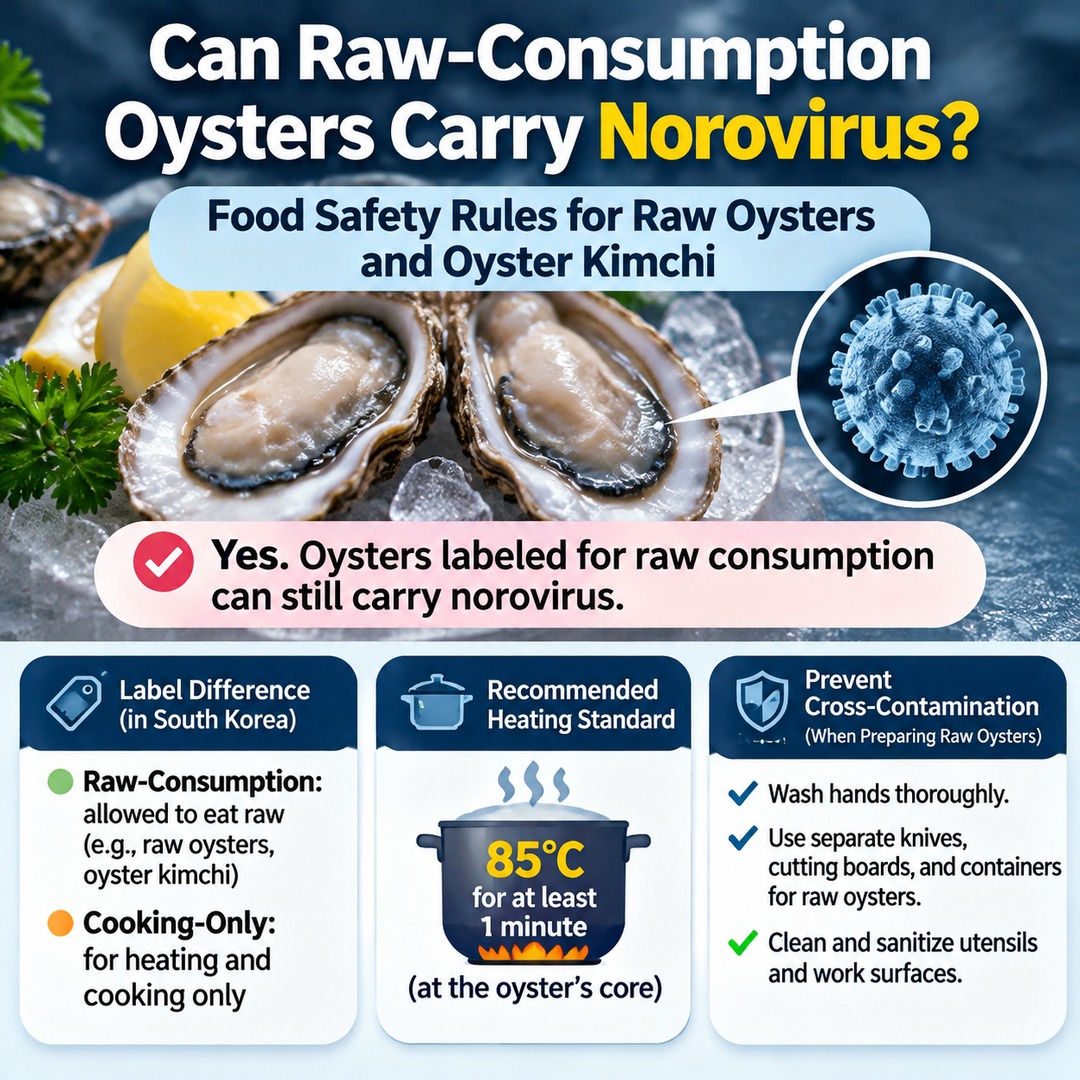
Oysters sold for raw consumption can still be contaminated with norovirus. A raw-consumption label means the product is intended to be eaten raw under applicable handling controls; it does not guarantee that the virus has been completely eliminated. When cooking oysters, heat them to a core temperature of 85°C (185°F) for at least 1 minute. You should also avoid using knives and cutting boards that have touched raw oysters to prepare cooked food or other ingredients without properly cleaning and sanitizing them.
During kimjang season, when people prepare kimchi for the winter, oysters are often eaten raw or added to seasoned oyster dishes and oyster kimchi. The first thing to check is not just how fresh the oysters look, but also the intended-use instructions printed on the package.
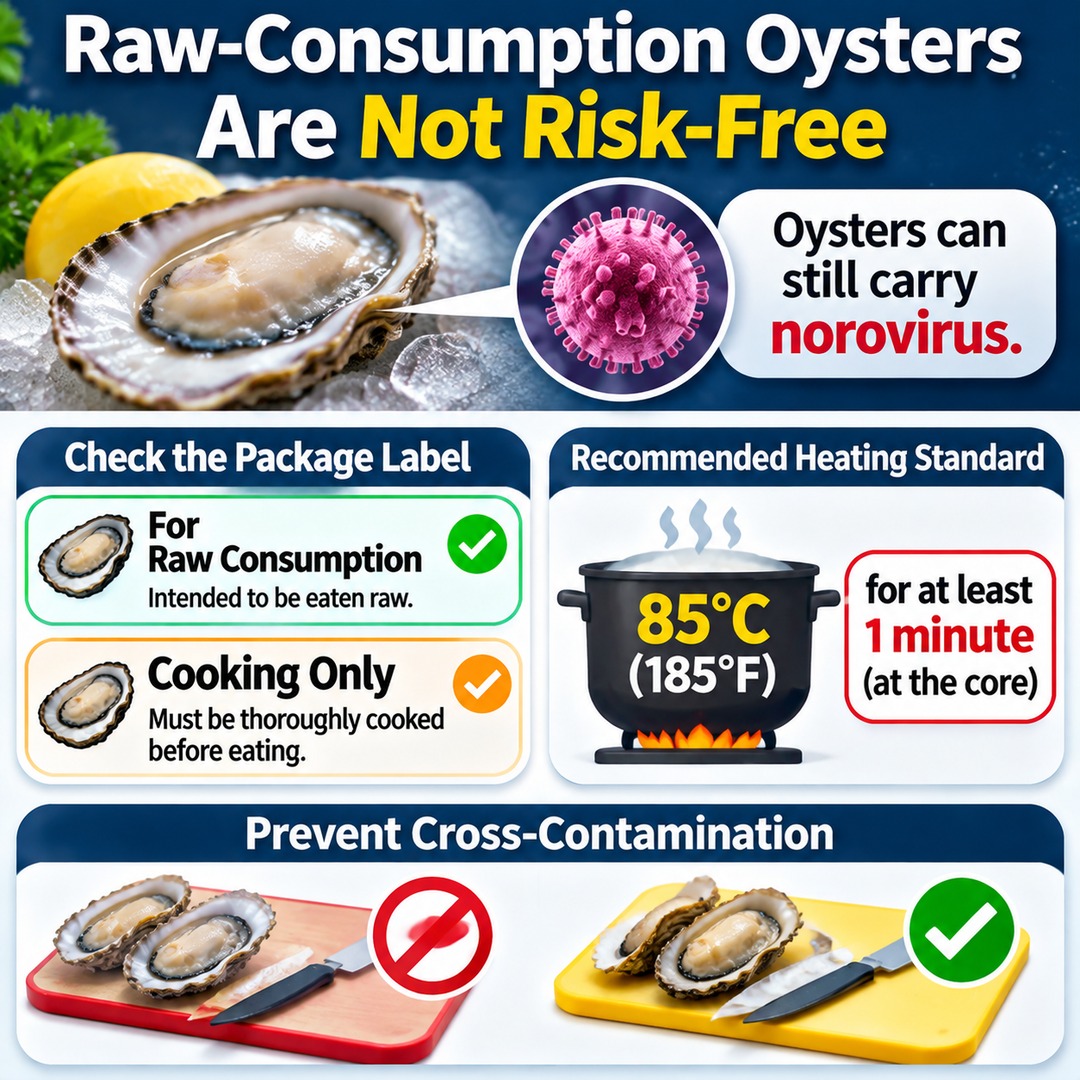
Raw-Consumption Oysters Are Not Guaranteed to Be Free of Norovirus
Oysters intended for raw consumption are not completely free from the risk of norovirus infection. Oysters are filter feeders that strain seawater for food. If the surrounding seawater is contaminated with viruses, the oysters can retain viruses inside their tissues.
A raw-consumption label helps distinguish products intended to be eaten without cooking. However, it should not be interpreted as a guarantee that an individual oyster contains no viruses.
It is particularly important to distinguish between these two product types:
For raw consumption: Products distributed for eating raw.
For cooking only: Products that must be thoroughly cooked before consumption.
As a general rule, oysters labeled for cooking only should not be used in raw oyster dishes. This also applies to foods such as seasoned oyster salad and oyster kimchi, in which the oysters are added without being cooked.
Even if you purchase oysters labeled for raw consumption, the risk of norovirus infection does not disappear entirely. Thorough cooking is the most reliable way to reduce the risk of infection.
What Should You Check on an Oyster Package?
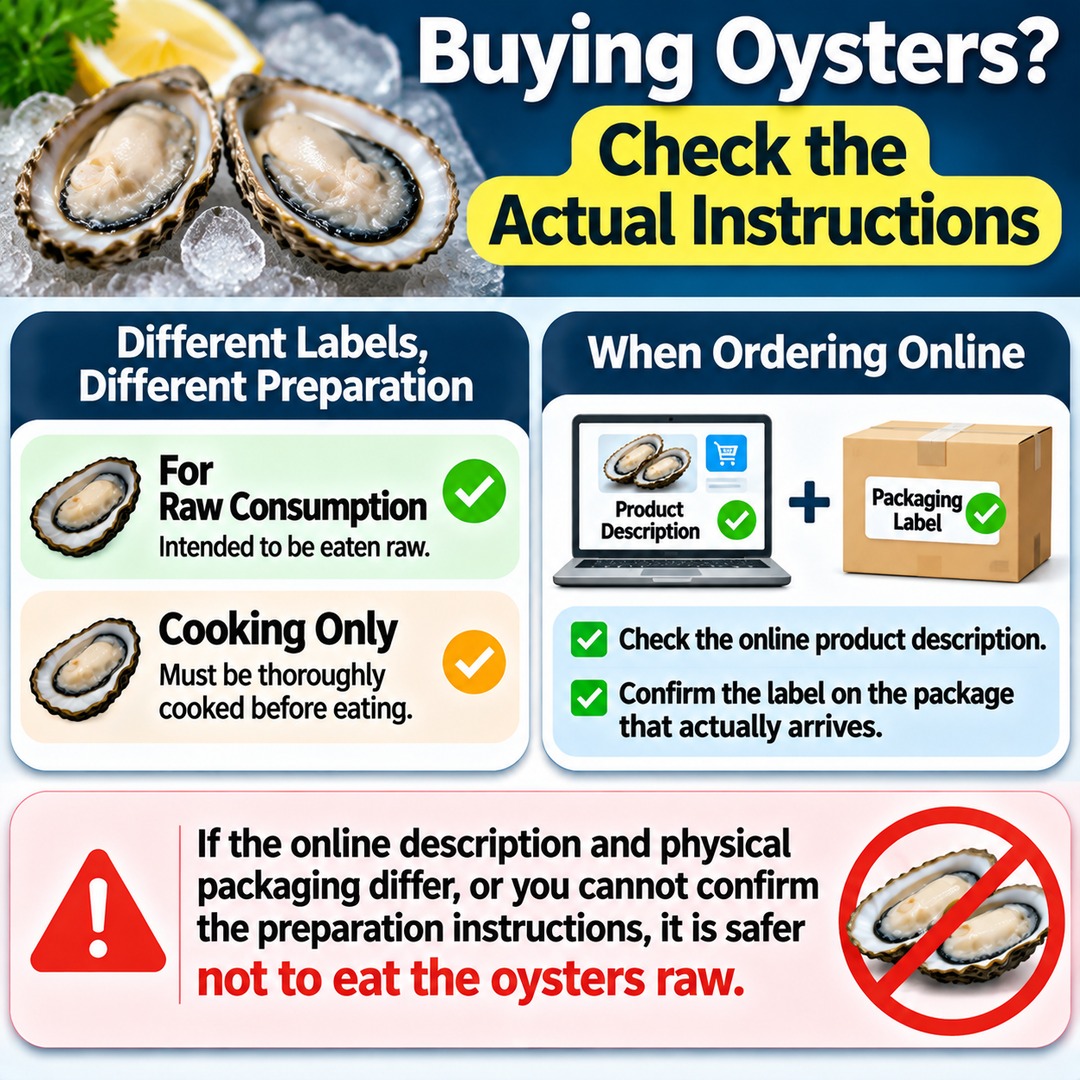
When buying oysters, do not rely solely on the product name on the front of the package. Check the actual instructions for consumption.
| Package label | How to interpret it |
|---|---|
| For raw consumption | Check that the product is specifically intended to be eaten raw. |
| For cooking only | Always cook thoroughly before eating. |
| Cook before eating | Consume only after cooking. |
| Unclear or missing instructions | Ask the seller about the intended use and avoid eating the oysters raw. |
Products intended for raw consumption and those intended for cooking have different preparation requirements. Do not treat the two labels as interchangeable.
If you order oysters online, check not only the product description on the shopping page but also the label on the package that actually arrives. If the online description and physical packaging differ, or if you cannot confirm the preparation instructions, it is safer not to eat the oysters raw.
What Temperature Should Oysters Reach to Help Prevent Norovirus?
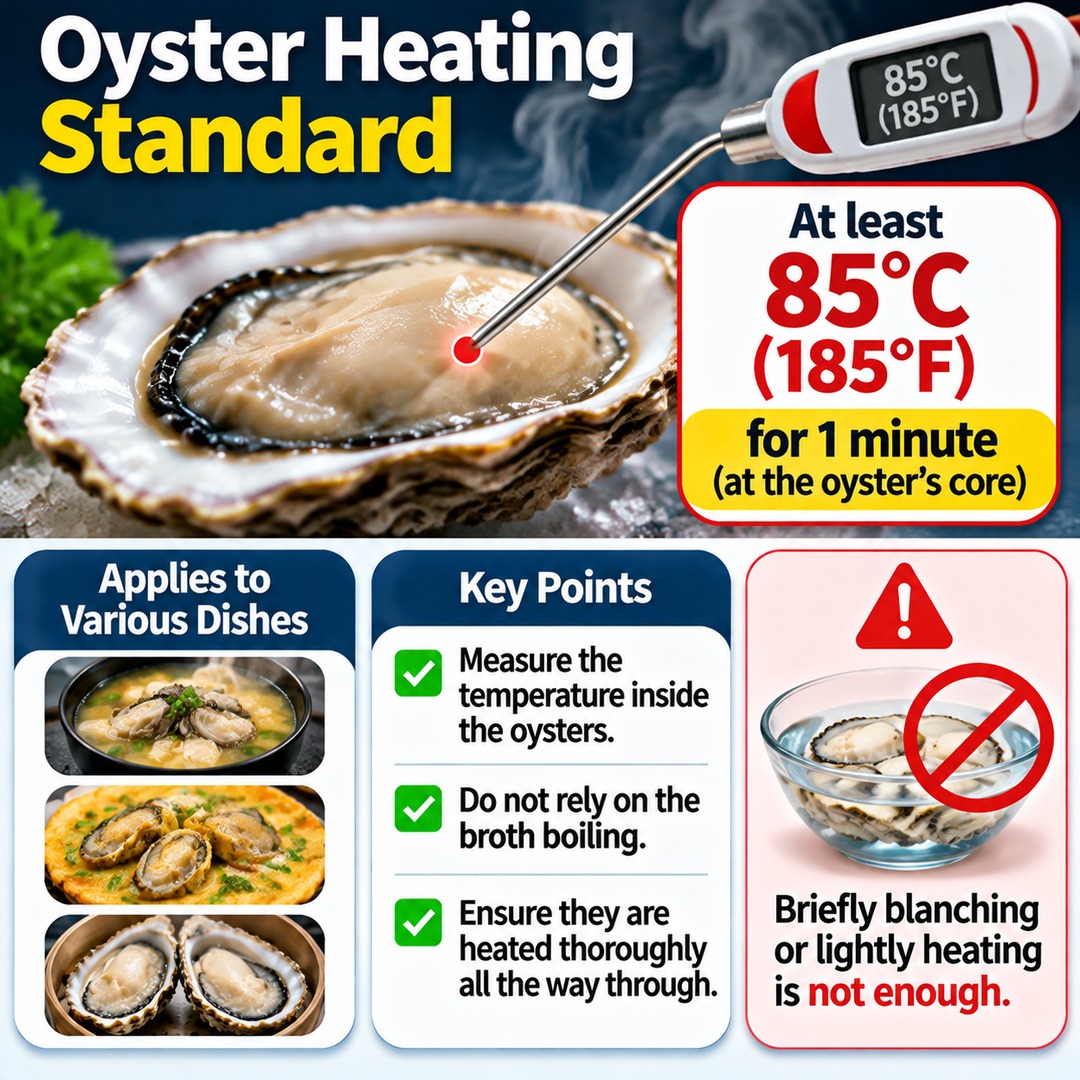
When heating oysters, maintain a core temperature of 85°C (185°F) for at least 1 minute. The important measurement is the temperature inside the oysters themselves, not the temperature of the water or broth in the pot.
Heating standard for oysters and other shellfish
If you add oysters to soup or stew, do not assume they are sufficiently cooked just because the broth has started boiling. The time required for heat to reach the center can vary depending on the size of the oysters and the amount being cooked.
The same principle applies to Korean oyster pancakes (*guljeon*) and steamed oysters. Make sure they are heated thoroughly all the way through rather than merely cooked on the outside.
Briefly blanching oysters or lightly heating them makes it difficult to determine whether the recommended heating standard has been met. Products labeled for cooking only must be cooked thoroughly.
Why Seasoned Raw Oysters and Oyster Kimchi Also Require Caution
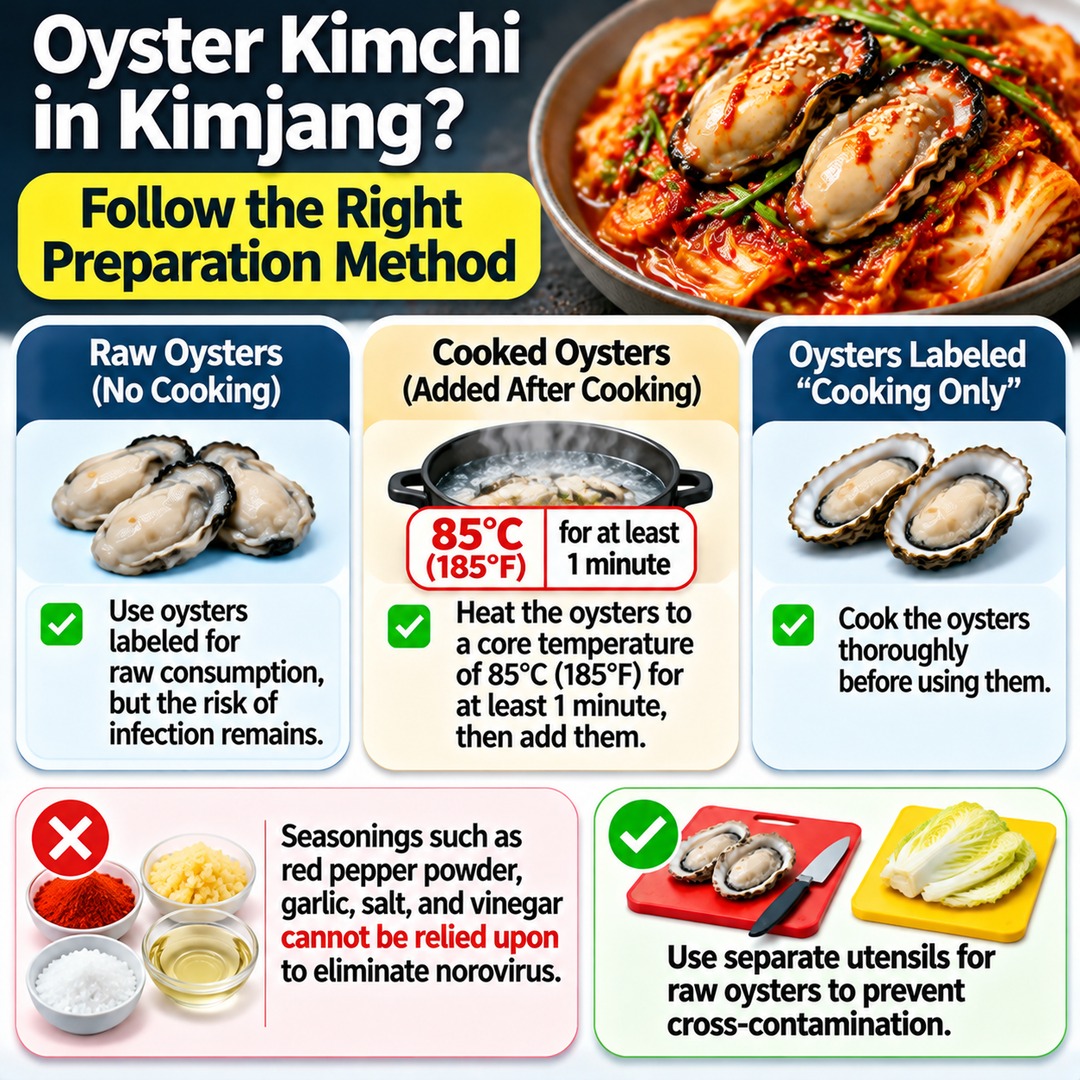
Seasoned raw oysters and oyster kimchi are prepared by mixing oysters with seasonings. However, adding seasonings does not turn the dish into cooked food.
Ingredients such as red pepper powder, garlic, salt, and vinegar cannot be relied upon to eliminate norovirus inside oysters.
If you are adding oysters while preparing kimjang, distinguish between the following methods:
Oyster kimchi made with raw oysters and eaten without cooking: Check that the oysters are labeled for raw consumption, but do not assume this eliminates the risk of infection.
Kimchi made with separately cooked oysters: Heat the oysters to a core temperature of 85°C for at least 1 minute before adding them.
Kimchi made with oysters labeled for cooking only: Cook the oysters thoroughly before using them.
Preparing other ingredients after handling oysters: Wash and sanitize your hands and cooking utensils.
This is particularly important during kimjang, when several people may prepare ingredients together. Keep utensils used for raw oysters separate so they do not come into contact with other ingredients.
Why You Should Use Separate Knives and Cutting Boards for Raw Oysters
Norovirus can spread not only through contaminated food but also through the hands of infected people and contaminated cooking equipment.
If you use a knife or cutting board that has touched raw oysters to chop vegetables for kimchi or handle food that has already been cooked, cross-contamination can occur.
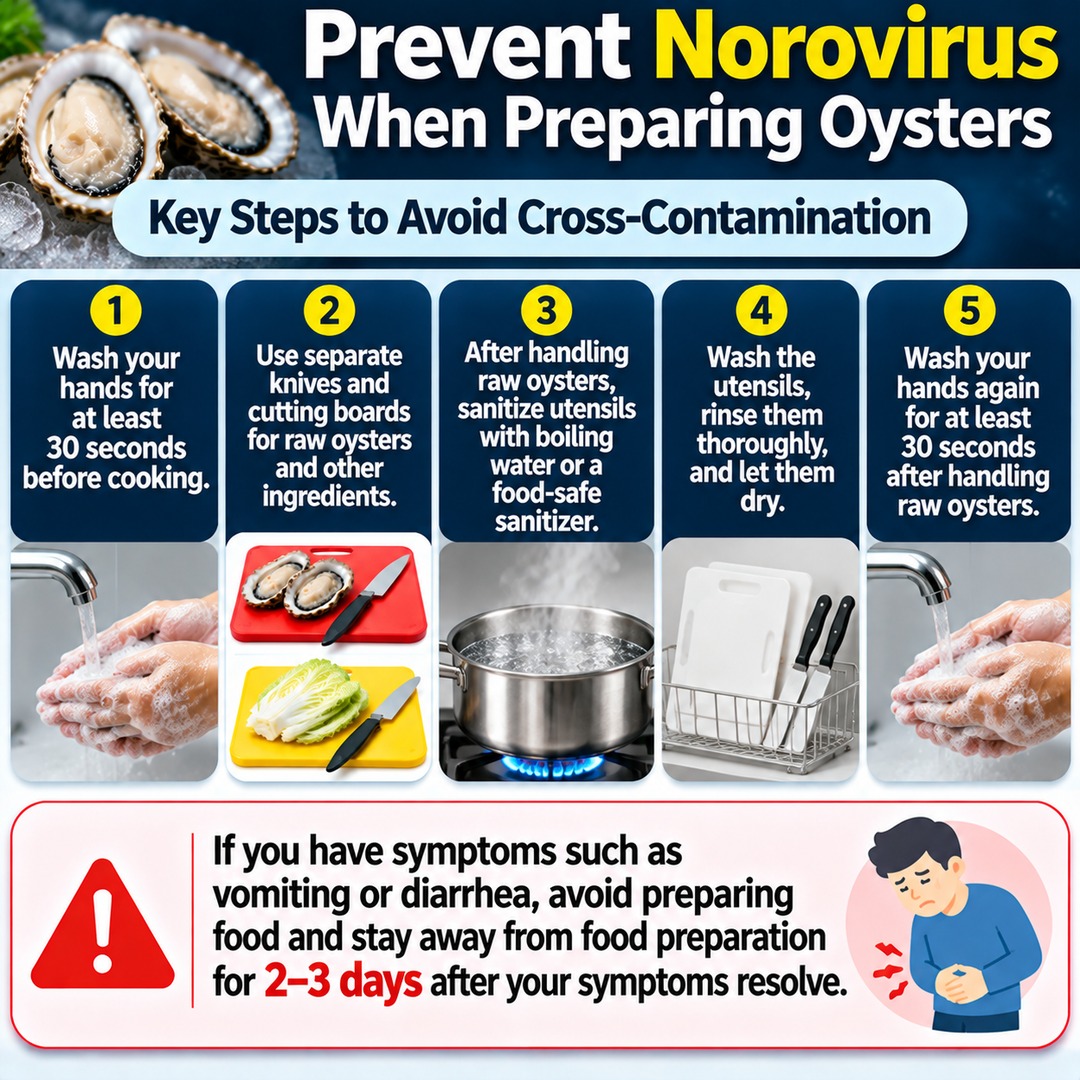
When preparing oysters at home, follow these steps:
1. Before cooking, wash your hands with soap and running water for at least 30 seconds.
2. Keep knives and cutting boards used for raw oysters separate from those used for other ingredients.
3. After handling raw oysters, treat the utensils with boiling water or an appropriate sanitizer designed for food-contact equipment.
4. Wash the utensils, rinse them thoroughly, and allow them to dry.
5. Wash your hands again for at least 30 seconds after finishing the preparation.
Anyone experiencing symptoms that may indicate norovirus infection, such as vomiting or diarrhea, should avoid preparing food. It is advisable to keep them away from food preparation for 2–3 days even after their symptoms have resolved.
What to Know About Oyster Safety Inspections During the 2026 Winter Season
Inspections are also being conducted as part of seasonal seafood safety management.
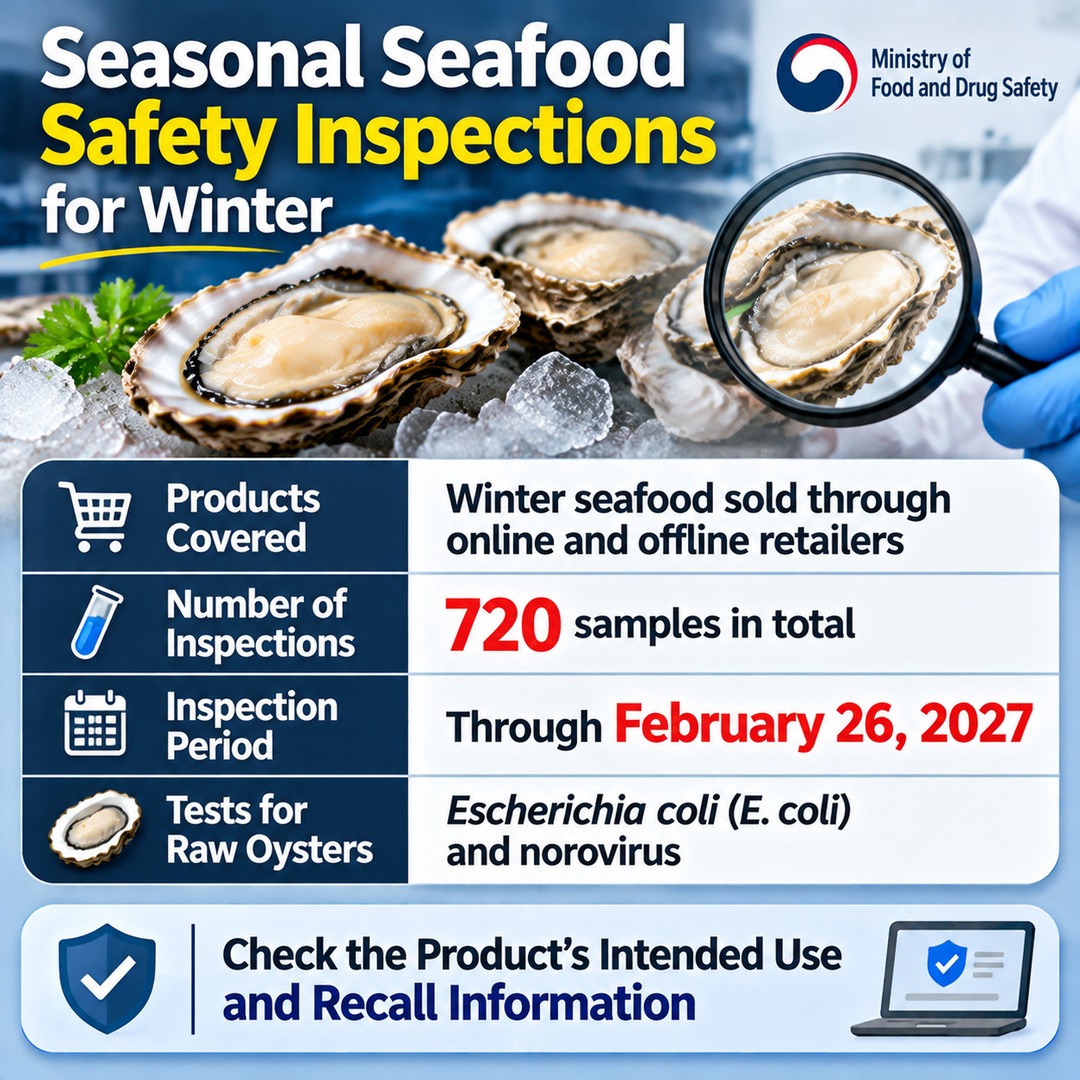
In November 2026, South Korea's Ministry of Food and Drug Safety (MFDS) announced a plan for intensive collection and testing of seafood products widely consumed during the winter season. The initiative includes safety testing of oysters intended for raw consumption.
Related coverage published on November 11, 2026, described the inspection plan as follows:
Products covered: Winter seafood sold through online and offline retailers.
Number of inspections: 720 samples in total.
Inspection period: Through February 26, 2027.
Tests for oysters intended for raw consumption: Escherichia coli (E. coli) and norovirus.
Products that fail to meet the applicable standards are expected to be recalled, with inspection results made available through South Korea's Food Safety Korea website.
However, these collection and testing activities are part of a regulatory program to assess the safety of products in distribution. They do not mean that every product not included in the inspection is guaranteed to be virus-free.
Consumers should check the product's intended use and relevant inspection or recall information. If you need to determine whether a specific product is subject to a recall, consult the domestic recall and sales-suspension information on Food Safety Korea.
What If You Develop Vomiting or Diarrhea After Eating Raw Oysters?
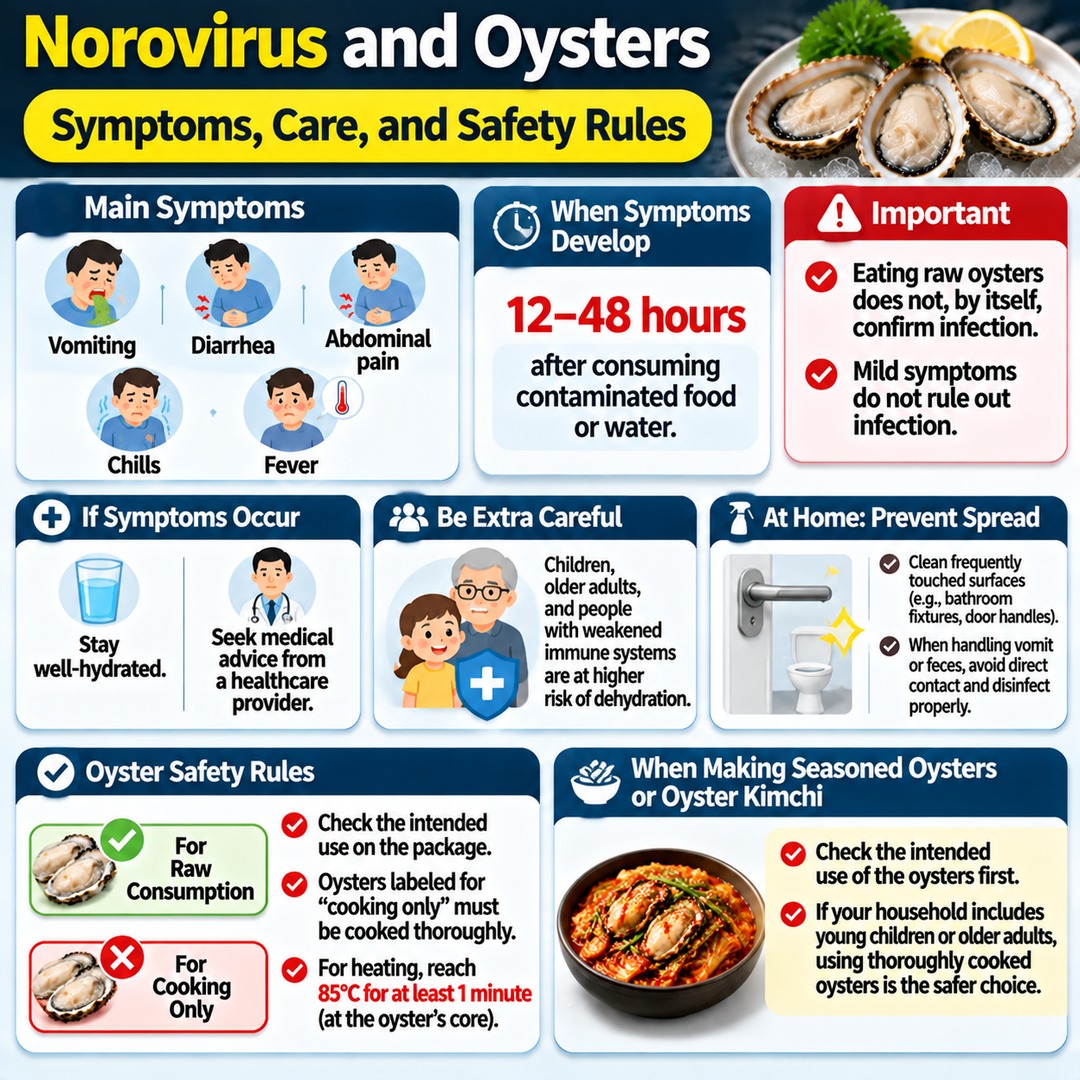
Norovirus infection can cause vomiting, diarrhea, abdominal pain, chills, and fever. Symptoms generally develop 12–48 hours after consuming contaminated food or water.
Eating raw oysters does not, by itself, confirm a norovirus infection. Conversely, mild symptoms do not rule out the possibility of infection.
If symptoms develop, pay attention to fluid intake and seek medical advice from a healthcare provider. Children, older adults, and people with weakened immune systems should be particularly careful about dehydration caused by vomiting and diarrhea.
If someone in your household may be infected, take care to clean frequently touched surfaces, including bathroom fixtures and door handles. When handling an infected person's vomit or feces, avoid direct contact and prevent contaminated material from splashing onto surrounding surfaces. Follow appropriate disinfection procedures.
When buying oysters, it is important not to judge their safety solely by whether the package says they are intended for raw consumption. Oysters labeled for cooking only must always be cooked thoroughly. When heating oysters, maintain a core temperature of 85°C for at least 1 minute.
If you are preparing seasoned oysters or oyster kimchi during kimjang season, check the intended use of the oysters first. If your household includes people who are more vulnerable to infection, such as young children or older adults, using thoroughly cooked oysters is the safer choice.