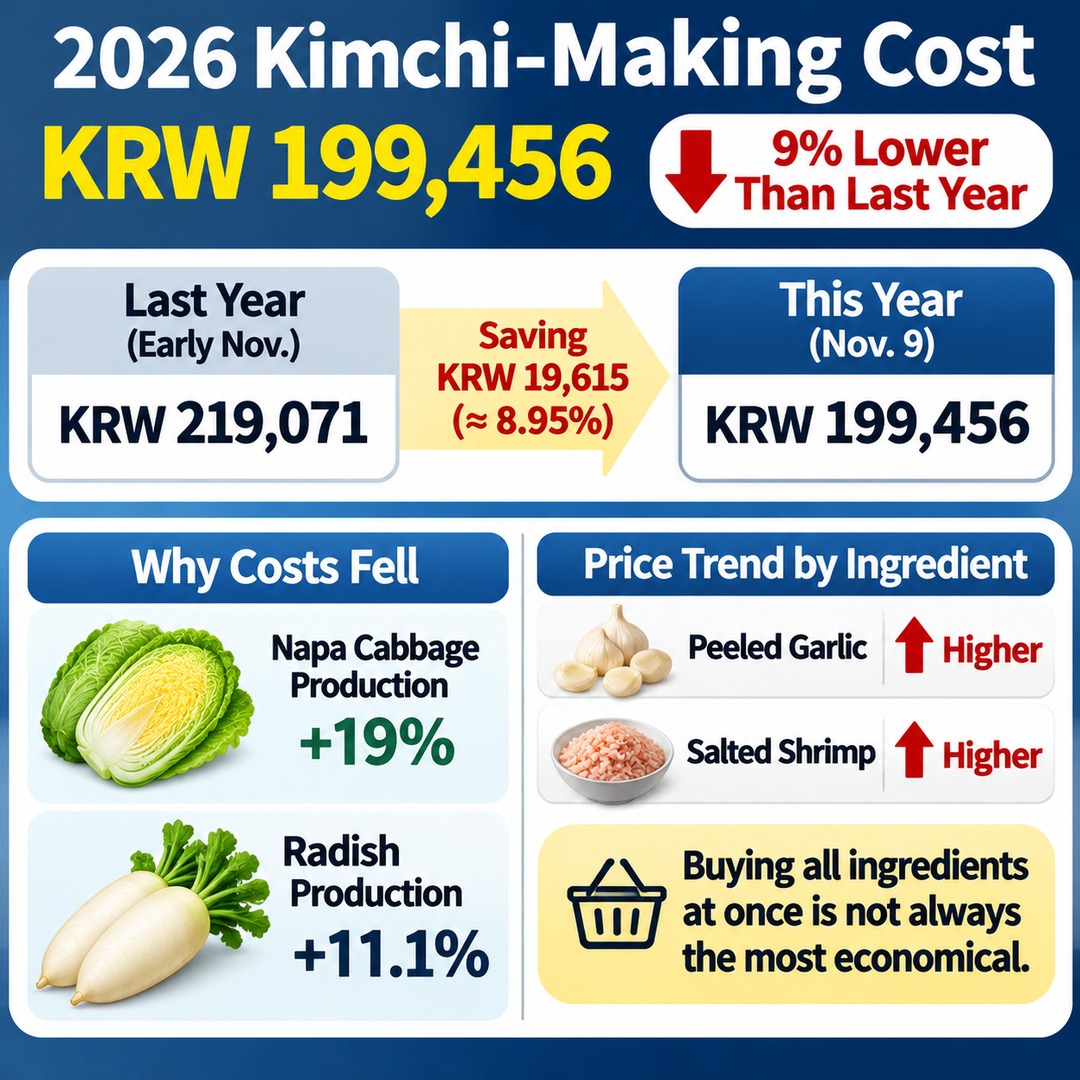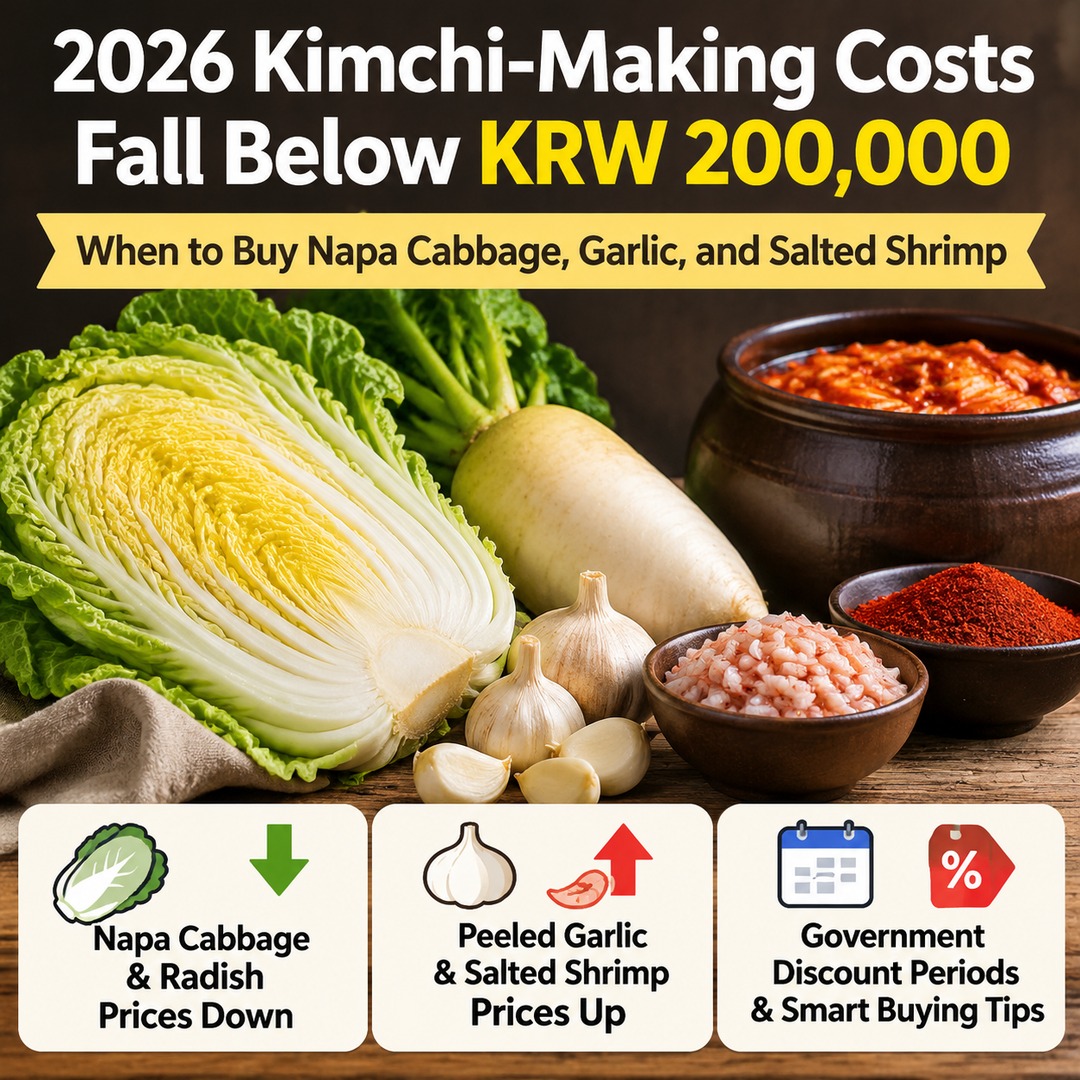
The average cost of ingredients for making kimchi in 2026 was KRW 199,456 as of November 9, 9% lower than during the same period last year. Increased production of napa cabbage and radishes was the main reason. However, peeled garlic and salted shrimp actually became more expensive, meaning that buying all the ingredients at once is not necessarily the most economical approach. A better strategy is to compare napa cabbage and radish prices when you need them and check available discounts before purchasing seasonings and other ingredients.
Why Did Kimchi-Making Costs Fall Below KRW 200,000 This Year?
The biggest reason for the decline in kimchi-making costs this year was increased supply of autumn napa cabbage and radishes.
According to a survey of 13 major kimchi-making ingredients conducted by the Korea Agro-Fisheries & Food Trade Corporation (aT), the average cost was KRW 199,456 as of November 9. This was KRW 19,615 less than the average of KRW 219,071 recorded in early November last year.
Author's calculation: KRW 219,071 − KRW 199,456 = KRW 19,615 in savings. The decrease was approximately 8.95%.
The survey covered 17 traditional markets and 36 large retailers across 11 regions of South Korea. Therefore, this figure is not the actual shopping bill for a particular household. It is a comparison benchmark based on the combined prices of 13 major kimchi-making ingredients.
Napa cabbage production increased substantially. Autumn napa cabbage production reached 1.214 million metric tons, approximately 19% more than the previous year. Autumn radish production was also forecast to reach 372,000 metric tons, an increase of 11.1% year over year.
The combination of increased cabbage supplies and declining demand for napa cabbage used in kimchi-making put downward pressure on prices.
When Is the Best Time to Buy Napa Cabbage and Radishes?
If you have a planned kimchi-making date, it is worth comparing napa cabbage and radish prices from mid-November onward. Supplies are sufficient this year, but that does not mean prices will continue falling indefinitely.
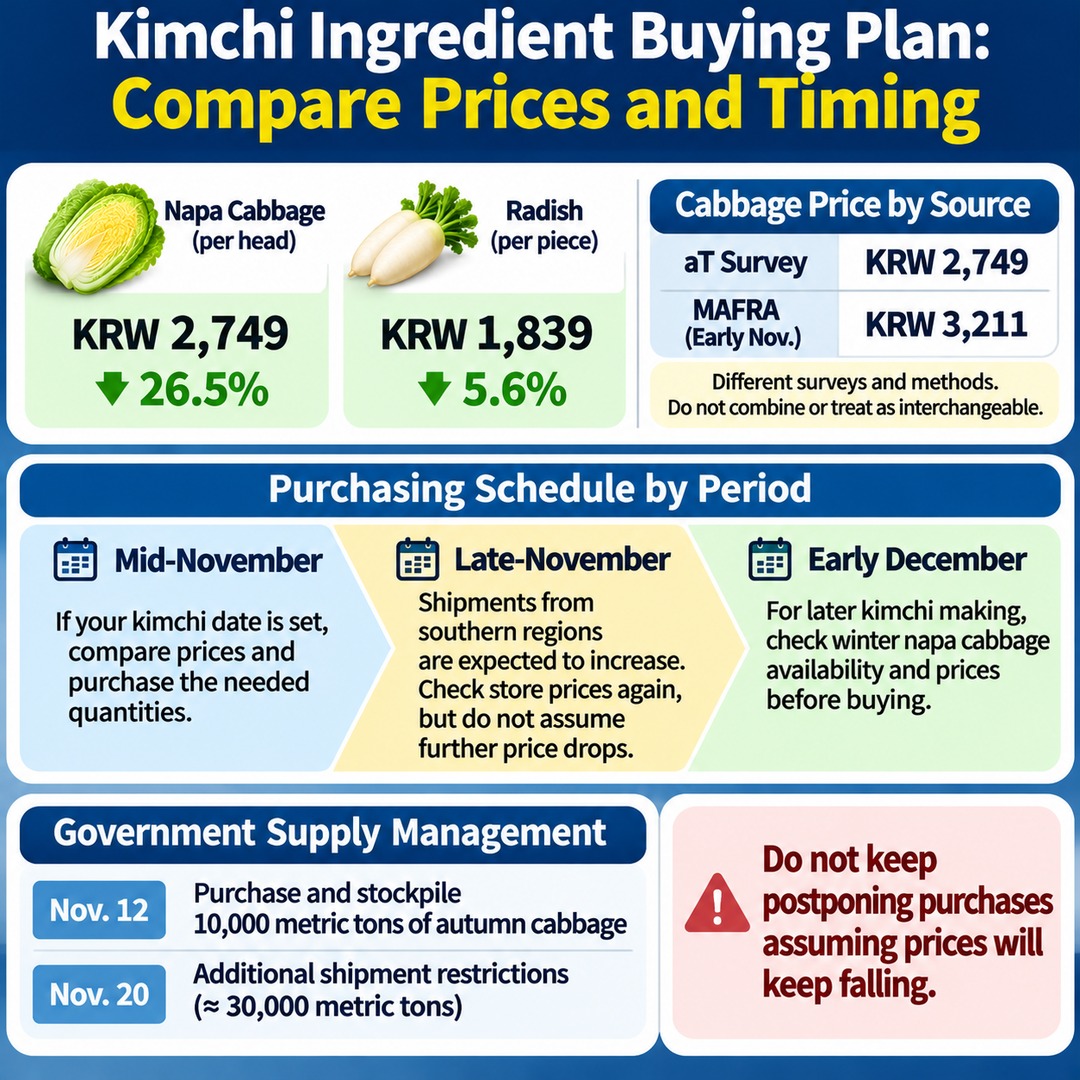
In aT's November 9 survey, the average consumer price of one head of napa cabbage was KRW 2,749, down 26.5% from the previous year. One radish averaged KRW 1,839, a decrease of 5.6%.
However, cabbage prices vary depending on the survey used. The Ministry of Agriculture, Food and Rural Affairs reported a consumer price of KRW 3,211 per head for early November. Since the two sources have not been confirmed to use identical survey dates and calculation methods, their figures should not be combined or treated as directly interchangeable.
You can assess the purchasing schedule as follows:
Mid-November: If your kimchi-making date is already set, compare selling prices for napa cabbage and radishes and purchase the quantities you need.
Late November: Shipments of napa cabbage from southern regions are expected to gather momentum. Compare actual store prices again, but do not assume that prices will necessarily fall further.
Early December: Households making kimchi later in the season should check winter napa cabbage shipments and prices at individual retailers.
There is also an important change in the government's supply management plans. To address excess cabbage supplies, the government announced that it would purchase and stockpile 10,000 metric tons of autumn napa cabbage starting November 12. It also planned to implement additional shipment restrictions covering approximately 30,000 metric tons starting November 20.
These measures are intended to manage supply from farms and the wider market. They do not mean consumer prices will necessarily rise from a particular date. However, indefinitely postponing purchases on the assumption that prices will keep falling is not necessarily a good strategy either.
Garlic and Salted Shrimp Require a Different Purchasing Strategy
Peeled garlic and salted shrimp have followed different price trends from napa cabbage and radishes. Production of some ingredients has declined, and consumer prices for these products were found to be higher than last year.
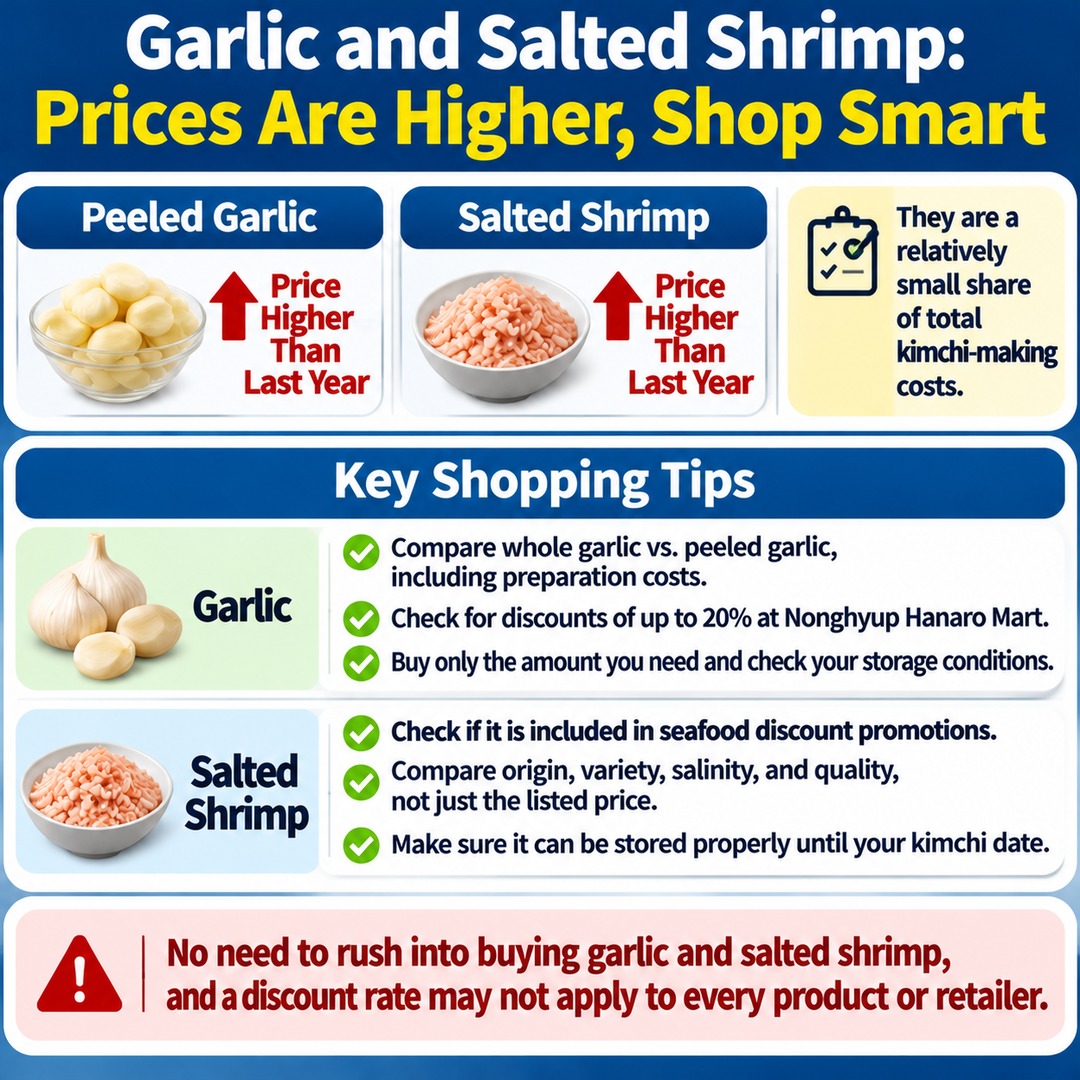
The aT survey confirmed price increases for peeled garlic and salted shrimp. However, these two ingredients account for a relatively small share of total kimchi-making costs, so their overall impact on the total is limited.
When shopping, it is worth comparing the following factors.
Garlic
Consider both the purchase quantity and preparation costs when comparing whole garlic with peeled garlic.
Check whether Nonghyup Hanaro Mart is offering discounts of up to 20% on garlic.
Rather than buying large quantities at once, consider how much you actually need and whether you have suitable storage conditions.
Salted shrimp
First, check whether the salted shrimp you need for kimchi-making is included in seafood discount promotions.
Prices can vary depending on origin, variety, salinity, and quality, even for products sold in the same package size. Do not compare products based on their listed prices alone.
Before purchasing, make sure the product can be stored properly until your kimchi-making date.
There is no need to rush into buying garlic and salted shrimp simply because napa cabbage prices have fallen. In particular, an advertised discount percentage does not necessarily apply equally to every product or retailer.
How Long Can You Use the November Kimchi-Making Discounts?
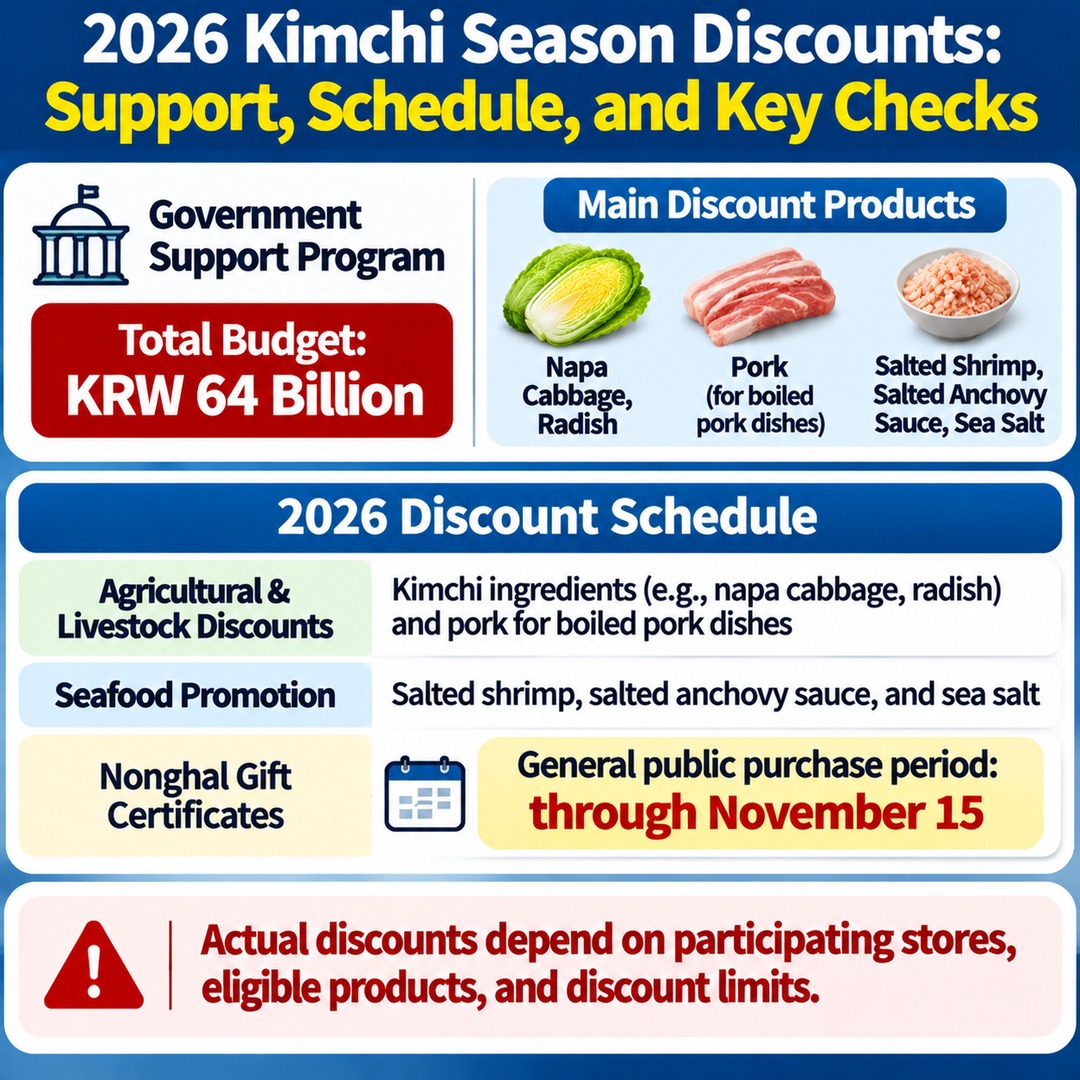
This year, the government is implementing a support program with a total budget of KRW 64 billion for agricultural, livestock, and seafood discounts to reduce consumer expenses during the kimchi-making season.
Major 2026 kimchi-season discount schedules
| Category | Promotion period | Discount |
|---|---|---|
| Agricultural and livestock products | October 29–December 2 | Up to 40% |
| Seafood | October 28–November 29 | Up to 50% |
| Agricultural Discount Gift Certificates (Nonghal Gift Certificates) | November 9–15 | 20% discount at purchase |
| Garlic | Kimchi-making season promotion | Up to 20% at Nonghyup Hanaro Mart |
Agricultural and livestock discounts cover kimchi-making ingredients such as napa cabbage and radishes, as well as pork used for boiled pork dishes served with kimchi. The seafood promotion includes salted shrimp, salted anchovy sauce, and solar sea salt.
Pay particular attention to the purchase period for Nonghal Gift Certificates. The purchasing period for the general public runs through November 15. If you have not purchased one yet, check whether purchases are still available that day and whether any budget remains.
The actual discount depends on participating stores, eligible products, and discount limits. Do not assume that the maximum advertised discount will automatically be applied to the final checkout price of every product.
Why Buying All Your Kimchi Ingredients at Once May Not Be the Best Approach
Although kimchi-making costs have declined this year, not every ingredient has moved in the same direction.
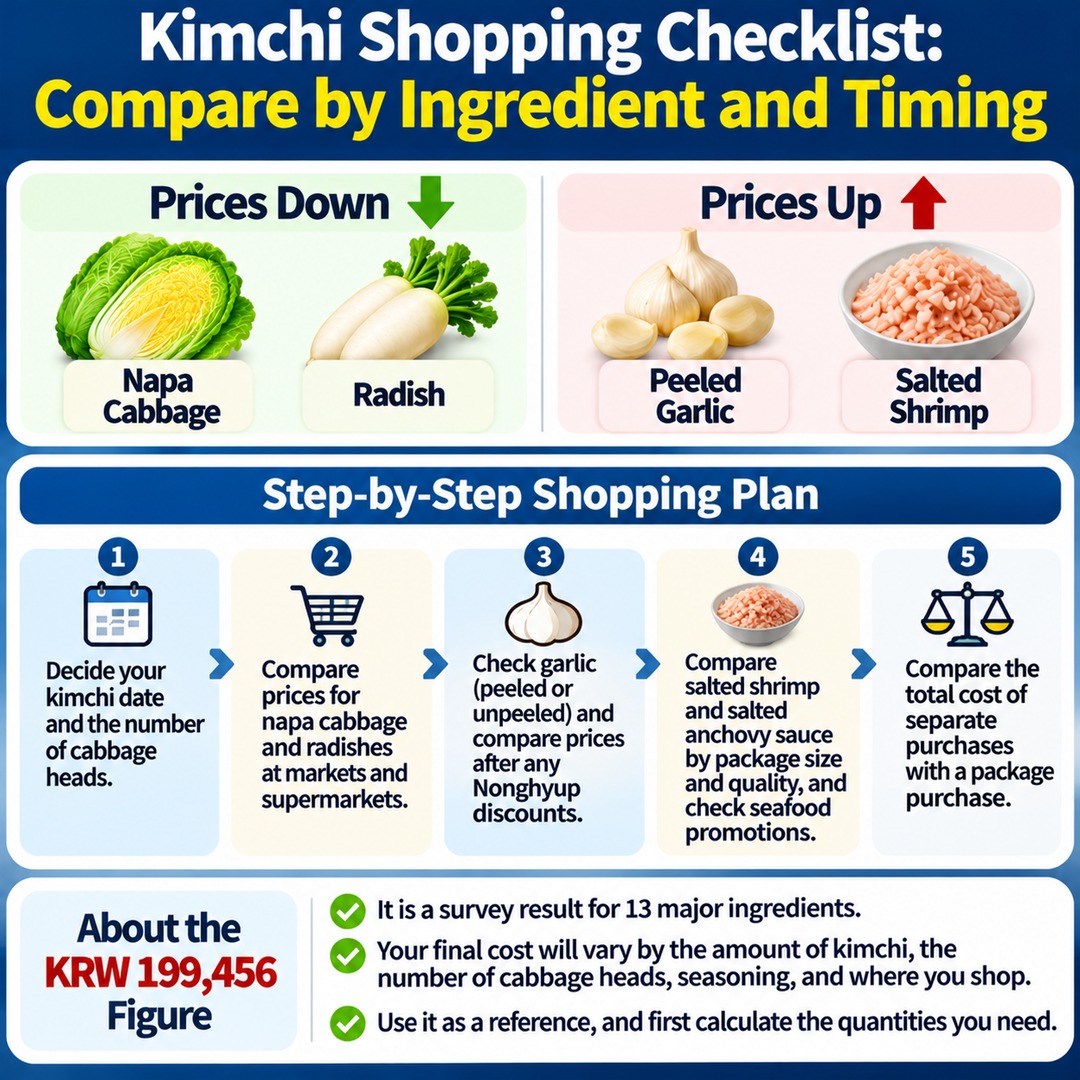
Increased production has eased price pressure on napa cabbage and radishes, while peeled garlic and salted shrimp have become more expensive. In this situation, it makes more sense to consider the purchasing timing for each ingredient separately rather than deciding when to shop based solely on the overall cost of making kimchi.
The following steps can help you compare prices when shopping:
1. Decide when you will make kimchi and how many heads of napa cabbage you will need.
2. Compare the day's selling prices for napa cabbage and radishes at traditional markets and large supermarkets.
3. For garlic, check whether it is sold peeled or unpeeled and compare the price after applying any Nonghyup discounts.
4. Compare salted shrimp and salted anchovy sauce by matching package sizes and quality, then check the prices available through seafood discount promotions.
5. Compare the total cost of purchasing ingredients separately with the price of buying them together in a package.
It is particularly important to understand that the KRW 199,456 kimchi-making cost represents survey results for 13 major ingredients. The final amount a household spends will vary depending on the quantity of kimchi being made, the number of cabbage heads, the amount of seasoning required, and where the ingredients are purchased.
Even among four-person households, spending can vary significantly depending on how much kimchi they prepare. Rather than using the survey average as your personal budget, first calculate the quantities you actually need.
Will Kimchi-Making Costs Remain Low for the Rest of the Season?
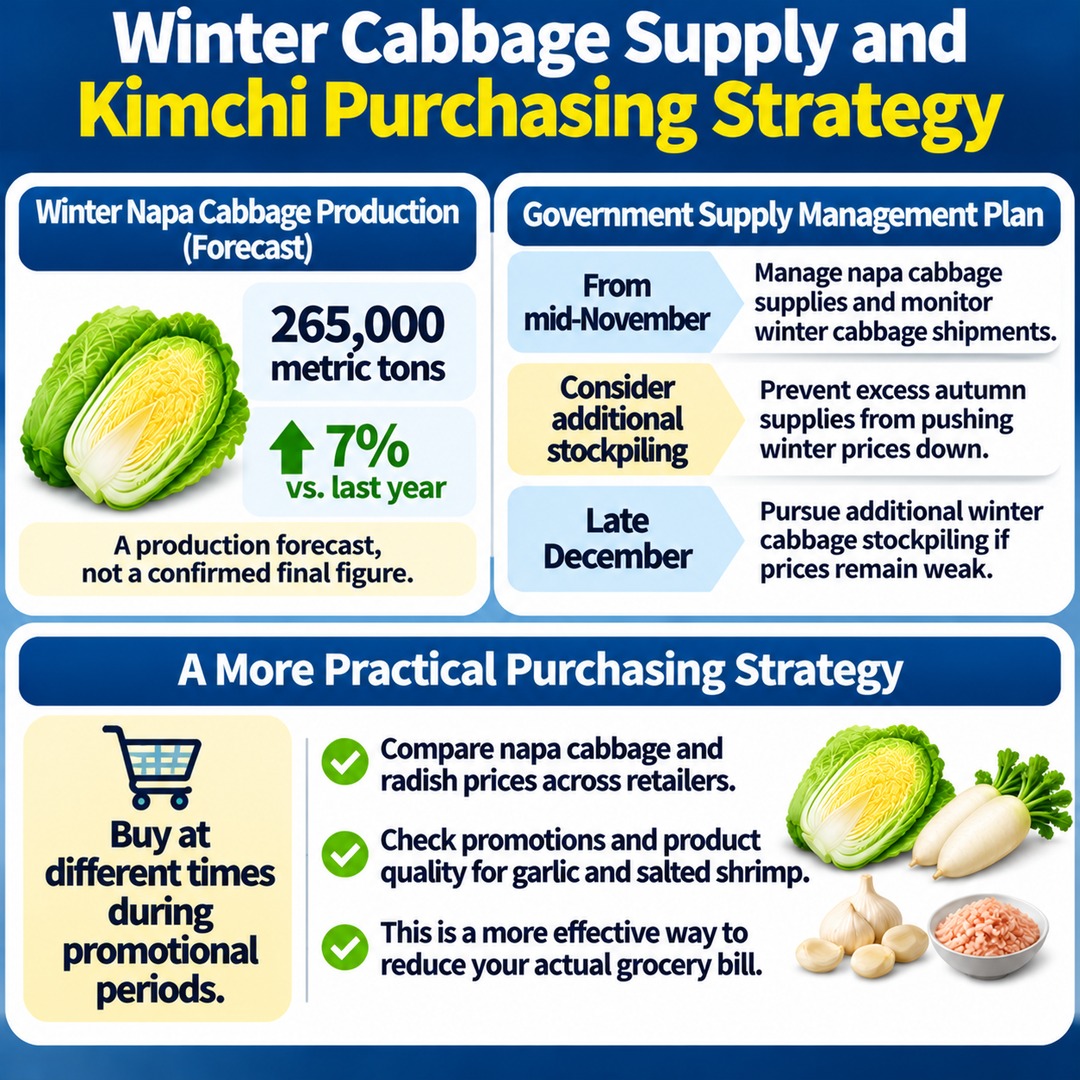
The government plans to manage napa cabbage supplies from mid-November onward and monitor shipments of winter napa cabbage.
Winter napa cabbage production this year is expected to reach 265,000 metric tons, 7% higher than the previous year. However, this is a production forecast, not a confirmed final production figure.
The government is also considering additional stockpiling to prevent excess autumn napa cabbage supplies from pushing winter cabbage prices down as well. If prices remain weak after the peak kimchi-making season, it plans to pursue additional winter napa cabbage stockpiling starting in late December.
For households preparing to make kimchi, it is therefore more practical to purchase discounted ingredients at different times during the promotional periods rather than simply waiting for napa cabbage prices to fall further.
It is clear that kimchi-making costs have decreased this year, but not every ingredient has become cheaper. Comparing napa cabbage and radish prices across retailers, while checking promotions and product quality for garlic and salted shrimp, is a more effective way to reduce your actual grocery bill.