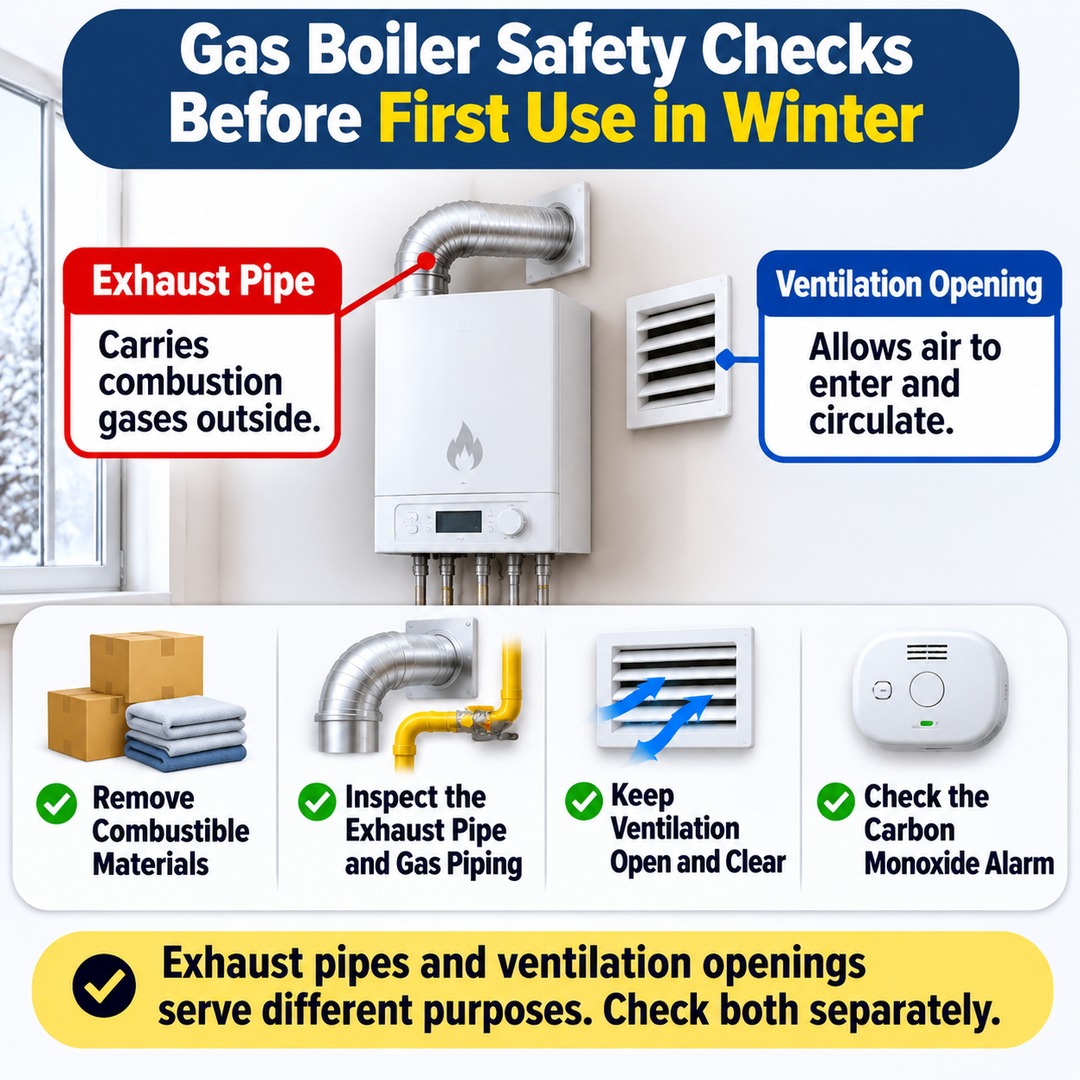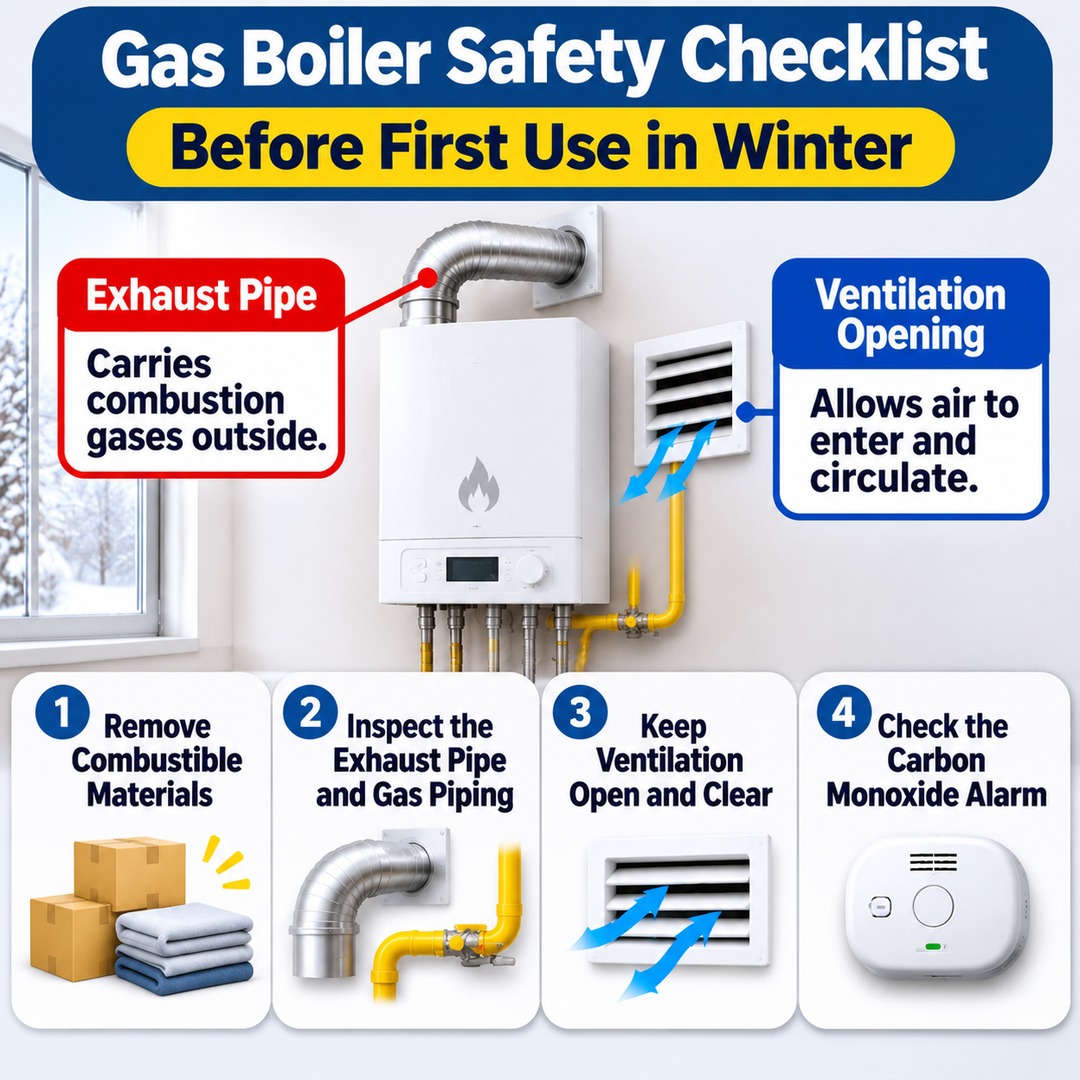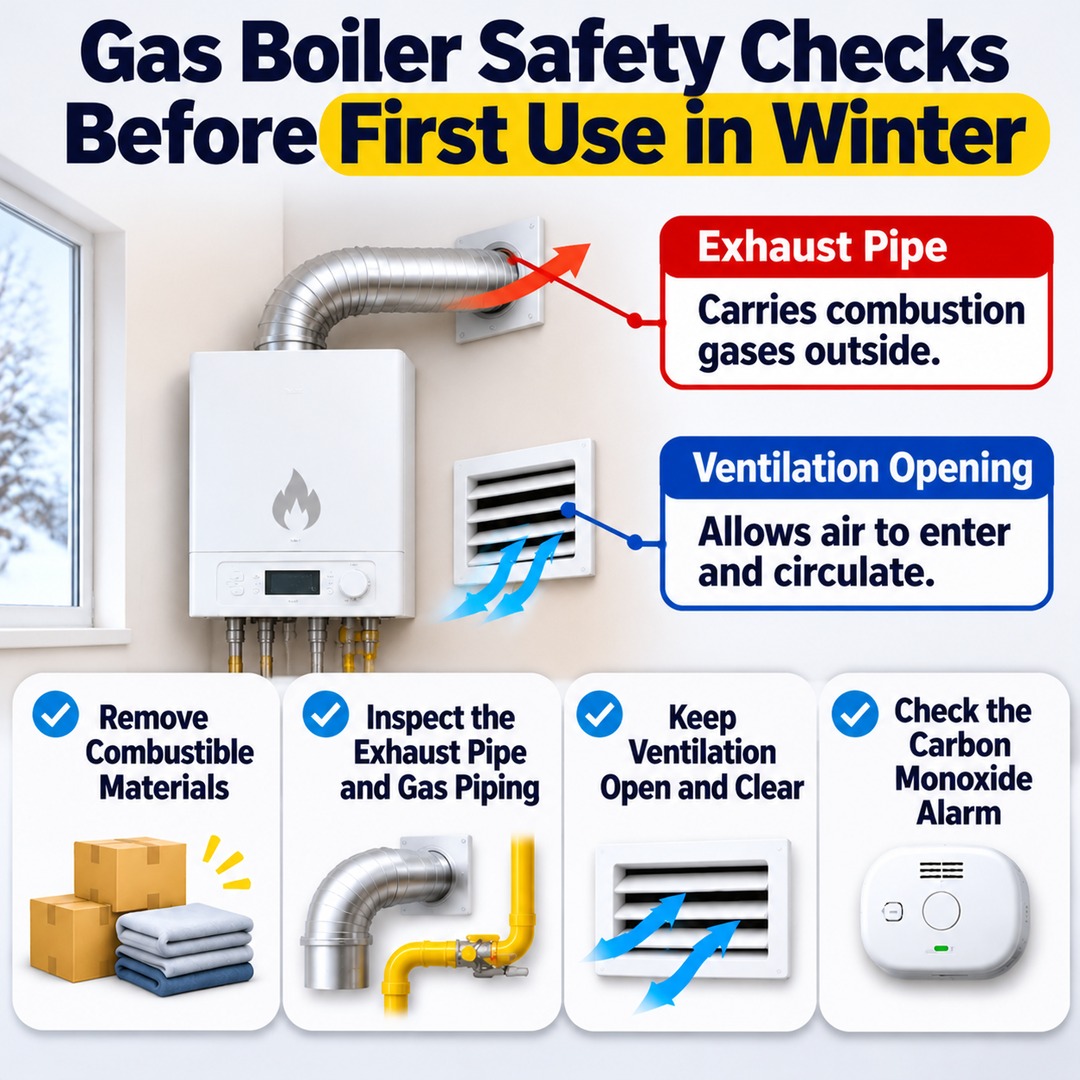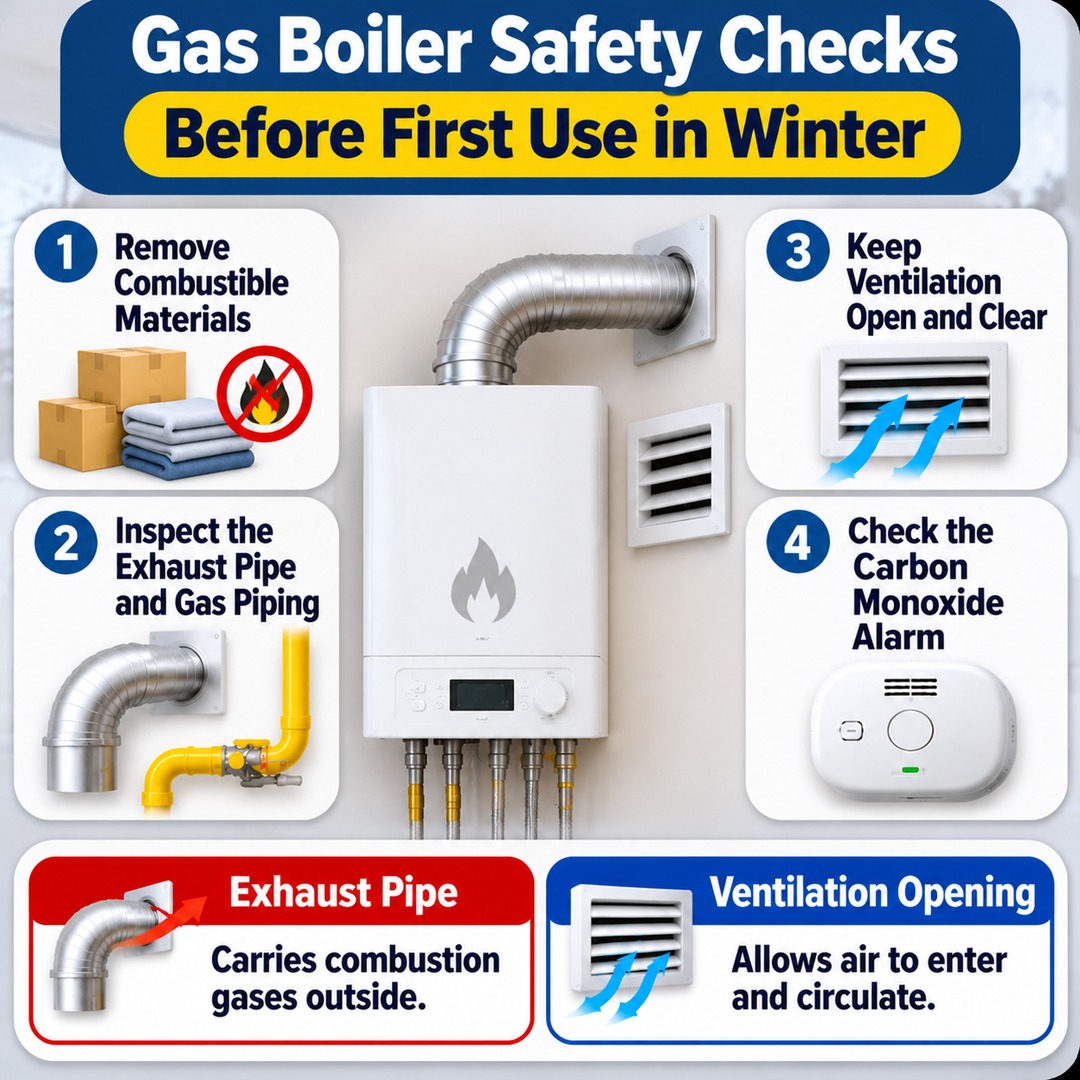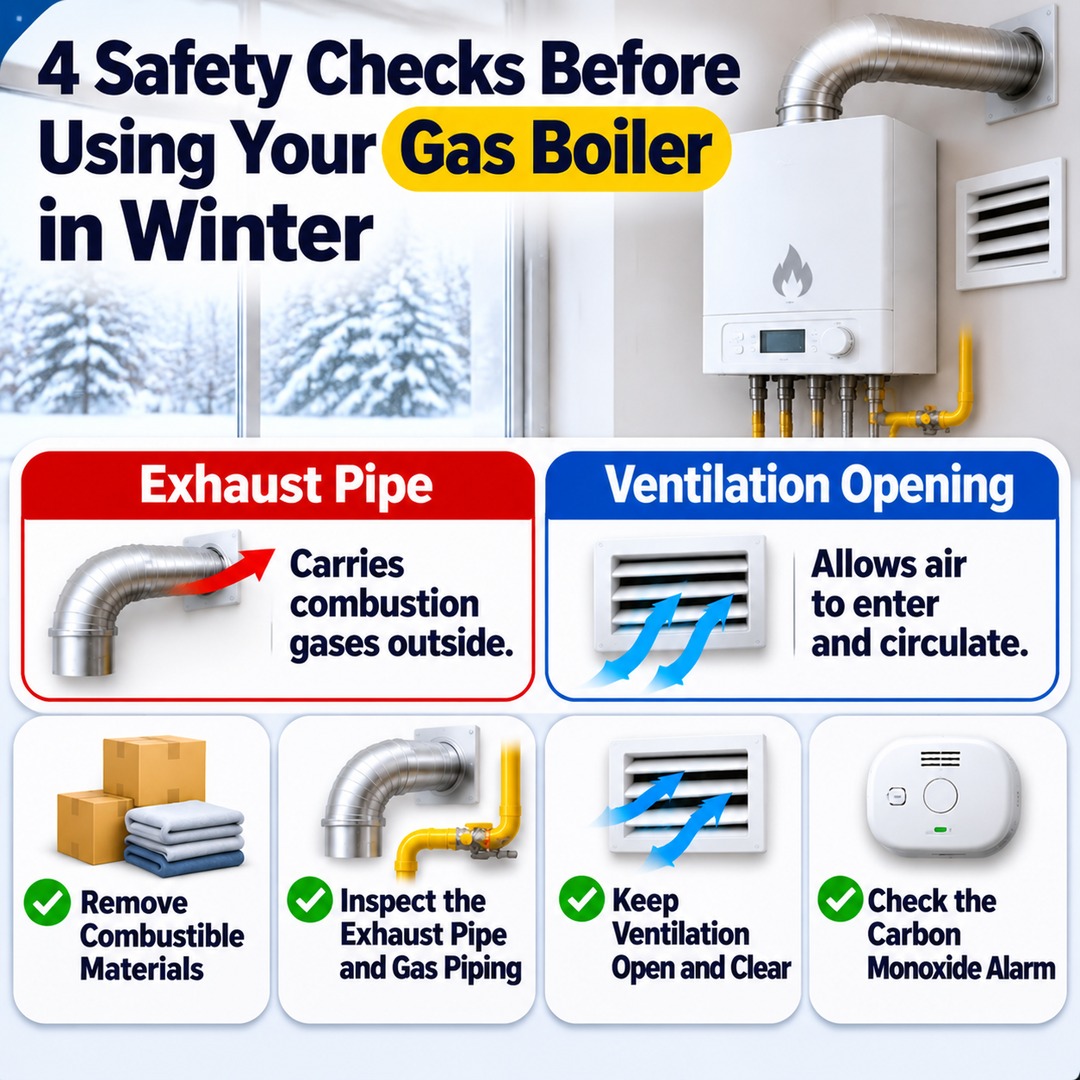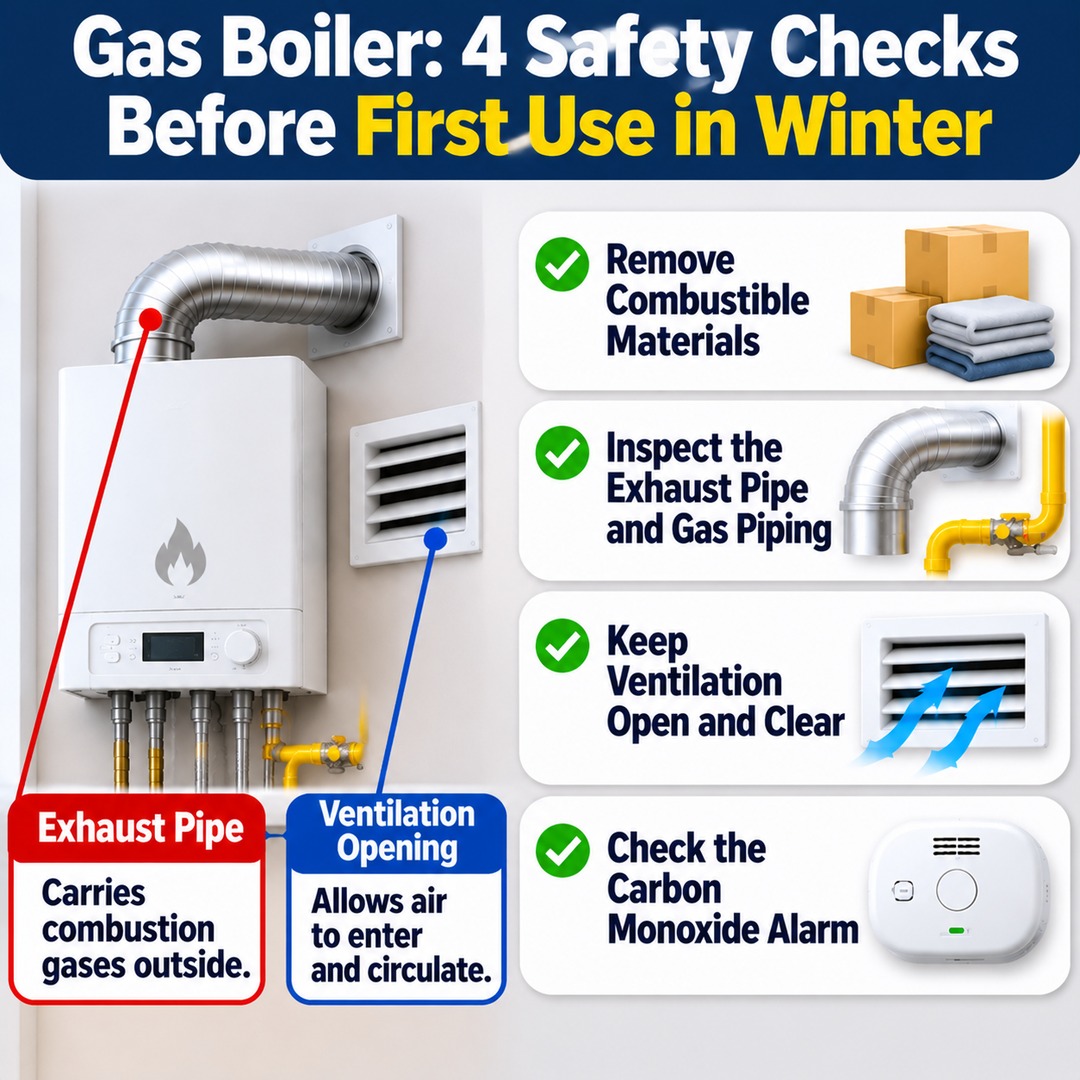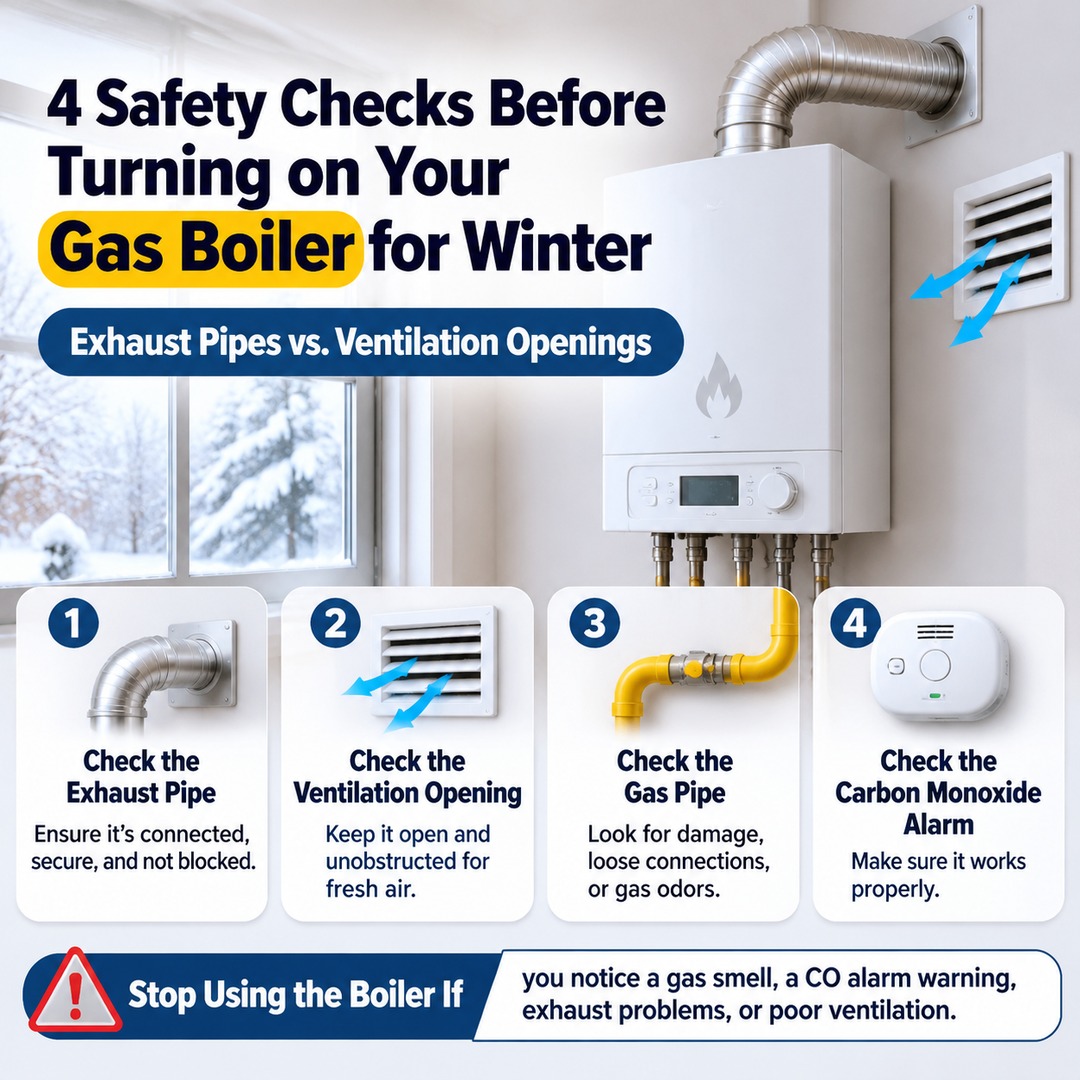
Before turning on a gas boiler for the first time in winter, check for combustible materials nearby, inspect the exhaust pipe and gas piping, make sure ventilation openings are clear, and check the carbon monoxide alarm. In particular, remember that the exhaust pipe carries combustion gases outside, while ventilation openings allow air to enter and circulate. These components serve different purposes and must be inspected separately. If you find anything abnormal, do not test-run the boiler. Request an inspection by a qualified professional instead.\n\nA total of 790 residential boiler fires occurred in South Korea between 2021 and 2025. These incidents resulted in 31 casualties, including one death and 30 injuries. When heating season begins, simply checking whether the boiler turns on is not enough to determine whether it is safe to use.\n\n## What Should You Check Before Turning on Your Boiler?\n\nStart the pre-operation inspection around the boiler, then move on to the exhaust pipe, gas piping, and ventilation openings. It is important to distinguish between visible conditions that you can check yourself and equipment problems that require professional inspection.\n\nFirst, check for combustible materials around the boiler.\n\nMake sure there are no easily flammable items, such as cardboard boxes, clothing, plastic bags, or cleaning supplies, stored around the boiler.\n\nDuring winter, people often store seasonal supplies and everyday household items in boiler rooms or utility rooms. Stacking items around a boiler can increase fire risks and interfere with inspection and maintenance.\n\nSecond, inspect the exhaust pipe connections.\n\nCheck whether the exhaust pipe connecting the boiler to the outdoors has become disconnected, dented, or damaged.\n\n- Make sure the joints have not separated or come loose.\n- Check that the pipe is not bent or severely compressed.\n- Look for holes or visible signs of surface damage.\n- Make sure the outdoor exhaust outlet is not blocked by foreign objects.\n\nThe exhaust pipe carries gases produced during combustion to the outdoors. If the pipe becomes disconnected or blocked internally, exhaust gases may enter the living space.\n\nDo not dismantle the exhaust pipe or attempt to adjust its connections yourself. If you notice any damage or abnormalities, contact the manufacturer's service center or a qualified inspection company.\n\nThird, inspect the gas pipes and connections.\n\nCheck the piping beneath the boiler for corrosion, dents, or unusual changes around the connection points.\n\nDo not loosen, tighten, or dismantle gas pipes yourself. If you suspect a gas leak, do not operate the boiler. Move to a safe location and contact your gas supplier or emergency services at 119.\n\nFourth, check the ventilation openings and carbon monoxide alarm.\n\nMake sure the boiler room's air intake and ventilation openings are not blocked by fabric, plastic, cardboard boxes, or other objects.\n\nAlso check whether a carbon monoxide alarm is installed indoors. Follow the manufacturer's instructions to check its power supply, operating status, inspection requirements, and replacement schedule.\n\n## What Is the Difference Between an Exhaust Pipe and a Ventilation Opening?\n\nThese two components serve different purposes. The exhaust pipe carries combustion gases from the boiler to the outdoors. Ventilation openings provide access for incoming air and help maintain proper air circulation.\n\n| Category | Exhaust Pipe | Ventilation Opening |\n| --- | --- | --- |\n| Main function | Discharges combustion gases | Allows air intake and ventilation |\n| What to inspect | Disconnection, dents, holes, and blockages | Obstructions caused by plastic, fabric, or other objects |\n| Signs of a problem | Damaged connections, deformation, or foreign objects | An obstructed or blocked airflow passage |\n| Recommended action | Stop operation and request a professional inspection | Remove obstructing objects; request professional inspection if there is a structural problem |\n\nThe important point is that ventilation openings and exhaust pipes are not interchangeable.\n\nAn open ventilation opening does not resolve damage to an exhaust pipe. Likewise, even if the exhaust pipe is properly connected, a blocked ventilation opening means you cannot assume the boiler is safe to operate.\n\nAir intake and exhaust configurations can vary depending on the boiler type and installation method. Avoid adding ventilation openings or modifying exhaust pipes on your own.\n\n## Why Is a Carbon Monoxide Alarm Necessary?\n\nCarbon monoxide is a colorless and odorless gas, so you cannot detect its presence through your senses alone. Never assume that a situation is safe simply because you cannot smell anything when exhaust gases may be entering an indoor space.\n\nA carbon monoxide alarm is a safety device that provides an audible warning about a danger that people may otherwise have difficulty detecting.\n\nIf an alarm is installed, check the following: \n\n- Whether a carbon monoxide alarm is installed\n- Its power supply and indicator status\n- Whether it operates correctly using its test function\n- Battery condition and replacement schedule according to the manufacturer's instructions\n\nIf the alarm sounds, do not keep operating the boiler or remain indoors to investigate the cause. Evacuate immediately and call 119, South Korea's emergency services number.\n\nYou should also leave the area if you experience symptoms that may indicate carbon monoxide poisoning, such as headaches, dizziness, or nausea. Even if the symptoms seem mild, do not re-enter the building to investigate.\n\n## When Should You Avoid Turning on Your Boiler?\n\nIf you notice damage to the exhaust pipe or gas piping, or if ventilation openings are structurally blocked, it is safer not to operate the boiler, even as a test.\n\nStop using the boiler and arrange a professional inspection if you notice any of the following: \n\n- The exhaust pipe has become disconnected or its joints have come apart.\n- The exhaust pipe is dented or has developed holes.\n- Corrosion or deformation is visible on the gas piping.\n- The combustion condition appears different from normal.\n- The boiler produces signs of overheating, unusual noise, vibration, or an unusual smell.\n- Indicator lights flash abnormally or fail to turn on.\n\nIf overheating, unusual noise, vibration, or an unusual smell occurs while the boiler is operating, stop it immediately, close the gas valve, and request a professional inspection.\n\nIf you suspect a gas leak, do not operate electrical switches or electronic devices. Evacuate to a safe location before reporting the suspected leak.\n\n## How Many Residential Boiler Fires Occur During Winter?\n\nA total of 790 residential boiler fires were recorded in South Korea between 2021 and 2025. During the same period, these incidents caused 31 casualties: one death and 30 injuries.\n\nThe reported causes of these fires included the following: \n\n| Cause of Fire | Number of Fires | Percentage |\n| --- | --- | --- |\n| Electrical factors | 351 | 44% |\n| Mechanical factors | 290 | 37% |\n| Carelessness during use or installation | 75 | 9% |\n| Gas leaks | 14 | 2% |\n\nResidential boiler fire statistics for 2021–2025. The percentages shown are the reported figures; other cause categories have been omitted from this table.\n\nIt is also important to recognize that electrical and mechanical factors accounted for a substantial proportion of these fires.\n\nInspecting the exhaust pipe and ventilation openings alone cannot prevent every boiler fire. Electrical connections, equipment deterioration, and overheating must also be monitored.\n\n## Final Checks Before Starting Your Heating System\n\nBefore turning on your gas boiler for the first time, go through the following checklist: \n\n- Remove combustible materials such as paper, plastic bags, and clothing from around the boiler.\n- Check the exhaust pipe for disconnection, dents, or damage.\n- Make sure the outdoor exhaust outlet is not blocked.\n- Check the gas piping for corrosion or deformation.\n- Make sure air intake and ventilation openings are unobstructed.\n- Check that a carbon monoxide alarm is installed and functioning.\n- Listen for unusual boiler noise or vibration and check for signs of overheating.\n\nIf you notice anything abnormal, do not attempt repairs yourself or repeatedly restart the boiler. Arrange a professional inspection first.\n\nIf your boiler makes noises that are different from its usual operating sounds, investigating those noises can also help distinguish heating problems from equipment malfunctions.\n\nWhen preparing for winter, the priority is not simply whether the boiler turns on. What matters first is whether combustion gases can be safely discharged and whether air can enter properly. Check the visible components before the first operation, and leave any equipment damage or abnormal conditions to qualified professionals.