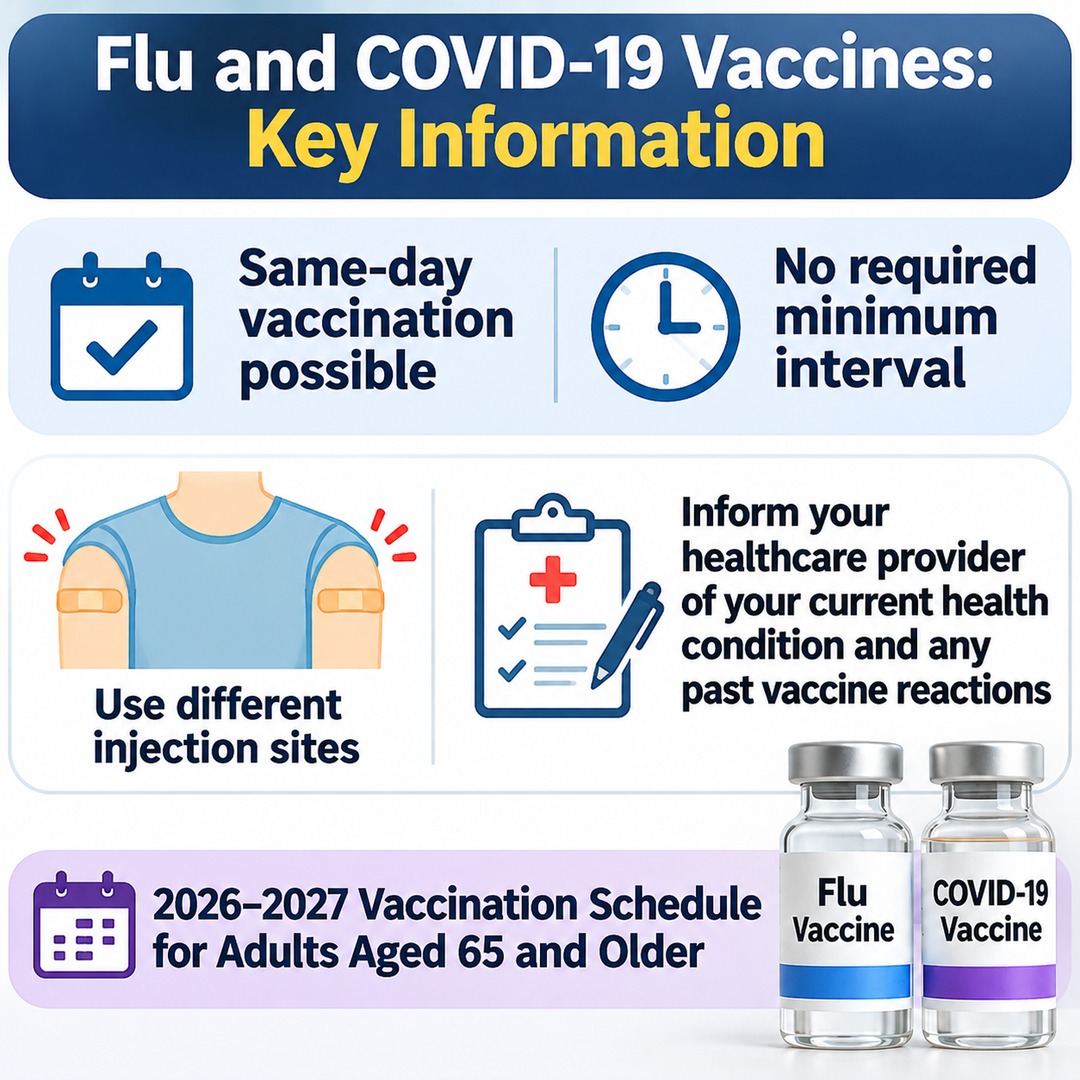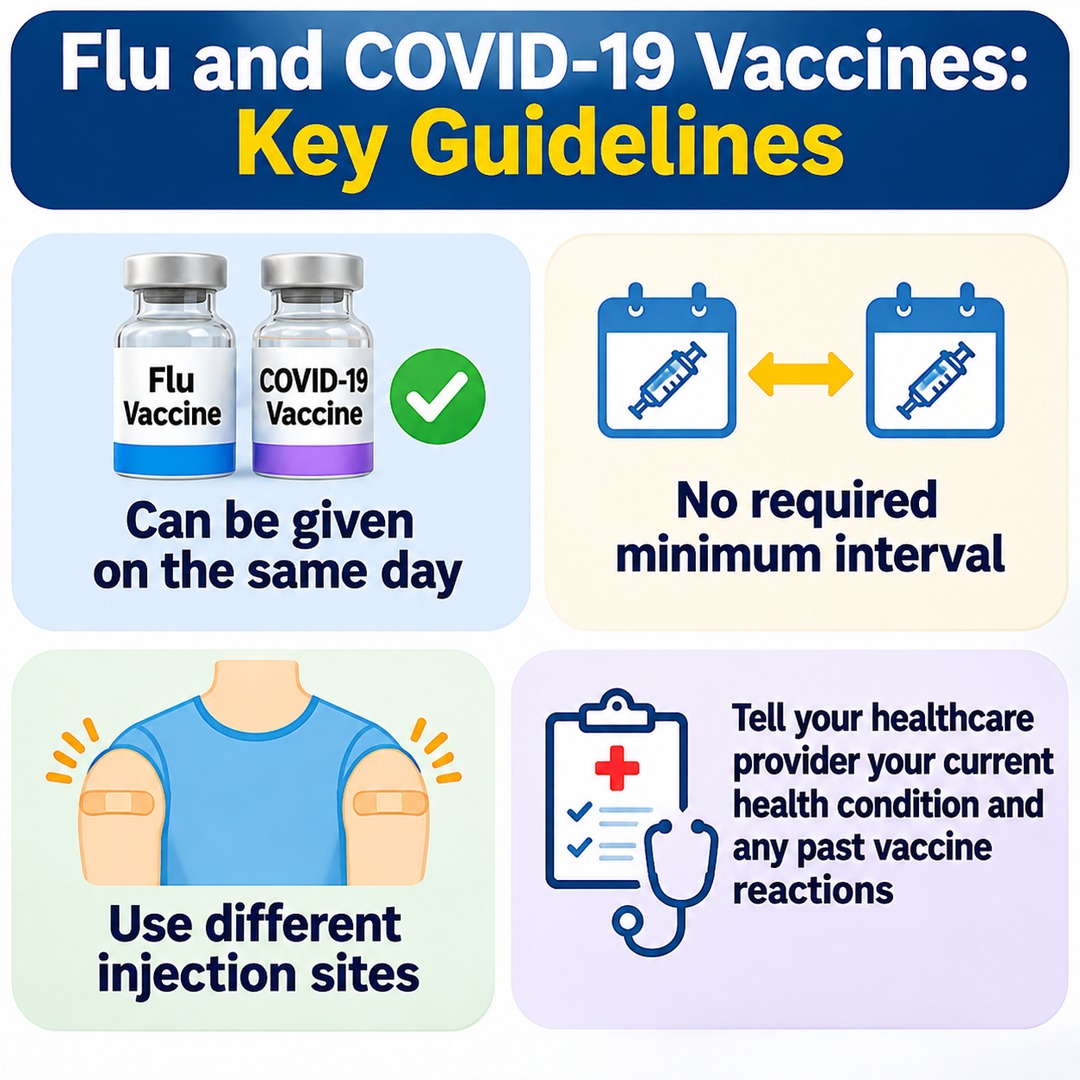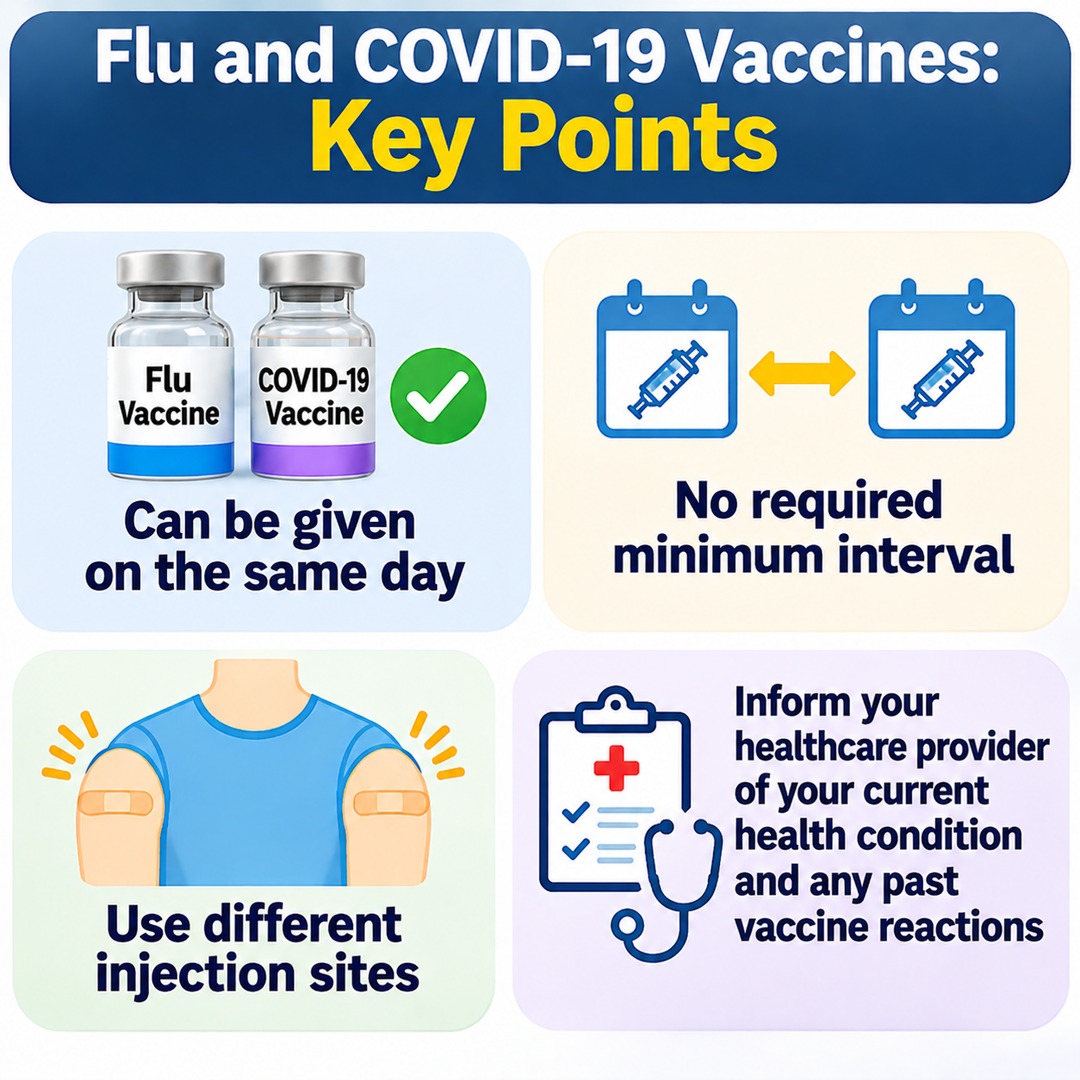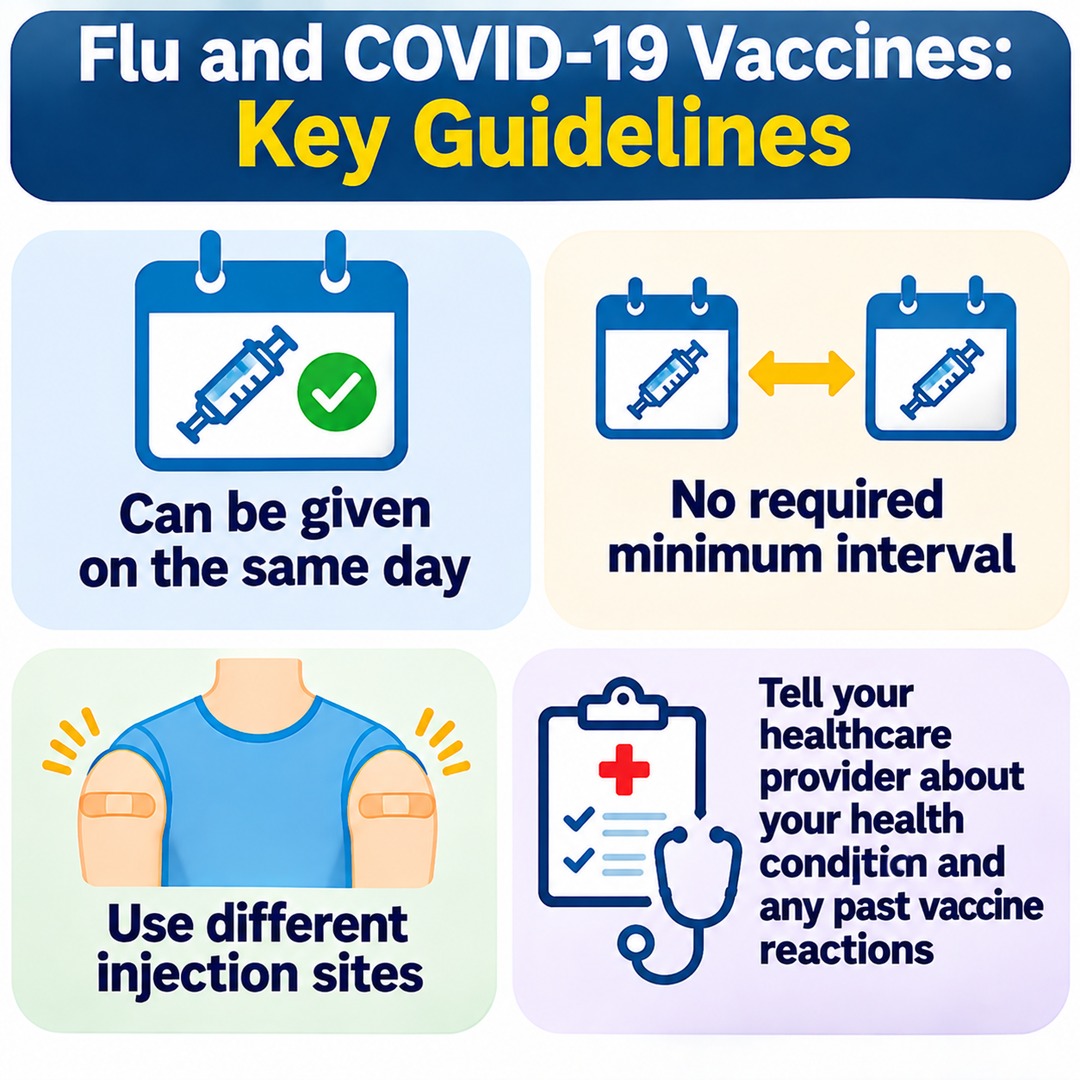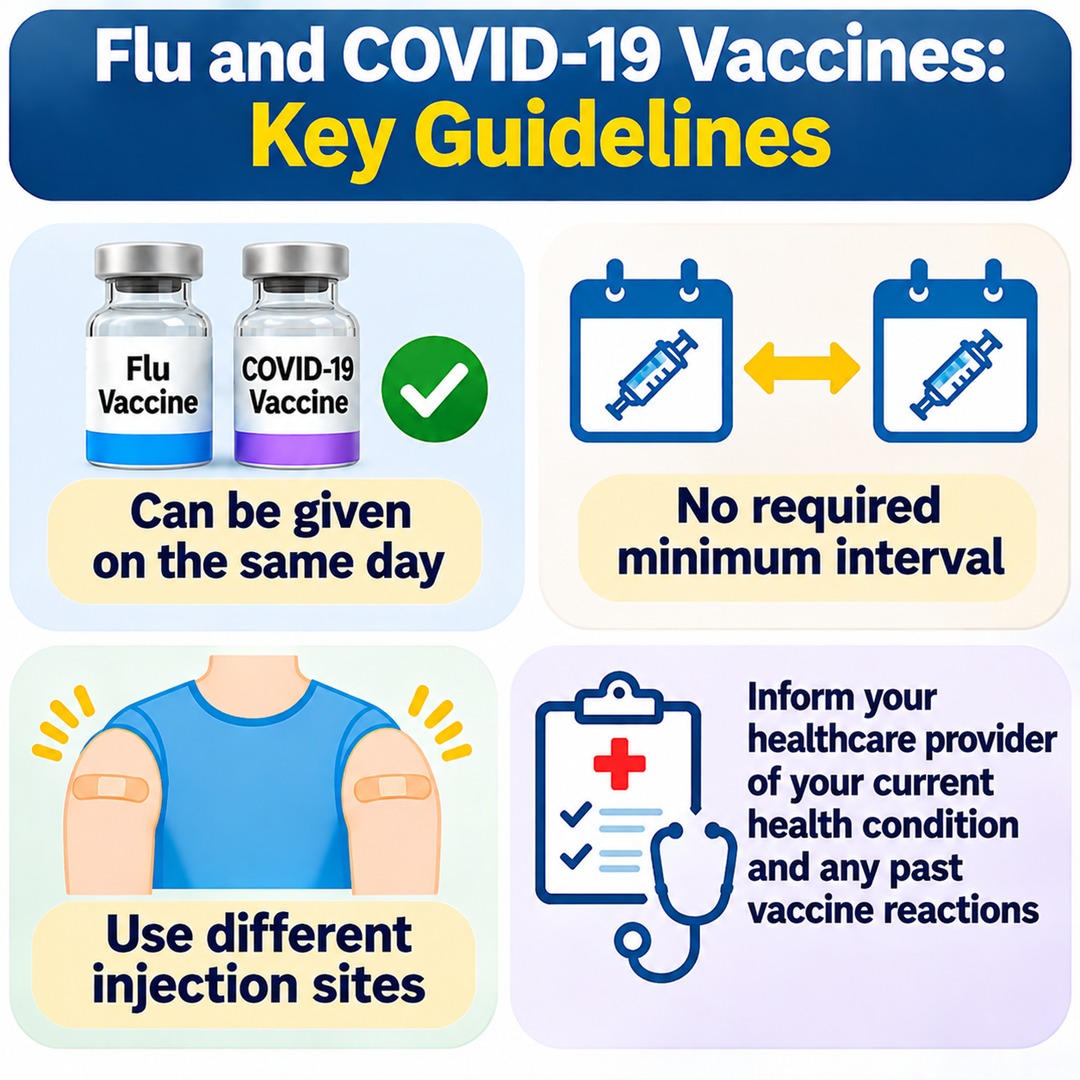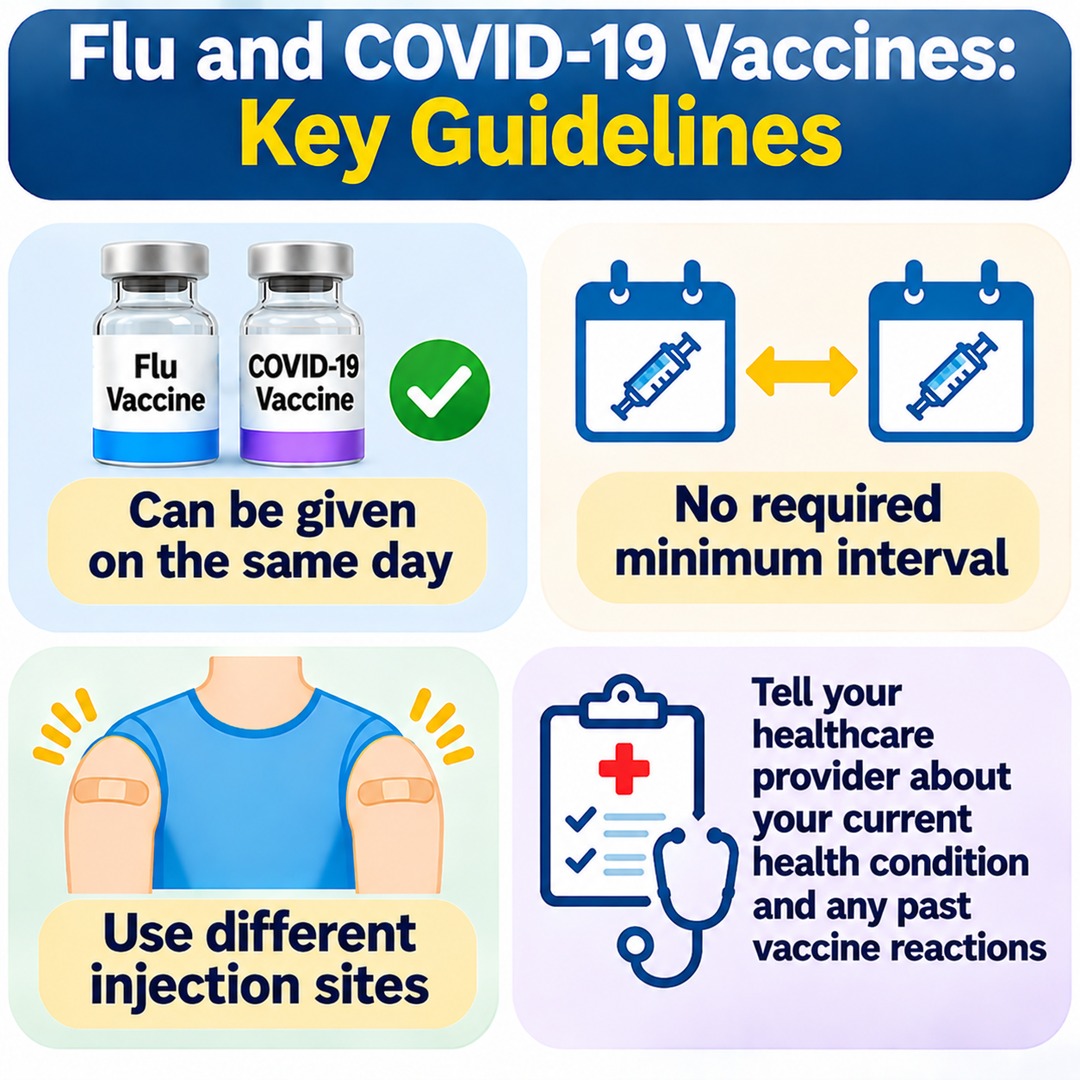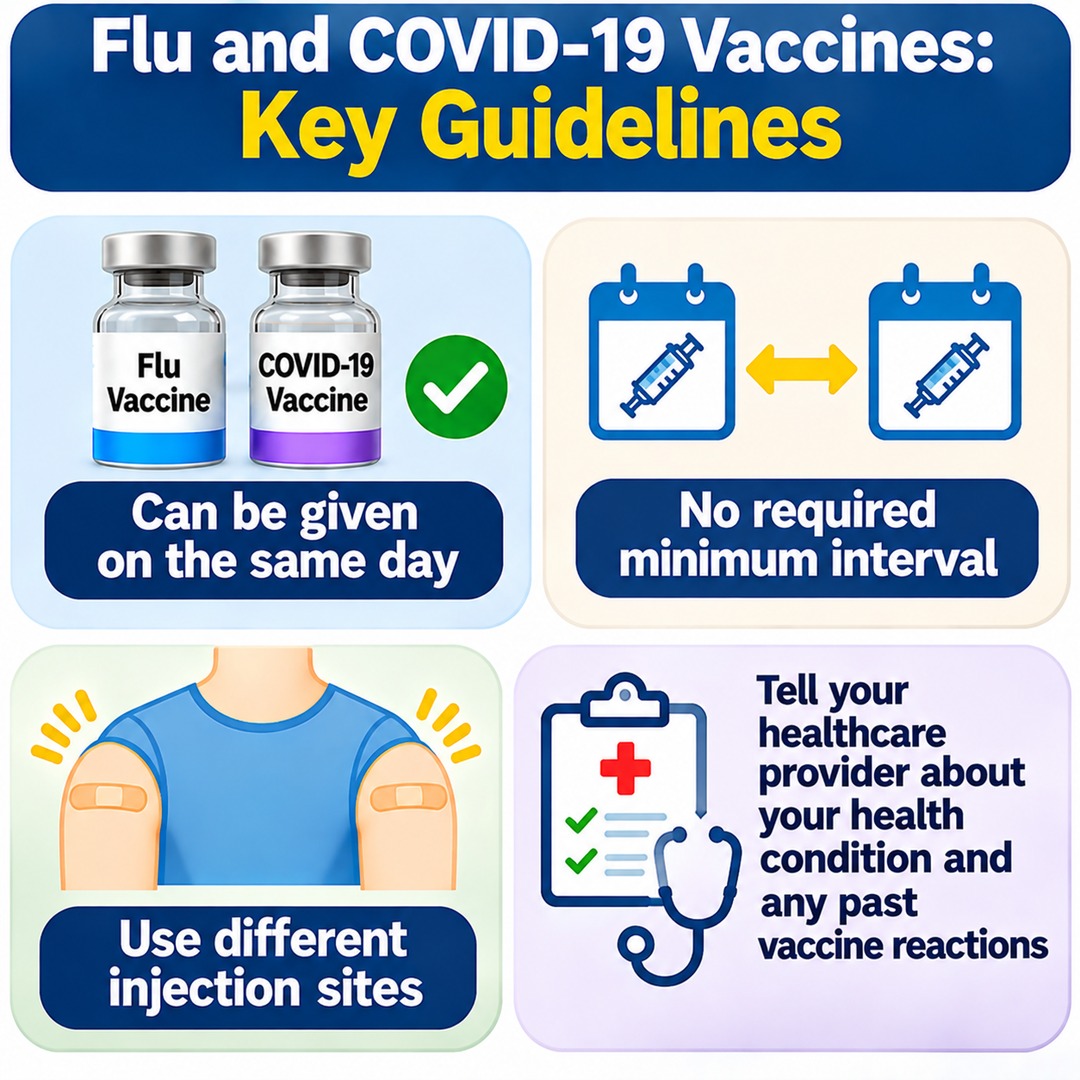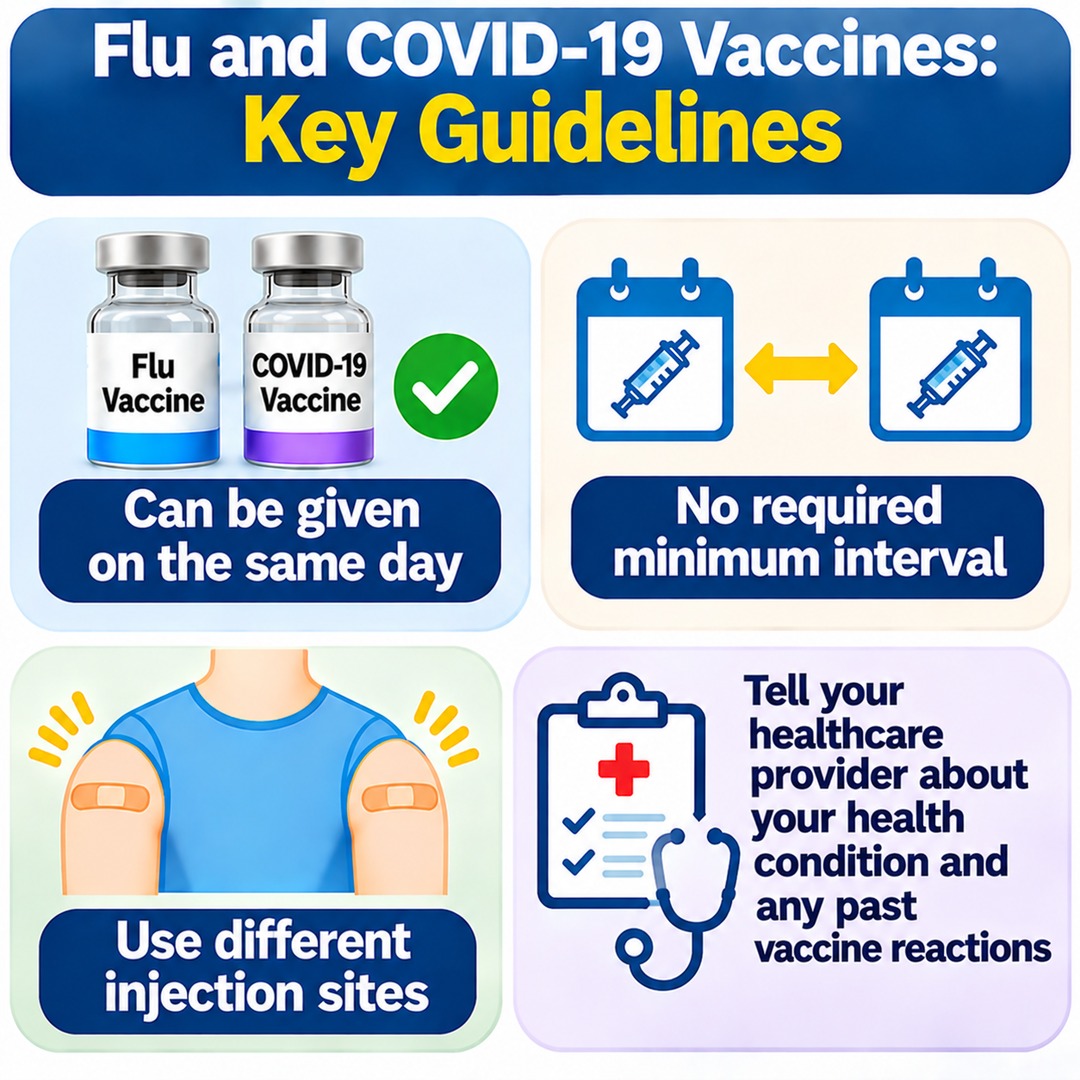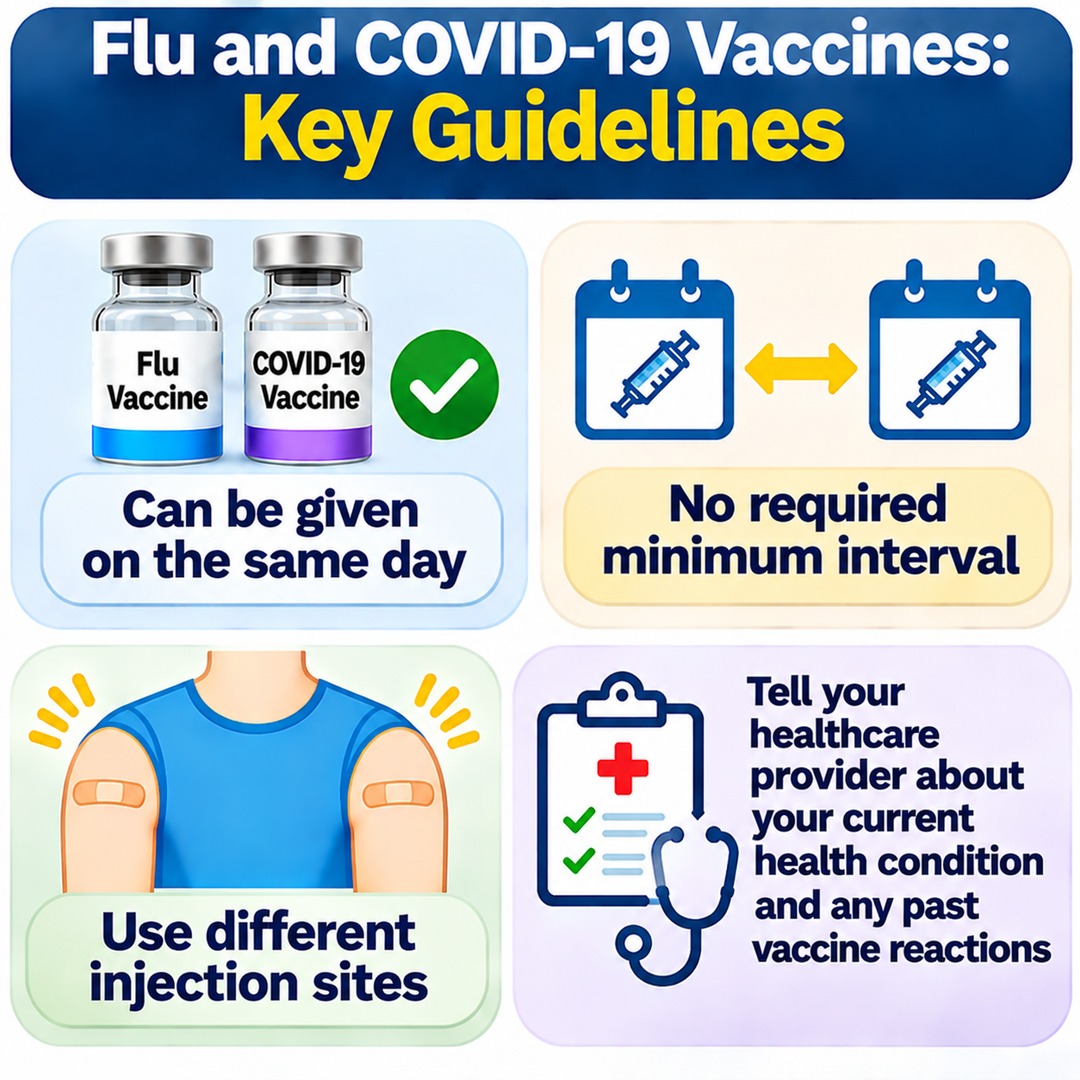
The flu vaccine and COVID-19 vaccine can be administered together on the same day. Even when they are given separately, there is generally no required minimum interval between the two vaccines. However, they should be administered at different injection sites, and you should tell your healthcare provider about your current health condition and any previous adverse reactions to vaccinations.\n\nDuring the 2026–2027 vaccination season, South Korea’s National Immunization Program will provide both vaccines to eligible adults aged 65 and older. You can receive both vaccines during a single visit to a medical institution, but their age-based start dates and program end dates differ, so check each schedule separately.\n\n## Can You Safely Get the Flu and COVID-19 Vaccines on the Same Day?\n\nThe two vaccines can be administered at the same time. For example, the flu vaccine can be injected into one arm and the COVID-19 vaccine into the other.\n\nThere is no requirement to wait several days between the two vaccinations. Receiving both at the same appointment also has the practical advantage of eliminating the need for a second visit to a medical institution.\n\nIf you plan to receive both vaccines together, keep the following points in mind:\n\n- Ask for the flu and COVID-19 vaccines to be administered in different arms.\n- Tell your healthcare provider about any medications you currently take and any adverse reactions you have experienced after previous vaccinations.\n- If you have a fever or are feeling unwell, consult your healthcare provider before vaccination.\n- Follow the observation period recommended by the medical institution after vaccination.\n\nWhether to receive both vaccines together should be decided after considering your individual health condition and vaccination history.\n\n## How Many Days Should You Wait If You Get the Two Vaccines Separately?\n\nIn general, there is no established minimum interval between the flu vaccine and the COVID-19 vaccine. If you cannot receive both on the same day, you can schedule them on separate available dates. You do not have to wait one or two weeks between vaccinations.\n\nFor example, you can receive the flu vaccine first and the COVID-19 vaccine several days later. You can also choose the opposite order, receiving the COVID-19 vaccine first and the flu vaccine afterward.\n\nHowever, when the vaccines are administered on separate days, it may be difficult to determine which vaccine caused a particular symptom. If you previously experienced a fever or severe pain after vaccination, inform your healthcare provider before arranging your schedule.\n\n## What Is the 2026–2027 Free Flu and COVID-19 Vaccination Schedule in South Korea?\n\nFor adults aged 65 and older, the vaccination start dates for both vaccines are staggered according to age. The flu vaccination program runs through April 30, 2027, while the COVID-19 vaccination program continues through June 30, 2027.\n\nNational vaccination schedule for adults aged 65 and older in South Korea\n\n| Age group | Flu vaccine | COVID-19 vaccine |\n| --- | --- | --- |\n| 75 and older | October 6, 2026 – April 30, 2027 | October 12, 2026 – June 30, 2027 |\n| 70–74 | October 12, 2026 – April 30, 2027 | October 12, 2026 – June 30, 2027 |\n| 65–69 | October 15, 2026 – April 30, 2027 | October 15, 2026 – June 30, 2027 |\n\nThe two programs have different end dates. Even after the flu vaccination period ends, COVID-19 vaccinations may still be available. Anyone planning to receive both vaccines should check the schedule for each separately.\n\nSouth Korea’s national COVID-19 vaccination program also covers immunocompromised people aged six months and older, as well as residents and inpatients at facilities for people vulnerable to infectious diseases. However, detailed vaccination schedules for high-risk children under 12 are provided separately, so check with a medical institution.\n\nThe national flu vaccination program covers children aged six months through 14 years, pregnant women, and adults aged 65 and older.\n\n## What Should You Do If You Have a Fever or Feel Sick on Vaccination Day?\n\nIf you have a fever or a moderate-to-severe acute illness, the general recommendation is to postpone vaccination until your condition improves. In particular, South Korea’s COVID-19 vaccination guidance recommends delaying vaccination until acute symptoms have resolved, including when a person has a fever of 37.5°C or higher.\n\nTell your healthcare provider about the following before vaccination:\n\n- Current acute symptoms, such as fever or coughing\n- Myocarditis or pericarditis that developed after a previous COVID-19 vaccination\n- A history of severe allergic reactions, such as anaphylaxis, after vaccination\n- A history of severe allergic reactions to any vaccine component\n- Treatments that may affect vaccination decisions, such as immunosuppressive therapy or anticoagulant medication\n\nIn particular, people who have developed myocarditis or pericarditis following a COVID-19 vaccination are advised to defer additional doses until sufficient safety evidence becomes available. If a severe allergic reaction occurred after a previous vaccination, whether further vaccination is contraindicated must also be assessed based on the vaccine type and its ingredients.\n\nHaving an underlying medical condition does not automatically mean you should avoid vaccination. A healthcare provider should assess the stability of your condition, current treatment, and medications before making a decision.\n\n## What Side Effects Can Occur After Flu and COVID-19 Vaccination?\n\nLocal reactions such as pain, redness, and swelling at the injection site may occur. After a flu vaccination, some people also experience systemic symptoms such as fever, fatigue, muscle aches, and headaches. Mild symptoms generally improve within one to two days.\n\nIf you receive both vaccines at the same time, you may experience pain in both arms. This can feel more uncomfortable than receiving an injection in only one arm. It is therefore advisable to avoid strenuous activities on vaccination day and monitor how you feel.\n\nThe following guide explains how to respond to different symptoms:\n\n| Symptom | Recommended response |\n| --- | --- |\n| Mild pain at the injection site | Monitor the area and avoid excessive use of the affected arm |\n| Temporary fever or muscle aches | Get sufficient rest and monitor changes in symptoms |\n| Symptoms become severe or persist for an extended period | Seek medical attention |\n| Suspected severe allergic reaction, such as difficulty breathing | Seek emergency medical assistance immediately |\n\nAnaphylaxis, a severe allergic reaction, is rare but requires prompt treatment. Do not leave immediately after vaccination; remain at the medical institution for the recommended observation period.\n\n## How Long Should You Stay at the Clinic After Vaccination?\n\nWhether you receive both vaccines together or only one, it is advisable to remain at the medical institution for 20–30 minutes after vaccination to monitor for adverse reactions.\n\nBefore leaving, you should also check your vaccination record and whether any additional doses are needed.\n\nYou can follow these steps on vaccination day:\n\n1. Complete the pre-vaccination questionnaire and have your health condition assessed.\n2. Confirm your eligibility for the flu and COVID-19 vaccination programs.\n3. Receive the two vaccines at different injection sites.\n4. Remain at the medical institution for 20–30 minutes for observation.\n5. After returning home, monitor the injection sites and watch for systemic symptoms.\n\nOlder adults and people who have experienced adverse reactions after previous vaccinations may also consider visiting with a family member or caregiver rather than traveling alone afterward.\n\n## Where Can You Get Vaccinated, and What Should You Check Before Visiting?\n\nPeople eligible for South Korea’s National Immunization Program can receive vaccinations at designated participating medical institutions or public health centers, regardless of their registered residential address. However, not every medical institution stocks both vaccines or offers them together on the same day, so check before visiting.\n\nFollow these steps to find a vaccination provider:\n\n- Visit the official Vaccination Assistant website (Preventive Vaccination Helper).\n- Select the participating medical institution search menu.\n- Choose your residential area or another convenient location.\n- Check availability of the flu and COVID-19 vaccines separately.\n- Call the medical institution to confirm whether both vaccines can be administered during the same visit.\n\nFor vaccination-related inquiries in South Korea, you can contact the Korea Disease Control and Prevention Agency (KDCA) at 1339.\n\nDetailed COVID-19 vaccination eligibility may vary depending on your target group and previous vaccination history. If you have recently received a COVID-19 vaccine, tell your healthcare provider the date of your most recent dose.\n\n## Frequently Asked Questions\n\n### Can I Get the Flu Vaccine in the Morning and the COVID-19 Vaccine in the Afternoon?\n\nYes. The two vaccines can be administered on the same day. However, they must be injected at different sites, so tell your healthcare provider in advance that you plan to receive both vaccines.\n\n### If I Get the Flu Vaccine First, Do I Have to Wait a Week Before Getting the COVID-19 Vaccine?\n\nThere is no general minimum interval requiring you to wait one week. The two vaccines can even be administered on the same day. If you prefer separate appointments, arrange the schedule with your healthcare provider.\n\n### Will Getting Both Vaccines Together Double the Risk of Side Effects?\n\nThat cannot be assumed. Some local reactions may be more frequent with simultaneous vaccination, which is why administering the vaccines at different injection sites is recommended. Individual reactions vary.\n\n### Should I Still Get the Flu Vaccine If I Have Already Had the Flu?\n\nYou can still consider flu vaccination after recovering from influenza. There are multiple influenza types, and infection with one type does not necessarily protect you against other types. Once your fever has subsided and you have recovered, consult a healthcare provider for a pre-vaccination assessment and a decision about vaccination.\n\n### Can Healthy Adults Under 65 Get the COVID-19 Vaccine for Free?\n\nFor the 2026–2027 season, the main groups covered by South Korea’s National Immunization Program are adults aged 65 and older, immunocompromised people, and residents or inpatients at facilities for people vulnerable to infectious diseases. Generally healthy adults may not qualify for government-funded vaccination. Check whether paid vaccination is available and whether the medical institution offers the vaccine.\n\n## If You Plan to Get Both Vaccines\n\nYou do not have to schedule flu and COVID-19 vaccinations on separate dates. If you plan to receive both vaccines, find a medical institution that offers same-day vaccination, have the injections administered at different sites, and remain under observation for 20–30 minutes afterward.\n\nHowever, individual exceptions may apply, including fever, acute illness, or a history of severe allergic reactions. Do not skip the pre-vaccination assessment before receiving either vaccine.