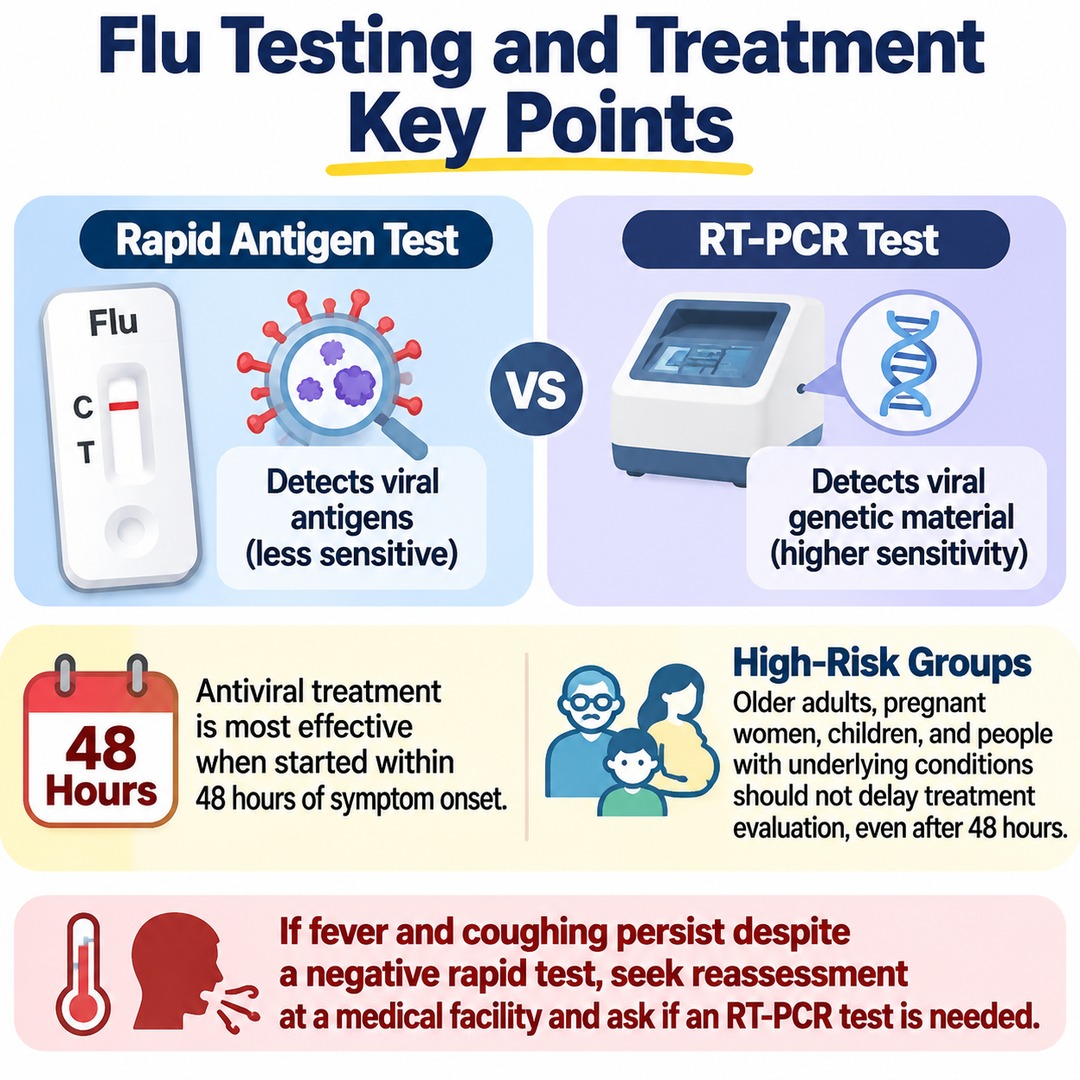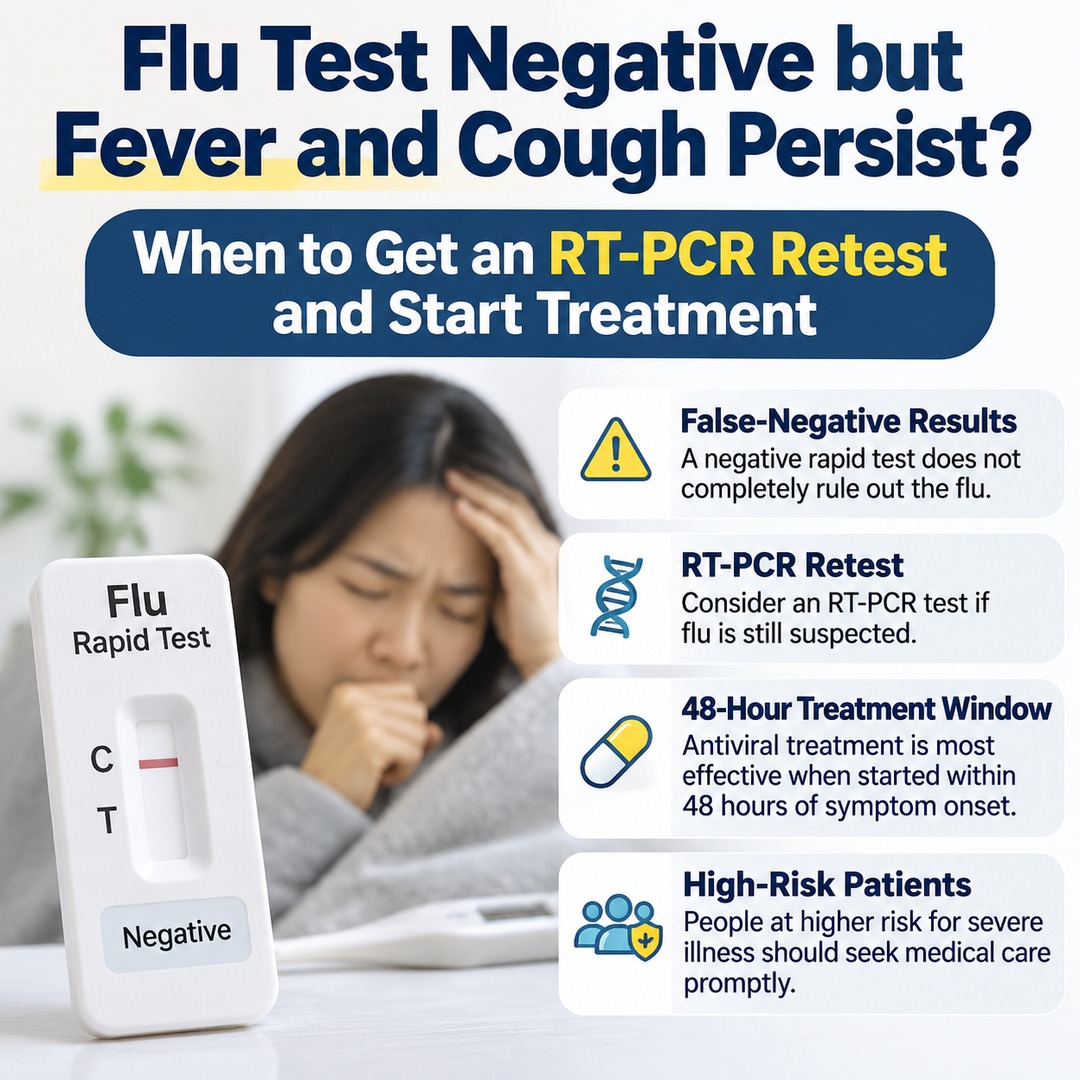
Even if a rapid influenza antigen test comes back negative, persistent fever and coughing do not completely rule out influenza. Rapid antigen tests detect viral antigens and are less sensitive than molecular tests such as PCR. If symptoms are pronounced, it is advisable to seek reassessment at a medical facility and ask whether an RT-PCR test is necessary.
Influenza antiviral medications are most effective when started within 48 hours of symptom onset. However, high-risk groups, including older adults, pregnant women, children, and people with underlying medical conditions, should not delay treatment evaluation even if more than 48 hours have passed.
Can You Still Have the Flu Despite a Negative Rapid Antigen Test?
Yes. A negative rapid antigen test means that influenza viral antigens were not detected in the specimen collected. It does not conclusively establish that there is no influenza virus in your body.
Rapid antigen tests work by detecting viral proteins called antigens. Their advantage is that results are available quickly. However, if the specimen does not contain enough viral antigens, the result may be negative even when an actual infection is present.
A negative result should be interpreted with caution, particularly in the following situations:
A sudden high fever and severe body aches develop during influenza season.
Fever and coughing continue despite a negative test result.
The timing of the test is not appropriate in relation to when symptoms began.
The specimen may not have been collected adequately, or there may have been a problem with the testing process.
The Korea Disease Control and Prevention Agency's (KDCA) 2026–2027 Seasonal Influenza Management Guidelines also explain that rapid antigen tests are less sensitive than molecular tests that detect viral genetic material. A negative result alone cannot completely rule out influenza infection.
Therefore, when symptoms strongly suggest influenza, test results should be evaluated alongside the patient's clinical symptoms.
When Should You Get a PCR Test After a Negative Result?
If your symptoms strongly suggest influenza but your rapid antigen test is negative, rather than automatically repeating the same test, consult a healthcare professional about whether a molecular test such as RT-PCR is appropriate.
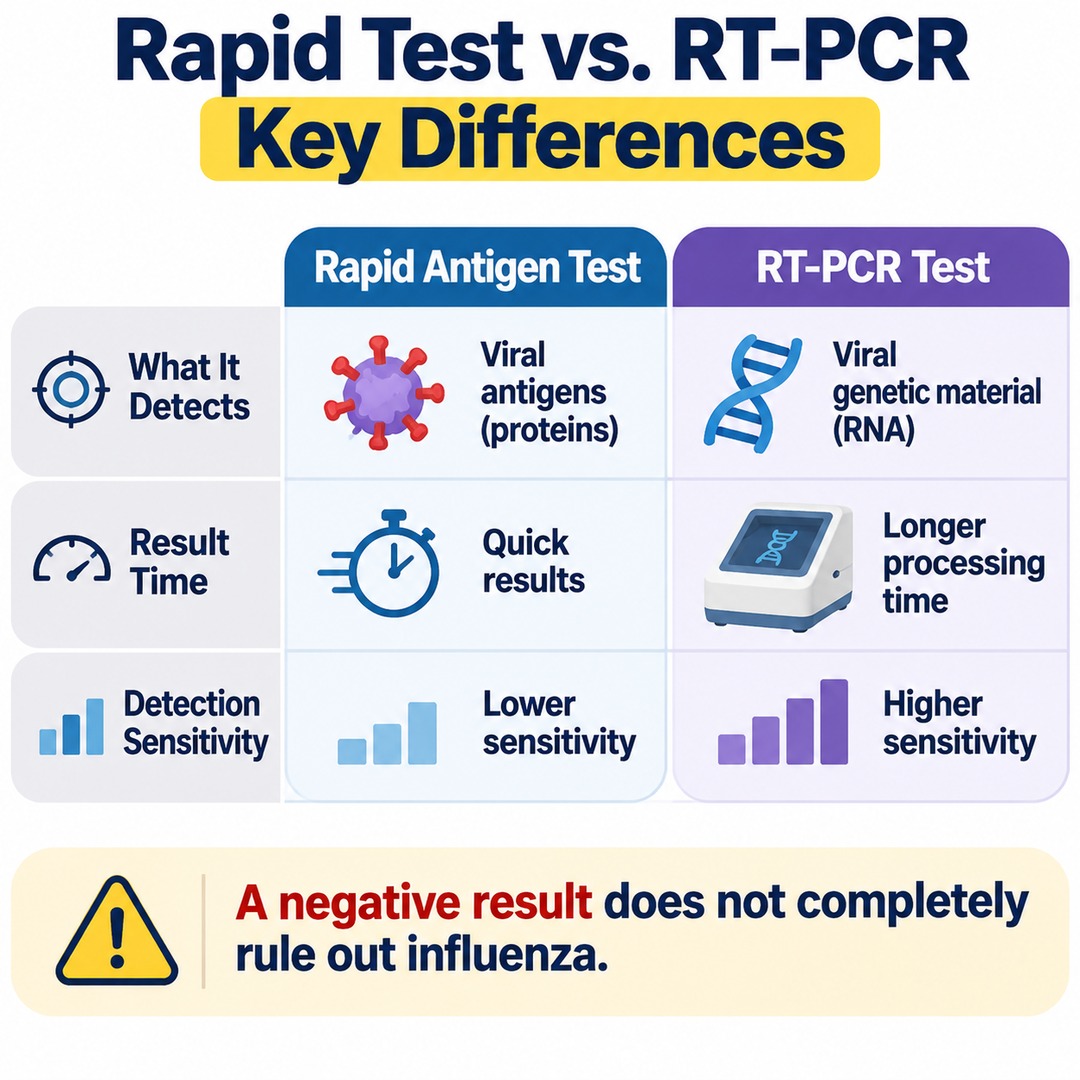
RT-PCR detects the genetic material of the influenza virus. Unlike rapid antigen tests, which look for viral antigens, it identifies the virus's genetic material and generally has higher detection sensitivity than conventional antigen testing.
The differences between the two testing methods are as follows:
| Category | Rapid Antigen Test | RT-PCR |
|---|---|---|
| What it detects | Viral antigens | Viral genetic material |
| Time to results | Approximately 15 minutes | Varies depending on the testing method |
| Sensitivity | Relatively low | Relatively high |
| Main limitation | Risk of false-negative results | False negatives are still possible depending on specimen collection and testing time |
However, PCR is not 100% accurate either. A negative result may occur if the specimen was not collected properly or if the virus was not present at detectable levels when the test was performed.
Therefore, a negative test result should not be treated as definitive proof that influenza is absent.
How Many Days After Symptoms Begin Should You Get Tested for the Flu?
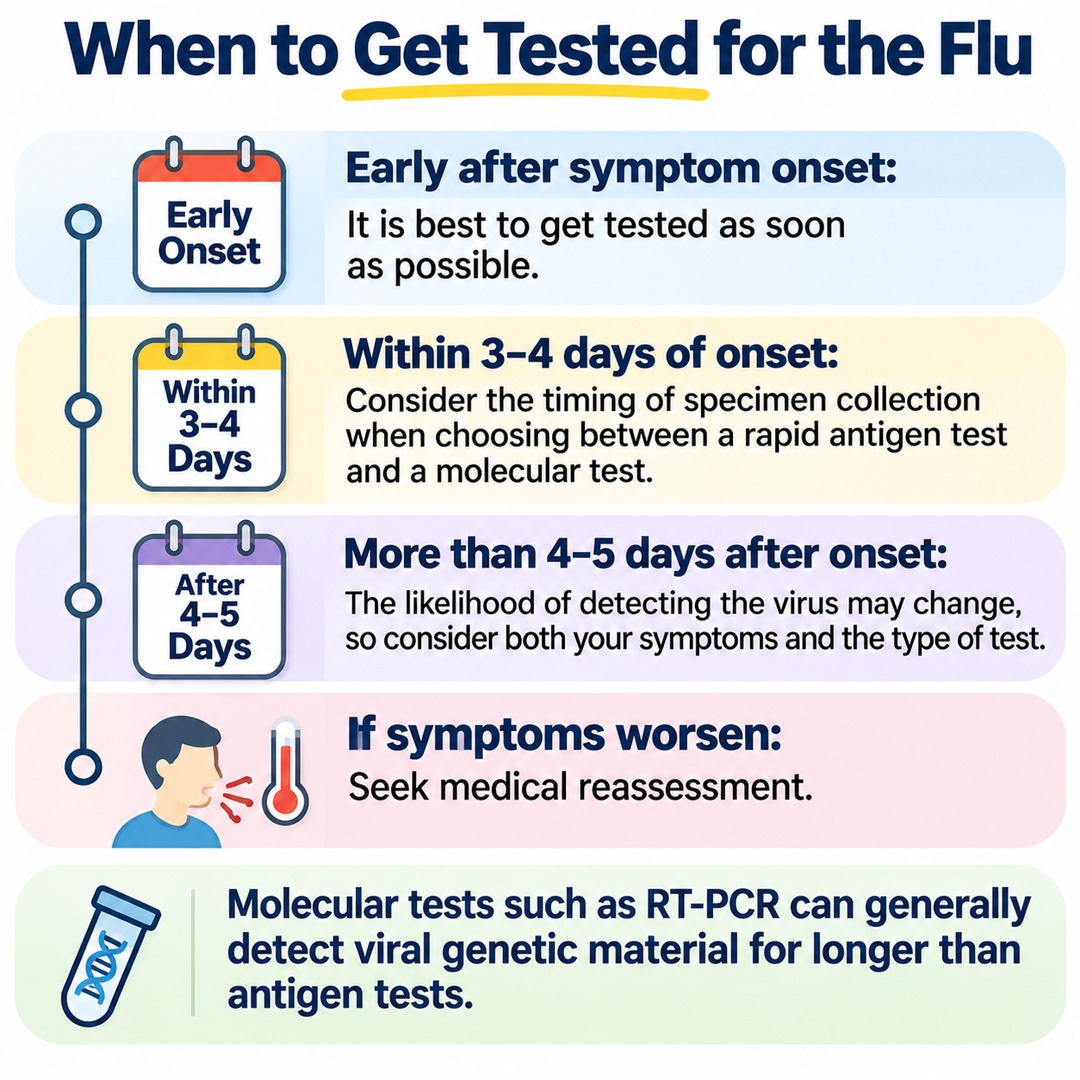
It is best to get tested as early as possible after influenza symptoms begin.
The timing of specimen collection affects test accuracy. In general, collecting a specimen within 3–4 days after symptom onset is favorable for detecting the virus.
Importantly, this does not mean testing becomes pointless after 4–5 days.
Early after symptom onset: It is best to get tested as soon as possible.
Within 3–4 days of symptom onset: The timing of specimen collection should be considered when choosing between rapid antigen testing and molecular testing.
More than 4–5 days after symptom onset: The likelihood of detecting the virus may change, so symptoms and the type of test should both be considered.
If symptoms worsen: Seek medical reassessment regardless of how many days have passed.
Molecular tests such as RT-PCR can generally detect viral genetic material for longer than antigen tests. A delayed test does not automatically mean testing should be abandoned.
Why Does the 48-Hour Window Matter for Flu Treatment?
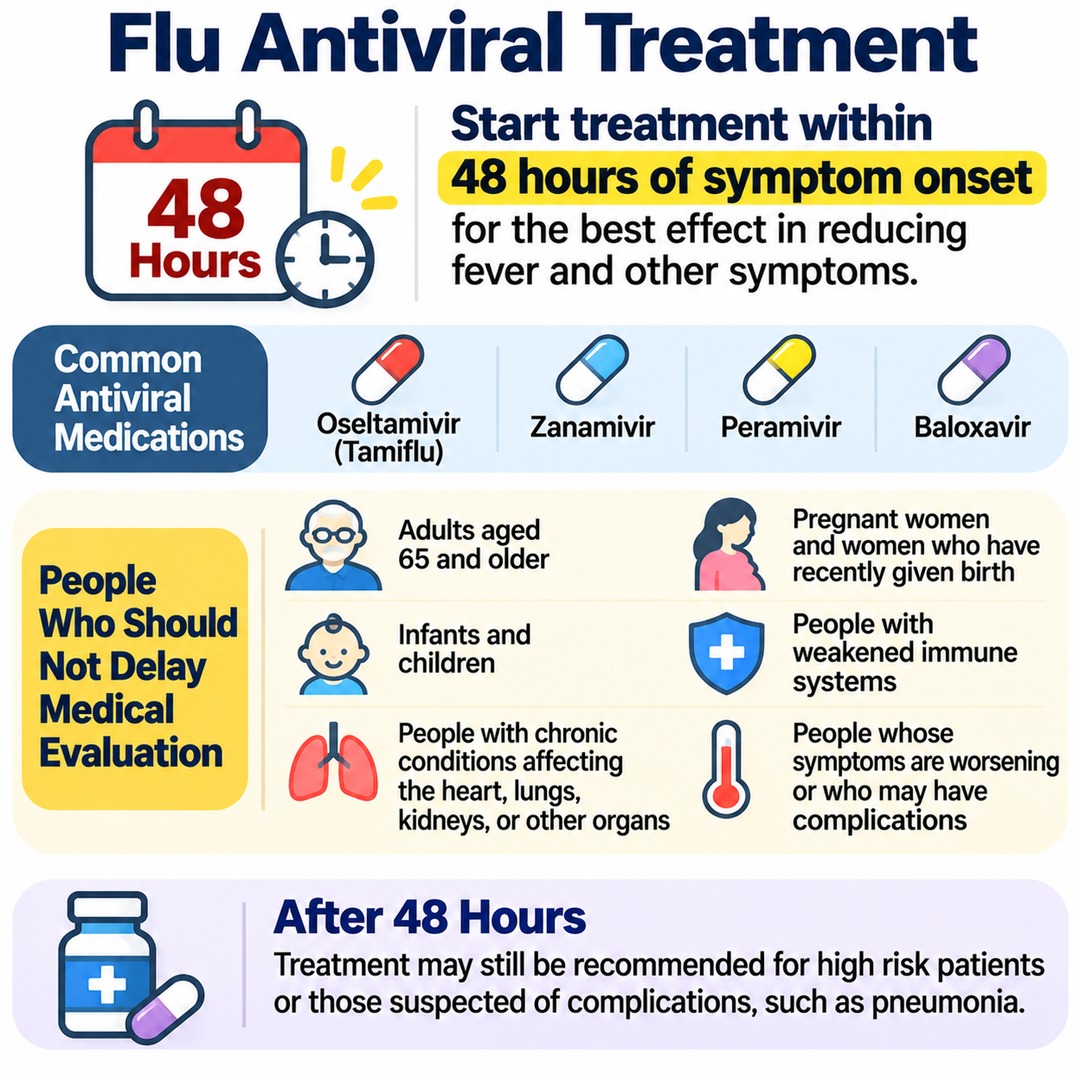
Influenza antiviral medications are most effective at reducing the duration of fever and other systemic symptoms when treatment begins within 48 hours after symptoms start.
Common influenza antiviral medications include oseltamivir (Tamiflu), zanamivir, peramivir, and baloxavir.
The KDCA's 2026–2027 Seasonal Influenza Management Guidelines also specify that the preferred initial treatment window for neuraminidase inhibitors and baloxavir is within 48 hours of symptom onset.
It is important not to miss the treatment window simply because you are waiting for test results.
In particular, the following people should not postpone medical evaluation solely because a rapid antigen test was negative:
Adults aged 65 and older
Pregnant women and women who have recently given birth
Infants and children
People with weakened immune systems
People with chronic conditions affecting the heart, lungs, kidneys, or other organs
People whose symptoms are worsening or who may have complications
For high-risk patients and those with severe or progressive illness, healthcare professionals may decide to begin antiviral treatment even before test results are confirmed.
Treatment does not automatically become ineffective or unavailable after 48 hours. Antiviral treatment may still be recommended for high-risk patients or those suspected of having complications such as pneumonia, even when more than 48 hours have passed since symptom onset.
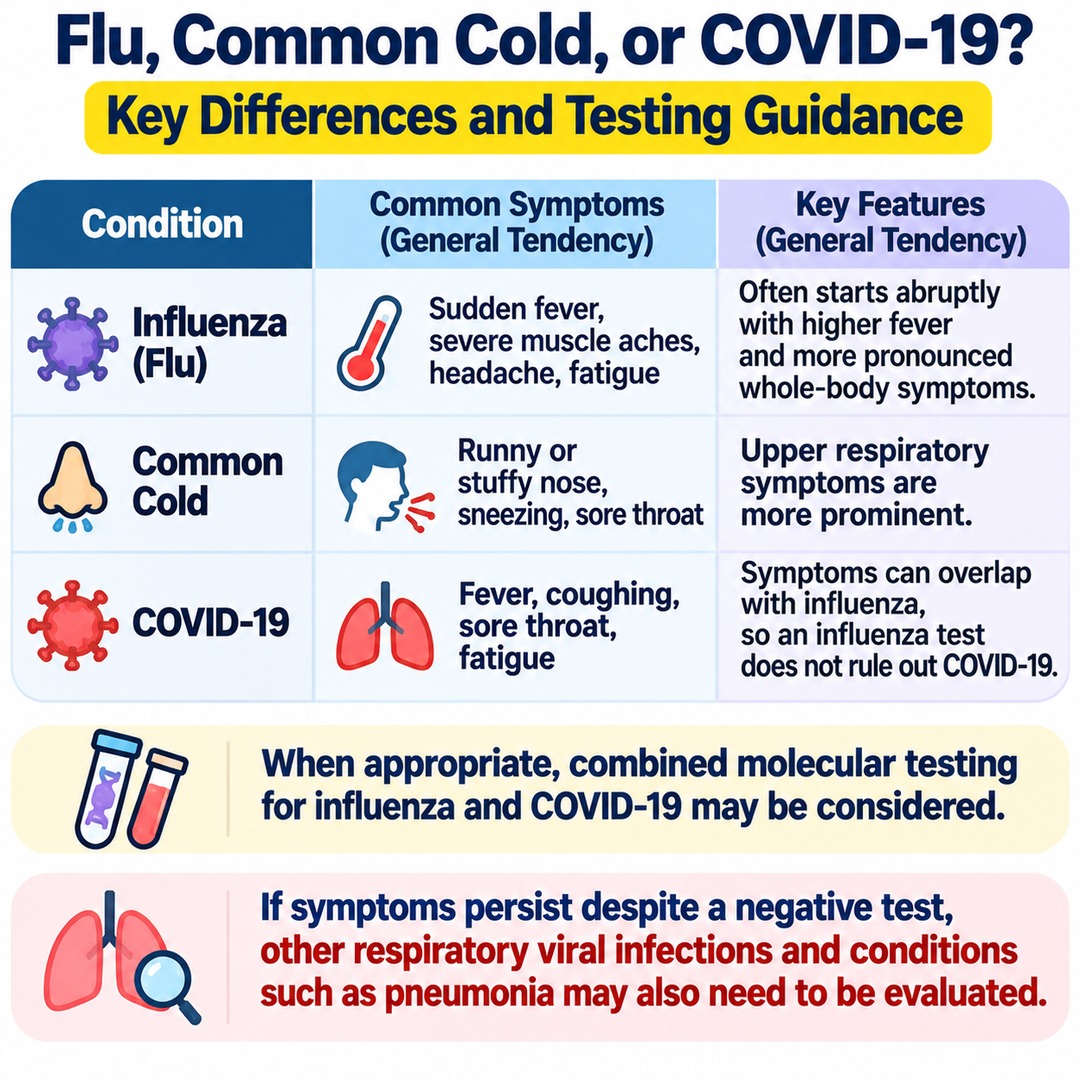
Can You Distinguish the Flu, COVID-19, and the Common Cold by Symptoms Alone?
It is difficult to distinguish them with complete accuracy.
Influenza may cause a sudden high fever, severe muscle aches, headaches, and fatigue. The common cold more often involves prominent upper respiratory symptoms, such as a runny or stuffy nose.
However, these are only general characteristics that may help with comparison. They are not criteria for confirming a diagnosis.
| Symptom | Influenza | Common Cold |
|---|---|---|
| Onset | Often sudden | Often gradual |
| High fever | Relatively common | Relatively uncommon |
| Muscle aches | Can be severe | Usually milder |
| Cough | Common | May occur |
| Fatigue | Can be severe | Usually milder |
COVID-19 can also cause symptoms that overlap with influenza, including fever, coughing, sore throat, and fatigue.
Having an influenza test does not rule out COVID-19. When both infections are circulating, combined molecular testing for influenza and COVID-19 may be considered when appropriate.
If symptoms persist despite a negative test, other respiratory viral infections and conditions such as pneumonia may also need to be evaluated during medical assessment.
When Medical Care Should Come Before Repeat Testing
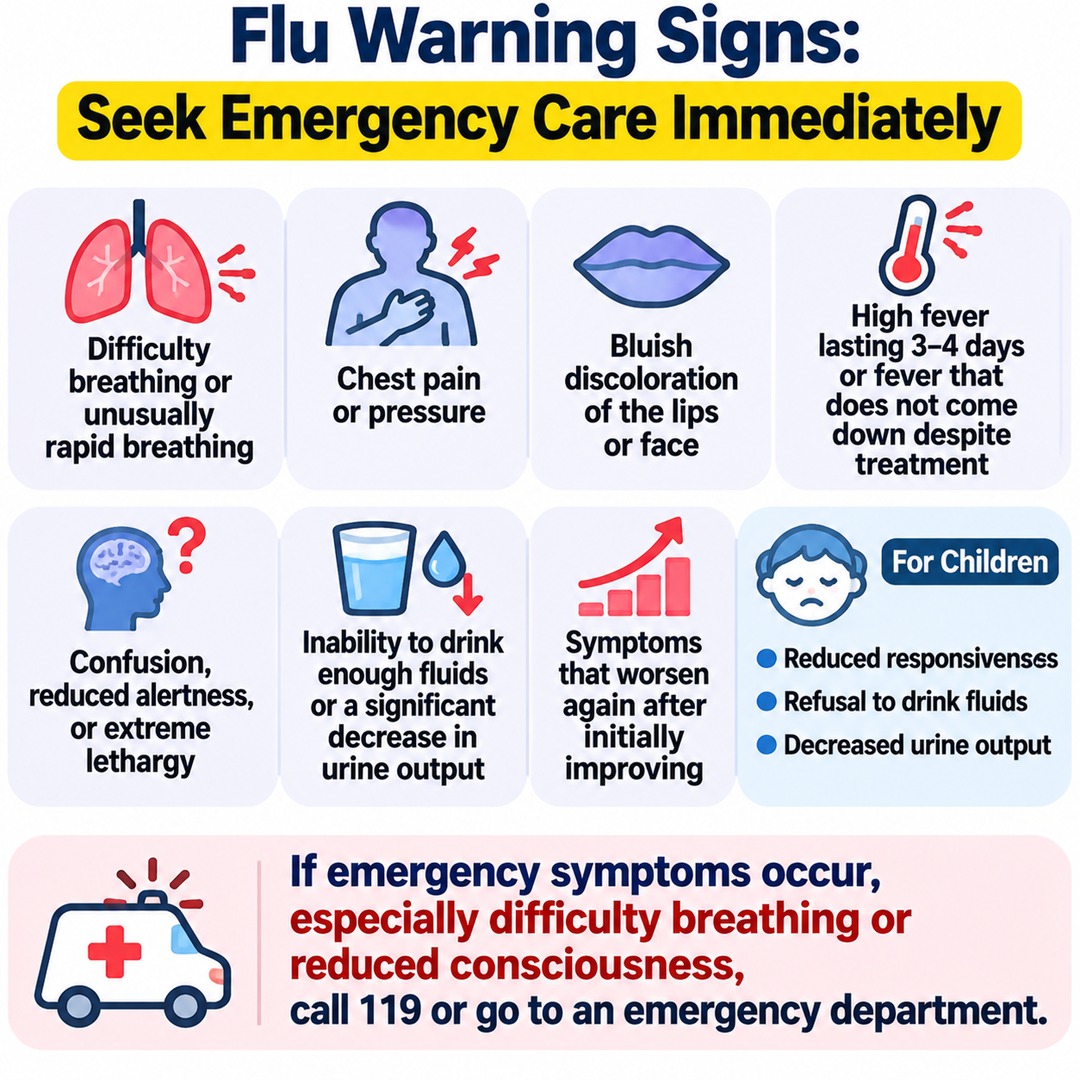
If you develop severe symptoms such as difficulty breathing or chest pain, do not wait for a PCR retest appointment. Seek medical attention immediately.
Pay particular attention to the following warning signs:
Difficulty breathing or unusually rapid breathing
Chest pain or pressure
Bluish discoloration of the lips or face
High fever lasting 3–4 days or longer, or fever that does not come down despite taking fever-reducing medication
Confusion, reduced alertness, or extreme lethargy
Inability to drink enough fluids or a significant decrease in urine output
Symptoms that worsen again after initially improving
For children, also watch for reduced responsiveness, refusal to drink fluids, and decreased urine output.
If emergency symptoms occur, particularly difficulty breathing or reduced consciousness, call 119 in South Korea or go to an emergency department.
What to Tell Your Doctor After a Negative Flu Test
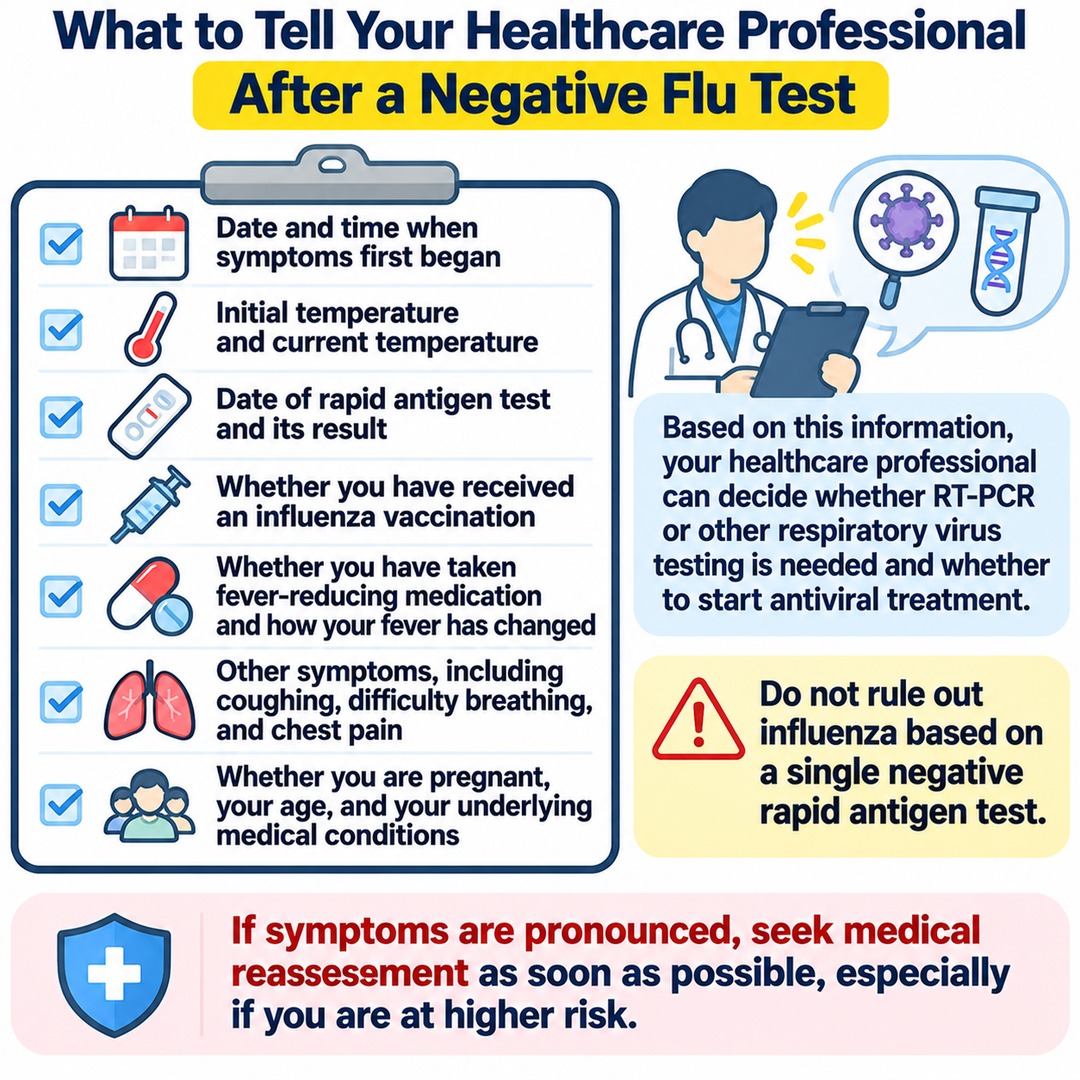
If your initial test was negative but fever and coughing continue, providing the following information to your healthcare professional can help guide decisions about further testing and treatment.
1. The date and time when symptoms first began
2. Your initial measured temperature and your current temperature
3. The date of your rapid antigen test and its result
4. Whether you have received an influenza vaccination
5. Whether you have taken fever-reducing medication and how your fever has changed
6. Other symptoms, including coughing, difficulty breathing, and chest pain
7. Whether you are pregnant, your age, any underlying medical conditions, and whether you have a weakened immune system
Based on this information, your healthcare professional can determine whether RT-PCR or testing for other respiratory viruses is necessary and whether antiviral treatment should be started.
The key point is not to rule out influenza based on a single negative rapid antigen test. If symptoms are pronounced, seek medical reassessment as soon as possible. This is especially important for high-risk individuals, who should seek medical care without waiting until the 48-hour treatment window has passed.