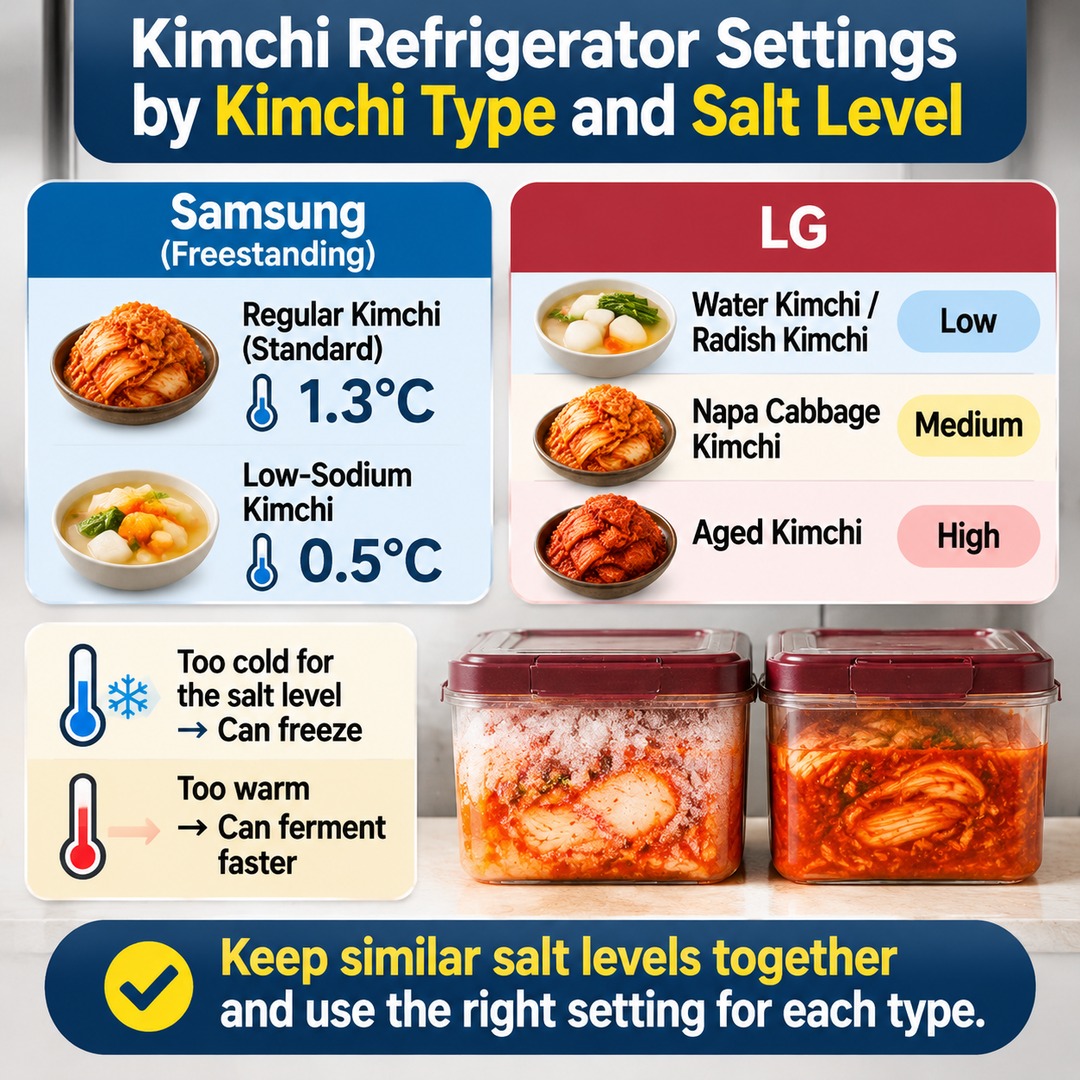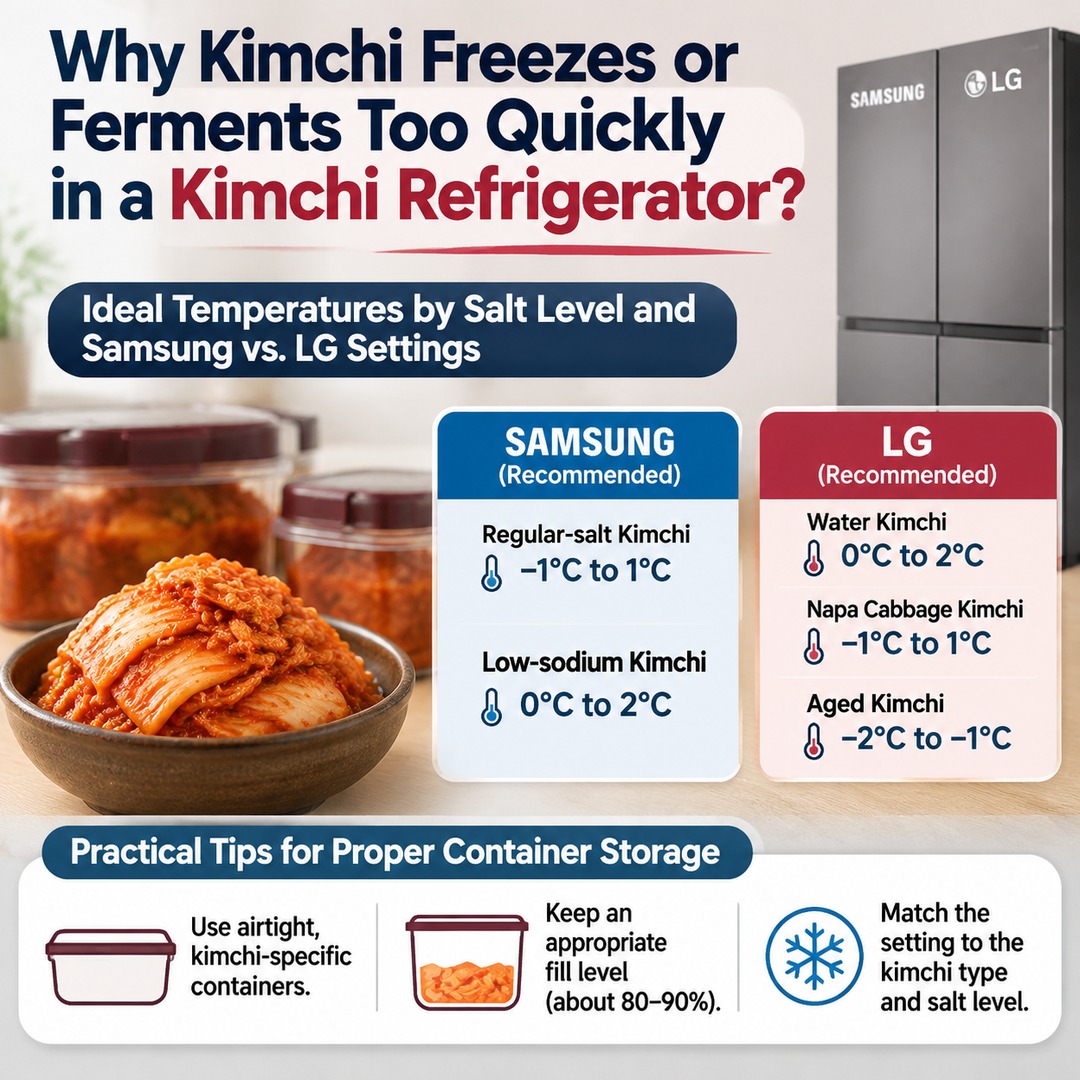
If kimchi stored in your kimchi refrigerator freezes or turns sour sooner than expected, the first things to check are the storage temperature and the kimchi's salt content. For Samsung freestanding models, the recommended Standard settings are -1.3°C for regular kimchi and -0.5°C for low-sodium kimchi. LG distinguishes between water kimchi and radish kimchi (Low), napa cabbage kimchi (Medium), and aged kimchi (High). Even in the same refrigerator, the appropriate setting depends on the type of kimchi and how salty it is.
Problems can occur particularly when homemade kimjang kimchi (kimchi prepared in large batches for the winter) and commercially purchased low-sodium kimchi are stored together in the same compartment. Rather than automatically selecting the coldest setting based only on the temperature indicator, identify the characteristics of each type of kimchi first.
Why Does Kimchi Freeze in a Kimchi Refrigerator?
One of the main reasons kimchi freezes is that the storage temperature is too low for its salt content. Water kimchi and low-sodium kimchi, which contain less salt, are more likely to freeze at low temperatures than regular napa cabbage kimchi or aged kimchi.
Both Samsung Electronics and LG Electronics recommend selecting different storage functions according to the type of kimchi and its salt content.
The circumstances in which kimchi freezes or develops a thin layer of ice can be distinguished as follows:
Water kimchi and dongchimi: Because they have relatively low salt content, they require greater attention to freezing.
Low-sodium napa cabbage kimchi: Thin ice may form if it is stored using the settings intended for regular kimchi.
Regular napa cabbage kimchi: Start with the Standard or Medium setting recommended by the manufacturer.
Aged kimchi: If it has a high salt content, a colder storage setting may be appropriate for long-term storage.
If you store several types of kimchi, avoid trying to manage all of them with a single setting. Whenever possible, separate kimchi varieties with similar salt levels.
What Are the Recommended Samsung Kimchi Refrigerator Temperatures by Salt Level?
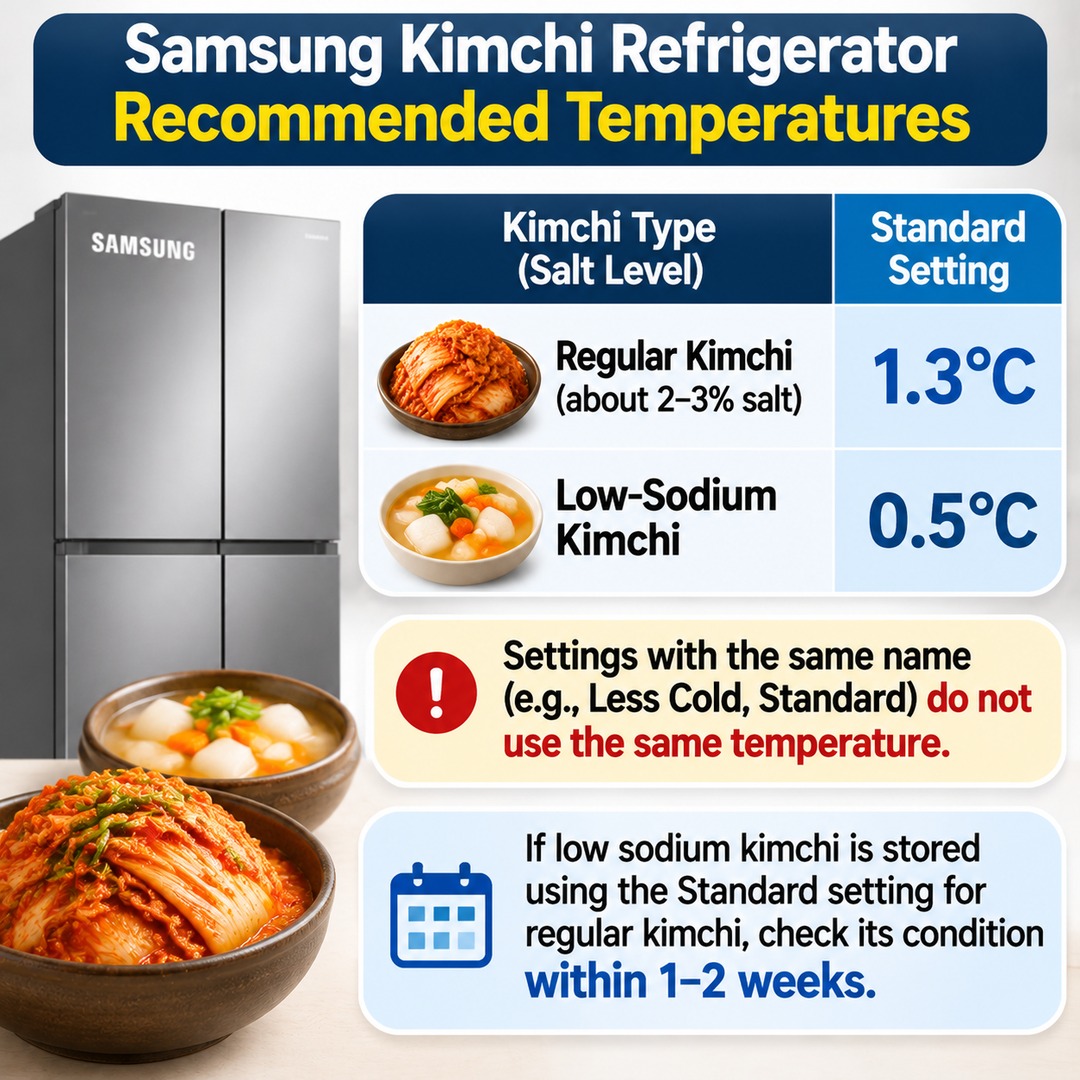
According to Samsung Electronics Service, the recommended settings differ between regular and low-sodium kimchi in freestanding models.
Samsung recommended temperature settings
Regular kimchi
| Storage setting | Temperature | Suitable kimchi |
|---|---|---|
| Less Cold | -0.8°C | Kimchi that develops thin ice at the Standard setting |
| Standard | -1.3°C | Napa cabbage kimchi, kkakdugi (cubed radish kimchi), and green onion kimchi |
| Colder | -1.8°C | Aged kimchi and high-salt kimchi intended for long-term storage |
Low-sodium kimchi
| Storage setting | Temperature | Suitable kimchi |
|---|---|---|
| Less Cold | 0°C | Kimchi that develops thin ice at the Standard setting |
| Standard | -0.5°C | Commercially available low-sodium kimchi |
| Colder | -1.0°C | White kimchi, dongchimi, nabak kimchi (radish and napa cabbage water kimchi), and yeolmu water kimchi |
One important point is that the Less Cold setting for regular kimchi and the Less Cold setting for low-sodium kimchi do not use the same temperature.
For example, the Standard setting for regular kimchi is -1.3°C, while the Standard setting for low-sodium kimchi is -0.5°C. Do not assume that settings with the same name correspond to identical temperatures.
Samsung explains that kimchi with an average salt content of 2–3% should be stored using the Regular Kimchi mode. However, the actual salt content can vary depending on the product and preparation method, so you should also monitor the condition of the kimchi.
If low-sodium kimchi is stored in a compartment set to Standard for regular kimchi, it is advisable to check its condition within one to two weeks.
How Do LG Kimchi Refrigerator Settings Differ for Water Kimchi and Aged Kimchi?
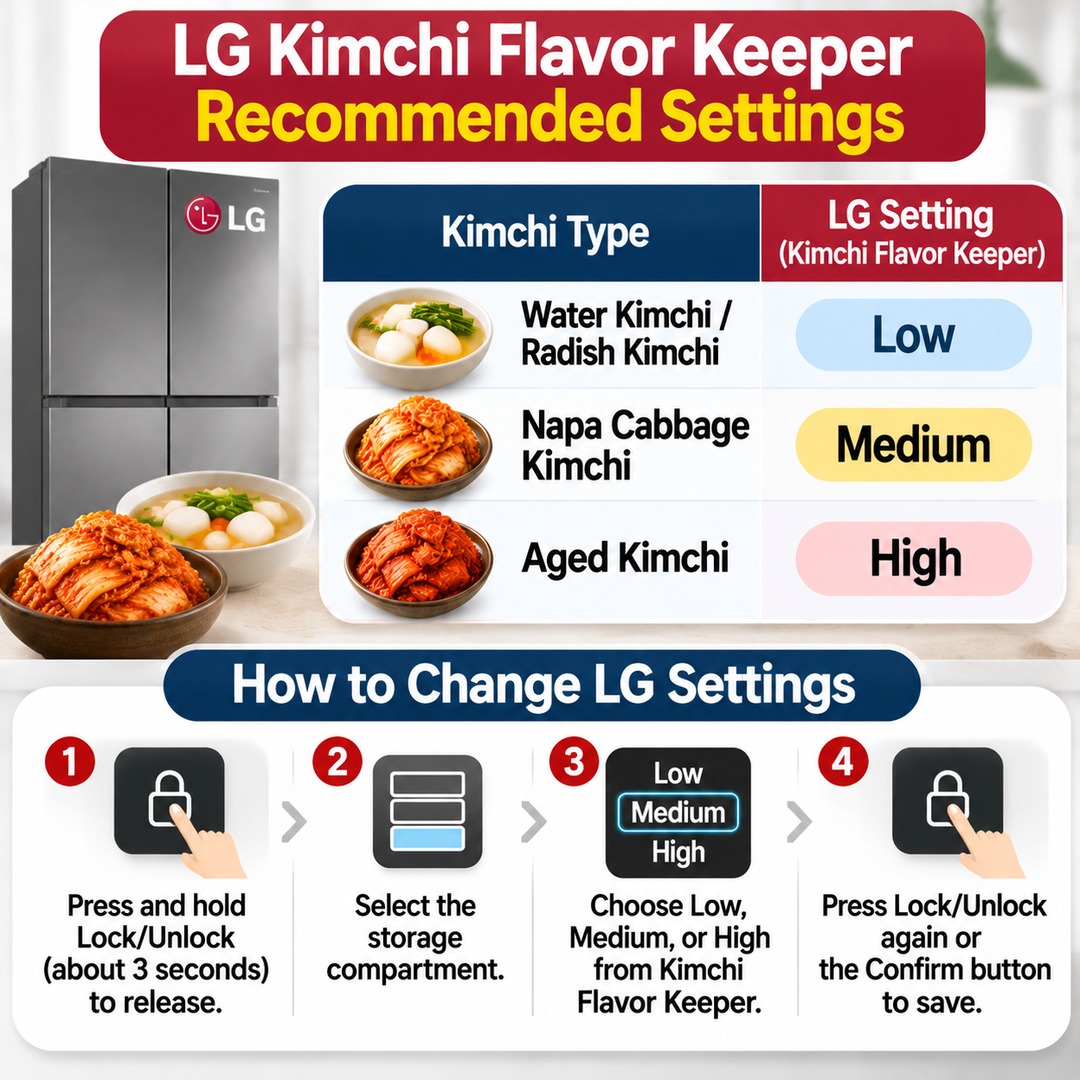
LG Electronics recommends selecting the Low, Medium, or High setting under its Kimchi Flavor Keeper function according to the salt content of the kimchi.
LG recommended settings by kimchi type
| Kimchi type | Setting | Recommended temperature for freestanding models |
|---|---|---|
| Water kimchi and radish kimchi | Low | -1.0°C |
| Napa cabbage kimchi and mustard leaf kimchi | Medium | -1.5°C |
| Aged kimchi | High | -2.0°C |
Top-opening models use different temperatures.
| Setting | Recommended temperature for top-opening models |
|---|---|
| Low | -0.7°C |
| Medium | -1.2°C |
| High | -1.7°C |
These figures are manufacturer-recommended values for the specified model types. Actual settings may vary depending on the product.
To change the settings on an LG kimchi refrigerator, follow these steps:
1. Press and hold the Lock/Unlock button on the control panel for approximately three seconds to release the lock.
2. Select the storage compartment whose temperature you want to change.
3. Select the desired Low, Medium, or High function from the Kimchi Flavor Keeper menu.
4. Press the Lock/Unlock button again or, depending on the model, press the Confirm button to save the setting.
Some models have different compartment selection or unlocking procedures, so check the display instructions and the product manual.
How Should You Adjust the Settings When Kimchi Freezes or Turns Sour Too Quickly?
The two problems require adjustments in opposite directions.
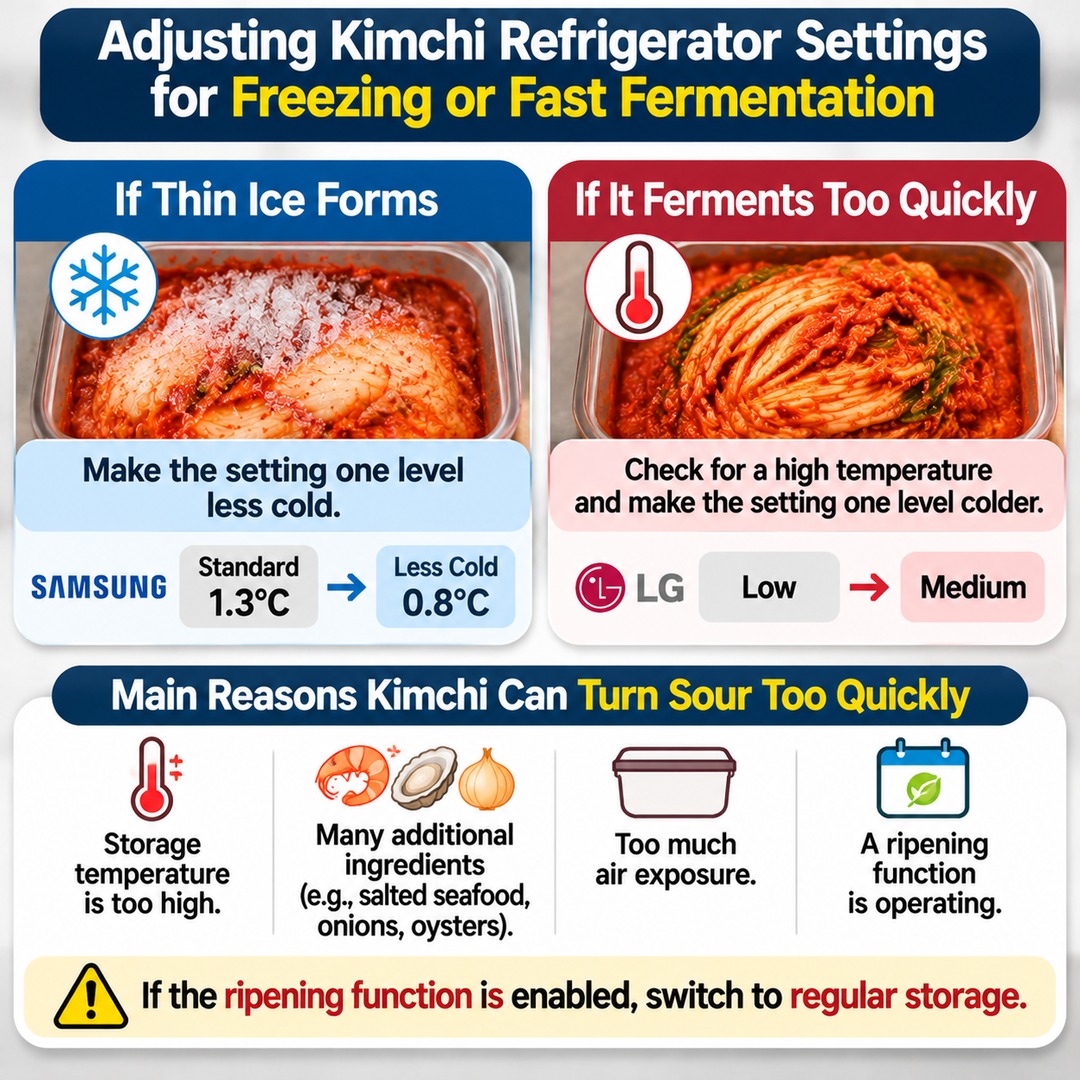
If thin ice forms on your kimchi, make the setting one level less cold.
Samsung Electronics explains that if thin ice forms while regular kimchi is stored at the Standard setting (-1.3°C), you should switch to Less Cold (-0.8°C).
LG Electronics also recommends checking whether the selected setting matches the type of kimchi and adjusting the temperature if freezing occurs.
Conversely, if kimchi ripens or turns sour too quickly, check whether the storage temperature is set too high. LG Electronics suggests making the setting one level colder, such as changing from Low to Medium.
However, changing the temperature alone may not solve the problem.
According to LG Electronics customer support, the following factors can contribute to kimchi turning sour too quickly:
The storage temperature is set too high.
The kimchi contains large amounts of additional ingredients such as salted seafood, onions, or oysters.
The kimchi is exposed to too much air.
A ripening function is currently operating.
In particular, distinguish between the ripening function and the regular storage function. If the function designed to ripen kimchi more quickly is enabled, switch to regular storage.
Can Kimchi Containers and the Amount of Brine Also Affect Freezing?
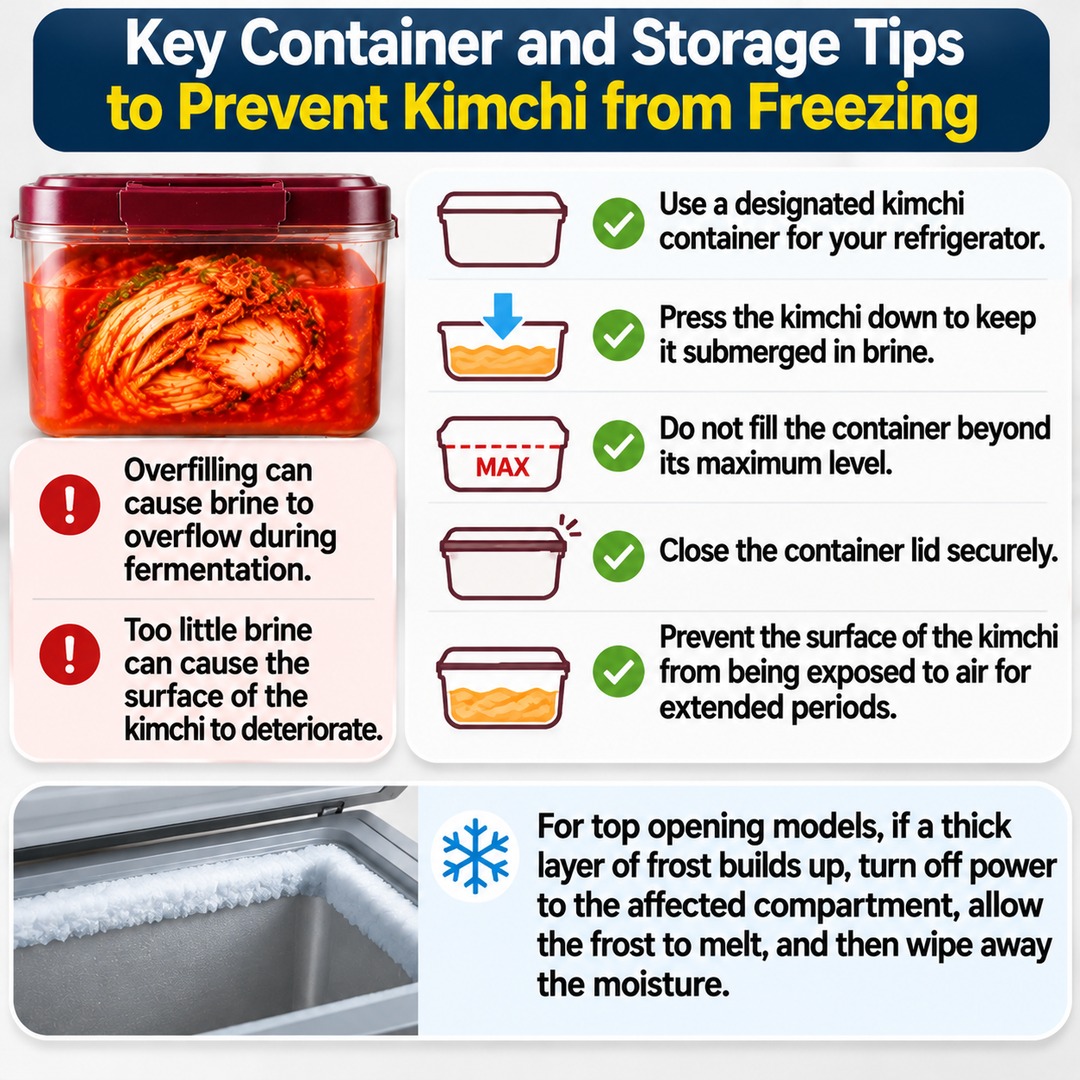
When kimchi freezes, check not only the refrigerator settings but also the storage container and how much of the kimchi is exposed to air.
LG Electronics recommends using the designated kimchi container and keeping the kimchi submerged in its brine.
Check the following when packing kimchi into a container:
Use a designated kimchi container suitable for your refrigerator.
Press the kimchi down so that it remains submerged in the brine.
Do not fill the container beyond its indicated maximum level.
Close the kimchi container lid securely.
Prevent the surface of the kimchi from being exposed to air for extended periods.
If you overfill a kimchi container, brine may overflow during fermentation. On the other hand, if there is too little brine and the surface of the kimchi is exposed, its surface condition may deteriorate. Maintain an appropriate amount of kimchi and brine.
If you have a top-opening kimchi refrigerator, also check whether a thick layer of frost has accumulated inside. LG Electronics recommends turning off power to the affected compartment, allowing the frost to melt, and then wiping away the moisture when excessive frost builds up.
Why Should You Wait Before Judging the Results After Changing the Temperature?
Changing the setting does not mean that the temperature inside the kimchi container changes immediately.
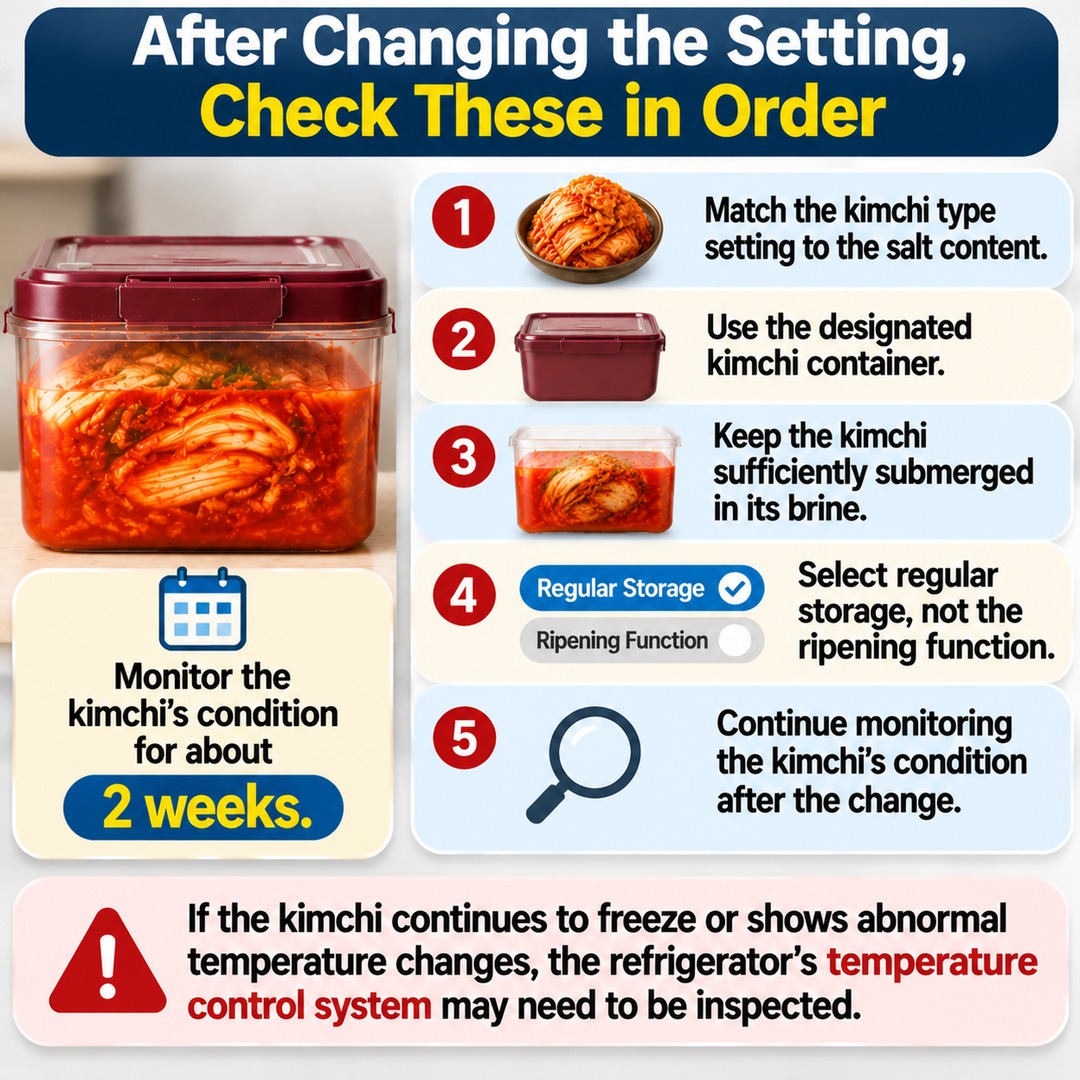
LG Electronics explains that the contents of the kimchi container need time to adjust after a temperature change and recommends monitoring their condition for approximately two weeks.
After adjusting the temperature, check the following items in order:
1. Make sure the selected kimchi type setting matches the salt content of the kimchi being stored.
2. Check whether you are using the designated kimchi container.
3. Make sure the kimchi is sufficiently submerged in its brine.
4. Confirm that regular storage, rather than the ripening function, is selected.
5. Continue monitoring the condition of the kimchi after changing the setting.
If a particular compartment continues to freeze the kimchi or shows abnormal temperature changes despite these adjustments, the refrigerator's temperature control system may need to be inspected.
Frequently Asked Questions About Kimchi Refrigerator Storage Temperatures
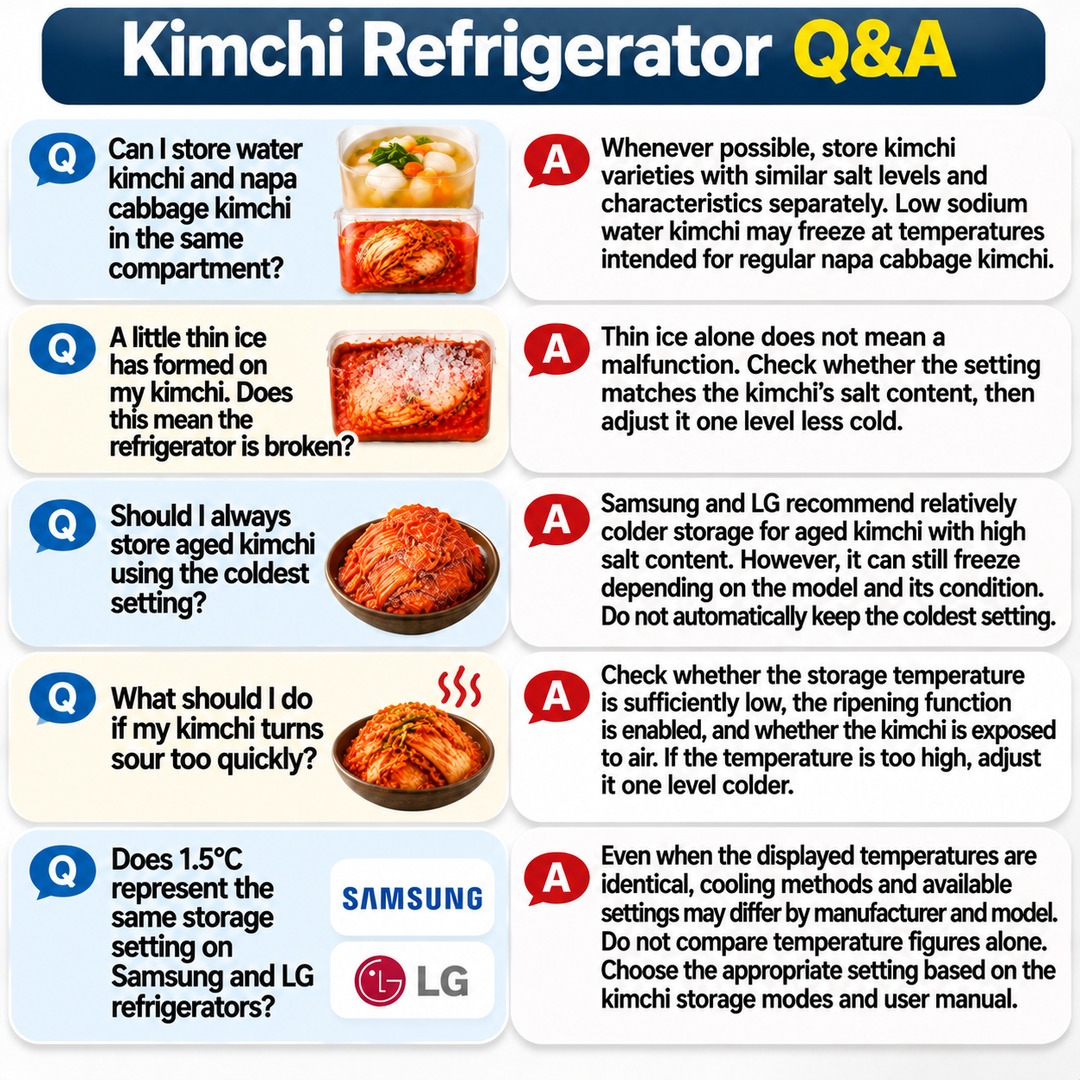
Q. Can I store water kimchi and napa cabbage kimchi in the same compartment?
Whenever possible, separate kimchi varieties with similar salt levels and characteristics. Low-sodium water kimchi may freeze at temperatures intended for regular napa cabbage kimchi, so consider the storage requirements of each type separately.
Q. A little thin ice has formed on my kimchi. Does this mean the refrigerator is broken?
The presence of thin ice alone does not mean that the refrigerator is malfunctioning. First, check whether the current setting is appropriate for the salt content of the kimchi, then try adjusting it one level less cold.
Q. Should I always store aged kimchi using the coldest setting?
Both Samsung Electronics and LG Electronics recommend relatively colder storage functions for aged kimchi with high salt content. However, kimchi can still freeze depending on the model and its condition, even at the coldest setting. Do not automatically keep the refrigerator at its coldest setting.
Q. What should I do if my kimchi turns sour too quickly?
Check whether the storage temperature is sufficiently low, whether the ripening function is enabled, and whether the kimchi is exposed to air. If the temperature is too high, you can adjust it one level colder.
Q. Does -1.5°C represent the same storage setting on Samsung and LG refrigerators?
Even when the displayed temperatures are identical, cooling methods and available settings may differ depending on the manufacturer and product model. Do not compare temperature figures alone. Choose the appropriate setting based on the kimchi storage modes and user manual for your specific refrigerator.