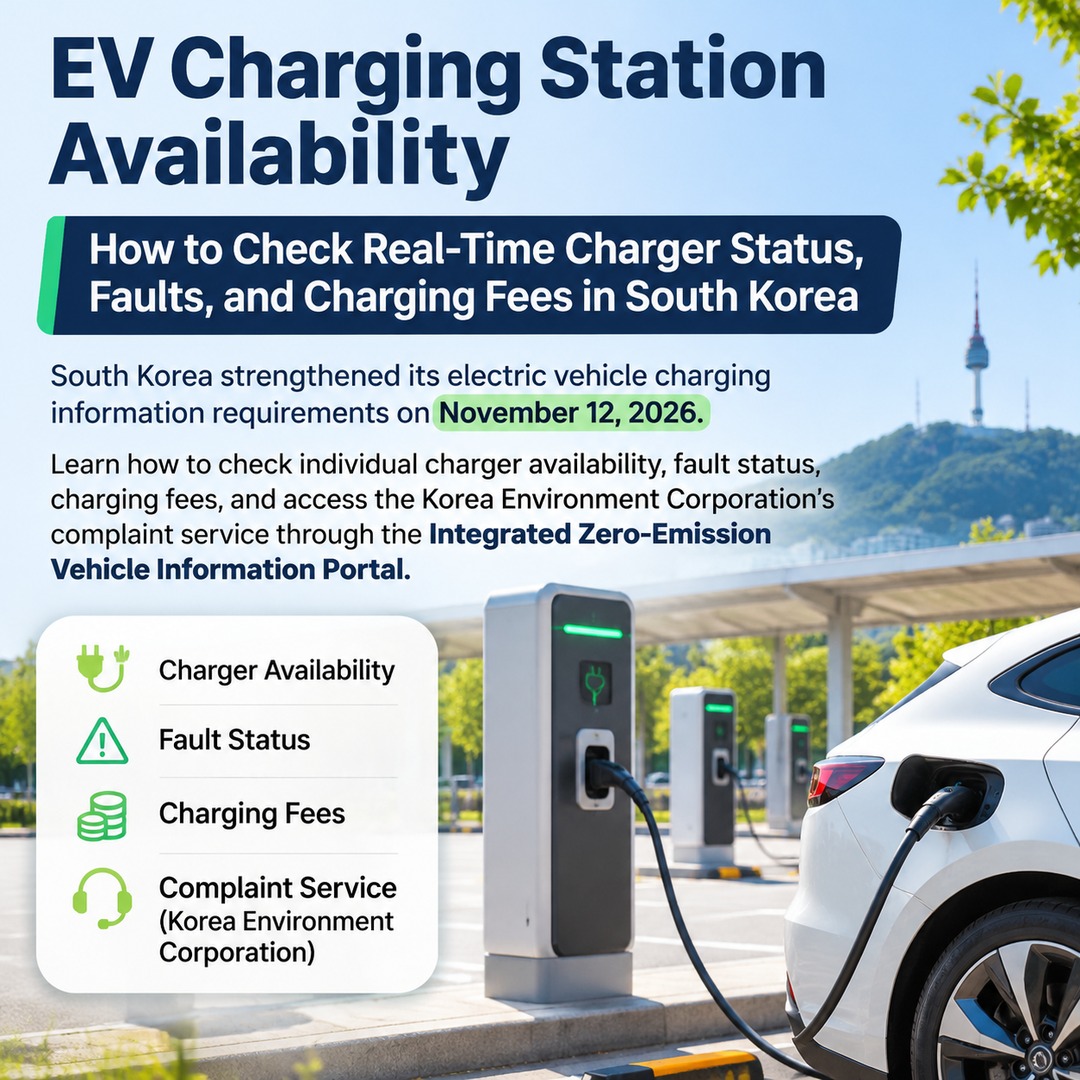
Even when an app shows an EV charging station as available, you cannot completely rule out the possibility of arriving and finding that the charger does not work. Under amendments to South Korea's Clean Air Conservation Act that took effect on November 12, 2026, charging operators face strengthened obligations to provide information about charger status, faults, and fees. Drivers can now check individual charger availability and pricing through the Integrated Zero-Emission Vehicle Information Portal (Mujagonghaecha Tonghap Nuri-jip) and report inaccurate information to the Korea Environment Corporation.
How EV Charging Station Information Requirements Changed on November 12
The main purpose of the regulatory change is to provide more than just charging station locations. It is intended to help drivers determine whether individual chargers are actually available for use.
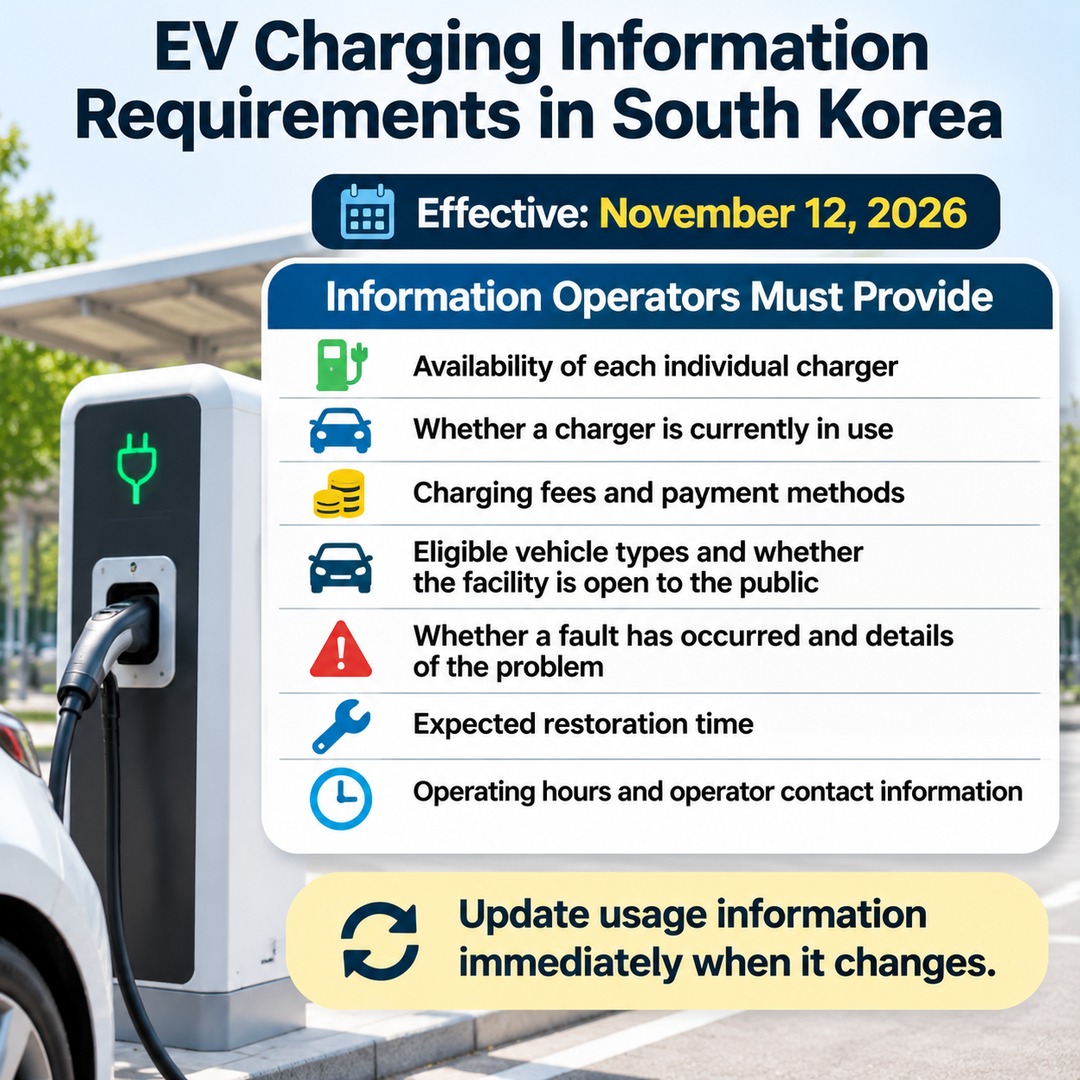
Under the amended Clean Air Conservation Act and its Enforcement Rules in South Korea, operators of electric vehicle and hydrogen vehicle charging facilities must register or provide installation and usage information through the designated information management system.
The required usage information includes:
Availability of each individual charger
Whether a charger is currently in use
Charging fees and payment methods
Eligible vehicle types and whether the facility is open to the public
Whether a fault has occurred and details of the problem
Expected restoration time
Operating hours and operator contact information
The ability to check each charger's status is particularly important. Knowing that a charging station is operating does not necessarily mean that the specific charger you intend to use is functioning properly.
The regulations also establish deadlines for registering information.
| Information category | Registration or provision deadline |
|---|---|
| Installation information for new charging facilities | Within 10 days of the start of operation |
| Changes to installation information | Within 5 days of the change |
| Usage information for new charging facilities | Within 10 days of the start of operation |
| Changes to usage information | Immediately after the change |
For these 10-day and 5-day periods, Saturdays, Sundays, public holidays, and other excluded days are not counted.
The requirement to update usage information immediately when it changes is an important distinction from older systems that primarily provided basic location information.
What Does an EV Charging Station's Availability Status Actually Mean?
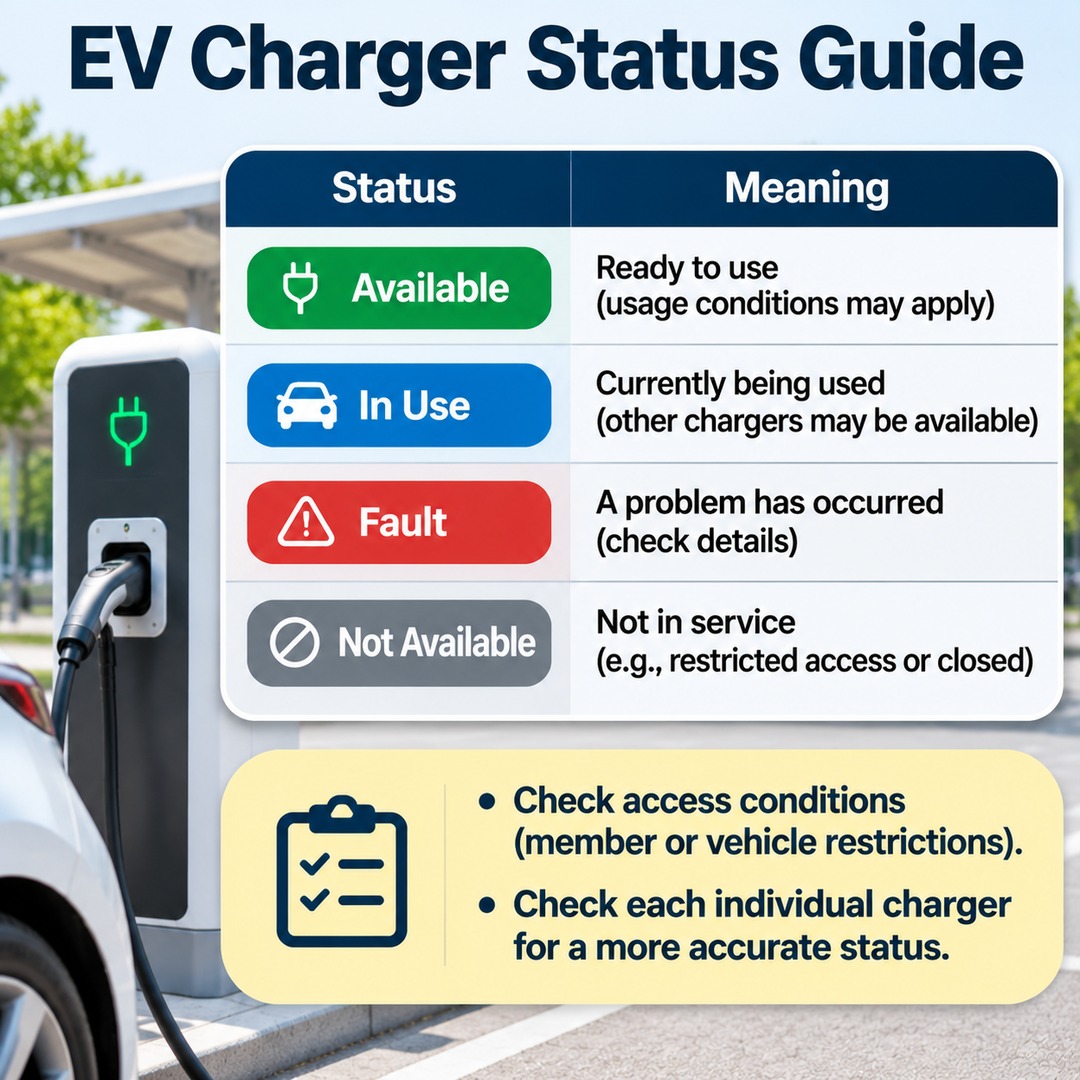
The Find a Charging Station feature on South Korea's Integrated Zero-Emission Vehicle Information Portal allows users to check different status categories for individual chargers.
Charger status guide
| Display status | Meaning | What to do |
|---|---|---|
| Available | The charger is reported as available for use | Recheck its status on arrival |
| In Use | Another vehicle is charging | Check whether you need to wait |
| Unavailable | The charger cannot currently be used | Choose another charger |
| Status Unconfirmed | Status information is unavailable or unverified | Contact the operator |
| Restricted Access | Use is limited to eligible users | Check the access requirements |
One important point is that an Available status does not guarantee that every usage condition has been met.
Even if a charger is functioning normally, the facility may be restricted to certain vehicles or registered members. Locations such as apartment complexes and business premises may also restrict access to outside vehicles, so check whether the station is open to the public.
Conversely, a station marked In Use may have other unoccupied chargers. Checking the status of each individual charger is more accurate than relying on the overall station status.
How to Check Real-Time EV Charger Status on the Integrated Zero-Emission Vehicle Information Portal
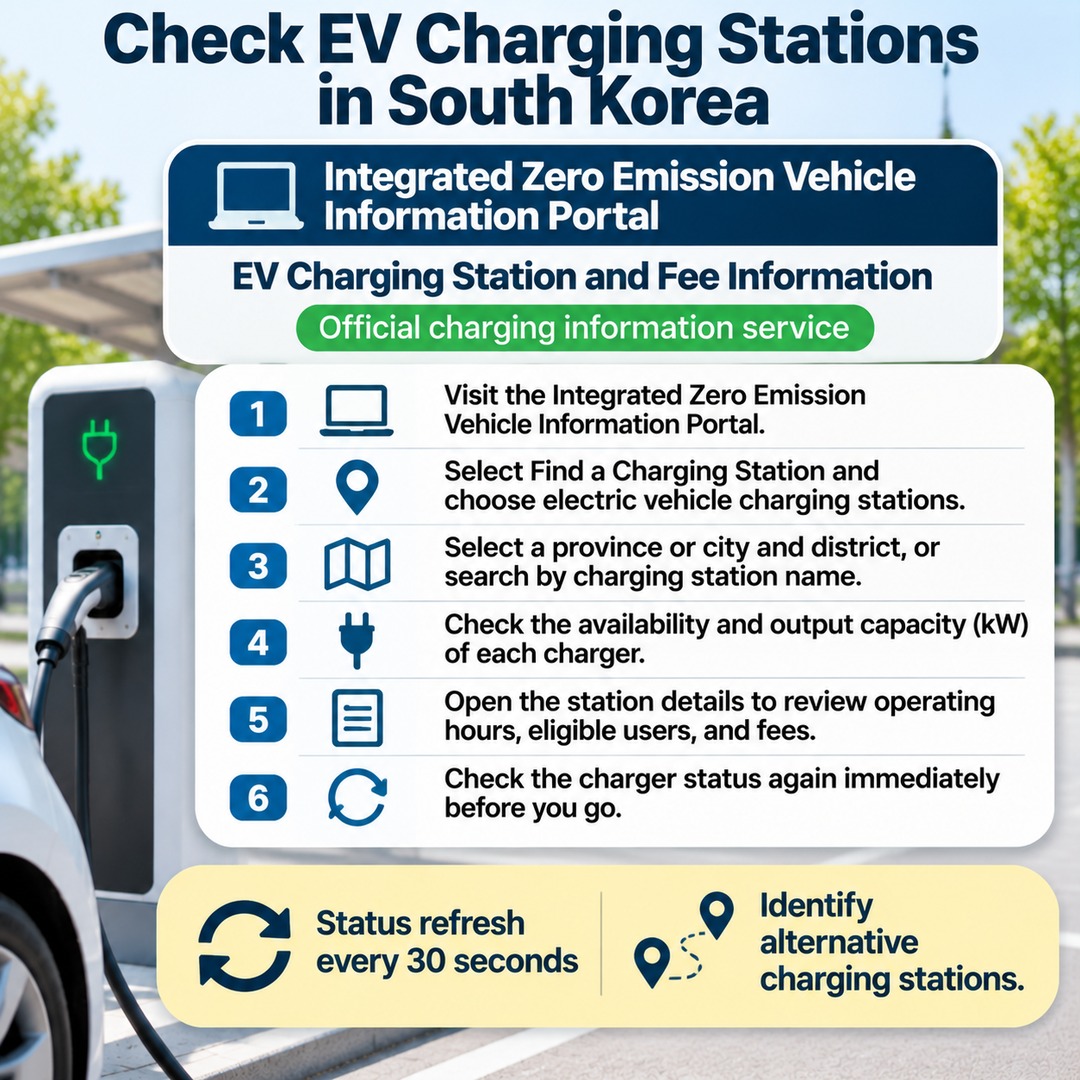
When looking for a charging station, it is useful to check South Korea's official Integrated Zero-Emission Vehicle Information Portal in addition to ordinary map applications.
Integrated Zero-Emission Vehicle Information Portal
EV Charging Station and Fee Information
Official charging information service
Follow these steps:
1. Visit the Integrated Zero-Emission Vehicle Information Portal.
2. Select the Find a Charging Station menu and choose electric vehicle charging stations.
3. Select a province or city and district, or search by charging station name.
4. Check the availability and output capacity (kW) of each charger.
5. Open the station details to review operating hours, eligible users, and fees.
6. Check the charger status again immediately before departure.
The charging station search page also offers an automatic status refresh feature that updates information every 30 seconds.
However, automatic refreshing simply retrieves the information supplied to the portal again. It does not physically test whether a charging unit at the site is working properly.
For long-distance journeys or rental vehicles that must be returned by a fixed time, it is therefore safer to identify alternative charging stations nearby rather than relying on a single destination.
Why Your Actual EV Charging Bill May Differ from the Displayed Price
When checking charging fees, look beyond the price per kWh for each charging speed. You should also check which operator's pricing and payment conditions will apply.
The Integrated Zero-Emission Vehicle Information Portal distinguishes between public reference rates and pricing information provided by private charging operators.
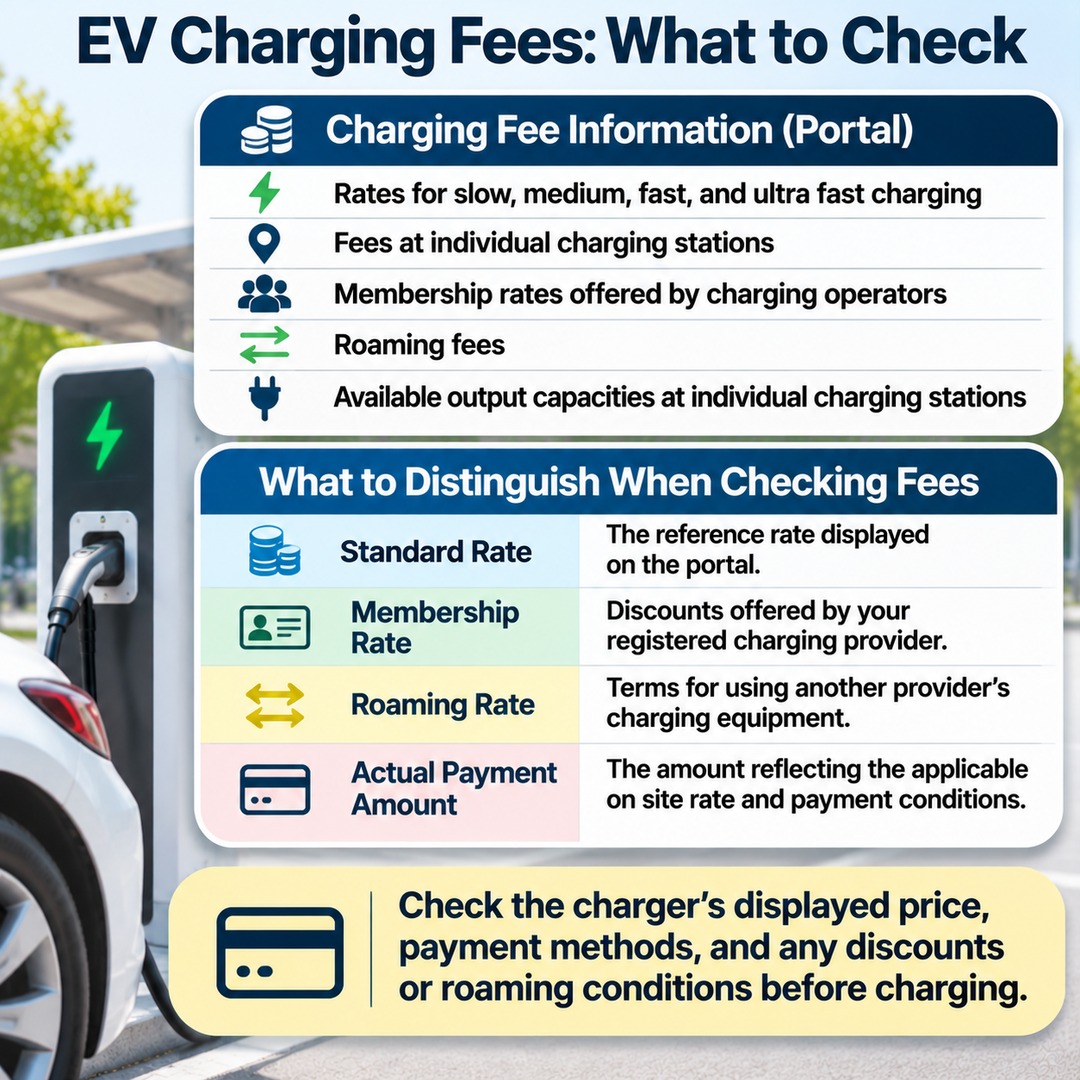
The charging fee information page provides details such as:
Rates for slow, medium-speed, fast, and ultra-fast charging
Fees at individual charging stations
Membership rates offered by charging operators
Roaming fees
Available output capacities at individual charging stations
Roaming is particularly important because it allows drivers to use chargers operated by a different charging provider. The applicable roaming rate may differ from the membership rate offered by the provider with which the driver originally registered.
What to distinguish when checking charging fees
Reference rate
The standard rate displayed on the portal
Membership rate
Discounts offered by your registered charging provider
Roaming rate
Terms for using another provider's charging equipment
Actual payment amount
The amount reflecting the applicable on-site rate and payment conditions
The actual amount charged may vary depending on the operator, time of use, applicable discounts, and roaming conditions.
For example, using the same charging station may cost different amounts depending on whether you pay through the station operator's membership service or use a charging card issued by another provider.
Before charging, check the price displayed on the charger's screen and the available payment methods. Also confirm whether any discounts or roaming conditions apply.
What to Do If a Charger Is Marked Available but Does Not Work
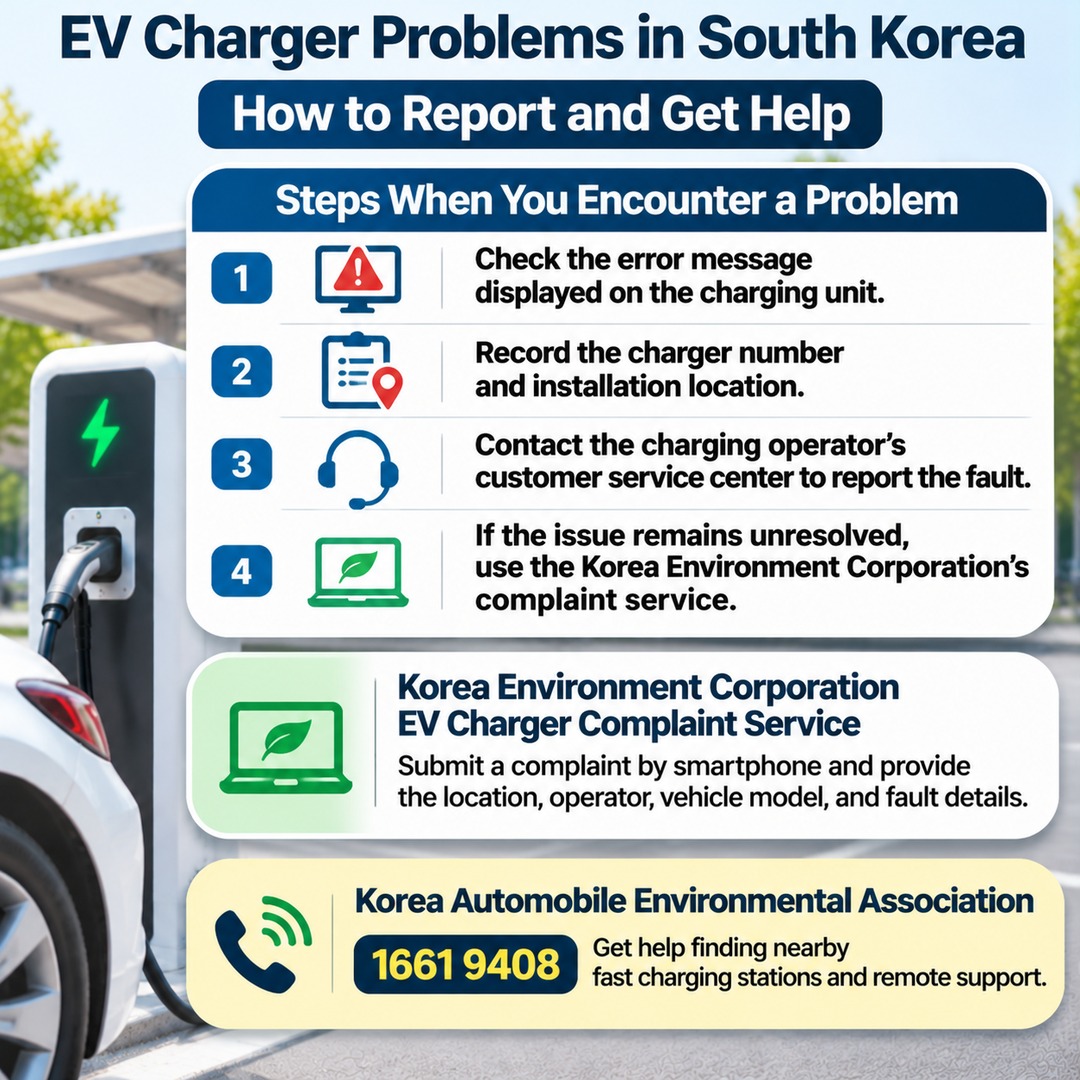
If the information does not match the actual situation, contact the charging operator first. If the issue cannot be resolved, you can use the Korea Environment Corporation's EV Charger Complaint Service.
The charging facility management standards introduced on November 12 also require operators to maintain continuous monitoring systems and procedures for receiving user inquiries and fault reports.
When a fault occurs, operators must arrange repairs and restoration promptly. Once the problem has been resolved, they must register details within the prescribed deadline, including the date and time of the fault, its type and cause, the corrective action taken, and the restoration completion time.
If you encounter a problem with an EV charger, follow these steps:
1. Check the error message displayed on the charging unit.
2. Record the charger number and installation location.
3. Contact the charging operator's customer service center to report the fault.
4. If the issue remains unresolved or you cannot submit a report through the operator, use the Korea Environment Corporation's complaint service.
Korea Environment Corporation EV Charger Complaint Service
If you cannot reach the charging operator's call center or encounter a problem while using a charger, you can submit a complaint using your smartphone.
When filing a report, provide specific details such as the charging station's location, operating company, vehicle model, and nature of the fault.
The Korea Environment Corporation manages these complaints by forwarding reports to the relevant charging facility operator and informing the person who submitted the report of the resulting action.
If a fast charger is not working and you need to find another station, you can also contact the Korea Automobile Environmental Association at 1661-9408, a number listed on the Integrated Zero-Emission Vehicle Information Portal. It may be able to help you locate nearby fast-charging stations and obtain remote support.
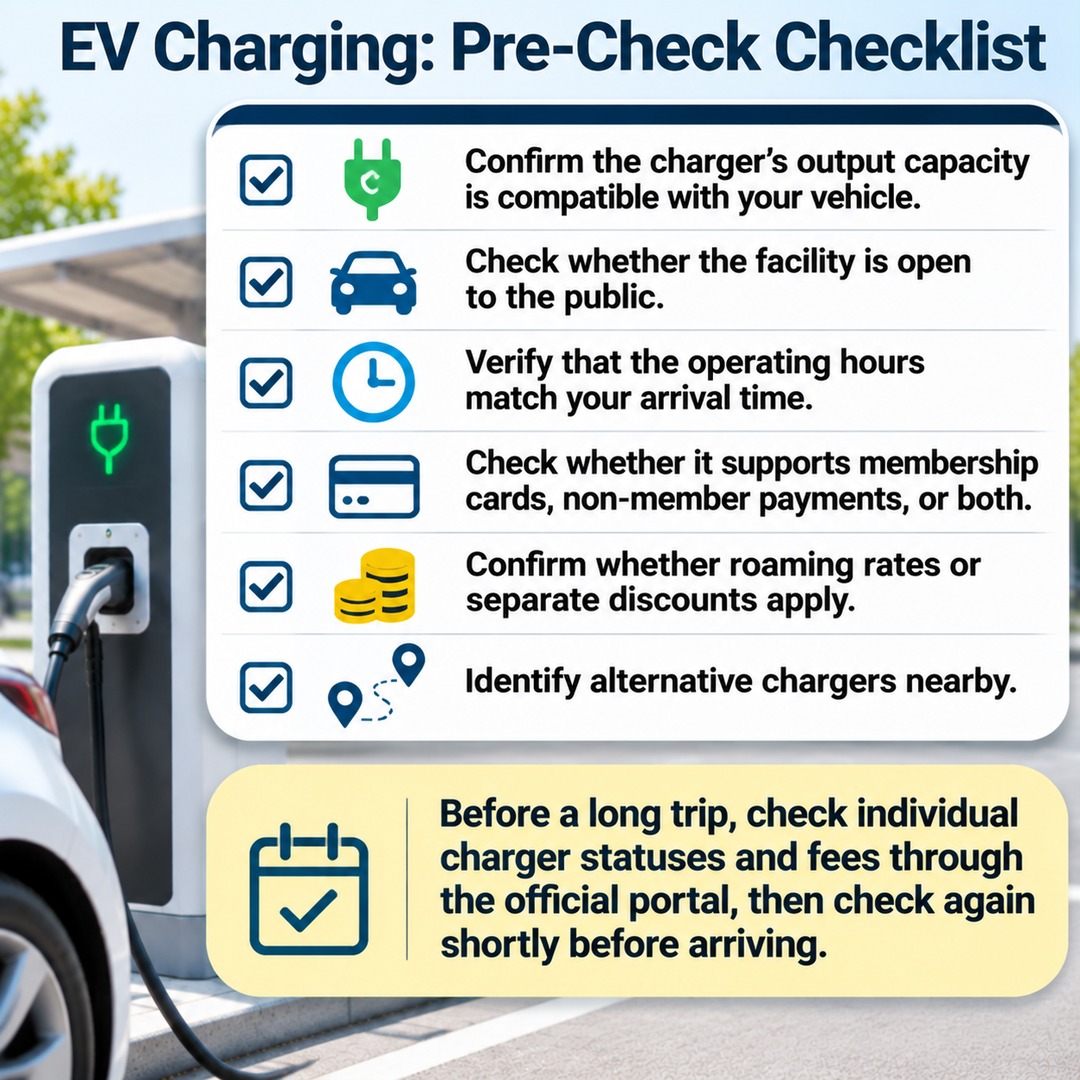
What to Check Before Arriving at an EV Charging Station
When preparing to charge, do not rely solely on the status displayed in an app. You should also confirm that your vehicle is compatible with the charging facility and meets its access requirements.
Whether the charger's output capacity is compatible with the charging method supported by your vehicle
Whether the charging facility is open to the public
Whether its operating hours match your intended arrival time
Whether it supports membership cards, non-member payments, or both
Whether roaming rates or separate discounts apply to the charging fee
Whether alternative chargers are available nearby
If you are renting an electric vehicle, also check the required battery level before returning it and confirm the available charging arrangements. Even a fully operational charger cannot be used if it does not support your vehicle's charging standard.
The strengthened EV charging information requirements are significant because they are intended to make availability information more reliable than basic location listings. However, the introduction of new regulations and perfect accuracy of on-site information are two different things.
Before a long-distance journey, check individual charger statuses and fees through the Integrated Zero-Emission Vehicle Information Portal, then check again shortly before arriving. If the displayed information does not match the actual conditions, reporting the discrepancy to the operator and the Korea Environment Corporation is also important so that the information can be corrected.