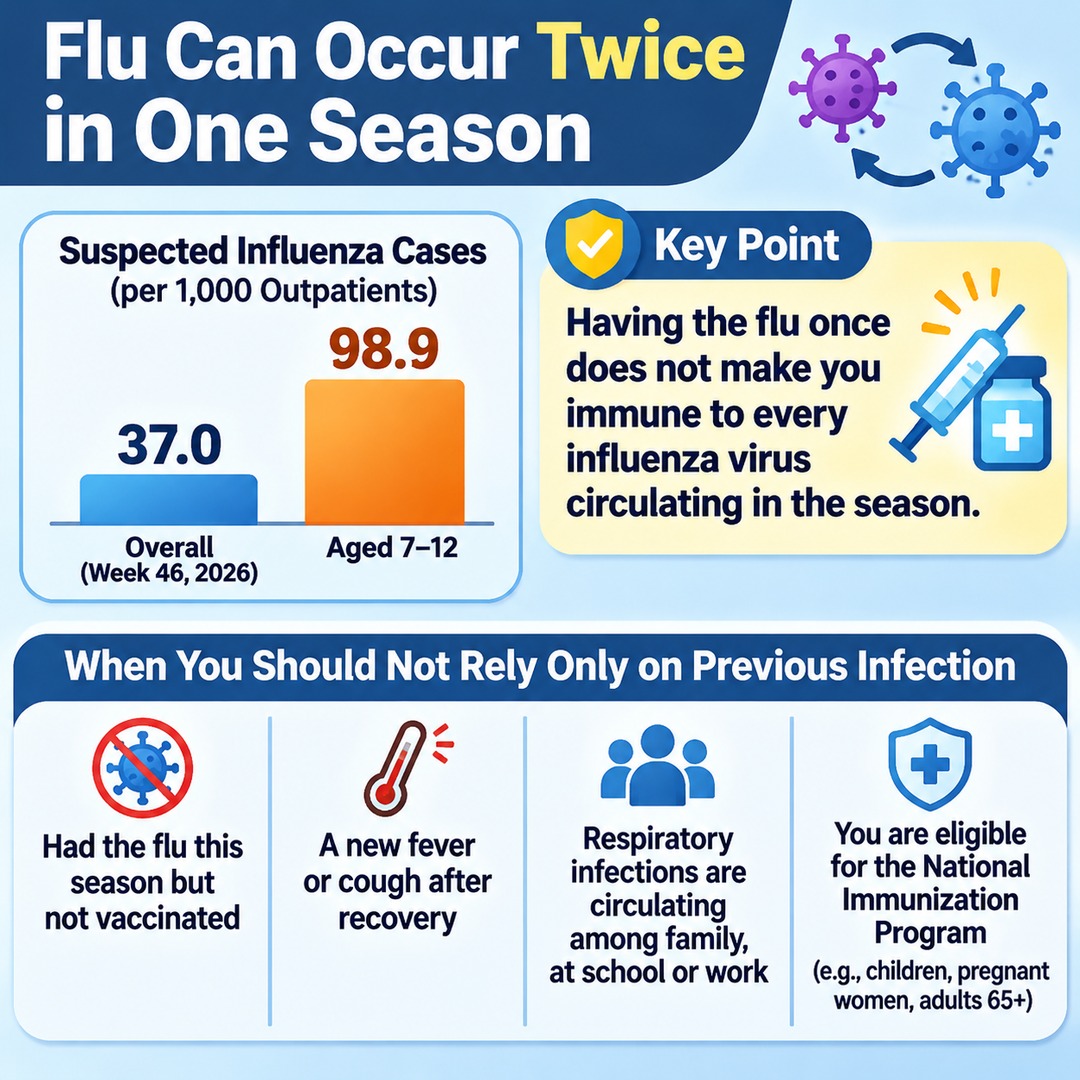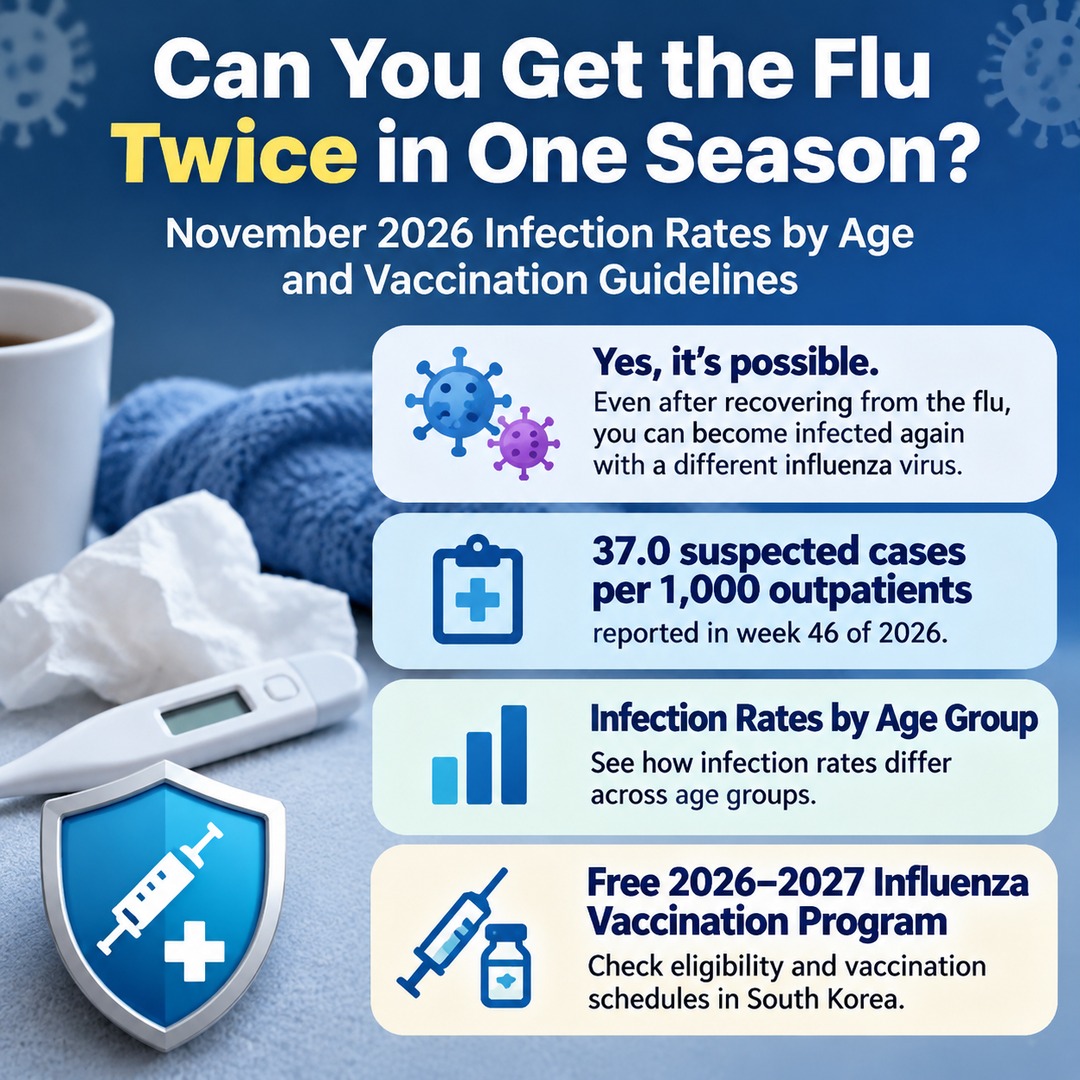
Even if you have already had the flu, you can become infected again during the same influenza season with a different influenza virus. In week 46 of 2026, the number of suspected influenza cases rose to 37.0 per 1,000 outpatients. The rate was particularly high among children aged 7–12, reaching 98.9 cases per 1,000 outpatients. Rather than assuming you are protected because you were previously infected, consider your vaccination status and the risks associated with your age group.
Why Can You Get the Flu Again After Already Having It?
Having the flu once does not make you immune to every influenza virus circulating during that season. The Korea Disease Control and Prevention Agency (KDCA) also explains that people who have already been infected with influenza can become infected again with a different type of virus.
There are various types and strains of influenza viruses. If the virus that initially infected you differs from the one you encounter later, reinfection is possible. Therefore, having had the flu this year does not automatically mean you no longer need additional preventive measures.
It is particularly important not to rely solely on your previous infection history in the following situations:
You had the flu during the current season but have not been vaccinated.
You develop a new fever or cough after recovering from the flu.
Respiratory infections are circulating among family members, at school, or in the workplace.
You belong to a group eligible for South Korea's National Immunization Program, such as children, pregnant women, or adults aged 65 and older.
However, the return of flu-like symptoms does not necessarily mean you have been reinfected. Whether the symptoms are part of your recovery from the original infection, caused by another respiratory illness, or the result of a new influenza infection must be determined through clinical assessment and, when necessary, testing.
How Much Did Flu Cases Increase in November 2026?
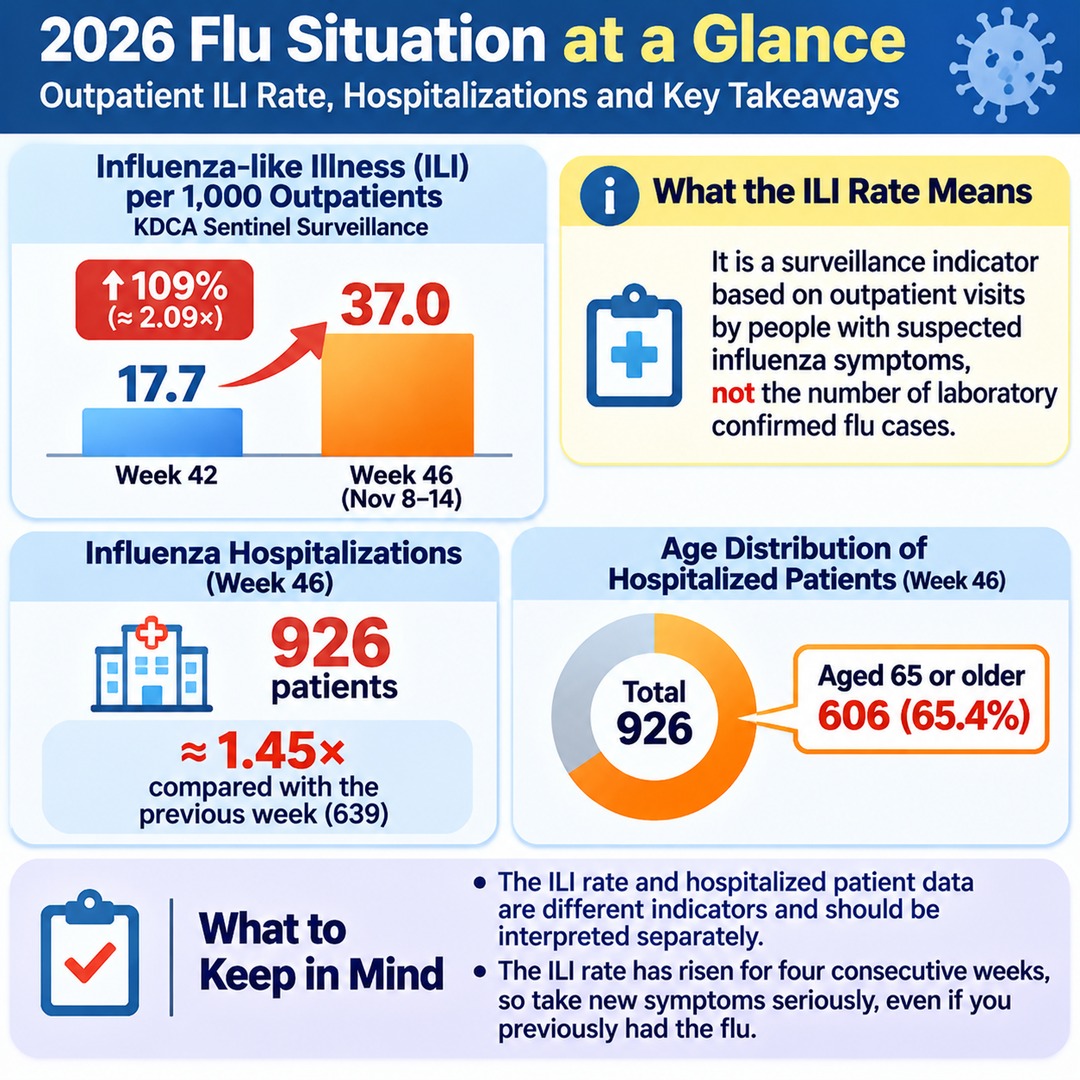
In week 46 of 2026 (November 8–14), the influenza-like illness (ILI) rate was 37.0 suspected cases per 1,000 outpatients. This was approximately 2.09 times the rate of 17.7 recorded in week 42. This figure is not the number of laboratory-confirmed flu cases. It is a surveillance indicator based on outpatient visits involving people with suspected influenza symptoms.
Influenza-like illness per 1,000 outpatients · KDCA sentinel surveillance
| Week | Suspected cases per 1,000 outpatients |
|---|---|
| Week 42 | 17.7 |
| Week 43 | 19.2 |
| Week 44 | 22.8 |
| Week 45 | 28.9 |
| Week 46 | 37.0 |
The rate increased by approximately 109% between weeks 42 and 46. Because it rose for four consecutive weeks, even people who previously had the flu should take new symptoms seriously rather than dismissing them.
During the same week, 926 influenza patients were hospitalized at 223 hospital-level sentinel surveillance institutions. This was approximately 1.45 times the previous week's total of 639. Among these hospitalized patients, 606 were aged 65 or older, accounting for 65.4% of the total. The outpatient ILI rate and the age distribution of hospitalized patients are different indicators and should be interpreted separately.
Which Age Group Has the Highest Flu Rate?
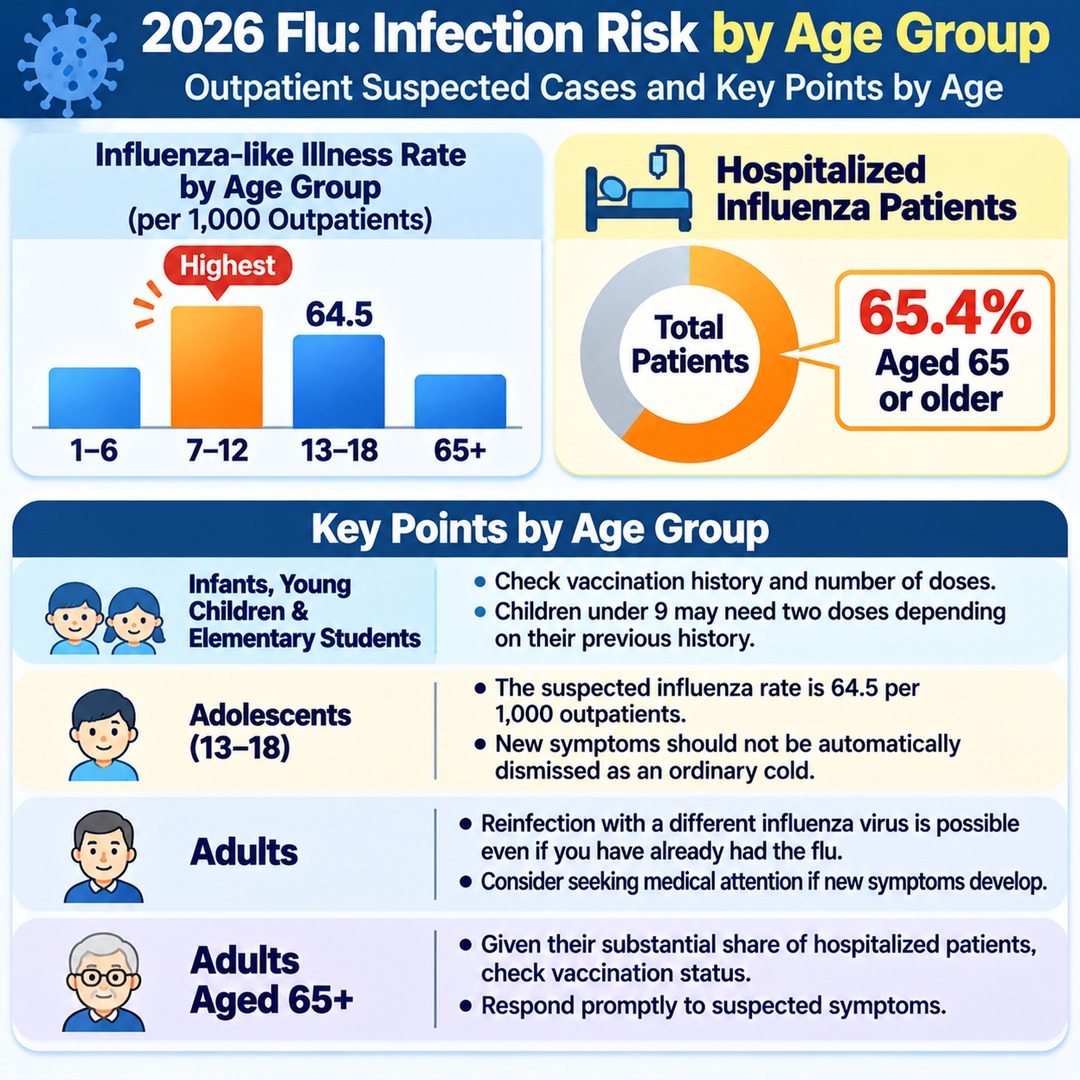
According to outpatient sentinel surveillance for week 46 of 2026, children aged 7–12 had the highest influenza-like illness rate. Adolescents aged 13–18 also recorded a high rate, while children aged 1–6 had higher figures than several adult age groups.
| Age group | Suspected cases per 1,000 outpatients |
|---|---|
| 7–12 years | 98.9 |
| 13–18 years | 64.5 |
| 1–6 years | 46.6 |
| 19–49 years | 39.5 |
| 0 years | 30.2 |
| 50–64 years | 21.7 |
| 65 years and older | 12.5 |
These figures are not the confirmed infection rate or reinfection rate among the entire population in each age group. They represent the estimated number of patients with suspected influenza symptoms among people visiting outpatient clinics.
There is another important distinction. Although the outpatient ILI rate among people aged 65 and older was lower than that of some other age groups, this age group accounted for 65.4% of hospitalized influenza patients at hospital-level institutions. A relatively low outpatient suspected-case rate should not be interpreted as evidence that older adults face a low risk of severe illness.
The points to consider vary by age group:
Infants, young children, and elementary school students: Check vaccination history and the number of doses received. In particular, children under 9 may need two doses depending on their previous vaccination history.
Adolescents: The suspected influenza rate among those aged 13–18 was 64.5 per 1,000 outpatients. New symptoms should not automatically be dismissed as an ordinary cold.
Adults: Reinfection with a different influenza virus is possible even if you have already had the flu. Consider seeking medical attention if new symptoms develop.
Adults aged 65 and older: Given their substantial share of hospitalized patients, check vaccination status and respond promptly to suspected symptoms.
If You Have Had the Flu, Can You Skip Vaccination?
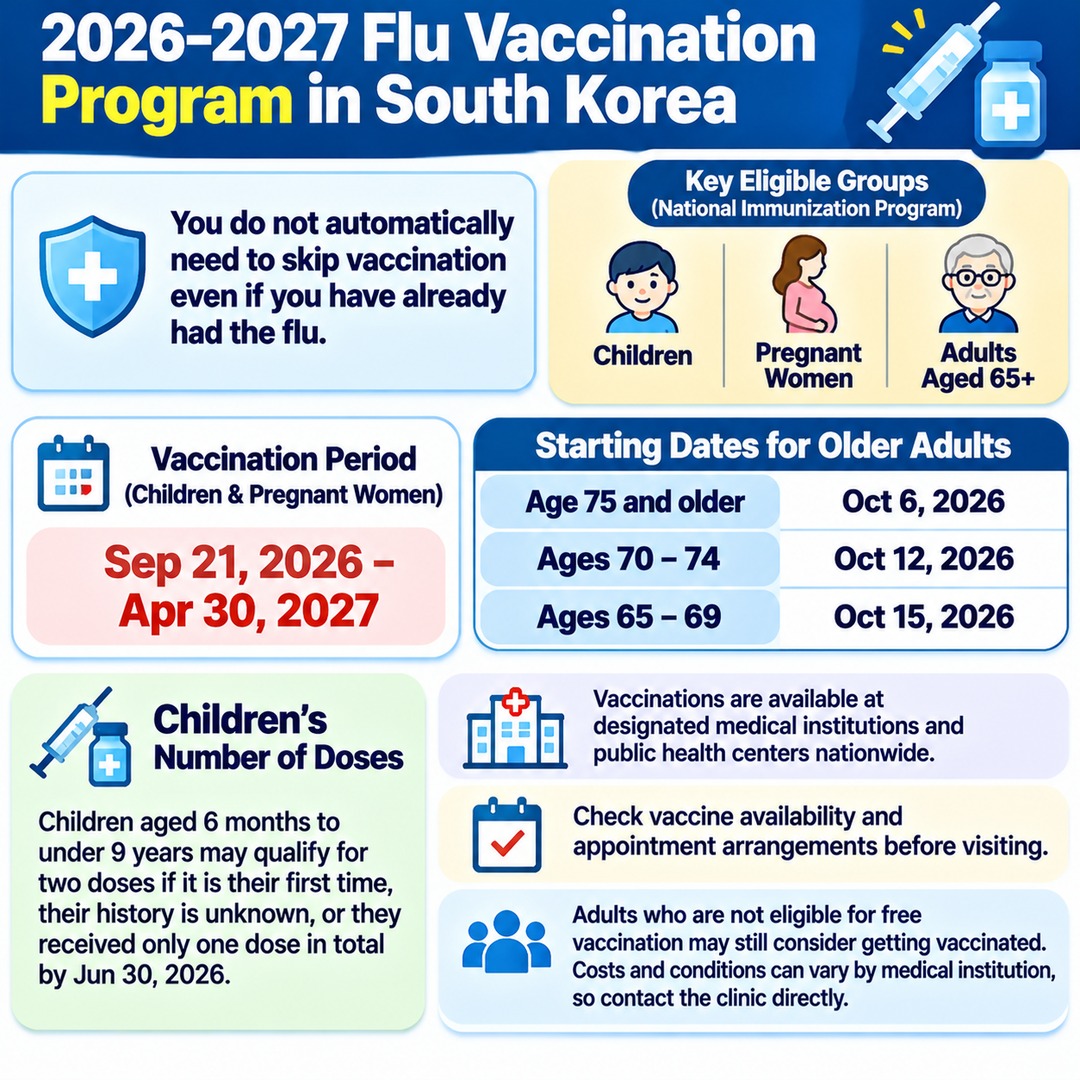
You do not automatically need to skip the 2026–2027 seasonal influenza vaccination simply because you have already had the flu. Infection with another type of influenza virus remains possible. It is particularly important for children, pregnant women, and adults aged 65 and older to check whether they qualify for South Korea's National Immunization Program.
The eligible groups for the 2026–2027 National Immunization Program are:
| Eligible group | Free vaccination coverage |
|---|---|
| Children | 6 months through 14 years of age |
| Pregnant women | All pregnant women with confirmed pregnancies |
| Older adults | Adults aged 65 and older |
Vaccination for children and pregnant women runs from September 21, 2026, through April 30, 2027. For older adults, the starting date varies by age. Vaccination has now begun for all eligible age groups, and the program ends on April 30, 2027.
The age-specific starting dates for older adults are:
Age 75 and older: October 6, 2026
Ages 70–74: October 12, 2026
Ages 65–69: October 15, 2026
Vaccinations are available at designated medical institutions and public health centers nationwide, regardless of your registered residential address in South Korea. It is advisable to check vaccine availability and appointment arrangements before visiting.
Parents should also check the required number of doses for their children. Children aged 6 months to under 9 years may qualify for two doses during this season if they are receiving an influenza vaccination for the first time, their previous vaccination history is unknown, or they received only one dose in total by June 30, 2026. The actual number of doses and the interval between them should be determined in consultation with the examining physician.
Adults who are not eligible for free vaccination may still consider getting vaccinated. However, vaccination costs and conditions for general adults may vary by medical institution, so contact the clinic directly for details.
What Should You Do If Flu Symptoms Return?
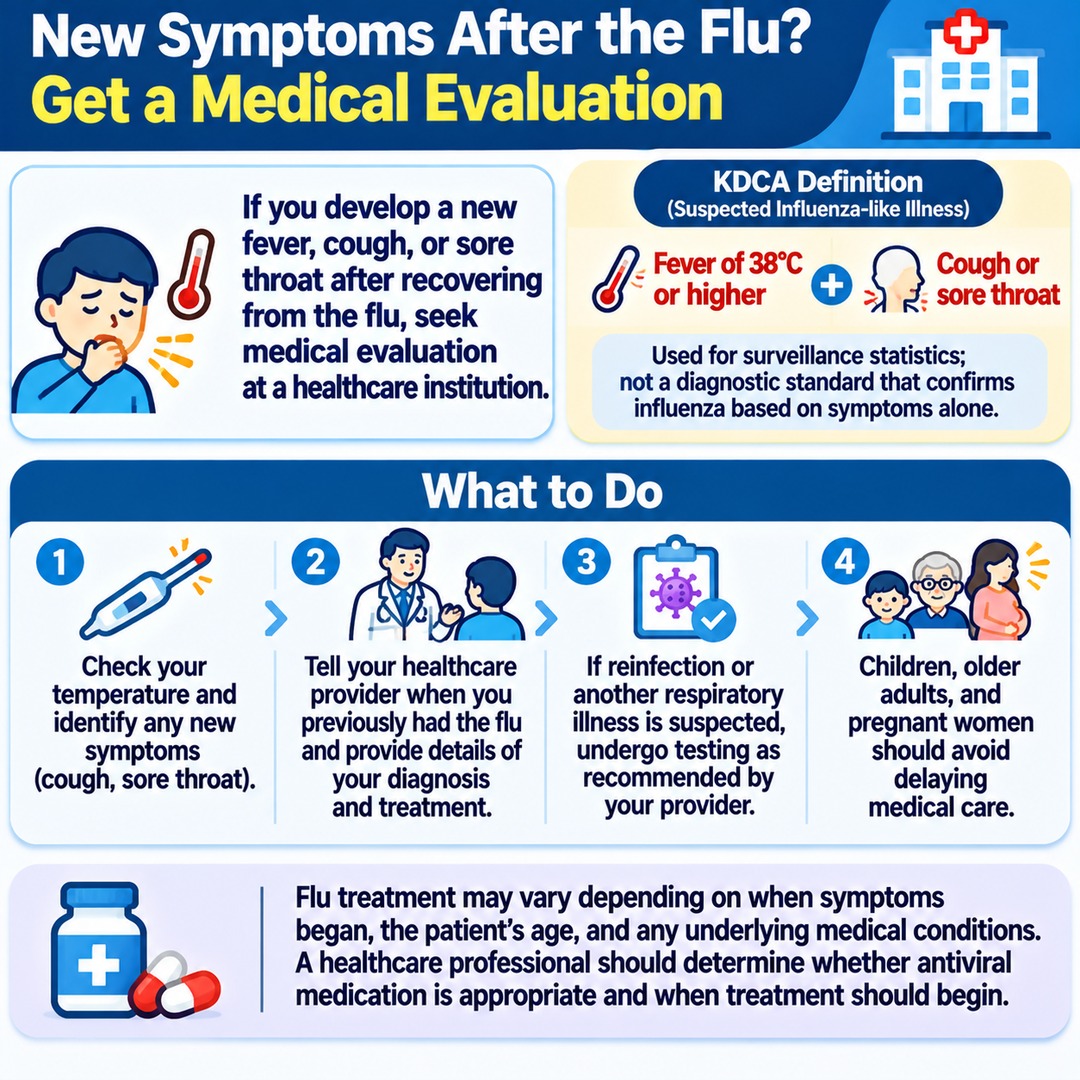
If you develop a new fever, cough, or sore throat after recovering from the flu, do not try to determine on your own whether you have been reinfected. It is advisable to seek medical evaluation at a healthcare institution.
The KDCA defines a suspected influenza-like illness as a condition involving a fever of 38°C or higher together with a cough or sore throat. This definition is used for surveillance statistics; it is not a diagnostic standard that confirms influenza based on symptoms alone.
Follow these steps:
1. Check your temperature and identify any new symptoms, including coughing and a sore throat.
2. Tell your healthcare provider when you previously had the flu and provide details of your diagnosis and treatment.
3. If reinfection or another respiratory illness is suspected, undergo testing as recommended by your healthcare provider.
4. Children, older adults, and pregnant women should avoid delaying medical care when symptoms develop.
5. If serious symptoms such as difficulty breathing or impaired consciousness occur, seek emergency medical assistance immediately.
Flu treatment may vary depending on when symptoms began, the patient's age, and any underlying medical conditions. A healthcare professional should determine whether antiviral medication is appropriate and when treatment should begin.
What Everyday Precautions Can Help Reduce Reinfection?
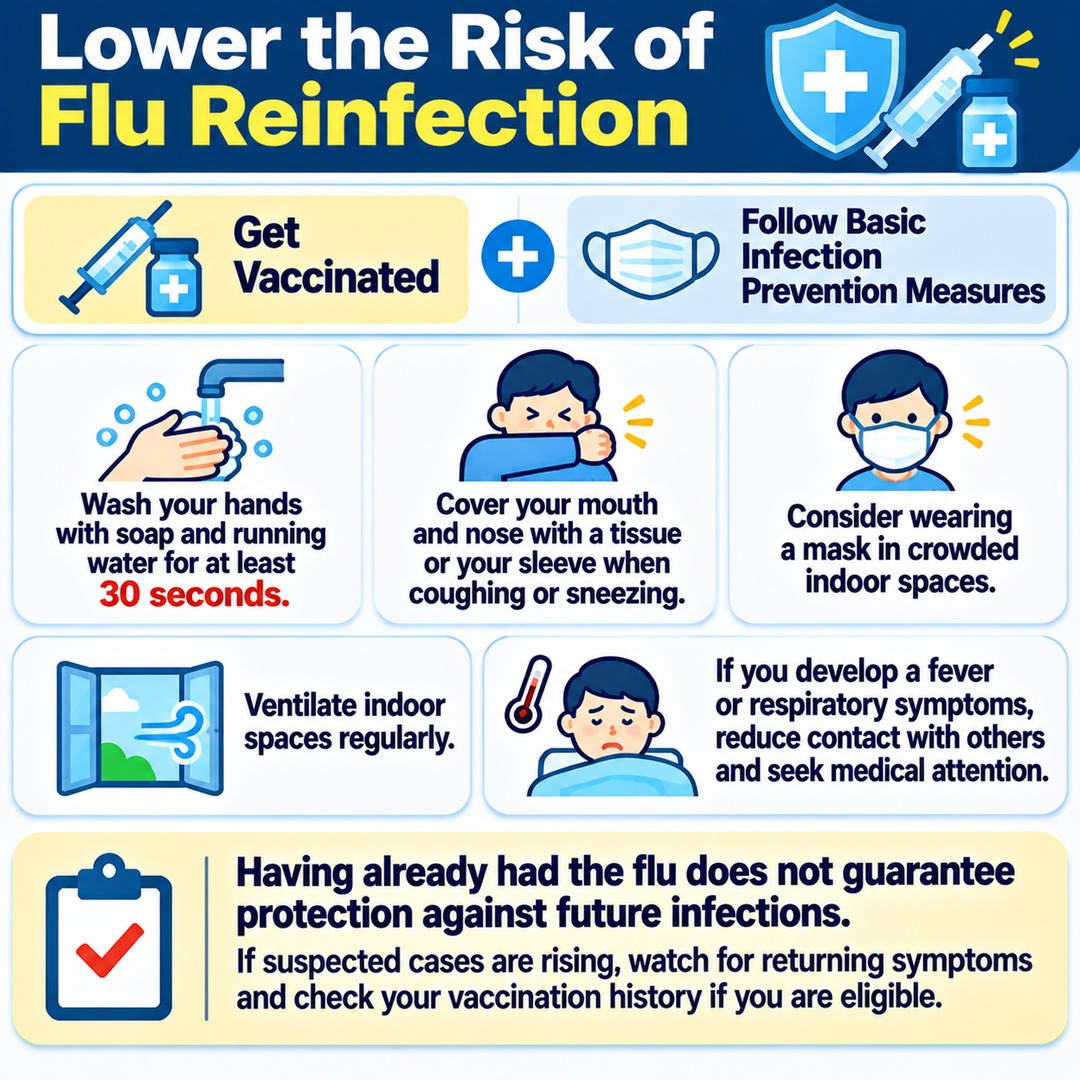
To reduce the risk of getting the flu again, combine vaccination with basic respiratory infection prevention measures.
Wash your hands with soap and running water for at least 30 seconds after going outside and before and after meals.
Cover your mouth and nose with a tissue or your sleeve when coughing or sneezing.
Consider wearing a mask in crowded indoor spaces.
Ventilate indoor spaces regularly.
If you develop a fever or respiratory symptoms, reduce contact with other people and seek medical attention.
Having already had the flu does not guarantee protection against future infections. Particularly when suspected cases are continuing to rise, as they are during this season, watch for returning symptoms and check your vaccination history if you belong to an eligible group.
Frequently Asked Questions About Flu Reinfection and Vaccination
Q. Can you get the flu twice during the same winter?
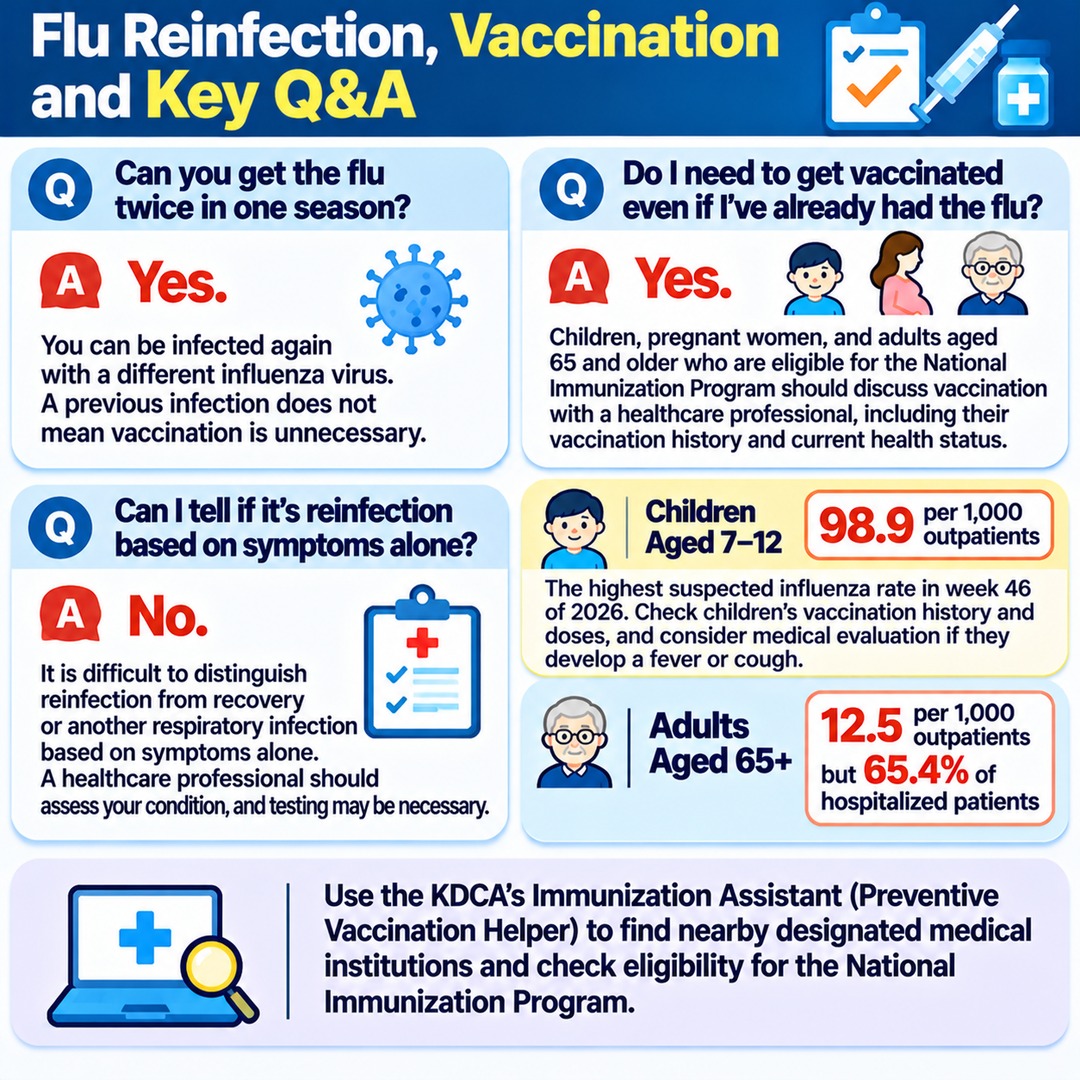
Yes. The KDCA explains that people who have already been infected with influenza can become infected again with a different type of virus.
Q. If I recover from the flu, can I skip the vaccine?
You should not assume that a previous infection means vaccination is unnecessary. Children, pregnant women, and adults aged 65 and older who qualify for South Korea's National Immunization Program should discuss vaccination with a healthcare professional, providing details of their vaccination history and current health status.
Q. How can you tell whether you have had the flu twice?
It is difficult to distinguish reinfection based on symptoms alone. A healthcare professional must assess whether the symptoms are part of recovery from the original infection, caused by another respiratory infection, or the result of a new influenza infection. Testing may be necessary.
Q. Why should children aged 7–12 be particularly careful?
In week 46 of 2026, the suspected influenza rate among children aged 7–12 was 98.9 per 1,000 outpatients, the highest among all age groups. Check children's vaccination history and the number of doses they have received. Consider medical evaluation if they develop a fever or cough.
Q. Are adults aged 65 and older safe because their flu rate is lower?
No. Their outpatient suspected influenza rate in week 46 was 12.5 per 1,000 outpatients, but adults aged 65 and older accounted for 65.4% of hospitalized influenza patients at hospital-level institutions. The outpatient suspected-case rate and the age distribution of hospitalized patients are different statistics.
Q. Where can I check where to get a flu vaccination?
You can use the KDCA's National Immunization Assistance Program website, known as the Immunization Assistant (Preventive Vaccination Helper), to search for nearby designated medical institutions. You can also check eligibility for South Korea's National Immunization Program for children, pregnant women, and adults aged 65 and older.