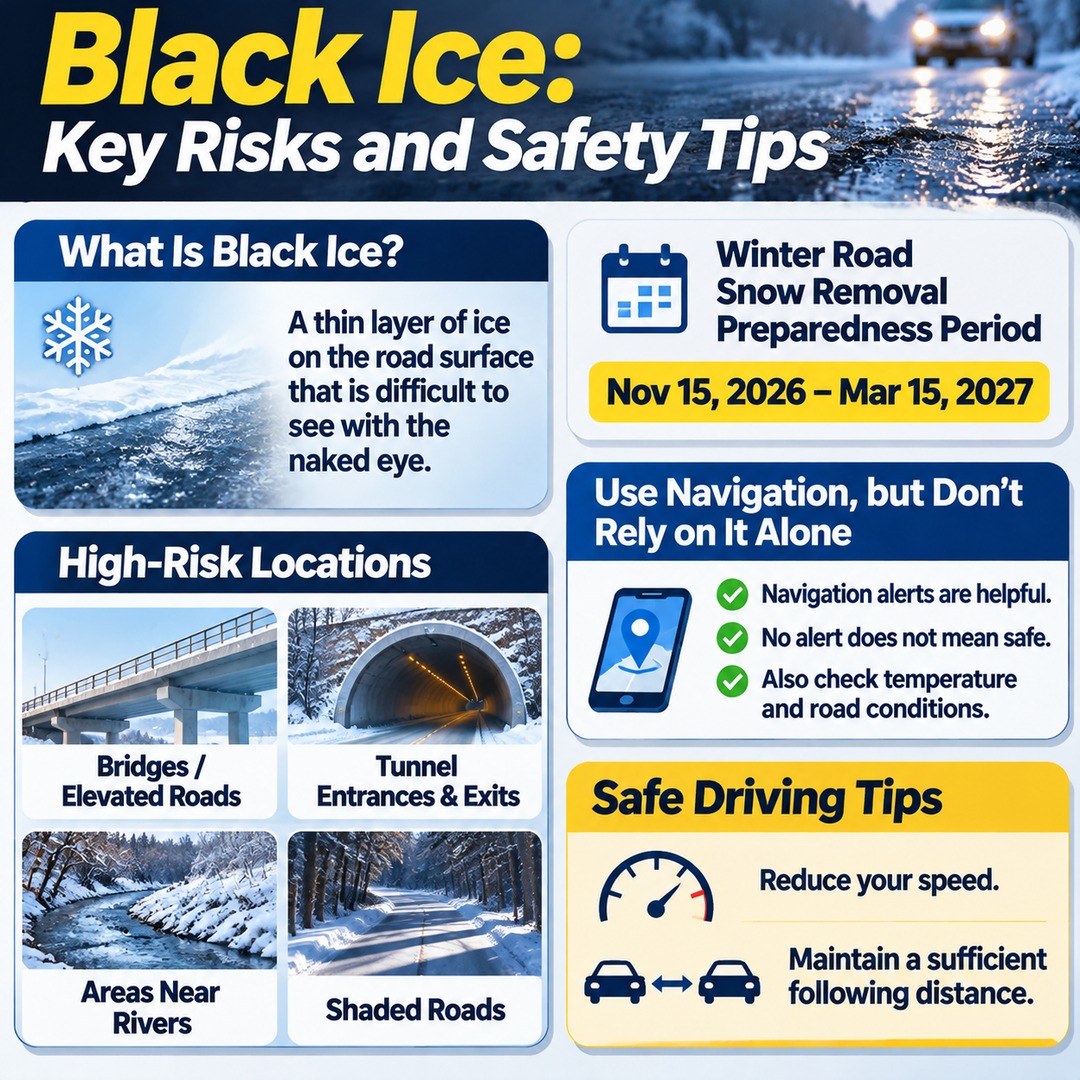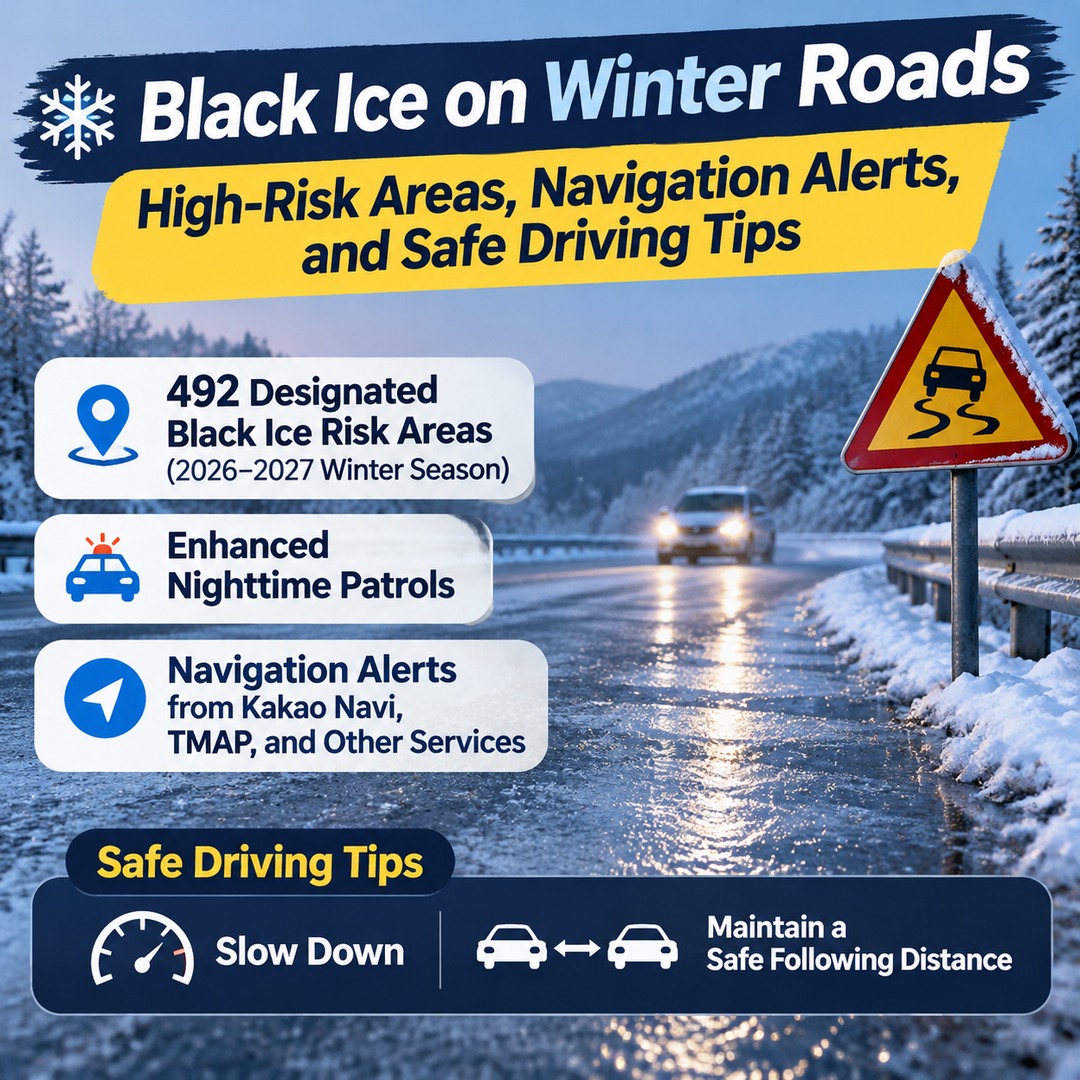
Black ice is a thin layer of ice that forms on the road surface and is difficult for drivers to see with the naked eye. Drivers should be particularly alert to possible icing near tunnel entrances and exits, on bridges, around rivers, and on shaded roads. From November 15, 2026, through March 15, 2027, South Korea will operate its winter road snow-removal preparedness period. During this time, the government will strengthen safety measures, nighttime patrols, and monitoring across 492 designated road sections vulnerable to freezing.
Navigation alerts for potential icy-road sections are useful for recognizing hazards in advance. However, the absence of an alert does not mean that the road is safe. Drivers should consider navigation information alongside actual temperatures and road conditions. If ice is suspected, they should reduce their speed and maintain a sufficient following distance.
Which Roads Are Most Vulnerable to Black Ice?
Black ice can form even when there is no clearly visible snow or ice. A road may look wet while actually having a thin layer of ice on its surface. This makes it difficult to judge road safety by appearance alone.
Drivers should exercise particular caution in the following locations:
Bridges and elevated roads: These structures have different thermal conditions from the surrounding ground, so drivers should pay close attention to possible icing.
Tunnel entrances and exits: Road conditions can change between the inside and outside of a tunnel. Adjust your speed when entering or leaving.
Areas near rivers and flowing water: Pay attention to the surrounding environment and temperature in these locations.
Mountain roads and shaded curves: Roads that receive little sunlight may have surface conditions that are difficult to assess visually.
One particularly hazardous situation occurs when temperatures drop after rain or snowfall. Wet and icy sections can alternate over a short distance. Just because one section appears safe does not mean the next section will be safe as well.
What Measures Will Be Taken at the 492 Black Ice Risk Areas in 2026–2027?
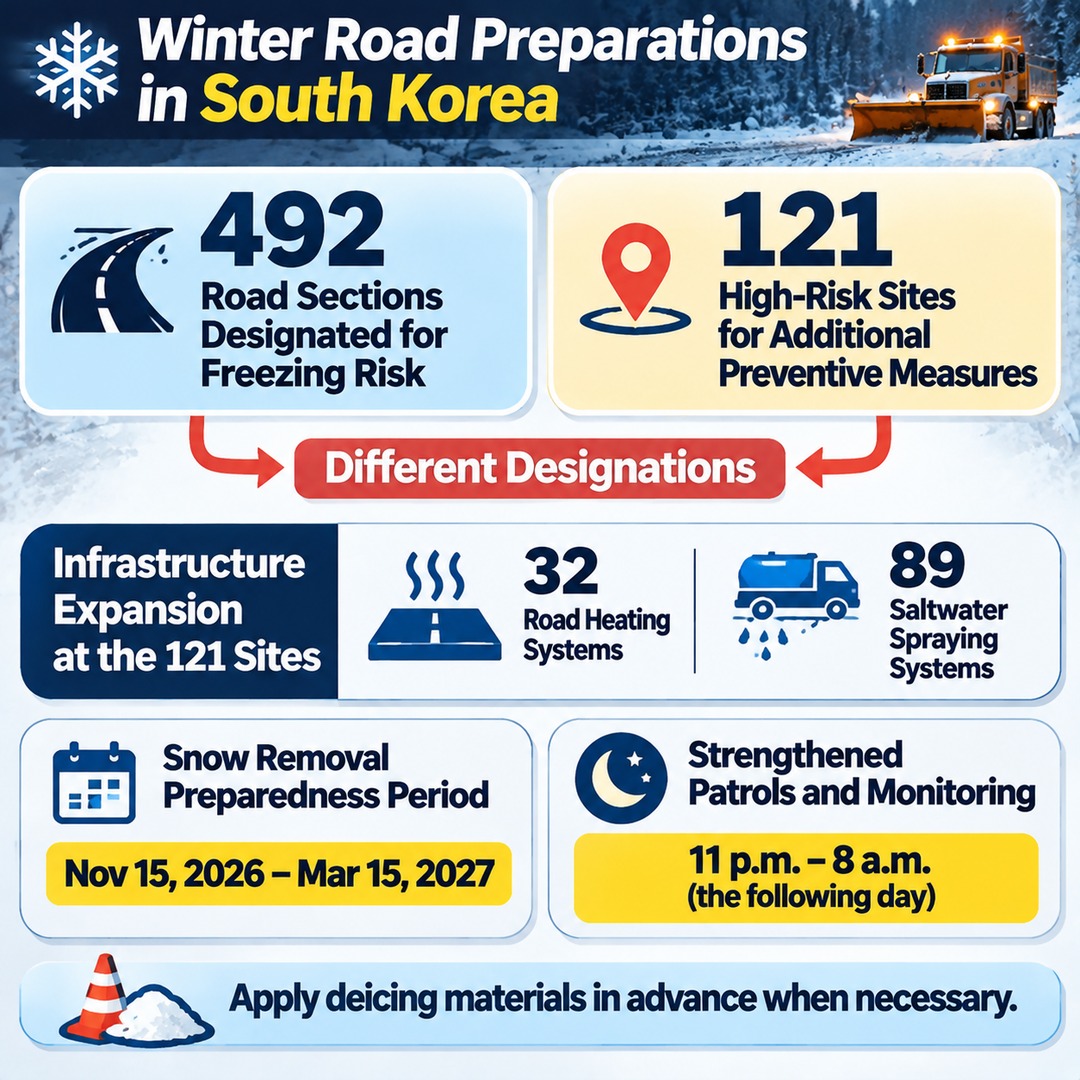
For the coming winter, the South Korean government has designated 492 road sections nationwide as vulnerable to freezing. The winter road snow-removal preparedness period will run from November 15, 2026, through March 15, 2027. Patrols and monitoring will also be strengthened during hours when the risk of road icing is particularly high.
The following figures are important for drivers to understand:
| Management item | Government announcement |
|---|---|
| Winter road snow-removal preparedness period | November 15, 2026–March 15, 2027 |
| Designated freezing-risk road sections | 492 locations |
| Patrols and monitoring during high-risk hours | 11 p.m.–8 a.m. the following day |
| Separately designated freezing-risk locations | 121 locations |
| Planned expansion of road heating systems | 32 locations |
| Planned expansion of saltwater spraying systems | 89 locations |
| Snow-removal materials secured | Approximately 660,000 metric tons |
| Snow-removal equipment secured | Approximately 8,200 units |
The figures of 492 and 121 do not describe the same locations in two different ways. The 492 locations are road sections designated for management because of their high freezing risk. The 121 locations are separately designated sites where additional preventive measures, including road heating and saltwater spraying systems, will be expanded.
Therefore, it would be incorrect to assume that road heating systems will be installed at all 492 locations. The planned installations of heating systems at 32 locations and saltwater spraying systems at 89 locations are part of the infrastructure expansion plan for the 121 designated high-risk sites.
The government plans to strengthen patrols and monitoring between 11 p.m. and 8 a.m. the following day, when freezing risks are elevated. It will also respond by applying deicing materials in advance when necessary.
How Much Should You Trust Black Ice Alerts from Navigation Apps?
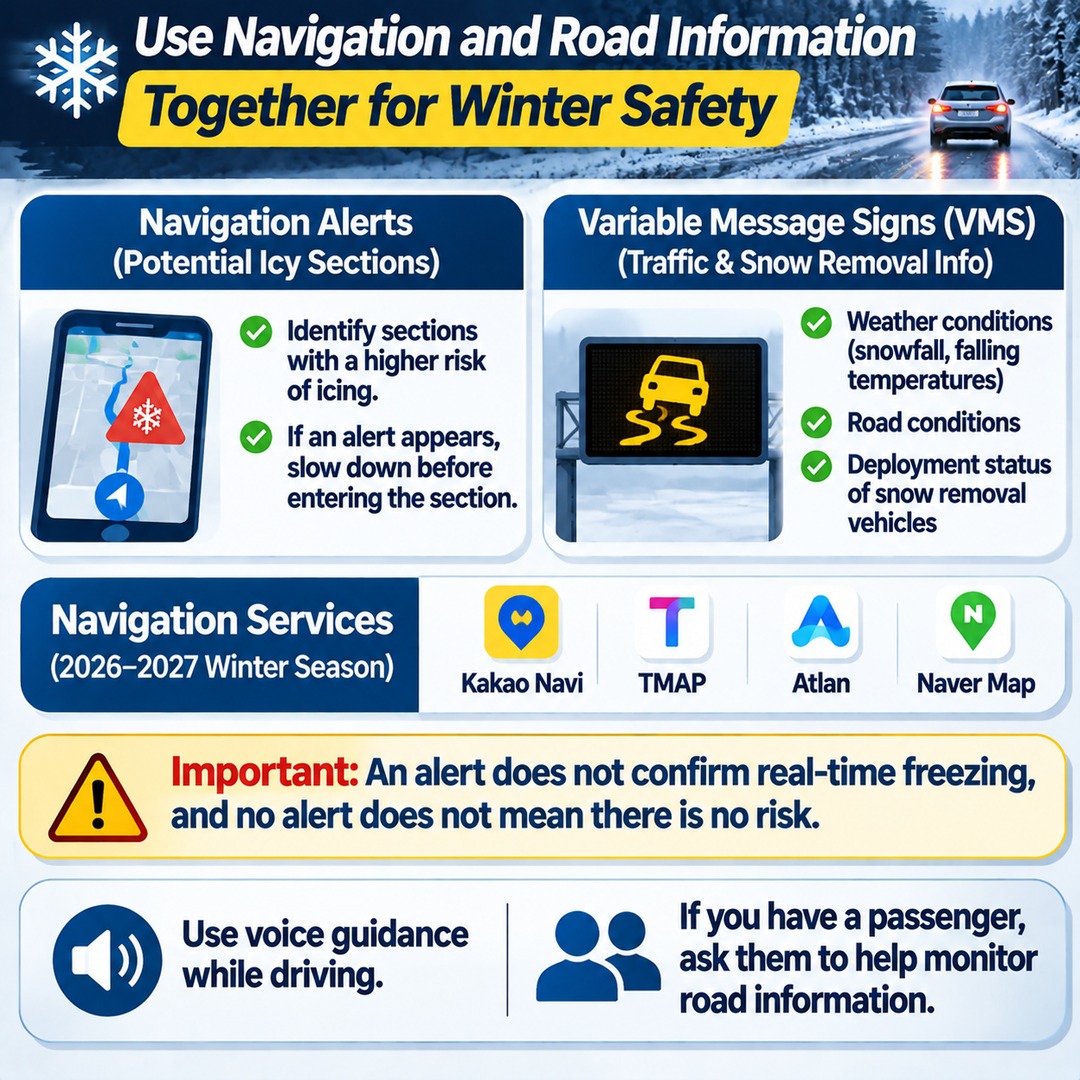
Navigation alerts are useful reference information, but they should never be the sole basis for deciding whether a road is safe. For the 2026–2027 winter season, the South Korean government announced plans to provide alerts about potentially icy road sections during high-risk hours through Kakao Navi, TMAP, Atlan, and Naver Map.
Drivers can use two main types of information.
Potential icy-road alerts from navigation apps
Identify sections along your route where you should be particularly alert to possible icing.
If an alert appears, begin slowing down before entering the indicated section.
Even without an alert, remain cautious when crossing bridges or passing tunnel exits.
Traffic and snow-removal information from Variable Message Signs (VMS)
Weather conditions, including snowfall and falling temperatures
Road conditions
Deployment status of snow-removal vehicles
Navigation apps help drivers identify potential hazards along their routes. Variable Message Signs provide information related to actual road management and conditions.
One distinction is especially important: an alert about a potentially icy section does not mean that the road has been confirmed to be frozen in real time, nor does it guarantee that the road is safe. Conversely, the absence of an alert does not mean there is no risk of ice.
While driving, avoid looking away from the road to operate or inspect your navigation screen. Use voice guidance whenever possible. If you have a passenger, ask them to help monitor road information.
How Should You Drive When Entering a Suspected Black Ice Area?
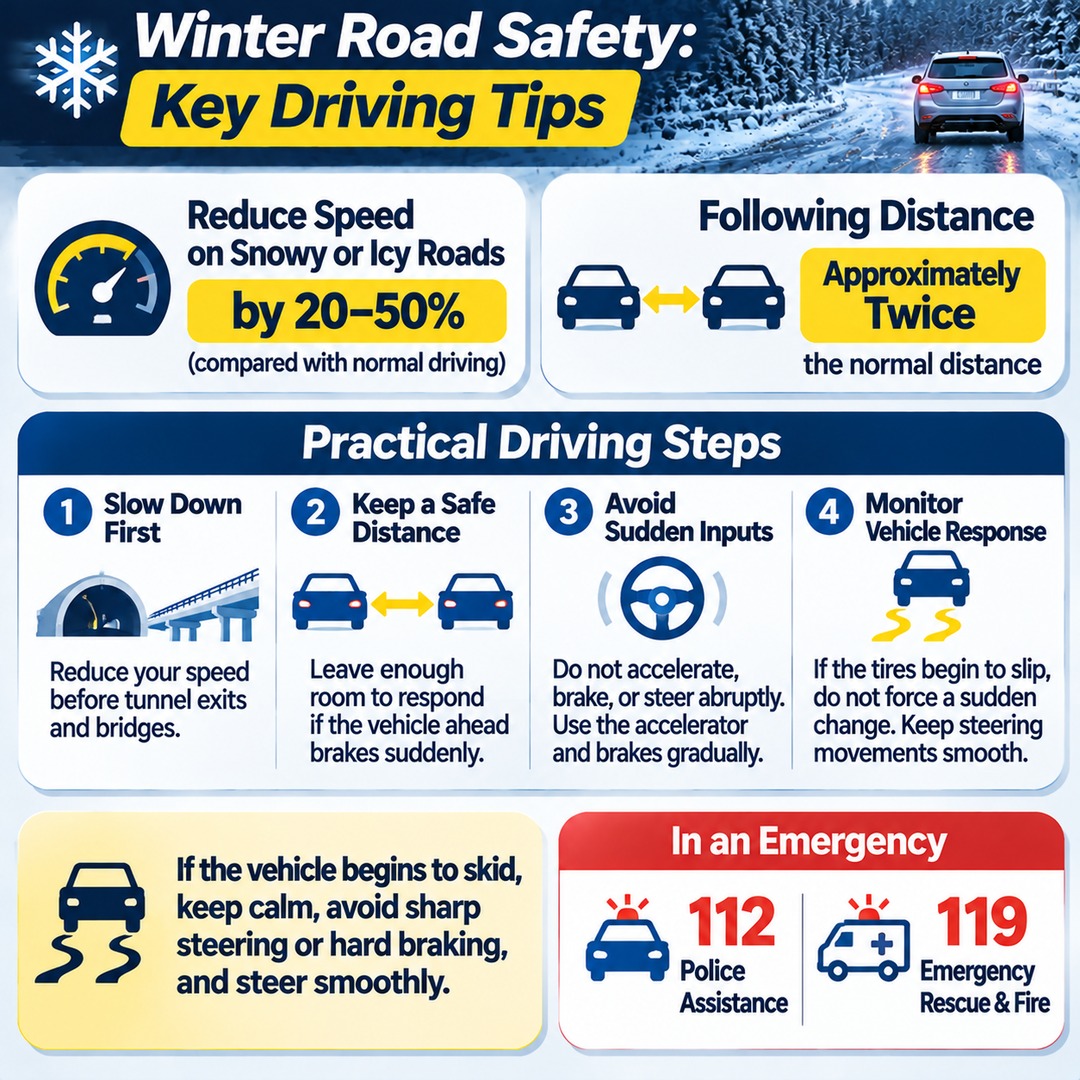
The most important principle is to operate the vehicle smoothly. Avoid suddenly accelerating, braking hard, or making sharp steering movements.
South Korean government guidance recommends reducing speed by 20–50% compared with normal driving when entering snowy or icy road conditions. Drivers should also maintain a sufficiently greater following distance. On snowy or icy roads, the recommended distance is approximately twice the normal following distance.
In practice, follow these steps:
1. Slow down before entering a hazardous section: Reduce your speed in advance of tunnel exits and bridges.
2. Maintain a safe following distance: Leave enough room to respond if the vehicle ahead brakes suddenly.
3. Avoid sudden movements: Do not accelerate, brake, or steer abruptly. Apply the accelerator and brakes gradually.
4. Monitor how the vehicle responds: If the tires begin to slip, do not force a sudden change in direction or accelerate aggressively.
5. Maintain space around other vehicles: On slippery roads, watch the movements of vehicles in adjacent lanes as well as the vehicle ahead.
If the vehicle begins to skid, do not panic and sharply turn the steering wheel in the opposite direction or suddenly slam on the brakes. Keep steering movements smooth and avoid abrupt vehicle inputs.
If the vehicle can no longer be controlled normally or an accident occurs, first consider the risk of a secondary collision. Determine whether you can move to a safe location. In an emergency in South Korea, call 112 for police assistance or 119 for emergency rescue and fire services.
What Should You Check on Your Vehicle Before Setting Off?
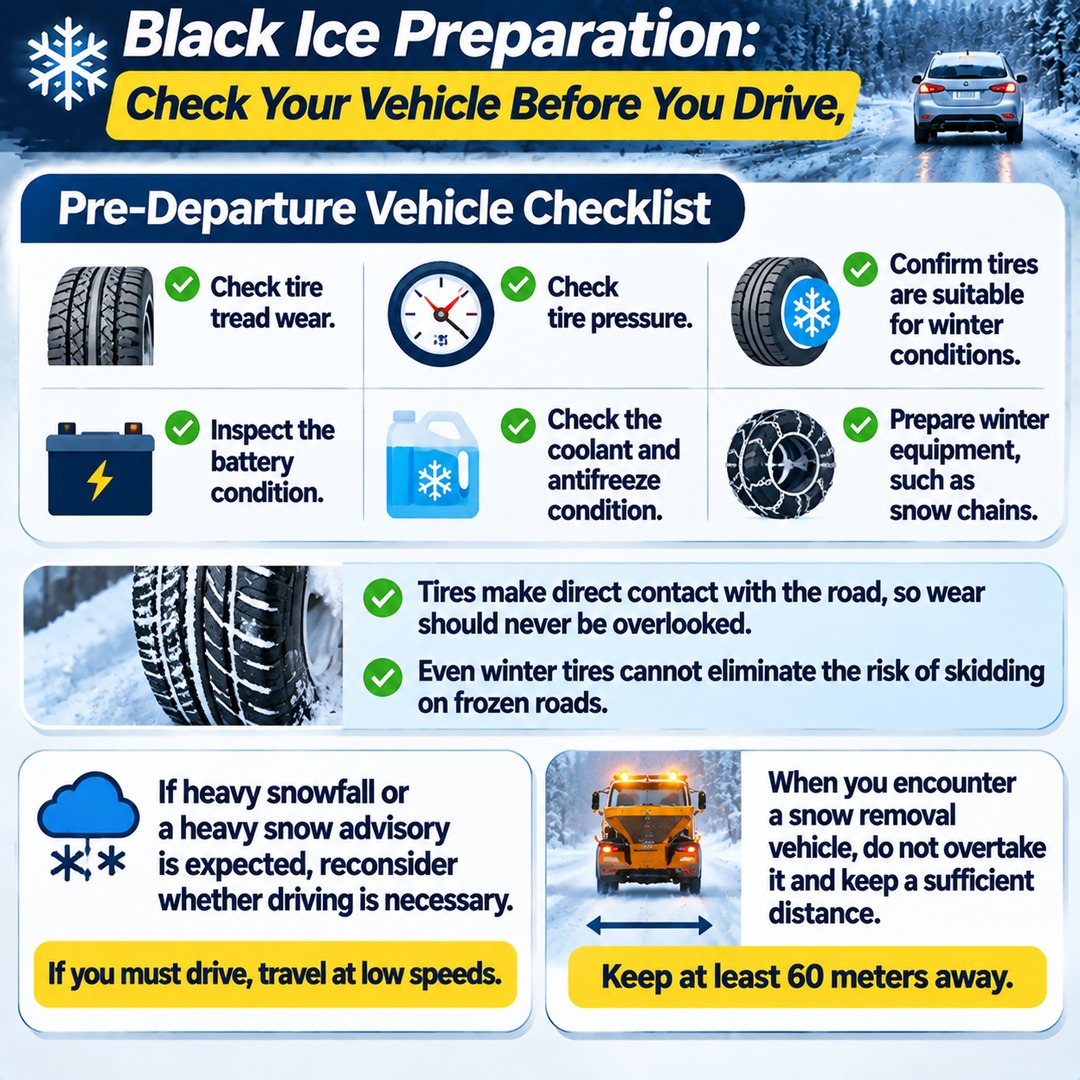
Preparing for black ice does not begin only after reaching a potentially hazardous road. Checking your vehicle before departure is also important.
Check tire tread wear.
Check tire pressure.
Confirm whether your tires are suitable for winter conditions.
Inspect the battery condition.
Check the coolant and antifreeze condition.
Prepare winter equipment, such as snow chains.
Tires are the components that make direct contact with the road, so their wear condition should never be overlooked. Even winter tires cannot eliminate the possibility of skidding on frozen roads.
If heavy snowfall or a heavy snow advisory is expected, reconsider whether driving is necessary at all. If driving is unavoidable, travel at low speeds. When encountering a snow-removal vehicle, do not attempt to overtake it recklessly, and maintain sufficient distance. South Korean government guidance recommends keeping at least 60 meters away from snow-removal vehicles.
What Should You Watch for During Early-Morning and Nighttime Commutes?
Black ice is not limited to specific types of roads. Even on the same road, the level of risk can change depending on the time of day and the condition of the surface.
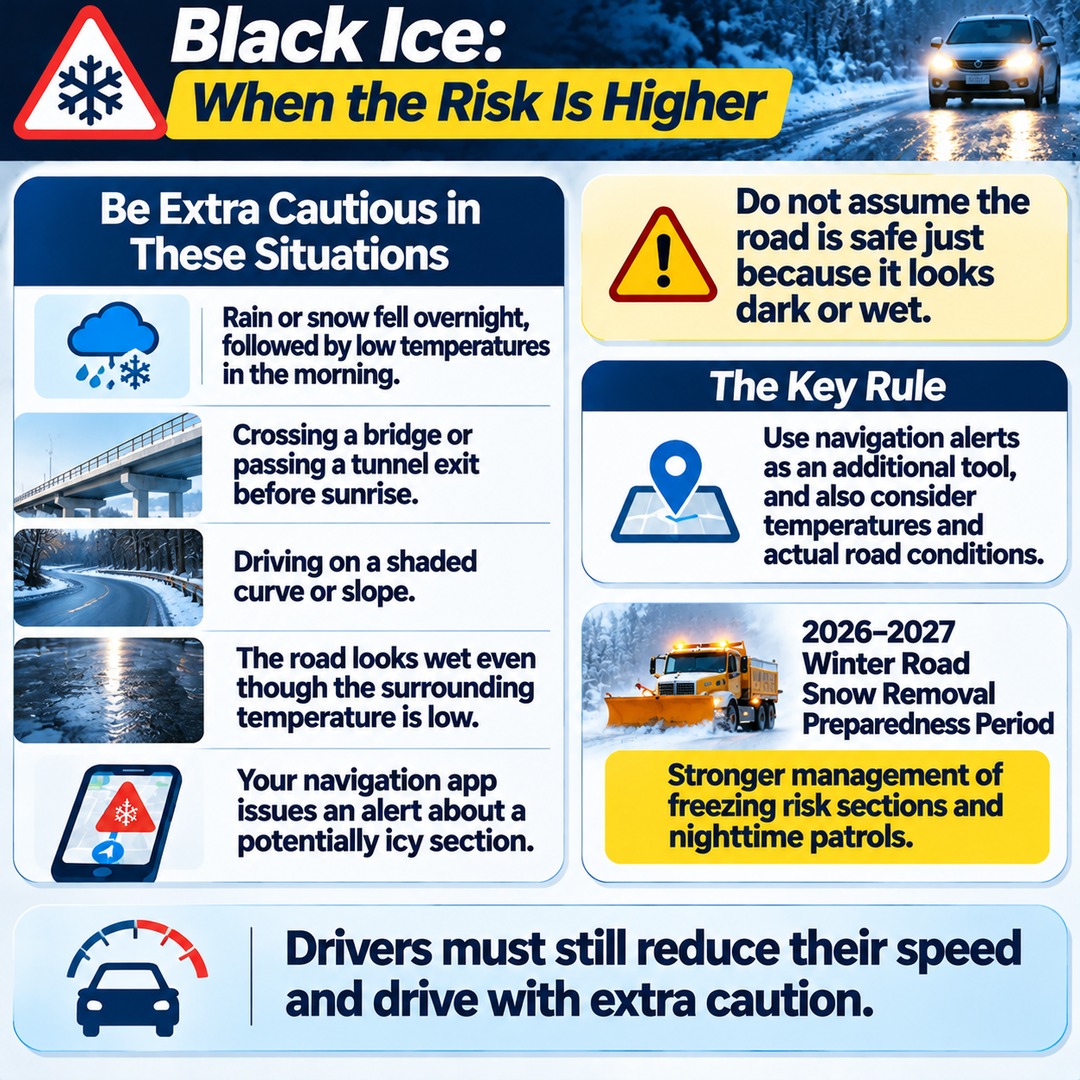
Exercise extra caution in the following situations:
Rain or snow fell overnight, followed by low temperatures in the morning.
You are crossing a bridge or passing a tunnel exit before sunrise.
You are driving on a shaded curve or slope.
The road looks wet even though the surrounding temperature is low.
Your navigation app issues an alert about a potentially icy section.
In these situations, do not assume the road surface is safe simply because it looks dark or wet.
The key rule to remember while driving is simple. Navigation alerts are an additional tool for identifying potential hazards in advance. Drivers must also consider temperatures and actual road conditions. During South Korea's 2026–2027 winter road snow-removal preparedness period, government management of freezing-risk sections and nighttime patrols will be strengthened. However, drivers must still reduce their speed and maintain a safe following distance.
Frequently Asked Questions
Can I find the exact locations of all 492 designated freezing-risk sections?
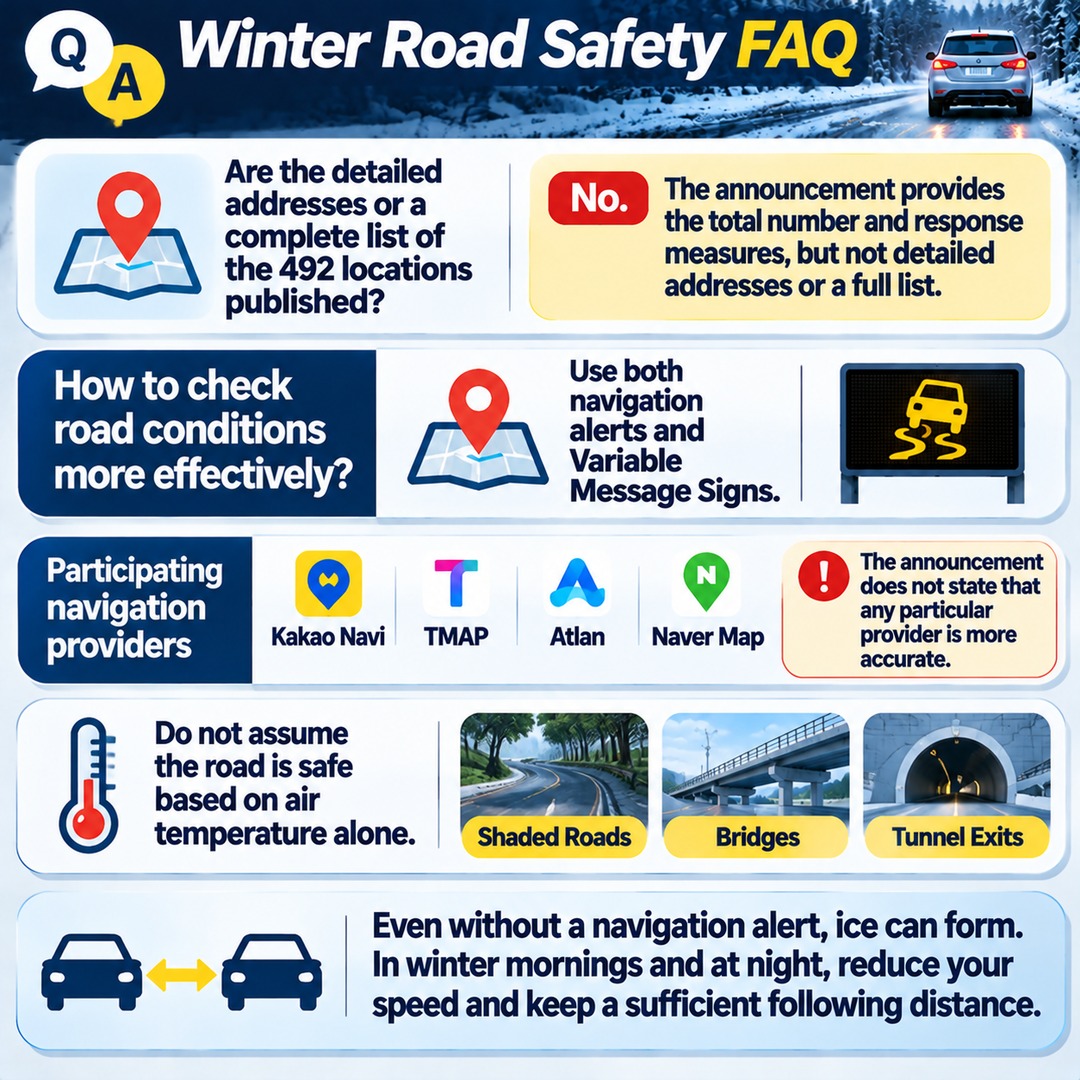
The government announcement provides the total number of designated locations and outlines its response measures. However, it does not publish detailed addresses or a complete list of all 492 locations in the announcement itself. It is advisable to use navigation alerts for potentially icy sections together with information displayed on Variable Message Signs.
Which is more accurate for black ice alerts, Kakao Navi or TMAP?
The government announcement alone does not provide enough information to compare the accuracy of the two services. It identifies Kakao Navi, TMAP, Atlan, and Naver Map as participating navigation providers but does not state that any particular provider is more accurate.
Is black ice no longer a concern when the temperature is above 0°C?
You should not assume that road conditions are safe based on the displayed air temperature alone. Consider the road's location and actual surface conditions as well. Exercise particular caution on shaded roads, bridges, and tunnel exits.
Can I drive normally if my navigation app does not issue an ice warning?
No. Ice can form even on sections without navigation alerts. During winter mornings and nighttime hours, continue to reduce your speed and maintain a sufficient following distance.