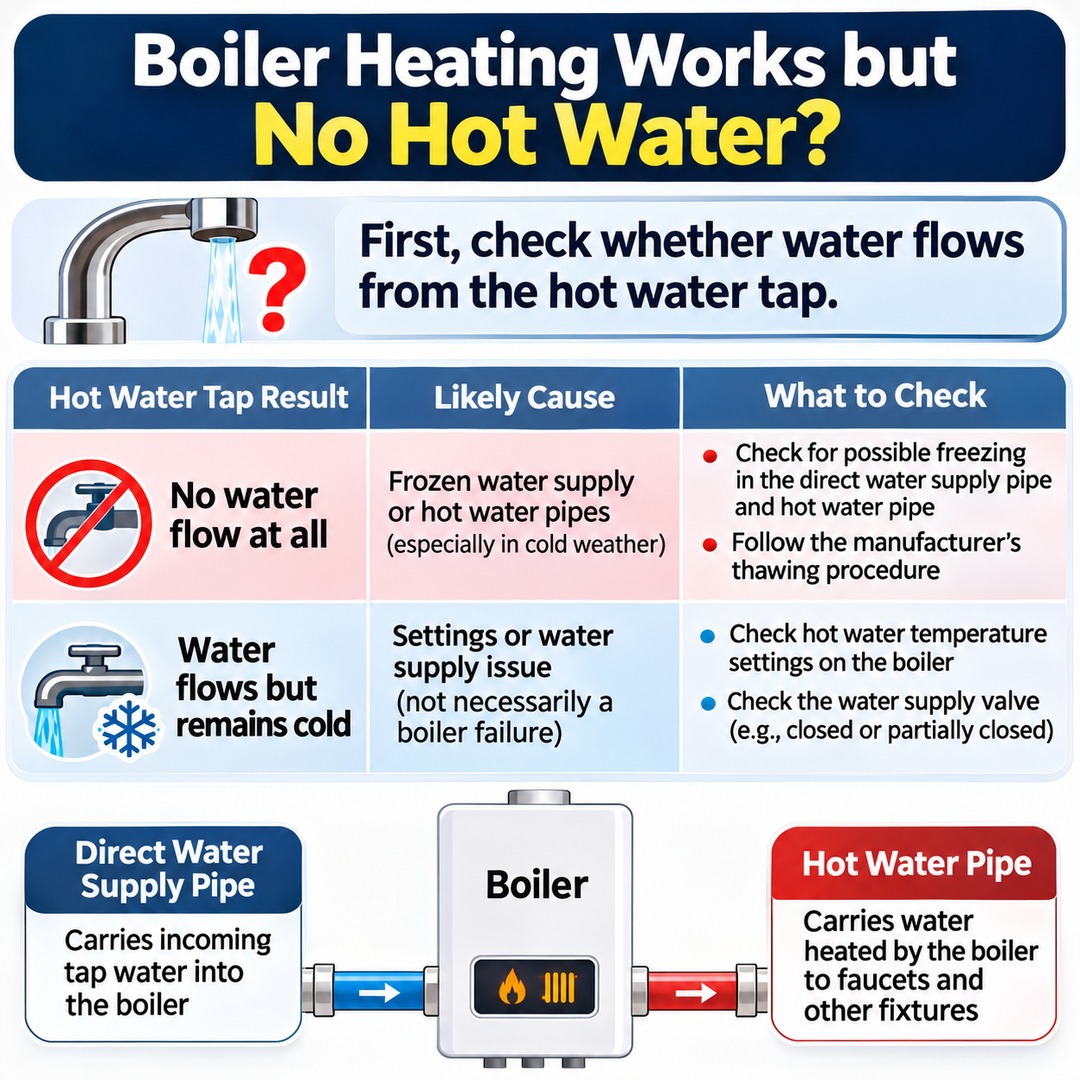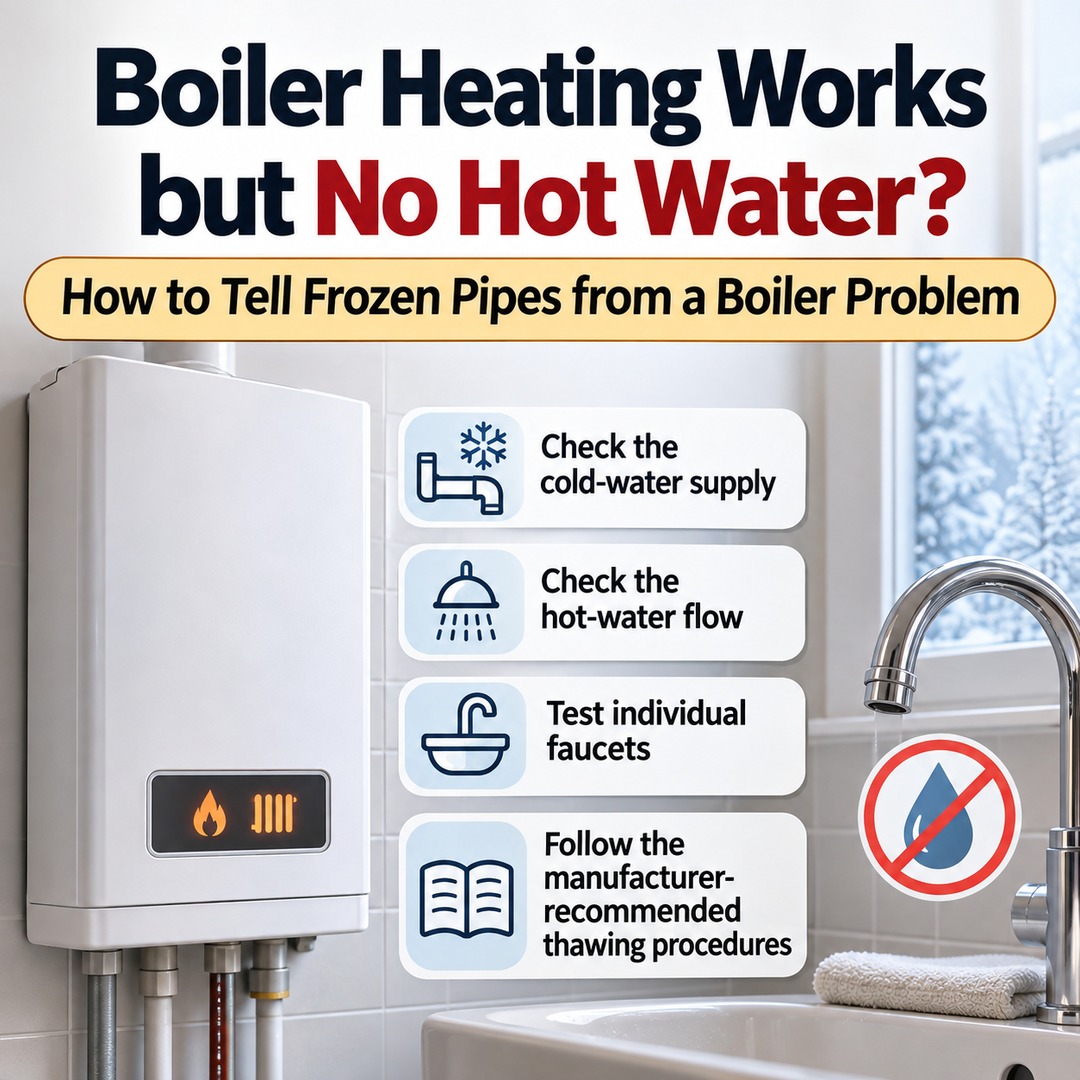
If your boiler is heating your home normally but the hot water has stopped working, the first thing to check is whether water actually flows from the hot-water tap. During cold weather, a complete lack of water flow on the hot side may indicate frozen water supply or hot-water pipes. If water flows normally but remains cold, other possible causes include hot-water settings and the water supply valve.
Do not assume that the entire boiler is working properly simply because the heating works. Likewise, a lack of hot water does not automatically mean the boiler itself is faulty.
What Is the Difference Between No Water Flow and Water That Stays Cold?
The most important distinction when troubleshooting hot-water problems is between water not flowing at all and water flowing but not being heated.
These symptoms require different checks.
| Symptom | What to Check First |
|---|---|
| Cold water flows normally, but no water comes from the hot-water tap | Frozen boiler supply or hot-water pipes |
| Water flows from the hot-water tap but remains cold | Hot-water function settings, water supply valve, and boiler operation |
| Neither cold nor hot water flows | Water meter, possible water supply interruption, and incoming water supply |
| Only one faucet or shower is affected | The affected fixture and its connected pipes |
Daesung Celtic, a South Korean boiler manufacturer, identifies frozen boiler supply and hot-water pipes as a major possible cause when cold water flows normally but hot water is unavailable during winter.
Rinnai also explains that freezing in the direct water supply pipe can completely interrupt hot-water delivery.
The direct water supply pipe carries incoming tap water into the boiler. The hot-water pipe carries water heated by the boiler to faucets and other fixtures.
It is therefore important to determine which part of the water supply or hot-water piping system may be affected.
Why Should You Check Every Hot-Water Tap in Your Home?
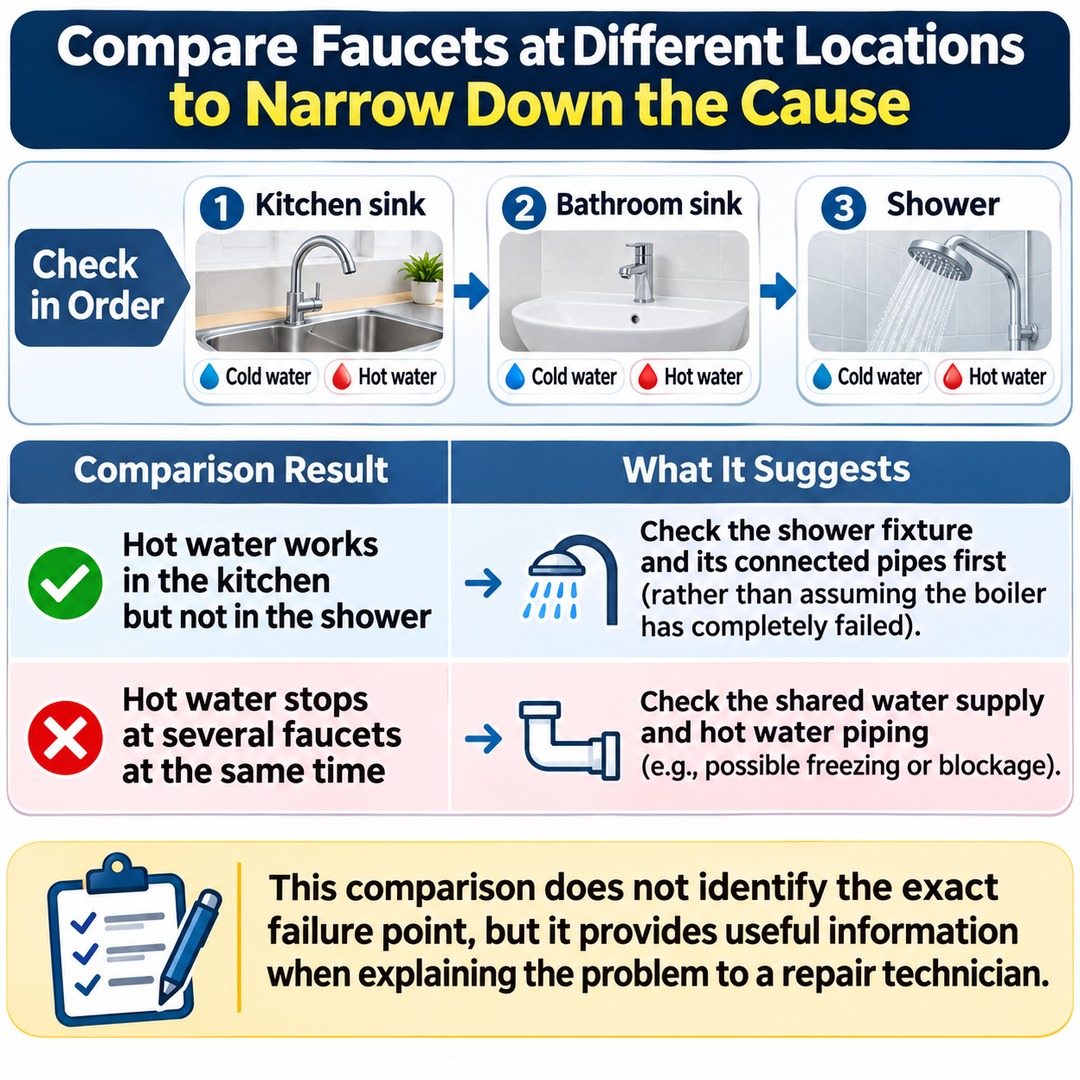
Comparing faucets in different locations, such as the kitchen and bathroom, helps determine whether the problem is limited to one fixture or affects a shared hot-water supply route.
Start by checking the cold and hot water separately at the kitchen sink. Then compare the cold- and hot-water supply at the bathroom sink and shower.
Do not check only the water temperature. Also observe whether water flows normally when the faucet is turned to the hot-water position.
For example, if hot water works normally in the kitchen but not in the bathroom shower, it is difficult to conclude that the entire boiler has failed. The shower fixture and its connected pipes should be checked first.
Conversely, if hot-water supply stops at several faucets simultaneously, the shared water supply and hot-water piping should be examined.
This comparison alone cannot identify the exact point of failure, but it provides valuable information when describing the problem to a repair technician.
What Should You Check on the Boiler If Water Flows but Stays Cold?
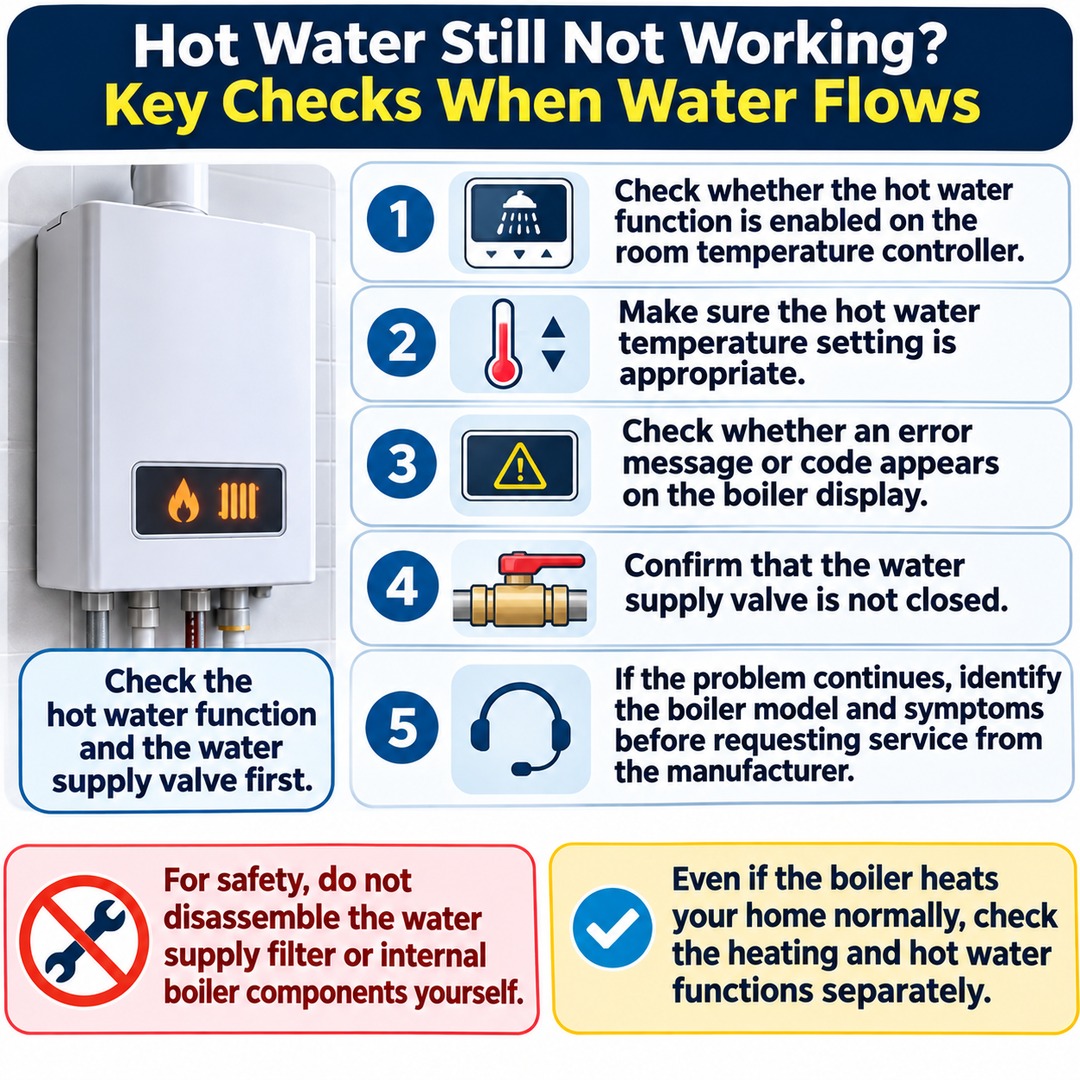
If water flows normally from the hot-water tap, first check whether the boiler's hot-water function is enabled and whether the water supply valve is in its normal operating position.
The Rinnai RCK623 user manual recommends checking the hot-water function settings, possible water supply interruptions, the water supply valve, and the water supply filter when hot water is unavailable.
Users can begin with the following checks:
1. Check whether the hot-water function is enabled on the room temperature controller.
2. Make sure the hot-water temperature setting is appropriate.
3. Check whether an error message or code appears on the boiler display.
4. Confirm that the water supply valve is not closed.
5. If the problem continues, identify the boiler model and symptoms before requesting service from the manufacturer.
For safety, users should not attempt to disassemble the water supply filter or internal boiler components themselves.
Even when the boiler is heating the home normally, this does not prove that its hot-water function is operating correctly. The heating and domestic hot-water functions must be checked separately.
Can You Use a Hair Dryer to Thaw Frozen Boiler Pipes?
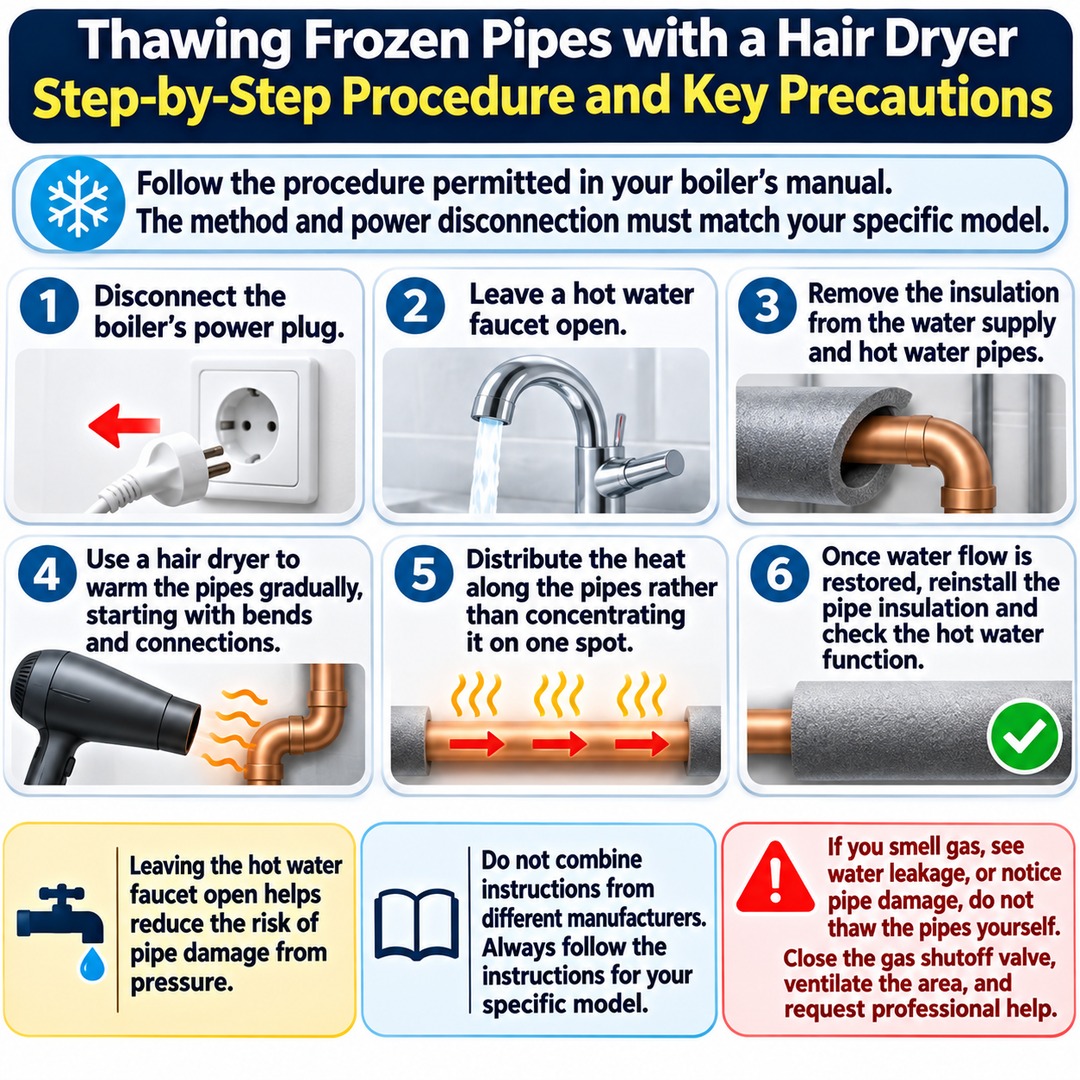
A hair dryer may be used to thaw frozen pipes when the procedure is permitted under the manufacturer's instructions. However, power disconnection and heating methods must follow the instructions for the specific boiler model.
Daesung Celtic provides the following winter procedure for thawing frozen hot-water pipes:
1. Disconnect the boiler's power plug.
2. Leave a hot-water faucet open.
3. Remove the insulation from the water supply and hot-water pipes that need thawing.
4. Use a hair dryer to warm the pipes gradually, starting with bends and connections.
5. Distribute the heat along the pipes rather than concentrating it on one spot.
6. Once water flow is restored, reinstall the pipe insulation and check the hot-water function.
Leaving the hot-water faucet open helps reduce the risk of pipe damage caused by pressure that may develop during thawing.
The Rinnai RCK623 manual also describes using a hair dryer or similar equipment to thaw frozen direct water supply and hot-water pipes. It advises contacting the service center if the problem cannot be resolved.
An important precaution is not to combine instructions from different manufacturers without checking their applicability. Always prioritize the instructions for your particular model regarding power disconnection, safe heating locations, and thawing procedures.
Do not attempt to thaw pipes yourself if you notice a gas smell, water leakage, or visible pipe damage. If you smell gas, do not operate electrical switches or plugs. Stop using the appliance, close the gas shutoff valve, ventilate the area, and request professional assistance from a safe location.
If Neither Cold Nor Hot Water Flows, Should You Check the Water Meter First?
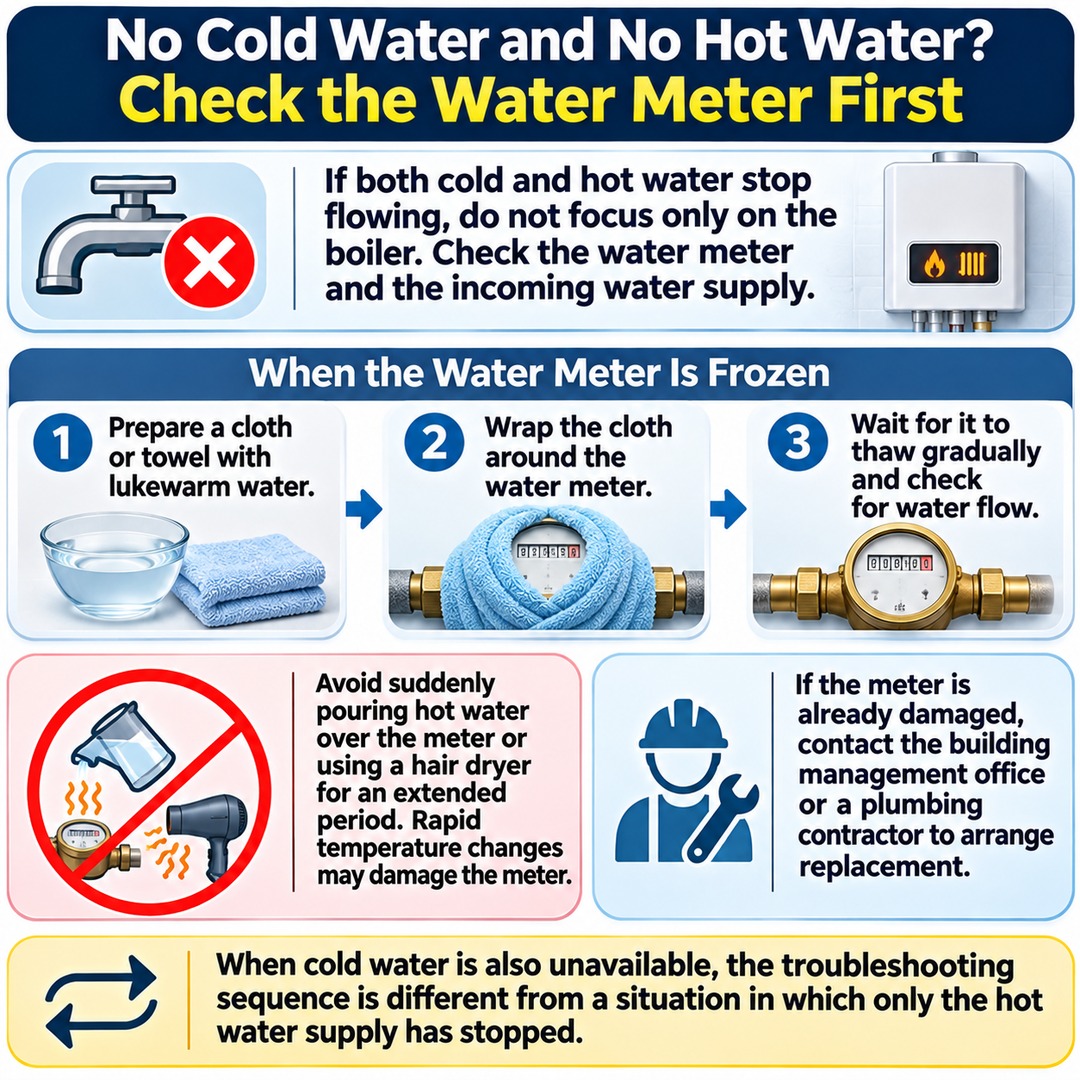
If both cold and hot water stop flowing, do not focus exclusively on the boiler. Start by checking the water meter and the incoming water supply.
Daesung Celtic advises checking whether the water meter is frozen or damaged when neither cold nor hot water is available.
If the meter is frozen, the manufacturer describes a thawing method using a cloth or towel soaked in lukewarm water.
Avoid suddenly pouring hot water over the meter or heating it with a hair dryer for an extended period. Rapid temperature changes may damage the meter.
If the meter is already damaged, contact the building management office or a plumbing contractor to arrange replacement.
When cold water is also unavailable, the troubleshooting sequence is different from a situation in which only the hot-water supply has stopped.
Who Should You Contact If Thawing the Pipes Does Not Restore Hot Water?
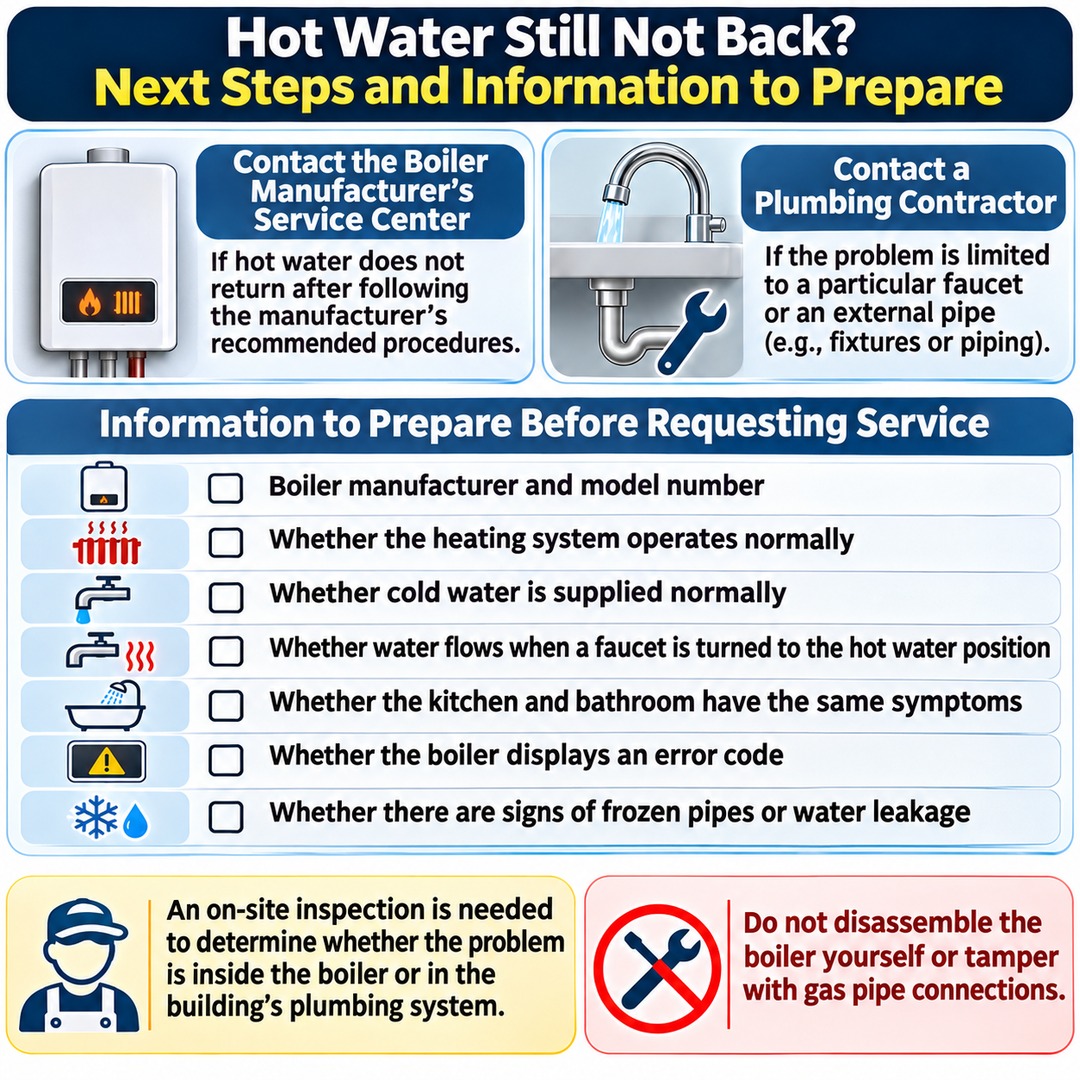
If hot water does not return after following the manufacturer's recommended procedures, it is appropriate to request an inspection from the boiler manufacturer's service center.
However, if the problem is limited to a particular faucet or an external pipe, a plumbing contractor responsible for fixtures and piping may need to inspect it instead.
Before requesting repairs, gather the following information to help explain the symptoms:
Boiler manufacturer and model number
Whether the heating system operates normally
Whether cold water is supplied normally
Whether water flows when a faucet is turned to the hot-water position
Whether the kitchen and bathroom have the same symptoms
Whether the boiler displays an error code
Whether there are signs of frozen pipes or water leakage
An on-site inspection is needed to determine whether the problem originates inside the boiler or in the building's plumbing system.
In particular, avoid disassembling the boiler yourself or tampering with gas pipe connections.
How Can You Prevent Boiler Pipes from Freezing Again?
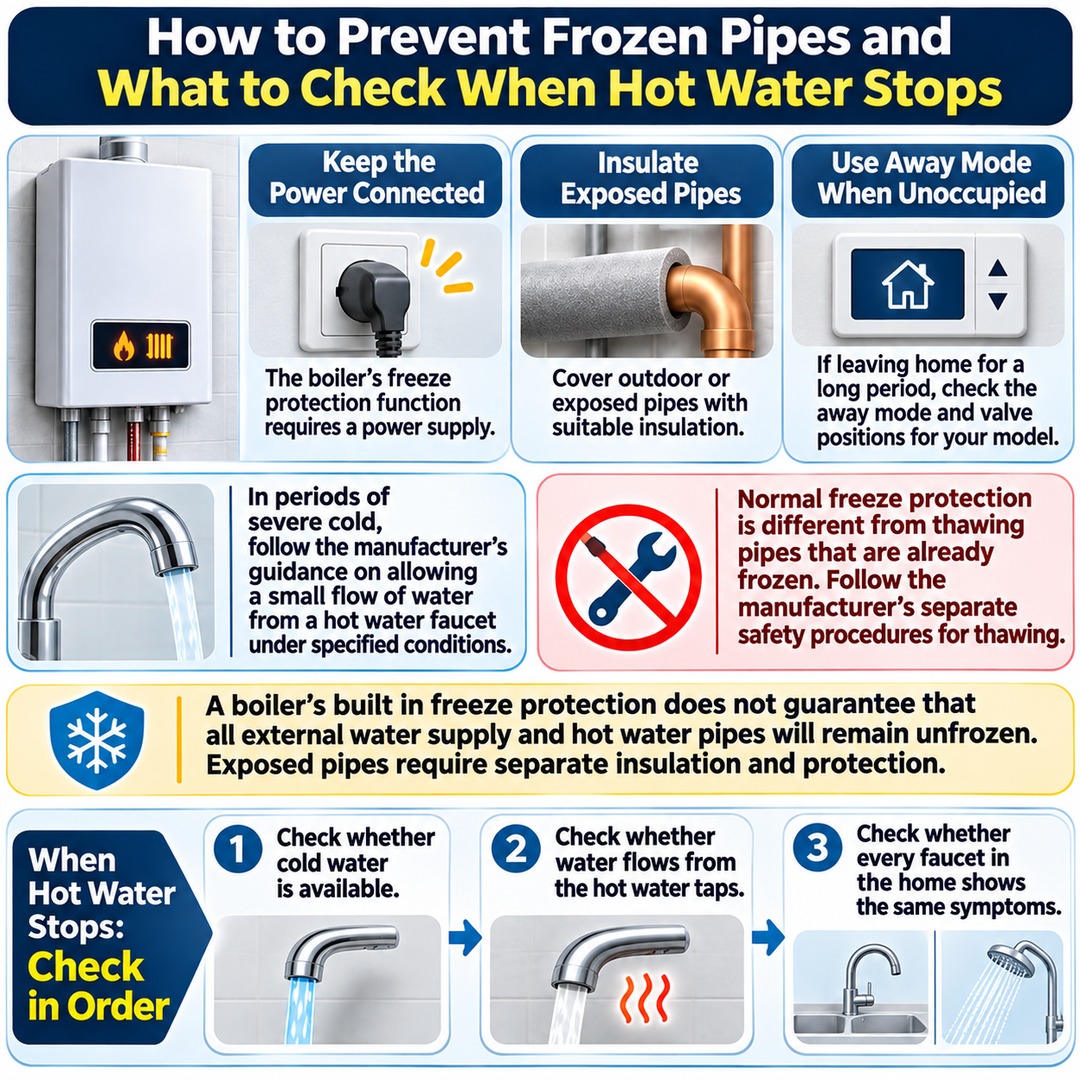
During winter, it is important to keep the boiler connected to its power supply so that its freeze-protection function can operate. Exposed pipes should also be covered with suitable insulation.
Both Daesung Celtic and Rinnai state that their freeze-protection systems require an electrical power supply to operate.
However, keeping the power connected for normal freeze protection is different from thawing pipes that are already frozen. When performing thawing work, follow the manufacturer's separate safety procedures.
If you plan to leave your home unoccupied for an extended period, check the appropriate away-mode settings and valve positions for your boiler model.
During periods of severe cold when temperatures remain below freezing, some manufacturers also recommend allowing a small amount of water to flow from a hot-water faucet under specified conditions.
A boiler's built-in freeze-protection function does not guarantee that all external water supply and hot-water pipes will remain unfrozen. Exposed pipes require separate insulation and protection.
When your hot water stops working, the first step should not be replacing the boiler or assuming an internal component has failed. Instead, compare whether cold water is available, whether water flows from the hot-water taps, and whether every faucet in the home shows the same symptoms. Then follow the troubleshooting procedure appropriate to the problem you observe.