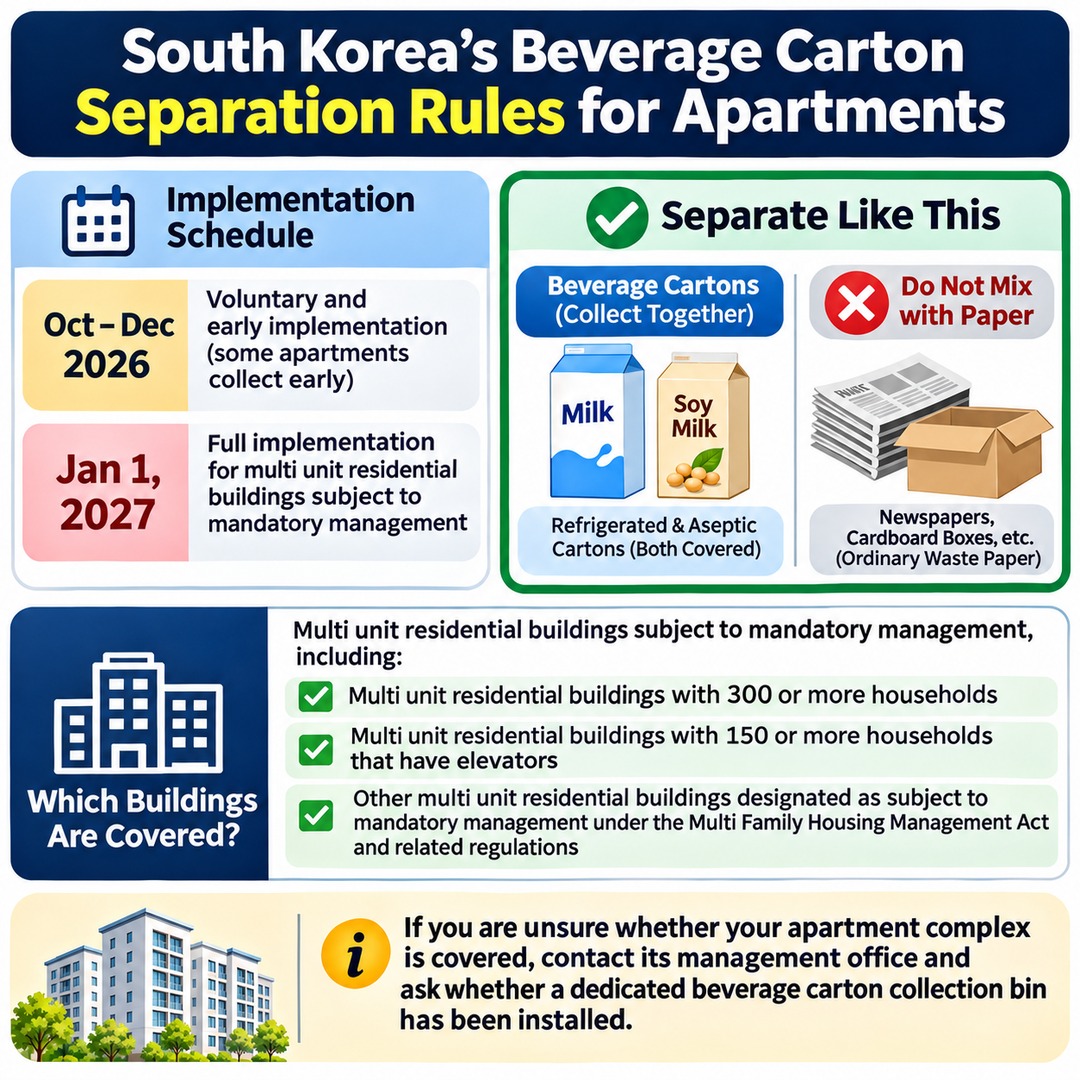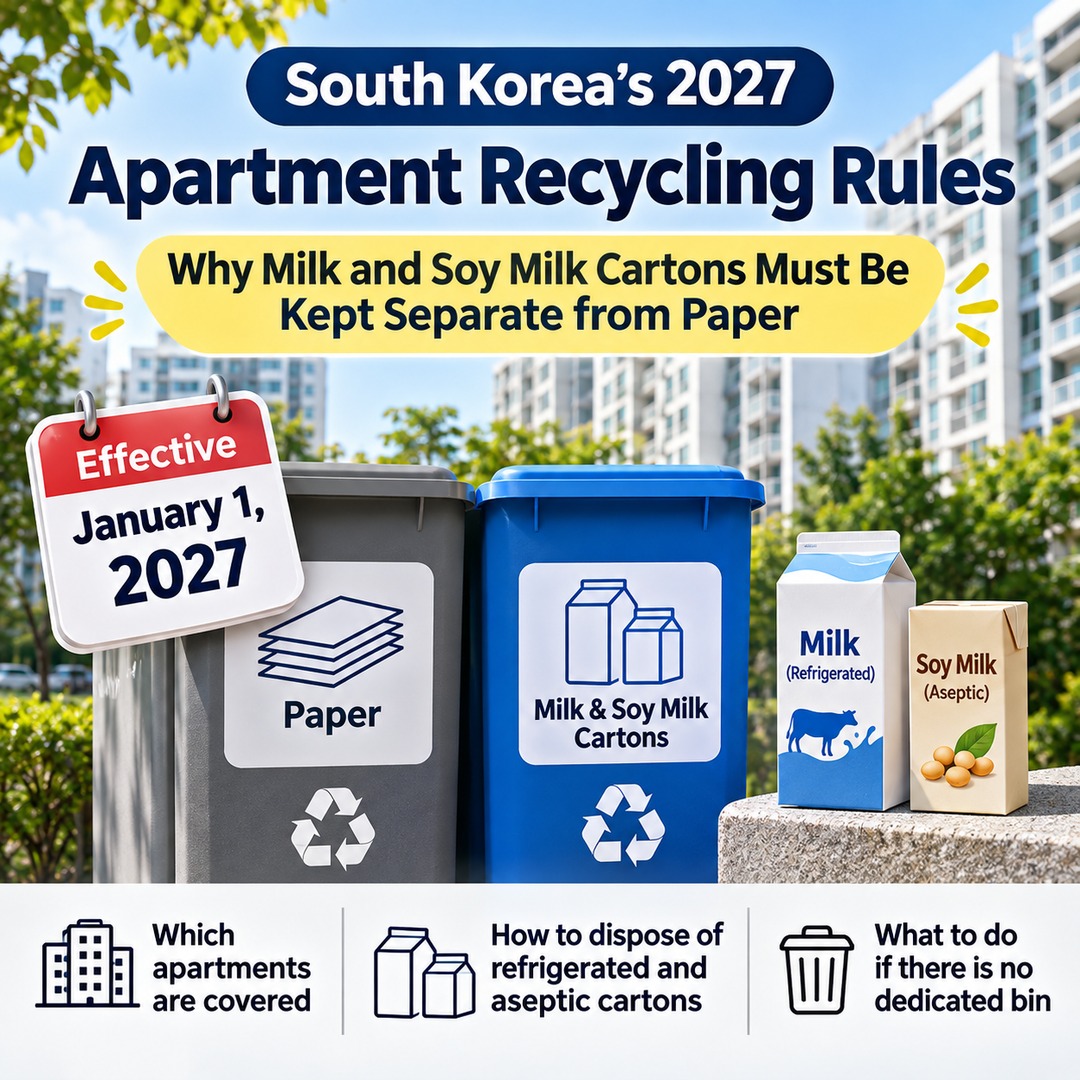
Starting January 1, 2027, residents of apartment complexes and other multi-unit residential buildings subject to mandatory management requirements across South Korea must separate milk and soy milk cartons from ordinary paper waste, such as newspapers and cardboard boxes. The rules cover both conventional beverage cartons and aseptic cartons. Both types can be placed together in a dedicated beverage carton collection bin or designated collection bag. However, the same requirements do not apply to every type of housing.
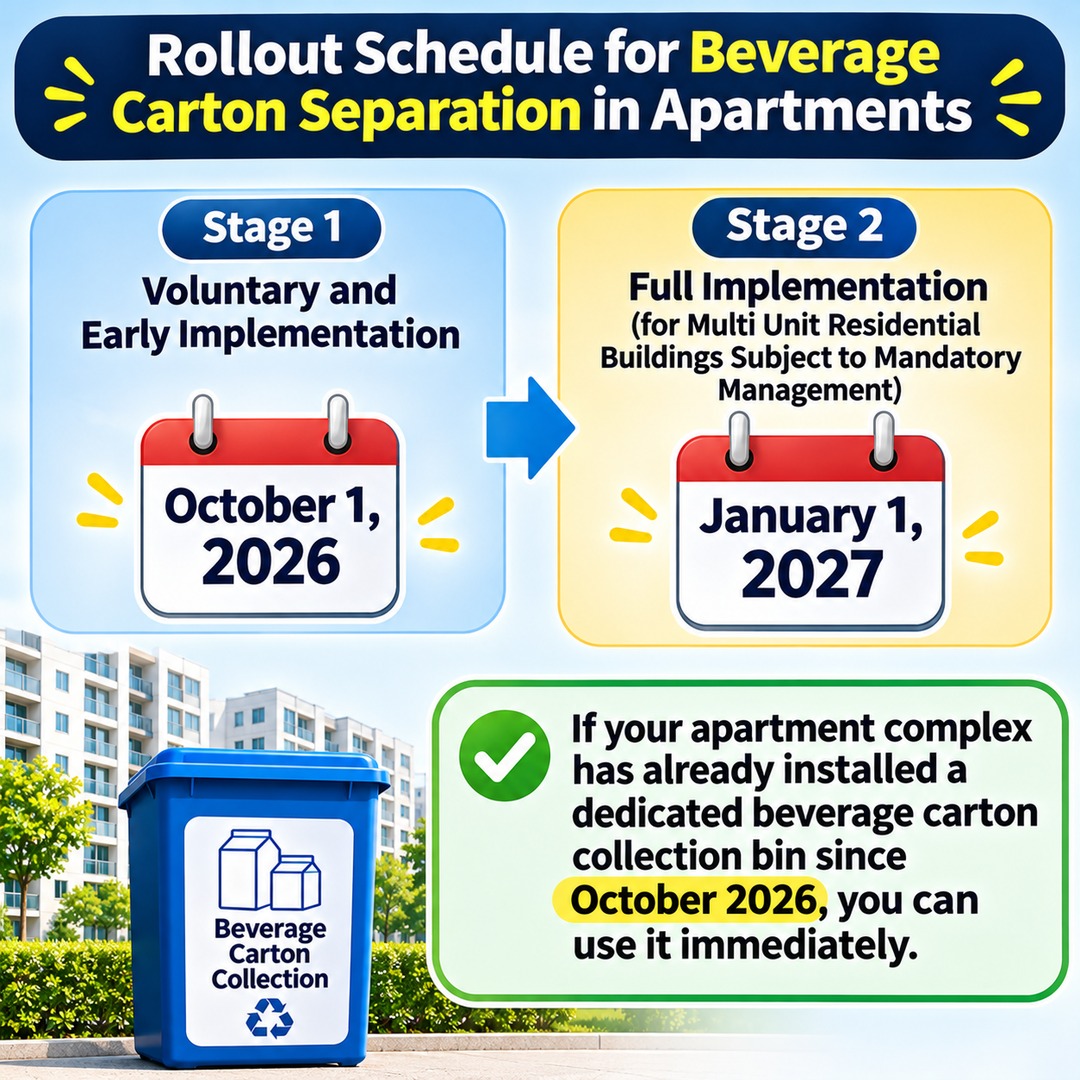
Some apartment complexes began collecting beverage cartons separately in October 2026. The period from October through December 2026 is designated for voluntary and early implementation, with full implementation beginning in January 2027 for multi-unit residential buildings subject to mandatory management requirements.
Even if you rinse and dry a milk carton at home, placing it with cardboard boxes does not comply with the new separation requirements. The key distinction residents need to make is not between different types of beverage cartons, but between beverage cartons and ordinary waste paper.
Which Apartment Buildings Must Separate Beverage Cartons Starting in 2027?
The new separation requirements apply to multi-unit residential buildings subject to mandatory management requirements throughout South Korea. Under Korean housing management regulations, these are residential properties that meet certain size or facility criteria and are legally required to have a formal management system.
The main categories include:
Multi-unit residential buildings with 300 or more households
Multi-unit residential buildings with 150 or more households that have elevators
Other multi-unit residential buildings designated as subject to mandatory management under South Korea's Multi-Family Housing Management Act and its related regulations
Therefore, residents should not assume that an apartment complex is exempt simply because it has fewer than 300 households. A complex with at least 150 households and elevators may also fall within the scope of the requirements.
Conversely, the same nationwide mandatory collection arrangements do not automatically apply to every villa-style residential building, detached house, or small multi-unit property.
In South Korea, the term 'villa' commonly refers to a low-rise multi-unit residential building rather than a detached luxury residence.
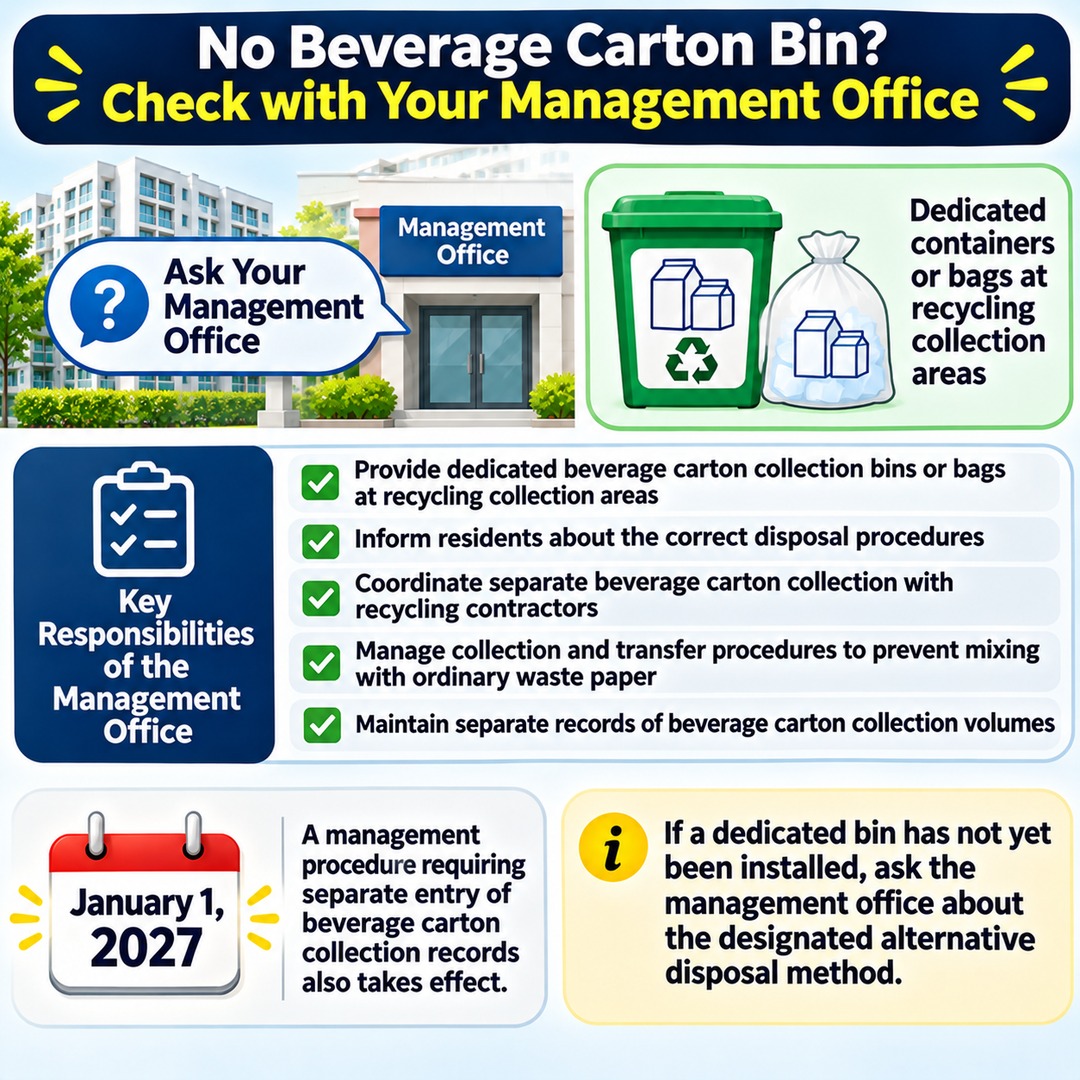
If you are unsure whether your apartment complex is subject to mandatory management requirements, the simplest approach is to contact its management office. You can also ask whether a dedicated beverage carton collection bin has been installed.
Can Milk Cartons and Soy Milk Cartons Go in the Same Recycling Bin?
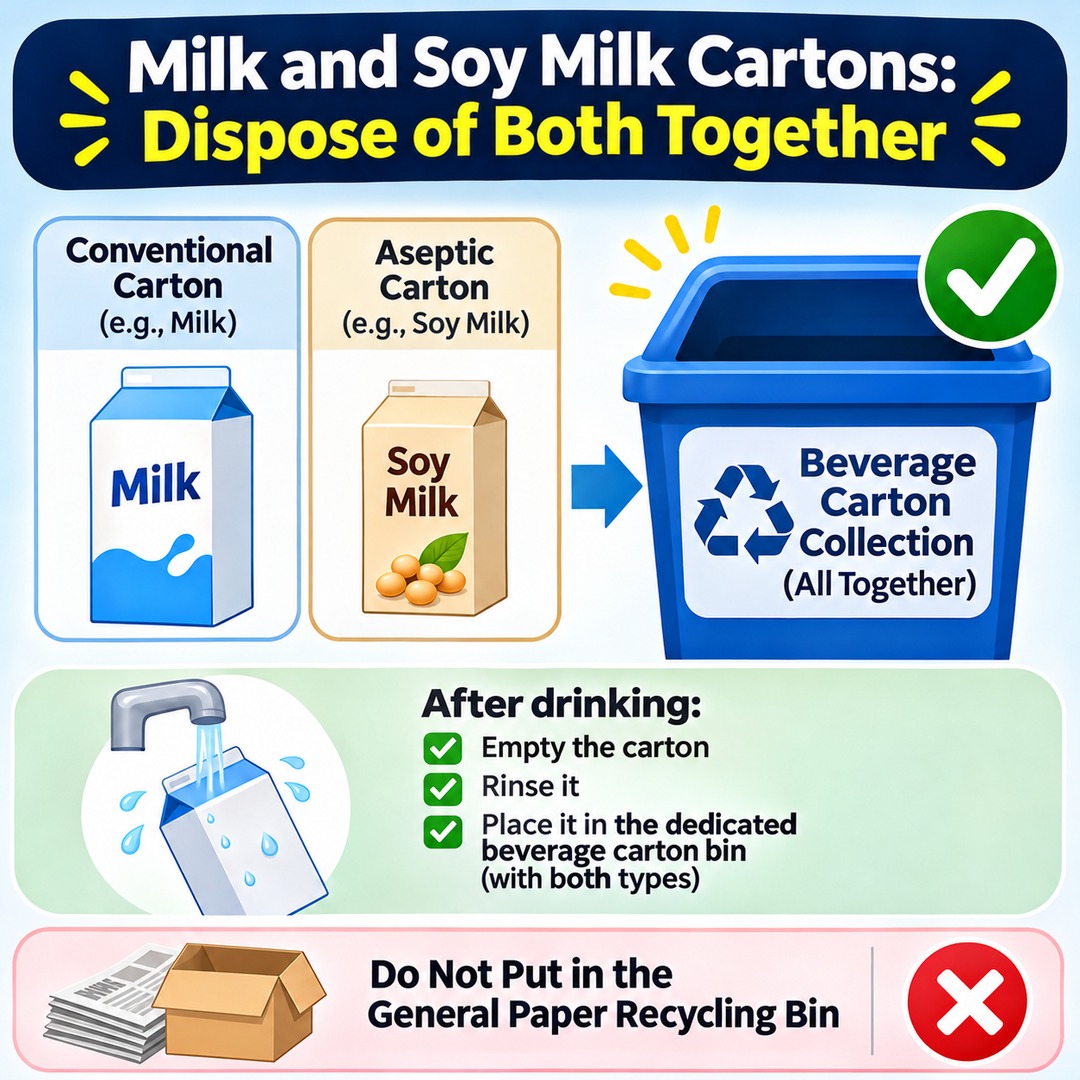
Yes. Milk cartons and soy milk cartons are both classified as beverage cartons requiring separate collection. Conventional cartons and aseptic cartons can be placed together in a dedicated beverage carton collection bin without separating the two types.
Although their packaging structures differ, the main distinction residents must make under the new system is between beverage cartons and ordinary waste paper.
| Category | Typical items | Where to dispose of them |
|---|---|---|
| Conventional beverage cartons | Milk cartons | Dedicated beverage carton collection bin |
| Aseptic beverage cartons | Soy milk cartons, aseptic juice cartons, aseptic packaged water cartons | Dedicated beverage carton collection bin |
| Ordinary paper waste | Newspapers, cardboard boxes | General paper recycling bin |
For example, after drinking milk or soy milk, you can empty and rinse the cartons, then place both the conventional milk carton and the aseptic soy milk carton in the same dedicated beverage carton collection bin.
Cleaning a beverage carton does not mean it should be placed in the general paper recycling bin.
How Should You Clean and Dispose of Milk and Aseptic Cartons?
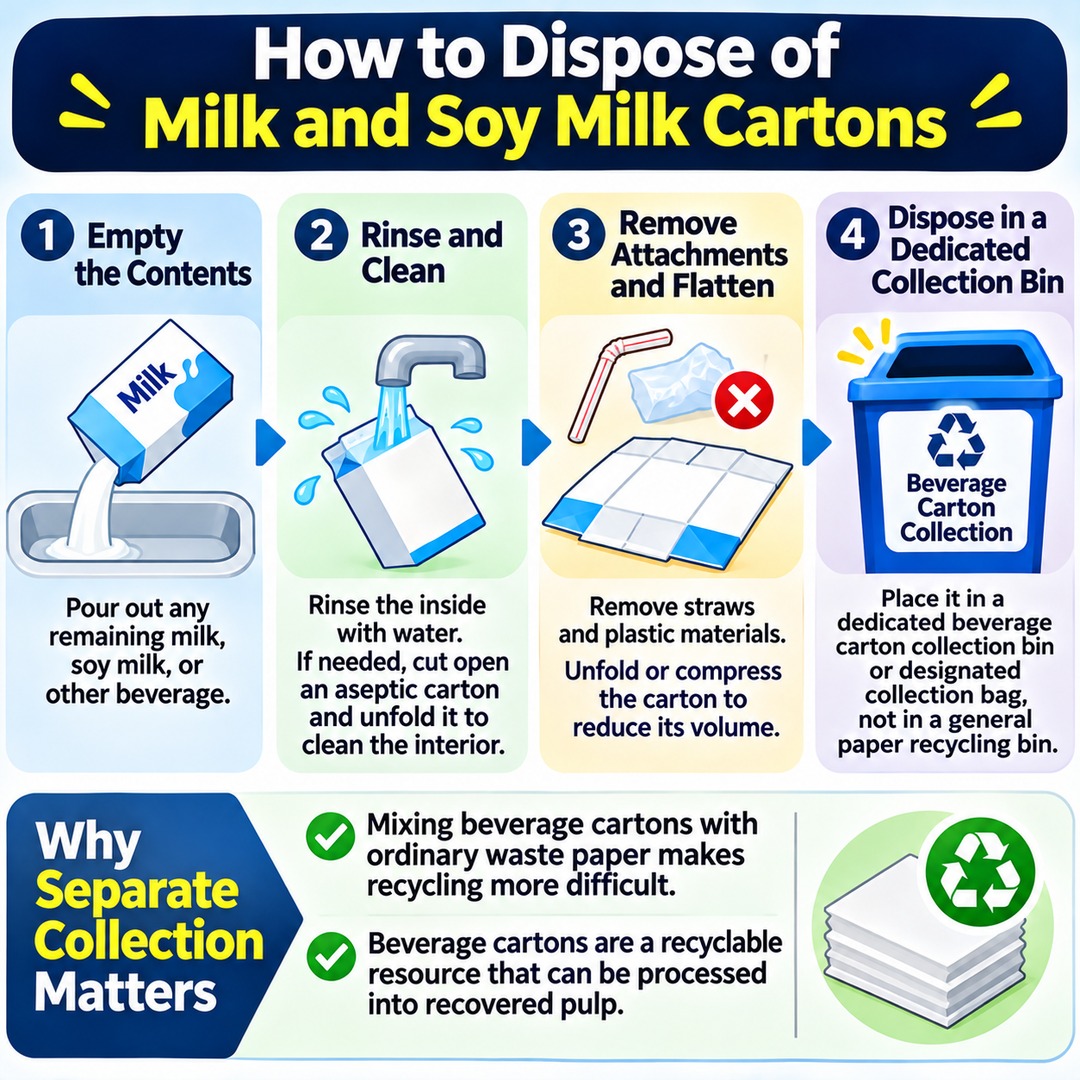
Empty the contents, rinse the carton with water, and unfold or flatten it before disposal. Remove non-carton attachments, including straws and plastic wrapping.
Steps for Separating Beverage Cartons
1. Empty the carton
Pour out any remaining milk, soy milk, or other beverage.
2. Rinse with water
Use water to wash away any beverage residue inside the carton. If necessary, cut open an aseptic carton and unfold it to clean the interior.
3. Remove attachments and flatten the carton
Remove straws and plastic materials. Unfold or compress the carton to reduce its volume.
4. Place it in a dedicated beverage carton collection bin
Dispose of the carton in a dedicated beverage carton collection bin or designated collection bag, not in a general paper recycling container.
The reason for collecting beverage cartons separately is that mixing them with ordinary waste paper makes recycling more difficult.
Beverage cartons are a recyclable resource that can be processed into recovered pulp. Separate collection helps ensure that they reach recycling facilities without being mixed with other types of waste paper.
What Changes Between October 2026 and January 2027?
October 1, 2026 marks the beginning of voluntary and early implementation, while January 1, 2027 marks the start of full implementation for multi-unit residential buildings subject to mandatory management requirements.
Understanding these two stages makes the transition easier to follow.
| Period | Implementation stage | Main details |
|---|---|---|
| September 2026 | Preparation for implementation | Government announcement of plans to expand separate beverage carton collection |
| October 1–December 31, 2026 | Voluntary and early implementation | Preparation and operation of separate collection systems in multi-unit residential buildings |
| From January 1, 2027 | Full implementation | Separate beverage carton collection in multi-unit residential buildings subject to mandatory management requirements |
If your apartment complex has already been operating a dedicated beverage carton collection bin since October 2026, residents can use it immediately.
There is no need to wait until January 2027 to begin separating beverage cartons.
What If Your Apartment Building Has No Dedicated Beverage Carton Collection Bin?
If you cannot find a dedicated beverage carton collection bin, first ask your apartment management office whether one has been installed and where cartons should be deposited. Guidance for multi-unit residential buildings subject to mandatory management requirements calls for dedicated containers or bags at recycling collection areas so residents can dispose of beverage cartons separately.
Apartment management offices also have several responsibilities:
Provide dedicated beverage carton collection bins or bags at recycling collection areas
Inform residents about the correct disposal procedures
Coordinate separate beverage carton collection with recycling contractors
Manage collection and transfer procedures to prevent beverage cartons from being mixed with ordinary waste paper
Maintain separate records of beverage carton collection volumes
In particular, a management procedure requiring separate entry of beverage carton collection records will also take effect on January 1, 2027.
This means the separation process does not end when residents place cartons in the correct bins. Recycling contractors and apartment management offices must also maintain separation throughout subsequent collection and handling.
If a dedicated collection bin has not yet been installed, it is better to ask the management office about the designated alternative disposal method rather than placing cartons in the general paper recycling bin without guidance.
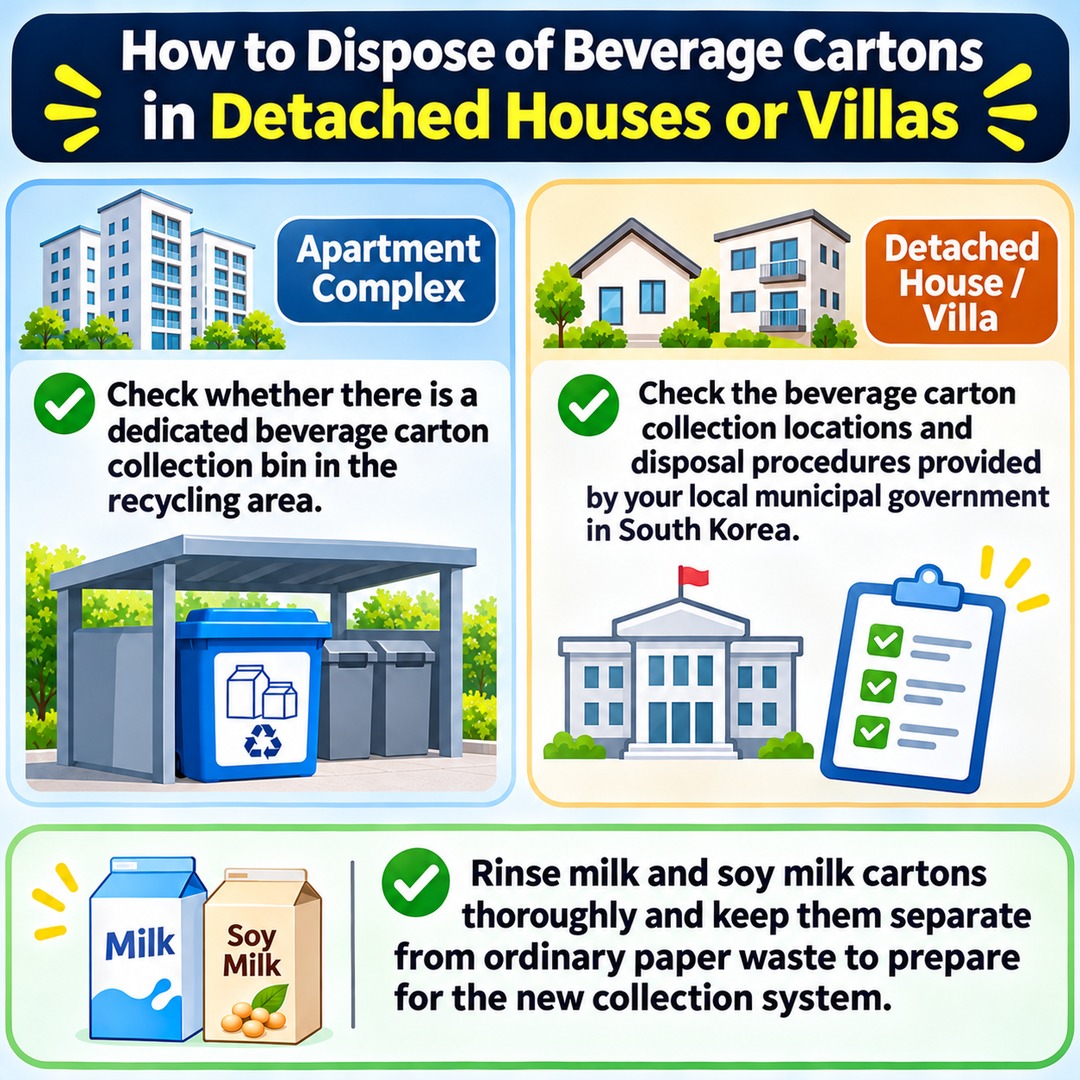
How Should Residents of Detached Houses or Small Villa Buildings Dispose of Beverage Cartons?
Housing that is not classified as multi-unit residential property subject to mandatory management requirements must be distinguished from the properties covered by this nationwide apartment collection mandate.
However, this does not mean residents can mix beverage cartons with ordinary waste paper. Beverage cartons are recyclable materials that require separate collection, so residents should follow the collection arrangements established in their local area.
If you live in a detached house or a small villa-style residential building, check the beverage carton collection locations and disposal procedures provided by your local municipal government in South Korea.
If you live in an apartment complex, start by checking whether there is a dedicated beverage carton collection bin in the recycling area. Simply rinsing milk and soy milk cartons thoroughly and keeping them separate from ordinary paper waste will help you prepare for the new collection system.