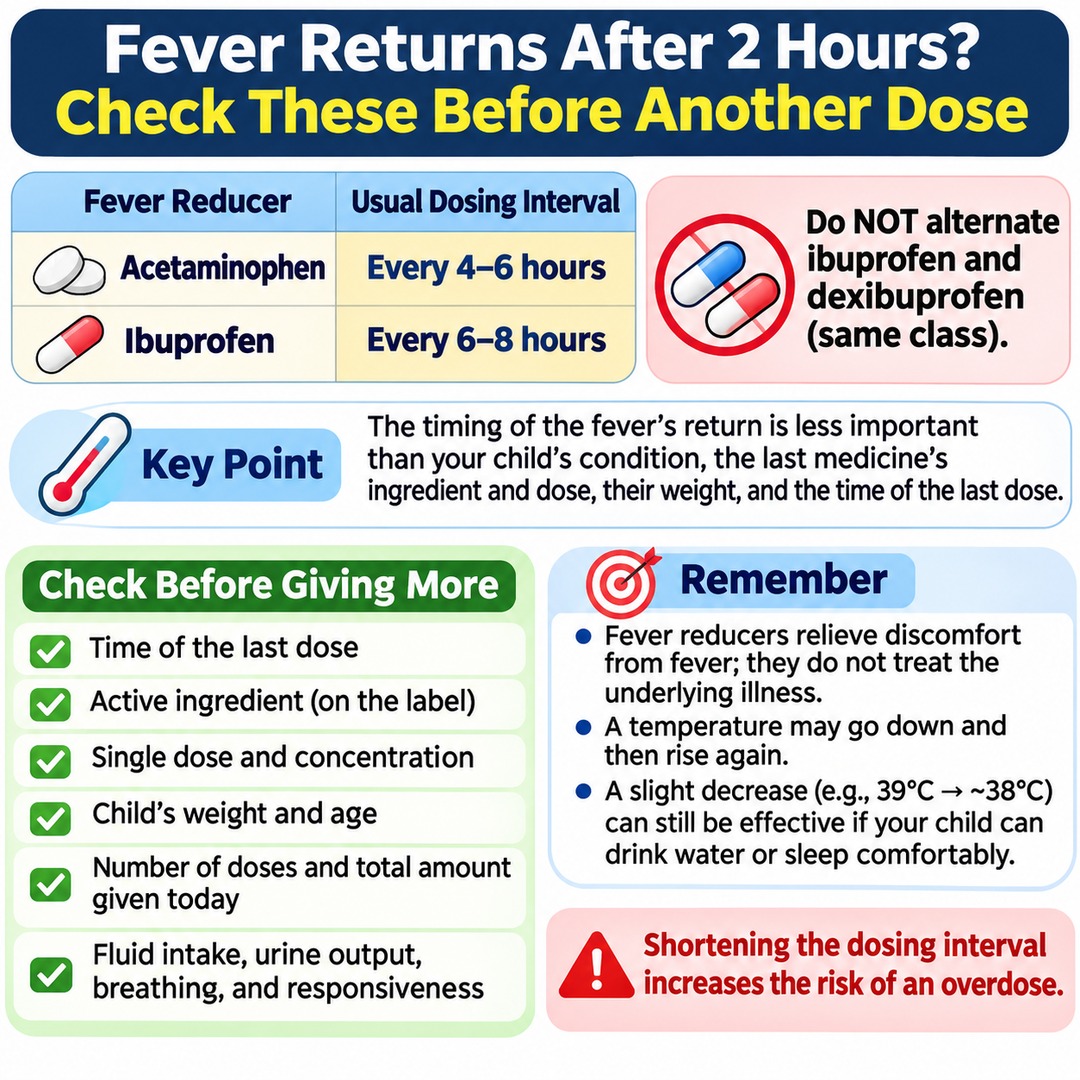

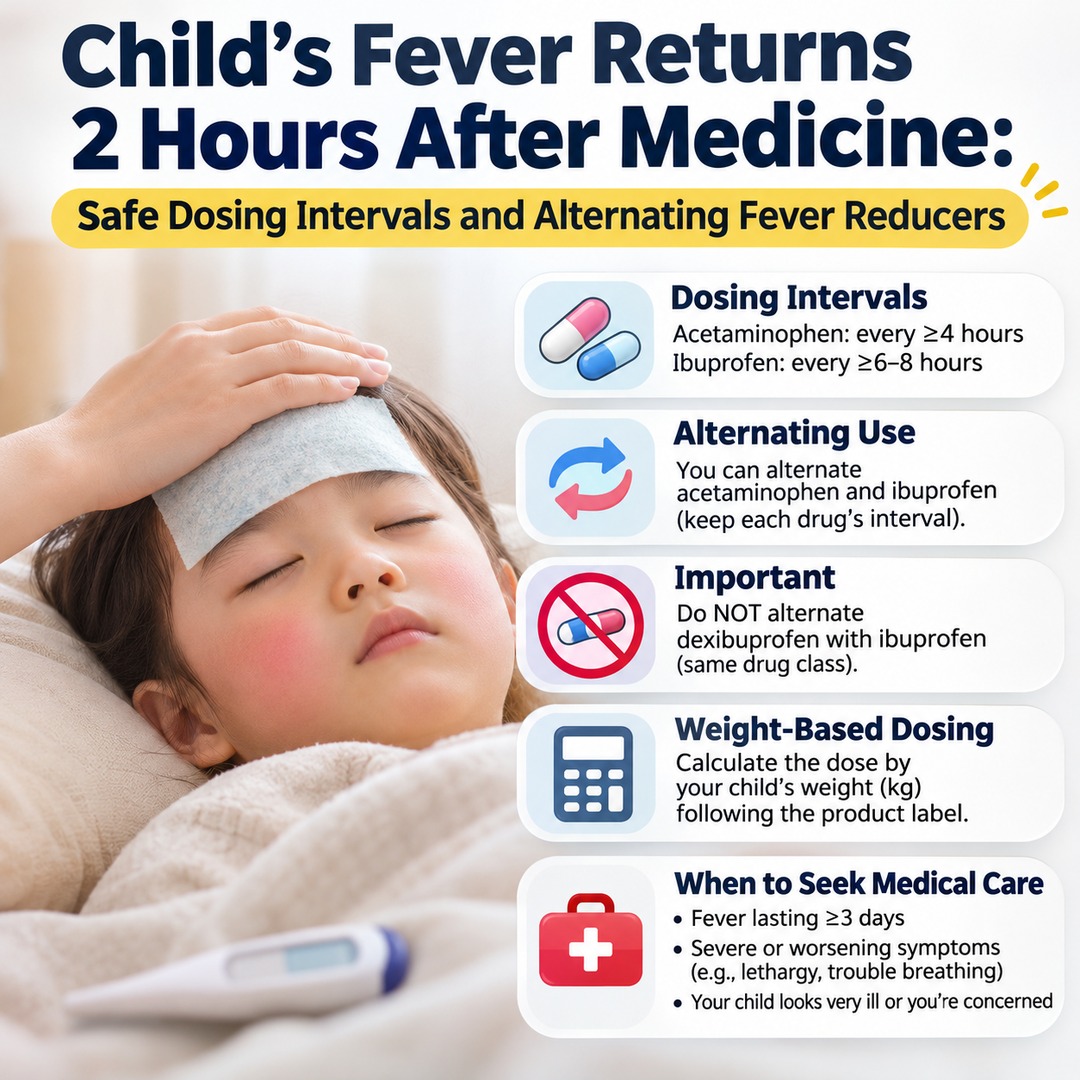
If your child's fever returns just two hours after taking a fever reducer, do not immediately give another dose. Acetaminophen is generally administered every 4–6 hours, while ibuprofen is given every 6–8 hours. Alternating between different classes of fever-reducing medications is not routinely recommended and should be done only under medical guidance.
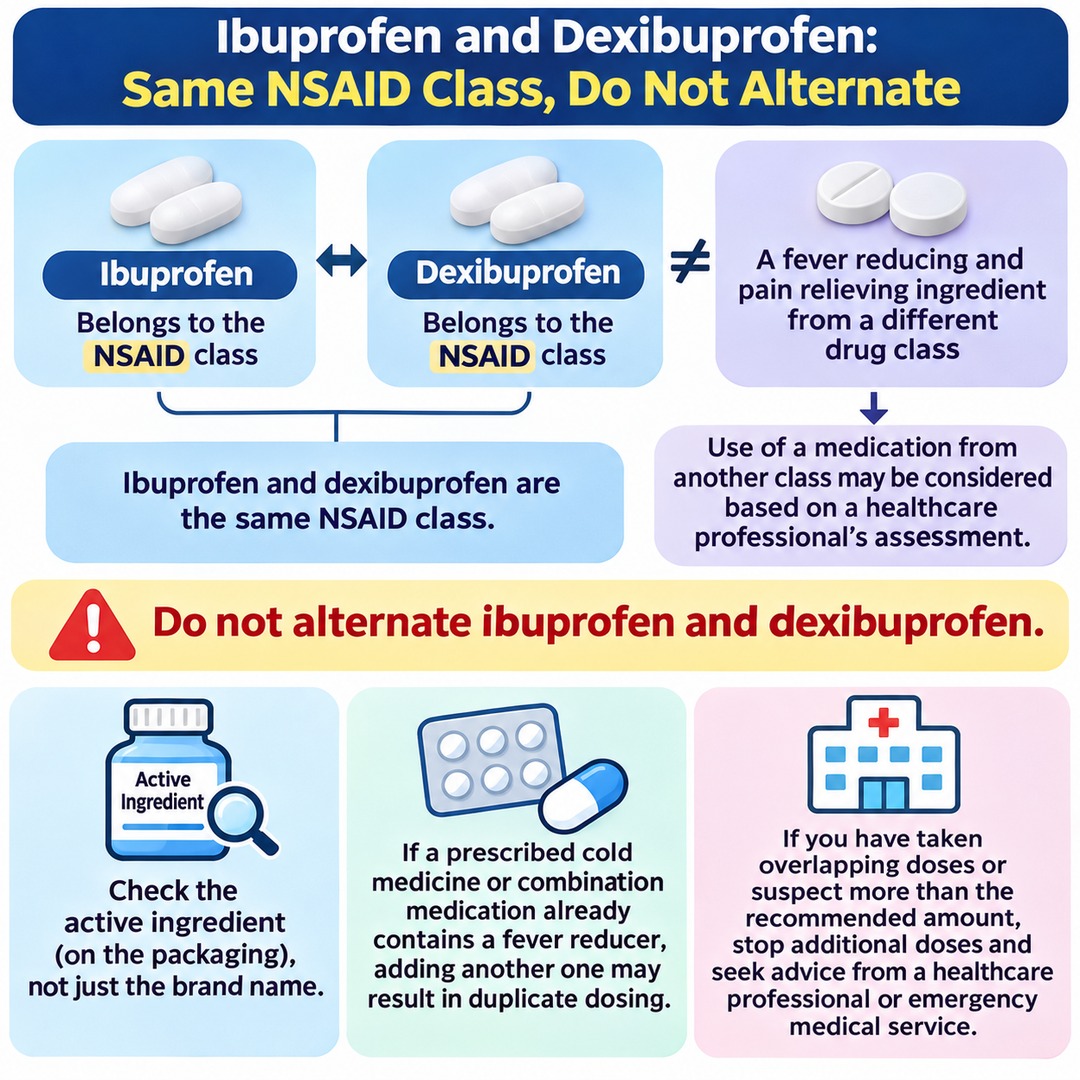
In particular, ibuprofen and dexibuprofen belong to the same class of medications. Even if their brand names differ, they should not be alternated as though they were separate types of fever reducers.
More important than the time when the fever returns are your child's current condition, the active ingredient in the last medication given, the appropriate dose for their weight, and the time of the previous dose.
What Should You Do If Your Child's Fever Returns After Just 2 Hours?
First, check your child's temperature and overall condition. The fact that two hours have passed since taking a fever reducer does not automatically mean you can repeat the same medication or switch to another one.
Fever reducers do not directly treat the illness causing the fever. Instead, they help relieve the discomfort associated with fever. A child's temperature may decrease after medication and then rise again. Likewise, a temperature that does not return completely to normal does not necessarily mean the medicine has failed.
For example, if your child's temperature drops from 39°C to around 38°C and they can drink water or sleep comfortably, the medication may be providing an effective fever-reducing benefit.
However, if your child remains extremely lethargic or has difficulty breathing, medical evaluation is necessary even if their temperature has decreased slightly.
Before deciding whether to give additional medication, check the following:
The exact time the last fever reducer was administered
The active ingredient listed on the medication box or bottle
The amount given in a single dose and the product's concentration
Your child's current weight and age
The number of doses and total amount already administered during the day
Fluid intake, urine output, breathing, and responsiveness
Shortening the recommended dosing interval simply because the fever has returned increases the risk of an overdose.
How Many Hours Apart Should Acetaminophen and Ibuprofen Be Given?
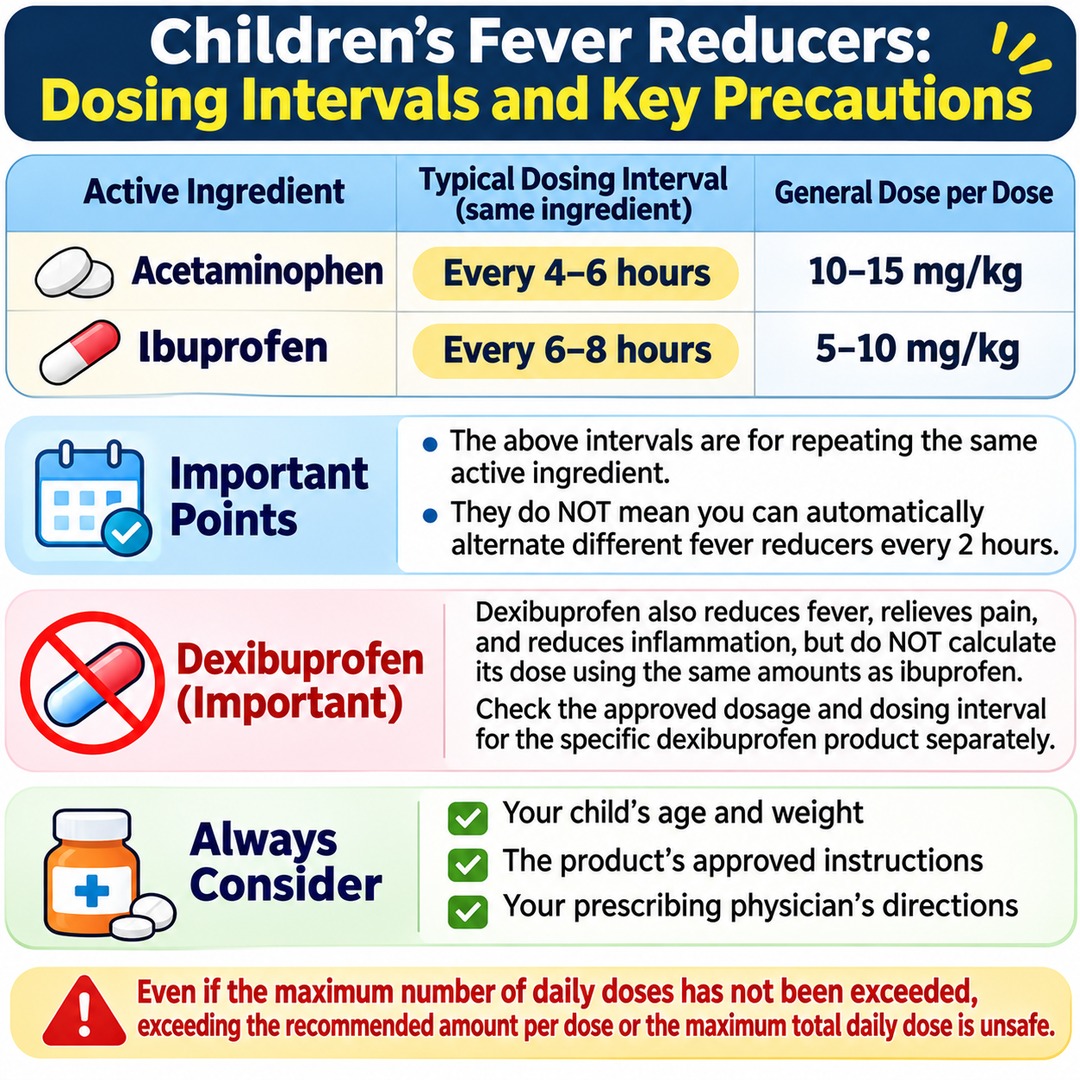
Acetaminophen is generally administered at intervals of 4–6 hours, while ibuprofen is given at intervals of 6–8 hours. These intervals apply when repeating a dose of the same active ingredient. They do not mean that different fever reducers can automatically be alternated every two hours.
| Category | Acetaminophen | Ibuprofen |
|---|---|---|
| Typical single dose | 10–15 mg per kg of body weight | 5–10 mg per kg of body weight |
| Dosing interval | 4–6 hours | 6–8 hours |
| Maximum daily frequency | No more than 5 doses | No more than 4 doses |
| Main effects | Fever reduction and pain relief | Fever reduction, pain relief, and anti-inflammatory effects |
| Main precautions | Duplicate ingredients and overdose | Use caution with dehydration or inadequate fluid intake |
The doses shown in the table are general guidelines for each active ingredient. The actual dose must be determined according to your child's age and weight, the approved instructions for the specific product, and the prescribing physician's directions.
Even if the maximum number of daily doses has not been exceeded, exceeding the recommended amount per dose or the maximum total daily dose is unsafe.
Dexibuprofen also has fever-reducing, pain-relieving, and anti-inflammatory effects, but its dosage must not be calculated using the same amounts as ibuprofen. Check the approved dosage and dosing interval for the specific dexibuprofen product separately.
If You Give Fever Medicine at 9 AM, When Can You Give the Next Dose?
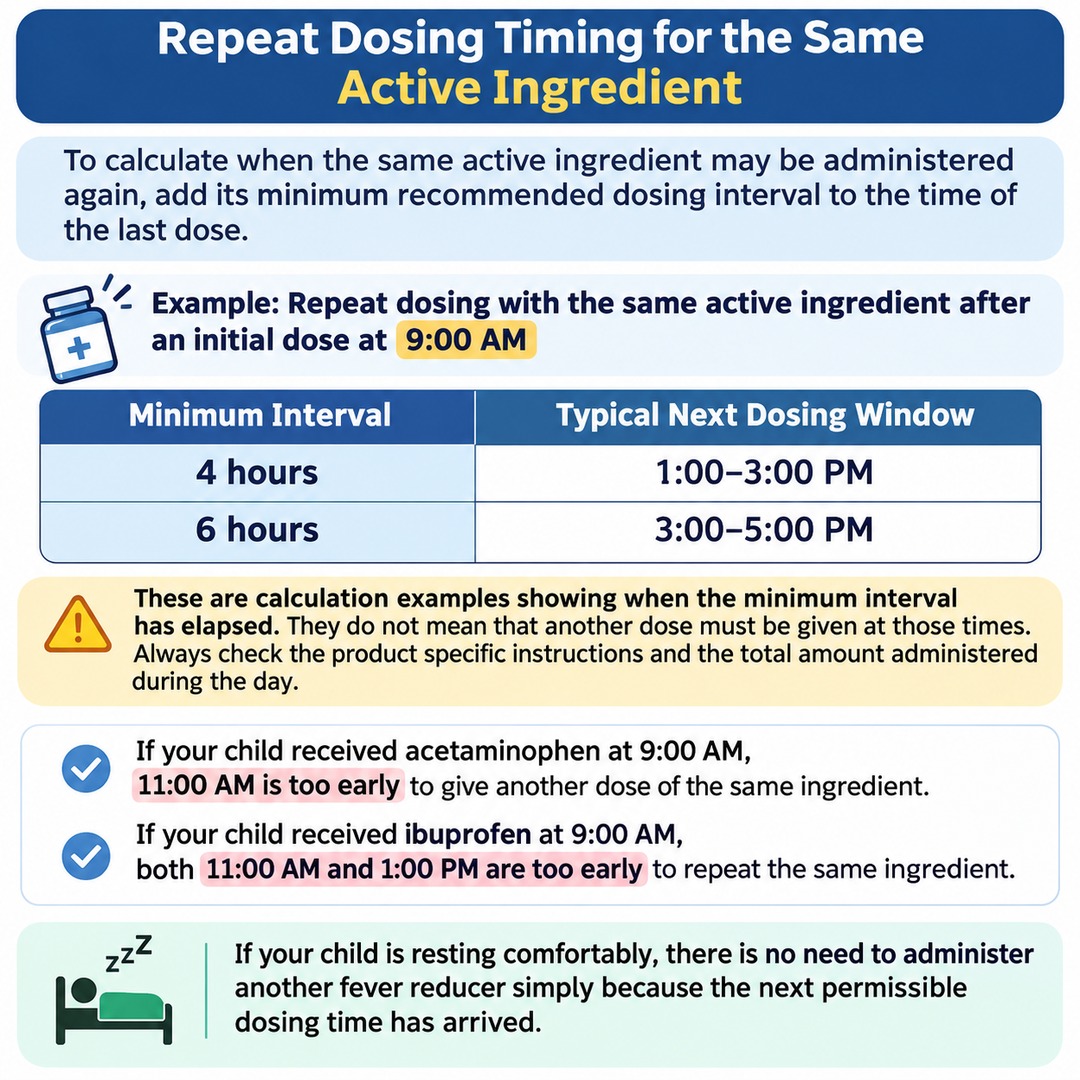
To calculate when the same active ingredient may be administered again, add its minimum recommended dosing interval to the time of the last dose.
Suppose your child received an appropriate dose at 9:00 AM.
Example of repeat dosing with the same active ingredient after an initial dose at 9:00 AM
Acetaminophen
Minimum interval: 4 hours
Typical next dosing window: 1:00–3:00 PM
Ibuprofen
Minimum interval: 6 hours
Typical next dosing window: 3:00–5:00 PM
These are calculation examples showing when the minimum interval has elapsed. They do not mean that another dose must be given at those times. Always check the product-specific instructions and the total amount administered during the day.
If your child received acetaminophen at 9:00 AM, 11:00 AM is too early to give another dose of the same ingredient.
If your child received ibuprofen at 9:00 AM, both 11:00 AM and 1:00 PM are too early to repeat the same ingredient.
If your child is resting comfortably, there is no need to administer another fever reducer simply because the next permissible dosing time has arrived.
Can You Alternate Fever Reducers Every 2 Hours?
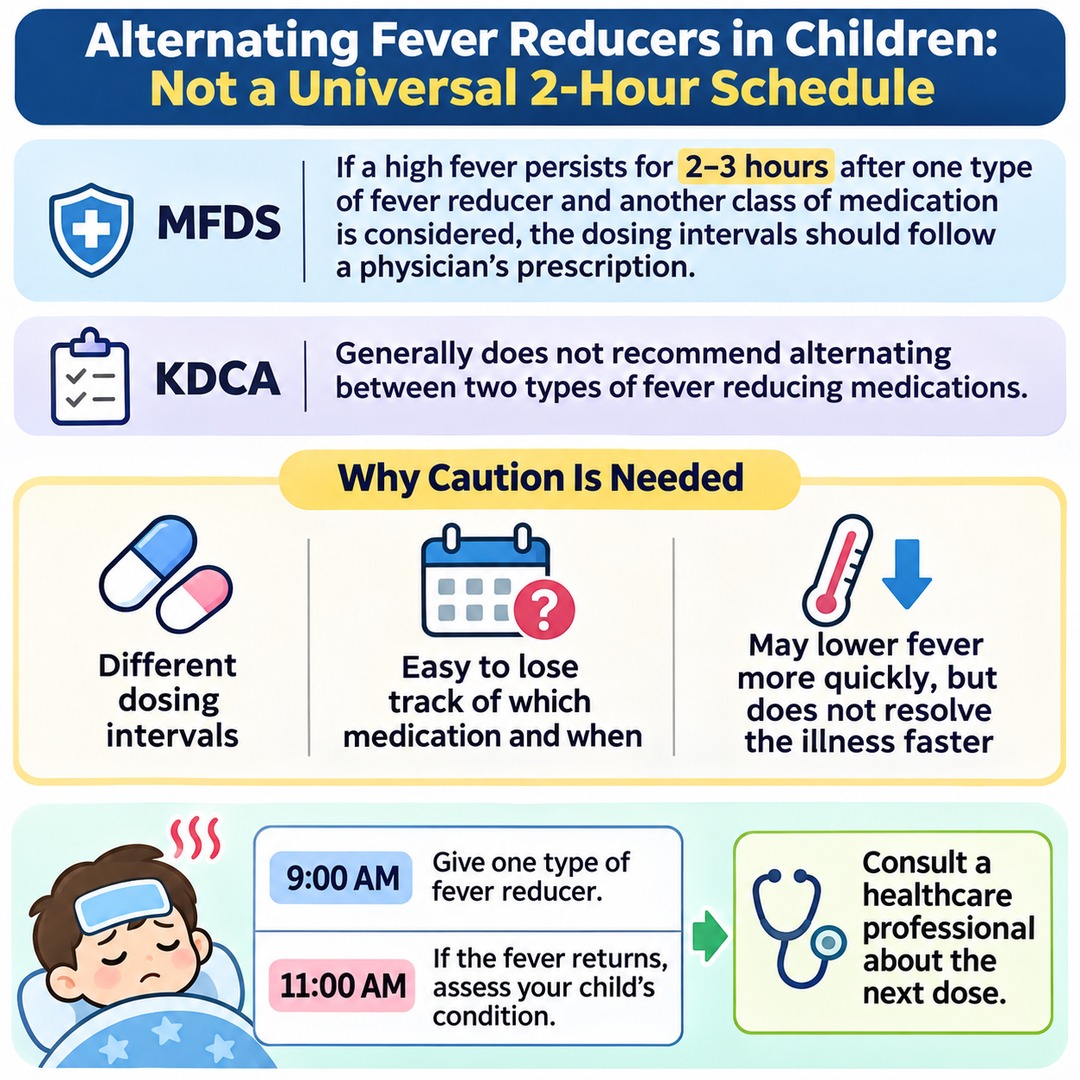
A two-hour interval is not a universally acceptable schedule for alternating fever reducers in children.
South Korea's Ministry of Food and Drug Safety (MFDS) advises that when a high fever persists for 2–3 hours after one type of fever reducer has been administered and a medication from another class is considered, the dosing intervals should follow a physician's prescription.
The Korea Disease Control and Prevention Agency (KDCA) also does not generally recommend alternating between two types of fever-reducing medications.
If your child remains very uncomfortable despite appropriate use of one fever reducer, another active ingredient may be considered. However, a medication plan should still be established in consultation with a healthcare professional.
One reason alternating medications is difficult is that different drugs have different dosing intervals. When two medicines are used alternately, it is easy to lose track of which active ingredient was last administered and when.
Furthermore, even if alternating fever reducers lowers body temperature more quickly, it does not mean the underlying illness will resolve faster.
Therefore, if you give one type of fever reducer at 9:00 AM and your child's fever returns at 11:00 AM, it is safer to assess your child's condition and consult a healthcare professional about the next dose rather than independently adding another medication.
Why Shouldn't Ibuprofen and Dexibuprofen Be Alternated?
Ibuprofen and dexibuprofen are not two independent classes of fever-reducing medications.
Dexibuprofen is the dextrorotatory form of ibuprofen, the form responsible for its therapeutic activity. Both substances belong to the nonsteroidal anti-inflammatory drug (NSAID) class.
Alternating these medications simply because they have different brand names can expose your child to overlapping drugs from the same class.
How common fever-reducing ingredients are related
Acetaminophen
A fever-reducing and pain-relieving ingredient from a different drug class
Use of a medication from another class may be considered based on a healthcare professional's assessment
Ibuprofen
Belongs to the NSAID class
Dexibuprofen
Belongs to the NSAID class
Do not alternate ibuprofen and dexibuprofen.
When checking a fever reducer, look at the active ingredient listed on the packaging rather than relying on the brand name.
In particular, if a prescribed cold medicine or combination medication already contains a fever-reducing ingredient, adding a separate fever reducer may result in duplicate dosing.
If your child has already received overlapping doses of these medications or you suspect that more than the recommended amount was administered, stop giving additional doses. Check the medication names, concentrations, amounts, and administration times, and immediately seek advice from a healthcare professional or emergency medical service. A suspected overdose should not be ignored simply because your child has no symptoms.
How Does the Correct Fever Reducer Dose Change With a Child's Weight?
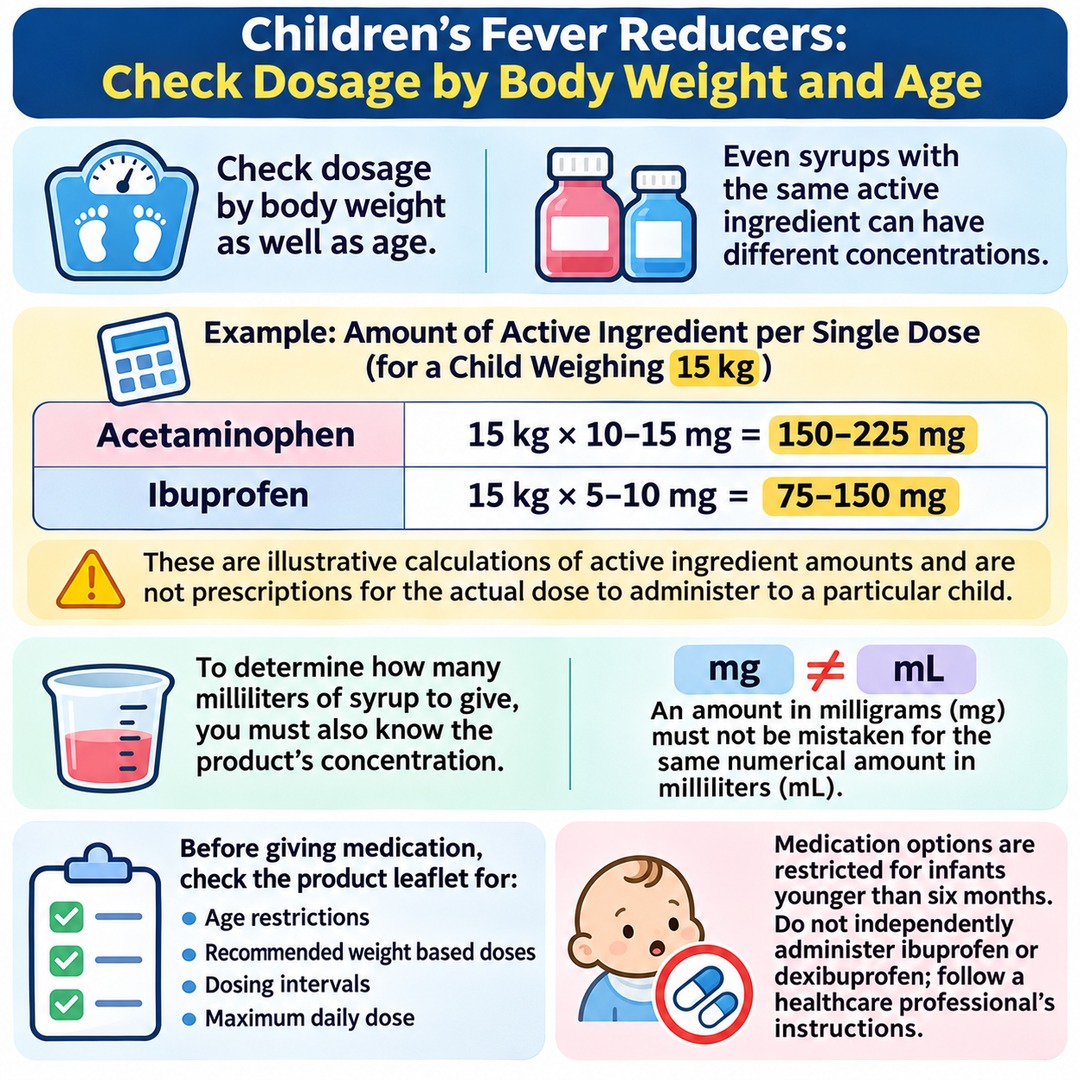
For children's fever reducers, it is important to check the dosage based on body weight as well as age.
Children of the same age may have different weights, and even syrups containing the same active ingredient may have different concentrations depending on the product.
For example, the typical amount of active ingredient in a single dose for a child weighing 15 kg can be calculated as follows:
Acetaminophen: 15 kg × 10–15 mg = 150–225 mg
Ibuprofen: 15 kg × 5–10 mg = 75–150 mg
These are illustrative calculations of active-ingredient amounts and are not prescriptions for the actual dose to administer to a particular child.
To determine how many milliliters of syrup to give, you must also know the product's concentration. An amount expressed in milligrams (mg) must not be mistaken for the same numerical amount in milliliters (mL).
Before administering medication, check the product leaflet for age restrictions, recommended weight-based doses, dosing intervals, and the maximum daily dose.
In particular, medication options are restricted for infants younger than six months. Do not independently administer ibuprofen or dexibuprofen to infants in this age group; follow a healthcare professional's instructions.
When Should You Take Your Child to the Hospital if the Fever Continues Despite Medication?
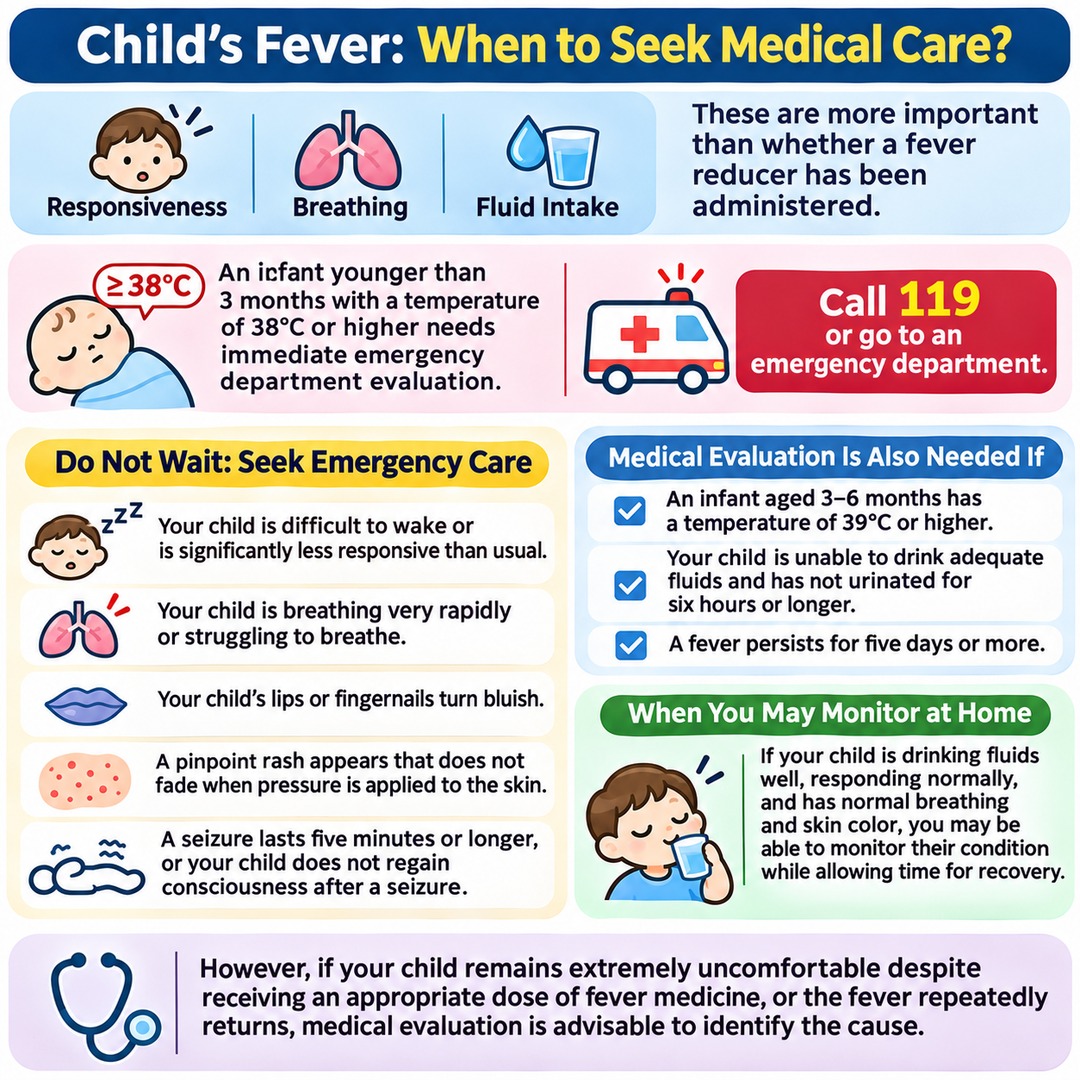
Your child's responsiveness, breathing, and fluid intake are more important than whether a fever reducer has been administered. In particular, an infant younger than three months with a temperature of 38°C or higher needs immediate emergency department evaluation, even if the baby appears relatively well.
In the following situations, do not wait until the next scheduled dose of fever medicine. Call 119, South Korea's emergency telephone number, or go to an emergency department:
Your child is difficult to wake or is significantly less responsive than usual
Your child is breathing very rapidly or struggling to breathe
Your child's lips or fingernails turn bluish
A pinpoint rash appears that does not fade when pressure is applied to the skin
A seizure lasts five minutes or longer, or your child does not regain consciousness after a seizure
Even without emergency warning signs, pediatric evaluation is necessary if an infant aged 3–6 months has a temperature of 39°C or higher, if a child is unable to drink adequate fluids and has not urinated for six hours or longer, or if a fever persists for five days or more.
Conversely, if your child is drinking fluids well, responding normally, and has normal breathing and skin color, you may be able to monitor their condition while allowing time for recovery.
However, if your child remains extremely uncomfortable despite receiving an appropriate dose of fever medicine, or the fever repeatedly returns, medical evaluation is advisable to identify the cause.
What Should Parents Record When a Child's Fever Returns at Night?
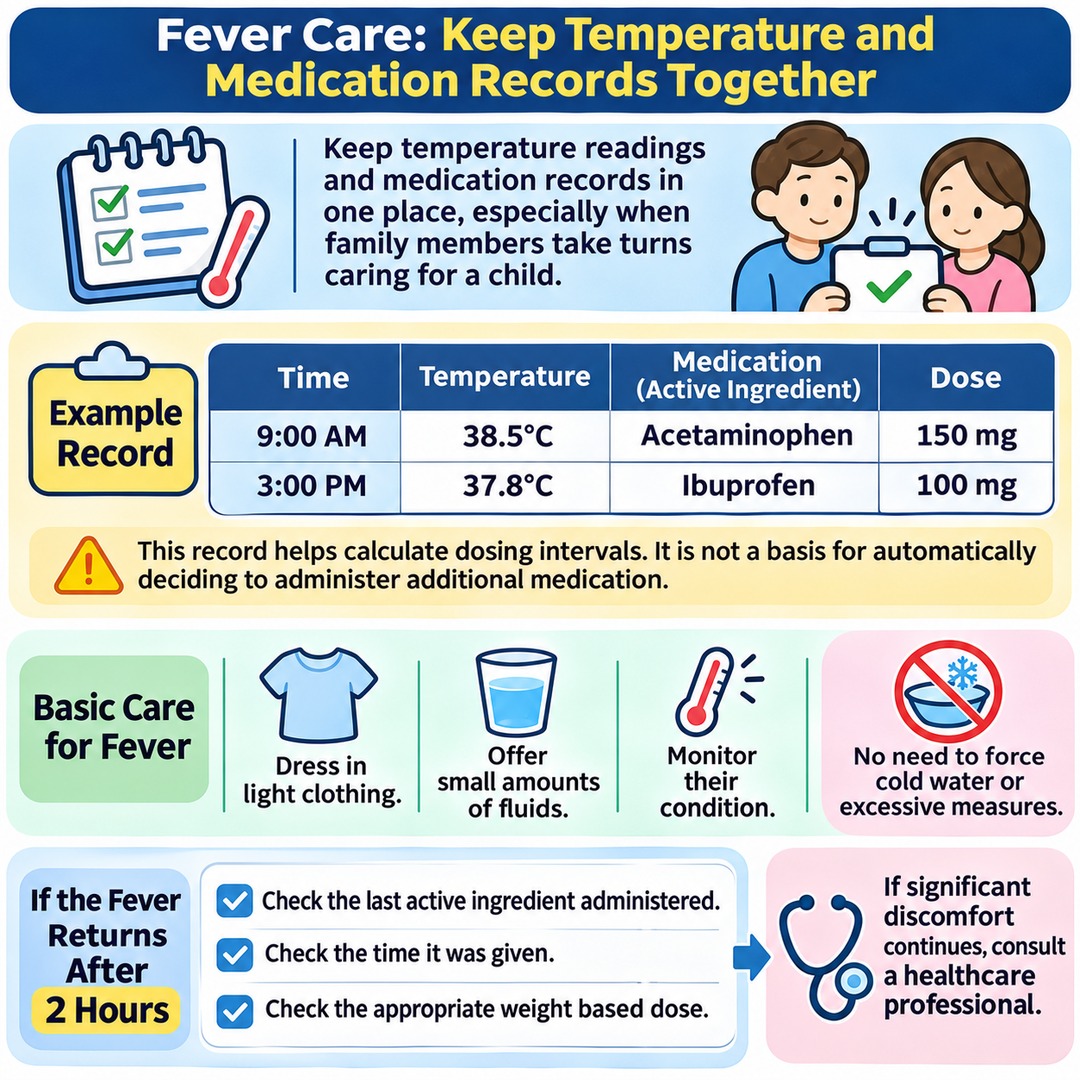
The most practical approach is to keep temperature readings and medication records together in one place. This is especially helpful when family members take turns caring for a child, as it can prevent another caregiver from accidentally repeating a dose that has already been given.
You can keep a record like this:
| Information to record | Example |
|---|---|
| Time medication was given | 9:00 AM |
| Active ingredient | Acetaminophen |
| Amount administered | Actual dose given according to the product label |
| Temperature changes | Readings before and after medication |
| Child's condition | Drinking water, sleeping, responsiveness |
| What to check next | Minimum interval for the same ingredient and cumulative daily dose |
This record helps calculate dosing intervals. It is not a basis for automatically deciding to administer additional medication.
When your child has a fever, dress them in light clothing to help them stay comfortable, offer small amounts of fluids they can drink, and monitor their condition. There is no need to force your child into cold water or take excessive measures to bring their temperature down to a completely normal reading.
If your child's fever returns just two hours after taking a fever reducer, the most important thing is not to rush into giving another dose. Check the last active ingredient administered, the time it was given, and the appropriate weight-based dose. If your child continues to experience significant discomfort, consult a healthcare professional about how and when to administer the next medication.