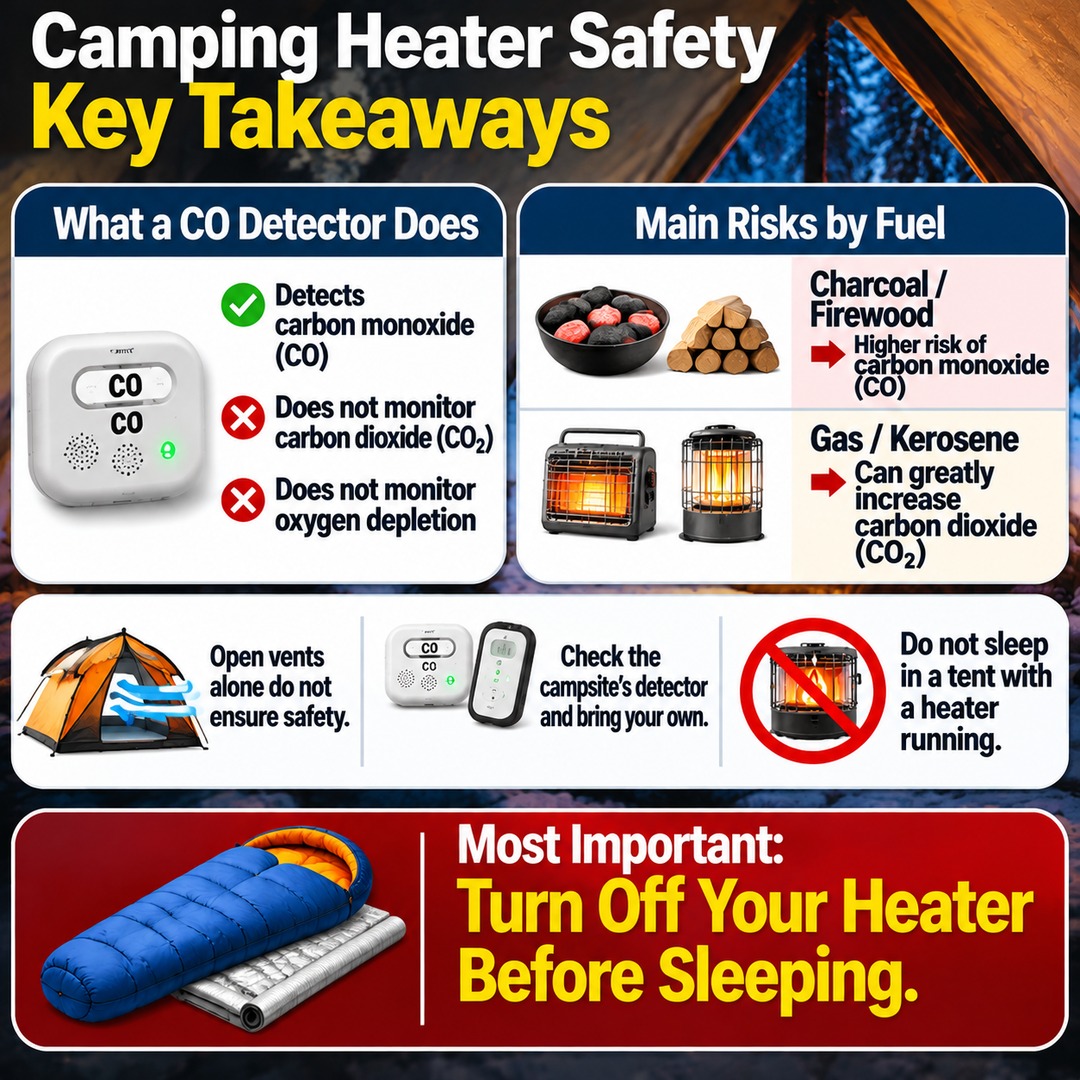

Even if you have installed a carbon monoxide detector, sleeping inside a tent with a heater running is not safe. Gas and kerosene heaters present different risks from charcoal and wood fires, but neither type should be considered safe for overnight use in an enclosed tent simply because a detector is present. In particular, you must consider not only carbon monoxide but also oxygen depletion and carbon dioxide accumulation.
For winter camping, the safer approach is to turn off all heating appliances before going to sleep and maintain body warmth with a sleeping bag and appropriate insulation equipment.
How Do the Risks Differ Depending on the Fuel?
Different heating fuels produce different hazardous gases and can cause them to accumulate at different rates inside a tent. Treating charcoal and wood fires as having exactly the same risks as gas and kerosene heaters can cause you to overlook important differences.
Charcoal and Wood Fires Pose a Significant Carbon Monoxide Risk
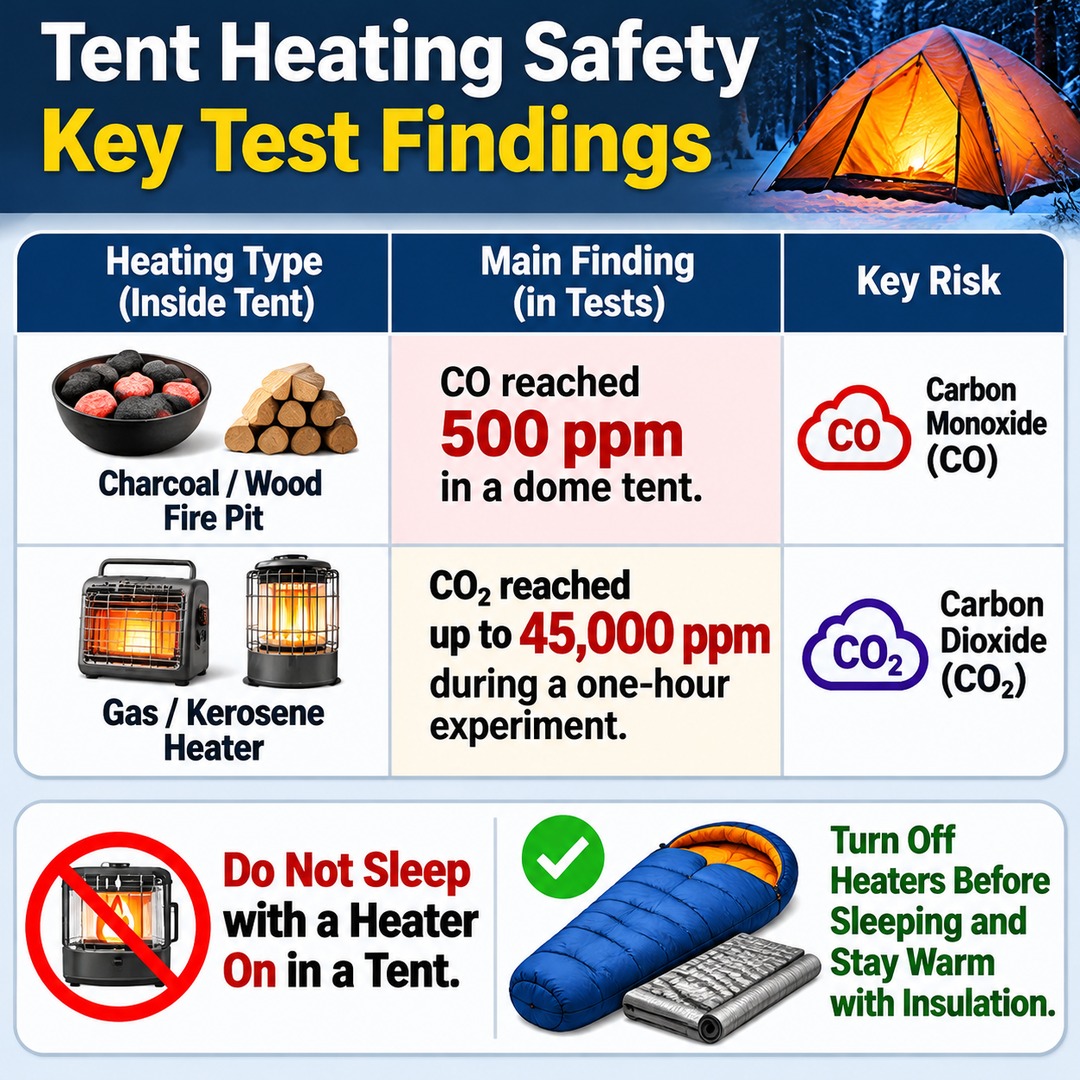
Charcoal and firewood can produce carbon monoxide during incomplete combustion. In tent experiments published by the Korea National Fire Agency, carbon monoxide concentrations reached 500 ppm within just 45 seconds when a wood-burning or charcoal-briquette fire pit was placed inside a dome tent.
In a living-room-style tent, carbon monoxide also entered the inner sleeping compartment even when the fire pit was placed in the front vestibule. This demonstrates that separating the vestibule from the sleeping area does not necessarily make the arrangement safe.
Charcoal and wood fire pits should not be used for heating inside tents. Before going to sleep, you must not only extinguish the fire but also completely deal with any remaining embers and ash.
Gas and Kerosene Heaters Require More Than Carbon Monoxide Monitoring
Heating appliances that use gas or kerosene present different risks from charcoal and wood fires. In experiments conducted by the Korea National Fire Agency, carbon dioxide concentrations increased rapidly even under conditions in which carbon monoxide levels did not rise substantially.
Differences Observed in Tests of Heating Appliances Inside Tents
Charcoal and wood fire pits
Carbon monoxide reached 500 ppm in a dome tent.
Gas and kerosene heating appliances
Maximum carbon dioxide concentration measured during a one-hour experiment.
CO stands for carbon monoxide, while CO₂ stands for carbon dioxide. These findings come from specific tent configurations and experimental conditions; they do not represent the emissions of every heating appliance.
Carbon dioxide concentrations reached as high as 45,000 ppm during the experiment. Therefore, the fact that a carbon monoxide detector has not sounded does not mean the air inside a tent is safe.
Gas and kerosene heaters should likewise not be used for extended periods in enclosed spaces or left running while you sleep.
Where Should You Install a Carbon Monoxide Detector?
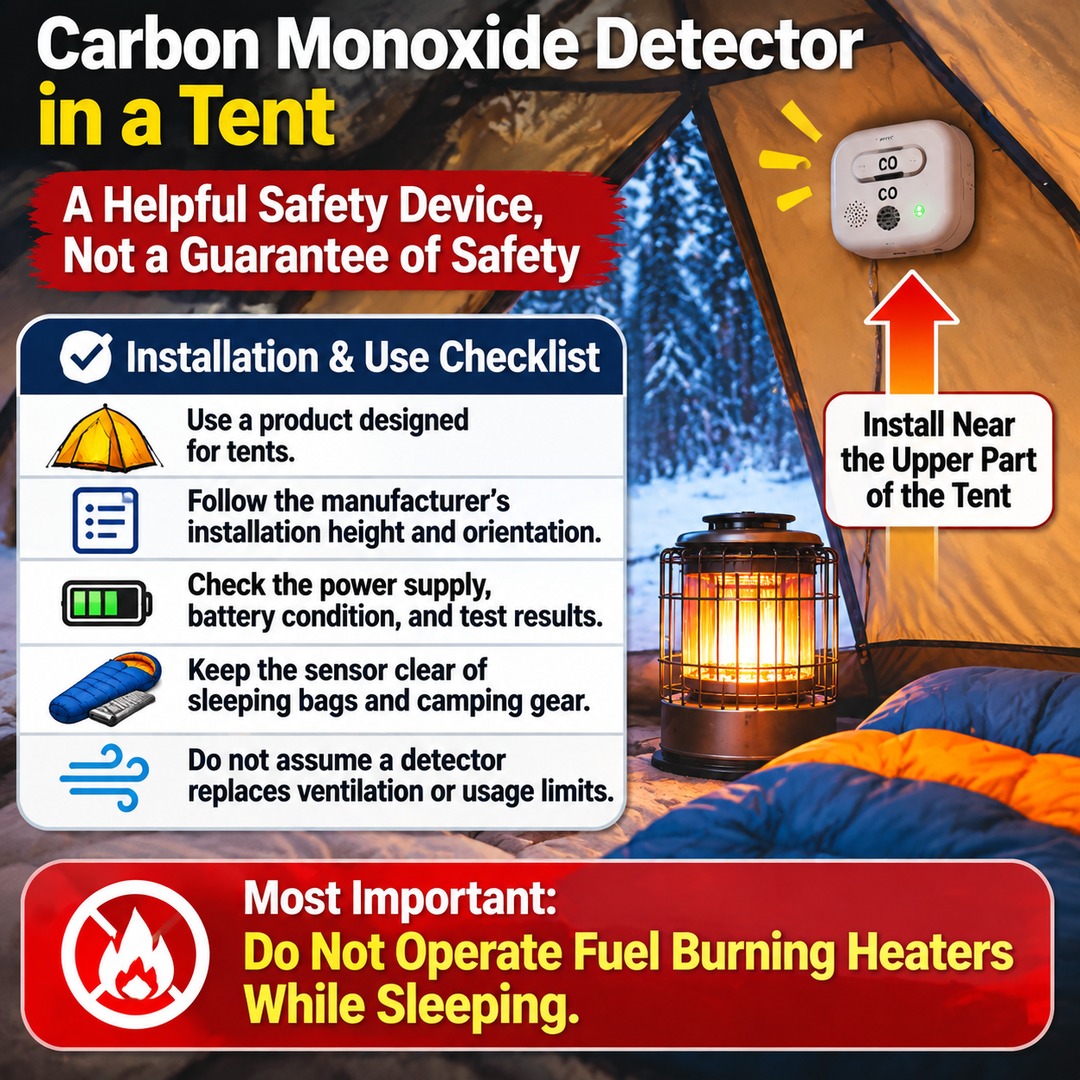
A carbon monoxide detector is a supplementary safety device that detects carbon monoxide. It does not make it safe to operate fuel-burning heating appliances. Appropriate placement can help detect danger relatively quickly, but it cannot eliminate the risk of exposure before the alarm sounds.
In its tent experiments, the Korea National Fire Agency explained that installing a detector near the upper part of a tent could provide relatively early detection, taking into account the characteristics of rising carbon monoxide.
When installing a detector, check the following:
Make sure the product is designed for use inside tents.
Follow the manufacturer's instructions regarding installation height and orientation.
Check the power supply, battery condition, and test results to confirm that the detector works properly.
Ensure that sleeping bags and camping equipment do not obstruct the sensor.
Never assume that installing a single detector eliminates the need for ventilation or restrictions on heater use.
The most important point is that avoiding the operation of fuel-burning heaters while sleeping takes priority over the location of the detector.
How Can You Stay Warm Without Sleeping with a Heater On?
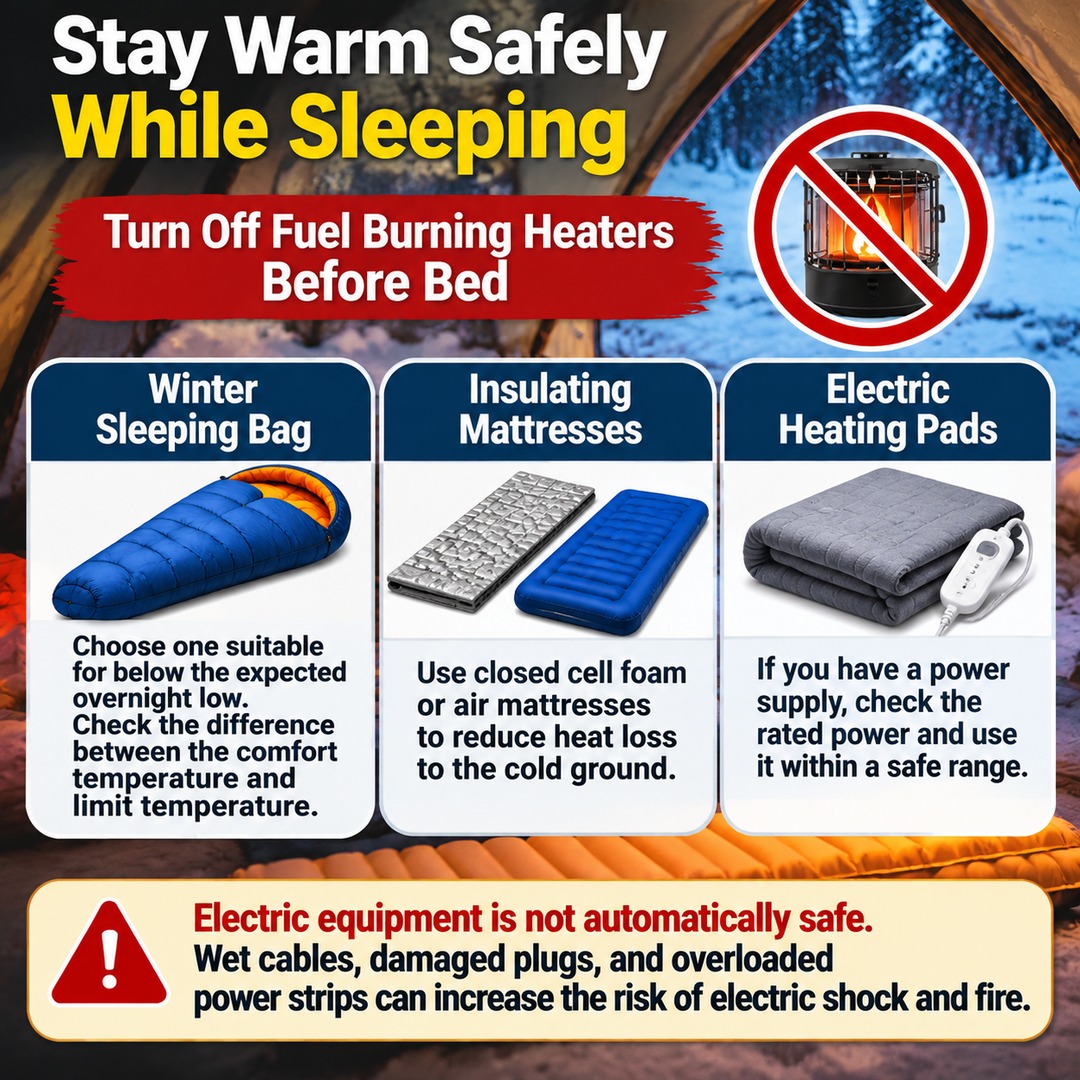
During sleep, it is safer to turn off fuel-burning heating appliances and rely on electric or non-combustion-based warming equipment and suitable bedding. Even if you use a heater before bedtime, turn it off or completely extinguish the fire before falling asleep.
Here are some ways to stay warm while winter camping:
1. Winter sleeping bag: Check whether the sleeping bag is suitable for temperatures below the expected overnight low. Pay attention to the difference between its comfort temperature and limit temperature ratings.
2. Closed-cell foam and air mattresses: Provide adequate insulation to reduce heat loss to the cold ground.
3. Electric heating pads: If you are camping at a site with an electrical supply, check the rated power consumption and condition of the cables. Avoid overloading the electrical circuit.
4. Insulating clothing: Reduce body heat loss with thermal underwear, warm socks, hats, and similar clothing.
5. Hand warmers and insulated hot-water bottles: Follow the product instructions and avoid prolonged direct contact with your skin.
Electric heating equipment is not automatically safe, either. Wet cables, damaged plugs, and overloaded power strips can increase the risk of electric shock and fire.
What Should You Do If a Carbon Monoxide Alarm Sounds or Poisoning Symptoms Appear?
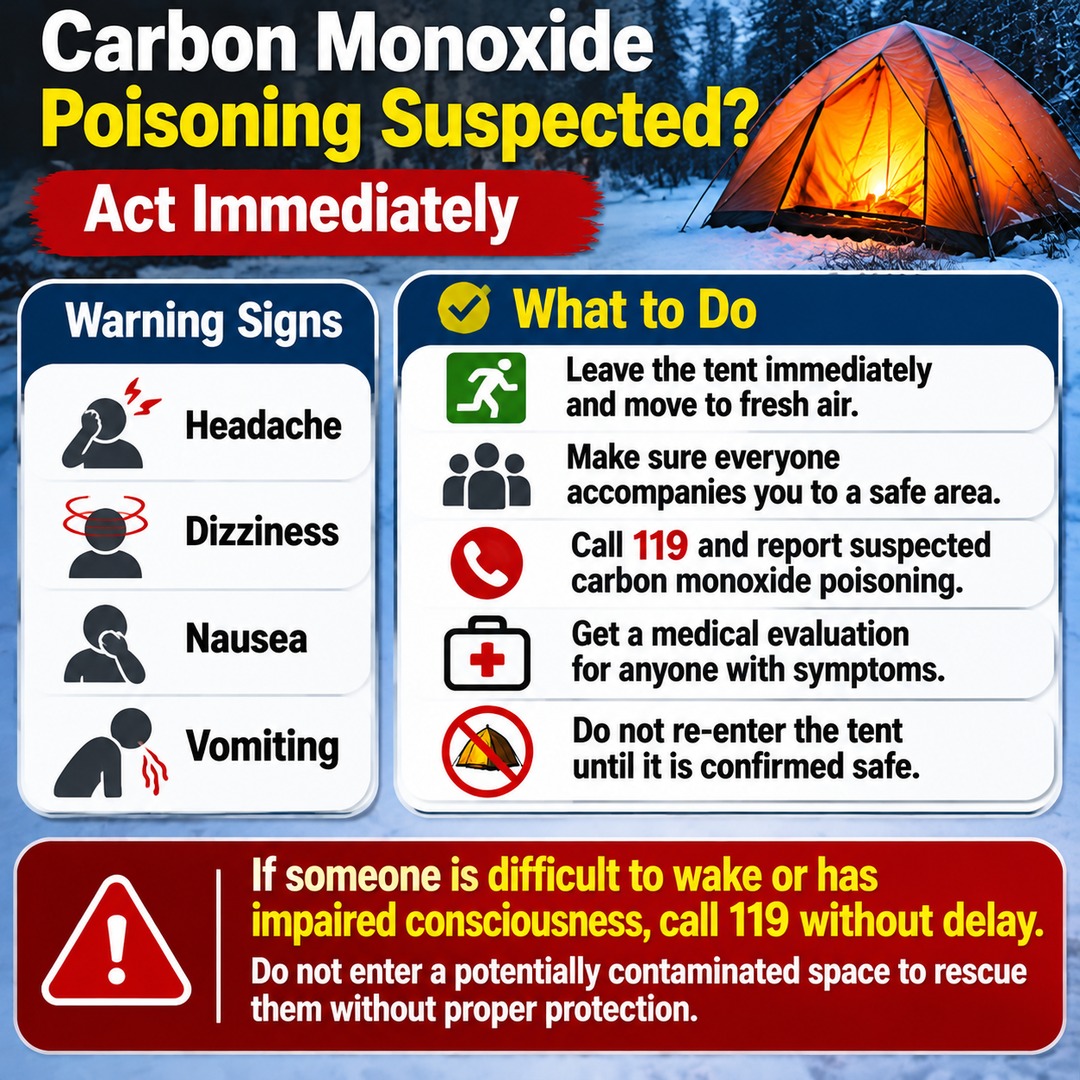
If an alarm sounds or symptoms such as headaches, dizziness, nausea, or vomiting occur, leave the tent immediately and move to fresh air. Carbon monoxide has no smell or color, making it difficult for people to detect directly. As exposure worsens, it can also impair judgment and consciousness.
Follow these steps:
Immediately leave the tent, vehicle, or any other space where exposure is suspected.
Make sure everyone accompanying you also evacuates to a safe area with fresh air.
Call 119, South Korea's emergency number, and report that carbon monoxide poisoning is suspected.
Ensure that anyone experiencing symptoms receives a medical evaluation.
Do not re-enter the tent until it has been confirmed safe.
If someone who is asleep is difficult to wake or has impaired consciousness, call 119 without delay. Do not put yourself in danger by entering a potentially contaminated space to rescue someone without proper protection.
Frequently Asked Questions About Winter Camping Heating Safety
Is It Safe If the Carbon Monoxide Detector Does Not Go Off?
No. A carbon monoxide detector is designed to detect carbon monoxide. It does not monitor all increases in carbon dioxide or oxygen depletion. Detection can also vary depending on the sensor's operating condition and installation location.
Are Gas and Kerosene Heaters Safer Than Charcoal Fires?
The types of gases produced differ depending on the fuel. Charcoal and firewood present a significant carbon monoxide risk, while gas and kerosene heating appliances can cause carbon dioxide concentrations to rise substantially. Regardless of the fuel, avoid sleeping in an enclosed tent with a heater running.
Can I Sleep with a Heater On If I Leave the Tent Vents Open?
Leaving tent vents open does not, by itself, ensure safe heating conditions during sleep. Airflow can vary depending on wind direction and speed, tent construction, and the condition of the heating appliance. The Korea National Fire Agency also advises against using heating appliances in enclosed spaces and recommends opening ventilation windows if their use is unavoidable.
Can I Rely Only on the Carbon Monoxide Detector Installed at the Campsite?
Detectors installed in campsite facilities and those used inside individual tents may operate under different installation conditions. It is advisable to check that the campsite's detector is working and to bring a personal detector as well. However, neither device provides permission or a safety guarantee for sleeping with a fuel-burning heater running.
The most important aspect of winter camping safety is not keeping a heater running throughout the night. It is preparing your sleeping environment so that you can stay warm without one. Always bring a carbon monoxide detector, but also follow the essential rule of turning off your heater before going to sleep.