
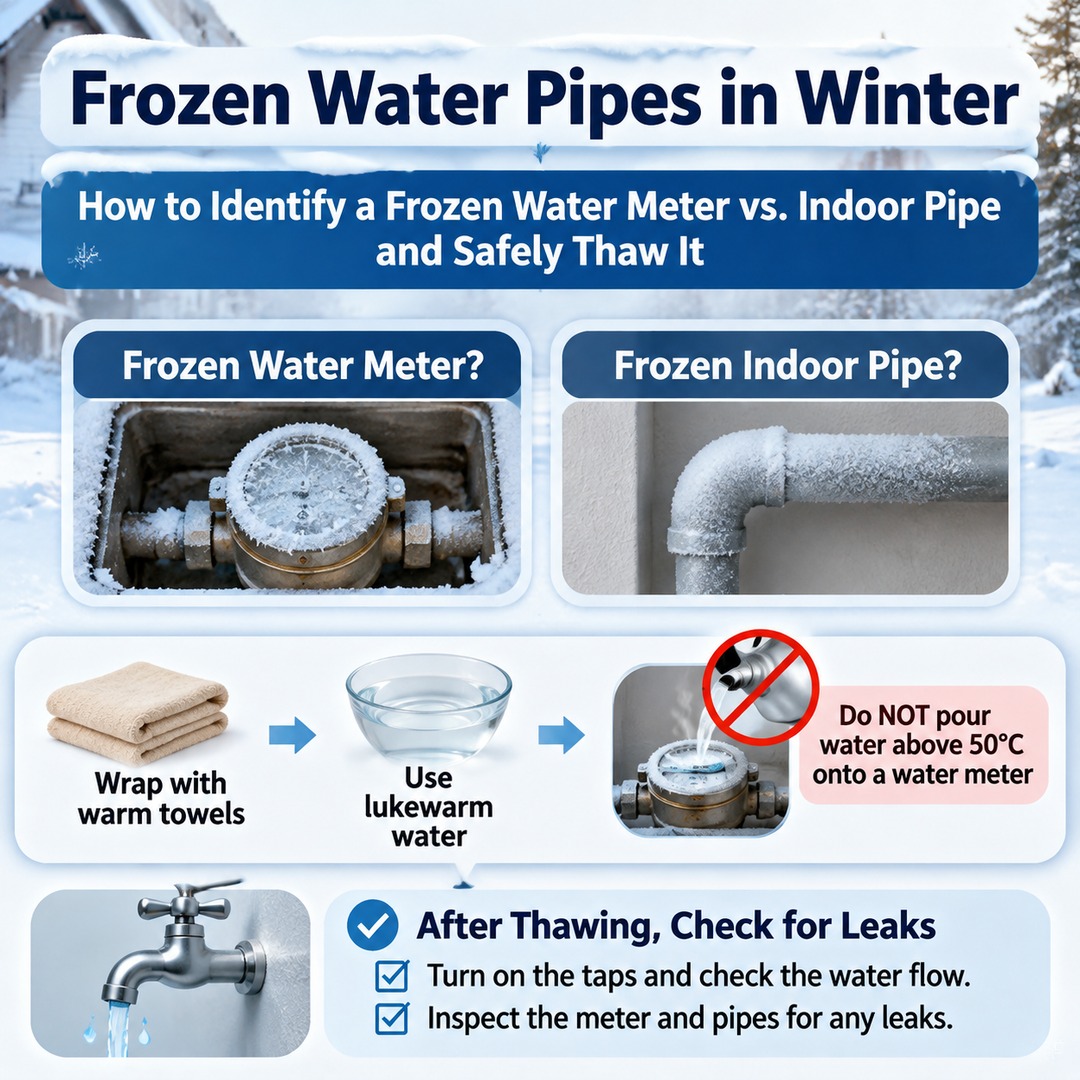
If no water comes out when you turn on a tap in winter, you need to identify where the freezing has occurred, from the water meter to the indoor supply pipes. If the meter glass is cracked or water is leaking, do not attempt to thaw it yourself. Contact your local waterworks office. If the pipes are frozen but show no signs of damage, thaw them gradually using warm towels and lukewarm water. Never pour water hotter than 50°C onto a water meter.
What Should You Check First When No Water Comes Out of Your Tap?
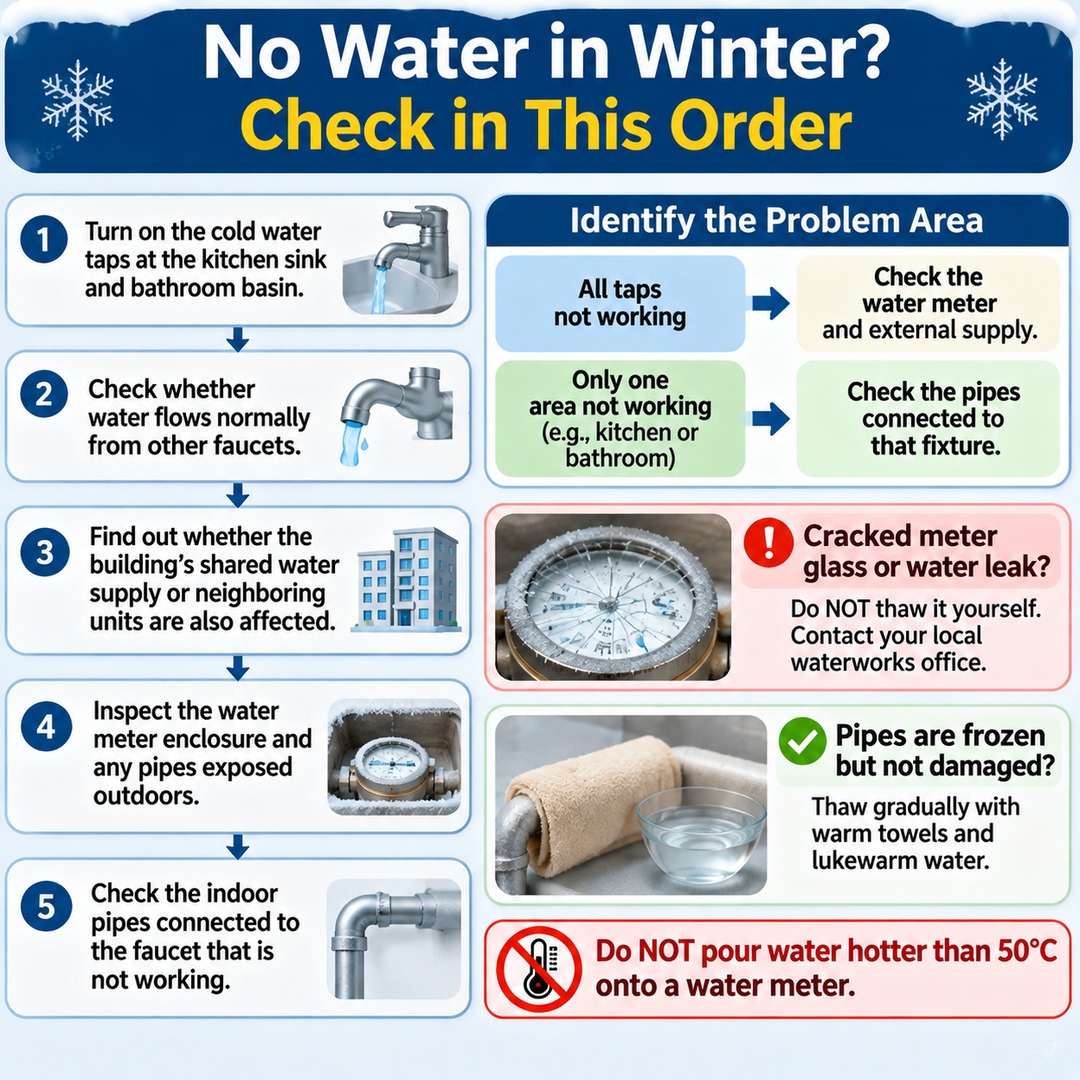
Start by checking whether all taps have stopped working or whether the problem affects only one faucet. If the entire home has lost its water supply, inspect the meter and the external water supply. If only one area, such as the kitchen or bathroom, is affected, it is generally better to start by checking the pipes connected to that fixture.
Follow these steps to avoid unnecessarily dismantling your plumbing:
1. Turn on the cold-water taps at both the kitchen sink and bathroom basin.
2. Check whether water flows normally from other faucets.
3. Find out whether the building's shared water supply or neighboring units are also affected.
4. Inspect the water meter enclosure and any pipes exposed outdoors.
5. Check the indoor pipes connected to the faucet that is not working.
Keep in mind that a complete loss of water throughout your home does not necessarily mean the water meter is frozen. A building-wide water outage or a problem with the water supply system may also be responsible.
How Can You Tell the Difference Between a Frozen Water Meter and Frozen Indoor Pipes?
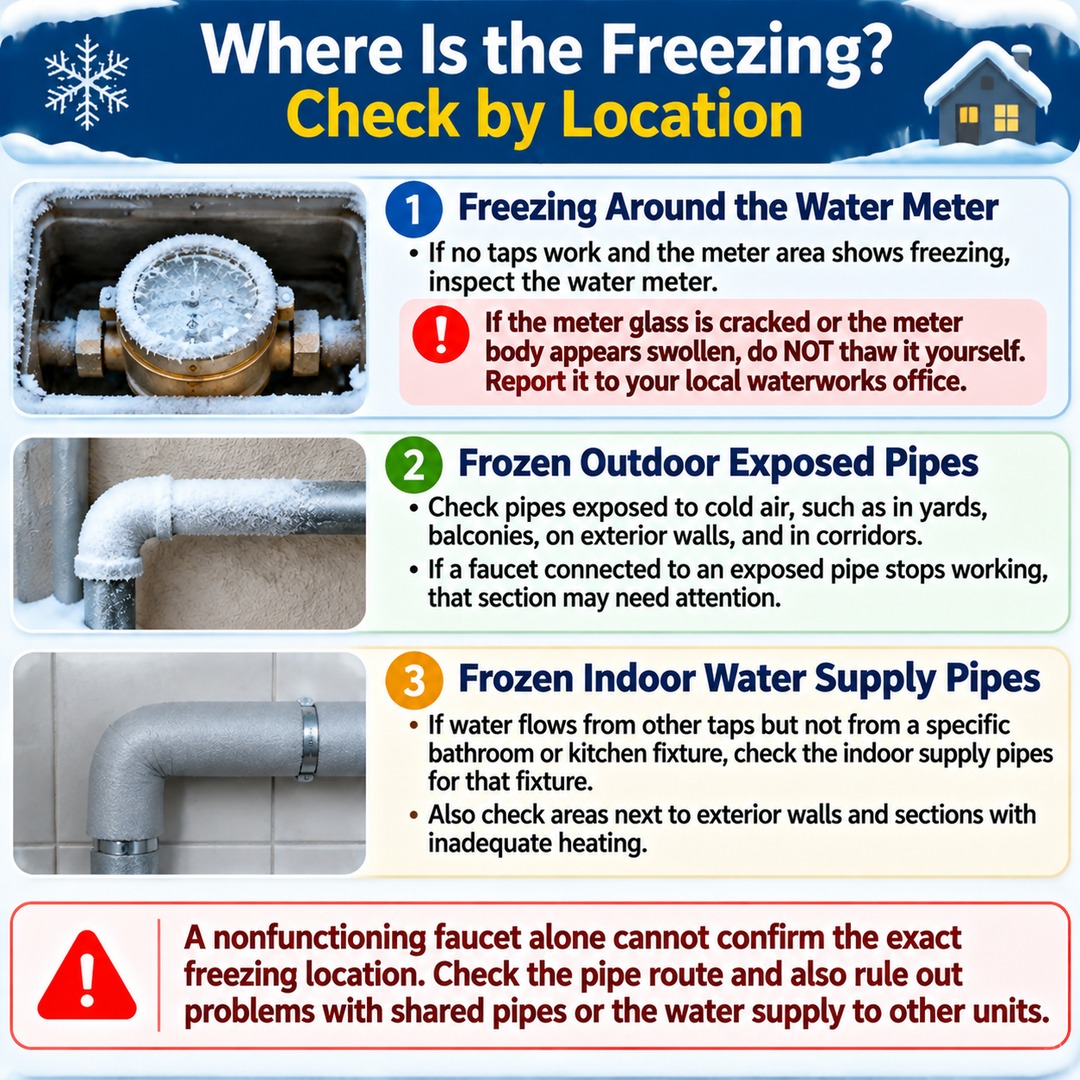
Check whether the freezing is around the water meter, in pipes exposed outside the building, or in the indoor supply pipes. In particular, cracked meter glass or a visibly swollen meter should not be treated as an ordinary freezing problem.
1. Freezing Around the Water Meter
If no taps in your home work and you find signs of freezing in the outdoor area containing the water meter enclosure, inspect the meter area. If the glass is cracked or the meter body appears swollen, stop any thawing attempts and report the problem to your local waterworks office.
2. Frozen Outdoor Exposed Pipes
Inspect pipes exposed to cold air in areas such as yards, balconies, exterior walls, and corridors. If a faucet connected to an exposed outdoor pipe stops working, that section of the plumbing may need attention.
3. Frozen Indoor Water Supply Pipes
If water flows from other faucets but not from a particular bathroom or kitchen fixture, check the indoor supply pipes leading to that fixture. Areas next to exterior walls and sections with inadequate heating are also worth inspecting.
The important point is that the location of a nonfunctioning faucet alone cannot confirm exactly where the pipe is frozen. You need to check the pipe route and also rule out problems involving shared pipes or the water supply to other units.
How Should You Thaw Frozen Water Pipes?
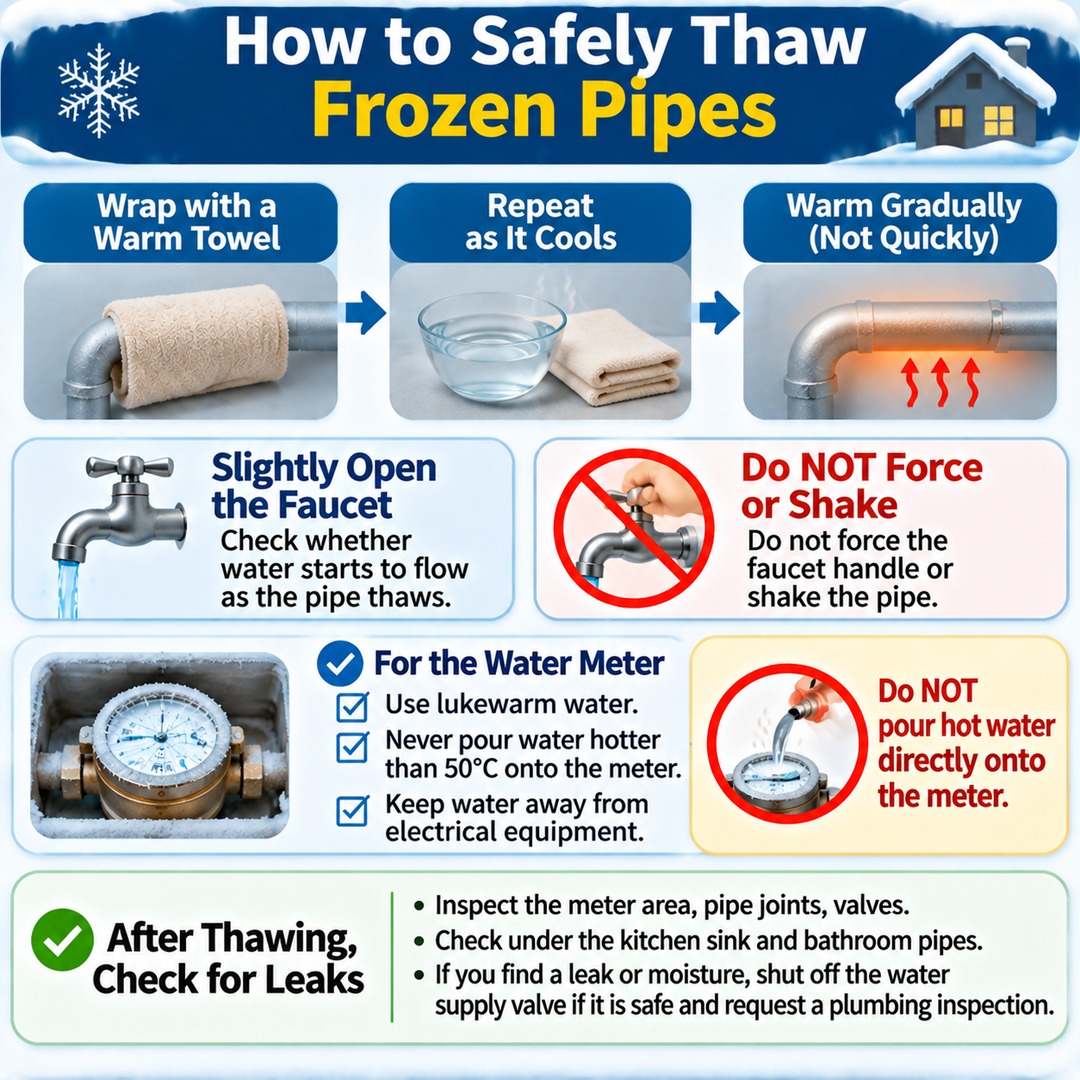
If the affected pipe is accessible and shows no visible signs of damage or leakage, you can begin by gradually warming it with a towel soaked in warm water. For water meters, start with lukewarm water and never pour water hotter than 50°C directly onto the meter.
Step 1: Open the Faucet and Check the Water Flow
Slightly open the faucet suspected of being connected to a frozen pipe. As the pipe thaws, you can check whether water begins to flow.
However, do not force the faucet handle or shake the pipe just because no water is coming out.
Step 2: Gradually Warm the Pipe With a Warm Towel
If you can access the pipe and there are no visible signs of damage or leakage, wrap the frozen section with a towel soaked in warm water.
When the towel cools, soak it in warm water again and replace it. Rather than heating one spot rapidly, gradually warm the exposed section of the pipe.
Step 3: Start With Lukewarm Water and Gradually Increase the Temperature
When using water around the meter enclosure, make sure it does not enter electrical equipment. Do not pour hot water directly onto the meter glass or display.
Step 4: Check for Leaks Once Water Starts Flowing
The job is not finished just because water starts flowing again. Pipes damaged by freezing may begin leaking once the ice melts and water flows through them.
Inspect the area around the water meter, pipe joints, valves, the cabinet beneath the kitchen sink, and the pipes around the bathroom.
If you find a leak or signs of moisture, shut off the water supply valve if you can do so safely, and request an inspection from a plumbing professional.
What Methods Should You Avoid When Thawing Water Pipes?
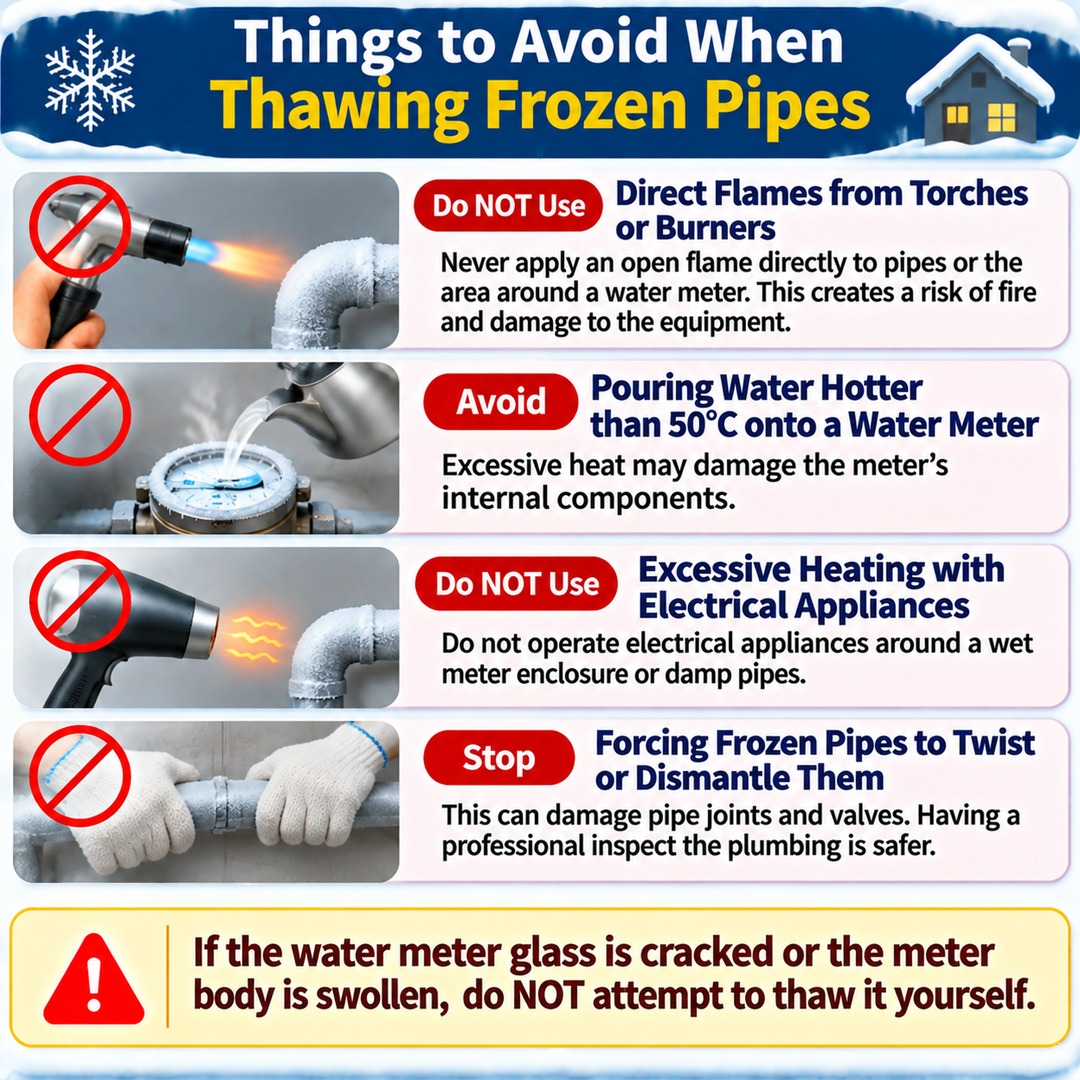
The most important thing to avoid is heating pipes directly with a torch or open flame. Applying intense heat to a meter or pipe can cause damage and create a fire hazard.
Do not use: Direct flames from torches or burners
Never apply an open flame directly to pipes or the area around a water meter. This creates a risk of fire and damage to the equipment.
Avoid: Pouring water hotter than 50°C onto a water meter
Excessive heat may damage the meter's internal components.
Do not use: Excessive heating with electrical appliances such as hair dryers
Do not operate electrical appliances around a wet meter enclosure or damp pipes.
Stop: Forcing frozen pipes to twist or dismantling them
This can damage pipe joints and valves. Having a professional inspect the plumbing is safer.
In particular, if the water meter glass is cracked or the meter body is swollen, do not attempt to thaw it yourself.
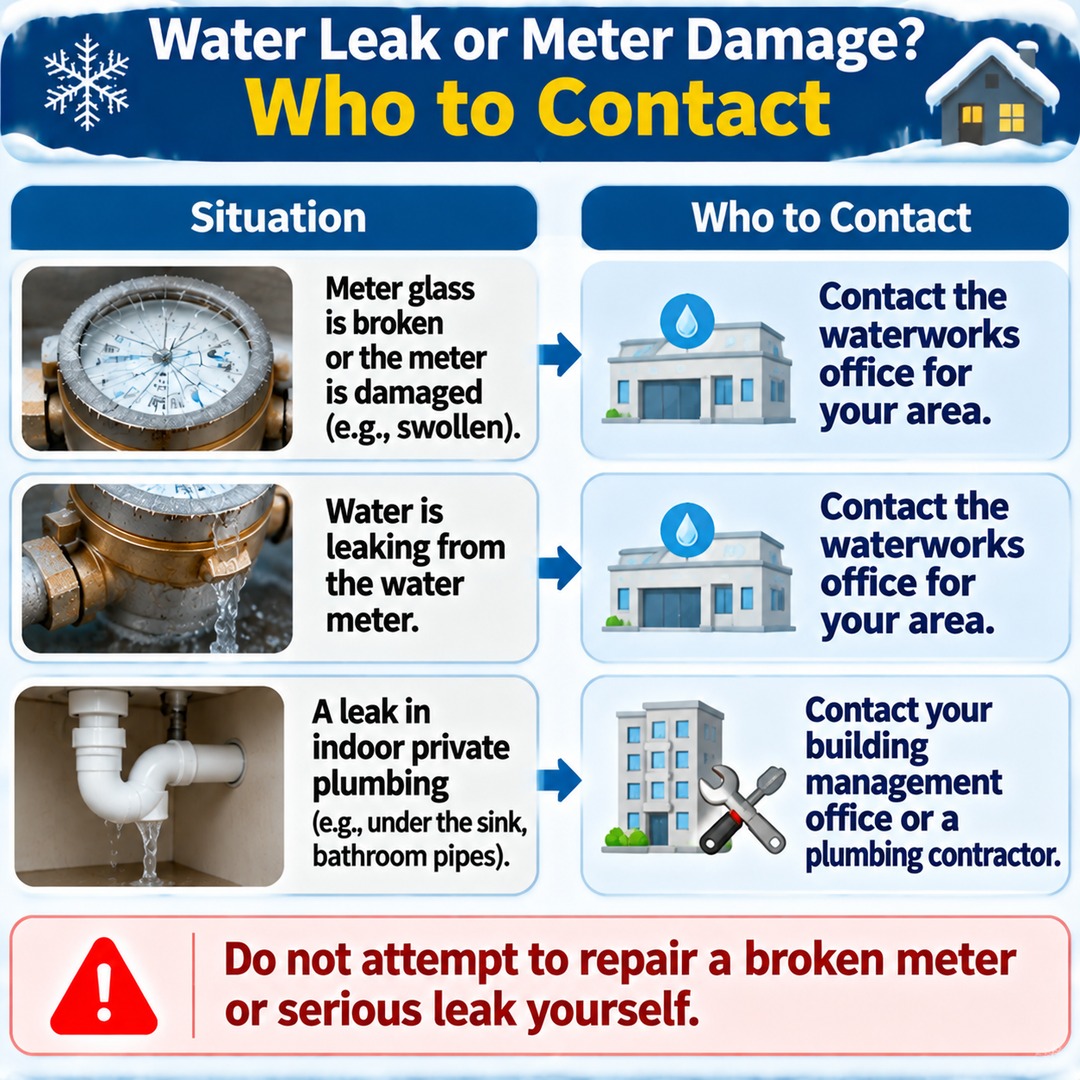
Who Should You Contact If the Water Meter Is Cracked or a Pipe Has Burst?
If the meter glass is broken or water is leaking, do not attempt repairs yourself. Contact the waterworks office responsible for your area. Leaks involving indoor private plumbing may require an inspection by your building management office or a plumbing contractor.
Use the following guide to identify whom to contact:
| Situation | First Contact |
|---|---|
| Cracked or swollen water meter | Local waterworks office |
| Leakage around the meter enclosure | Waterworks office |
| Problem with shared apartment building pipes | Building management office |
| Damage to pipes inside an individual unit | Plumbing contractor |
| Building-wide water outage with an unknown cause | Building management office or waterworks office |
What Should You Check After the Water Supply Returns?
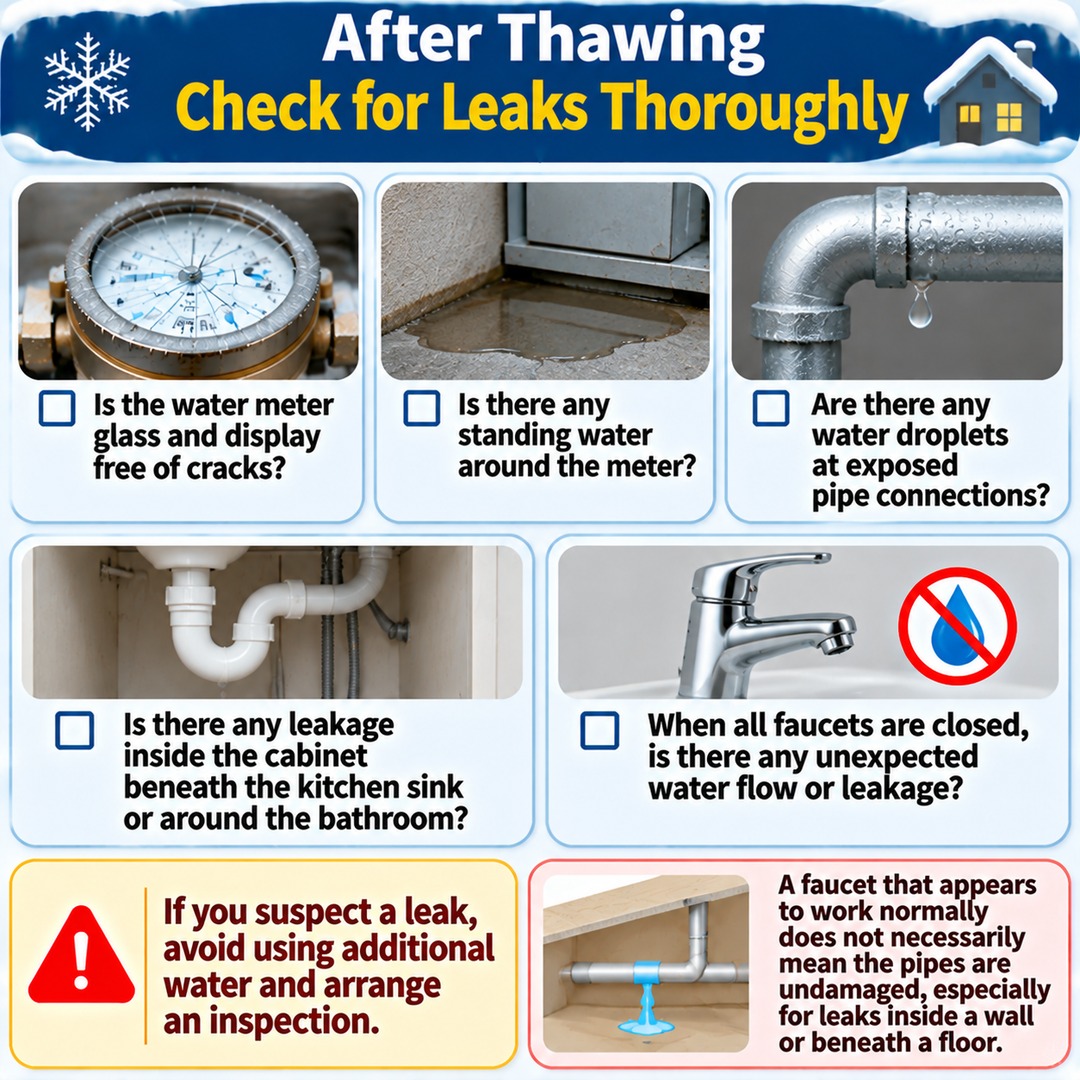
Immediately after thawing, do not simply check whether water flows normally. Inspect the pipe connections and the area around the water meter as well.
Check the following:
Is the water meter glass and display free of cracks?
Is there any standing water on the ground around the meter?
Are there any water droplets forming at exposed pipe connections?
Is there any leakage inside the cabinet beneath the kitchen sink or around the bathroom?
When all faucets are closed, is there any unexpected water flow or leakage?
If you suspect a leak, avoid using additional water and arrange an inspection. In particular, if water is leaking inside a wall or beneath a floor, a faucet that appears to work normally does not necessarily mean the pipes are undamaged.
How Can You Protect Your Water Meter and Exposed Pipes Before the Next Cold Spell?
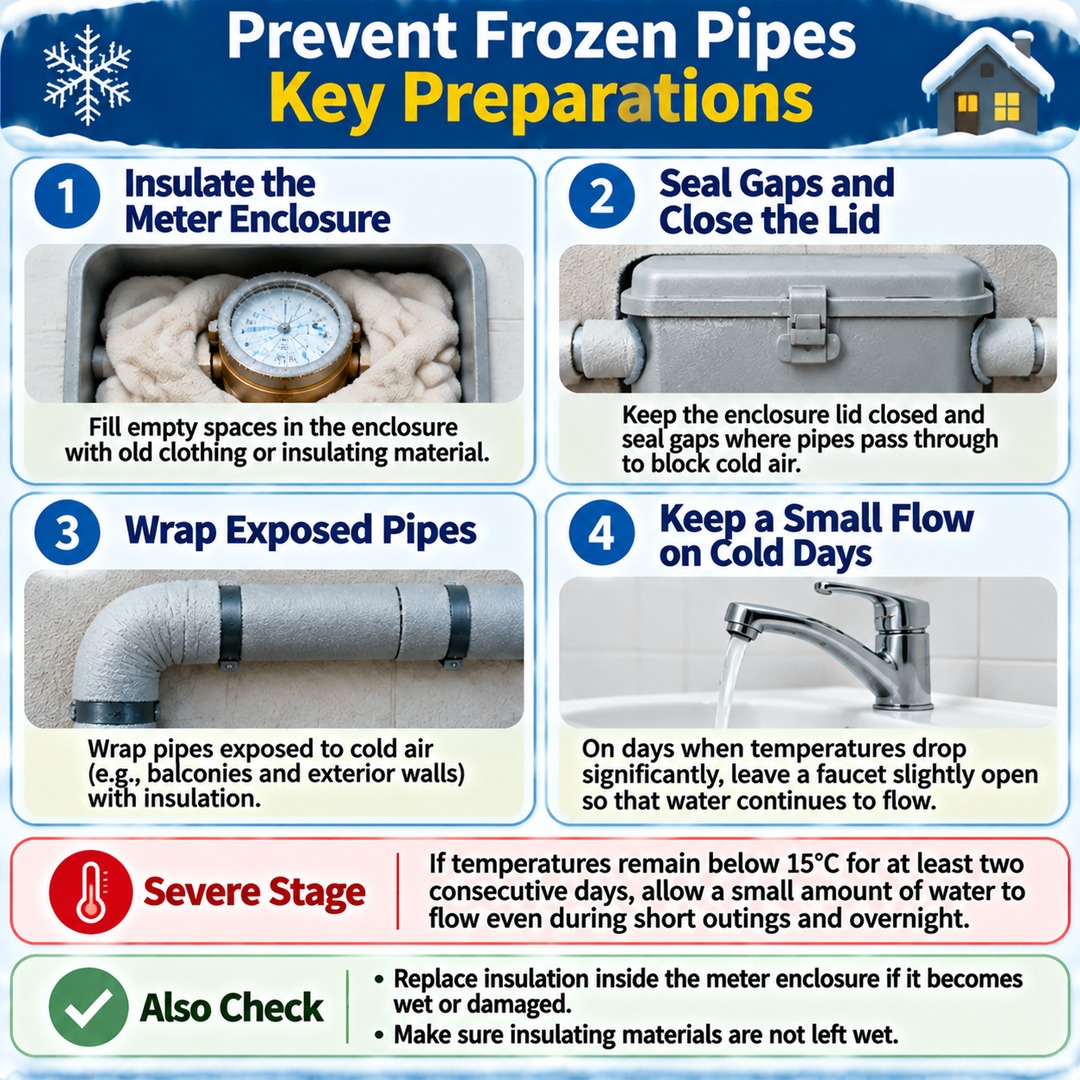
To prevent freezing, first check the insulation inside the water meter enclosure and around any pipes exposed outdoors.
1. Fill empty spaces inside the water meter enclosure with old clothing or insulating material.
2. Seal the enclosure lid and the gaps where pipes pass through to prevent cold air from entering.
3. Wrap exposed pipes on balconies, exterior walls, and similar areas with insulation.
4. On days when temperatures drop significantly, leave a faucet slightly open so that water continues to flow.
If temperatures remain below -15°C for at least two consecutive days, the situation is classified as a severe stage. The guidance recommends allowing a small amount of water to flow even during short outings and overnight.
Replace insulation inside the meter enclosure if it becomes wet or damaged. It is also important to make sure that insulating materials are not left wet.
Frequently Asked Questions
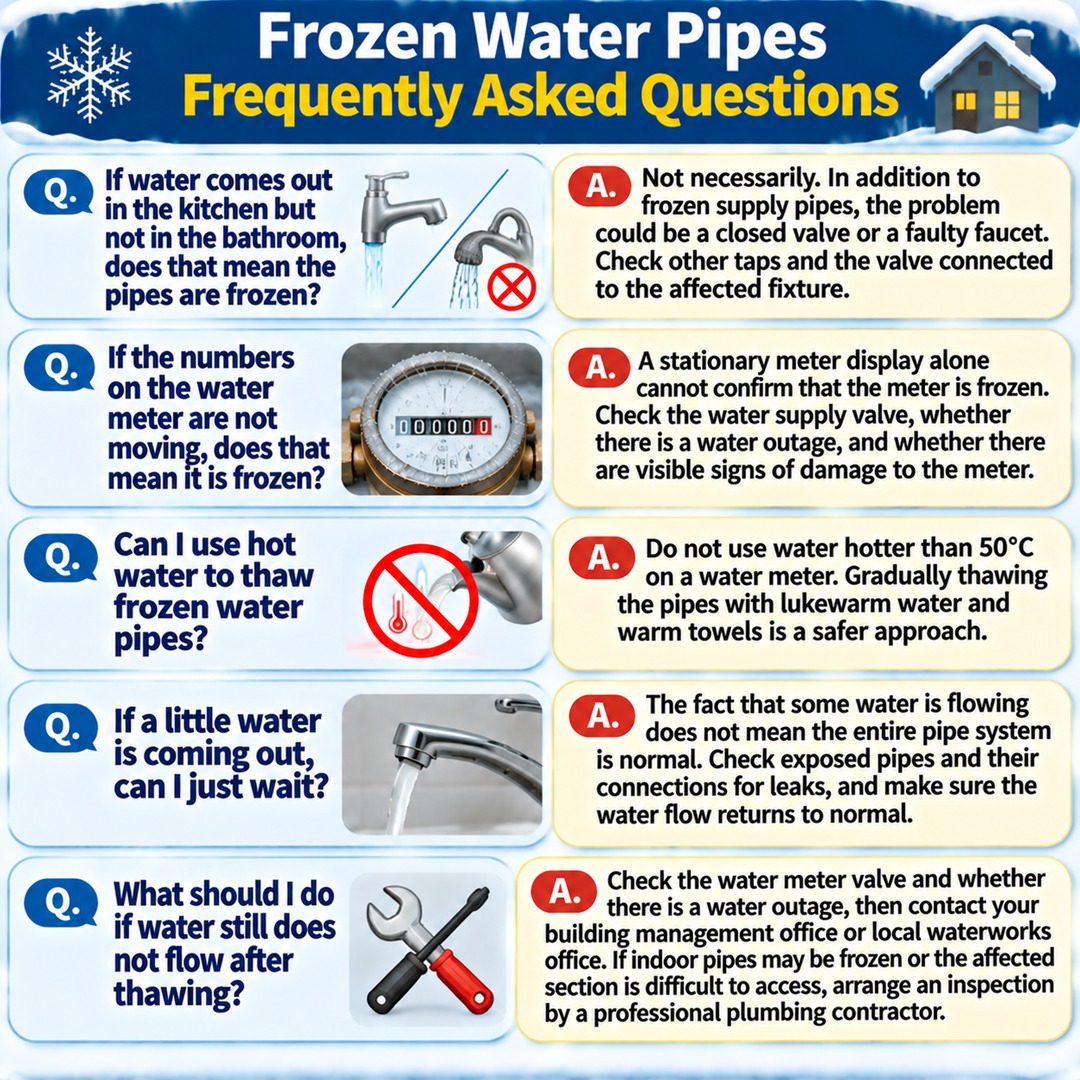
Q. If water comes out in the kitchen but not in the bathroom, does that mean the pipes are frozen?
Not necessarily. In addition to frozen supply pipes leading to the bathroom, the problem could involve a closed valve or a faulty faucet. Check the water supply at other taps and inspect the valve connected to the affected fixture.
Q. If the numbers on the water meter are not moving, does that mean it is frozen?
A stationary meter display alone cannot confirm that the meter is frozen. Check the water supply valve, whether there is a water outage, and whether there are visible signs of damage to the meter.
Q. Can I use hot water to thaw frozen water pipes?
Do not use water hotter than 50°C on a water meter. Gradually thawing the pipes with lukewarm water and warm towels is a safer approach.
Q. If a little water is coming out, can I just wait?
The fact that some water is flowing does not mean the entire pipe system is functioning normally. Check exposed pipes and their connections for leaks, and make sure the water flow returns to normal.
Q. What should I do if water still does not flow after thawing?
Check the water meter valve and whether there is a water outage, then contact your building management office or local waterworks office. If indoor pipes may be frozen or the affected section is difficult to access, arrange an inspection by a professional plumbing contractor.