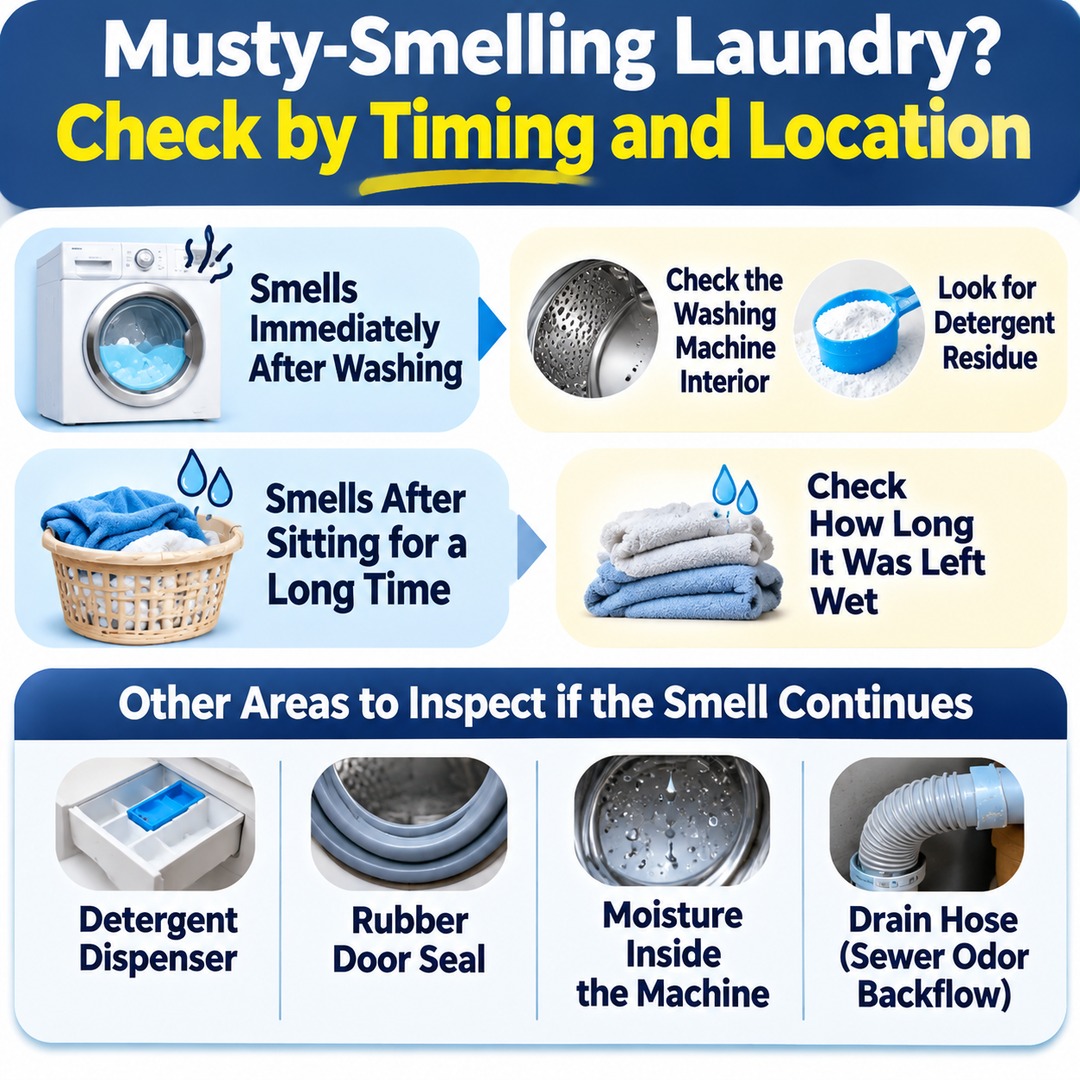


If freshly washed clothes smell musty, the first things to check are washing machine buildup, excessive detergent use, and laundry left sitting while wet. The timing of the odor is particularly important. If clothes smell immediately after washing, inspect the inside of the washing machine and look for detergent residue. If the laundry was left in the machine for a long time after the cycle ended, check how long it remained wet and whether it dried properly.
If the odor persists even after cleaning the drum, also inspect the detergent dispenser, rubber door seal, and moisture trapped inside the machine. A musty smell can also come from sewer odors traveling backward through the drain hose. Before assuming the washing machine is malfunctioning, narrow down the cause by identifying when and where the smell occurs.
Can You Identify the Cause of Musty-Smelling Clothes by When the Odor Appears?
The timing of the odor can help you narrow down which parts of the washing machine need inspection. If wet clothes smell immediately after a cycle or still smell musty after drying, check both the washing machine's maintenance condition and how the laundry was handled.
| When the Odor Occurs | What to Check First |
|---|---|
| Wet clothes smell immediately after washing | Washing machine buildup and detergent residue |
| Musty smell remains after drying | Washing machine buildup and laundry left sitting for too long |
| Odor comes from inside the machine when the door is opened | Rubber door seal, detergent dispenser, and moisture inside the drum |
| Stronger odor around the drain than inside the drum | Sewer drain and drainage hose |
| Excessive suds or slippery residue remains | Excessive detergent use and rinsing performance |
These distinctions are not definitive diagnoses of a mechanical fault. They are a guide for deciding what to inspect first.
In particular, if the same odor keeps appearing even when you remove the laundry immediately after washing, inspecting the inside of the washing machine is generally more efficient than simply washing the clothes again.
How Can You Check for Buildup Inside the Washing Machine Drum?
If the drum has not been cleaned for a long time, accumulated residue and moisture can contribute to unpleasant odors. Even if the visible surface of the drum looks clean, residue may remain in areas that are difficult to see.
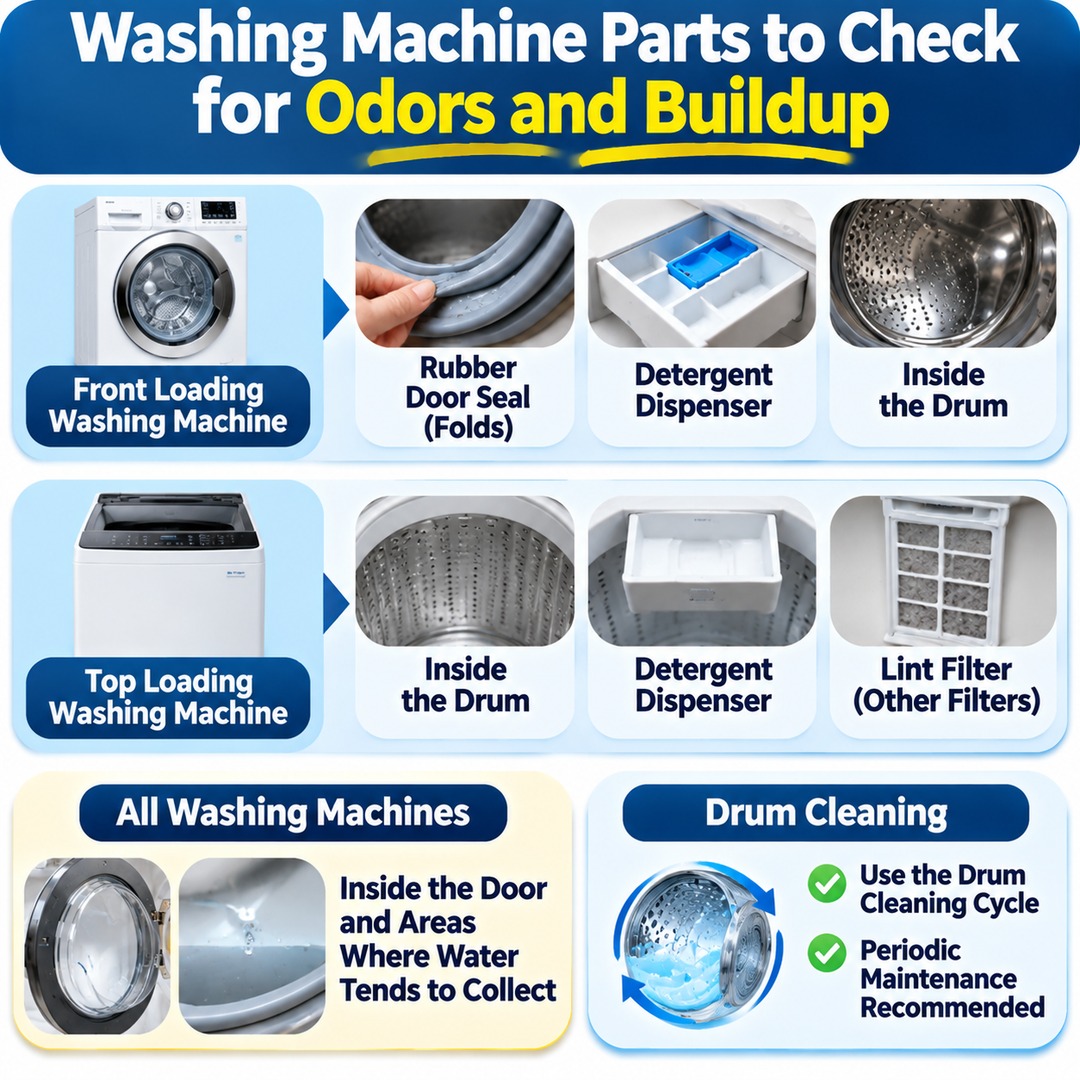
Check the following areas:
Front-loading washing machines: Inside the folds of the rubber door seal, detergent dispenser, and inside the drum.
Top-loading washing machines: Inside the drum, detergent dispenser, lint filter, and other filters.
All washing machines: The inside of the door and areas where water tends to collect.
For front-loading machines, pay particular attention to the folded sections of the rubber door seal. If moisture, debris, or black stains are visible, clean the affected area according to the product manual.
For top-loading machines, check the detergent dispenser and lint filter for accumulated residue.
If drum contamination is suspected, use the washing machine's drum-cleaning cycle. Both Samsung Electronics and LG Electronics recommend periodic drum maintenance. LG's guidance for top-loading washing machines recommends running a drum-cleaning cycle once a month.
How Should You Clean a Washing Machine Drum?
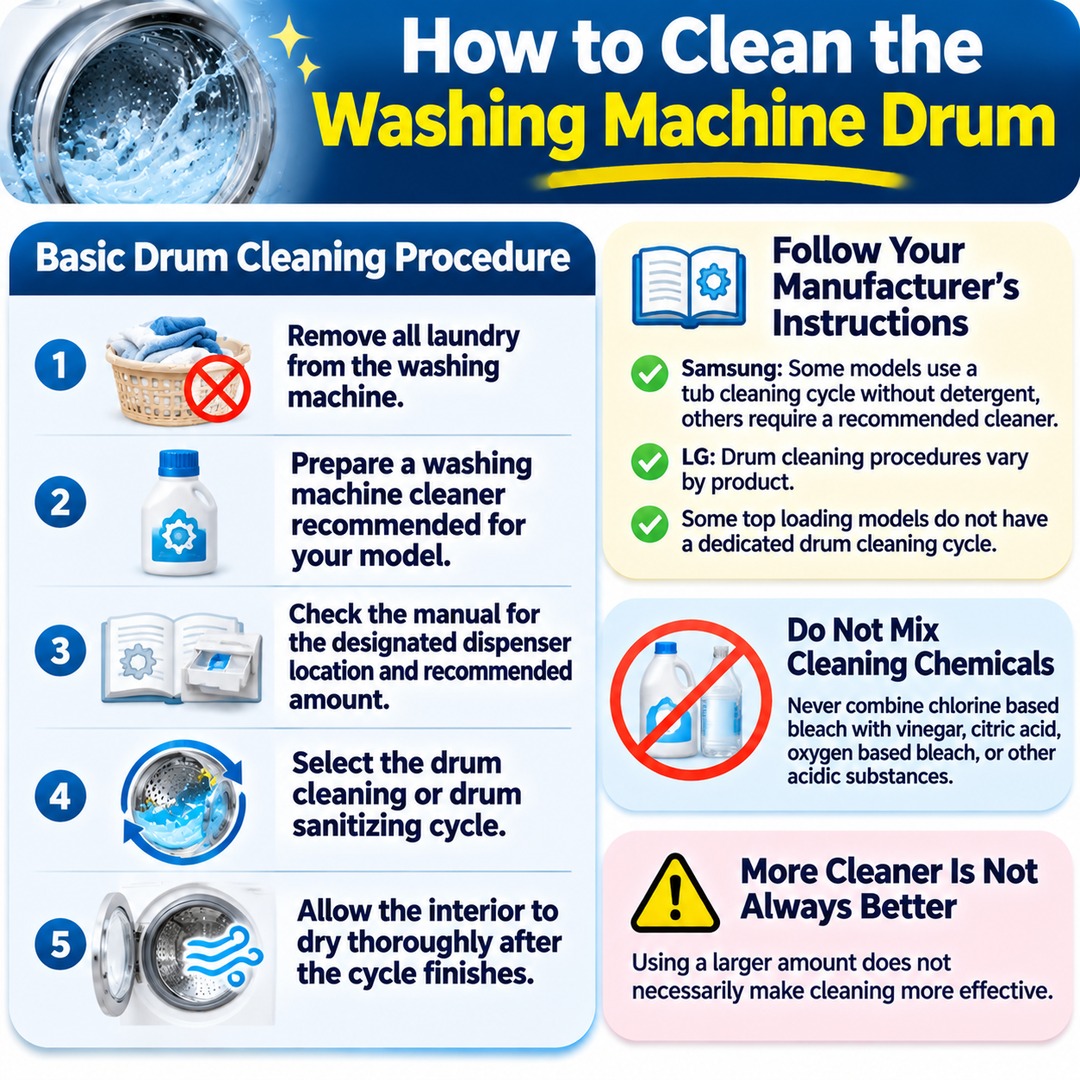
The basic approach is to run the drum-cleaning cycle without laundry, using the cleaning product and cycle specified for your particular model. The permitted cleaning ingredients and the correct dispenser location vary by manufacturer and model. Therefore, avoid automatically adding bleach or vinegar without checking the instructions.
Basic Drum-Cleaning Procedure
1. Remove all laundry from the washing machine.
2. Prepare a washing machine cleaner recommended for your model.
3. Check the manual for the designated dispenser location and recommended amount.
4. Select the drum-cleaning or drum-sanitizing cycle.
5. Allow the interior to dry thoroughly after the cycle finishes.
Samsung's washing machine instructions distinguish between models that offer a tub-cleaning cycle without detergent and those that require a recommended cleaning product.
LG also provides different drum-cleaning procedures depending on the product. Some top-loading models do not have a dedicated drum-cleaning cycle, so their instructions specify a separate procedure using a washing machine drum cleaner.
One important point: using more cleaning product does not necessarily make the cleaning process more effective.
Never mix cleaning chemicals indiscriminately. Combining chlorine-based bleach with vinegar, citric acid, oxygen-based bleach, or other acidic substances can release hazardous gases. Always follow the cleaning product instructions and the washing machine manufacturer's guidance for your specific model.
Why Can Using Too Much Detergent Make Clothes Smell Bad?
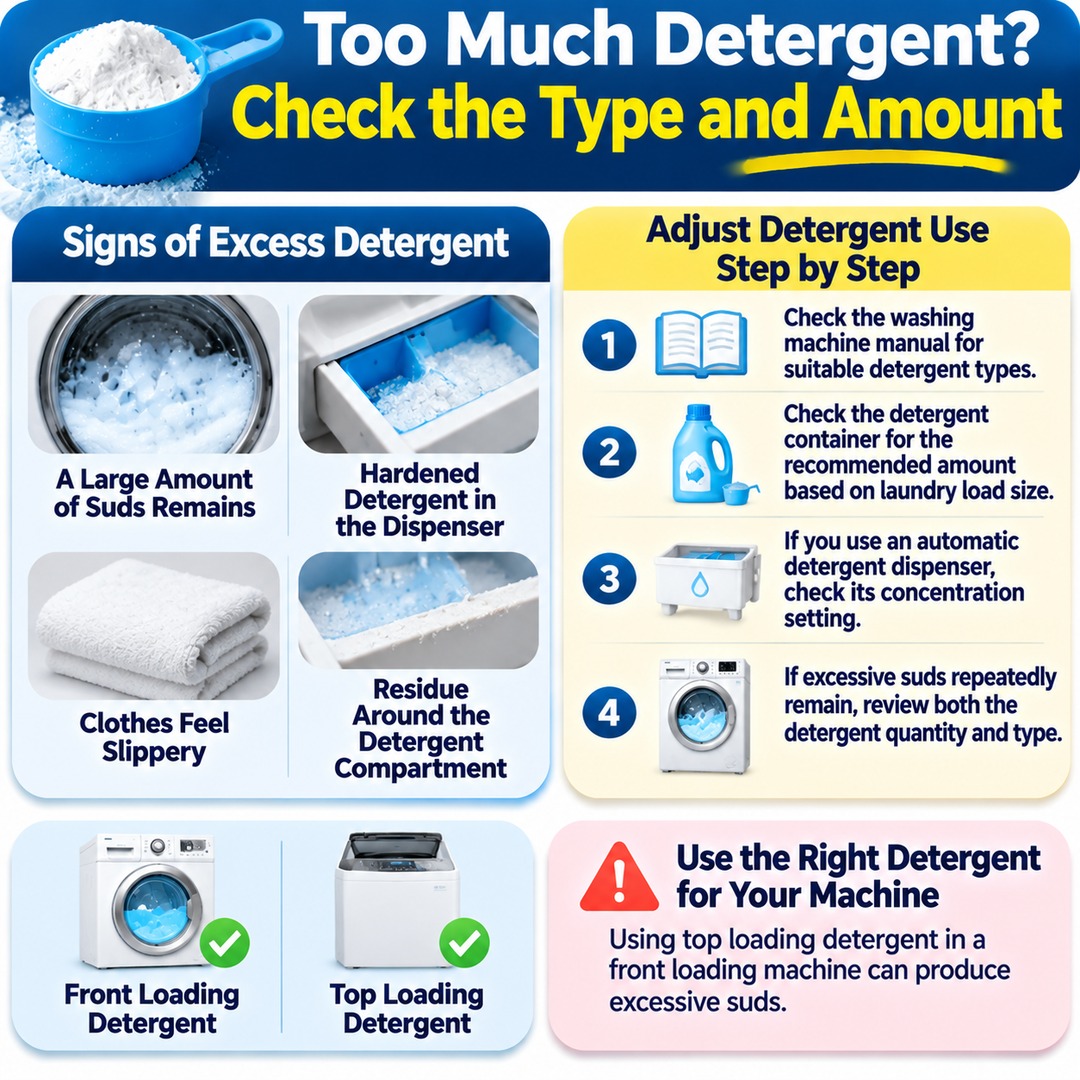
Using more detergent than recommended can leave undissolved detergent or residue inside the washing machine. In particular, using detergent designed for conventional top-loading machines in a front-loading machine can produce excessive suds. Check both the detergent type and the amount used.
Look for these signs of excessive detergent use:
A large amount of suds remains after washing.
Hardened detergent is visible in the dispenser.
Clothes feel slippery after washing.
Residue accumulates around the detergent compartment.
The correct detergent amount depends not only on the weight of the laundry but also on the detergent's concentration and formulation.
Samsung Customer Support's reference tables for front-loading washing machines also show different recommended amounts depending on the detergent type. Therefore, do not assume that a specific quantity you find online is suitable for every washing machine.
When adjusting detergent use, follow these steps:
1. Check the washing machine manual to confirm which detergent types are suitable.
2. Check the detergent container for the recommended amount based on laundry load size.
3. If you use an automatic detergent dispenser, check its concentration setting.
4. If excessive suds repeatedly remain, review both the detergent quantity and type.
If residue continues to accumulate in the detergent compartment even after reducing the amount, inspect the dispenser and the nozzles of the automatic dispensing system as well.
Can Leaving Wet Laundry in the Machine for Too Long Cause Odors Even After Drying?
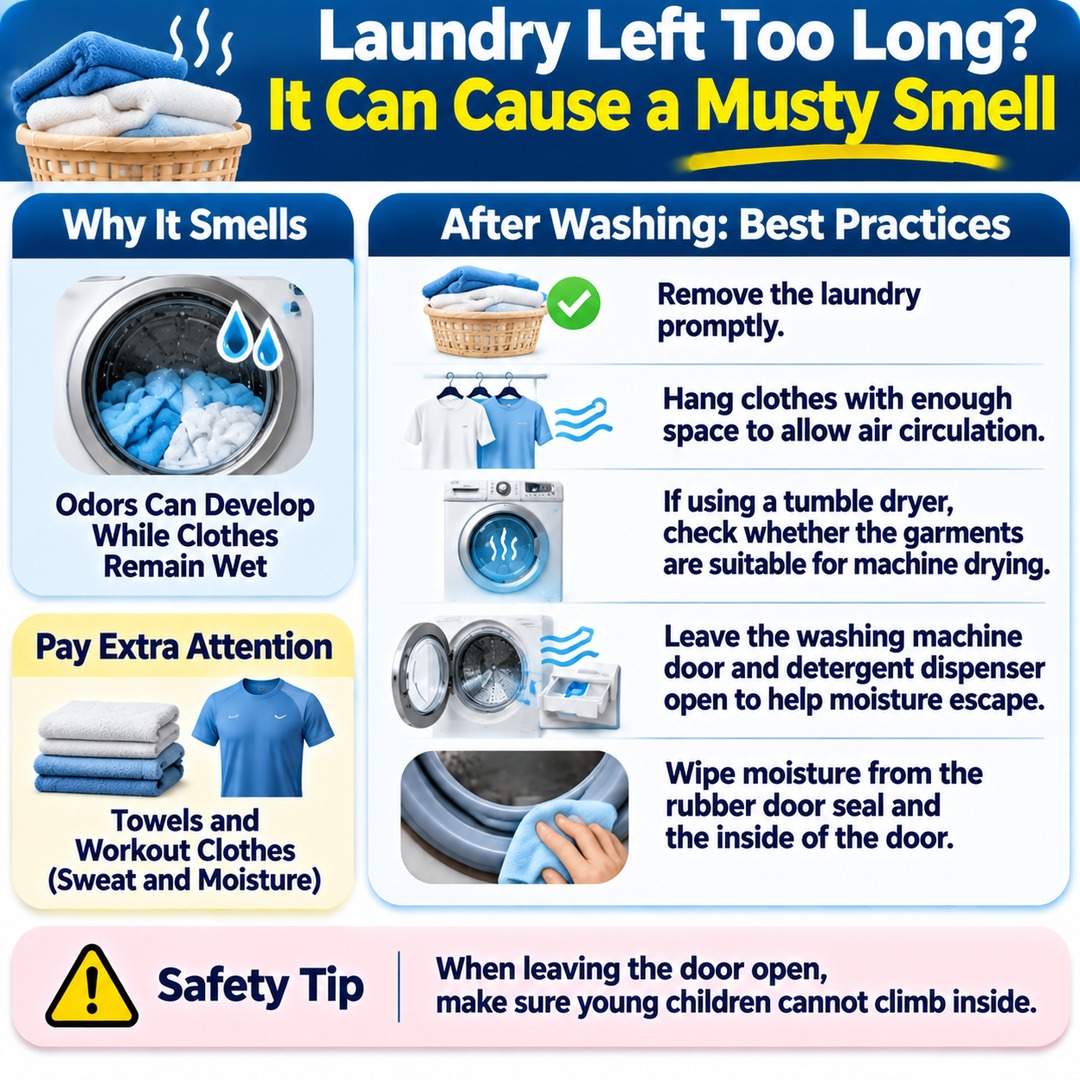
Yes. If you leave laundry inside the washing machine long after the cycle has finished, odors can develop while the clothes remain wet. A musty smell may persist even after the clothes have dried.
Towels and workout clothes soaked with sweat deserve particular attention because they may already contain moisture and contaminants before washing. Avoid storing them for extended periods in a laundry basket or an enclosed laundry container.
After a washing cycle finishes, follow these practices:
Remove the laundry promptly.
Hang clothes with enough space between them to allow air circulation.
If using a tumble dryer, check whether the garments are suitable for machine drying.
Leave the washing machine door and detergent dispenser open to help moisture escape.
Wipe moisture from the rubber door seal and the inside of the door.
In particular, moisture can remain trapped inside front-loading washing machines when the door is kept closed.
When leaving the door open, make sure young children cannot climb inside the washing machine.
Should You Check the Drainage Hose If the Washing Machine Still Smells After Cleaning?
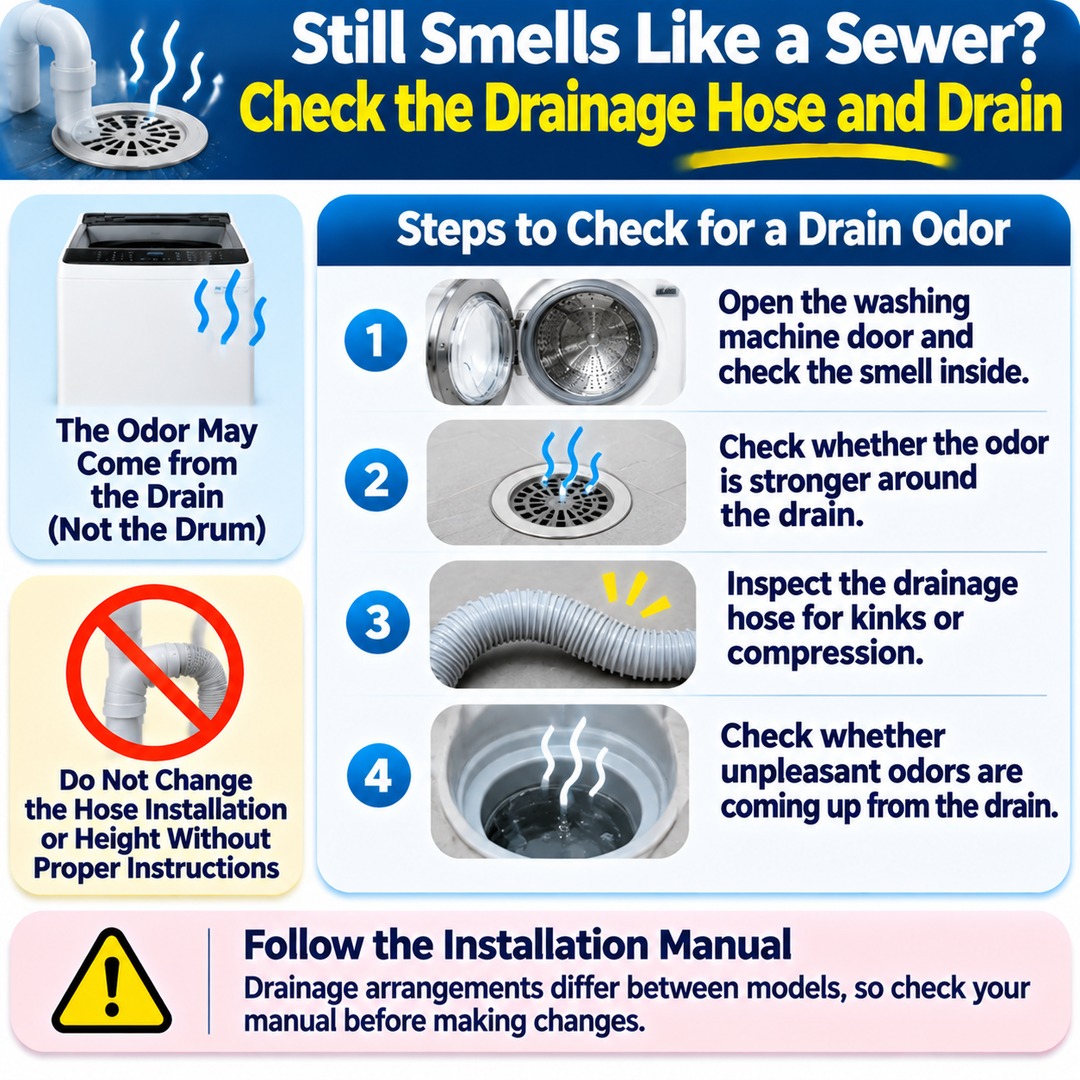
If a sewer-like odor remains around the washing machine even after cleaning the drum, inspect the drainage hose and drain. Incorrect hose installation or sewer odors traveling backward through the hose can make it seem as though the smell is coming from inside the washing machine.
LG's guidance for top-loading washing machines suggests checking whether the odor decreases when the washing machine door is opened.
If you suspect an odor coming from the drain, follow these steps:
1. Open the washing machine door and check the smell inside.
2. Check whether the odor is stronger around the drain.
3. Inspect the drainage hose for kinks or compression.
4. Check whether unpleasant odors are coming up from the drain itself.
Avoid disconnecting the drainage hose or changing its installation height without proper instructions. Drainage arrangements differ between models, so follow the installation manual.
If the smell decreases when the washing machine door is opened but remains strong around the drain, the sewer drain may need cleaning or the drainage system may require inspection.
How to Prevent Musty Smells From Returning After Washing
Preventing recurring odors requires more than cleaning the drum. You should also maintain the washing machine's interior and handle laundry properly.
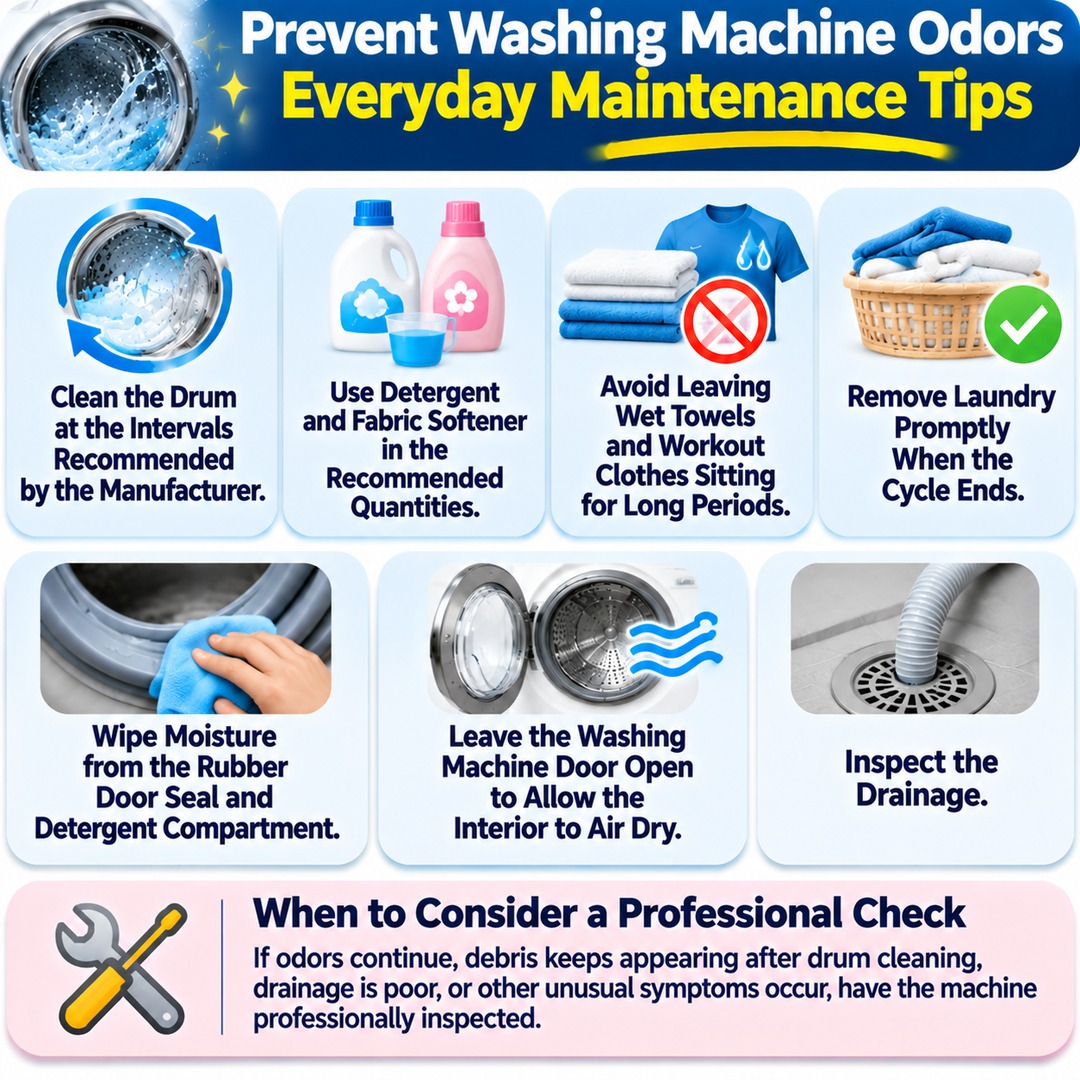
Follow these everyday maintenance practices:
Clean the drum at the intervals recommended by the manufacturer.
Use detergent and fabric softener in the recommended quantities for your product.
Avoid leaving wet towels and workout clothes sitting for long periods.
Remove laundry promptly when the cycle ends.
Wipe moisture from the rubber door seal and detergent compartment.
Leave the washing machine door open to allow the interior to air-dry.
Inspect the drainage system if you suspect odors are coming from the drain.
If the odor continues despite several drum-cleaning cycles and checks of detergent quantity and drainage conditions, consider having the machine professionally inspected.
In particular, if debris continues to appear after drum cleaning, drainage is poor, or other unusual symptoms occur, do not assume the problem is simply related to laundry handling.
Frequently Asked Questions
Can Clothes Still Smell Musty After They Have Dried?
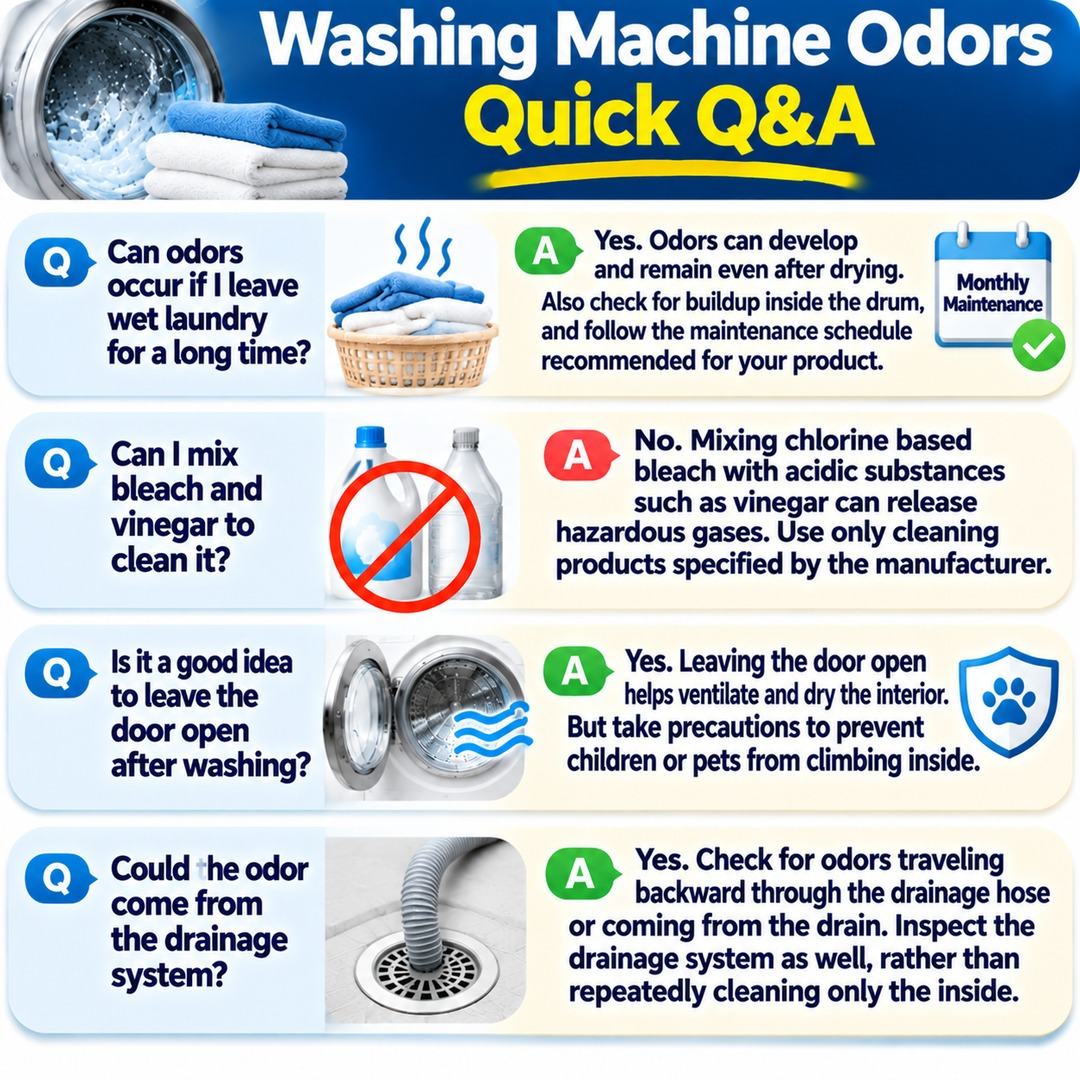
Yes. Leaving wet laundry in the washing machine for an extended period can cause musty odors that remain even after drying. You should also check for buildup inside the washing machine drum.
Should I Clean My Washing Machine Drum Every Month?
Follow the maintenance schedule recommended for your specific product. Some Samsung and LG washing machine instructions recommend monthly maintenance.
Can I Mix Bleach and Vinegar When Cleaning a Washing Machine Drum?
No. Mixing chlorine-based bleach with acidic substances such as vinegar can release hazardous gases. Use only cleaning products specified by the washing machine manufacturer.
Should I Always Leave the Washing Machine Door Open?
It is a good idea to leave the door open after washing to ventilate the interior and allow moisture to dry. However, take precautions to prevent children or pets from climbing inside the drum.
Why Does My Washing Machine Still Smell Like a Sewer After Drum Cleaning?
Check for odors traveling backward through the drainage hose or coming directly from the drain. Rather than repeatedly cleaning only the inside of the washing machine, inspect the drainage system as well.