
If someone infected with norovirus vomits at home, simply wiping the area with ordinary detergent is not enough. First, safely remove the vomit, then disinfect contaminated surfaces using a solution made by mixing 1 part 4% household bleach with 39 parts water. Contaminated clothing and bedding should be washed at 70°C or higher, or treated using a separate diluted bleach method.
Norovirus can spread not only through an infected person's vomit and feces but also through contaminated hands, bathrooms, doorknobs, household items, and other surfaces. It is particularly important to use protective equipment and follow the correct cleaning sequence to prevent contamination from spreading while cleaning up vomit.
What Is the Correct Order for Cleaning Up Norovirus Vomit?
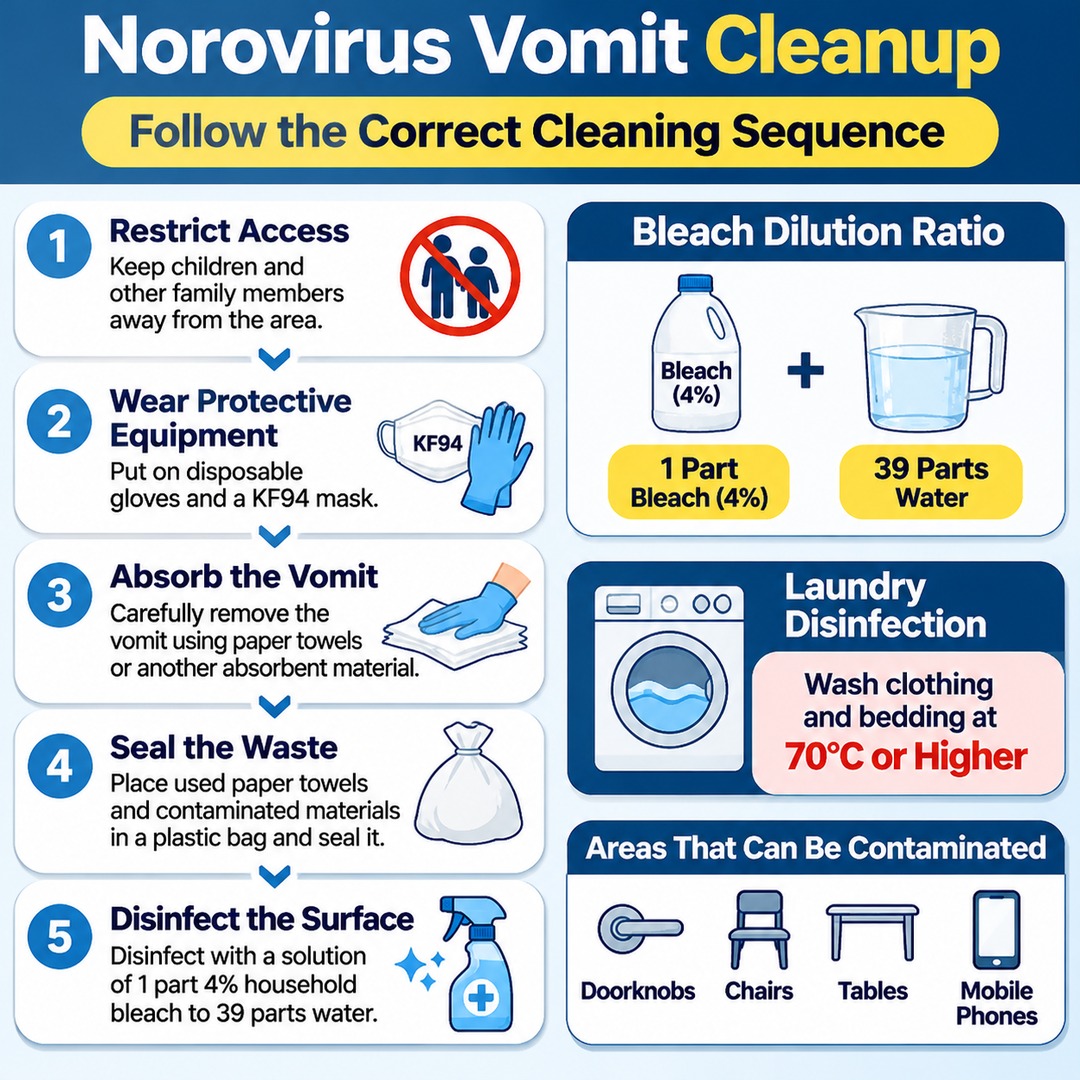
When someone vomits, keep other people away from the area. Put on gloves and a KF94 mask, a Korean-certified respirator mask, before removing the contaminated material. Avoid scrubbing the vomit with a dry cloth or vacuuming it with an ordinary household vacuum cleaner. Instead, carefully absorb it using an absorbent material.
Follow these steps:
1. Restrict access: Keep children and other family members away from the contaminated area.
2. Wear protective equipment: Put on disposable gloves and a KF94 mask.
3. Absorb the vomit: Carefully remove the vomit using paper towels or another absorbent material.
4. Seal the waste: Place used paper towels and contaminated materials in a plastic bag and seal it.
5. Disinfect the surface: Treat the contaminated area with an appropriately diluted chlorine-based disinfectant.
6. Finish cleaning: After disinfection, clean the surface again with clean water and detergent.
It is easy to assume that vomit has contaminated only the floor, but nearby walls, furniture, and household items may also have been contaminated.
Pay particular attention to doorknobs, chairs, tables, mobile phones, and other objects near the place where the person vomited.
Is a 1:39 Dilution Ratio Correct for Household Bleach?
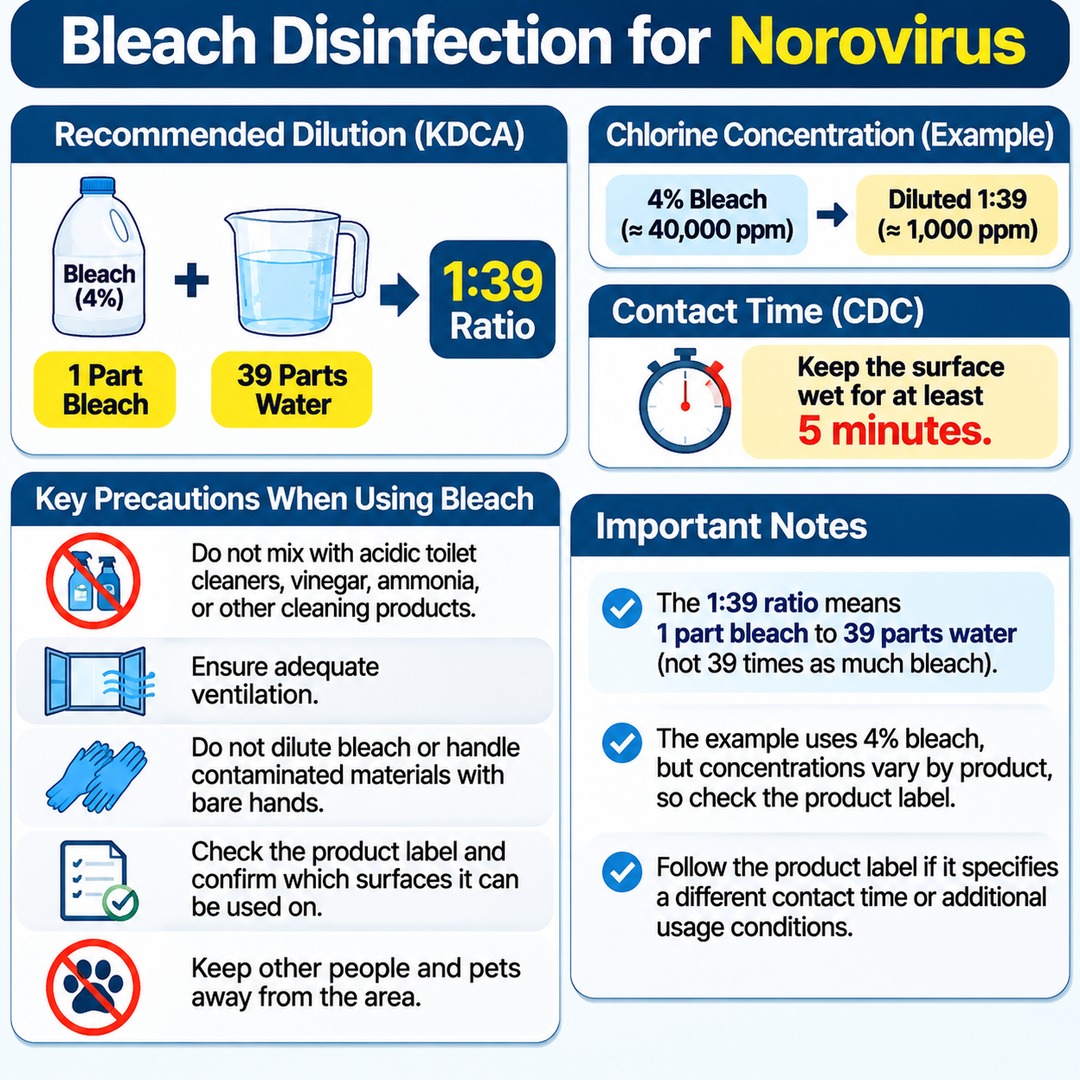
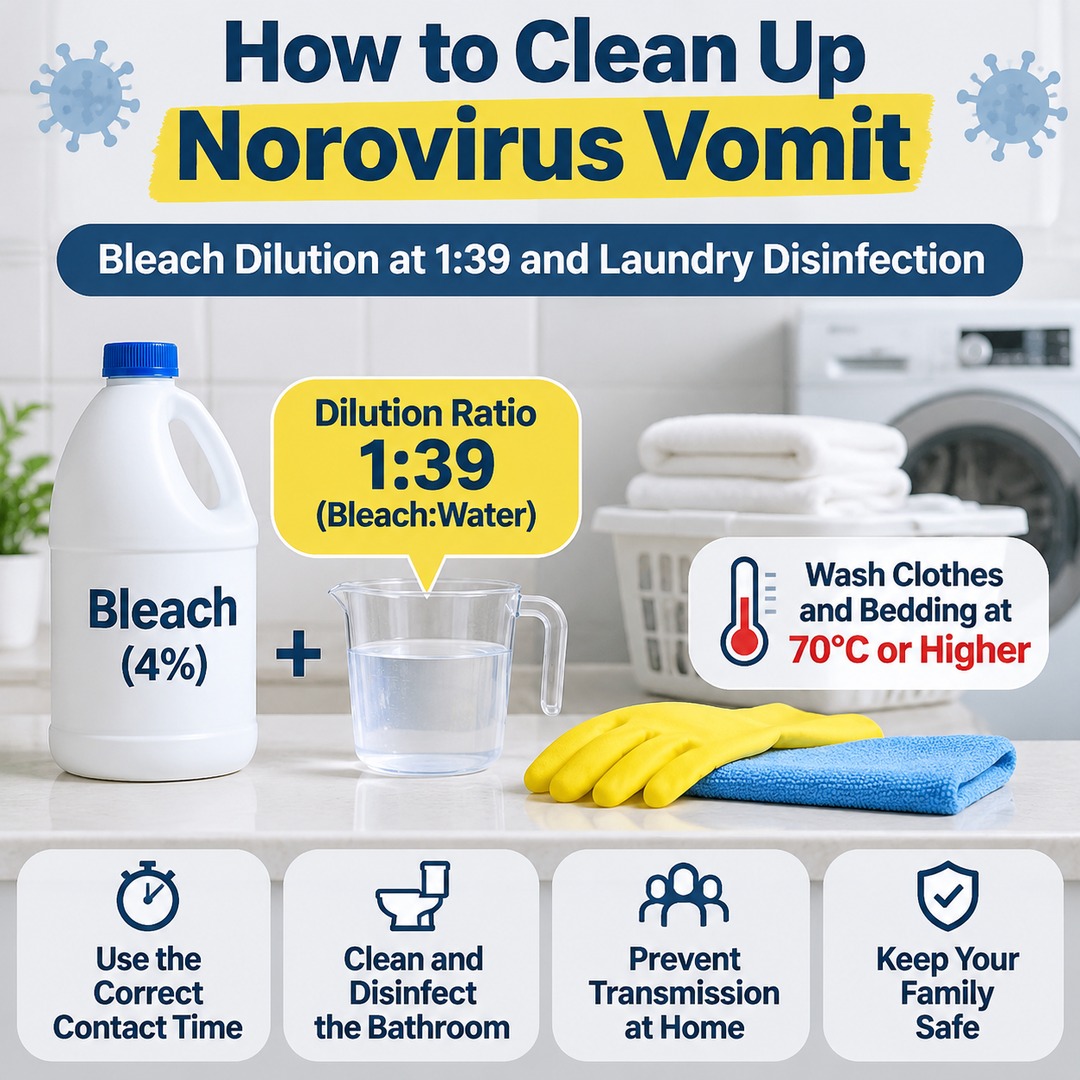
The Korea Disease Control and Prevention Agency (KDCA) recommends mixing 1 part of 4% household sodium hypochlorite bleach with 39 parts water.
The 1:39 ratio refers to the proportion of bleach to water. It means adding 39 parts water to 1 part bleach, not adding 39 times as much bleach to 39 parts water.
How Do You Make 1 Liter of Disinfectant?
| Ingredient | Amount |
|---|---|
| 4% household bleach | 25 mL |
| Water | 975 mL |
| Total solution | 1,000 mL |
These quantities are an example calculated using the 1:39 ratio.
Bleach at a 4% concentration contains approximately 40,000 ppm of available chlorine. Diluting it 40-fold produces a solution of approximately 1,000 ppm.
However, not all household bleach products contain 4% sodium hypochlorite. Concentrations vary between products, so check the product label before preparing the solution.
Important precautions when using bleach
Never mix bleach with acidic toilet cleaners.
Do not mix it with vinegar, ammonia-based cleaners, or other cleaning products.
Ensure adequate ventilation when preparing the solution.
Never dilute bleach or handle contaminated materials with bare hands.
Check the product label and confirm which surfaces it can be used on.
Keep other people and pets away from the area being disinfected.
How Long Should the Disinfectant Remain on the Surface?
The US Centers for Disease Control and Prevention (CDC) recommends using chlorine-based solutions containing 1,000–5,000 ppm for environmental disinfection against norovirus and keeping contaminated surfaces wet for at least 5 minutes.
Accordingly, when using a 1:39 dilution of 4% bleach, you can follow the guidance of keeping the contaminated surface sufficiently wet for at least 5 minutes.
However, if the product label specifies a different contact time or additional usage conditions, follow the instructions for that particular product.
Is Disinfecting the Toilet Enough to Clean a Bathroom?
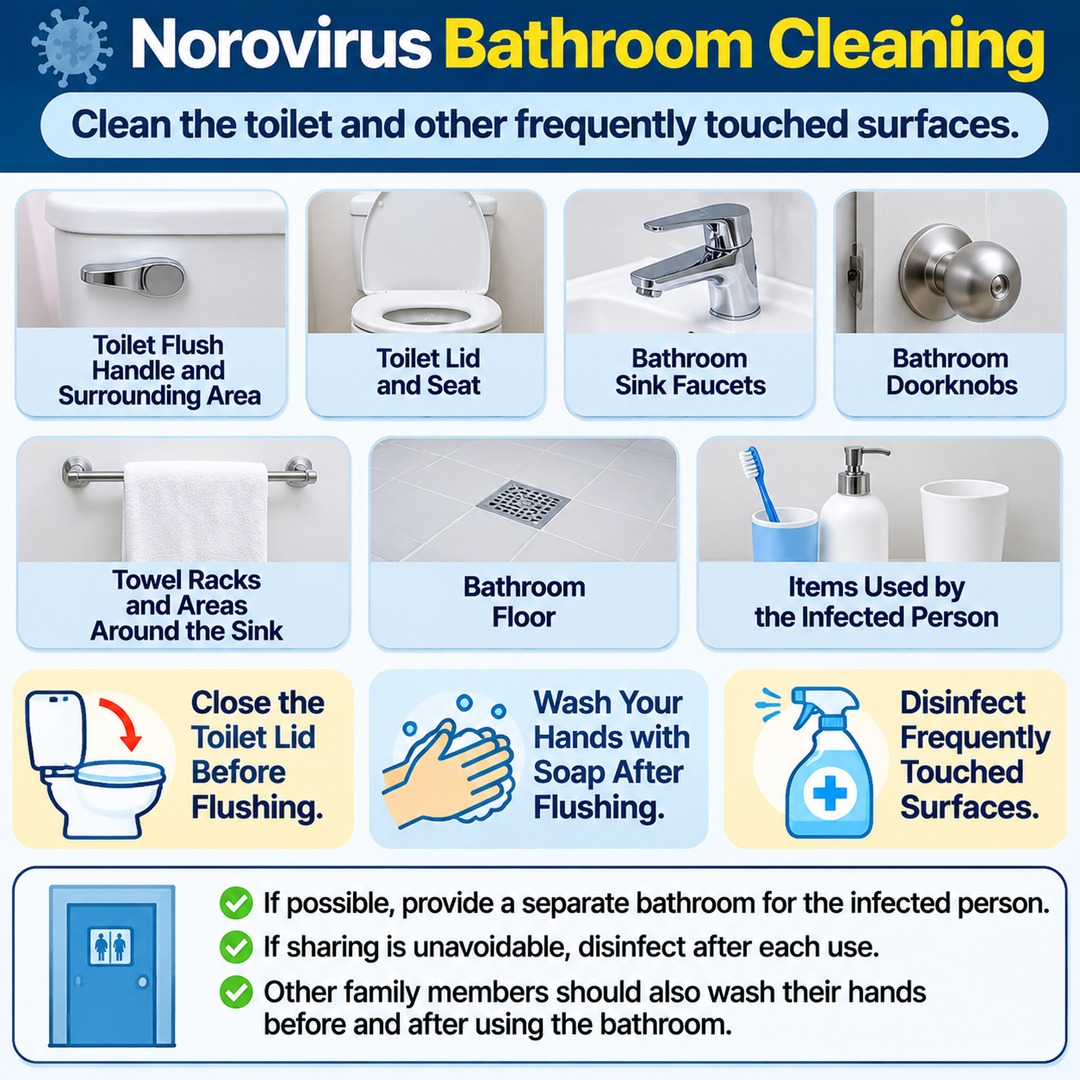
If someone with norovirus has used the bathroom, you should clean not only the toilet but also nearby surfaces that people frequently touch.
Pay particular attention to the following areas:
Toilet flush handle and surrounding area
Toilet lid and seat
Bathroom sink faucets
Bathroom doorknobs
Towel racks and areas around the sink
Bathroom floor
Items used by the infected person
It is advisable to close the toilet lid before flushing. After flushing, wash your hands with soap and also clean surfaces you may touch again, such as the sink faucet and doorknob.
If possible, provide the infected person with a separate bathroom for their exclusive use.
If sharing a bathroom is unavoidable, disinfect frequently touched surfaces after the infected person uses it. Other family members should also wash their hands thoroughly before and after using the bathroom.
At What Temperature Should an Infected Family Member's Clothes and Bedding Be Washed?
Clothing, towels, and bed sheets contaminated with vomit or feces from someone with norovirus should be handled separately from ordinary laundry.
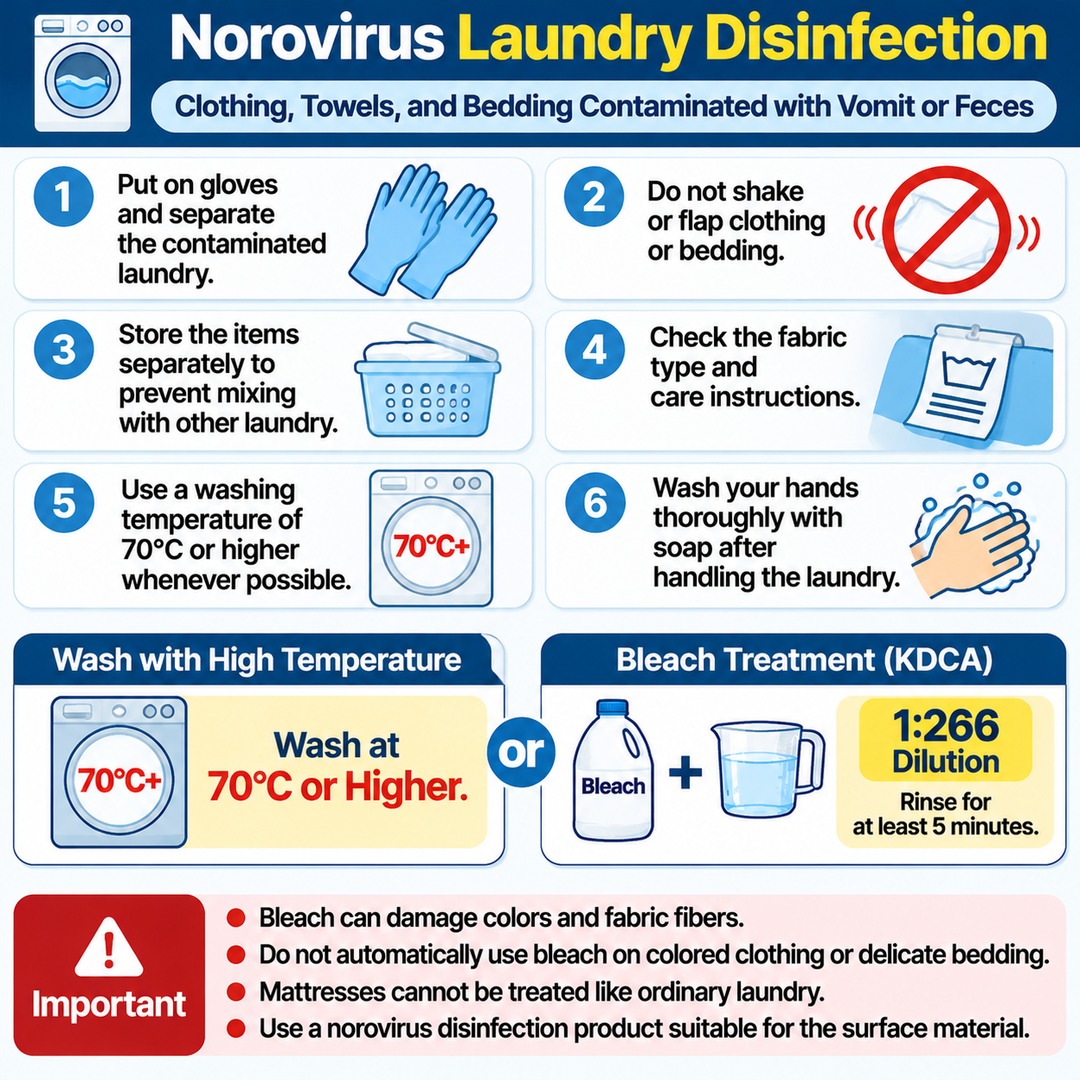
The KDCA recommends washing contaminated laundry at 70°C or higher, or rinsing it for at least 5 minutes using a bleach solution diluted at 1:266.
Steps to Follow When Washing Contaminated Laundry
1. Put on gloves and separate the contaminated laundry.
2. Do not shake or flap clothing or bedding.
3. Store the items separately to prevent them from mixing with other family members' laundry.
4. Check the fabric type and care instructions.
5. Use a washing temperature of 70°C or higher whenever possible.
6. Wash your hands thoroughly with soap after handling the laundry.
If washing at 70°C is not possible, consider the KDCA-recommended treatment using a 1:266 diluted bleach solution. However, bleach can damage clothing colors and fabric fibers, so first check whether the material can safely be treated with chlorine-based products.
Do not automatically use bleach on colored clothing or delicate bedding.
Items such as mattresses that cannot be machine-washed cannot be treated in the same way as ordinary laundry. Check the instructions for a product specifically suitable for norovirus disinfection and compatible with the surface material.
How Can You Prevent Secondary Norovirus Infections Within the Family?
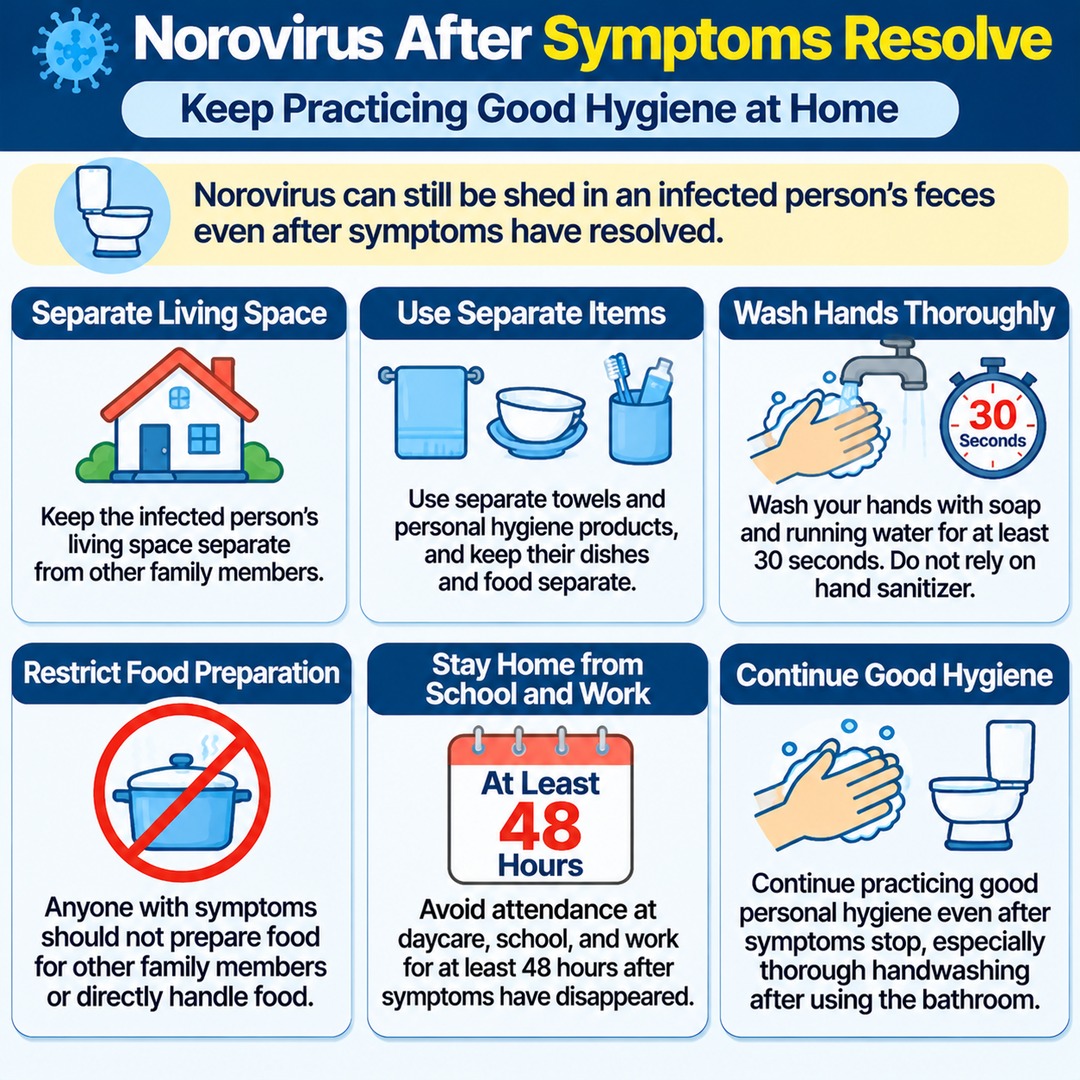
Norovirus can continue to be shed in an infected person's feces even after symptoms have resolved. Rather than immediately returning to normal activities as soon as symptoms disappear, continue practicing good hygiene for an appropriate period.
The following measures are recommended at home.
Separate the infected person's living space from the rest of the family
Set aside specific areas and household items for the infected person. Use separate towels and personal hygiene products, and keep their dishes and food separate as well.
Wash hands
Wash your hands with soap and running water for at least 30 seconds after using the bathroom, handling vomit or feces from the infected person, and before eating.
It is important not to rely on hand sanitizer as a substitute for washing with soap and water.
Restrict food preparation
Anyone experiencing symptoms should not prepare food for other family members or directly handle food.
Stay home from school and work
The KDCA recommends avoiding attendance at daycare, school, and work for at least 48 hours after symptoms have disappeared.
Continue practicing good personal hygiene even after symptoms stop. In particular, maintain thorough handwashing after using the bathroom over an extended period.
What Is the Difference Between Bleach Disinfection and Ordinary Detergent Cleaning?
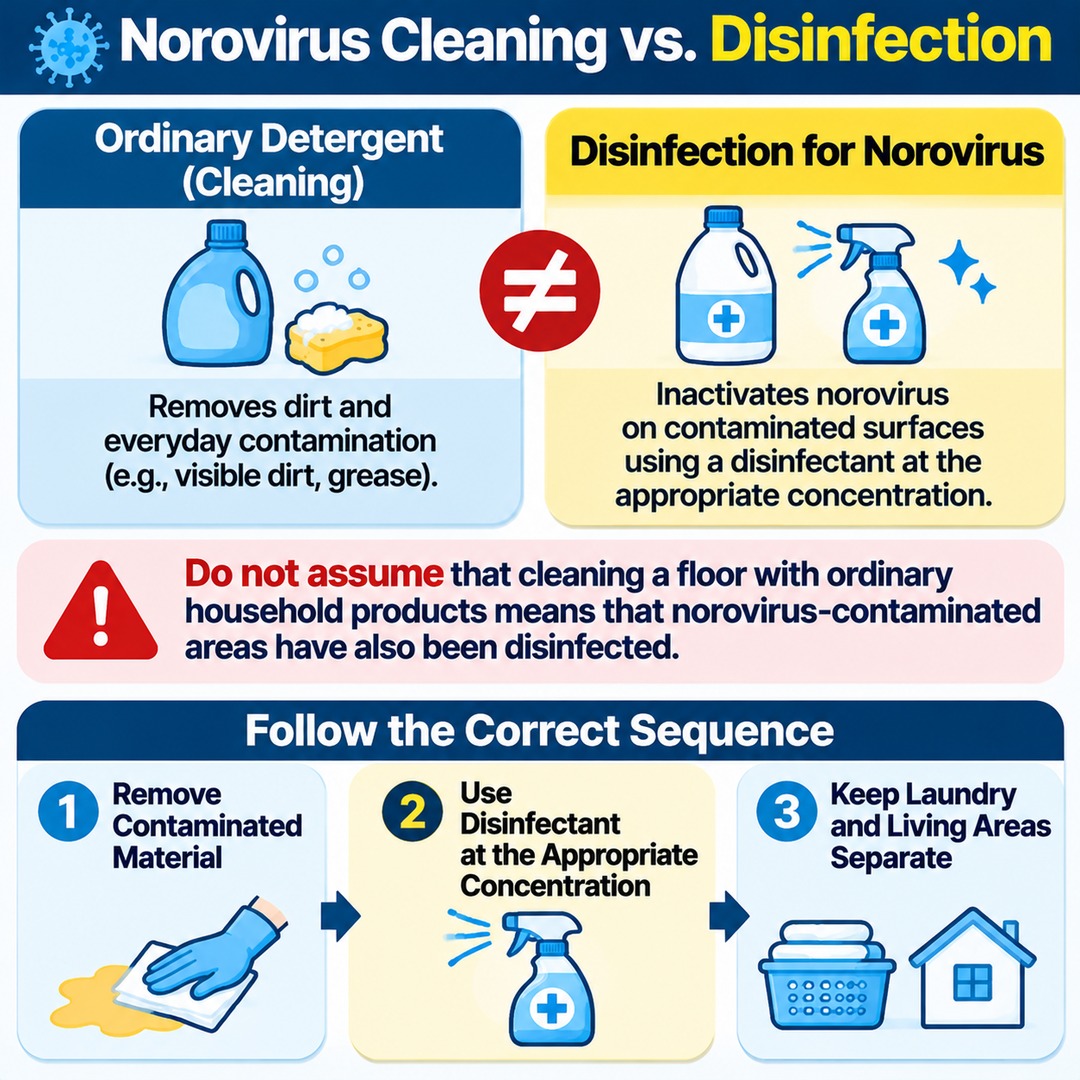
Ordinary detergents are used to remove dirt and everyday contamination, but this is different from disinfecting surfaces contaminated with norovirus.
| Category | Main purpose | Recommended standard |
|---|---|---|
| Ordinary detergent | Removing dust and everyday dirt | Follow product instructions |
| Chlorine-based disinfectant | Disinfecting surfaces contaminated with norovirus | 1:39 dilution of 4% bleach |
| Contaminated laundry | Treating clothing and bedding | Wash at 70°C or higher, or use a 1:266 diluted bleach solution |
Do not assume that cleaning a floor with ordinary household products means that norovirus-contaminated areas have also been disinfected.
You need to carry out each step separately: remove contaminated material first, use disinfectant at the appropriate concentration, and keep contaminated laundry and living areas separate.
Frequently Asked Questions About Disinfecting a Home After Norovirus Infection
Q. Can I clean up vomit with wet wipes?
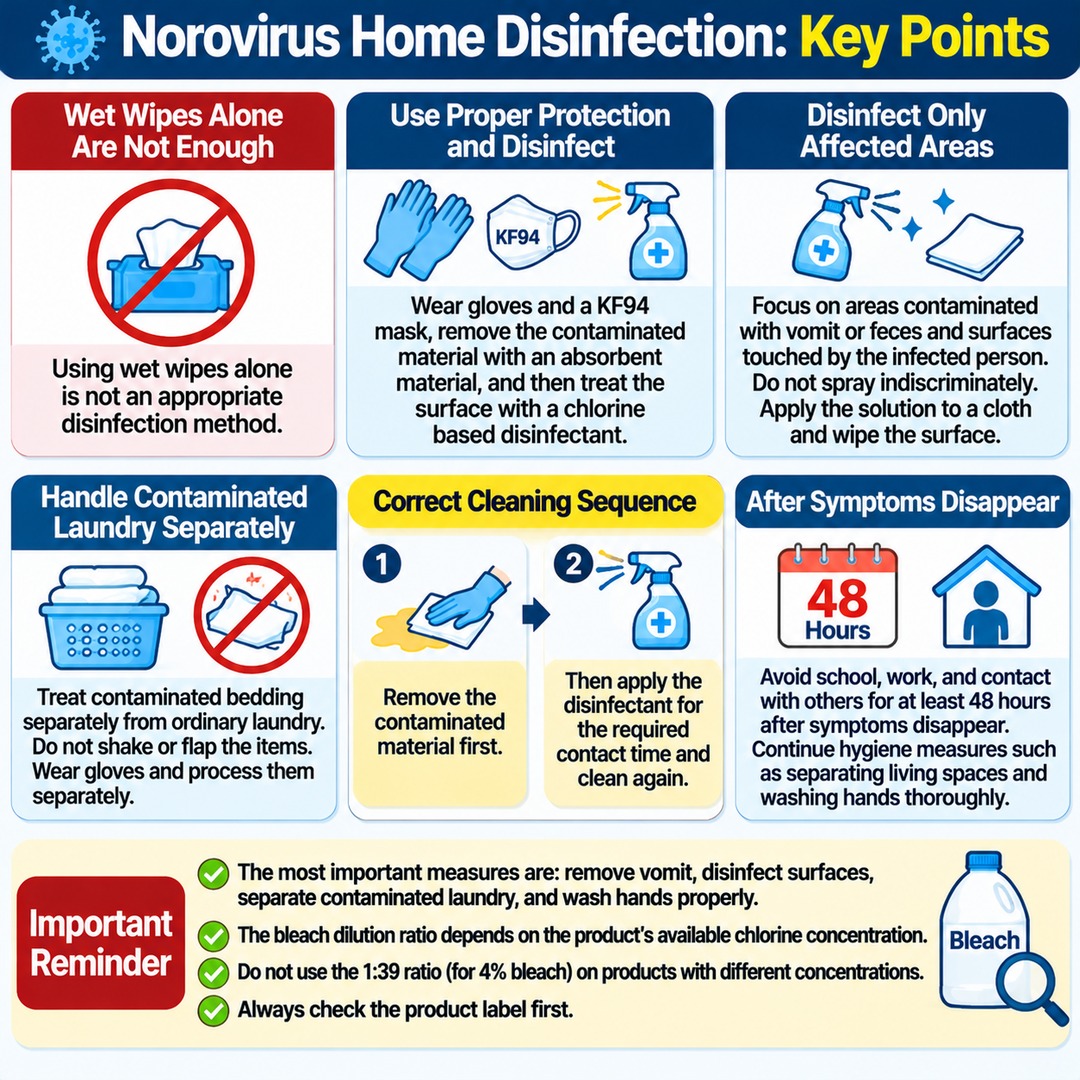
Using wet wipes alone is not an appropriate disinfection method. Wear gloves and a KF94 mask, remove the contaminated material with an absorbent material, and then treat the affected surface with a chlorine-based disinfectant.
Q. Should I spray a 1:39 diluted bleach solution throughout the entire house?
No. There is no need to do that. Focus on areas contaminated with vomit or feces and surfaces touched by the infected person. Spraying indiscriminately can disperse disinfectant into the air and create an inhalation hazard. Instead, apply the solution to a cloth and use it to wipe the affected surfaces.
Q. Can I wash the bed sheets used by an infected person with the rest of the laundry?
It is best to handle contaminated bedding separately from ordinary laundry. Do not shake or flap the items. Wear gloves and process them separately.
Q. Is wiping the floor once enough if it has been contaminated with vomit?
Removing vomit and disinfecting the surface are two separate steps. First, remove the contaminated material. Then apply the disinfectant for the required contact time and clean the surface again to finish.
Q. Can the infected person live with the rest of the family once their symptoms disappear?
Even after symptoms disappear, the KDCA recommends avoiding school, work, and contact with others for at least 48 hours. Continue hygiene measures such as separating living spaces and washing hands thoroughly.
When someone in the household develops norovirus, the most important measures are to remove vomit, disinfect surfaces, separate contaminated laundry, and wash hands properly.
In particular, the dilution ratio for bleach depends on the product's available chlorine concentration. Do not apply the 1:39 ratio intended for 4% bleach to products with different concentrations. Always check the product label first.