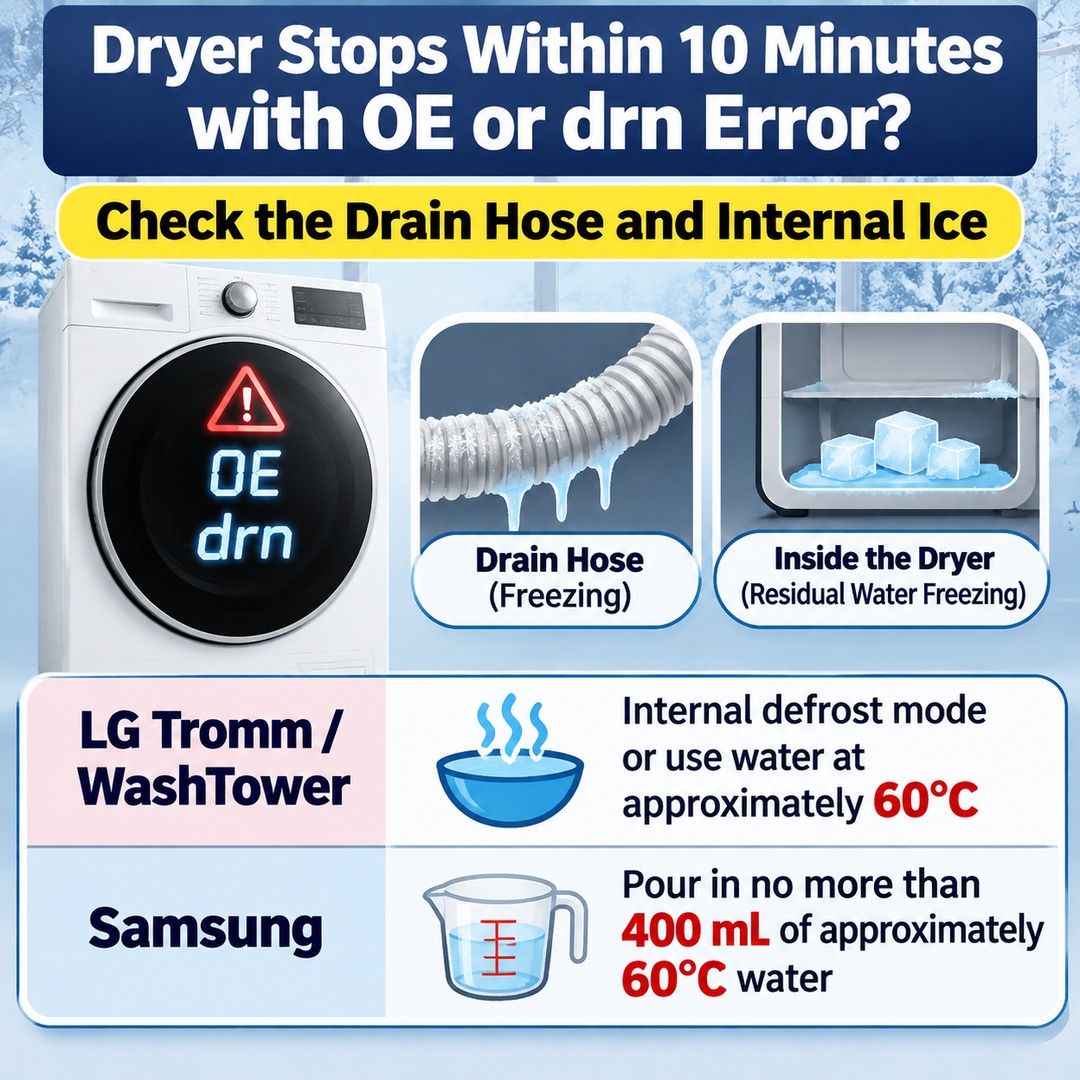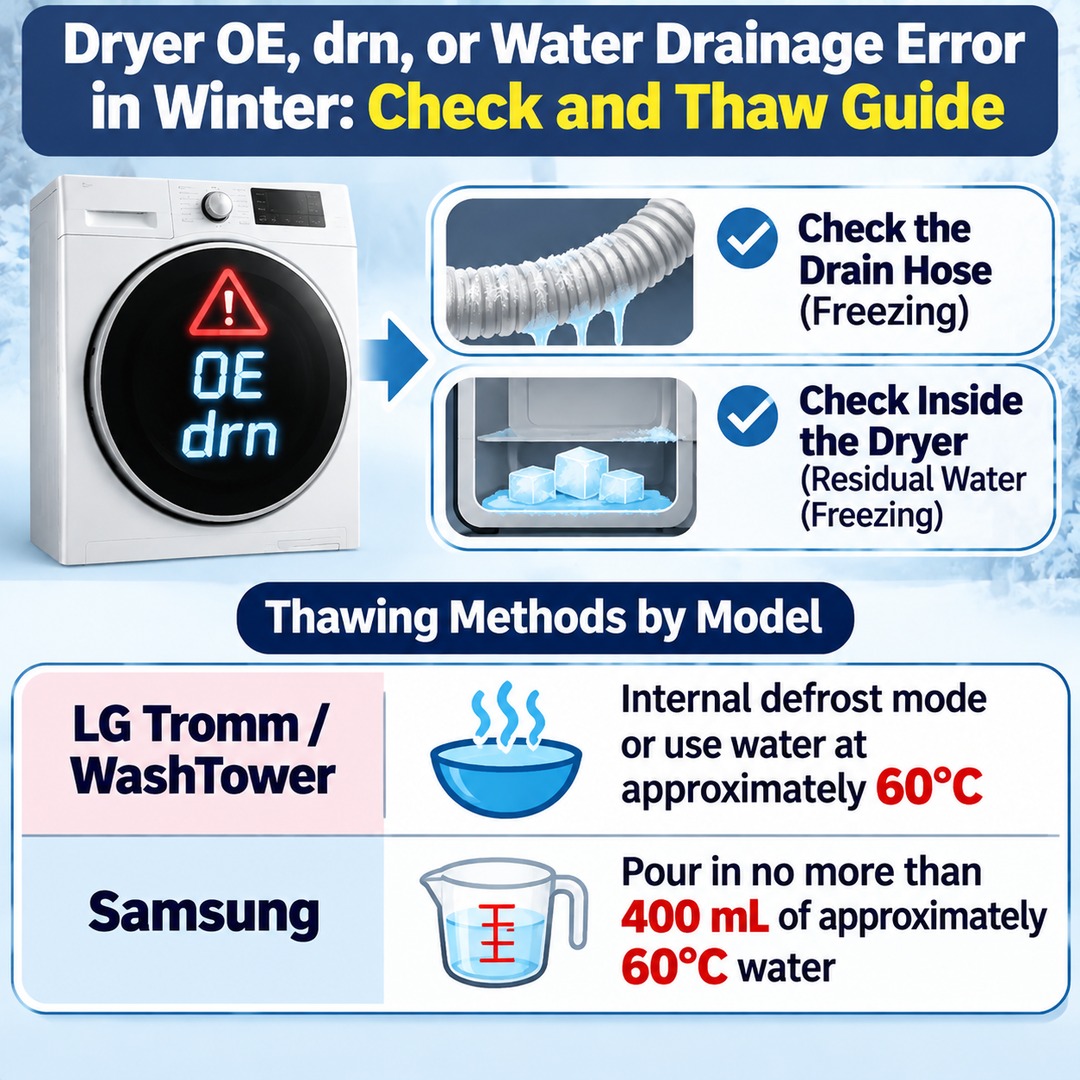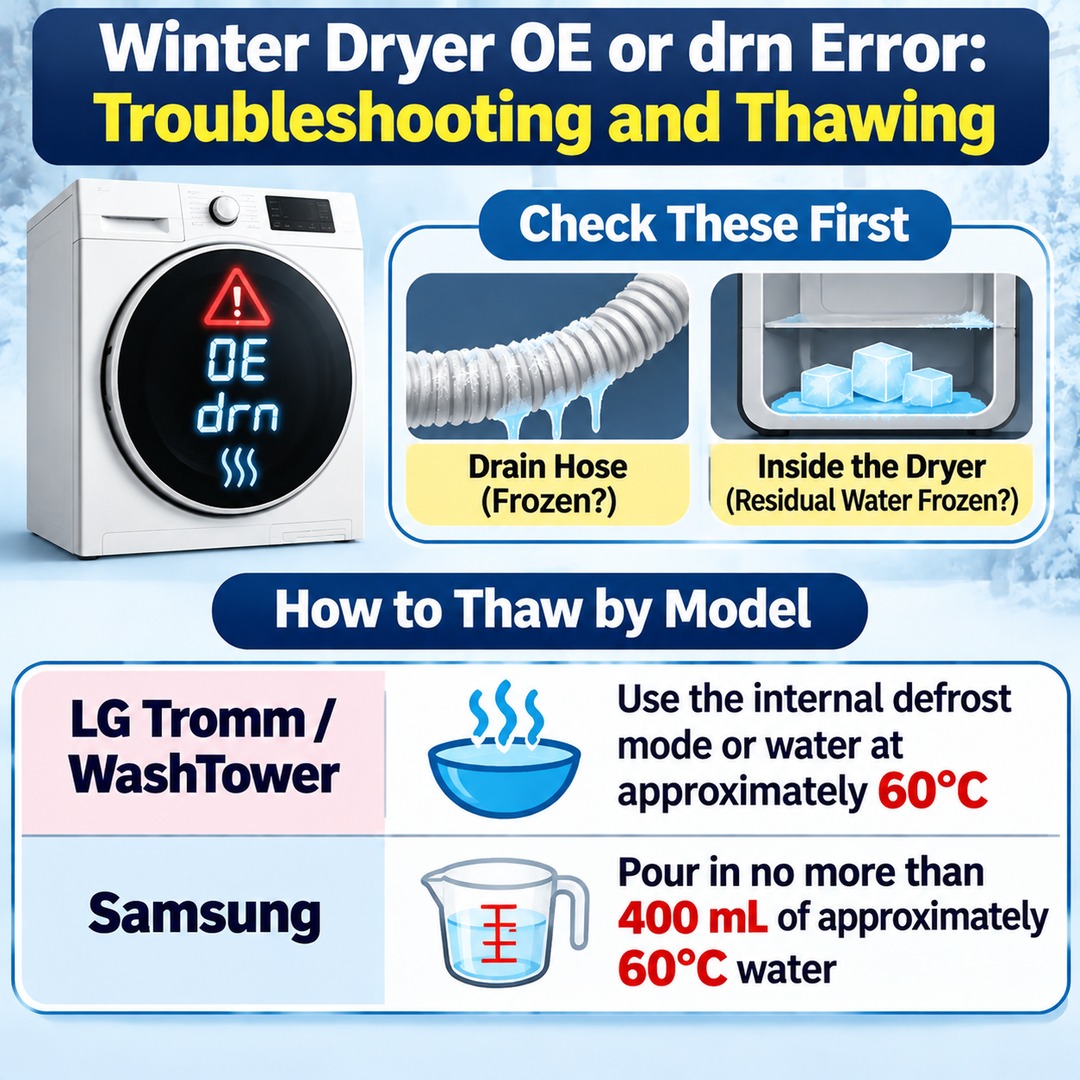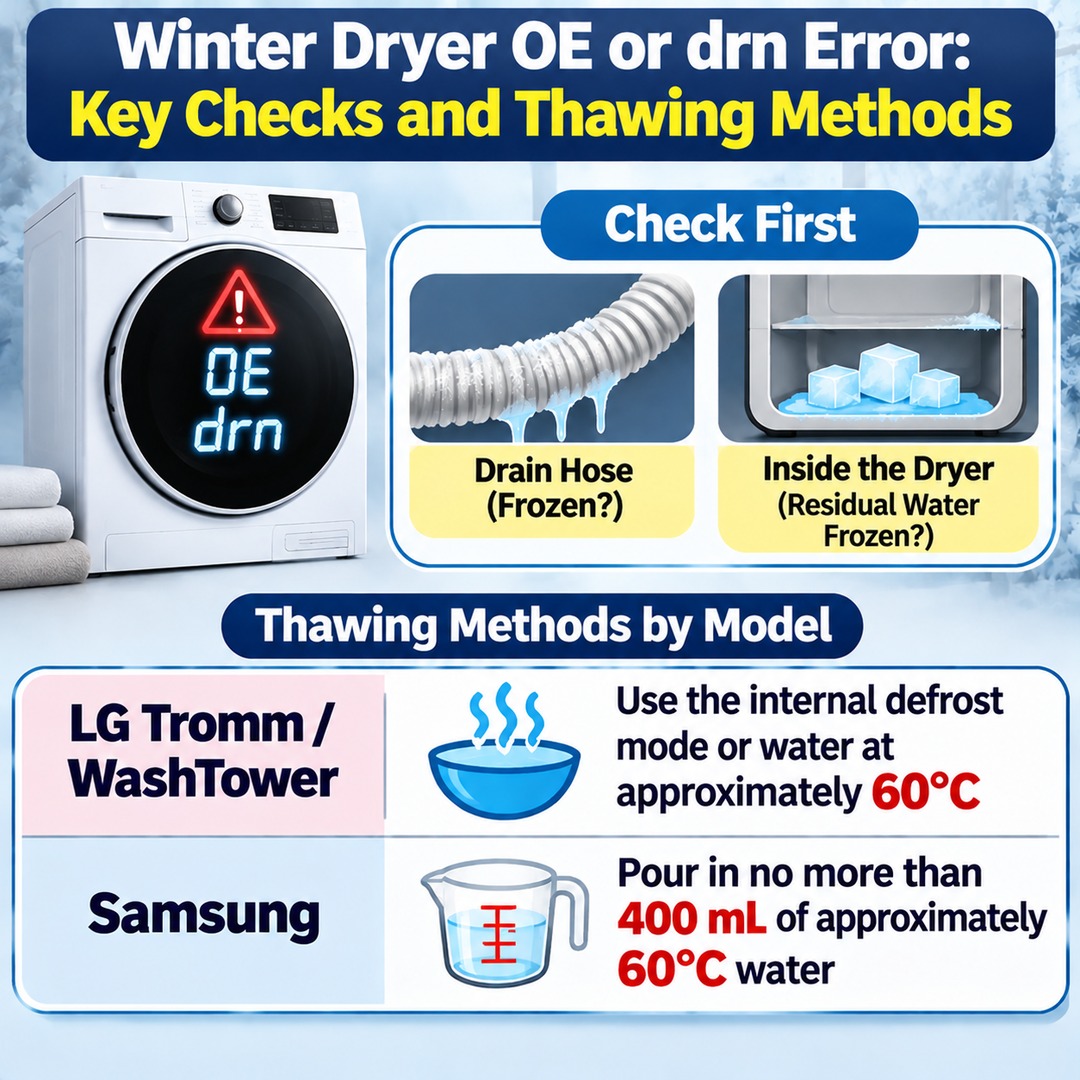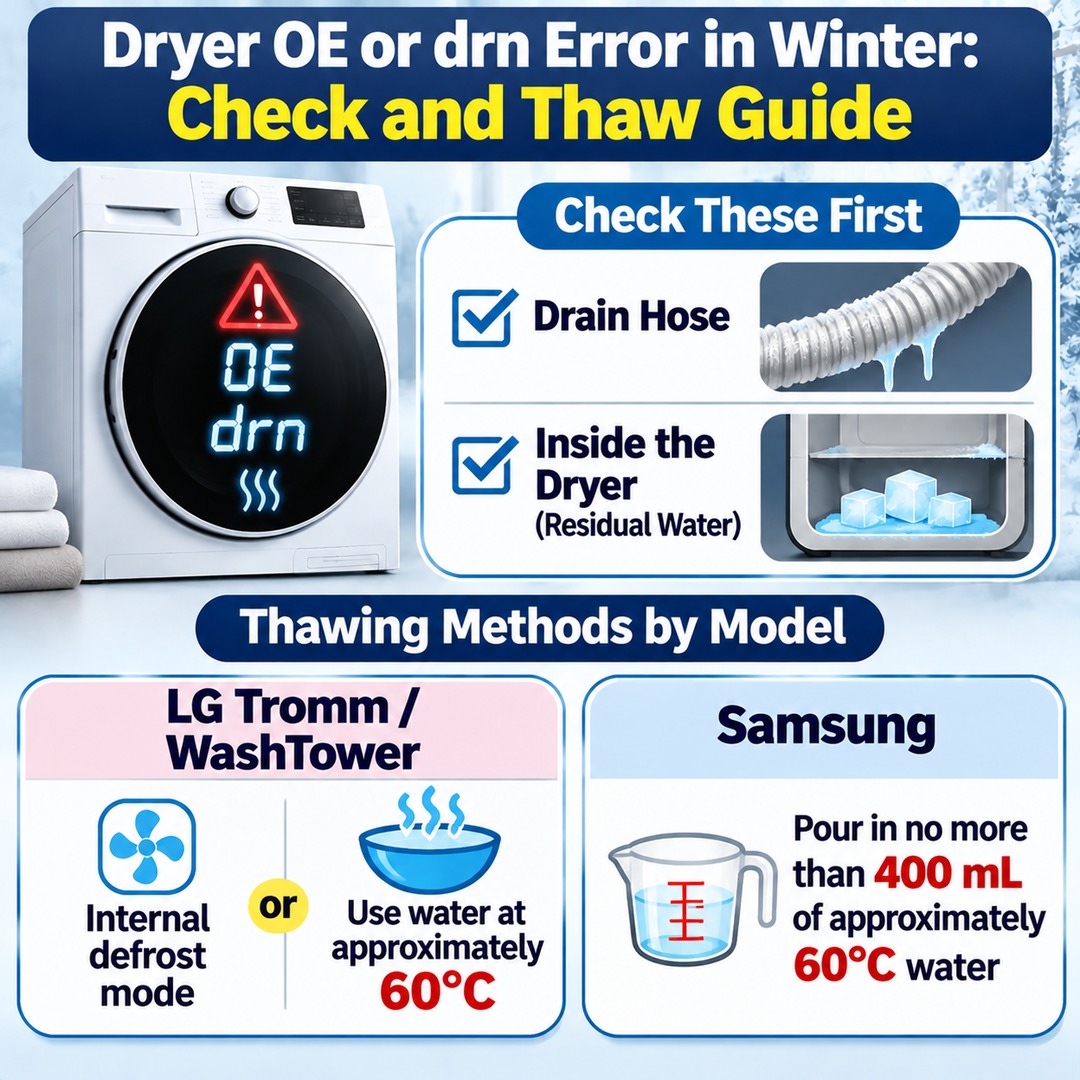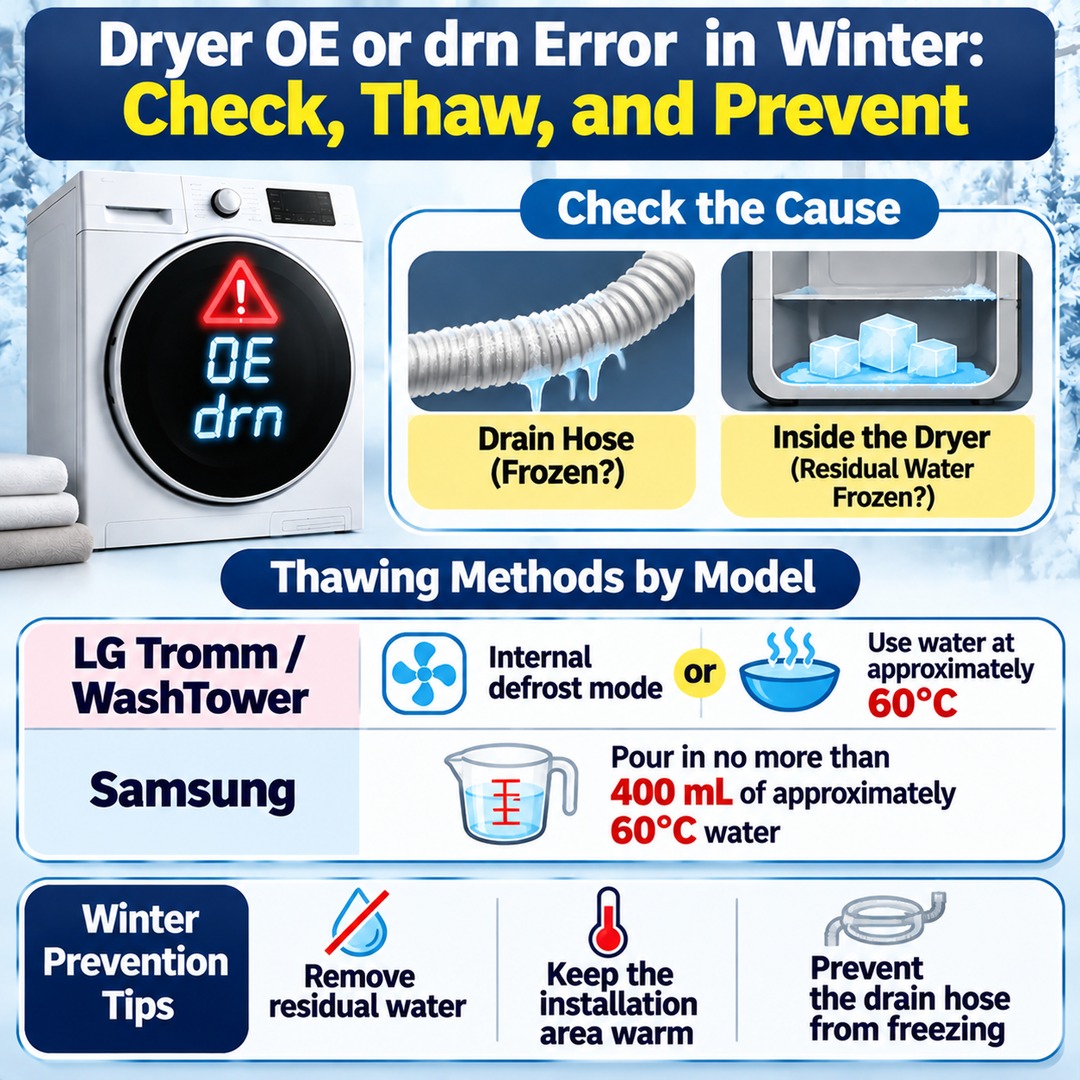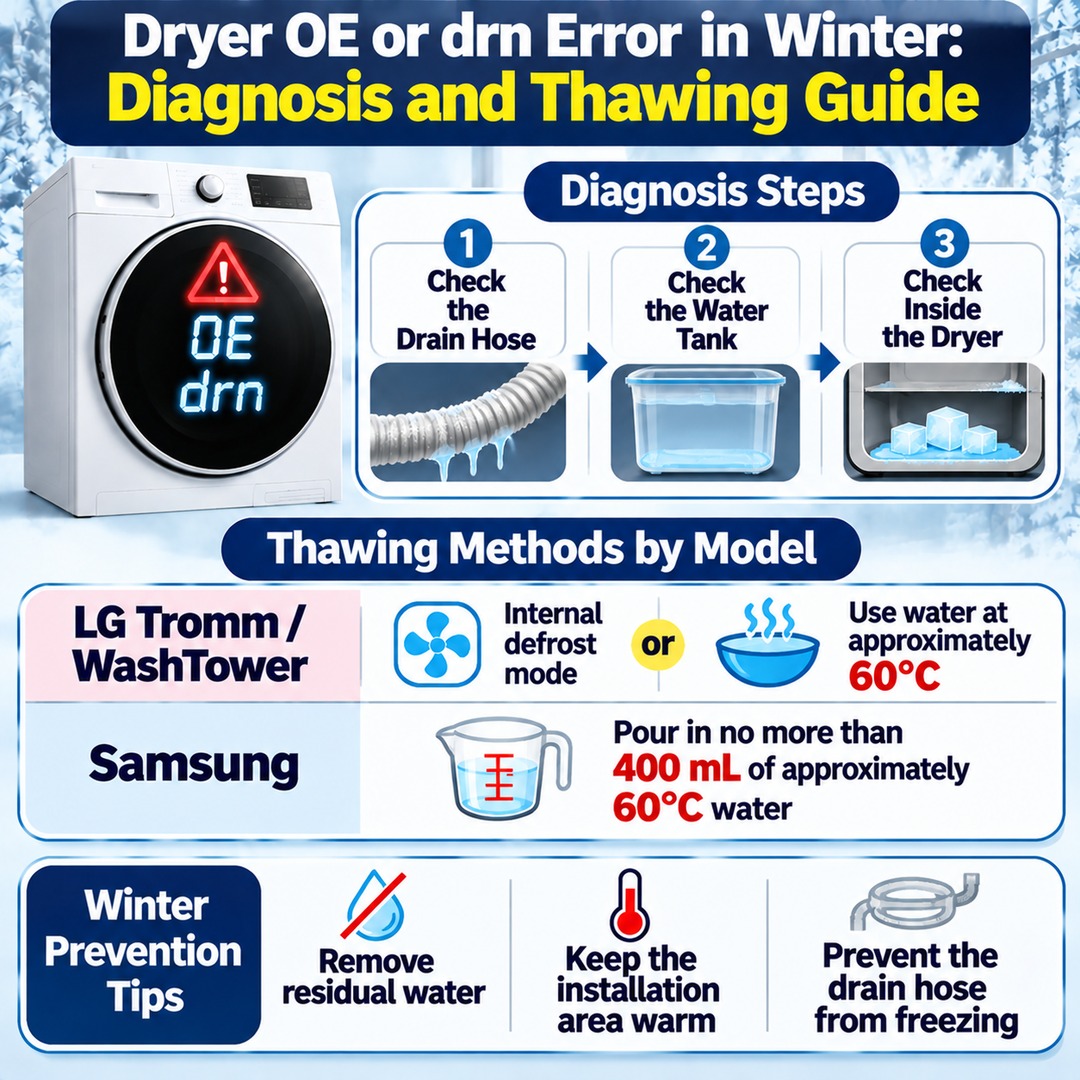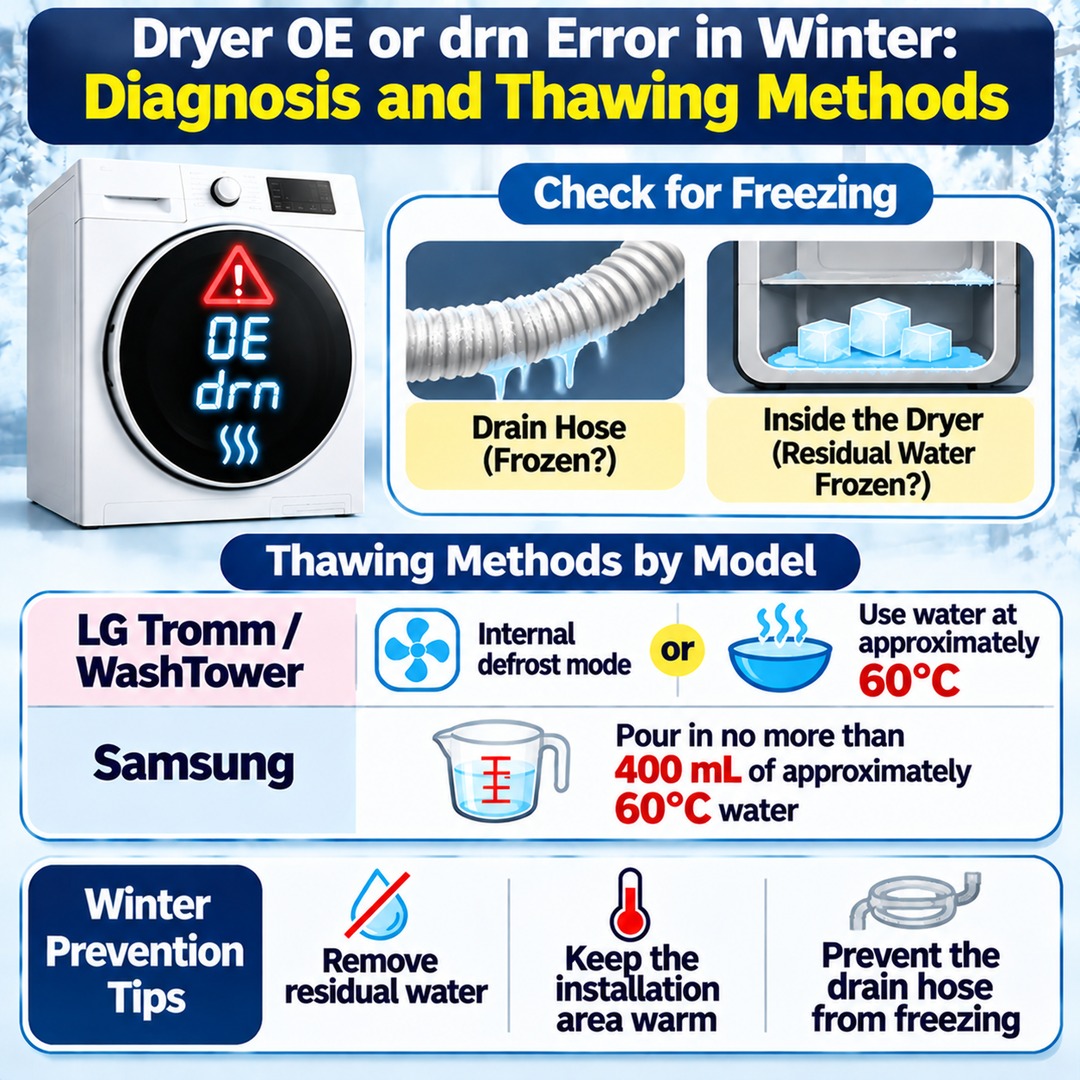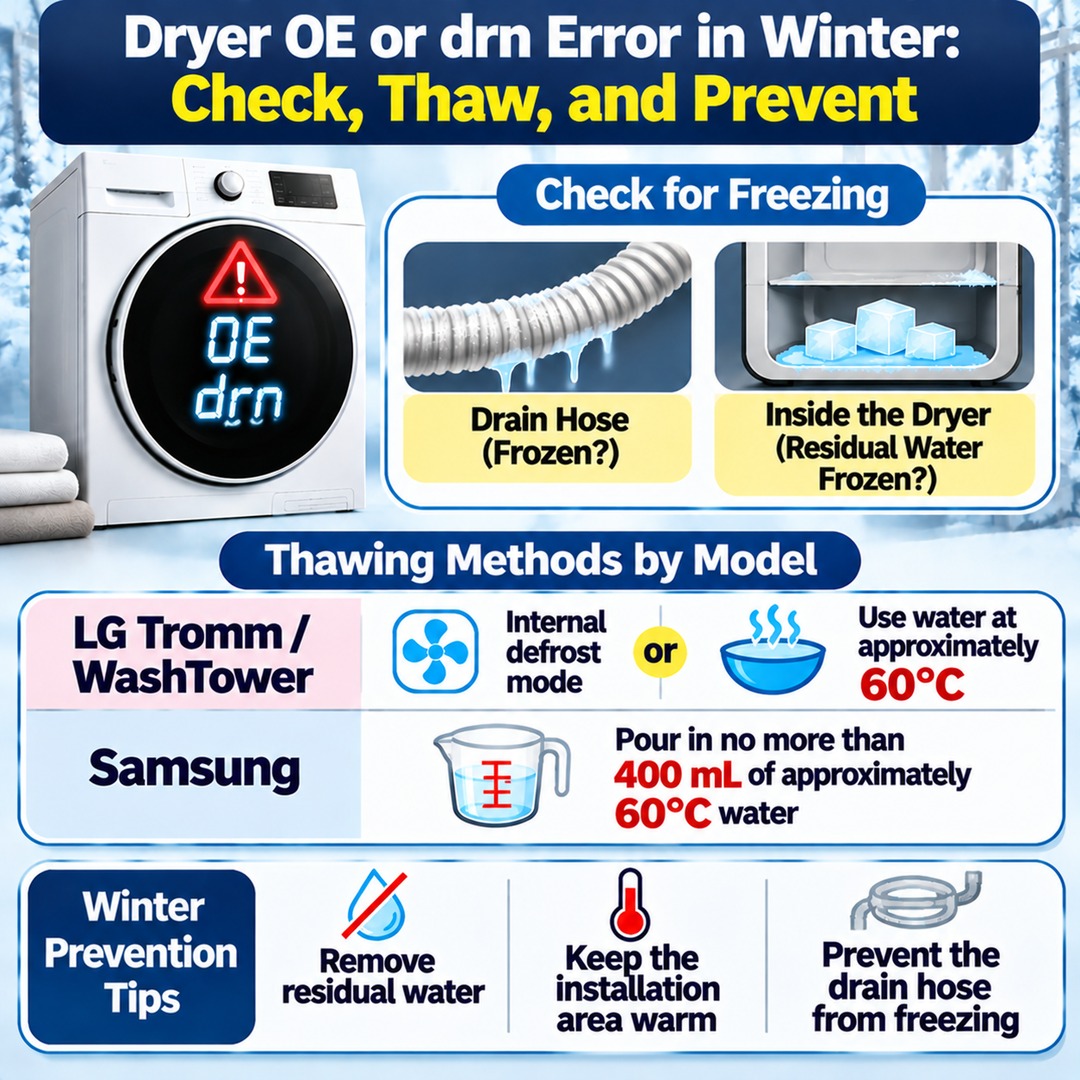

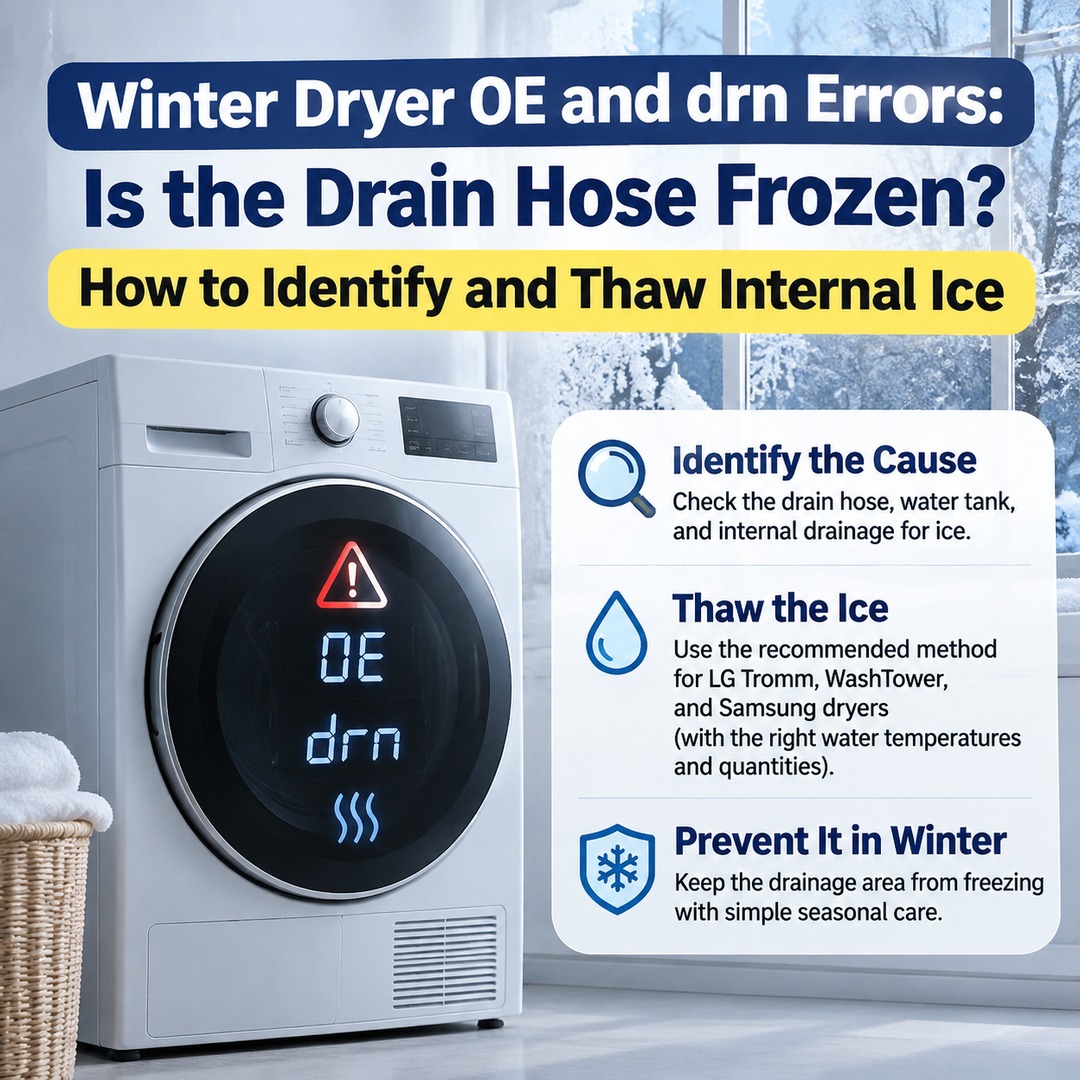
If your dryer stops within 10 minutes of starting and displays an OE, drn, or water drainage error during winter, check not only the drain hose but also whether residual water inside the appliance has frozen. Depending on the model, LG Tromm and WashTower dryers offer an internal defrost mode or a method using water at approximately 60°C. Samsung dryers provide instructions for thawing internal ice by pouring no more than 400 mL of water at approximately 60°C into the compartment where the water tank is installed.\n\nEven when the error code is the same, the appropriate solution depends on where the ice has formed and which dryer you use. Rather than repeatedly restarting the appliance, inspect the external drain hose, water tank, and internal drainage system in that order.\n\n## Why Does a Dryer Display an OE or drn Error Within 10 Minutes?\n\nWhen freezing occurs in winter, an LG Tromm dryer may stop within 10 minutes of starting and display an OE, water drainage, empty water container, or drn error.\n\nWater produced during the drying process must be drained from the appliance. If the drainage path or an internal section of the dryer freezes, the water may no longer drain properly.\n\nPay particular attention to possible freezing if your dryer is used in any of the following conditions:\n\n- The dryer is installed on a balcony where windows are frequently left open.\n- The drain hose is installed near an outdoor area.\n- The drain hose has bends or low sections where water can collect.\n- The water tank is left unemptied for an extended period after drying.\n- The dryer remains unused for a long time in subzero temperatures.\n\nHowever, an OE or drn error does not automatically confirm that freezing is the cause. If the same symptoms continue even though the hose is not frozen, other possible causes, such as a drainage pump problem, may require inspection.\n\n## How Can You Tell Whether the Drain Hose or the Dryer Interior Is Frozen?\n\nThe first thing to inspect is the external drain hose connected to the dryer. If you find a frozen section, address the hose first. If the hose and water tank appear normal but water still cannot drain, check for ice inside the appliance.\n\nSigns That the Drain Hose May Be Frozen\n\nCheck whether water has collected in sections where the drain hose is bent or sags downward. These areas may have frozen.\n\nYou can gently press the hose by hand to check whether a particular section feels unusually rigid or contains ice. Do not forcibly bend or pull a frozen hose, as this could damage it.\n\nSigns That the Water Tank May Be Frozen\n\nIf your dryer uses a water tank instead of a drain hose, check whether residual water inside the tank has frozen.\n\nIf you remove the tank and see ice inside, or the water cannot be emptied normally, address the frozen tank first.\n\nSigns That the Dryer Interior May Be Frozen\n\nIf the drain hose and water tank appear normal but the dryer continues to display the same error, water remaining in the internal drainage path may have frozen.\n\nIn this situation, thawing the external hose alone may not solve the problem. Follow the manufacturer's recommended procedure for thawing the appliance's interior.\n\n## How to Thaw a Frozen Drain Hose with Warm Towels\n\nRather than dismantling the entire drain hose, concentrate on the section that is frozen.\n\nFor LG Tromm dryers and WashTower units, the recommended method is to immerse the frozen section of the drain hose in warm water for approximately 10 minutes. If removing the hose is difficult, wrap it and its connection area with a towel soaked in warm water for approximately 10 minutes.\n\nSamsung recommends wrapping the frozen section of the hose with a towel soaked in warm water for approximately 20 minutes. If the hose can be safely disconnected, it can also be immersed in warm water to thaw.\n\nKeep the following precautions in mind:\n\n- Do not pour boiling water directly onto the hose.\n- Do not forcibly bend a frozen hose.\n- Do not force the hose connections apart.\n- If you disconnect the hose for thawing, reconnect it to its original position afterward.\n- Check for leaks after thawing.\n\nLG specifically warns that failing to reconnect the drain hose properly can cause water leaks.\n\n## How to Thaw Internal Ice in LG Tromm and WashTower Dryers\n\nSome LG dryers have a built-in defrost mode, depending on the model. If your appliance supports this feature, check whether it is available before pouring water into the dryer.\n\n1. Models with a Built-In Defrost Mode\n\nFor certain LG standalone dryers, follow these steps:\n\n1. Turn off the dryer and remove all laundry from the drum.\n2. On applicable standard models, press the Power button, then hold the Time Reduction button for 3 seconds.\n3. Press the Start button to activate defrost mode.\n\nFor WashTower models, the recommended procedure is to press and hold the Steam and Tub Clean buttons simultaneously for 3 seconds, then press Start to activate defrost mode.\n\nThe display may show a defrost duration of 3 hours. However, if defrosting finishes earlier, the cycle ends automatically with an alert.\n\nThis feature is not available on every model. Check your appliance manual before attempting the procedure.\n\n2. Models Without a Built-In Defrost Mode\n\nAnother method recommended by LG involves pouring warm water into the compartment beneath the filters to melt internal ice.\n\n1. Turn off the dryer and remove all laundry.\n2. Remove both the internal and external filters.\n3. Pour no more than 1 L of warm water at approximately 60°C into the empty filter compartment.\n4. Reinstall the filters.\n5. Wait approximately 30 minutes.\n6. Turn on the dryer and use the Start/Pause button to check whether it operates normally.\n\nIt is important to follow the specified water quantity. Adding too much water may cause leakage from the bottom of the appliance, while excessively hot water may cause burns or damage the dryer.\n\nIf your dryer is stacked or installed as part of a WashTower, do not climb onto the appliance or use an unstable chair to reach the water compartment. If it is difficult to access the area safely, arrange a service inspection.\n\n## How to Thaw Internal Ice in Samsung Dryers Using No More Than 400 mL of Warm Water\n\nSamsung dryers use a different internal thawing procedure from LG models. Samsung Electronics Service recommends pouring no more than 400 mL of warm water at approximately 60°C into the compartment where the water tank is installed.\n\nFollow these steps:\n\n1. Turn off the dryer.\n2. Remove all laundry from the drum.\n3. Remove the water tank.\n4. Pour no more than 400 mL of warm water at approximately 60°C into the compartment inside the appliance where the tank fits.\n5. Wait approximately 1 hour.\n6. Start the dryer and check whether drainage works normally.\n\nThe 400 mL figure specified by Samsung is the maximum amount of water to use for internal thawing. Do not confuse it with the 1 L guideline for applicable LG dryers.\n\nAfter thawing, you may hear a sound resembling ice breaking as the pump motor operates. Samsung Electronics Service explains that this noise can occur as ice remaining inside the appliance breaks apart.\n\n## What Are the Differences Between LG and Samsung Dryer Thawing Methods?\n\nBoth manufacturers recommend checking the drain hose and water tank for freezing first. However, the location and amount of water used for internal thawing differ between their products.\n\n| Category | LG Tromm and WashTower | Samsung dryers |\n| --- | --- | --- |\n| Drain hose | Warm towel for approximately 10 minutes | Warm towel for approximately 20 minutes |\n| Internal thawing | Model-specific defrost mode or filter compartment | Water tank compartment |\n| Water temperature | Approximately 60°C | Approximately 60°C |\n| Water quantity | No more than 1 L | No more than 400 mL |\n| Waiting time | Approximately 30 minutes or defrost mode | Approximately 1 hour |\n\nThese are representative methods provided by the manufacturers and do not necessarily apply to every model.\n\nIn particular, LG defrost mode button combinations vary by model, and some appliances do not support defrost mode at all. Samsung procedures may also differ depending on the dryer's capacity and internal design.\n\nCheck your model number and follow the customer support instructions for that specific appliance.\n\n## What If the OE or drn Error Returns After Thawing?\n\nIf the error continues after thawing the drain hose and dryer interior, investigate possible causes other than freezing.\n\nAvoid repeatedly attempting to fix the appliance yourself in situations such as these:\n\n- Water still does not drain even after the hose and tank have thawed.\n- The same error appears again when the dryer is restarted after thawing.\n- Water continues leaking from the front or bottom of the dryer.\n- Unusual noises repeatedly come from the drainage pump.\n- The dryer has been installed outdoors and exposed to subzero temperatures for an extended period.\n\nSamsung Electronics Service specifically explains that when freezing in the internal drainage section prevents the drainage pump from operating, water produced during drying may flow out from the front of the appliance. If a leak occurs, stop using the dryer, wipe up the water, and inspect the appliance's condition.\n\nLG Electronics also warns that dryers installed outdoors and exposed to below-freezing temperatures for extended periods may not be restored using ordinary thawing methods. In such cases, have a qualified service technician inspect the appliance for possible component damage.\n\n## How Can You Prevent Your Dryer from Freezing in Winter?\n\nAfter thawing, it is important to manage residual water so that it does not remain in the dryer's internal components or drainage system.\n\nLG recommends the following methods for removing residual water:\n\n- For dryers connected to a drain hose, point the hose downward to remove water remaining inside.\n- Install the hose without bends or kinks.\n- For dryers with a water tank, empty it completely after each use.\n- If considerable residual water remains after drying, run the Air Dry cycle for 2–3 minutes.\n- If your model has a dedicated safe-drain hose, use it to remove residual water from the appliance.\n- For dryers installed outdoors, consider moving them to a warmer location or protecting them from exposure to cold outdoor air.\n\nSamsung also recommends emptying the water tank after every use and removing residual water from the drain hose when one is installed.\n\nDo not stop at emptying the water tank after drying. It is also important to manage water remaining in the drain hose and inside the appliance.\n\n## Frequently Asked Questions\n\n### Q. Does a dryer that stops within 10 minutes always have frozen water inside?\n\nNo. LG explains that freezing during winter can cause OE or drn errors to appear within 10 minutes, but the error alone does not confirm that ice is the cause. Check the hose and water tank. If the error continues after internal thawing, the appliance may need inspection.\n\n### Q. Will thawing the drain hose also melt ice inside the dryer?\n\nNot necessarily. The external hose and the inside of the appliance are separate areas. If drainage still does not work after thawing the hose, check separately for internal freezing.\n\n### Q. Can I pour 1 L of water into a Samsung dryer?\n\nSamsung Electronics Service recommends using no more than 400 mL of water at approximately 60°C. Do not apply the 1 L guideline for LG dryers to a Samsung appliance.\n\n### Q. Is a LG WashTower thawed in the same way as a standard Tromm dryer?\n\nThe button combination for internal defrost mode may differ. For WashTower models, the recommended procedure involves pressing and holding the Steam and Tub Clean buttons simultaneously for 3 seconds. However, this feature may not be available on every model, so check the manual for your specific appliance.\n\n### Q. Can I use a dryer on a balcony during winter?\n\nThis depends on the installation environment and the appliance's permitted operating temperature. Prolonged exposure to subzero temperatures can cause residual water inside the dryer or the drain hose to freeze. Manage the installation environment and check the manufacturer's operating conditions.