Even when indoor humidity is 50%, it is not unusual for water droplets to form on windows. Condensation is not determined by humidity alone. It also depends on the indoor temperature and the surface temperature of the glass and window frames. The location and recurring pattern of the moisture can help determine whether the cause is excess indoor moisture or an insulation or sealing problem affecting a particular window.
In particular, if you have ventilated the room and reduced humidity but the bottom edge or corners of the same window continue to get wet, managing indoor humidity alone may not solve the problem. You should also inspect the window system and the surrounding wall structure.
Why Does Window Condensation Occur Even at 50% Indoor Humidity?
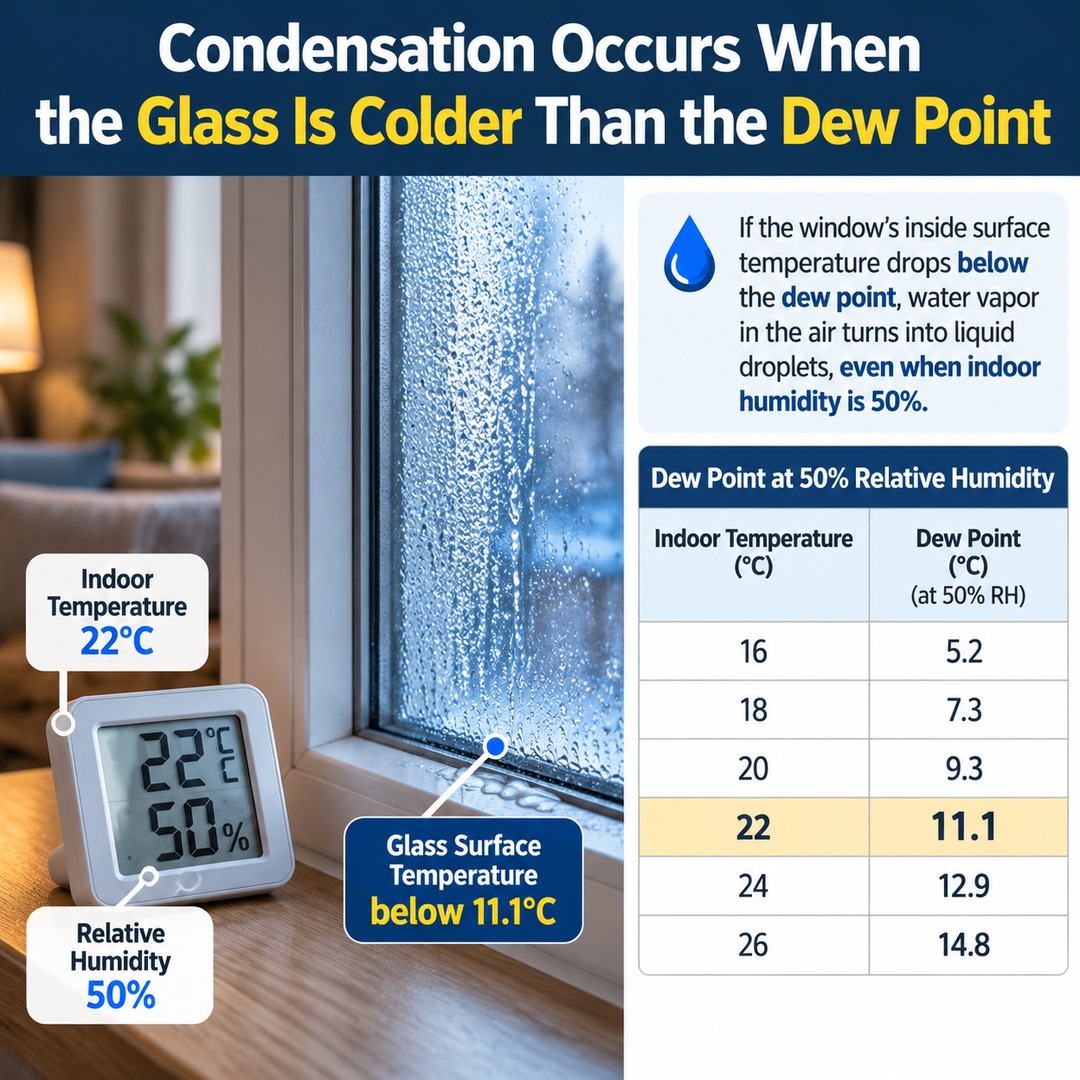
The cause is the difference between the dew point and the window surface temperature. The dew point is the temperature at which water vapor in the air begins to turn into liquid droplets. If the inside surface of a window becomes colder than this temperature, condensation can form even when indoor humidity is 50%.
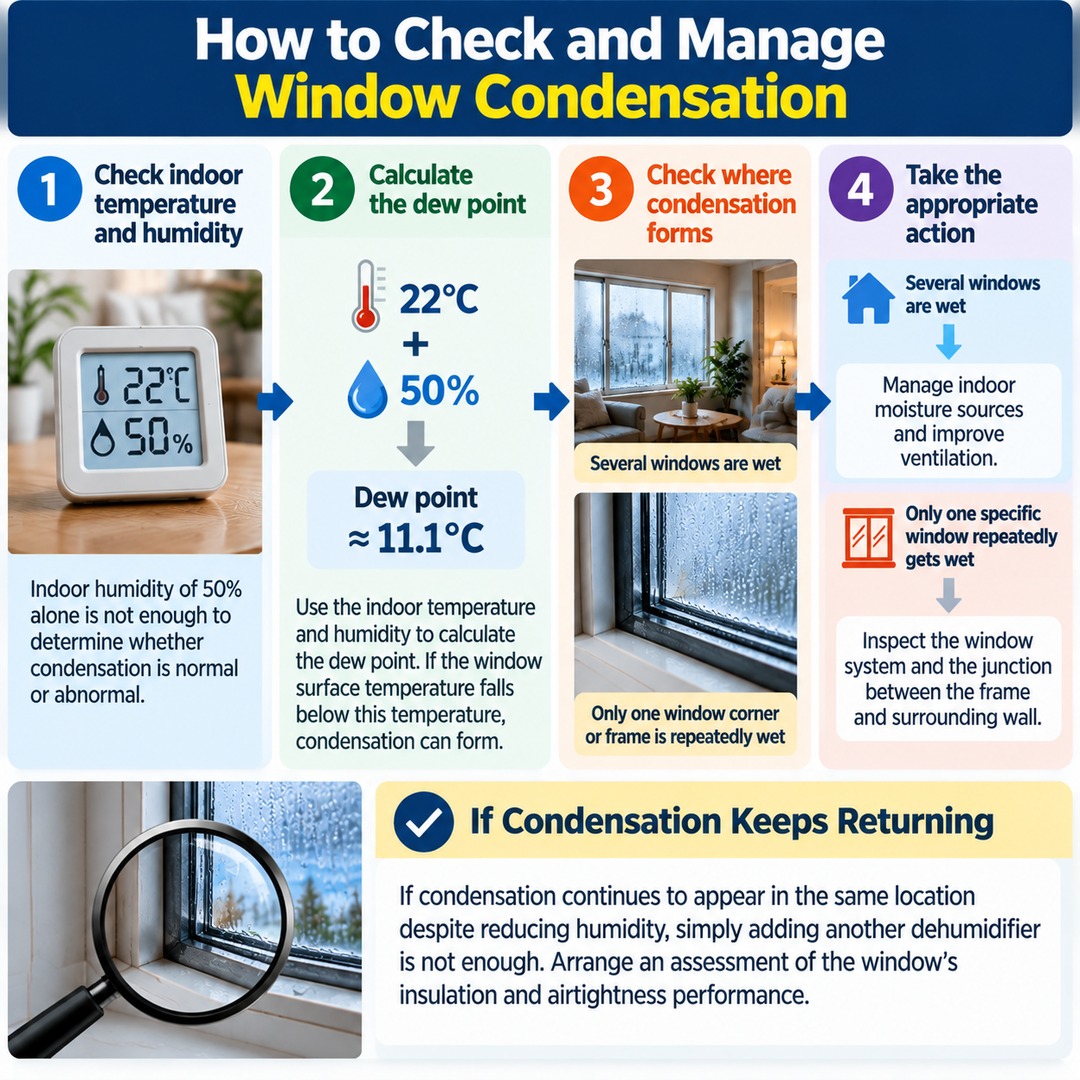
For example, if the indoor temperature is 22°C and relative humidity is 50%, the dew point is approximately 11.1°C. The fact that indoor air is 22°C does not mean the glass surface also remains at 22°C. When outdoor temperatures fall, the indoor-facing surfaces around the edges of the glass and the window frame can also become colder.
The dew points at different indoor temperatures, assuming the same relative humidity, are as follows:
| Indoor Temperature | Relative Humidity | Dew Point |
|---|---|---|
| 20°C | 50% | Approximately 9.3°C |
| 22°C | 50% | Approximately 11.1°C |
| 25°C | 50% | Approximately 13.9°C |
*Author's calculation using the Magnus approximation formula; values rounded.*
Even if the indoor temperature rises, the dew point also rises when relative humidity remains unchanged. Conversely, lowering indoor humidity reduces the dew point, making it less likely for water droplets to form on window surfaces.
The important point is that the reading on a hygrometer and the temperature of the window surface provide two different kinds of information. Even if a hygrometer displays 50%, condensation can still occur when the corners of the glass or the window frame fall below the dew point.
How Can You Distinguish Insufficient Ventilation from Window Insulation Problems?
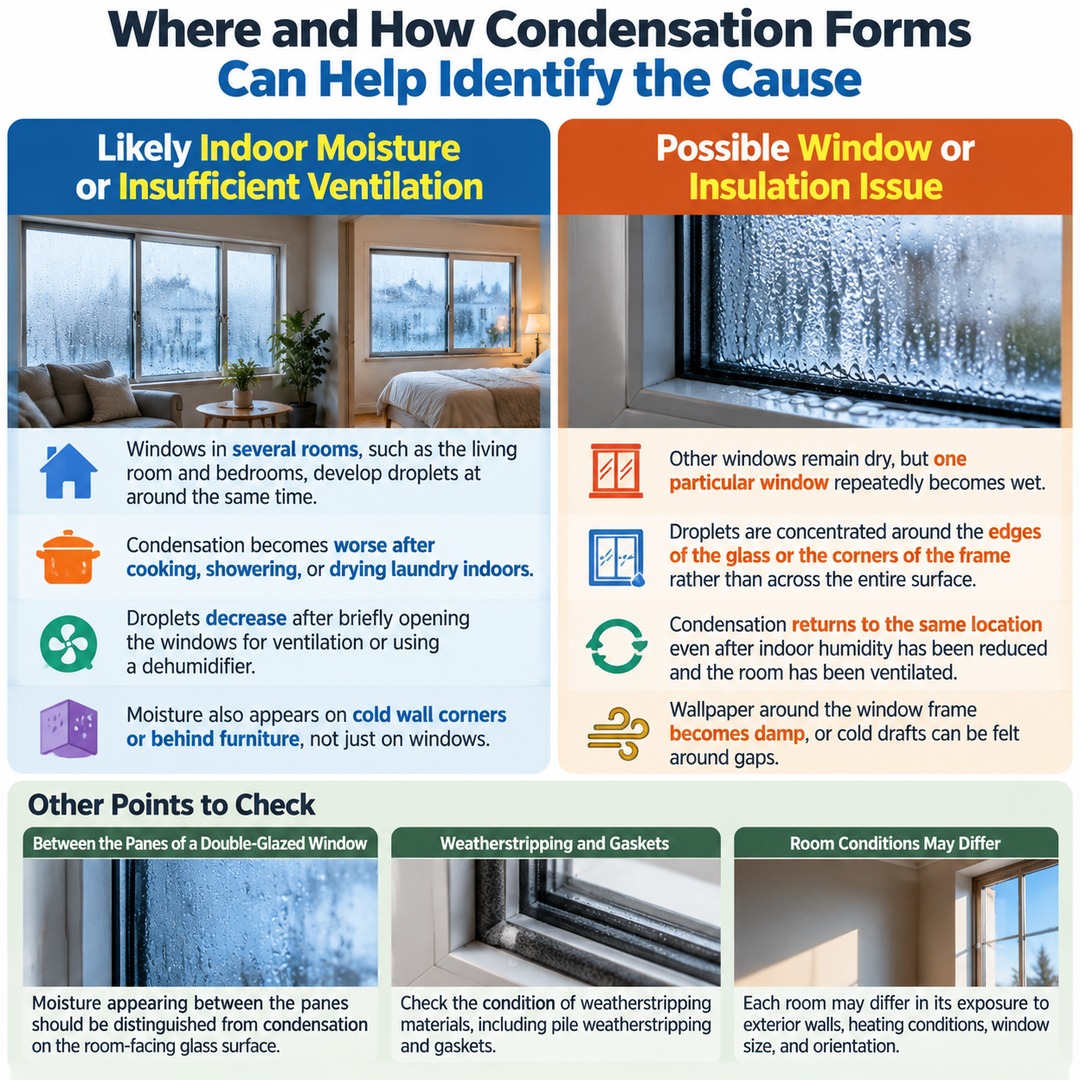
Looking at where condensation forms and how widely it spreads can help distinguish between these two causes. If windows in several rooms become wet in similar ways, first examine indoor moisture levels and ventilation. If moisture is concentrated in a specific area of just one window, a temperature drop around the window system or its joints may be responsible.
Signs that indoor moisture or insufficient ventilation may be contributing:
Windows in several areas, such as the living room and bedrooms, develop droplets at around the same time.
Condensation becomes worse after cooking, showering, or drying laundry indoors.
Droplets decrease after briefly opening the windows for ventilation or using a dehumidifier.
Moisture also appears on cold wall corners or behind furniture, not just on windows.
Signs that the windows or insulation may need further inspection:
Windows in other rooms remain dry, but one particular window repeatedly becomes wet.
Droplets are concentrated around the edges of the glass or the corners of the frame rather than across the entire glass surface.
Condensation returns to the same location even after indoor humidity has been reduced and the room has been ventilated.
Wallpaper around the window frame becomes damp, or cold drafts can be felt around gaps.
However, these signs alone cannot establish that the window is defective or that there was a construction fault. Each room may differ in its exposure to exterior walls, heating conditions, window size, and orientation.
In particular, moisture appearing between the panes of a double-glazed window should be distinguished from ordinary condensation on the room-facing glass surface. The condition of the window's weatherstripping materials, including pile weatherstripping and gaskets, may need to be checked.
What Does the 50% Humidity Level Mean Under the 2026 Condensation Design Standards for Apartment Buildings?
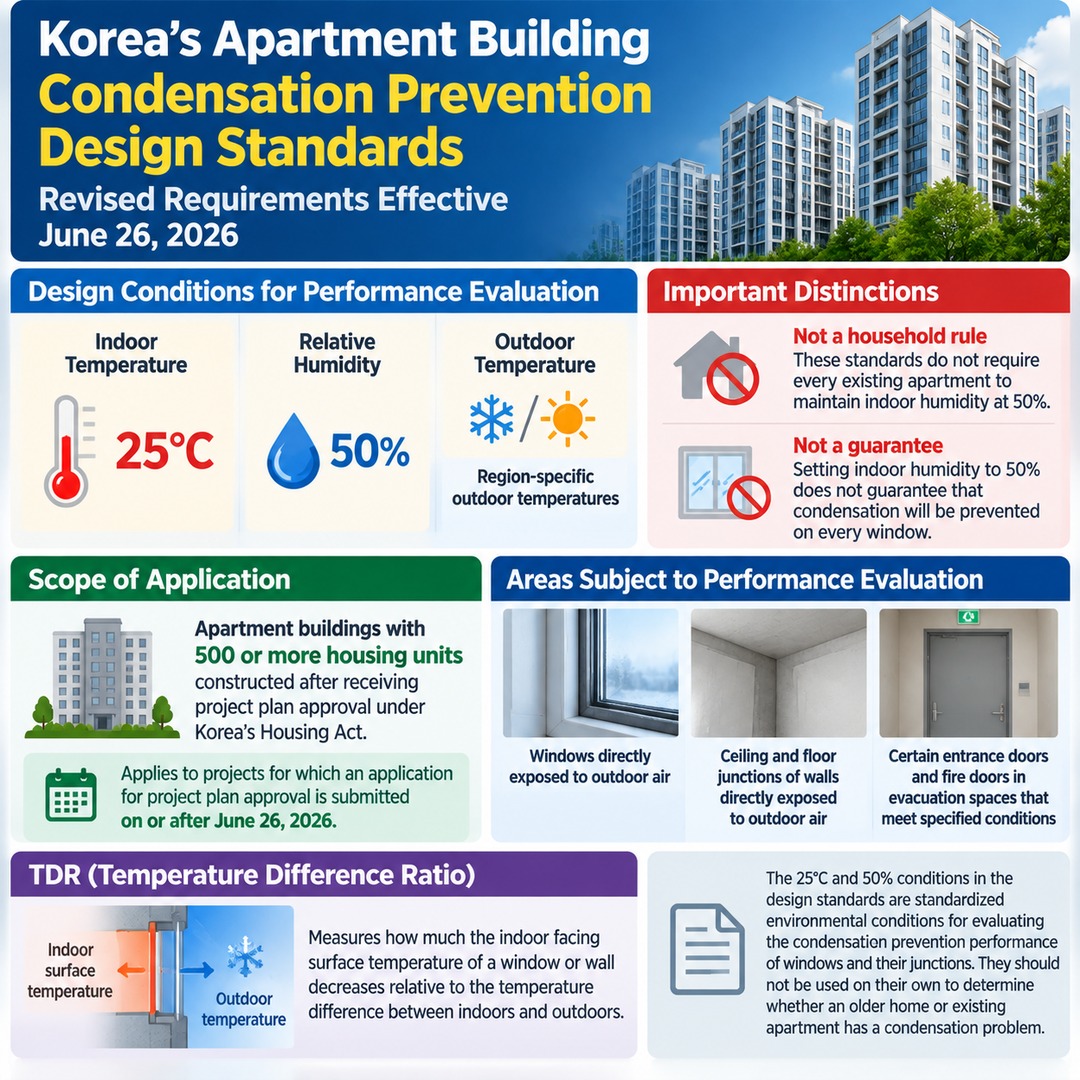
The Ministry of Land, Infrastructure and Transport's Design Standards for Preventing Condensation in Apartment Buildings have been subject to revised requirements effective June 26, 2026. These standards establish design conditions of 25°C indoor temperature, 50% relative humidity, and region-specific outdoor temperatures for evaluating condensation-prevention performance in apartment buildings.
One distinction is particularly important.
These standards are not a household rule requiring every existing apartment to maintain indoor humidity at 50%. Nor do they guarantee that setting humidity to 50% will prevent condensation on every window.
The standards apply to apartment buildings with 500 or more housing units that are constructed after receiving project-plan approval under Korea's Housing Act. The revised 2026 standards apply to projects for which an application for project-plan approval is submitted on or after June 26, 2026.
The areas subject to performance evaluation include:
Windows directly exposed to outdoor air
Ceiling and floor junctions of walls directly exposed to outdoor air
Certain entrance doors and fire doors in evacuation spaces that meet specified conditions
The indicator used in these standards is TDR (Temperature Difference Ratio). It measures how much the indoor-facing surface temperature of a window or wall decreases relative to the temperature difference between indoors and outdoors.
Therefore, the 25°C and 50% conditions in the design standards should be understood as standardized environmental conditions for evaluating the condensation-prevention performance of windows and their junctions. They should not be used on their own to determine whether an older home or existing apartment has a condensation problem.
What Steps Should You Take to Reduce Window Condensation?
Rather than simply trying to lower humidity as much as possible, it is important to manage periods when large amounts of water vapor are produced and prevent window surfaces from becoming excessively cold. Following the steps below can help you determine whether ventilation is sufficient or whether additional inspection is necessary.
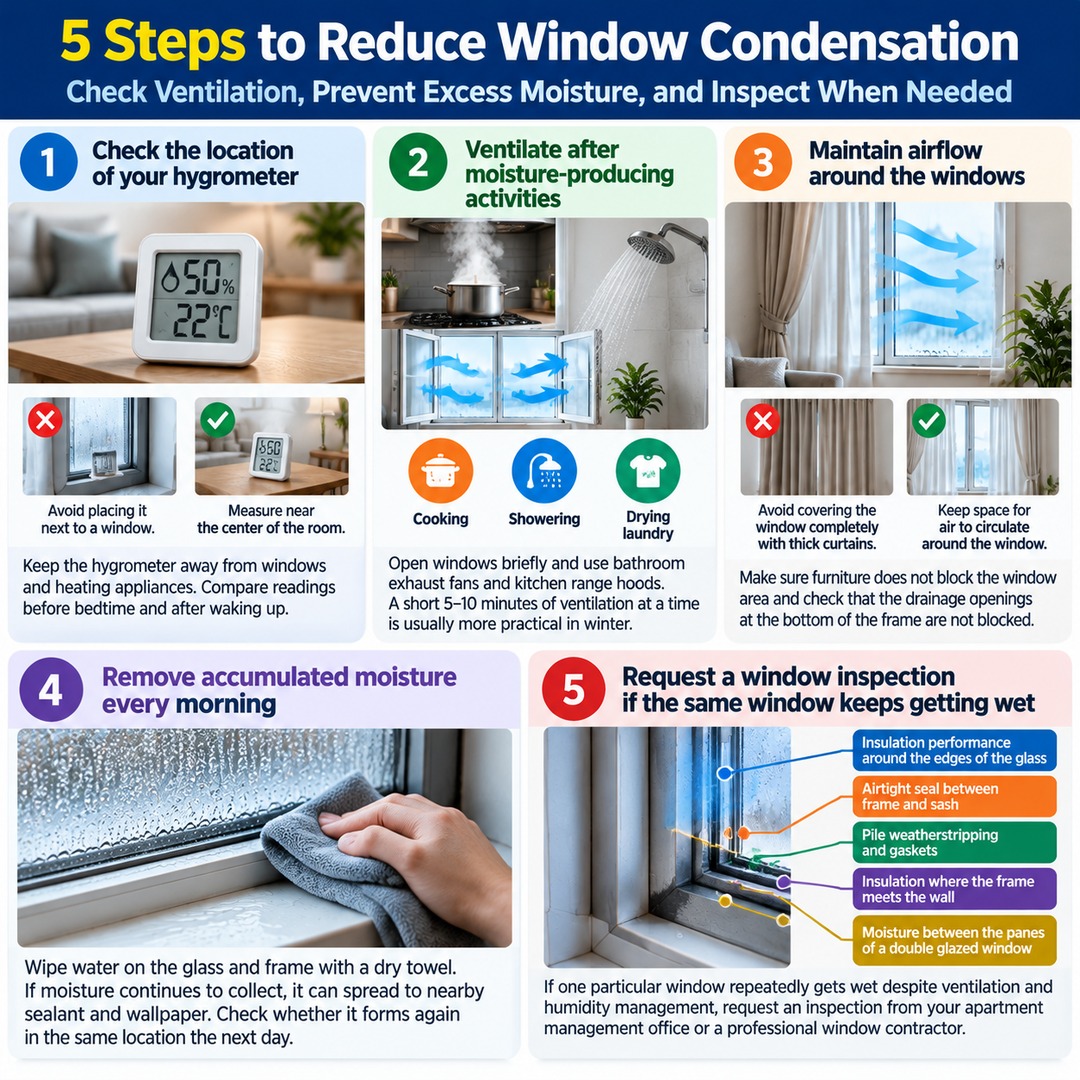
1. Check the location of your hygrometer.
Make sure your hygrometer is positioned near the center of the room. If it is placed directly beside a window or near a heating appliance, its reading may differ from the humidity level throughout the room. It is better to measure humidity near the center and compare readings before bedtime with those taken immediately after waking up.
2. Ventilate immediately after activities that produce moisture.
Cooking and showering can leave considerable amounts of water vapor indoors. Open the windows briefly to ventilate the room, and use bathroom exhaust fans and kitchen range hoods appropriately.
One approach to natural ventilation is to open the windows briefly for approximately 5–10 minutes at a time. During winter, replacing the air quickly is generally more practical for heating management than leaving windows open for extended periods and allowing indoor temperatures to drop significantly.
3. Maintain airflow around the windows.
If thick curtains completely cover a window or furniture blocks the area in front of the frame, warm indoor air may not circulate properly across the window surface. Try opening the curtains and leaving enough space for air to move around the window.
Also check that the drainage openings at the bottom of the window frame are not blocked by dust or debris.
4. Remove accumulated moisture every morning.
Wipe water collected on the glass and window frame with a dry towel. If water continues to accumulate in the frame, moisture may spread to nearby silicone sealant and wallpaper.
However, wiping away the water does not eliminate the underlying cause of condensation. Check whether it forms again in the same location the following day.
5. Request a window inspection if condensation repeatedly affects one particular window.
If the same window continues to get wet despite ventilation and humidity management, the following areas may need inspection:
Insulation performance around the edges of the glass
The airtight seal between the window frame and sash
Wear or damage to pile weatherstripping and gaskets
Insulation where the window frame meets the surrounding wall
Whether condensation is forming between the panes of a double-glazed window
Rather than dismantling the window frame yourself or applying additional silicone sealant without identifying the cause, it is better to request an inspection from your apartment management office or a professional window contractor.
Are Water Droplets on Windows Always a Sign of Condensation?
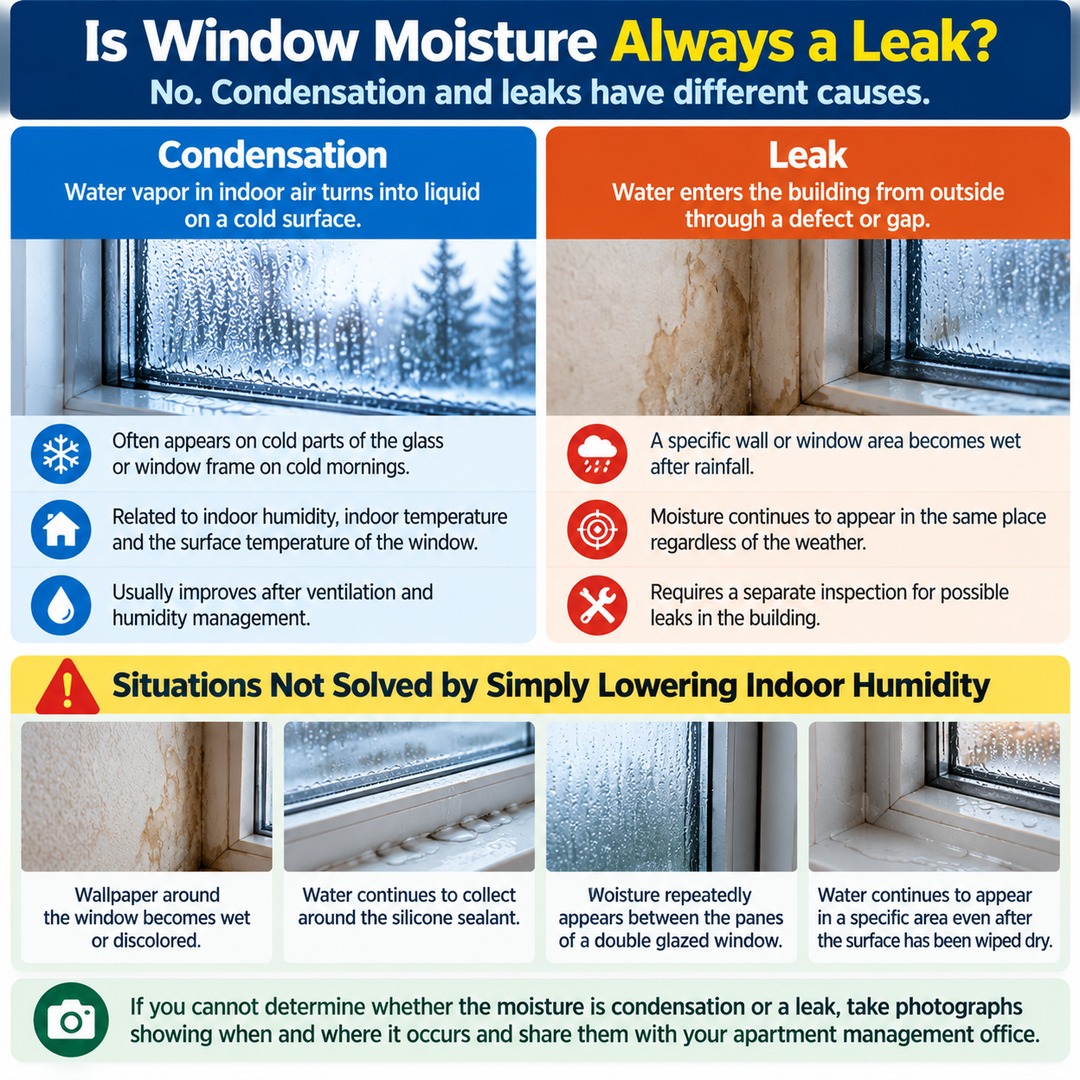
No. Condensation occurs when water vapor in indoor air turns into liquid on a cold surface. Water leaking into a building from outside has a different cause.
Ordinary condensation often appears on cold parts of the glass or window frame on cold mornings. By contrast, if a particular wall or the area around a window becomes wet after rainfall, or moisture continues to appear in the same place regardless of the weather, a possible leak should also be investigated separately.
You should not try to solve the following situations simply by lowering indoor humidity:
Wallpaper around the window becomes wet or discolored.
Water continues to collect around the silicone sealant.
Moisture repeatedly appears between the panes of a double-glazed window.
Water continues to appear in a specific area even after the surface has been wiped dry.
If you cannot determine whether the moisture is condensation or a leak, take photographs showing when and where it occurs and share them with your apartment management office. This can help with the inspection.
Frequently Asked Questions
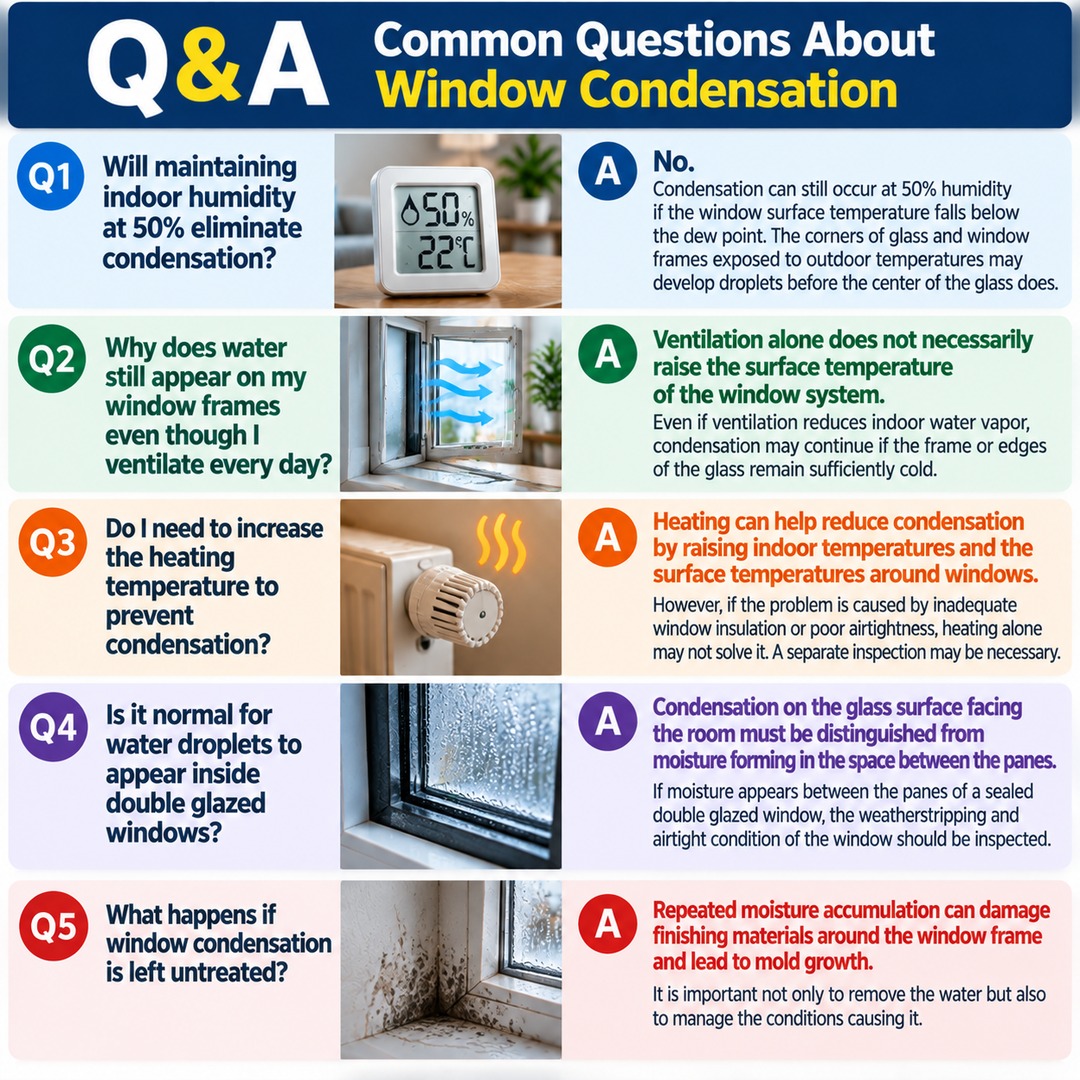
Q. Will maintaining indoor humidity at 50% eliminate condensation?
No. Condensation can still occur at 50% humidity if the window surface temperature falls below the dew point. In particular, the corners of glass and window frames exposed to outdoor temperatures may develop droplets before the center of the glass does.
Q. Why does water still appear on my window frames even though I ventilate every day?
Ventilation alone does not necessarily raise the surface temperature of the window system. Even if ventilation reduces indoor water vapor, condensation may continue if the frame or edges of the glass remain sufficiently cold.
Q. Do I need to increase the heating temperature to prevent condensation?
Heating can help reduce condensation by raising indoor temperatures and the surface temperatures around windows. However, if the problem is caused by inadequate window insulation or poor airtightness, heating alone may not solve it. A separate inspection may be necessary.
Q. Is it normal for water droplets to appear inside double-glazed windows?
Condensation on the glass surface facing the room must be distinguished from moisture forming in the space between the panes. If moisture appears between the panes of a sealed double-glazed window, the weatherstripping and airtight condition of the window should be inspected.
Q. What happens if window condensation is left untreated?
Repeated moisture accumulation can damage finishing materials around the window frame and lead to mold growth. It is important not only to remove the water but also to manage the conditions causing it.
Surface Temperature Is the Most Important Factor When Assessing Window Condensation
Indoor humidity of 50% alone is not enough to determine whether window condensation is normal or abnormal. You need to calculate the dew point using the indoor temperature and humidity, then examine where droplets actually form and whether they repeatedly appear in the same locations.
If windows in several rooms become wet, start by managing indoor moisture production and ventilation. If only the corners or frame of one particular window repeatedly become wet, inspecting the window system and the junction between the frame and surrounding wall is a reasonable next step.
If condensation continues to return to the same location despite reducing humidity, move beyond simply adding another dehumidifier and arrange an assessment of the window's insulation and airtightness performance.