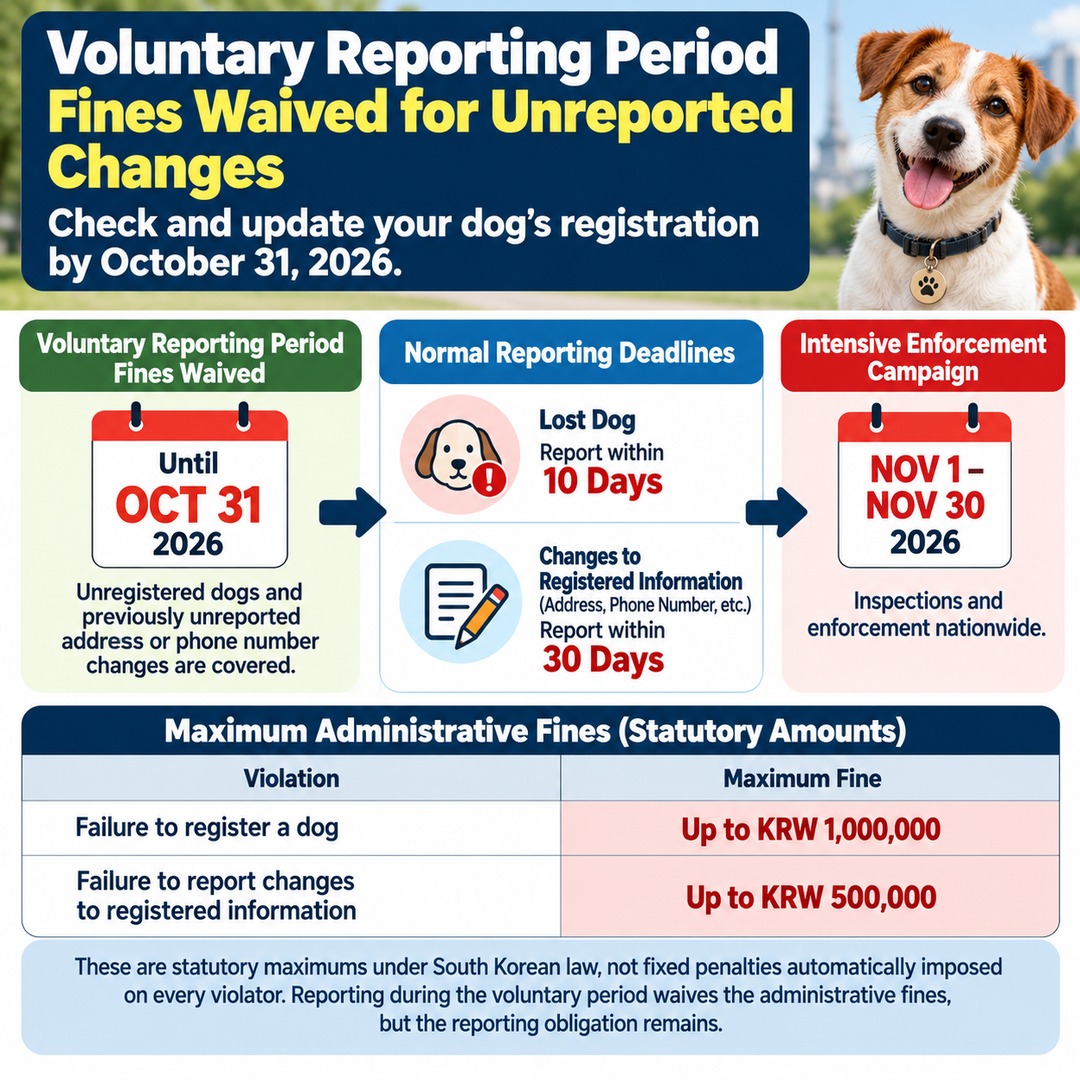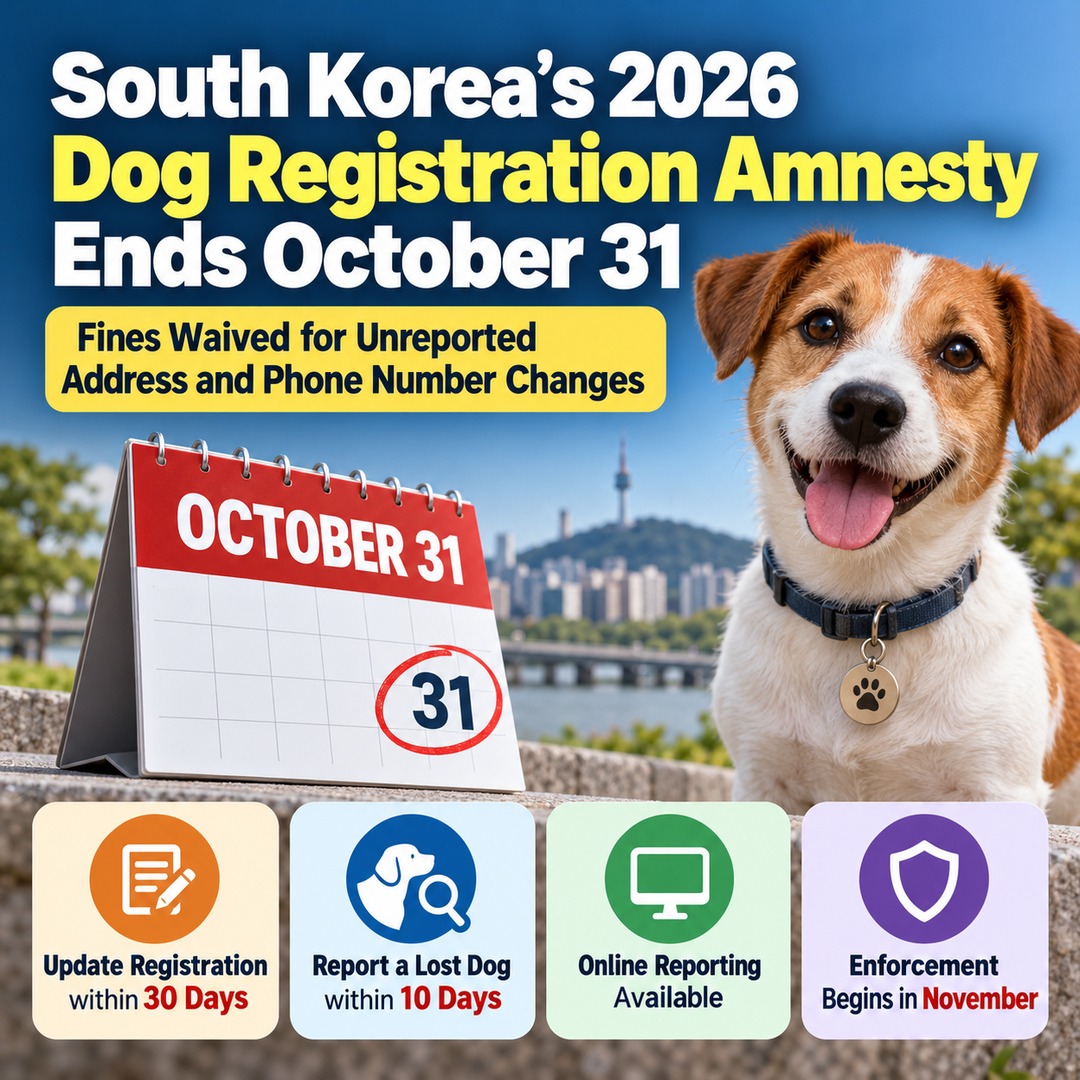
Even if your dog is already registered in South Korea, you can avoid administrative fines for previously unreported address or phone number changes by voluntarily reporting them by October 31, 2026. Unregistered dogs are also covered by the amnesty, and an intensive enforcement campaign will run from November 1 through November 30. However, the statutory reporting deadlines remain separate: a lost dog must be reported within 10 days, while changes to key registration details, such as an owner's address or contact information, generally must be reported within 30 days.
This voluntary reporting period is not limited to owners registering their dogs for the first time. Owners who have moved without updating their registered address, or changed their mobile phone number without correcting their dog's registration details, should also review their records.
Can You Avoid a Fine for Failing to Update Your Address or Phone Number?
Yes. If you report previously omitted changes during the voluntary reporting period, administrative fines for violating the registration update requirement will be waived.
Completing your dog's initial registration does not end your reporting obligations. If the registered information no longer matches the owner's actual details, a change report is required.
For example, this applies if you registered your dog and later moved to another area without updating your address, or changed your mobile phone number but left the previous number in the registration records.
The maximum administrative fines differ by violation:
Failure to register a dog: Up to KRW 1,000,000
Failure to report changes to registered information: Up to KRW 500,000
These amounts are statutory maximums under South Korean law, not fixed penalties automatically imposed on every violator.
The fine waiver during the voluntary reporting period does not eliminate the underlying reporting obligation. It provides an opportunity to correct previously missed reports within a designated period. Any new changes must still be reported within the normal statutory deadlines.
What Changes After October 31?
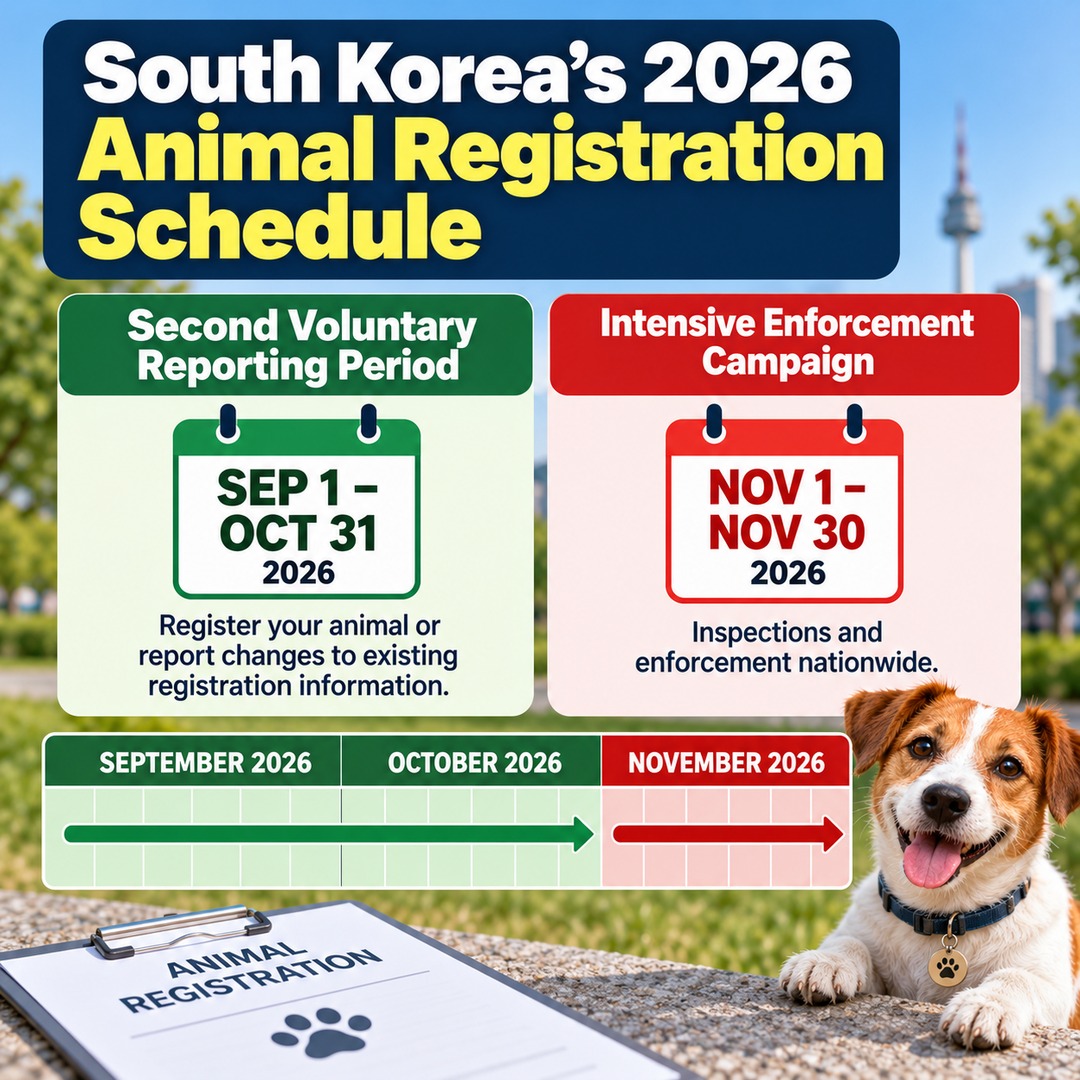
South Korea's second voluntary animal registration reporting period in 2026 runs from September 1 through October 31. An intensive enforcement campaign is scheduled for November 1 through November 30.
Second Voluntary Reporting Period
September 1 – October 31
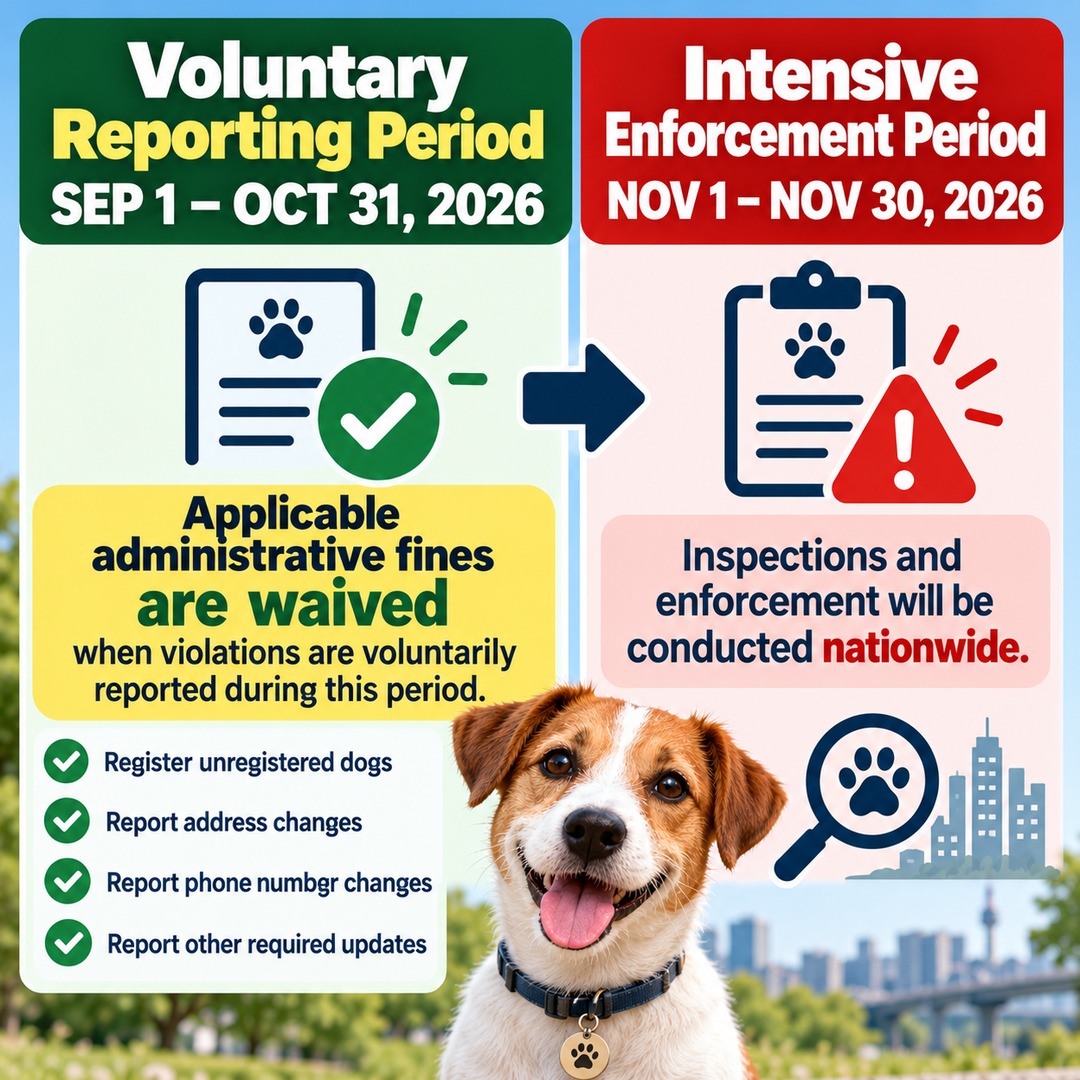
Applicable administrative fines are waived when violations are voluntarily reported during this period.
Intensive Enforcement Period
November 1 – November 30
Checks for unregistered dogs and failures to report registration changes.
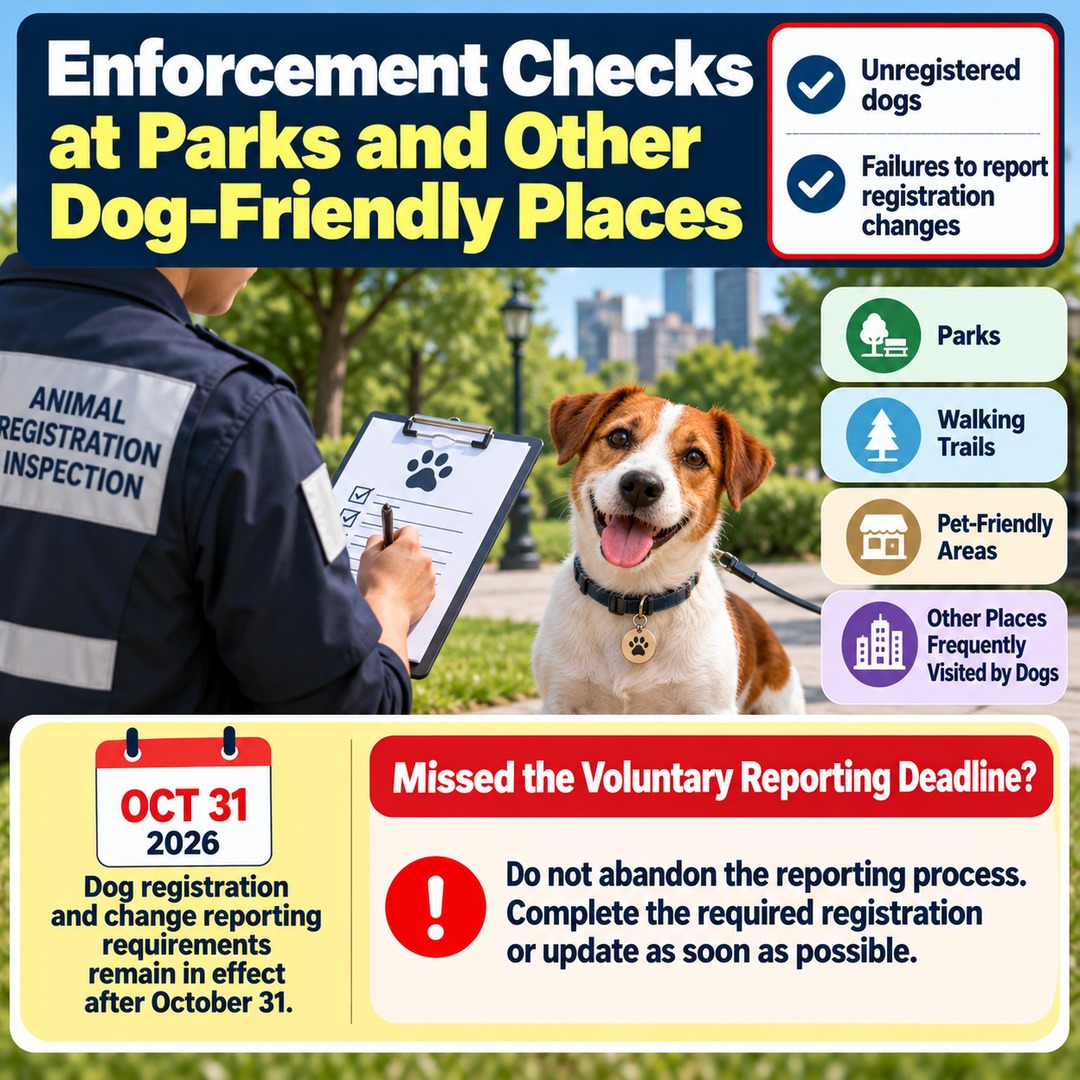
The enforcement campaign will include checks at parks and other places frequently visited by dogs to determine whether animals are registered and whether owners have fulfilled their change-reporting obligations.
Dog registration and change-reporting requirements remain in effect after October 31. Therefore, even if you miss the voluntary reporting deadline, you should not abandon the reporting process. Complete the required registration or update as soon as possible.
Why Must Lost Dogs Be Reported Within 10 Days but Address and Contact Changes Within 30 Days?
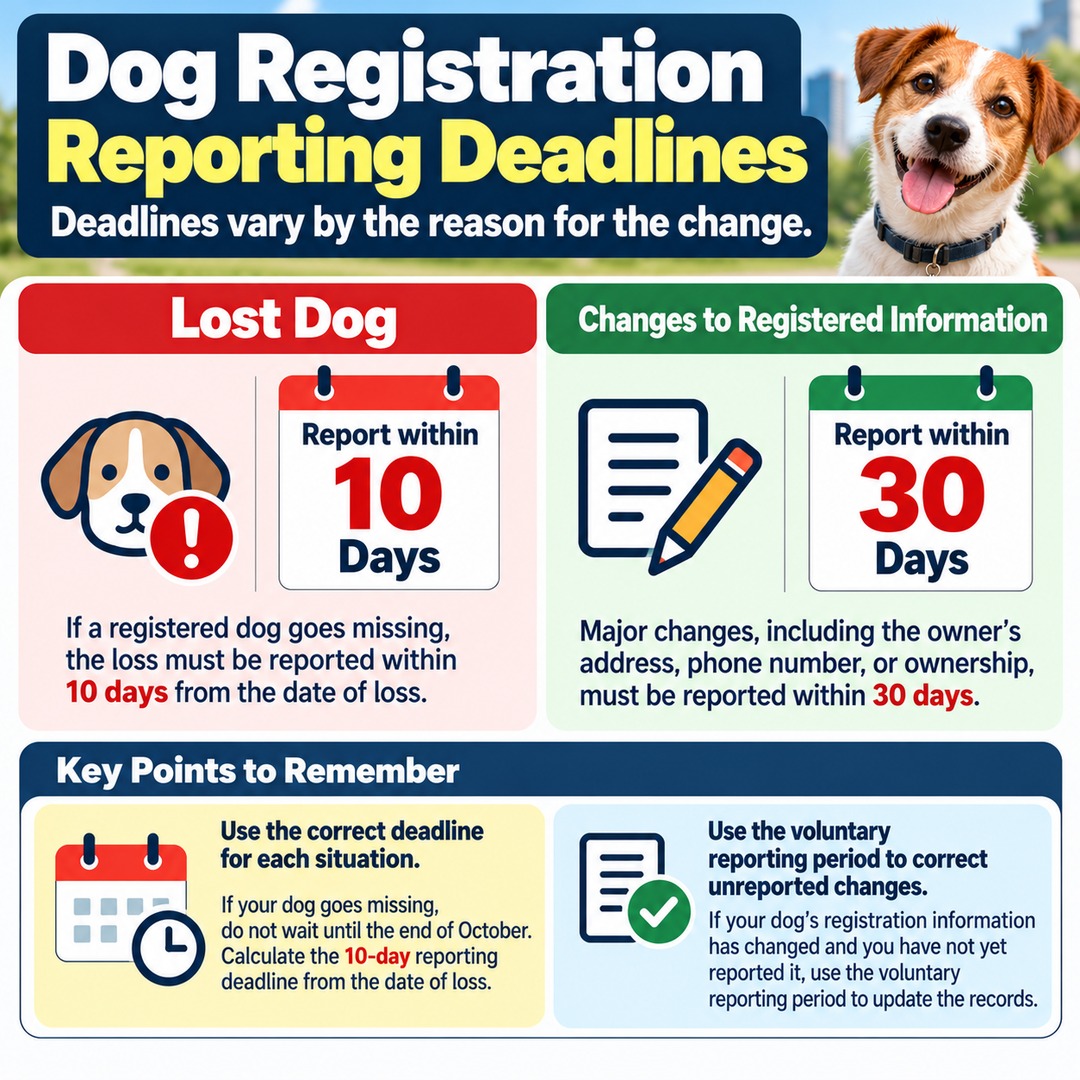
Under South Korea's animal registration system, statutory deadlines vary according to the reason for the change. If a registered dog goes missing, the loss must be reported within 10 days. Major changes, including the owner's address, phone number, or ownership, must be reported within 30 days.
| Reason for Reporting | Statutory Reporting Deadline |
|---|---|
| A registered dog goes missing | Within 10 days |
| Owner's address changes | Within 30 days |
| Owner's phone number changes | Within 30 days |
| Ownership changes | Within 30 days |
| A registered animal dies | Within 30 days |
| A previously lost dog is found | Within 30 days |
| Reason for Reporting | Statutory Reporting Deadline |
|---|---|
| Changes to registered information, such as the owner's name | Within 30 days |
Understanding these differences helps prevent confusion between the temporary voluntary reporting period and the ordinary statutory reporting deadlines.
For example, if your dog goes missing, you should not wait until the end of October. Instead, calculate the reporting deadline from the date the dog was lost.
If your dog's registration information has changed and you have not yet reported it, use the voluntary reporting period to correct the records.
Where Should You Report Changes: the National Animal Protection Information System or Government24?
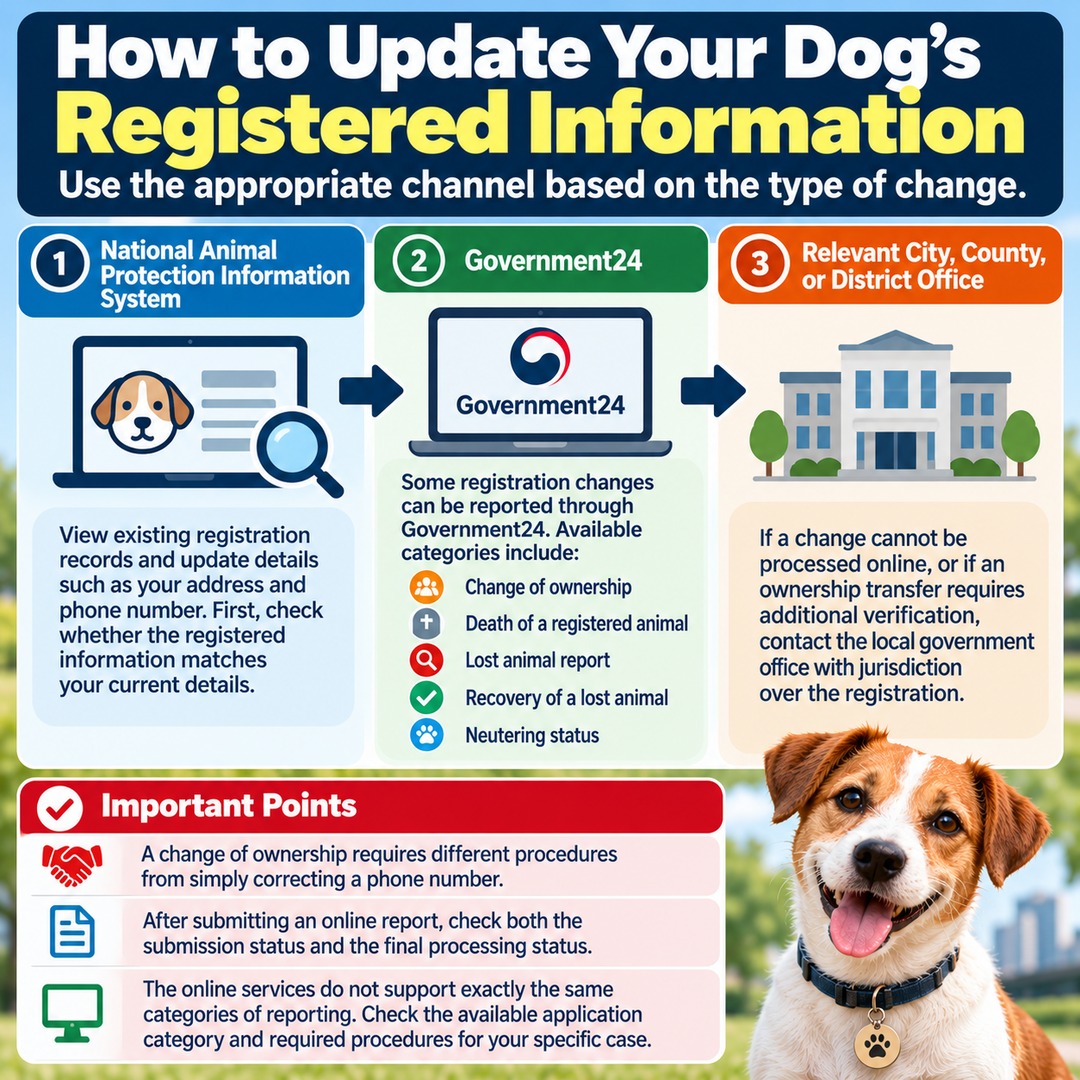
To update an owner's registered information, such as an address or phone number, start with South Korea's National Animal Protection Information System. Some animal registration changes can also be reported through Government24, the country's online government services portal. However, the two services do not support exactly the same categories of online reporting.
National Animal Protection Information System
This system is used to view existing animal registration records and update registered details, including addresses and contact information. You can first check whether the registered owner's information matches the current details.
Government24
This portal provides a reporting channel for changes involving ownership, the death of a registered animal, a lost animal, the recovery of a lost animal, and neutering status. Check the available application category and required procedures for the specific type of report.
Relevant City, County, or District Office
If a change cannot be processed online, or if an ownership transfer requires additional verification, you can contact the local government office with jurisdiction over the registration.
Reporting a change of ownership is different from simply correcting a phone number. Because it involves information about both the previous and new owners, you must follow the procedures required for that reporting category.
After submitting an online report, do not stop at entering the information. It is advisable to confirm both the submission status and the final processing status.
What If Your Dog Has Never Been Registered?
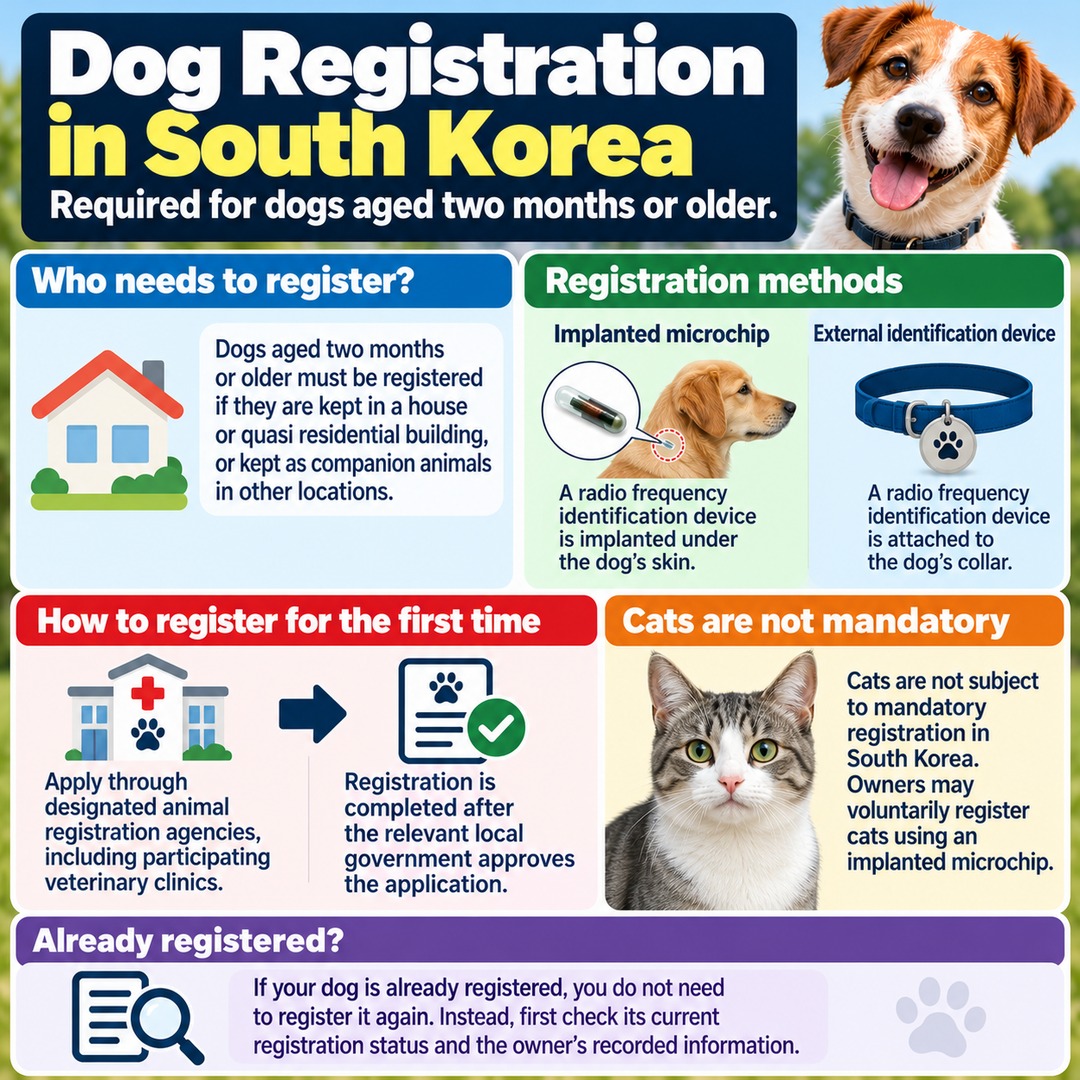
In South Korea, dogs aged two months or older must be registered if they are kept in a house or quasi-residential building, or kept as companion animals in other locations.
There are two registration methods:
Implanted microchip: A radio-frequency identification device is implanted under the dog's skin.
External identification device: A radio-frequency identification device is attached to the dog's collar.
Owners registering a dog for the first time can apply through designated animal registration agencies, including participating veterinary clinics. Registration is completed after the relevant local government approves the application.
Unlike dogs, cats are not subject to mandatory registration in South Korea. Owners may voluntarily register cats using an implanted microchip.
If your dog is already registered, you do not need to register it again. Instead, first check its current registration status and the owner's recorded information.
What Should You Check Before October 31, and in What Order?
If you are unsure whether you have any outstanding reporting obligations, follow these steps.
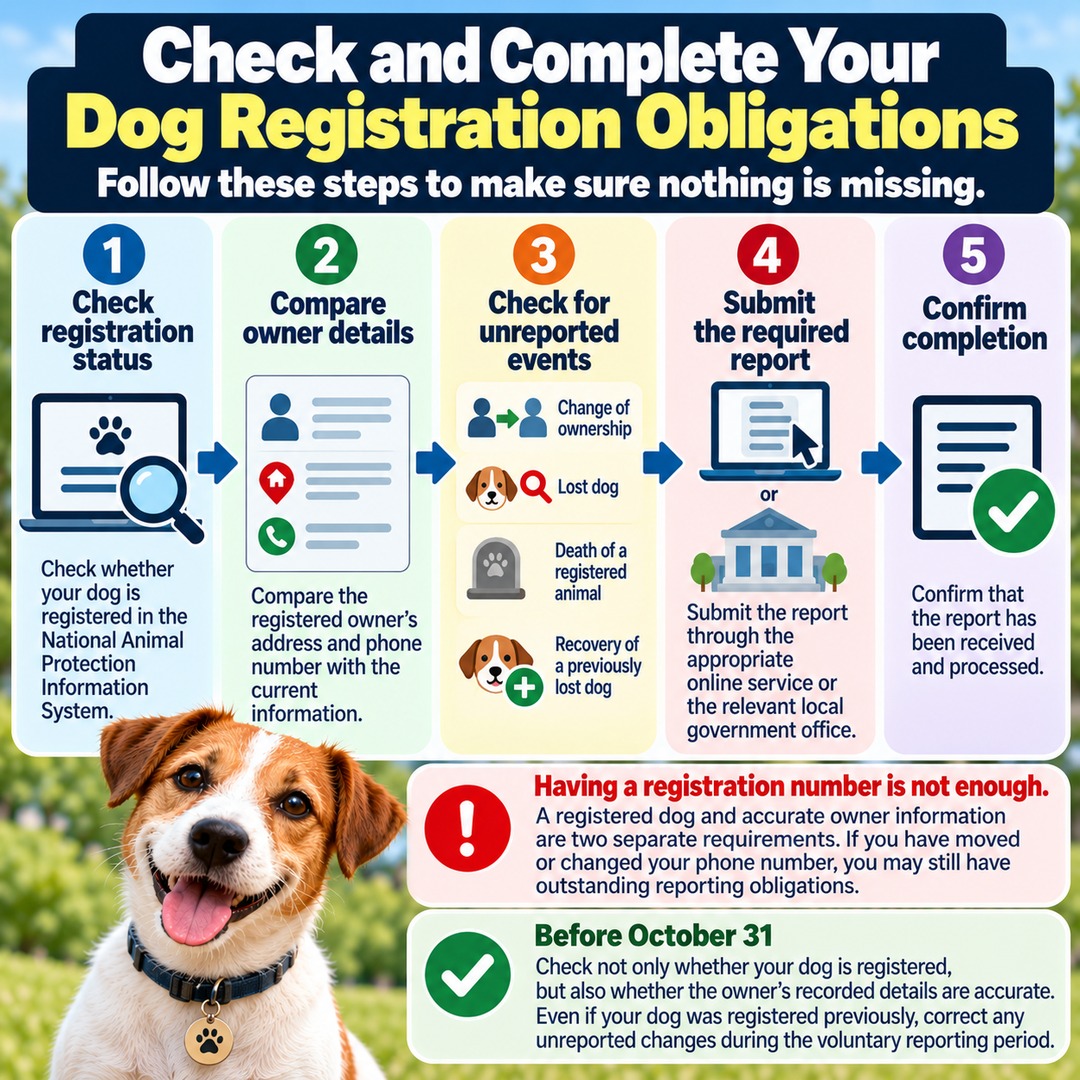
1. Check whether your dog is registered in the National Animal Protection Information System.
2. Compare the registered owner's address and phone number with the current information.
3. Check whether any events have gone unreported, such as a change of ownership, a lost dog, the death of a registered animal, or the recovery of a previously lost dog.
4. Submit the required report through the appropriate online service or the relevant local government office.
5. Confirm that the report has been received and processed.
Owners who have moved or changed their mobile phone numbers may assume that having a registration number means all their obligations have been fulfilled.
However, having a registered dog and maintaining accurate registration information are two separate requirements.
Before October 31, check not only whether your dog is registered but also whether the owner's recorded details are accurate. Even if your dog was registered previously, correct any unreported changes during South Korea's voluntary reporting period.