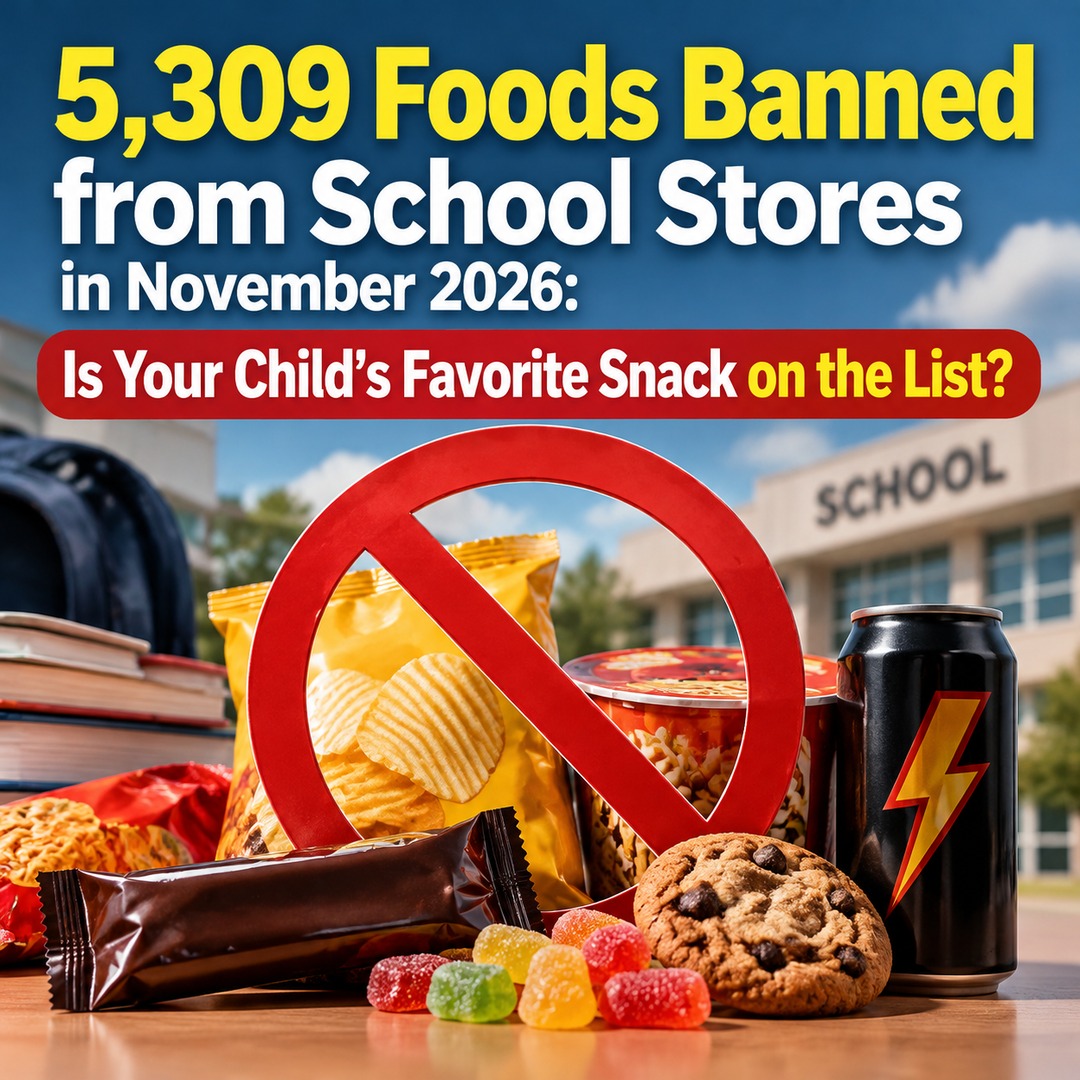
Foods restricted for sale in school stores must be checked individually by product. The South Korean Ministry of Food and Drug Safety's November 2026 notice includes 5,309 high-calorie, low-nutrient food products, along with a separate list of children's preferred foods containing high levels of caffeine. Even if a product is available at an ordinary supermarket, its eligibility for sale in a school store must be checked separately.
What Changed in the November School Store Restricted-Sales List?
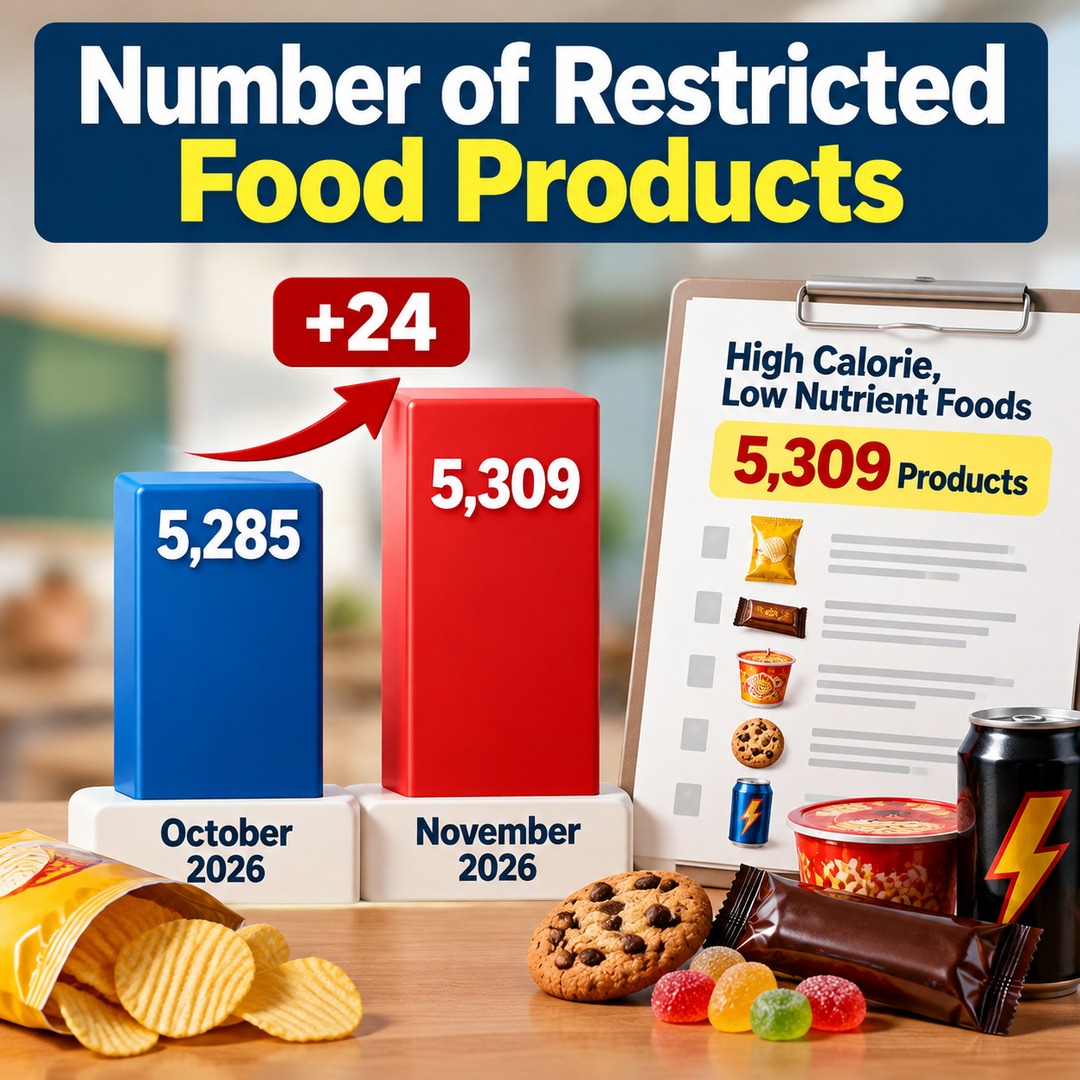
The November 2026 list contains 5,309 high-calorie, low-nutrient food products. This is an increase of 24 products compared with the October list, which contained 5,285 products.
Comparison of product counts
Number of high-calorie, low-nutrient food products listed in the South Korean Ministry of Food and Drug Safety's monthly notices:
October 2026: Approximately 5,300 products
November 2026: Approximately 5,300 products
These figures do not mean that all snacks and beverages are prohibited in schools. They represent the number of individual products officially classified and listed by the South Korean Ministry of Food and Drug Safety as high-calorie, low-nutrient foods.
The November notice also includes a separate list of children's preferred foods containing high levels of caffeine. These two lists must be considered separately because their classification criteria and sales restrictions differ.
What Are High-Calorie, Low-Nutrient Foods?
High-calorie, low-nutrient foods are foods marketed to children that contain relatively high amounts of calories, sugar, or saturated fat while providing comparatively insufficient amounts of nutrients such as protein. A product cannot be classified as restricted for sale simply because it tastes sweet or contains a high number of calories.
The products covered can include snacks, candy, frozen desserts, bread, chocolate, certain dairy products, and beverages. Nutritional standards vary by food category, so consumers should not make their own assumptions based solely on the nutritional information printed on the package.
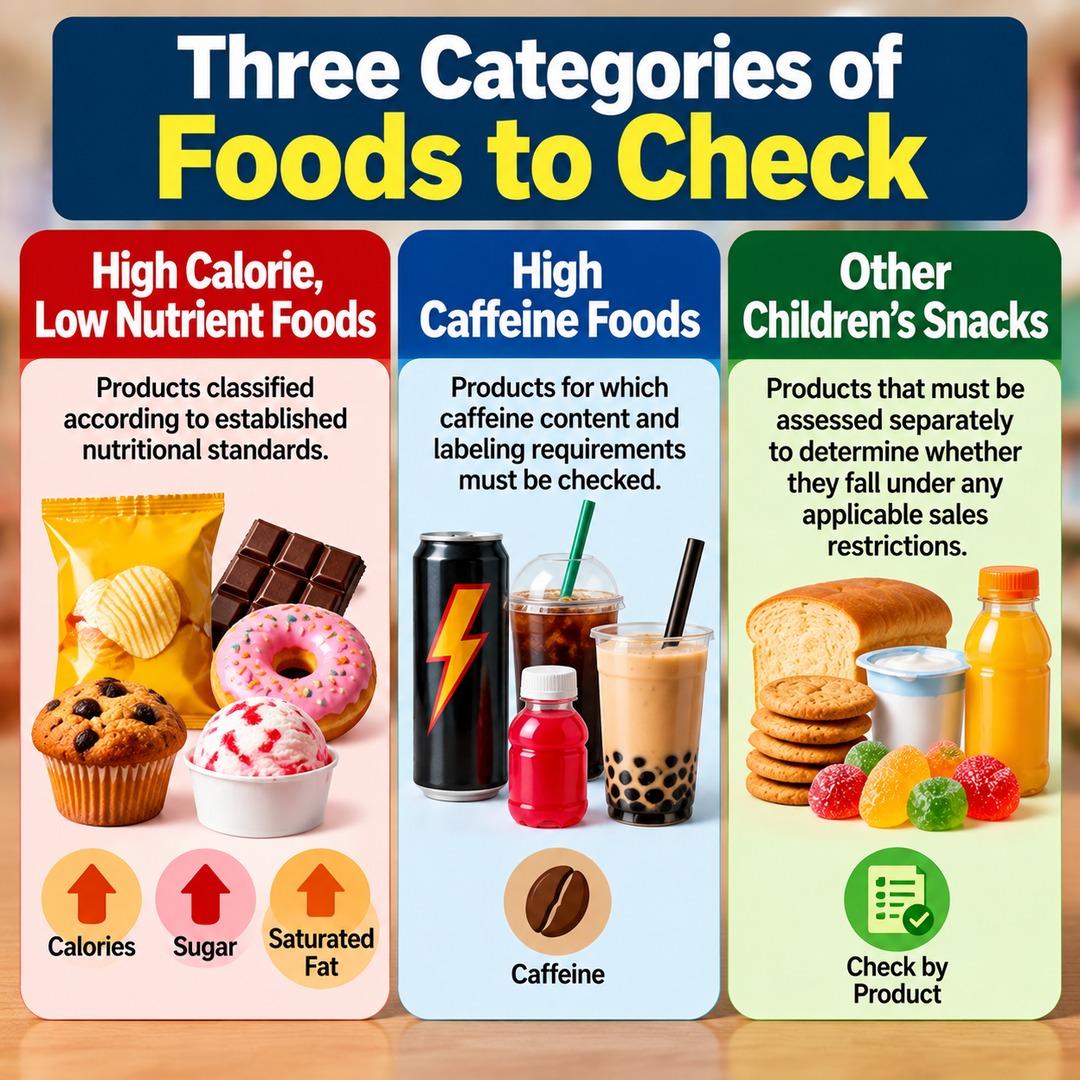
In particular, it is important to distinguish among three categories:
High-calorie, low-nutrient foods: Products classified according to established nutritional standards.
High-caffeine foods: Products for which caffeine content and labeling requirements must be checked.
Other children's snacks: Products that must be assessed separately to determine whether they fall under any applicable sales restrictions.
How Do Sales Restrictions Differ Between Schools and Ordinary Stores?
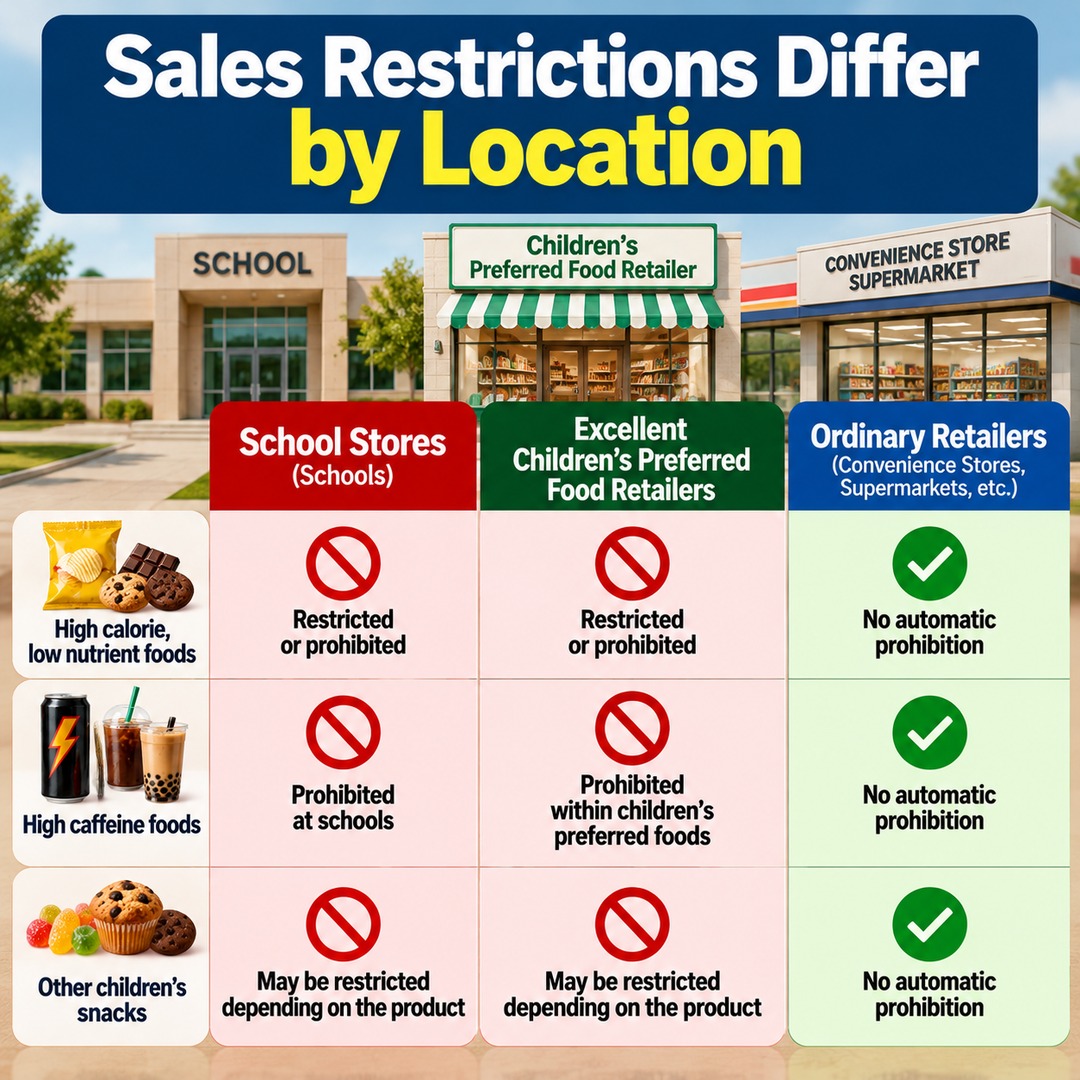
School stores and Excellent Children's Preferred Food Retailers are subject to specific management requirements. However, the same sales prohibitions do not automatically apply to every ordinary convenience store and supermarket.
Under Article 8 of South Korea's Special Act on Safety Management of Children's Dietary Life, the sale of high-calorie, low-nutrient foods and high-caffeine foods can be restricted or prohibited at schools and designated Excellent Children's Preferred Food Retailers.
The rules differ by location:
| Location | High-calorie, low-nutrient foods | High-caffeine foods |
|---|---|---|
| Schools | Sales restricted or prohibited according to the official product list | Sales prohibited |
| Excellent Children's Preferred Food Retailers | Sales restricted or prohibited according to the official product list | Sales prohibited within the scope of children's preferred foods |
| Ordinary convenience stores and supermarkets | School-specific sales restrictions do not automatically apply | School sales prohibitions do not automatically extend to all ordinary retailers |
The important distinction concerns the scope of the high-caffeine food restrictions.
South Korean law prohibits the sale of high-caffeine foods at schools. At Excellent Children's Preferred Food Retailers, the prohibition applies to high-caffeine products within the category of children's preferred foods.
Therefore, the fact that a product can be purchased at an ordinary retailer does not mean it can also be sold in a school store.
How Can You Check Your Child's Snacks by Product Name?
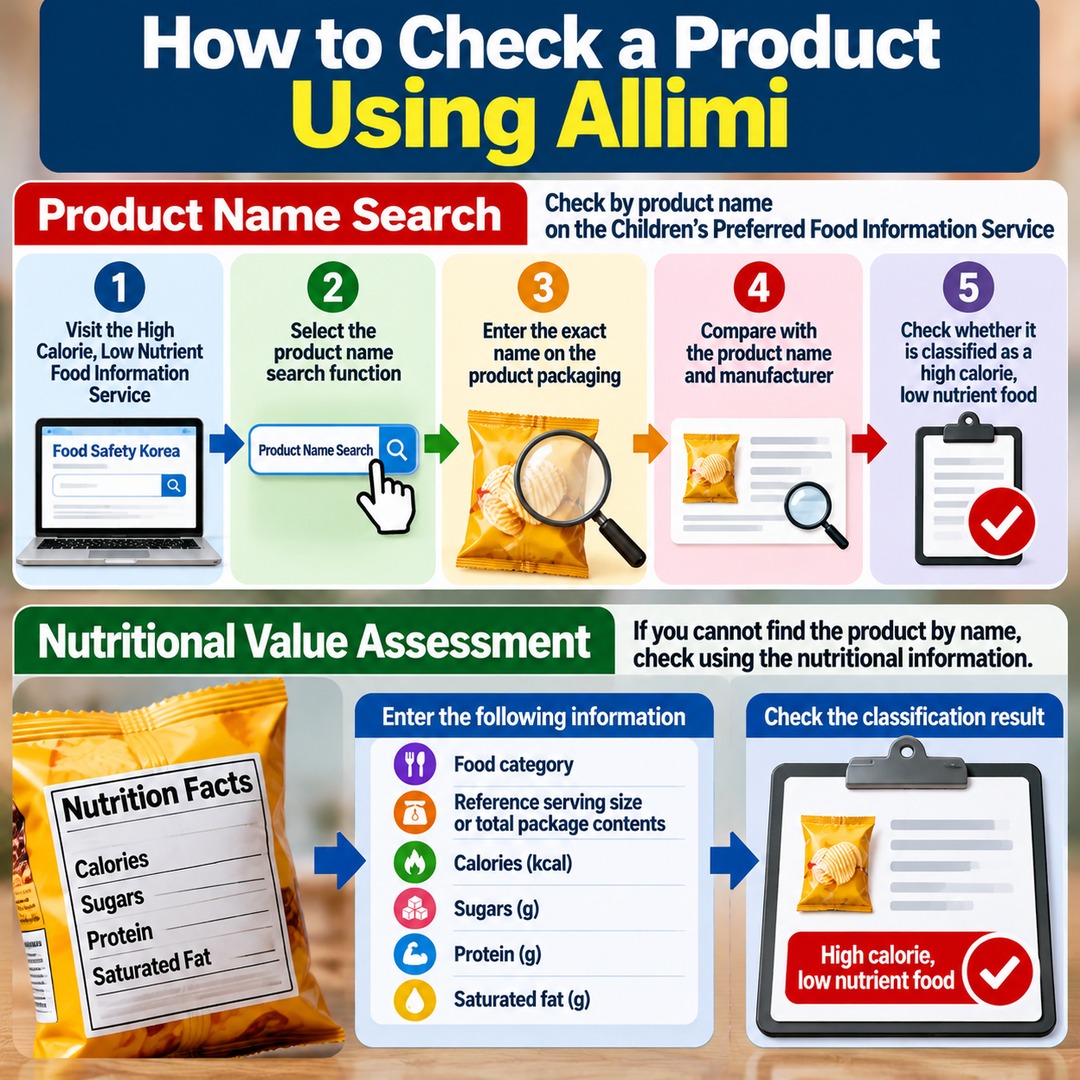
One of the easiest ways to check is to use the Children's Preferred Food Information Service (Allimi), available through South Korea's Food Safety Korea website.
Follow these steps:
1. Visit the High-Calorie, Low-Nutrient Food Information Service on Food Safety Korea.
2. Select the product-name search function.
3. Enter the exact name printed on the product packaging.
4. Compare the search result with the product name and manufacturer.
5. Check whether the product has been classified as a high-calorie, low-nutrient food.
The product-name search service is designed for children's preferred foods commonly sold around schools.
Not finding a product in the search results does not prove that it is exempt from sales restrictions. The product may not be included in the search database, or its name may differ from the name entered.
What If the Product Does Not Appear in the Search Results?
If you cannot identify a product by name, you can use the nutritional information printed on the back of its packaging.
Select the nutritional-value assessment function in the Allimi service and enter the following information:
Food category
Reference serving size or total package contents
Calories (kcal)
Sugars (g)
Protein (g)
Saturated fat (g)
The entered information can be used to determine whether the product meets the criteria for high-calorie, low-nutrient foods.
Pay particular attention to the difference between the total package contents and the reference serving size. Classification is based on the prescribed reference serving size. For certain small products, a conversion to a 30 g reference amount is also applied.
What Nutritional Standards Are Used to Classify High-Calorie, Low-Nutrient Foods?
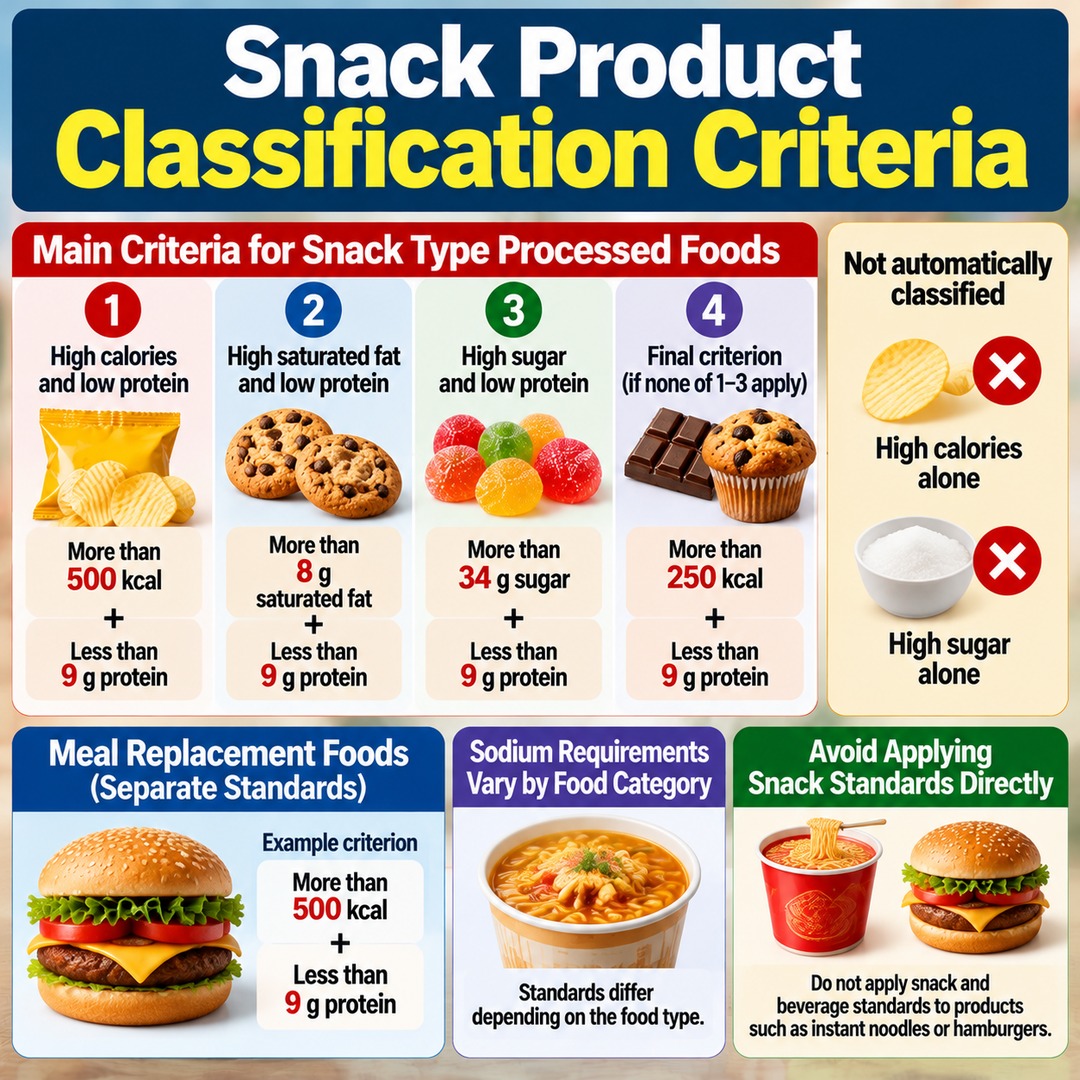
Snack products are classified using combinations of calories, saturated fat, sugar, and protein. A product does not automatically qualify simply because it contains a high number of calories or a large amount of sugar.
The main classification criteria for snack-type processed foods include the following:
| Classification condition | Standard |
|---|---|
| Calories and protein | More than 250 kcal per reference serving and less than 2 g of protein |
| Saturated fat and protein | More than 4 g of saturated fat and less than 2 g of protein |
|---|---|
| Sugar and protein | More than 17 g of sugar and less than 2 g of protein |
| Additional criterion | More than 500 kcal, or more than 8 g of saturated fat, or more than 34 g of sugar |
|---|
The final criterion applies to foods that do not meet any of the first three conditions.
Meal-replacement foods are assessed using separate standards. For example, the criteria include combinations such as more than 500 kcal and less than 9 g of protein. Sodium requirements also vary depending on the food category.
Therefore, the standards for snacks and beverages should not be applied directly to products such as instant noodles or hamburgers.
Where Should You Look on Packaging for High-Caffeine Beverages?
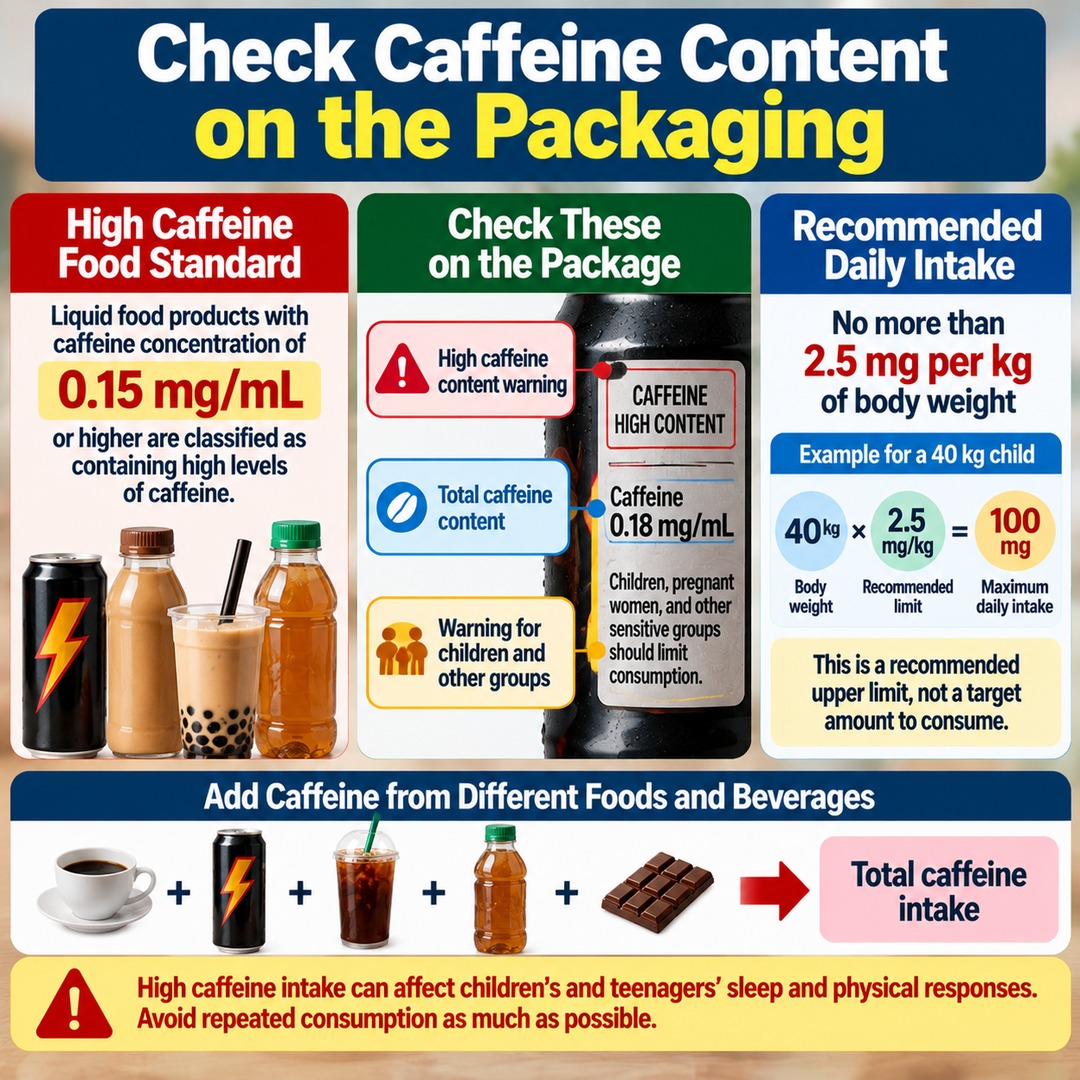
For products containing high levels of caffeine, check the caffeine content information on the packaging. A liquid food product is classified as containing high levels of caffeine if its caffeine concentration is at least 0.15 mg per milliliter.
Look for the following information on product packaging:
High-caffeine content warning
Total caffeine content
Warning advising children and other groups to limit consumption
When checking energy drinks and beverages containing coffee or tea ingredients, it is also important to review the actual caffeine content.
High caffeine intake can affect children's and teenagers' sleep and physical responses. They should avoid consuming such beverages repeatedly without considering their total caffeine intake.
According to guidance provided by South Korea's Food Safety Korea, the recommended maximum daily caffeine intake for children and adolescents is no more than 2.5 mg per kilogram of body weight.
For example, the calculation for a child weighing 40 kg is:
\[
40 \times 2.5 = 100\text{ mg}
\]
Calculation: Recommended maximum daily caffeine intake for a child weighing 40 kg — 100 mg.
This is a recommended upper limit, not a target amount to consume. Caffeine from different foods and beverages must be added together. Whenever possible, children's caffeine consumption should be minimized.
What Should You Check Before Buying Snacks for Your Child?
It is more accurate to assess whether a product is permitted for sale and whether its nutritional profile is suitable as two separate questions.
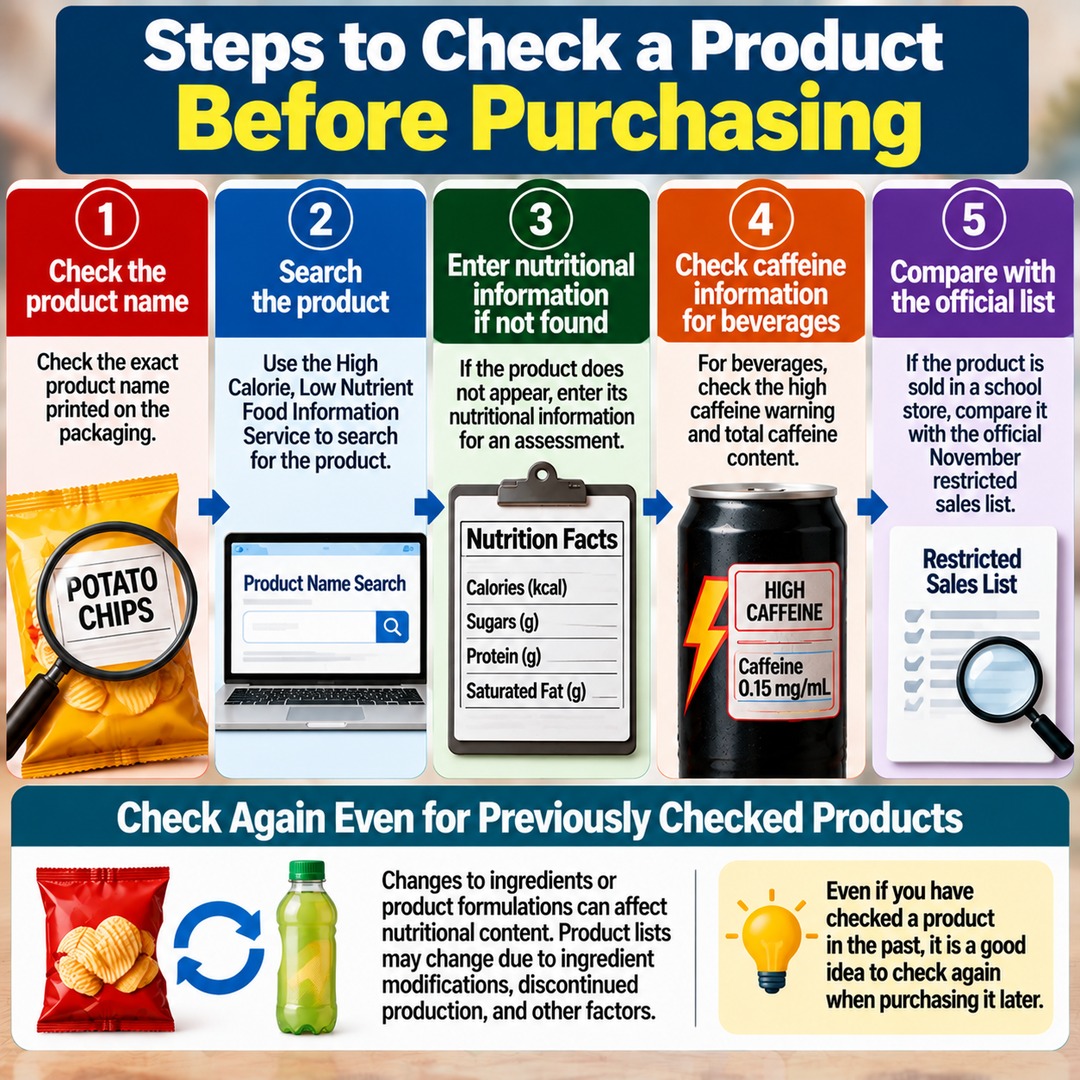
During the purchasing process, follow these steps:
1. Check the exact product name printed on the packaging.
2. Search for the product using the High-Calorie, Low-Nutrient Food Information Service.
3. If the product does not appear, enter its nutritional information for an assessment.
4. For beverages, check the high-caffeine warning and total caffeine content.
5. If the product is sold in a school store, compare it with the official November restricted-sales list.
Changes to ingredients or product formulations can affect nutritional content. The South Korean Ministry of Food and Drug Safety also notes in its official notices that product lists may change because of ingredient modifications, discontinued production, and other factors.
Therefore, even if you have checked a product in the past, it is a good idea to check again when purchasing it later.
Frequently Asked Questions
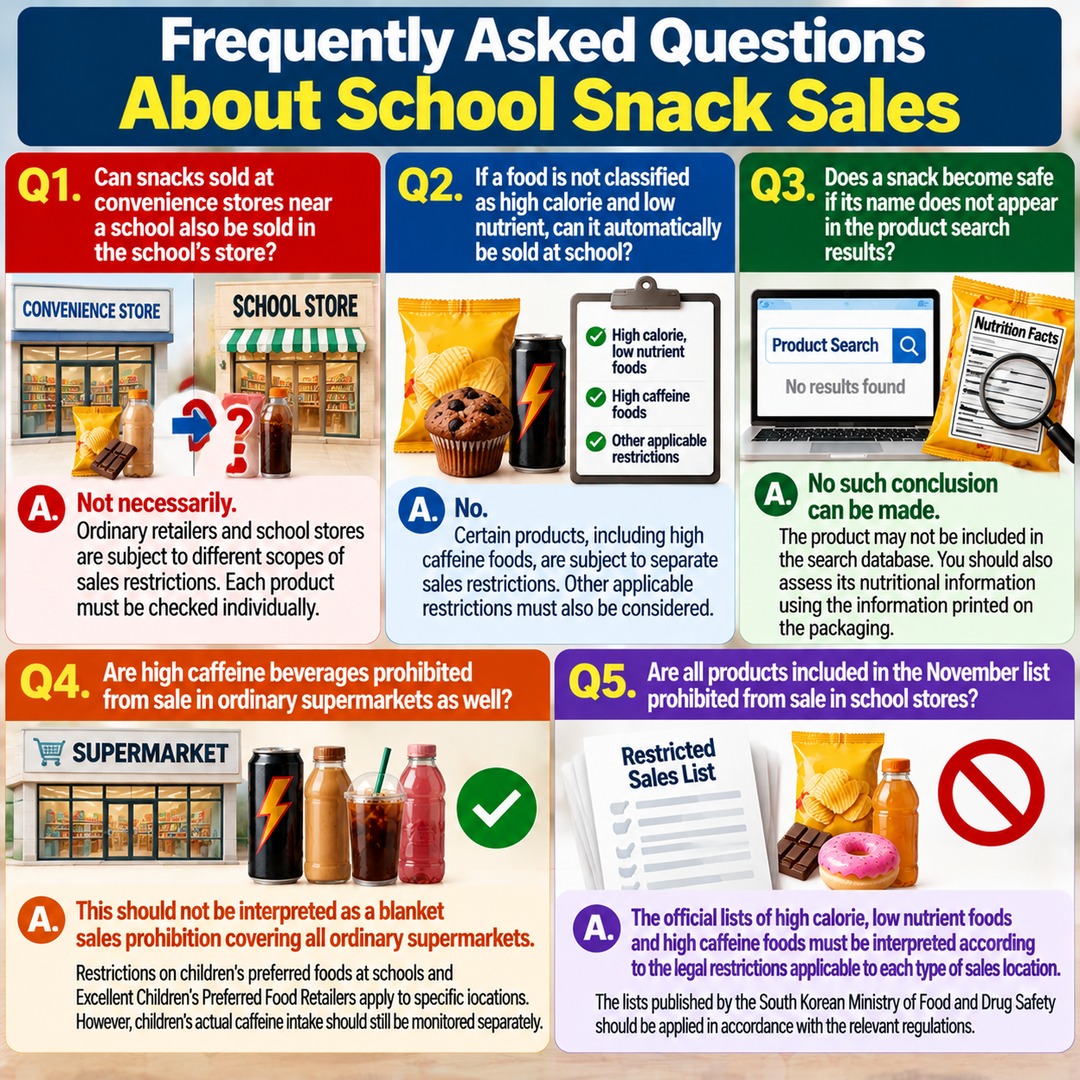
Q. Can snacks sold at convenience stores near a school also be sold in the school's store?
Not necessarily. Ordinary retailers and school stores are subject to different scopes of sales restrictions. Each product must be checked individually.
Q. If a food is not classified as high-calorie and low-nutrient, can it automatically be sold at school?
No. Certain products, including high-caffeine foods, are subject to separate sales restrictions. Other applicable restrictions must also be considered.
Q. Does a snack become safe if its name does not appear in the product search results?
No such conclusion can be made. The product may not be included in the search database. You should also assess its nutritional information using the information printed on the packaging.
Q. Are high-caffeine beverages prohibited from sale in ordinary supermarkets as well?
Restrictions on children's preferred foods at schools and Excellent Children's Preferred Food Retailers should not be interpreted as a blanket sales prohibition covering all ordinary supermarkets. However, children's actual caffeine intake should still be monitored separately.
Q. Are all products included in the November list prohibited from sale in school stores?
The official lists of high-calorie, low-nutrient foods and high-caffeine foods published by the South Korean Ministry of Food and Drug Safety must be interpreted according to the legal restrictions applicable to each type of sales location.